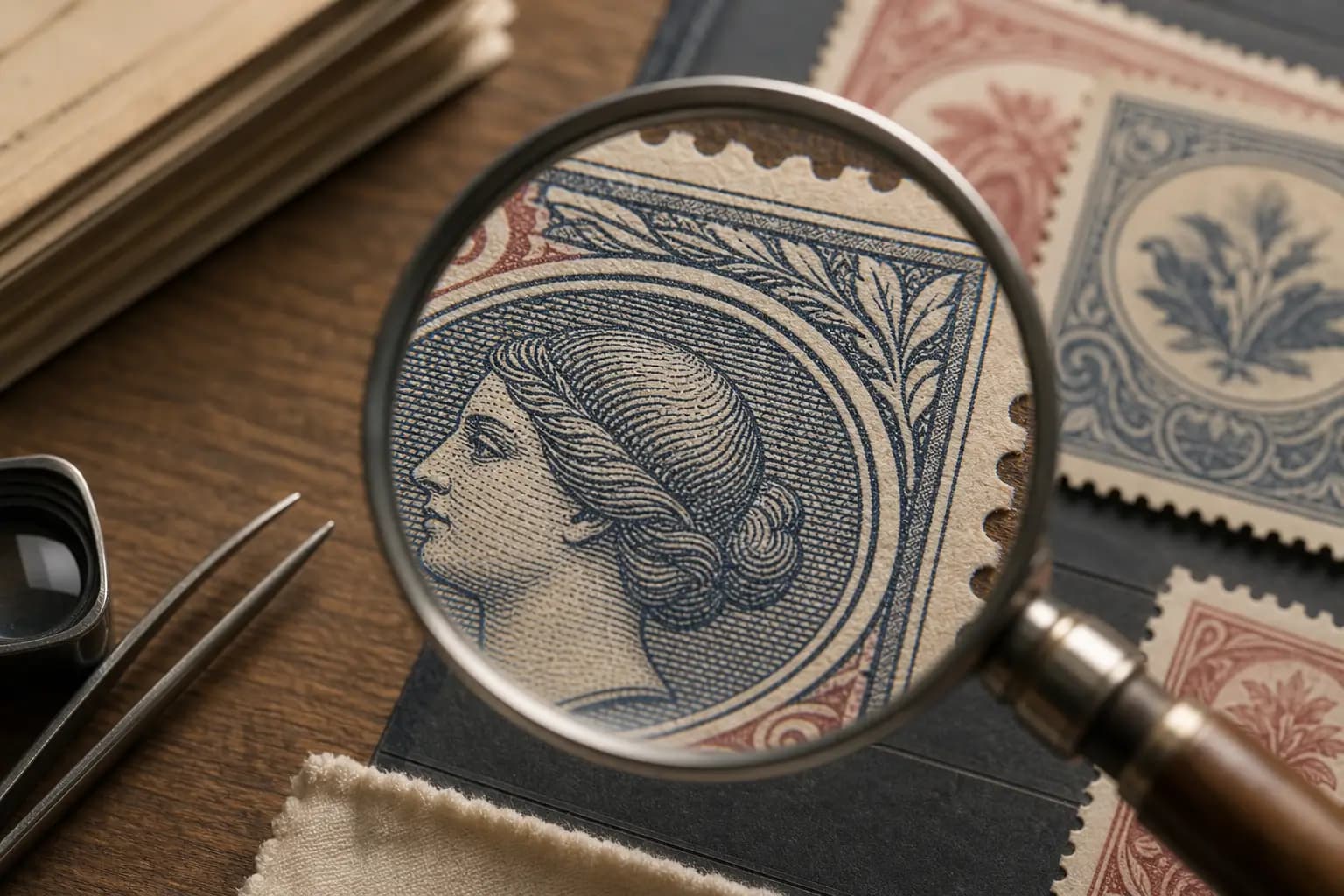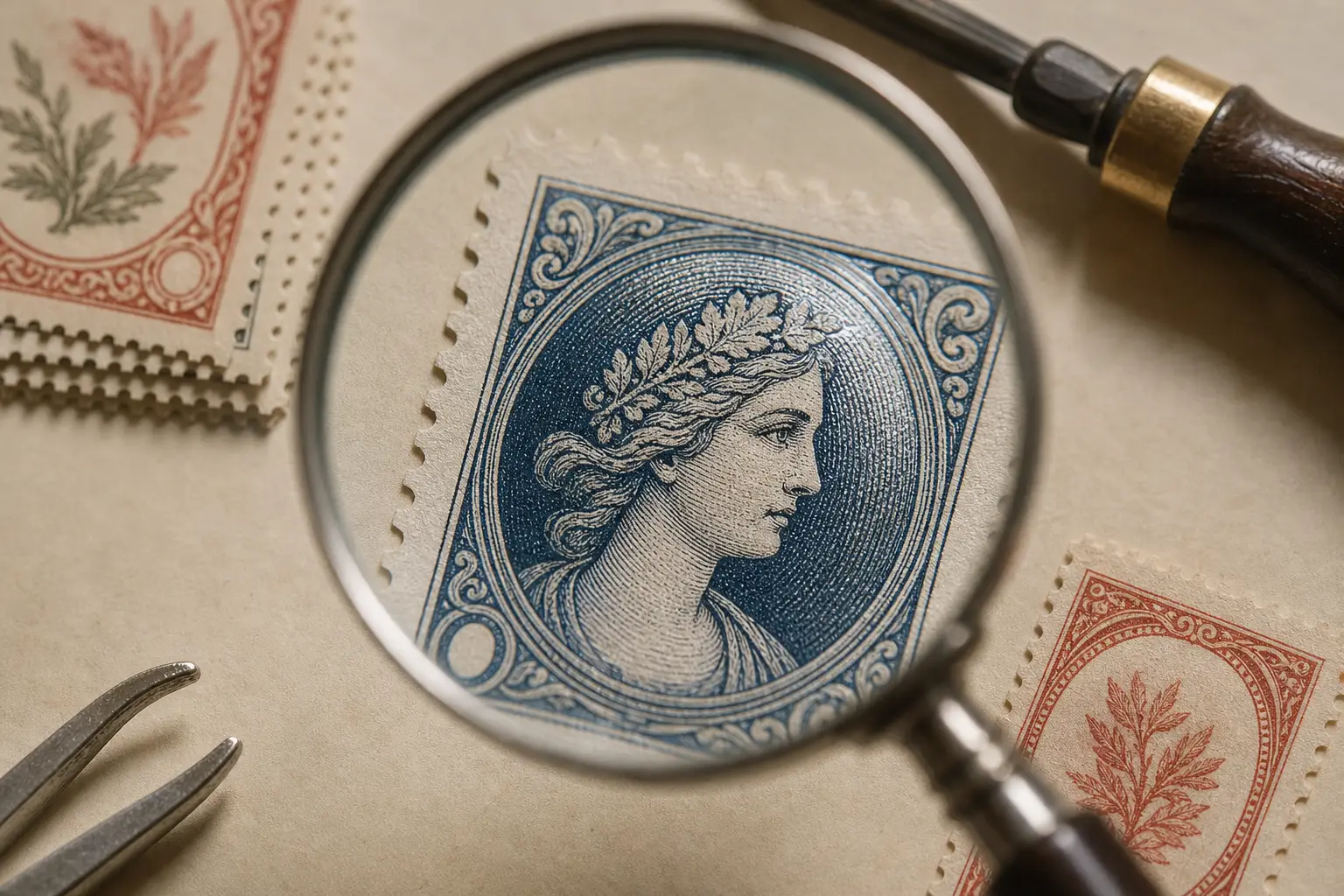
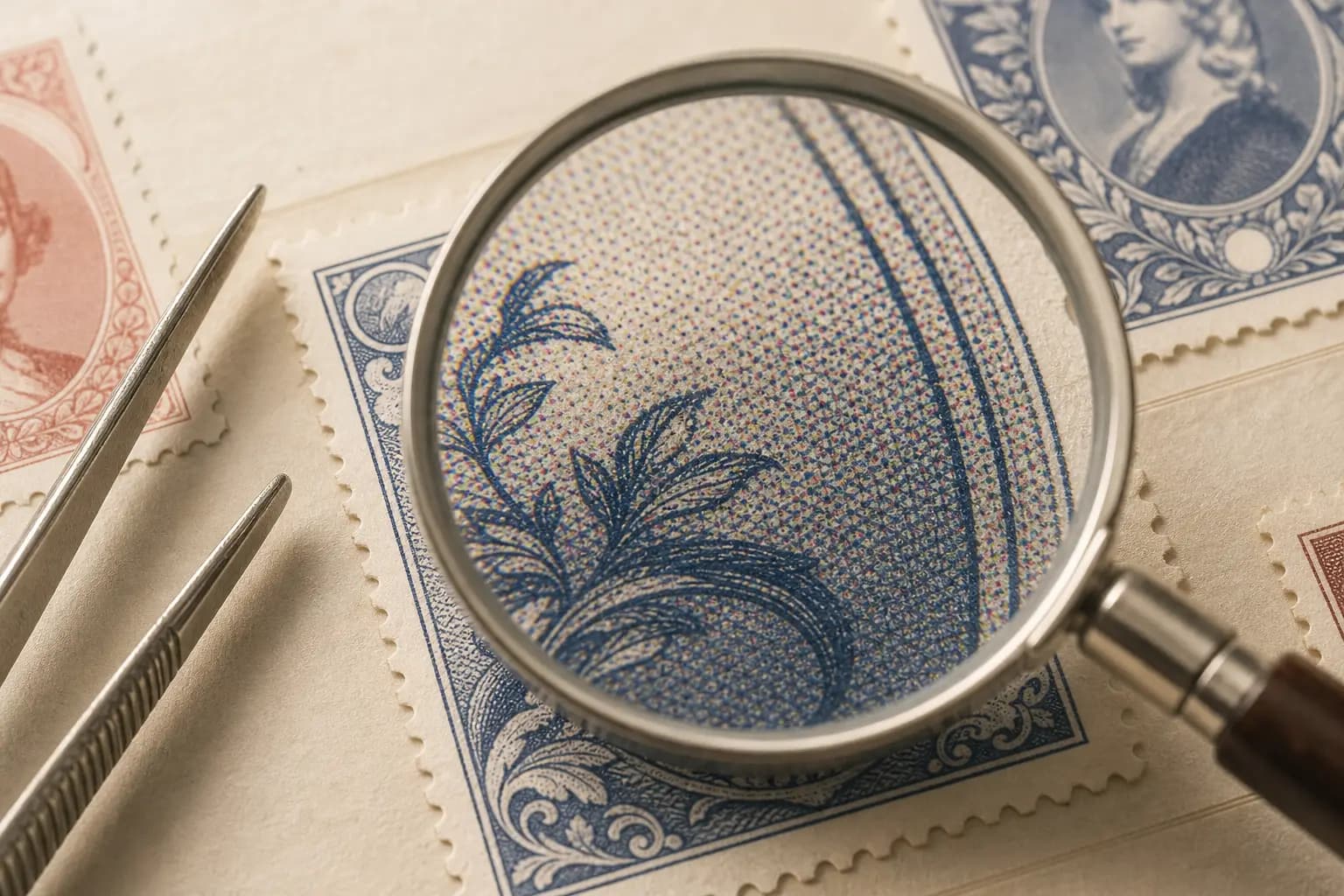
Start with the safest answer: do not rely on one visual clue
You can often suspect offset lithography on a modern stamp, but you should not diagnose it from one feature alone. The safest approach is to treat every visual sign as a clue, then combine the stamp’s appearance with what you can learn from cataloguing or production records. This is especially important because modern stamps may use more than one process, and different processes can share similar-looking effects.
A practical first rule is to use only non-contact magnification and diffuse or oblique light. That lets you examine the surface without risking damage. If you are building a record in StampSnap, note the clues you see, but leave the identification open until the evidence points the same way from more than one angle.
What offset lithography is, in plain terms
The Smithsonian National Postal Museum describes offset lithography as a planographic process, meaning the image is formed on a smooth surface rather than cut or etched into a plate. Oil-based ink adheres to the image area, and a rubber blanket transfers, or offsets, that image to paper. That basic structure helps explain why lithography can look different from line-engraved intaglio or gravure.
Modern stamp lithography commonly uses separate process-color layers made from very fine dots. Those dots can be useful to study, but they do not prove lithography by themselves. The museum notes that a dot pattern must be interpreted with other evidence, because gravure and other processes can also show screened structures under magnification.
The main printing families you should compare
The American Philatelic Society identifies four major families used for postage stamps: line-engraved intaglio, gravure, letterpress, and lithography. If you are trying to place a modern stamp, compare it against all four families rather than forcing it into a single guess. That wider comparison is more reliable than looking for one dramatic clue.
Line-engraved intaglio is a recess process in which ink is transferred from deliberately incised lines. Its design is normally built from lines, hatching, cross-hatching, and stippling. Gravure is also a recess process, but it forms tone from screened cells. Letterpress and lithography belong to different printing families, so a careful collector should compare the whole printed character of the stamp before concluding.
Clues that can support offset lithography
Under magnification, modern lithography may show very fine dot layers that belong to separate process-color printing. A smooth printed surface can also fit a planographic process, because the image is not cut into the plate in the way a line-engraved intaglio design is. These are supporting clues, not tests that work on their own.
Avoid depending on soft or blurred edges as a rule. The Smithsonian notes that modern lithography can be sharp, so softness is not dependable. Likewise, do not assume every dot pattern means lithography, because gravure and other processes may also show screened structures. The question is not whether one clue appears, but whether several clues point the same way.
How to read a stamp without over-interpreting it
Begin with good lighting and a steady magnifier. Look for the general print character first, then inspect the fine structures. If the design appears to sit on a smooth surface and the colour is built from very fine dot layers, lithography becomes more plausible. If instead you see incised-line character, hatching, or the physical impression associated with recess printing, you should consider line-engraved intaglio or gravure before settling on lithography.
Remember that screened or raised effects can appear in other processes too. The APS specifically warns that these features are supporting evidence rather than a single test. For a modern stamp, the most responsible method is to gather several observations, compare them with the known printing families, and then check records when possible.
Why production records matter as much as surface clues
Some modern stamps involve more than one process, so the surface may not tell the full story. That is why production records matter. A stamp that looks like lithography may include another process element, or a stamp with a screened appearance may still not be pure lithography. Records help you separate what the eye suggests from what was actually used.
This is where a careful collection note is useful. Write down what you observed under non-contact magnification, the light angle you used, and any features that seemed to repeat across the design. If you later match those notes with a reliable source, the identification becomes more defensible and easier to revisit.
A safe, methodical workflow for collectors
Use a simple sequence: inspect at low magnification, change to oblique light, look for line structure or dot structure, then compare the result with the major printing families. Keep the focus on cumulative clues. If the stamp remains uncertain, stop there rather than forcing a conclusion. Uncertainty is normal, especially with modern stamps that mix processes or use very fine printing.
Do not use contact methods, household solvents, or aggressive handling just to chase a print identification. The aim is to observe safely, not to alter the stamp. If you want to keep a working record, StampSnap can help you store the observation trail, but the identification itself should still rest on your own careful comparison and, when available, production evidence.
Frequently asked questions
Can I identify offset lithography from dot patterns alone?
No. Fine dot layers can support an offset-lithography identification, but gravure and other processes can also show screened structures. Use dot structure together with other clues.
Are blurred edges a reliable sign of lithography?
No. The Smithsonian National Postal Museum notes that modern lithography can be sharp, so softness or blur is not a dependable rule.
What printing families should I compare first?
Compare line-engraved intaglio, gravure, letterpress, and lithography. The APS identifies these as the four major families used for postage stamps.
How should I inspect a stamp safely?
Use only non-contact magnification and diffuse or oblique light. Treat all visual signs as clues, and avoid contact methods or harsh handling.
What if a modern stamp seems to show more than one process?
That can happen. The APS notes that more than one process may appear on a modern stamp, so you should combine observations and consult production records.