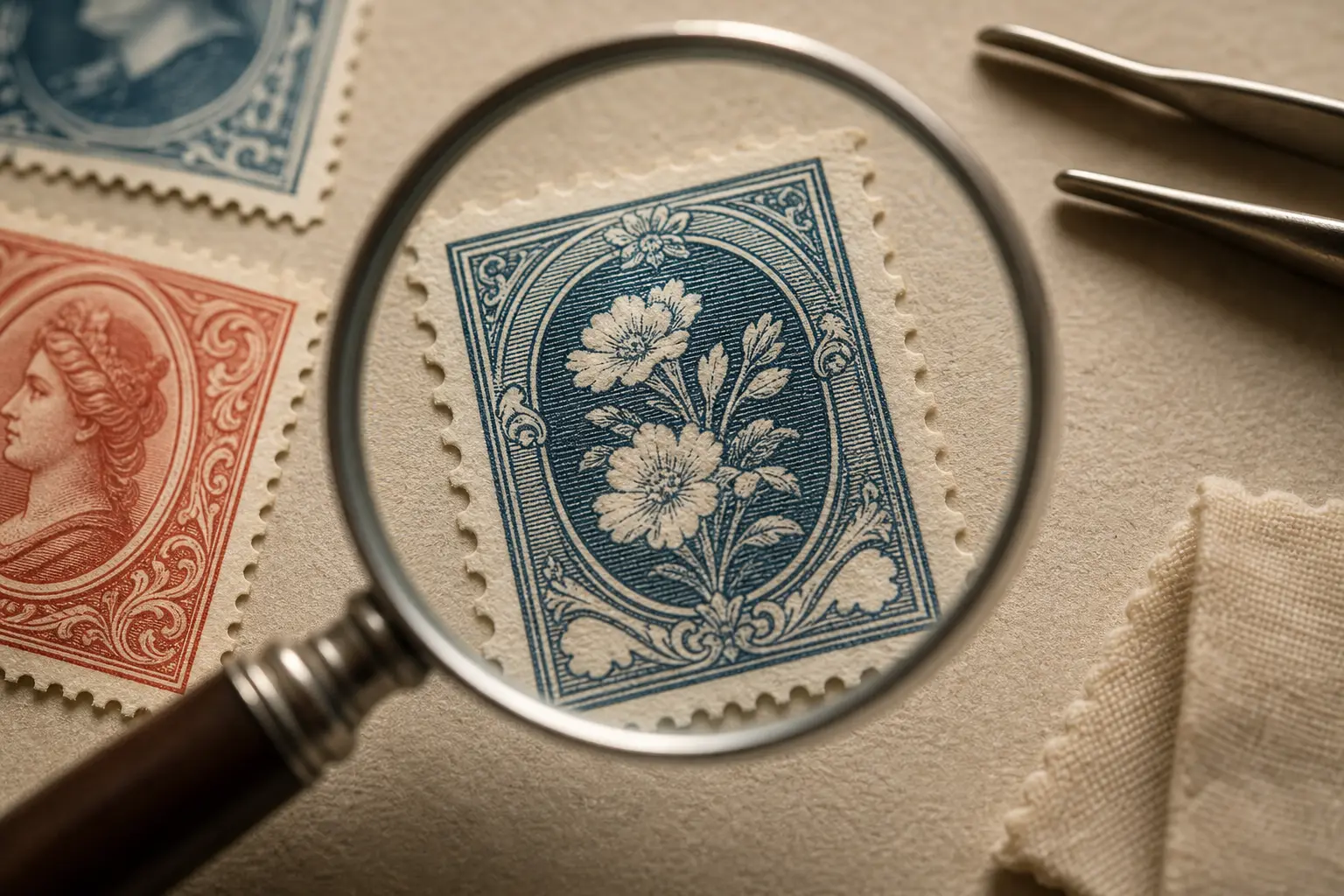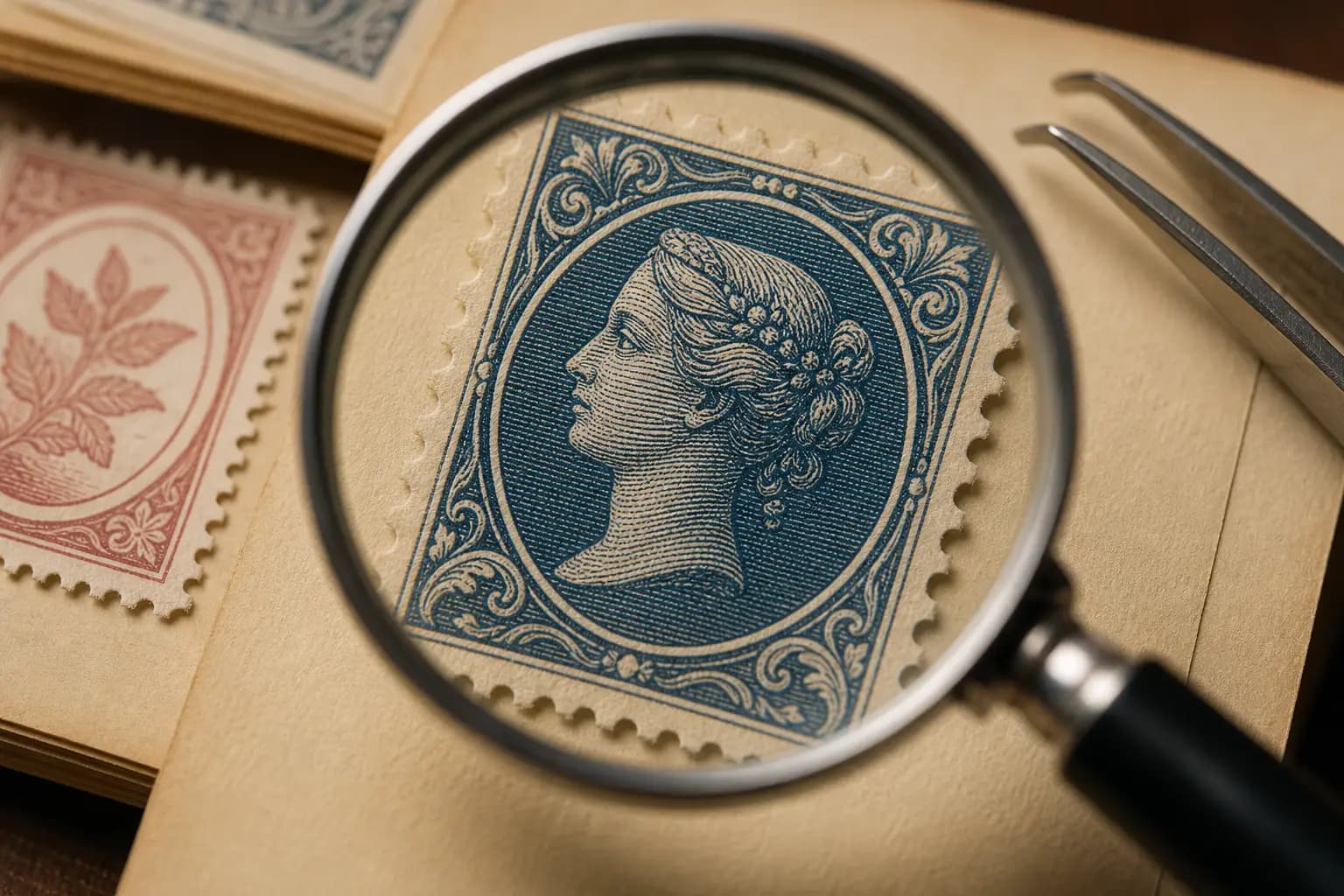
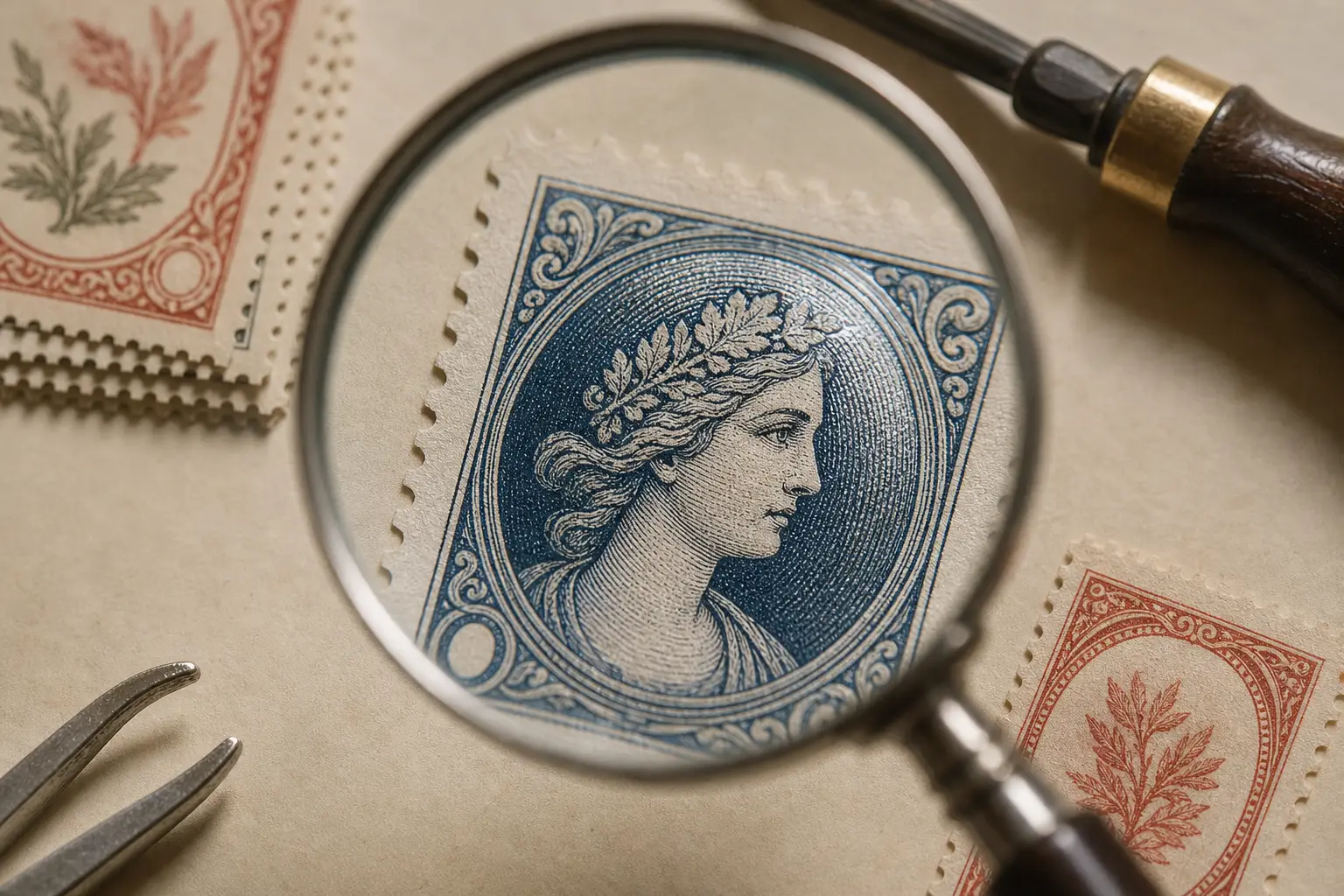
Short answer: edges and sheen can suggest, but not prove
Stamp edges and ink sheen can point you toward a printing family, but they do not identify it by themselves. The safest collector answer is to treat them as part of a larger checklist, not as a standalone verdict. A crisp edge, a slight surface gloss, or a duller finish may be useful, yet each can appear for more than one reason.
The American Philatelic Society identifies four major families used for postage stamps: line-engraved intaglio, gravure, letterpress, and lithography. More than one process may appear on a modern stamp, so a single visual cue can be misleading. If you want to make a record in StampSnap or your own album notes, record what you see rather than naming a process too early.
Why line-engraved intaglio looks different from gravure
Line-engraved intaglio is a recess process in which ink transfers from deliberately incised lines. The design is normally built from lines, hatching, cross-hatching, and stippling. Under magnification and oblique light, the surface may show raised ink, and pressure may leave debossing on the reverse. These are supporting features, not a single decisive test.
Gravure is also a recess process, but it forms tone from screened cells rather than from the line structure typical of line-engraved intaglio. Because screened or raised effects can appear in other processes too, a collector should not decide from one visual impression alone. The most reliable practice is to compare several clues and, when possible, consult production records.
What offset lithography can and cannot tell you
Offset lithography is a planographic process: the image is formed on a smooth surface rather than cut or etched into a plate. Oil-based ink adheres to the image area, and a rubber blanket transfers, or offsets, that image to paper. Modern stamp lithography commonly combines separate process-color layers made from very fine dots.
That dot pattern is useful, but it must be read carefully. The Smithsonian National Postal Museum notes that modern lithography can be sharp, so soft or blurred edges are not a dependable identifying rule. It also warns that a dot pattern must be interpreted with other evidence, because gravure and other processes can also show screened structures under magnification.
Use light and magnification, not risky handling
For safe examination, use non-contact magnification and diffuse or oblique light. Those tools help you see line structure, screen patterns, and possible surface relief without stressing the stamp. Avoid assumptions based on speed or a quick glance, especially on modern material where more than one process may be present.
You can look for the cumulative picture: line structure, type of shading, surface reflection, and any evidence of debossing on the back. None of these should be treated as a single yes-or-no test. If the stamp is valuable or uncertain, keep handling minimal and do not try to force a conclusion from a tiny area that seems to fit one theory.
How to read edges without over-reading them
Collectors often focus on whether stamp edges look sharp, soft, clean, or slightly uneven. Those impressions can be useful, but they are not unique to one printing family. A sharp edge may occur in lithography, and a screened or raised look may appear in gravure or other methods. The important point is to avoid turning one feature into a rule.
A better method is to ask what supports the edge appearance. Is the border line made up of distinct lines, or does it break into dots? Does oblique light reveal any raised ink, or does the surface remain visually flat? The answer may move you closer to line-engraved intaglio, gravure, letterpress, or lithography, but only if several clues agree.
A safe collector workflow for uncertain stamps
Start by identifying the stamp as cleanly and conservatively as you can. Note the design, any obvious surface qualities, and whether the stamp seems to show line work, screened tone, or process-color dots. If you are building a collection record, write down your observations before you label the printing family. This keeps your notes useful even if a later review changes your view.
Next, compare the stamp with reliable production information when available. The American Philatelic Society says collectors should combine observations and consult production records, because visual clues alone can mislead. That is especially important for modern stamps where more than one process may appear on the same item.
When the safest answer is still uncertain
Sometimes the honest answer is that the printing family is not yet clear. That is not a failure of collecting; it is part of careful philately. If the evidence is mixed, keep your note open and describe what you observed instead of forcing a final label. Over time, that record can help you compare similar stamps more accurately.
If you use StampSnap to organise material, treat it as a way to store a likely identification and your supporting notes, not as a final authority. The goal is to create a stable, reviewable record. That approach is safer for the stamp and more useful for learning than making a quick call from one feature such as sheen, edge sharpness, or dotting.
Frequently asked questions
Can I identify a stamp’s printing method from the edges alone?
No. Edge appearance is only one clue. It should be combined with line structure, screen patterns, surface relief, and production information.
Does a shiny surface mean a stamp was printed by lithography?
Not necessarily. Surface sheen can vary for many reasons, so it is not a dependable standalone test for lithography.
What is the key difference between line-engraved intaglio and gravure?
Line-engraved intaglio is built from incised lines, while gravure forms tone from screened cells. Both are recess processes, so they must be distinguished by several clues together.
What is the safest way to study printing clues?
Use non-contact magnification and diffuse or oblique light, and avoid handling that stresses the stamp. Then compare the evidence with production records when possible.
Can more than one printing process appear on one modern stamp?
Yes. The American Philatelic Society notes that more than one process may appear on a modern stamp, so collectors should expect mixed evidence.