The short answer: keep dry stamps flat, separate, and protected
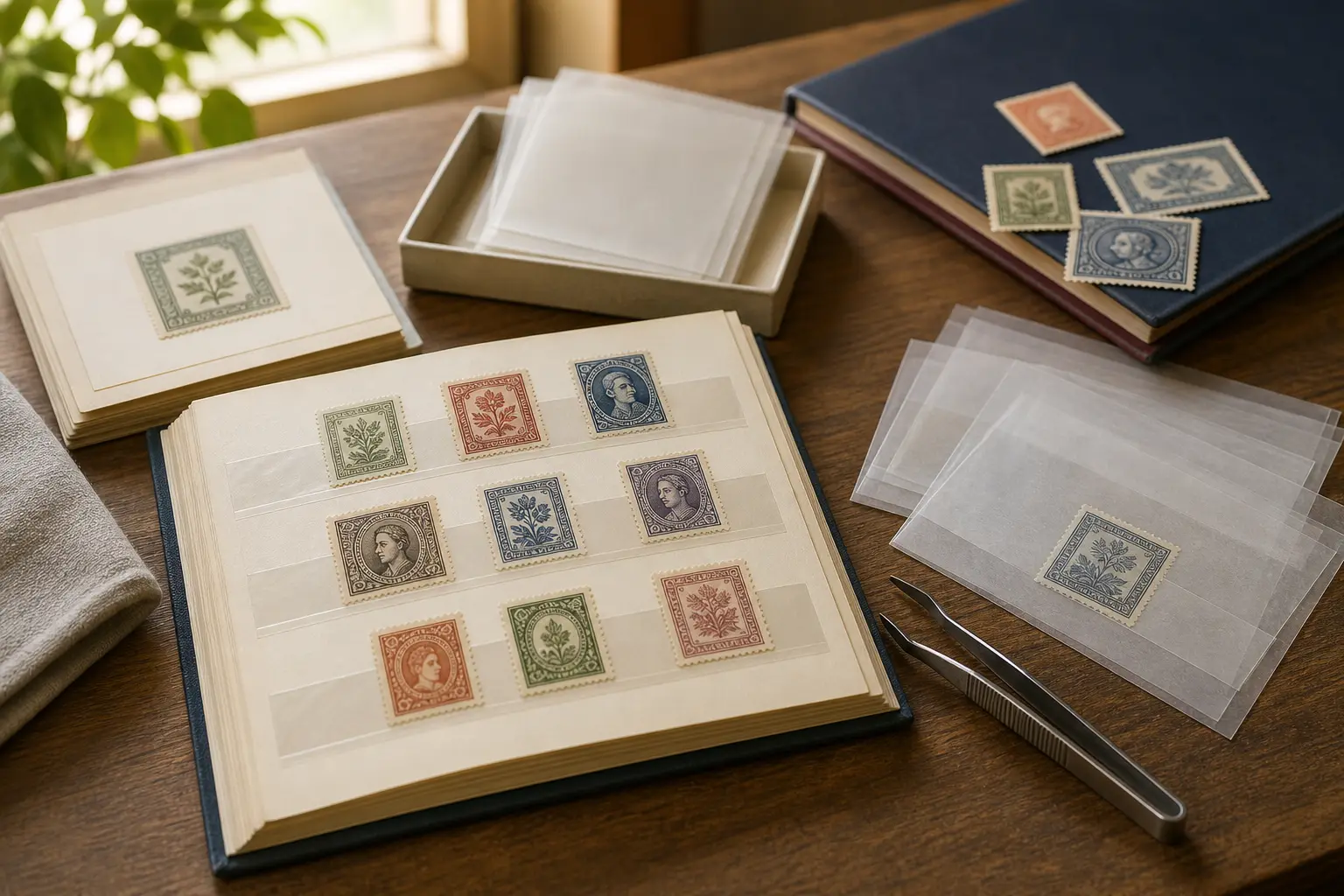
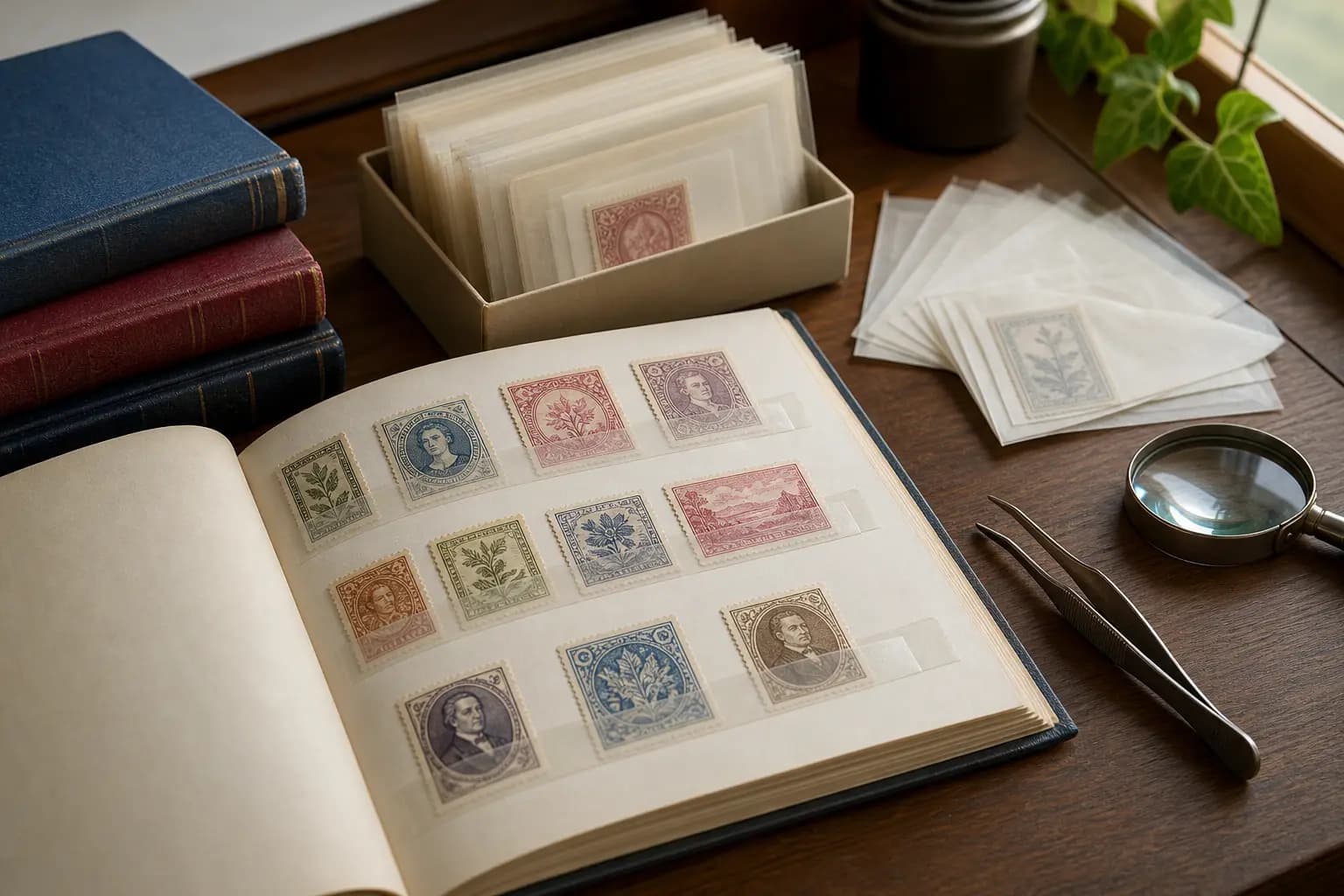
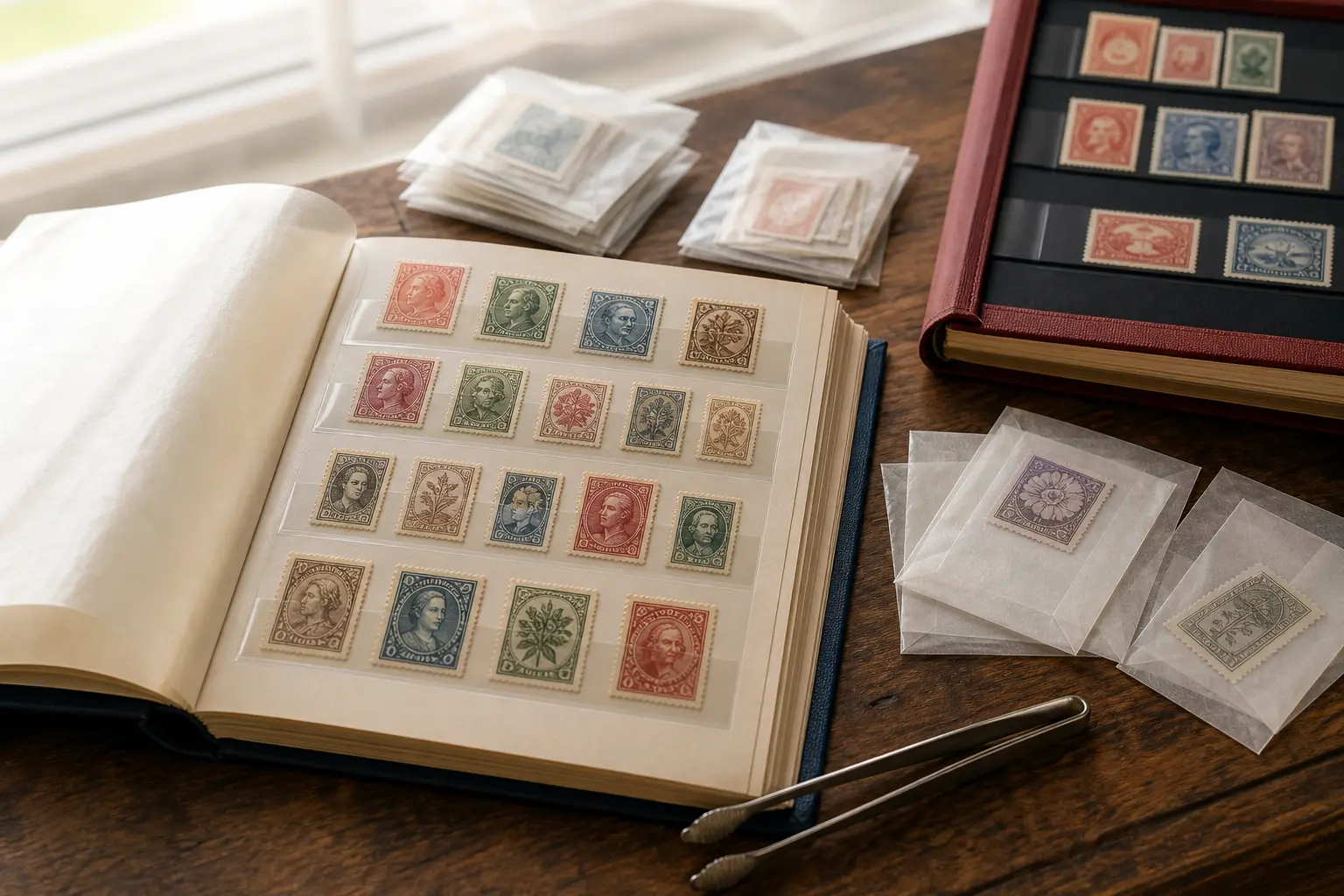
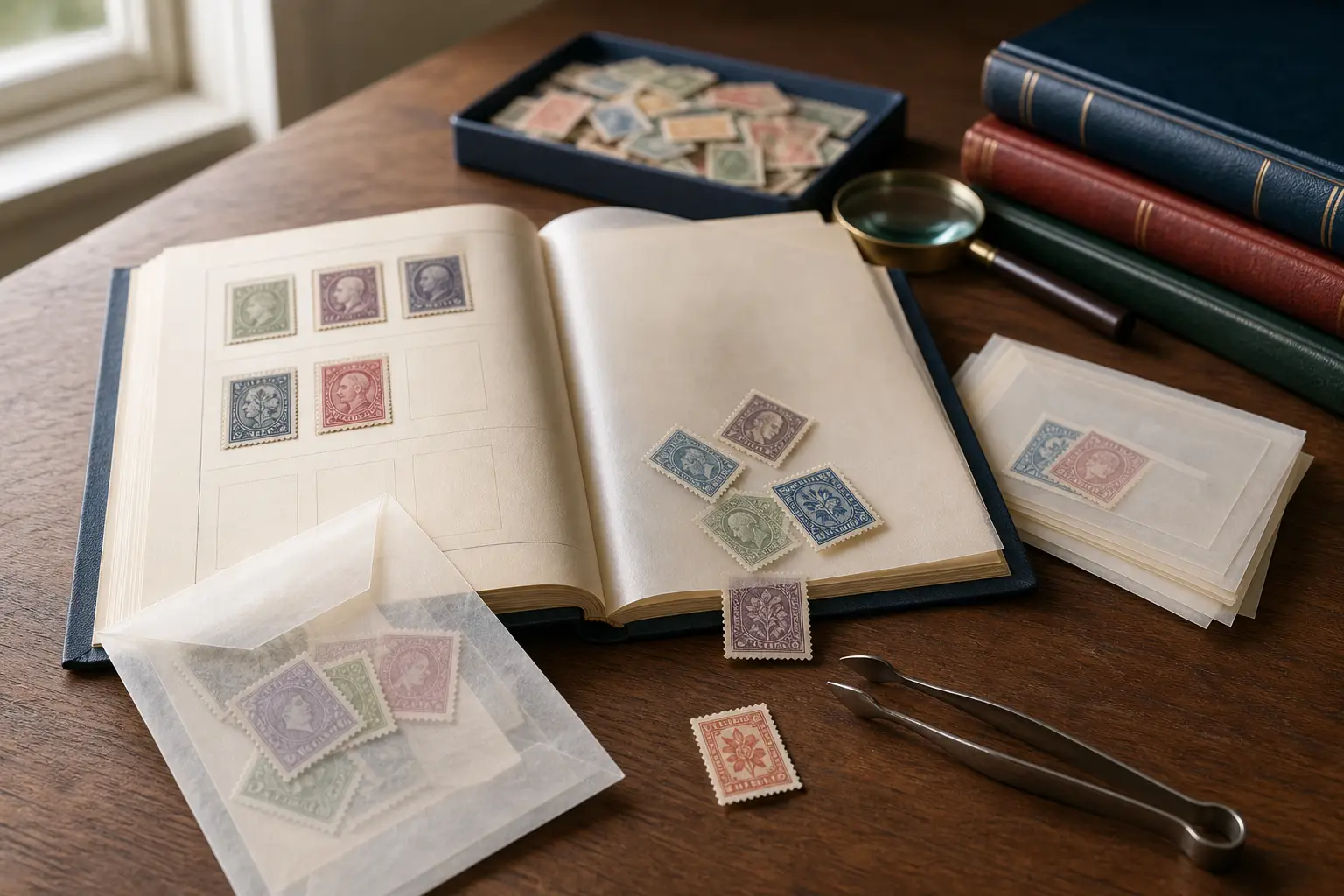
The safest way to store stamps before mounting is to keep them dry, flat, and separated in a protective holder such as a glassine envelope, stock book, or album. The American Philatelic Society says stamps can be stored in albums to help protect them, and that stock books are another option when you want to organise them before final placement.
If a stamp is still wet, softened, or newly soaked, do not treat it the same way as a dry stamp. Wait until it is fully dry before using tongs or placing it into longer-term storage. Wet material is more easily damaged, so the best first step is simply to let it dry safely before you sort or mount it.
Choose storage that protects the stamps, not one that traps damage
A stock book is useful when you want to sort stamps without committing them to a permanent page. According to the American Philatelic Society, stock books have plastic or paper pockets on each page and let you organise stamps however you wish. That makes them practical for temporary storage while you compare duplicates, group by country, or build a thematic run.
A stamp album is a better choice when you want a more finished arrangement. Some albums include printed spaces or categories, while others are simpler and more flexible. The same source also notes that a photo album can be used only if the pages are acid-free and not sticky. Sticky pages are a poor choice because they can damage stamps over time.
How to handle dry stamps without stressing the paper or gum
Handle loose, dry stamps as little as possible. The American Philatelic Society recommends stamp tongs for dry stamps because oils from skin can damage them, even if hands have been washed. Tongs are designed for stamps and have a smooth gripping surface, unlike ordinary tweezers that may be too sharp or uneven for delicate material.
Use tongs only on dry stamps, and keep the touch light. If a stamp has just been soaked, left damp, or is still drying, do not pick it up with tongs. Place it on a clean surface and wait until it is fully dry before moving it again. That simple delay reduces tearing, creasing, and surface disturbance.
Avoid the storage mistakes that cause slow, hidden damage
Do not use tape or glue to hold stamps in place. The American Philatelic Society warns that these materials can lower value and may damage the stamp if you later try to remove it. If you want a removable way to attach a stamp to a page, use a hinge or a mount rather than a sticky household product.
Also avoid putting damp stamps directly into closed storage, because trapped moisture can lead to curling or sticking. If stamps are newly soaked, the APS recommends leaving them to dry overnight after careful rinsing. When they are ready, place them between paper towels with light weight if needed to reduce curling, but do not press them aggressively.
Sort first, then decide whether the stamp should be mounted at all
Before mounting, sort your stamps into a system that fits your collection. The American Philatelic Society suggests sorting by country, by topic, or by the service the stamp was meant to provide. It also advises keeping the best example when you have duplicates, and setting aside damaged pieces unless they are unusual or hard to replace.
This is the stage where many collectors decide whether a stamp belongs in a final album page or should stay in temporary storage for a while longer. If you are uncertain about a similar-looking stamp, a magnifying lens and catalogue can help you create a careful identification record. StampSnap can support that kind of record-keeping, but the decision to mount or store should still be based on your own inspection and reference material.
Hinges and mounts: use the removable option that fits your collection
When you are ready to place a dry stamp into an album, use either a hinge or a mount. The APS describes hinges as small folded pieces with special gum on one side, and mounts as clear plastic sleeves. Both are designed to be removable, which makes them far safer than tape or glue for long-term collecting.
The right choice depends on your collecting goals and the condition of the stamp. A mount may be preferable when you want maximum physical support, while a hinge may suit some collecting styles better. Whatever you choose, make sure the stamp is fully dry and that the page itself is suitable, clean, and free of sticky surfaces.
A practical routine for safe pre-album storage
A simple routine helps keep things orderly. First, sort the dry stamps into groups. Next, move them into glassine envelopes or a stock book while you compare, identify, and plan the final layout. After that, mount only the stamps you have decided to keep on the page, using a hinge or mount rather than any permanent adhesive.
This approach keeps handling to a minimum and gives you time to notice small differences before you fix a stamp into place. It is also easier to revise later if you change collecting direction. A careful storage system now prevents rushed decisions and reduces the chance of bent corners, surface marks, or unnecessary loss from overhandling.
When not to rush: special cases and cautious judgement
Some material needs extra restraint. Brightly coloured envelopes can bleed during soaking, so they should be separated before treatment. Self-adhesive stamps, especially many U.S. issues from 2004 or later, may not soak off easily at all. If a stamp is still attached to paper or needs special treatment, stop and research the safest method before trying anything forceful.
The basic rule is simple: dry stamps can be handled carefully with tongs, but wet or softened material should be left alone until it is ready. If you are unsure whether a stamp should be stored, mounted, or left in temporary holding, keep it flat in a protective sleeve and consult a catalogue or trusted reference before taking the next step.
Frequently asked questions
What is the safest place to keep stamps before mounting them?
A glassine envelope, stock book, or suitable album is a safe temporary home for dry stamps before you mount them.
Should I use tongs on a wet stamp?
No. Tongs are recommended for dry stamps only. Wet or damp stamps are easier to damage, so let them dry first.
Can I use tape or glue in a stamp album?
No. Tape and glue can damage stamps and reduce their value. Use hinges or mounts instead.
Do all stamps need to be mounted right away?
No. You can sort and store them temporarily first, then mount them later when you are ready and certain about the arrangement.
What should I do if my stamps are still damp after soaking?
Leave them to dry fully before handling them again or placing them in long-term storage. Damp stamps are more easily damaged.