The safest short answer
Protect loose stamps by keeping them dry, handling them as little as possible, and storing them in protective holders until you are ready to place them in an album or stock book. If a stamp is wet, softened, or has just been soaked, treat it differently from a dry stamp and do not use the same handling routine.
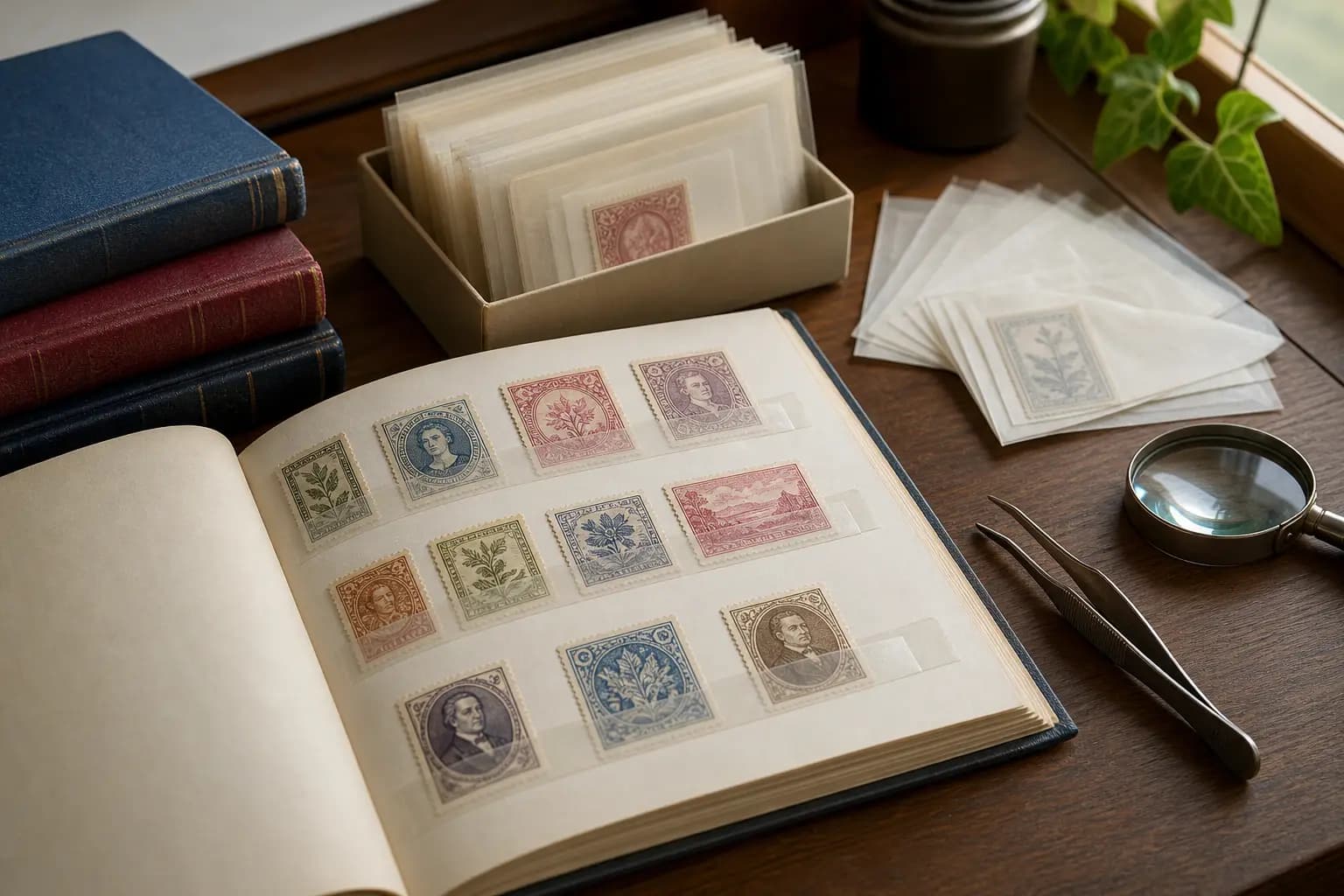
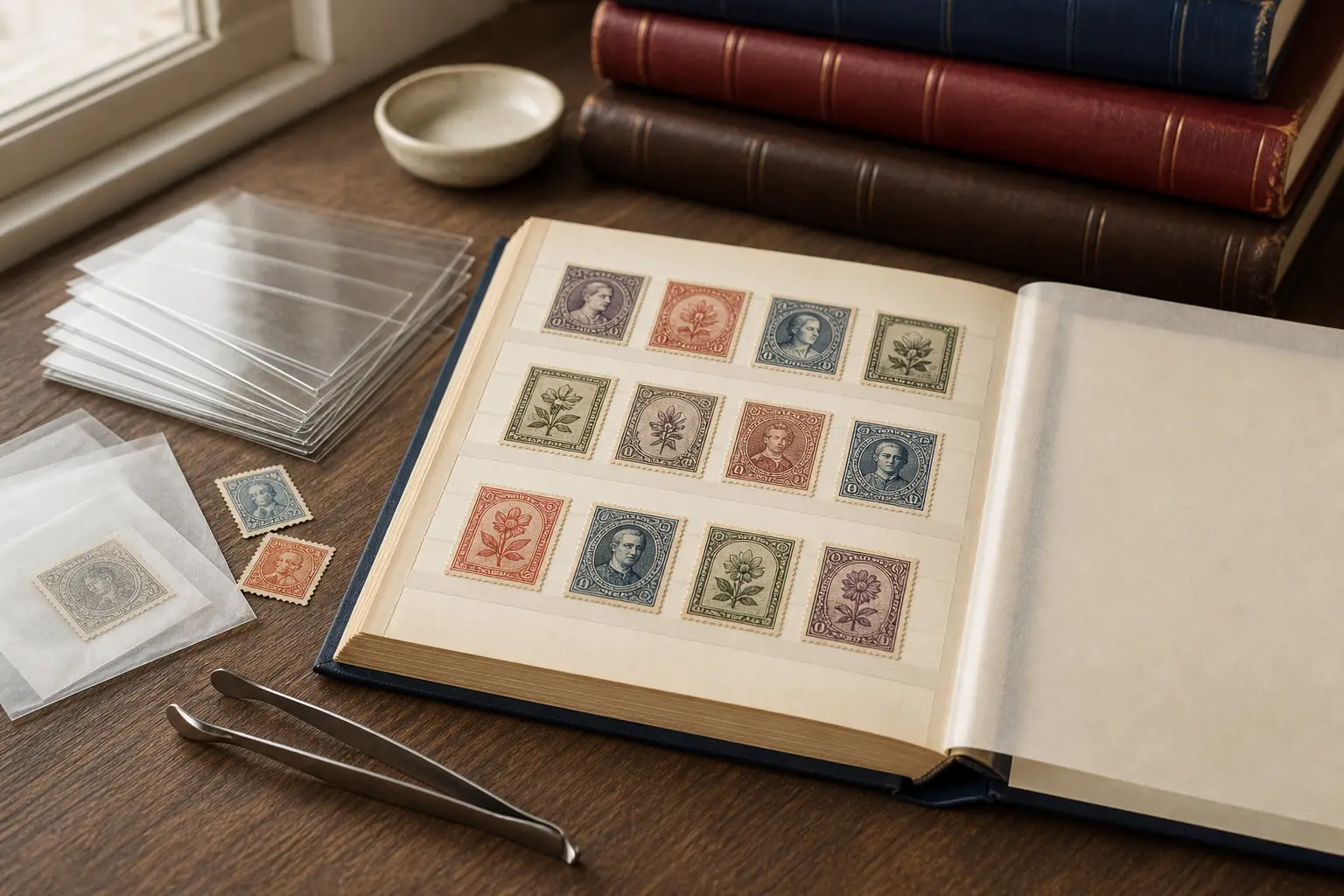
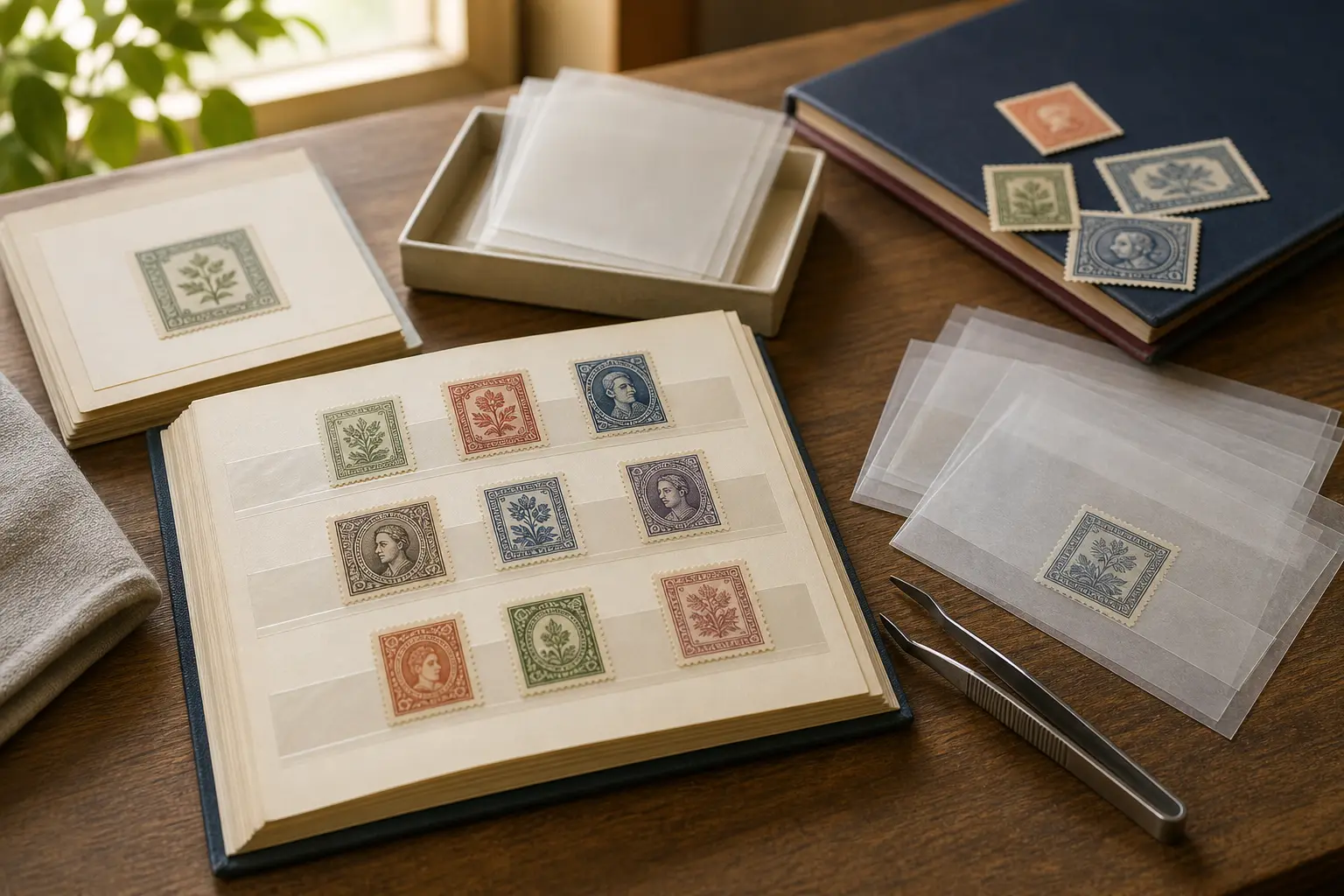
For dry stamps, the safest basic workflow is simple: use stamp tongs, keep the material off humid surfaces, and move the stamps into glassine envelopes, albums, or stock books when you are ready to organise them. If you are unsure about a stamp’s condition, pause and inspect it first rather than forcing it into a storage method that might cause curling, sticking, or tearing.
Why moisture is the main risk
Moisture is risky because it can make stamps curl, stick together, or tear if you try to move them too soon. The American Philatelic Society recommends patience after soaking: a wet stamp is easier to damage than a dry one, and you should not pull it free from the paper before it is ready. That same caution applies when you are deciding where a stamp should go next.
Even after stamps are free of paper, they should be left to dry fully before storage or mounting. The Society notes that stamps can be placed between paper towels with a book on top to reduce curling, then left to dry overnight. A stamp that still feels damp should stay out of albums, stock books, and envelopes that could trap moisture.
How to handle dry stamps safely
Dry stamps should be handled as little as possible. The American Philatelic Society advises using tongs because oil from your skin can damage stamps even when your hands are clean. Tongs are designed with a smooth gripping surface, unlike ordinary tweezers that can dent or scratch the paper if used carelessly.
Use a magnifying glass for inspection, not force. Some stamps look alike until you check small details, and a clear magnifier can help you compare design features without touching the surface repeatedly. A practical habit is to inspect first, then move the stamp once, then store it promptly. StampSnap can help you create a simple identification or collection record, but the physical stamp still needs careful handling.
What not to use
Do not use tape or glue on stamps. The American Philatelic Society states that these materials can decrease value and may damage the stamp if removal is attempted later. Sticky album pages are also a problem, so avoid any storage surface that might bond to the paper.
For album placement, use peelable hinges or mounts instead. Hinges and mounts are made for stamps and allow later removal with less risk than adhesive household materials. If you are not ready to mount a stamp, keep it in a temporary protective holder rather than improvising with office supplies or craft glue.
Where to keep stamps before mounting
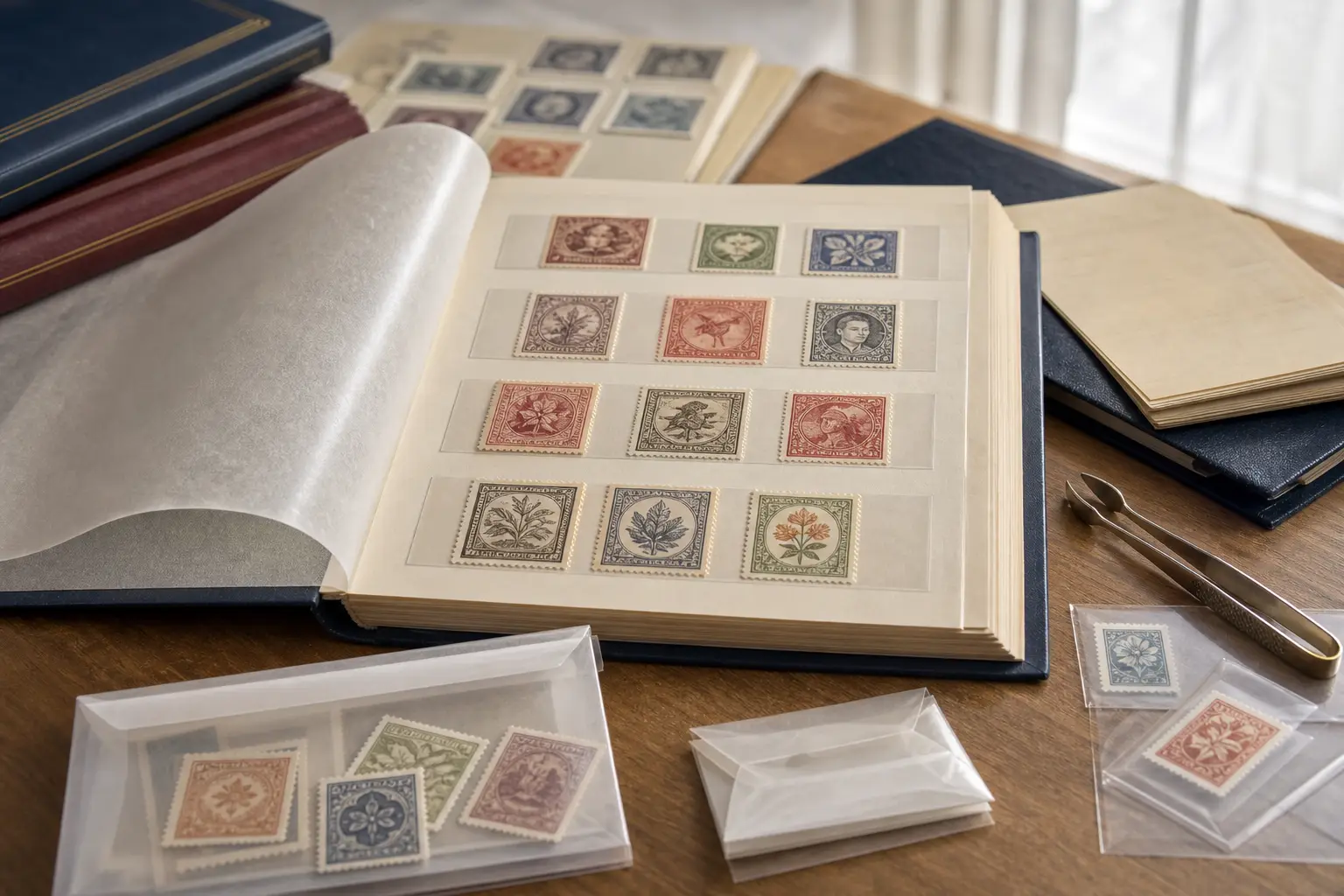
If you are not mounting stamps immediately, store them in glassine envelopes or in a stock book. The American Philatelic Society recommends albums for protection and notes that stock books provide pockets on each page, while albums can be organised by country, topic, or another collecting plan. That makes them useful as a safe temporary home while you sort.
A useful approach is to sort first and mount later. The Society suggests sorting by country, topic, or postal service type, and choosing the best copy if you have duplicates. This reduces repeated handling because you decide what to keep before you start attaching stamps to pages. A clear order also helps you see whether any item needs extra drying time or more careful storage.
Special care for soaked or self-adhesive stamps
Wet material needs extra caution. If you have soaked stamps, let them dry fully before placing them in envelopes, albums, or stock books. The APS says many U.S. self-adhesives issued in 2004 or later will not soak easily, if at all, and its FAQ notes that most current U.S. self-adhesives use an oil-based backing rather than a water-based one.
That means you should not assume water alone will solve every removal problem. Some self-adhesives need a different approach, and the exact method depends on the stamp and its backing. If you are uncertain, stop before experimenting, because forcing the issue can damage the stamp, the backing, or the envelope image you may have wanted to keep.
A simple methodical routine you can reuse
Start by separating dry stamps from wet or softened material. Then inspect the dry items with tongs and a magnifier, sort them by country or topic, and place them in glassine envelopes, an album, or a stock book when they are ready. If any stamp is still damp, return it to a drying setup instead of moving it into long-term storage too early.
This routine works because it reduces handling and avoids rushed decisions. It also leaves room for later identification, especially when small details matter and two stamps appear similar. Over time, you will build a safer filing habit: dry first, inspect second, sort third, and mount only when the stamp is fully ready.
Frequently asked questions
Should I store stamps while they are still damp?
No. Let them dry fully first. Damp stamps can curl, stick, or tear, and they are easier to damage than dry stamps.
What is the safest way to handle a dry stamp?
Use stamp tongs and handle it as little as possible. Clean hands alone are not enough, because skin oils can still harm the stamp.
Can I use tape or glue to hold a stamp in place?
No. Tape and glue can damage stamps and reduce value. Use peelable hinges or mounts made for stamps instead.
Where should I keep stamps before I mount them?
Use glassine envelopes, an album, or a stock book. These give temporary protection while you sort and decide how to arrange the stamps.