The safest answer: keep unmounted stamps dry, separate, and unforced
The safest way to store stamps before mounting is to keep them dry, flat, and separated until you are ready to place them in an album or stock book. If a stamp has not been mounted yet, the goal is not to improve it with quick fixes, but to prevent bending, curling, sticking, and skin damage while you decide how it should be organized.
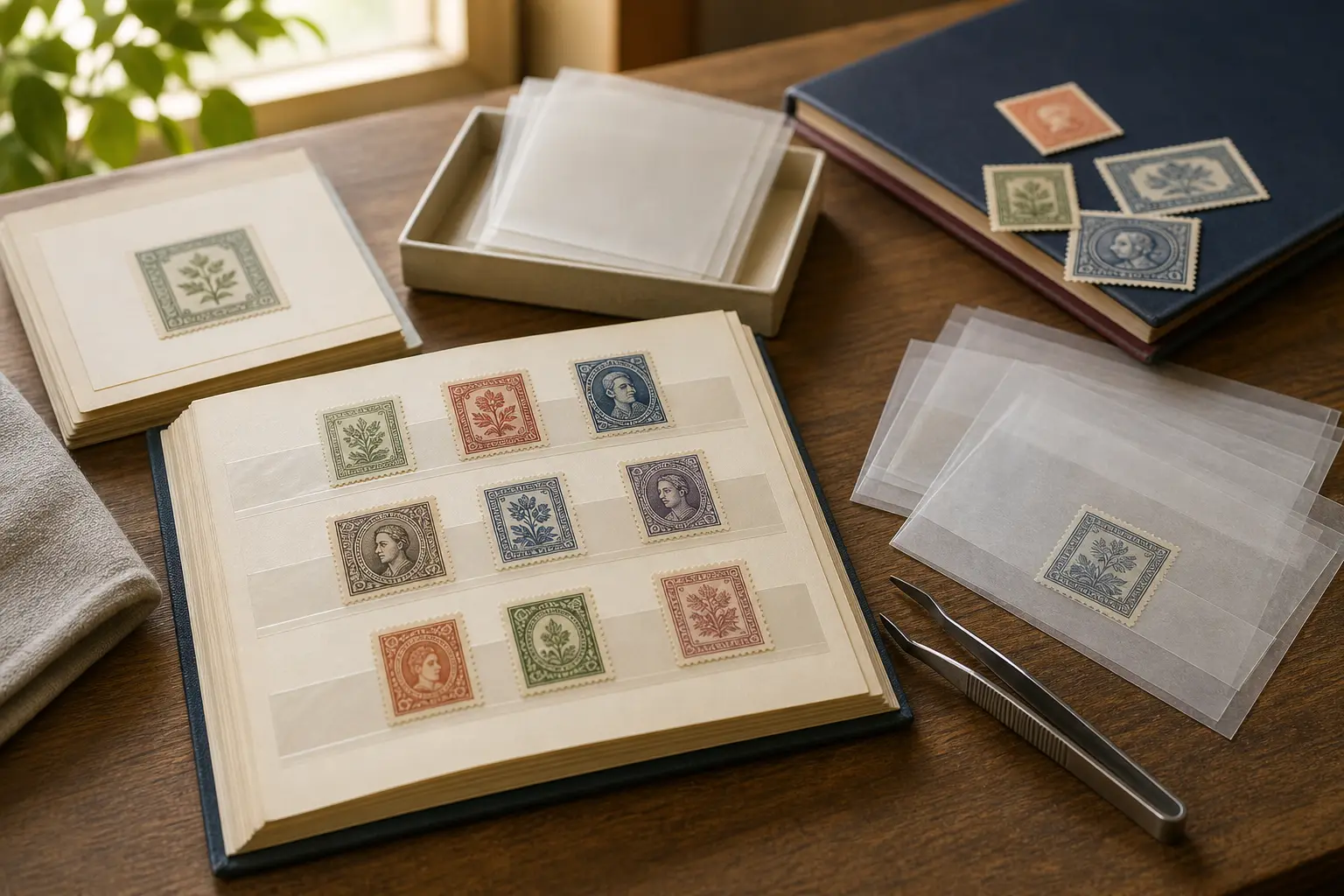
A practical holding system can be very simple. The source guidance says stamps may be stored in albums, stock books, or glassine envelopes until they are ready to be mounted. It also notes that no tools are required to be a collector, although some tools make organization and handling easier. For a collector who is still sorting, the main rule is to avoid unnecessary contact and avoid any adhesive that could harm the stamp or make later removal risky.
Handle dry stamps differently from damp or wet stamps
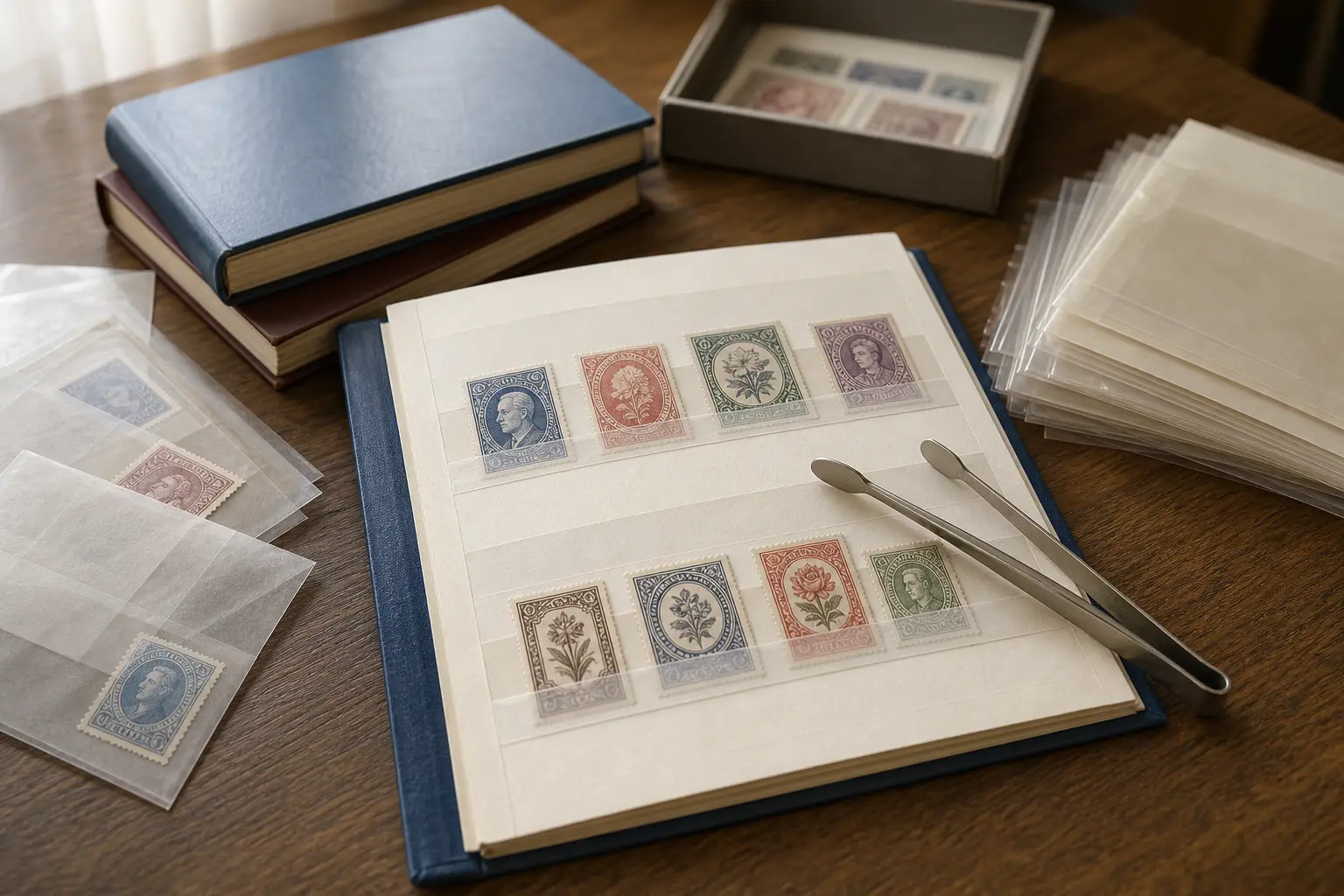
Dry stamps can be handled with stamp tongs, and the American Philatelic Society specifically recommends tongs for dry stamps because oil from skin can damage them. That advice matters most when the stamp is loose and dry enough to move safely. Tongs are described as having a smooth gripping surface designed for stamps, which helps reduce finger contact and edge wear.
Wet or softened stamps need a more conservative approach. The sourcing here is clear that a wet stamp is more easily damaged than a dry one, and you should not try to pull a stamp free before it is ready. If you are drying recently soaked material, place the stamps between paper towels and put a book on top to help prevent curling, then leave them to dry overnight. Because the category here is preservation, the safest advice is to wait until the stamp is fully dry before using tongs or any mounting method that requires firm handling.
Choose a temporary storage method that protects the stamp, not the backing
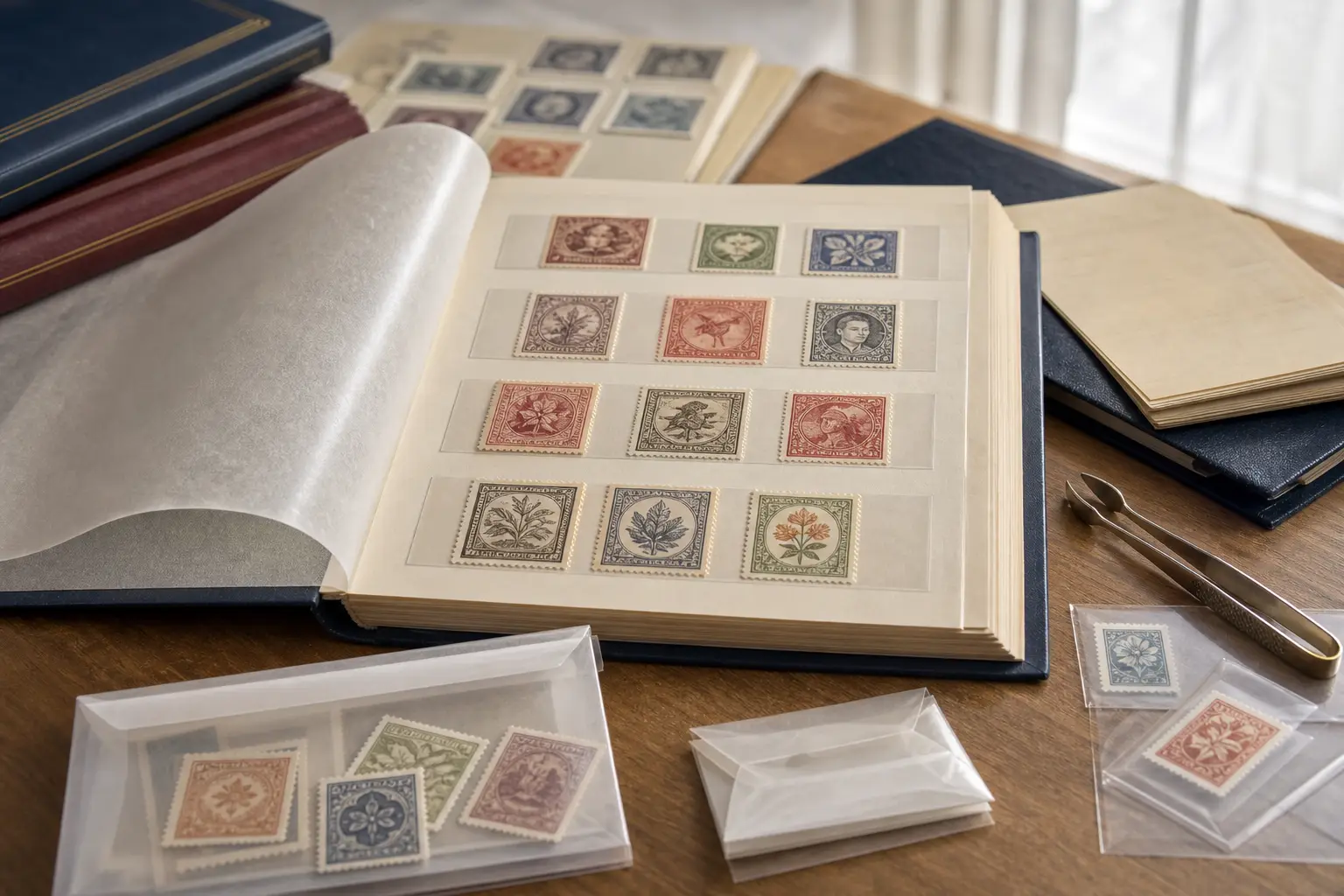
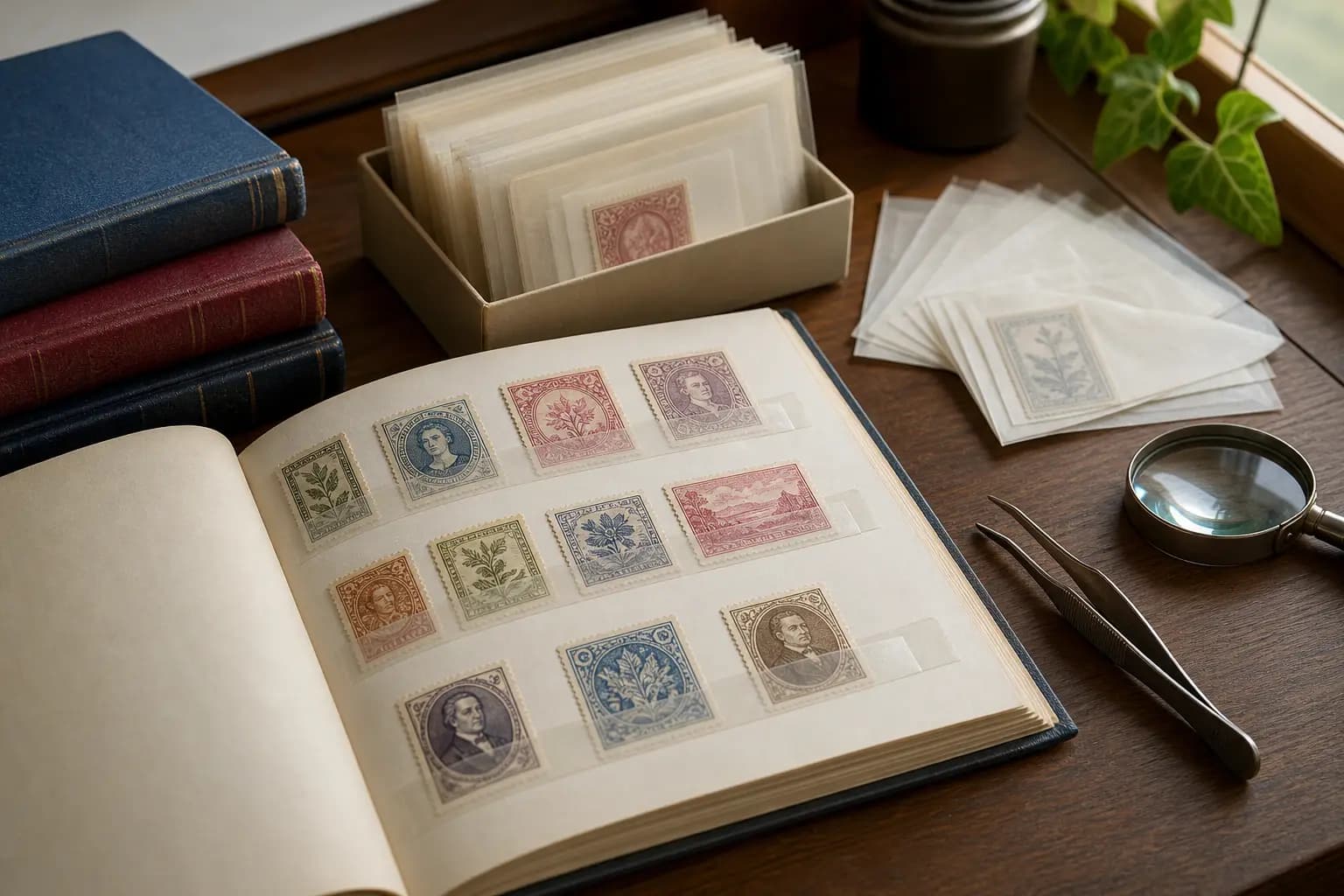
For short-term storage before mounting, glassine envelopes, stock books, and proper albums are all acceptable according to the supplied sources. Glassine gives you a temporary holding space, while a stock book offers pockets for flexible sorting, and an album helps protect stamps once you are ready to arrange them in a more permanent order. The important point is that these are storage tools, not repair tools.
If you are selecting an album, avoid sticky pages. The source material explicitly warns not to use a photo album with sticky pages because they can damage stamps. It also notes that albums may be purchased, made at home, or improvised with acid-free paper, but the page surface must be safe. If you want to create a likely identification or collection record before mounting, StampSnap can help you keep notes and images together, but it should be treated as a record-keeping aid rather than a substitute for physical care.
Use hinges or mounts only when the stamp is ready to be placed
When a stamp is ready for an album page, use either a hinge or a mount. The source guidance says both are meant to allow removal later without the damage caused by tape or glue. That is the central preservation principle: do not use household adhesives, because they can reduce value and may tear the stamp when removal is attempted.
Hinges are small folded pieces with special gum on one side, and mounts are clear plastic sleeves. The APS explains that a hinge is lightly moistened on the short end and attached to the back of the stamp, then to the page, with the fold positioned near the top. A mount is used as a sleeve. For preservation, the exact choice is less important than the discipline of using materials made for stamps and never using sticky substitutes.
Sort first, then store, so you do not keep reopening the same stamp
A common storage mistake is to keep rehandling the same stamps because they are not yet sorted. The APS recommends sorting before mounting, and says collectors may sort by country, by topic, or by service such as airmail, special delivery, postage due, parcel post, or revenue. Sorting also helps you decide which duplicate copy is best to keep for the album and which duplicates can be saved for trading.
This matters for preservation because every extra move adds risk. If you already know the order you want, you can place each dry stamp once into the right temporary holder and avoid repeated handling. A magnifying glass and catalog can help with identification before mounting, but use them on the table, not as reasons to keep shuffling the stamps around. If a stamp is fragile, damaged, or still damp, leave it alone until it is fully stable.
A conservative workflow for safe pre-mount storage
A safe workflow is straightforward. First, separate wet or recently soaked stamps from dry stamps. Second, let damp material finish drying flat and undisturbed. Third, sort the dry stamps by the system you plan to use. Fourth, place them in glassine, a stock book, or another safe temporary holder until you are ready to mount them.
If you are working with self-adhesive issues, be extra cautious. The supplied sources say many current U.S. self-adhesives do not simply soak off because their backing is oil based rather than water based, and older guidance notes that most U.S. self-adhesives from 2004 or later will not soak easily, if at all. That does not change storage advice, but it does mean you should not assume a stamp can be separated in the same way as a conventional issue.
What not to do before mounting
Do not use tape or glue, even as a temporary fix. Do not force a stamp flat if it is still damp. Do not use tongs on a wet stamp, and do not pinch or grip the corners of softened material. Do not choose sticky album pages, because they can damage stamps on contact and make later removal risky.
Also avoid turning pre-mount storage into a cleaning or restoration step. The sources here support careful soaking, drying, sorting, and mounting, not home repair. If a stamp is badly damaged, the APS notes that collectors may remove damaged duplicates from a working set unless they are valuable or hard to replace. That is a collecting decision, not a preservation shortcut. The safer rule is to stabilize first, then decide whether the item belongs in the album, a stock book, or a separate holding area.
Frequently asked questions
Should I use tongs on a stamp that is still wet?
No. The supplied guidance says wet stamps are more easily damaged than dry ones, and tongs are recommended for dry stamps only.
What is the best temporary storage for stamps before mounting?
Glassine envelopes, stock books, and safe album pages are all acceptable temporary storage options in the supplied sources, as long as the pages are not sticky.
Can I use tape or glue if I just need the stamp to stay in place for now?
No. The sources specifically warn against tape and glue because they can damage the stamp and make later removal harmful.
How long should I wait before mounting a stamp that was soaked?
Wait until it is fully dry and flat. The sources advise leaving soaked stamps to dry overnight and not trying to pull or handle them before they are ready.
Do self-adhesive stamps need different storage before mounting?
They can be stored the same way while dry, but the supplied sources note that many modern self-adhesives do not soak off easily because of their oil-based backing.