The safest answer: store stamps dry, flat, and without adhesive damage
The safest way to store stamps is to keep them dry, handle them as little as possible, and place them in an album or stock book with proper mounts or hinges. For loose, dry stamps, stamp tongs are the preferred tool because skin oils can damage stamps even when your hands look clean. If a stamp is still damp or softened, do not try to mount it yet; let it dry first so it is less easily damaged.
A good storage plan starts with avoiding the most common causes of harm: tape, glue, sticky album pages, rough handling, and forcing stamps off paper before they are ready. If you are building a collection record in StampSnap, use it to note what you have and how each item is stored, but do not treat that record as a substitute for physical care.
Handle loose stamps differently from damp or wet stamps
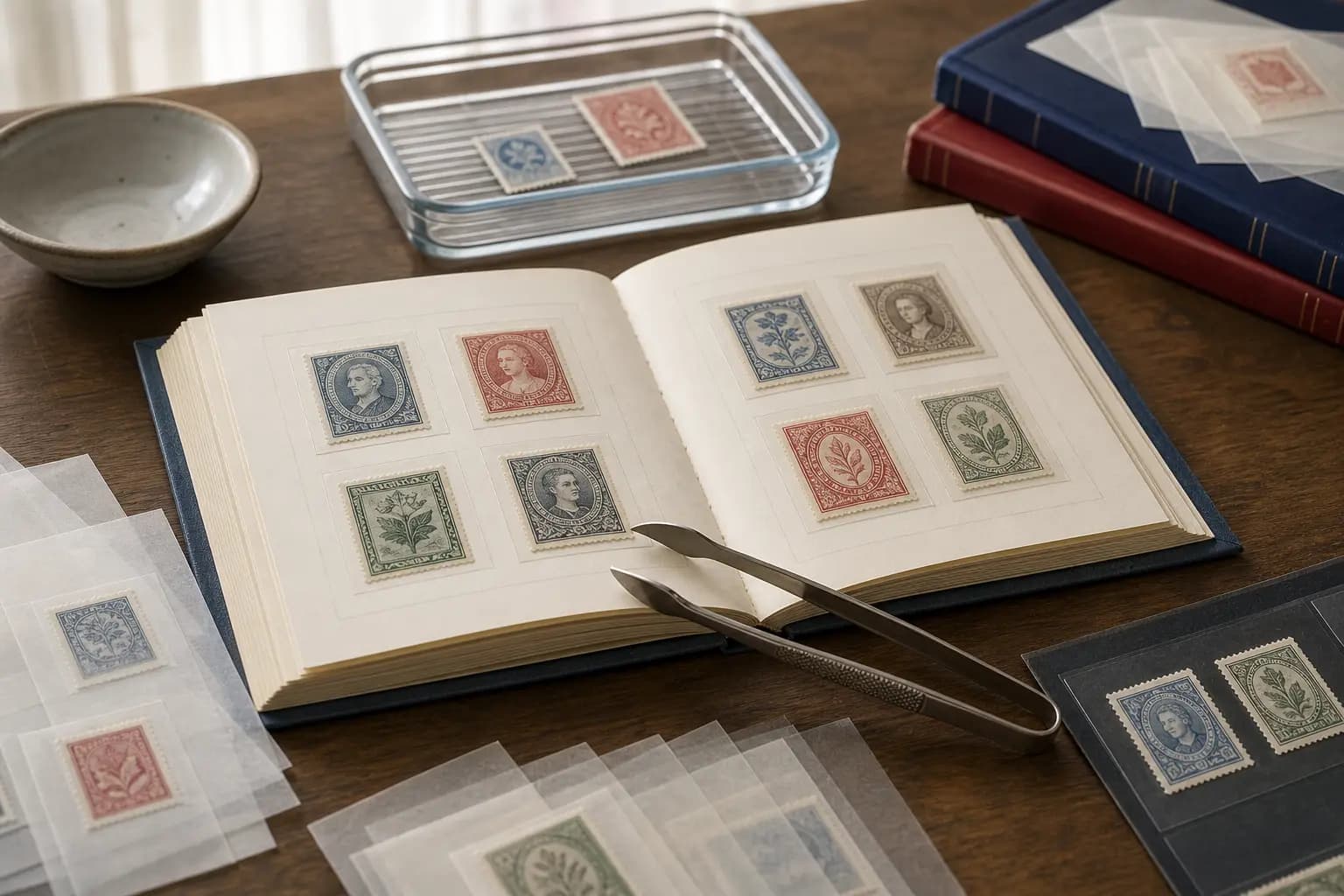
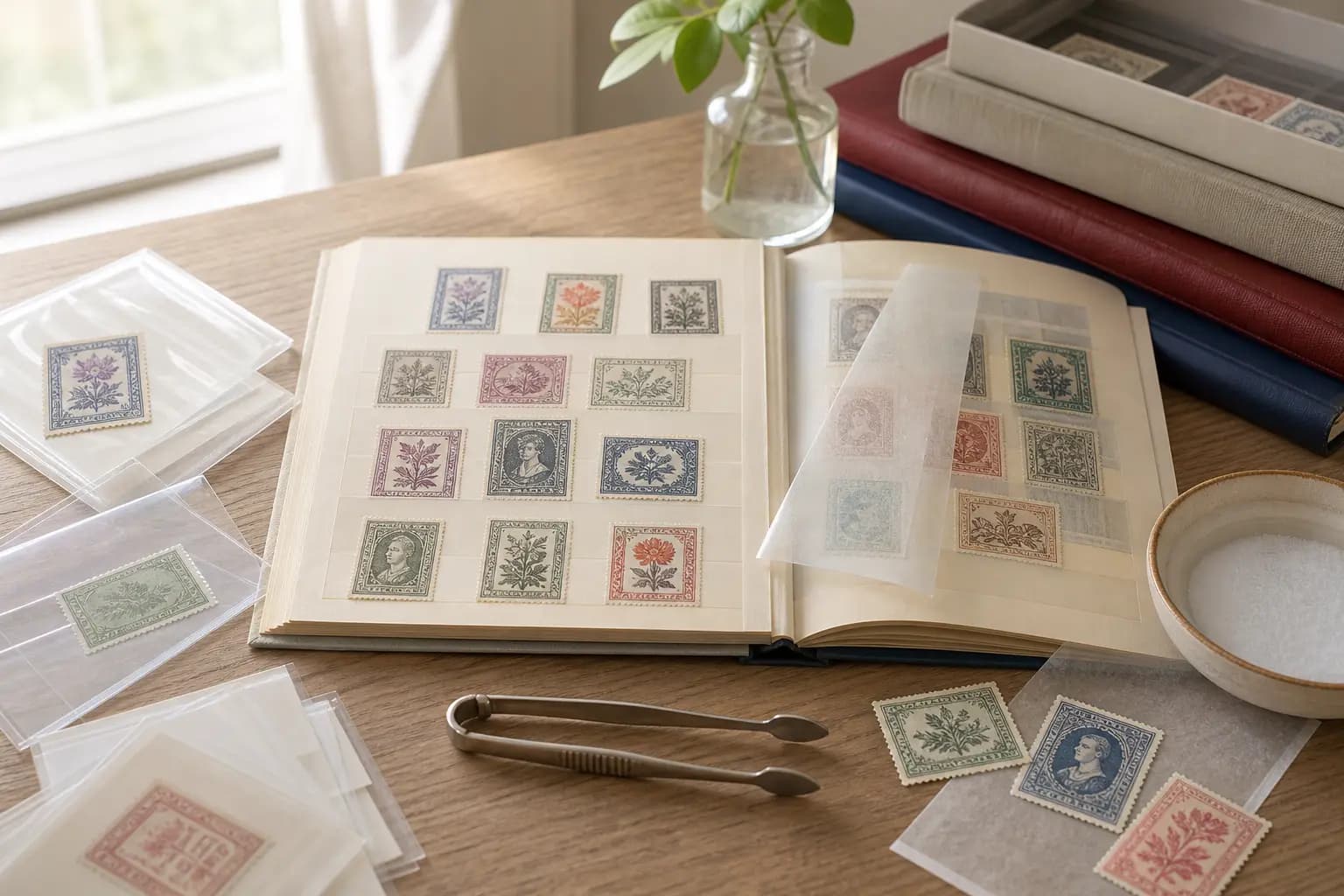
Loose, dry stamps can be handled with tongs, which are shaped like tweezers but have a smooth gripping surface designed for stamps. The American Philatelic Society recommends tongs for dry stamps because oils from skin can damage them. A magnifying glass is also useful for checking details before storage, especially when similar stamps need to be separated into groups.
Wet or softened stamps need a more cautious approach. The APS advises that wet stamps are more easily damaged than dry ones, so they should not be rushed or pulled free before they are ready. After soaking, they should be placed between paper towels and left to dry overnight to reduce curling. This is one reason why storage and drying are linked: if you store a stamp too early, you can create wrinkles, tears, or poor album placement.
If you are soaking stamps, sort the material before storage
Many collectors begin storage by soaking stamps from envelopes, but only if removal is really what they want. If the cover has a special cancel or image that matters, the safer choice may be to keep the entire envelope. When soaking is appropriate, the APS recommends lukewarm water, shallow containers, and care not to soak too many stamps at once. Brightly coloured envelopes should be set aside and soaked separately because the colour may bleed.
Once stamps are dry, sort them before putting them into albums or stock books. The APS suggests sorting by country, topic, or service type such as airmail, special delivery, postage due, parcel post, or revenue. This is also the stage where you can remove badly damaged duplicates from your working stock, while keeping any item that may be hard to replace. If you have more than one copy, choose the best-centred, lightly cancelled example for your main collection and save extras for trading.
Choose albums and stock books that protect rather than harm
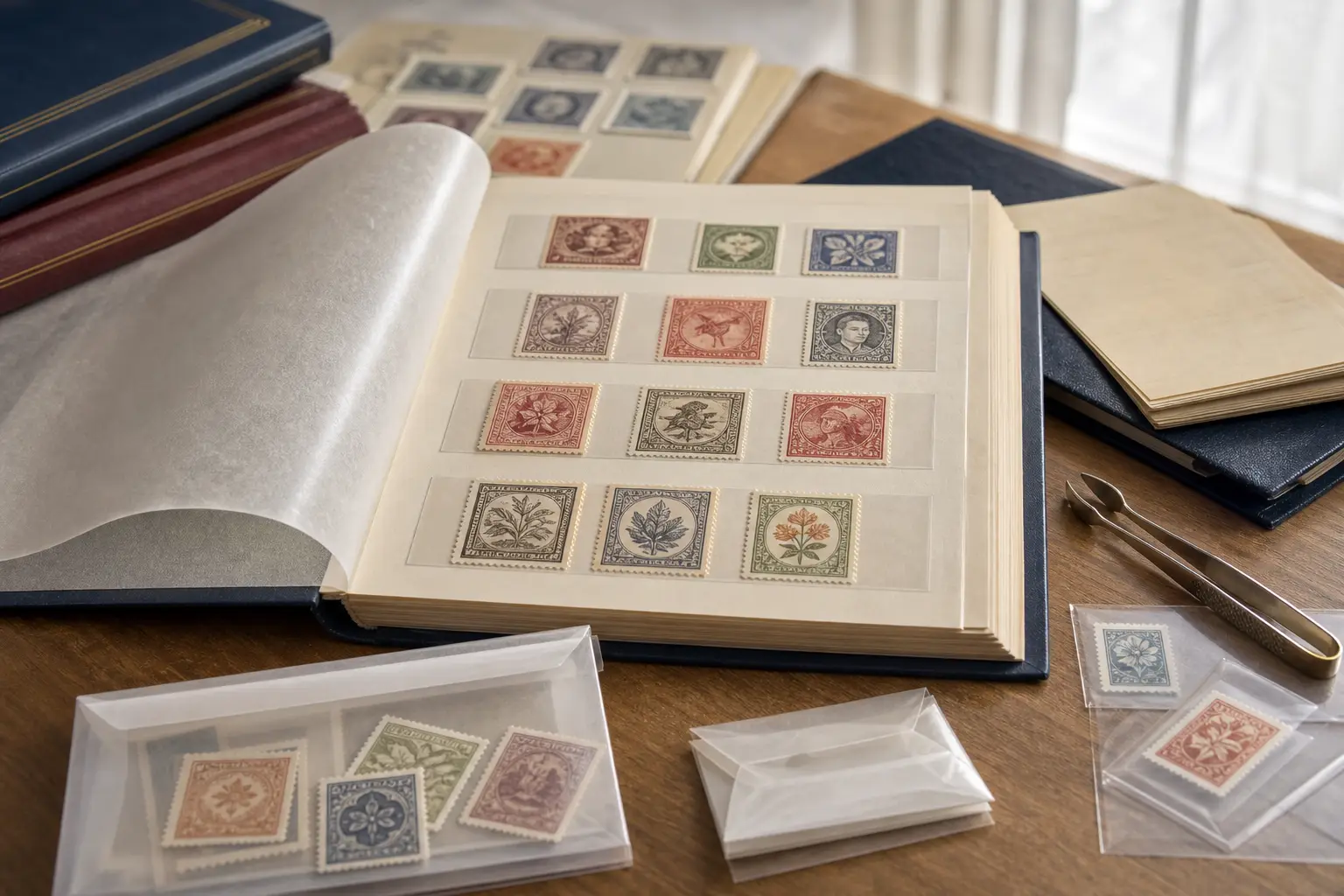
A stamp album is a good storage choice because it helps protect stamps while keeping them organised. The APS notes that collectors may buy albums from dealers, make their own, or even use a photo album with acid-free paper. What you should not use is a photo album with sticky pages, because those pages can damage stamps. Stock books are another practical option when you want flexible organisation without printed page layouts.
Stock books have plastic or paper pockets on each page and do not picture the stamps, which means you can arrange them as you wish. That flexibility is useful when you are still deciding how to structure a collection. If you are unsure how a stamp should fit into a larger grouping, a catalog can help confirm issue date, purpose, printing method, and the used or unused value listing, while your storage system keeps the physical item safe.
Use hinges or mounts, never tape or glue
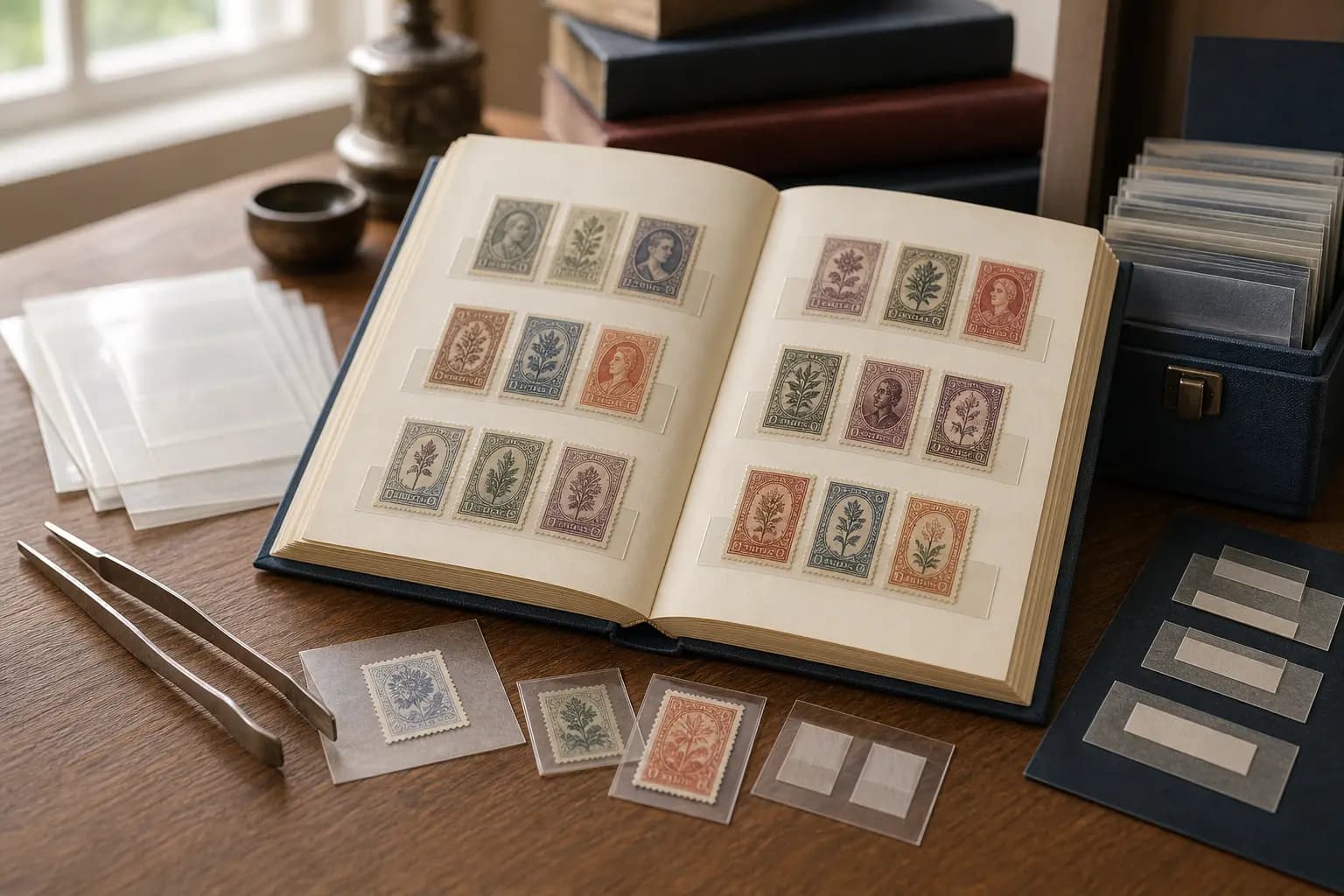
When it is time to place a stamp in an album, use a hinge or a mount. The APS is clear that tape and glue should never be used because they can decrease value and may damage the stamp if removal is ever attempted. Hinges are small, folded pieces of translucent paper or plastic with special gum on one side. Mounts are clear plastic sleeves that hold the stamp without direct adhesive on the stamp itself.
If you use hinges, do so only on dry stamps and follow the guidance carefully. The hinge is moistened lightly on the short end, attached to the back of the stamp, and then attached to the page with the fold positioned near the top. Mounts are often preferred when collectors want a more protective presentation. In either case, the goal is the same: secure storage without creating a future removal problem.
Use basic tools to check condition before you file anything away
Before storage, a magnifying glass helps you look for small differences, damage, or accidental tears that are hard to see with the naked eye. The APS recommends a lens that magnifies clearly without distortion, ideally in the range of five to ten times magnification. A perforation gauge can also help distinguish stamps that look the same but differ in hole spacing along the edge.
These checks matter because a stamp that looks ordinary at first glance may need a different place in your collection. A catalog can then support identification and sorting, while your storage system preserves the stamp itself. In practice, this means checking condition first, recording what you have, and only then deciding whether the item belongs in an album page, a stock book pocket, or with your duplicates.
A practical storage routine for everyday collecting
A simple routine keeps your collection safer than improvising each time. First, separate dry stamps from damp ones. Second, inspect dry stamps with magnification and, if needed, a perforation gauge. Third, sort by your chosen collecting plan, such as country, topic, or service. Fourth, place the stamps in glassine envelopes, a stock book, or an album only when they are fully ready for storage.
This method is conservative because it respects the different condition of each stamp. It also reduces the chance of sticking, curling, or abrasion. If you are building a digital inventory in StampSnap, use it to track what you have stored and where it is stored, but keep the physical stamp care process separate: dry first, handle gently, and use the right storage material.
Frequently asked questions
Should I use tongs on a wet stamp?
No. The APS says wet stamps are more easily damaged than dry ones, so let them dry before handling them with tongs.
Can I store stamps in any photo album?
No. The APS says sticky photo album pages can damage stamps. Use acid-free pages, a proper stamp album, or a stock book instead.
Is tape or glue ever okay for mounting stamps?
No. Tape and glue should never be used because they can damage the stamp and reduce its value.
What should I do with a stamp from a cover that has a special cancel?
Keep the entire envelope if the cover or cancel is important to you. The APS advises deciding first whether you really want to remove the stamp.
How do I decide where a stamp belongs in storage?
Sort it by your collecting plan, such as country, topic, or service type, and use a catalog and magnification to check the item before filing it away.