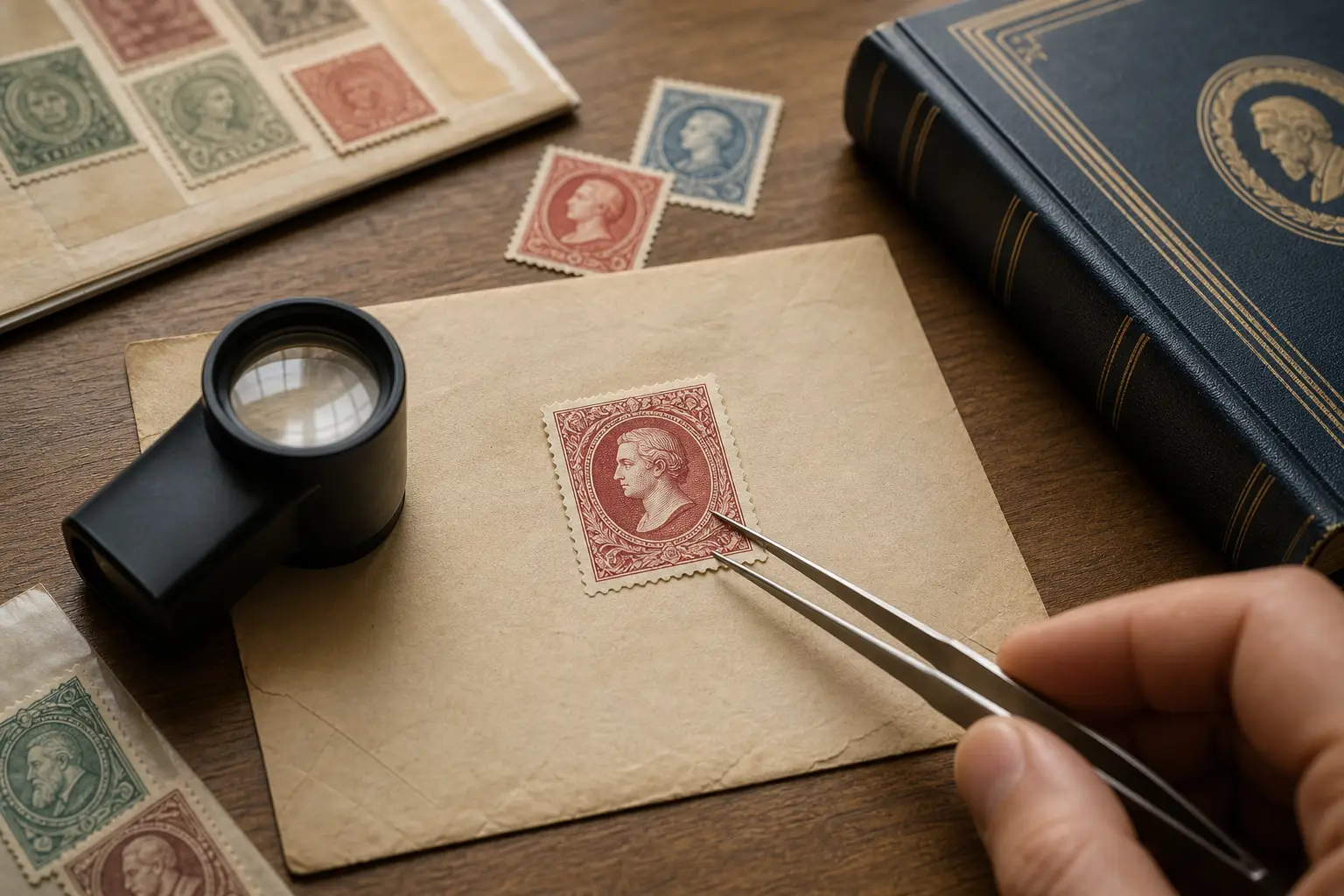
Short answer: yes, a watermark can change value
Yes. A watermark can affect value when it separates stamps that otherwise look the same into different catalog entries. The American Philatelic Society explains that stamps with the same design may differ by the presence or absence of a watermark, or by the watermark design itself, and those differences generally receive separate catalog numbers. That means the watermark can be the detail that turns one stamp into a different collecting and valuation issue.
This matters because a watermark is not just decoration. APS describes watermarks as a security measure incorporated into stamp paper to deter counterfeiting, formed by thin places in the paper. In practice, that hidden paper feature can be the sole difference between a common stamp and one that is cataloged very differently. For valuation, that makes careful identification essential before any conclusion is drawn.
Why two similar stamps can have different values
Look-alike stamps can be confusing, especially when the design changes only slightly over time. APS notes that carefully reviewing all aspects of a stamp, including watermark, perforations, and color, helps narrow identification. In its examples, stamps with similar designs but different details were assigned different catalog numbers because the small differences mattered to the listing.
The key valuation point is simple: a stamp is not valued only by the picture on its face. If a watermark changes the catalog identity, then the stamp may belong to a different issue or variety. APS specifically says some stamps exist on both unwatermarked and watermarked paper, and even on paper with different watermarks. That is why the watermark must be treated as a core identification feature, not an afterthought.
How to check a watermark without damaging the stamp
Use the least invasive method that works. APS says the best method of detecting watermarks is to lay the stamp face down in a dark tray and moisten it with watermark fluid, which brings up the watermark in dark lines against a lighter background. APS recommends commercial watermark fluid and notes that it evaporates quickly and should not affect the gum on an unused stamp. It also mentions tools such as a Safe Signoscope or Morley Bright Watermark Detector.
If you are not sure what you are seeing, do not force a conclusion. Some watermarks are easy to see, but many require more careful study, and APS notes that only part of a watermark may be visible. In uncertain cases, record what you can observe and compare it with a trusted reference later. If you use StampSnap, treat it as a way to create a likely identification or collection record, not as a final authentication step.
What to look for before you think about value
Start with the basics in a methodical order. APS recommends watching for watermark, perforations, and color when sorting similar stamps, and then checking the unique details that match a specific catalog entry. That sequence helps you avoid overreacting to a first impression. A stamp that looks ordinary may become much more interesting once a hidden paper feature is identified.
Also remember that a watermark may be visible in whole, in part, or not clearly at all. APS notes that many stamps show only a portion of the watermark, sometimes only a small part of a single letter. That means a partial mark is not automatically enough to prove identity by itself. Compare the shape, placement, and orientation carefully, and keep the stamp clean and flat during inspection.
Why watermark differences matter so much in cataloging
Catalogs often separate stamps by watermark because the difference can be more than cosmetic. APS states that stamps with the same design but different watermark status or watermark design generally receive separate catalog numbers. That separation exists because collectors treat those paper differences as distinct varieties, not merely condition changes. From a valuation point of view, the watermark can therefore change which entry you are actually holding.
APS also gives a clear example of United States material with different watermark types used during different periods, including double-line and single-line forms on postage stamps. The broader lesson is that watermark study is not limited to one country or one era. Whenever a design appears in more than one paper type, the watermark may be the deciding factor in both identification and value.
Safe handling when the stamp might be valuable
Handle the stamp as if the watermark check could matter. Use clean tools, a dark tray, and a fluid or detector designed for the job. Avoid guessing from the front alone when the result could change the catalog identity. If the stamp is unused, be especially careful not to soak it or subject it to unnecessary moisture, because APS specifically notes the value of using a fluid that evaporates quickly and is intended for this purpose.
Do not rush to separate, peel, or alter anything just to make the watermark easier to see. The goal is to observe safely, not to change the stamp. If the item is on cover or part of a larger holding, document it first and work methodically. Good notes about the suspected watermark, the visible portions, and any matching catalog clue can save time later and reduce handling.
How to record the result for future valuation work
Once you think you have identified a watermark, record the evidence, not just the conclusion. Note whether the watermark is present, absent, or only partly visible, and describe the letters, symbols, or pattern as clearly as you can. APS explains that watermarks may be words, letters, or symbols, so a precise description is more useful than a vague one. This record becomes valuable when you compare similar stamps later.
For collectors who organize large groups of look-alike stamps, a photo or note can prevent repeated re-checking. A brief written record beside the stamp or in your inventory is often enough to remind you why one stamp was placed in a different group. Used carefully, StampSnap can help you keep that identification trail together with the stamp itself, but the watermark evidence should still be reviewed with the same caution as the physical item.
Frequently asked questions
Do watermarks affect a stamp’s value?
Yes. According to the American Philatelic Society, a watermark can be the sole difference between a common stamp and one that belongs to a different catalog entry, which can change value.
Can two stamps with the same design have different values because of a watermark?
Yes. APS says stamps with the same design may differ by the presence, absence, or specific design of the watermark, and those differences generally receive separate catalog numbers.
What is the safest way to check a watermark?
APS recommends laying the stamp face down in a dark tray and using watermark fluid, or a dedicated detector, rather than trying to force a visual guess from the front.
What if I can only see part of the watermark?
That is common. APS notes that many stamps show only a portion of the watermark, sometimes only part of a single letter, so partial evidence should be compared carefully with other clues.
Should I trust a watermark guess without checking other details?
No. APS advises reviewing watermark together with perforations, color, and other details before deciding which catalog entry fits best.