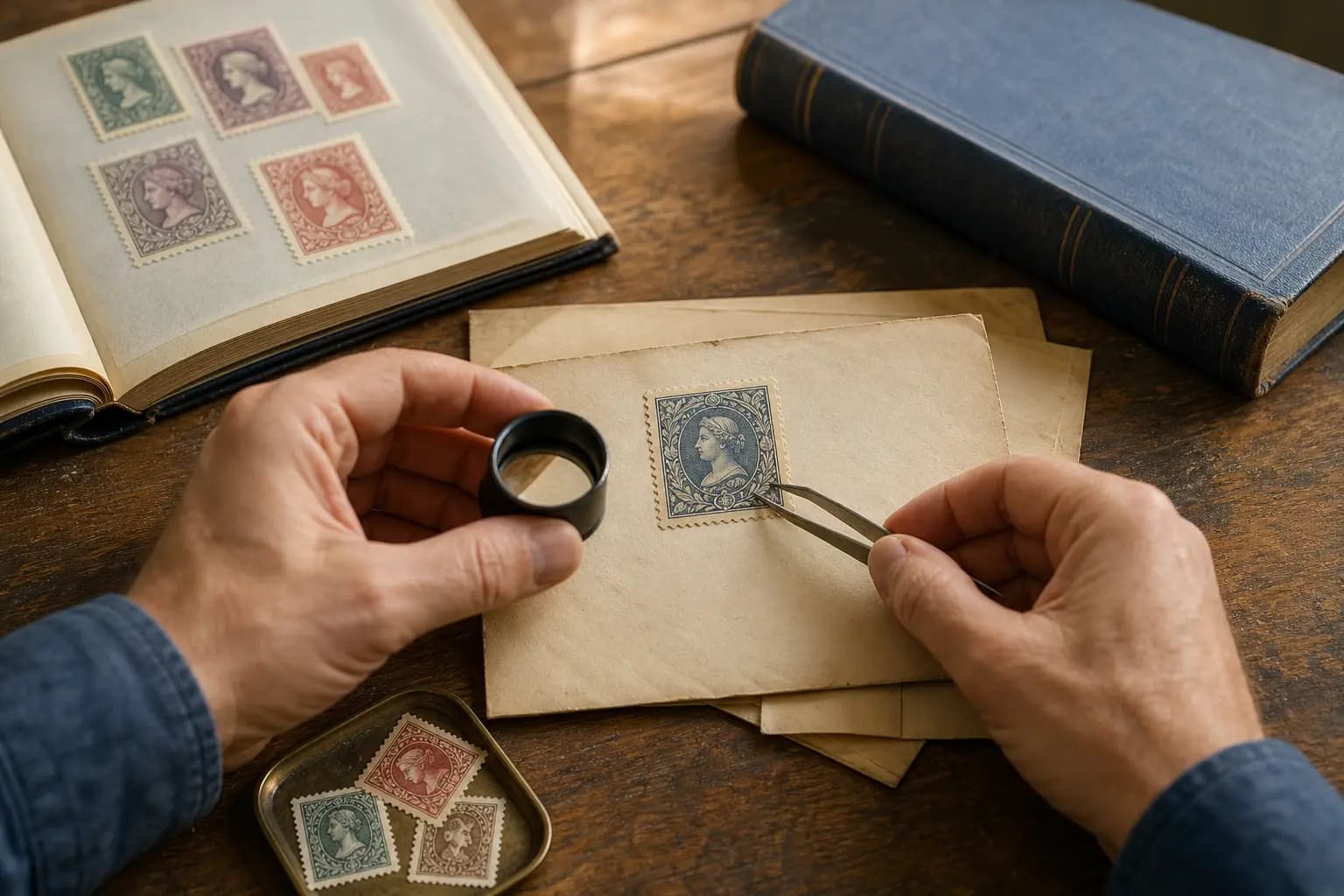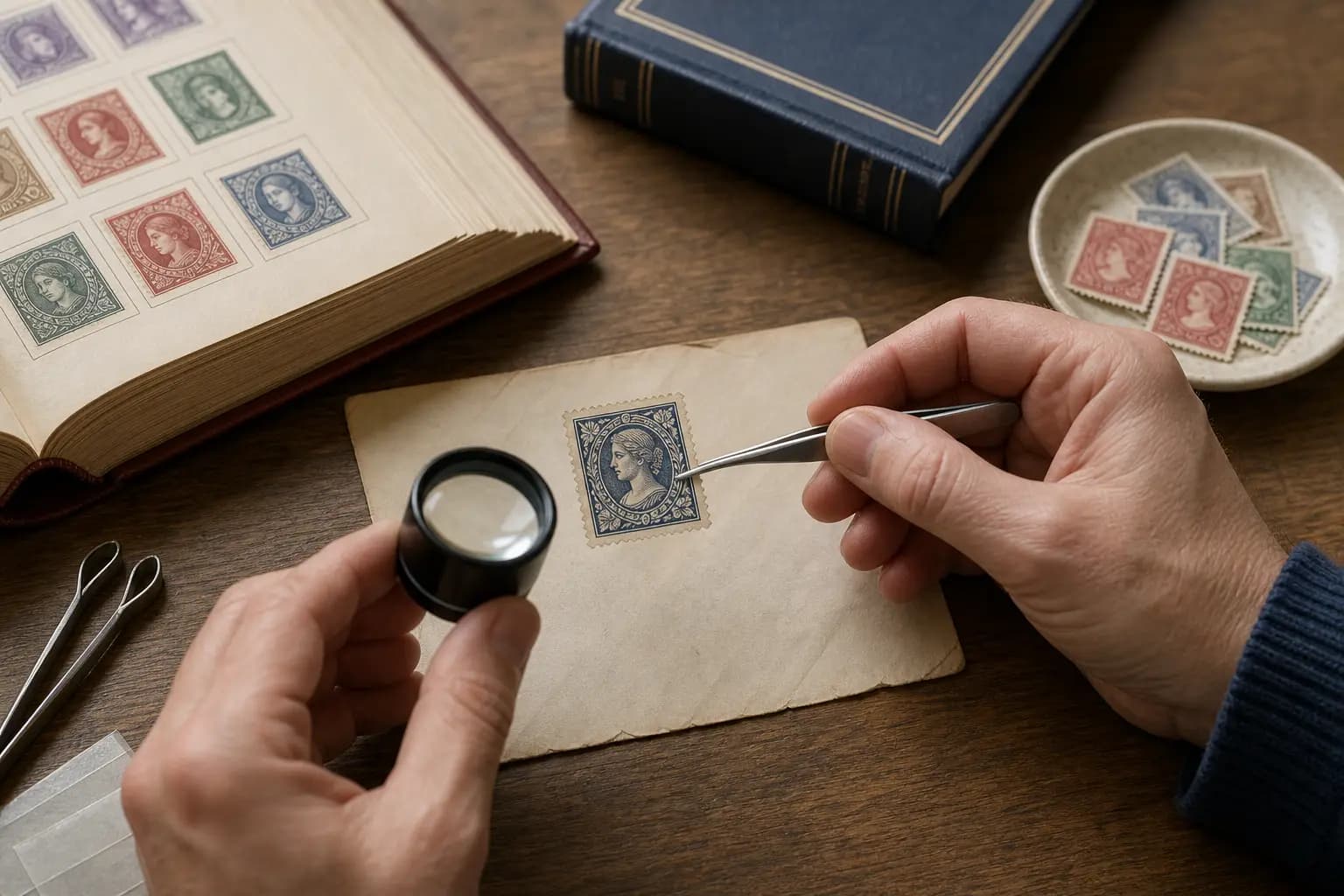
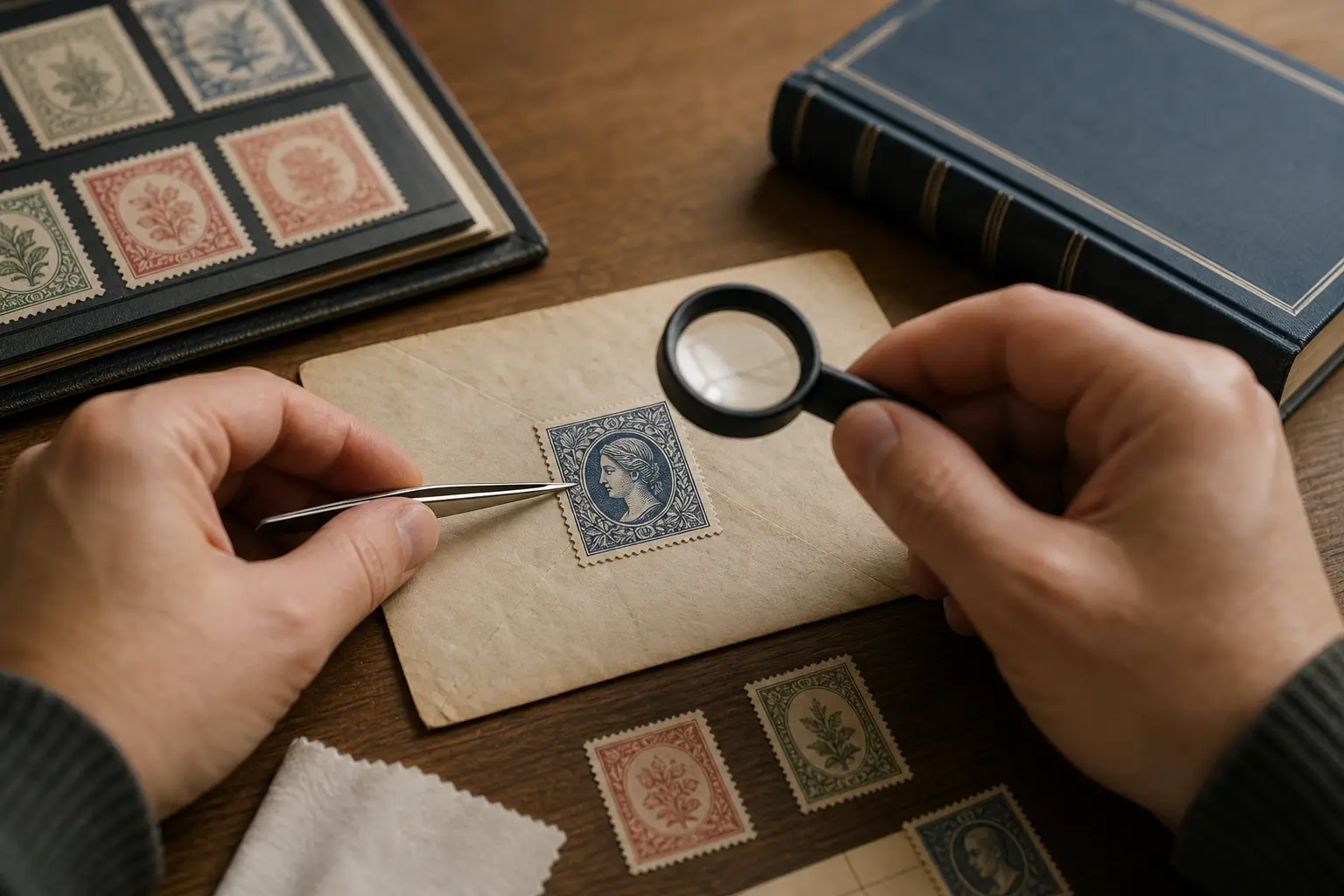
The short answer: yes, a watermark can change the issue
A watermark can turn a stamp that looks ordinary into a different catalog listing, and that difference can matter a great deal to value. The American Philatelic Society says watermarks are a security measure in stamp paper, and that stamps with the same design may be separated into different catalog numbers because of the presence, absence, or design of the watermark.
In practical terms, that means you should not assume two stamps with the same face design are the same issue. A watermark may be the only visible difference between a very common stamp and one cataloged much more differently. For identification, the safest first step is to verify the watermark before drawing any conclusion about the stamp’s issue or value.
Why watermarks matter so much
Watermarks are formed during papermaking from dies attached to the frame used to make paper from pulp. The result is a pattern of thin places in the paper. According to the APS, watermarks may appear as words, letters, symbols, or monograms, and the exact form can determine whether a stamp is listed as a separate issue.
This is why collectors treat watermark study as more than a curiosity. The same design can exist on unwatermarked paper and on paper with different watermarks, and those differences may receive separate catalog numbers. When you are evaluating a stamp, a recorded watermark can be just as important as the country, denomination, or colour.
How to check a watermark safely
The APS says the best method is to place the stamp face down in a dark tray and moisten it with watermark fluid, which brings up the watermark in dark lines against a lighter background. The same source notes that many collectors use lighter fluid, but APS recommends commercial watermark fluid instead. The fluid evaporates quickly and should not affect the gum on an unused stamp.
If you are handling an unused stamp, keep the process controlled and brief. Use a proper tray, handle the stamp carefully, and avoid improvised liquids or household products. The goal is to reveal the paper structure, not to test the stamp by soaking it or exposing it to unnecessary risk.
When light is enough, and when it is not
Some watermarks can be seen by holding the paper up to light, and the APS notes that this is especially true for certain stamps and for some paper markings that collectors may recognize easily. But many stamps require more careful study, and some watermarks show only a small part of a single letter.
That means a partial view is not always enough for a firm identification. If the mark is faint, incomplete, or affected by paper thickness, it is safer to record it as a possible watermark rather than forcing a conclusion. A careful note such as 'partial watermark seen' is more useful than an uncertain guess.
Common pitfalls that can lead to wrong value assumptions
A watermark can be missed because only a fragment is visible, or because the stamp has similar paper characteristics that make the surface look misleading. The APS explains that even the same design may exist with and without a watermark, so visual similarity alone does not confirm identity. This is especially important for collectors who are trying to separate a common example from a scarcer listed form.
Do not rely on color, centering, or the design image alone when a watermark might be present. Those features may help describe the stamp, but the catalog difference may depend on paper. If the watermark is not clear, record the uncertainty and return to the stamp later with proper tools rather than guessing.
How to record what you find
For valuation work, the useful habit is to record both the visible result and the level of certainty. Note whether the watermark is seen, partly seen, or not seen, and mention the method used. If you are organizing a collection or building a likely identification record in StampSnap, keep the note descriptive rather than absolute when the evidence is incomplete.
That approach helps later comparison against catalog entries and prevents a weak observation from becoming a false identification. It is especially useful when the watermark is only a trace or when the stamp design exists in multiple paper states. Good records are often as important as good eyesight.
A methodical valuation habit for collectors
A safe valuation routine starts with identification, then checks for paper differences, and only then moves to comparison with catalog descriptions. The APS examples show that identical or near-identical designs can represent different catalog numbers when the watermark changes. So the watermark is not a small detail to save for later; it is a core part of the identification process.
If you cannot confirm the watermark confidently, stop short of assigning a stronger value interpretation. That is the most conservative and collector-safe approach. Over time, consistent notes about watermarks, paper type, and the stamp’s condition will make your collection easier to organize and much easier to review.
Frequently asked questions
Can two stamps with the same design have different values because of a watermark?
Yes. The APS says the presence, absence, or design of a watermark can create separate catalog numbers, and that difference may separate a common stamp from one valued much differently.
What is the safest way to check a stamp watermark?
The APS recommends placing the stamp face down in a dark tray and using commercial watermark fluid to reveal the pattern. It says the fluid evaporates quickly and should not impact the gum on an unused stamp.
Can I identify every watermark just by holding the stamp up to light?
No. Some watermarks can be seen that way, but the APS says many stamps need more careful study, and some watermarks show only a small part of a letter or symbol.
What should I do if the watermark is only partly visible?
Record it as a partial or uncertain observation and avoid a firm conclusion. A cautious note is better than guessing, especially when catalog value may depend on the watermark.
Do watermarks always appear on the front of the stamp?
No. Stamp collectors usually view watermarks from the back of the stamp, and the mark is often revealed by looking through the paper rather than by surface inspection alone.