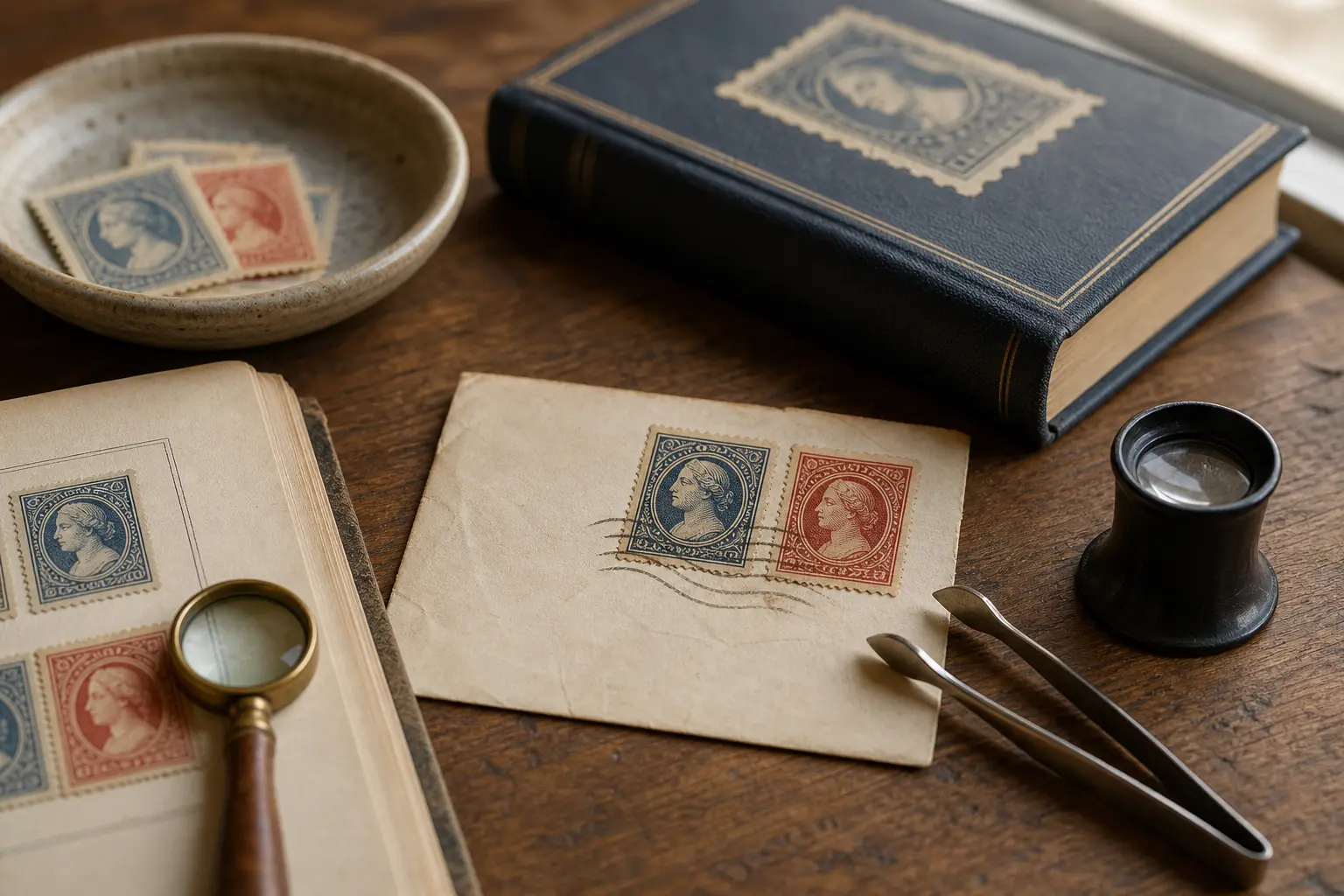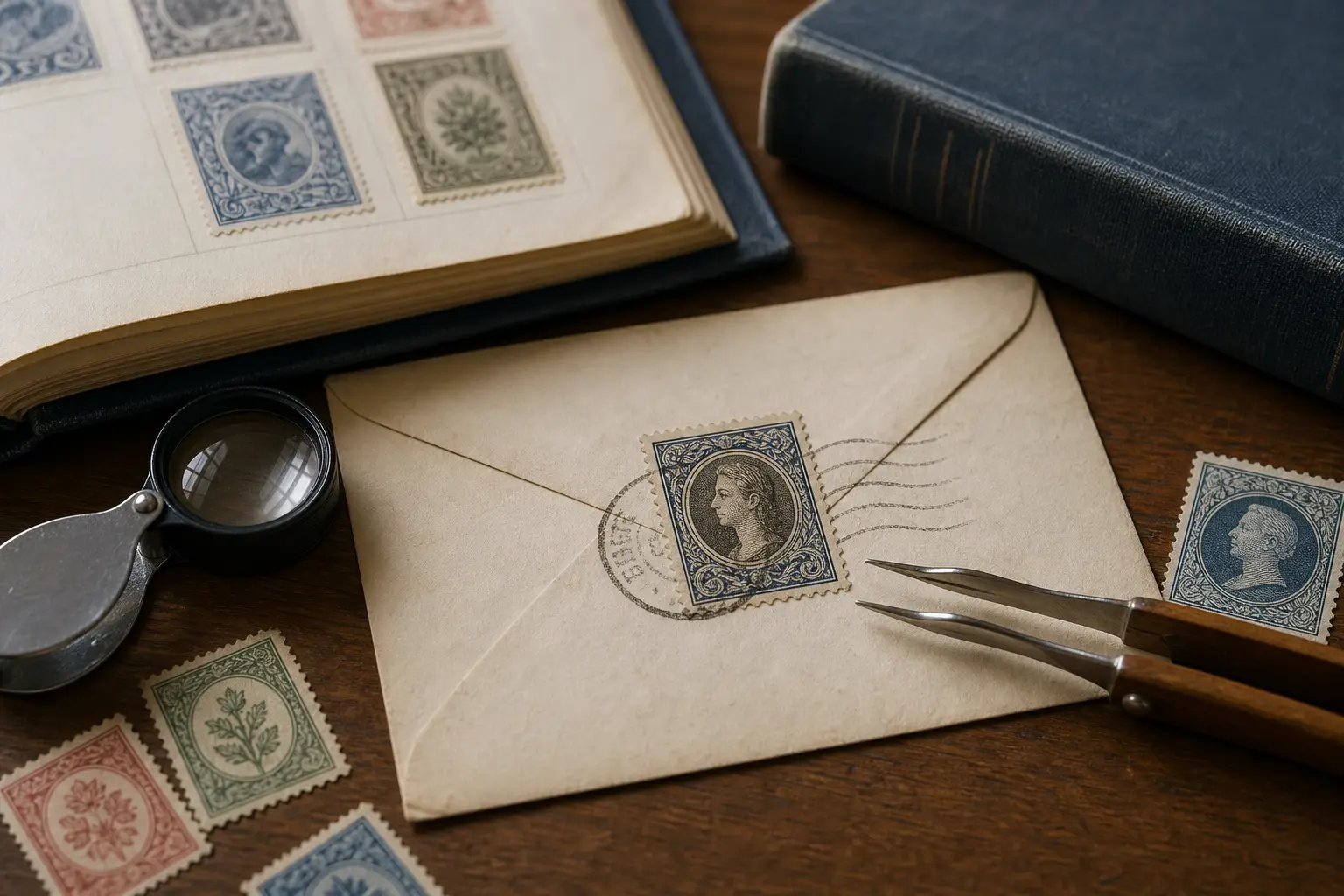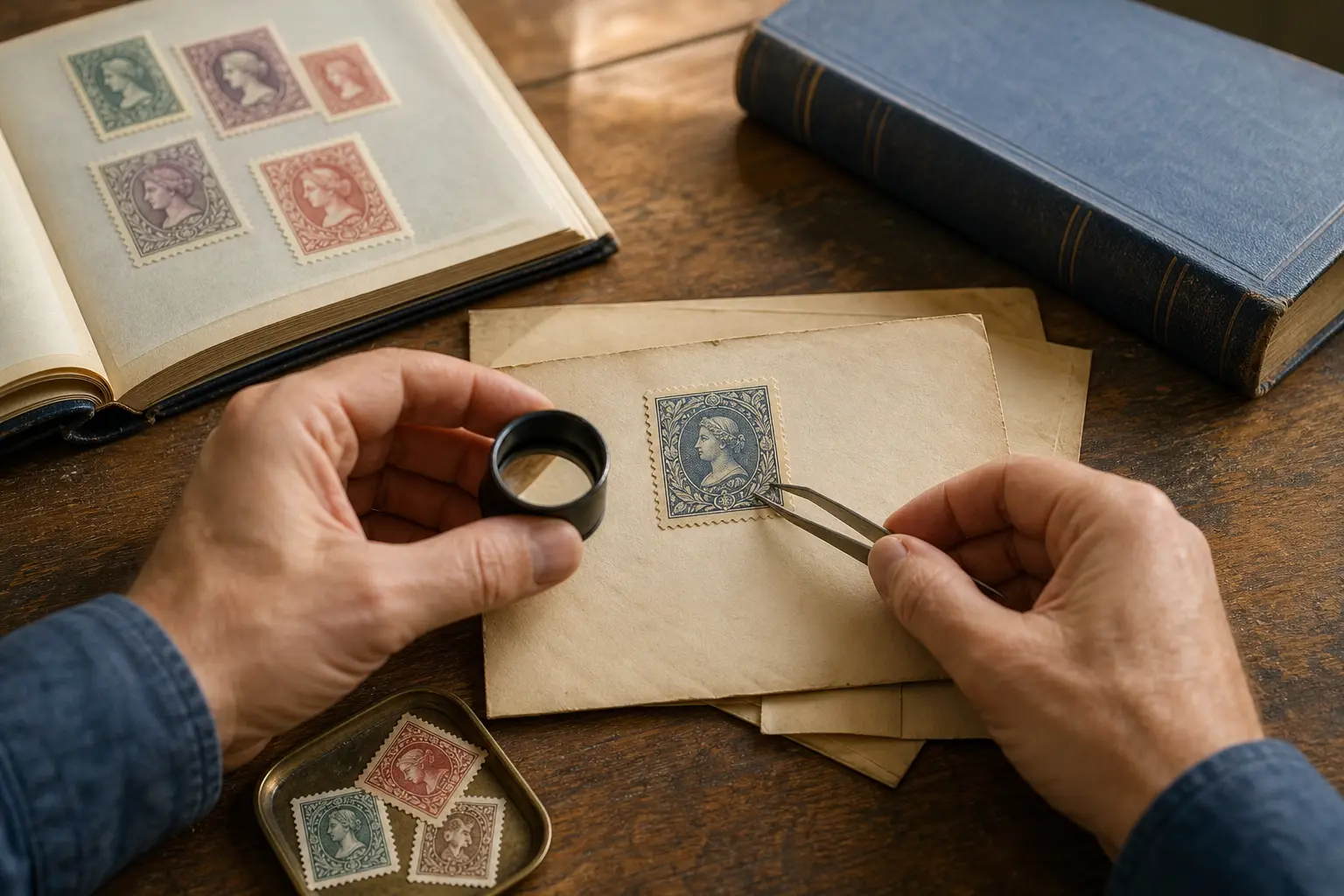
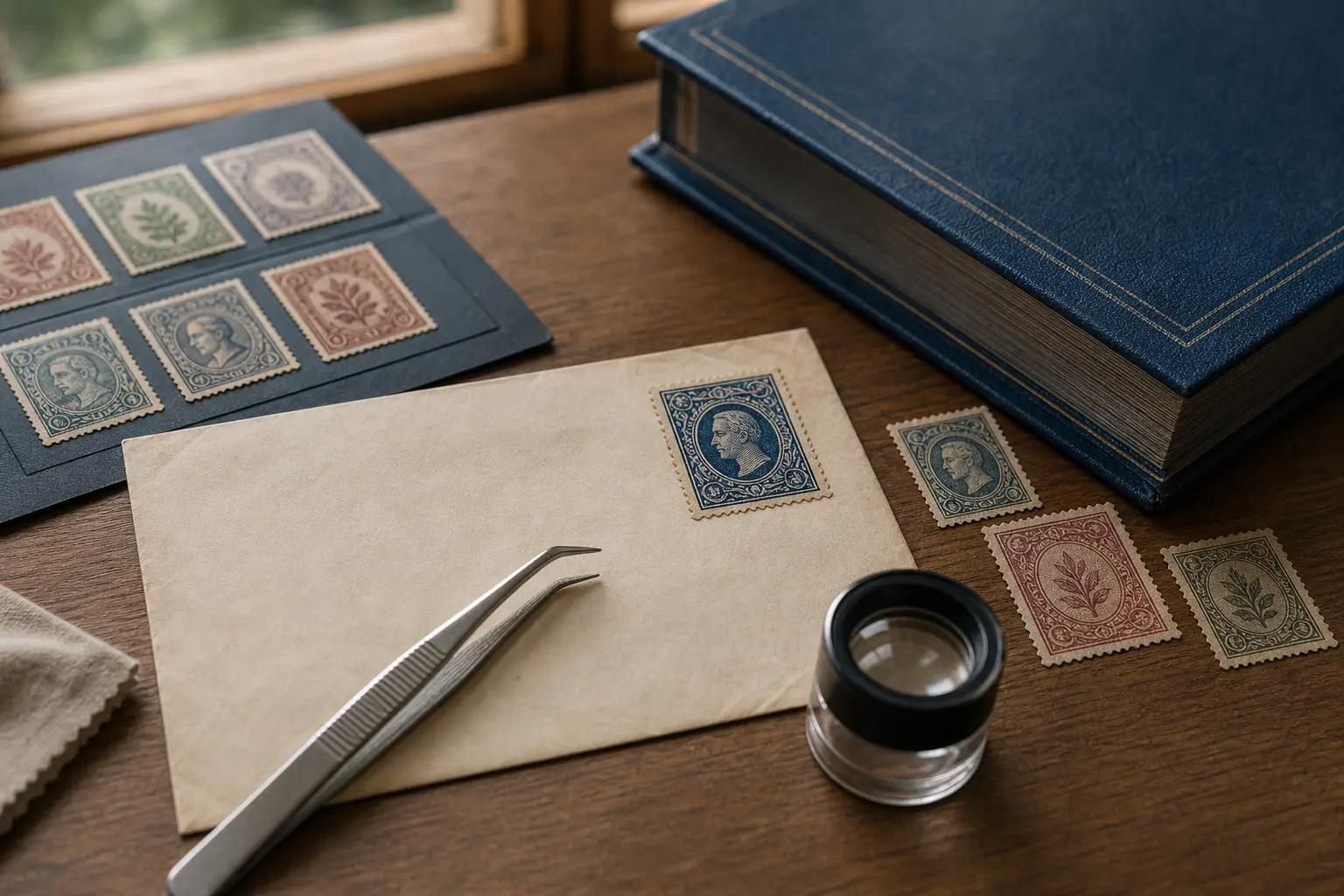
Start with the key answer: small differences can change value a lot
When two stamps look almost the same, do not assume they have the same value. The supplied evidence shows that stamps with the same design can differ by watermark, and that this single feature may be the only difference between a very common stamp and one valued much higher. In other cases, a small wording change or a date in the corner can place the stamp in a different catalog listing and a different value group.
The safest first step is to compare the stamp against the full set of clues that are visible without any damage to the item: country, design, color, perforations or lack of them, and any clearly visible wording or date. If you use StampSnap to build a likely identification or collection record, treat it as a starting point only. The final value depends on the exact match and on condition, not on a quick visual guess.
Why look-alike stamps are tricky to price
The American Philatelic Society notes that identifying a stamp in a worldwide catalog is often harder than simply finding the country. Look-alike definitives can be issued over many years with only minor changes in design and color. That means two stamps that seem nearly identical at a glance may belong to different catalog entries and should not be priced as if they are the same item.
The same source gives practical examples of how tiny details matter. One North Borneo pair differs by the wording near the bottom of the design, and a Liechtenstein example differs because one stamp has year dates in the upper corners while another does not. These are the kinds of changes that can alter the identity of a stamp and therefore its value.
Check the visible clues before you think about value
Begin with the details that can be checked safely and directly. Compare the inscription, the placement of words, the presence or absence of dates, the color, and whether the stamp has perforations. The APS specifically recommends careful review of watermark, perforations, and color as part of the identification process. These are not decorative extras; they are often the clues that separate one catalog number from another.
Do not rush to a value estimate from the image alone. If you are working from a loose stamp, examine it under ordinary light first and note anything that is obvious from the front. If the stamp is still on cover or attached to paper, keep it that way until you have enough evidence to decide whether further study is needed. A conservative note such as
Use watermark evidence carefully and safely
Watermarks deserve special attention because they can be the sole feature that changes value. The APS explains that watermarks are security features in stamp paper and that stamps can exist on unwatermarked paper, on paper with different watermarks, or on paper where only part of the watermark appears. Because of that, a stamp that looks ordinary may still belong to a separate and much more desirable listing.
The safest documented method in the supplied evidence is to place the stamp face down in a dark tray and moisten it with watermark fluid so the design appears in dark lines against a lighter background. The APS recommends commercial watermark fluid rather than household substitutes, and says it evaporates quickly and should not impact gum on an unused stamp. Avoid improvising with unknown liquids or handling that could disturb the stamp surface.
Do not overvalue what you cannot confirm
If the watermark is partial, faint, or hard to read, say so in your notes. The evidence makes clear that many stamps show only a portion of the watermark, sometimes only a small part of a letter, and that some watermarks are particularly difficult to see without better study. That means an uncertain reading should not be used as a final valuation basis.
A methodical collector will separate three things: what is clearly visible, what is likely but unconfirmed, and what is unknown. This matters because a catalog match based on incomplete evidence can lead to an inflated or incorrect value estimate. When in doubt, keep the description cautious and record exactly which clue was confirmed and which one still needs checking.
Build a simple valuation workflow for similar stamps
A practical workflow is to identify the country first, then compare the design family, and only then move to finer details. After that, check whether the stamp is one of several look-alike issues that differ by wording, date, watermark, perforation, or color. This approach matches the APS advice to narrow the search from broad design to very specific details before choosing the correct catalog entry.
For a collection record, it helps to write down the features in the same order every time. Note the country or issuing authority, the design description, the visible inscriptions, the perforation style, and any watermark reading you can confirm safely. If StampSnap helps you assemble those notes into a likely identification record, use that record to guide your next comparison, not to replace it.
When to stop and seek a better check
Stop and gather more evidence when the stamp could belong to more than one issue, when the watermark is unclear, or when the visible text differs from the catalog description by even a small amount. That is the point at which a quick estimate becomes unreliable. For a careful collector, uncertainty is not a failure; it is part of the valuation process.
The evidence supplied here supports a conservative rule: only assign a confident value after the stamp has been matched to the correct design and the relevant distinguishing feature has been confirmed. If that confirmation is not possible from the available evidence, record the stamp as unconfirmed and avoid a firm price conclusion.
Frequently asked questions
Why can two similar stamps have different values?
Because small differences such as watermark, perforations, color, wording, or a date in the design can place them in different catalog entries.
Is a watermark really enough to change a stamp’s value?
Yes. The supplied evidence says a watermark may be the sole difference between a very common stamp and one valued much higher.
What clues should I check before pricing a look-alike stamp?
Check the country, design wording, color, perforations or lack of them, and any visible watermark evidence before comparing catalog listings.
How should I detect a watermark safely?
The supplied evidence recommends placing the stamp face down in a dark tray and using commercial watermark fluid. Do not use improvised household methods.
What if I cannot read the watermark clearly?
Do not treat it as confirmed. Note the uncertainty, keep the identification conservative, and avoid a final value estimate until the watermark can be verified.