Introduction to Multi-Tool Stamp Identification
Identifying postage stamp varieties is one of the most rewarding aspects of philately, but it requires a structured and patient approach. Many stamps that appear identical at first glance actually possess minute differences in their design, paper, or perforation measurements. To successfully distinguish these varieties, collectors rely on a methodical multi-tool inspection process rather than visual guesswork.
By combining physical handling tools, magnification, measurement scales, and reference literature, you can systematically analyze any specimen. This step-by-step guide outlines how to use these essential philatelic tools safely and effectively to identify your stamps and document your findings.
Protecting the Specimen with Stamp Tongs
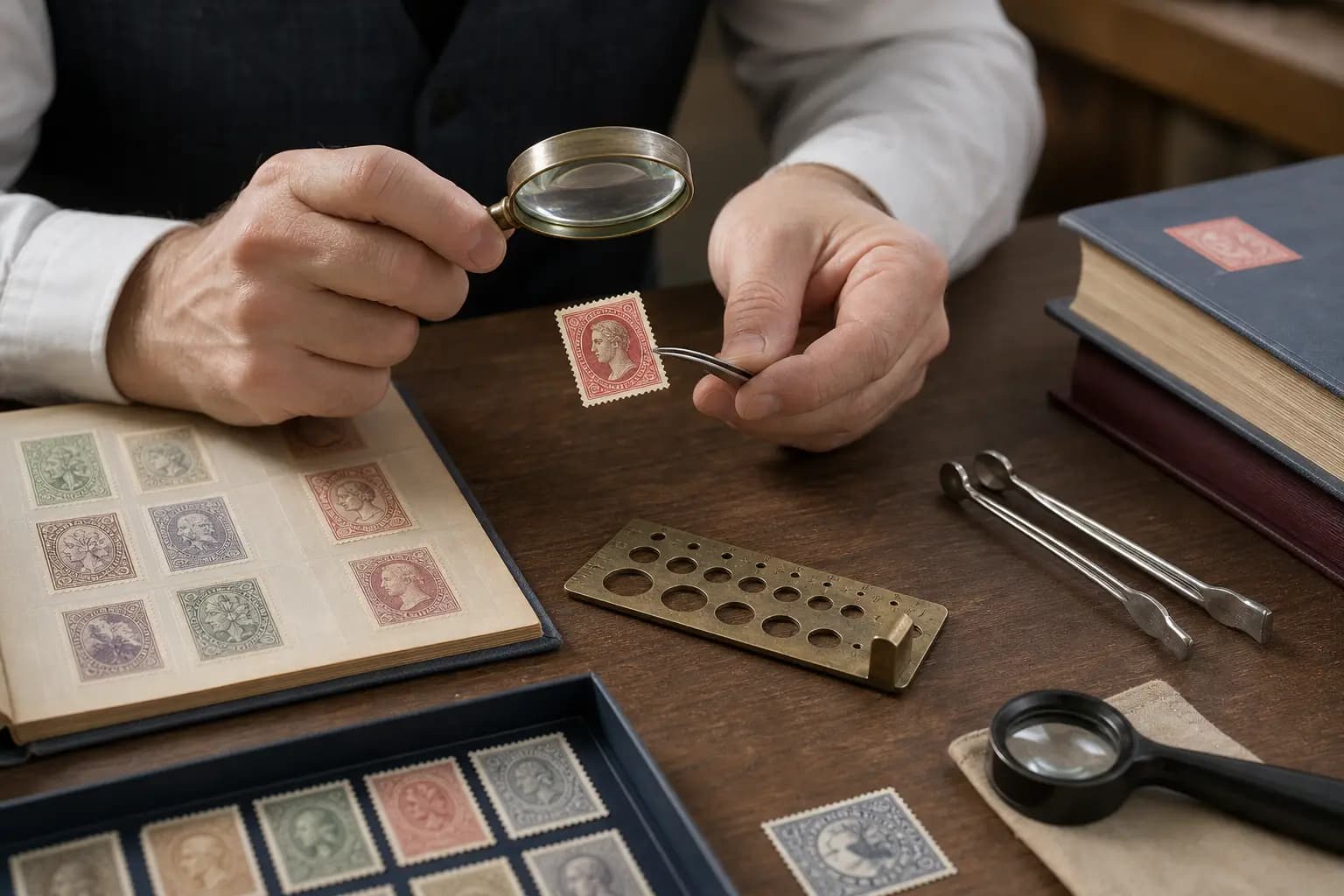
The first rule of stamp identification is to protect the physical integrity of the specimen. No matter how thoroughly you wash and dry your hands, natural oils from your skin will transfer to the paper and cause gradual, irreversible damage. To prevent this, always use specialized stamp tongs as your primary handling tool.
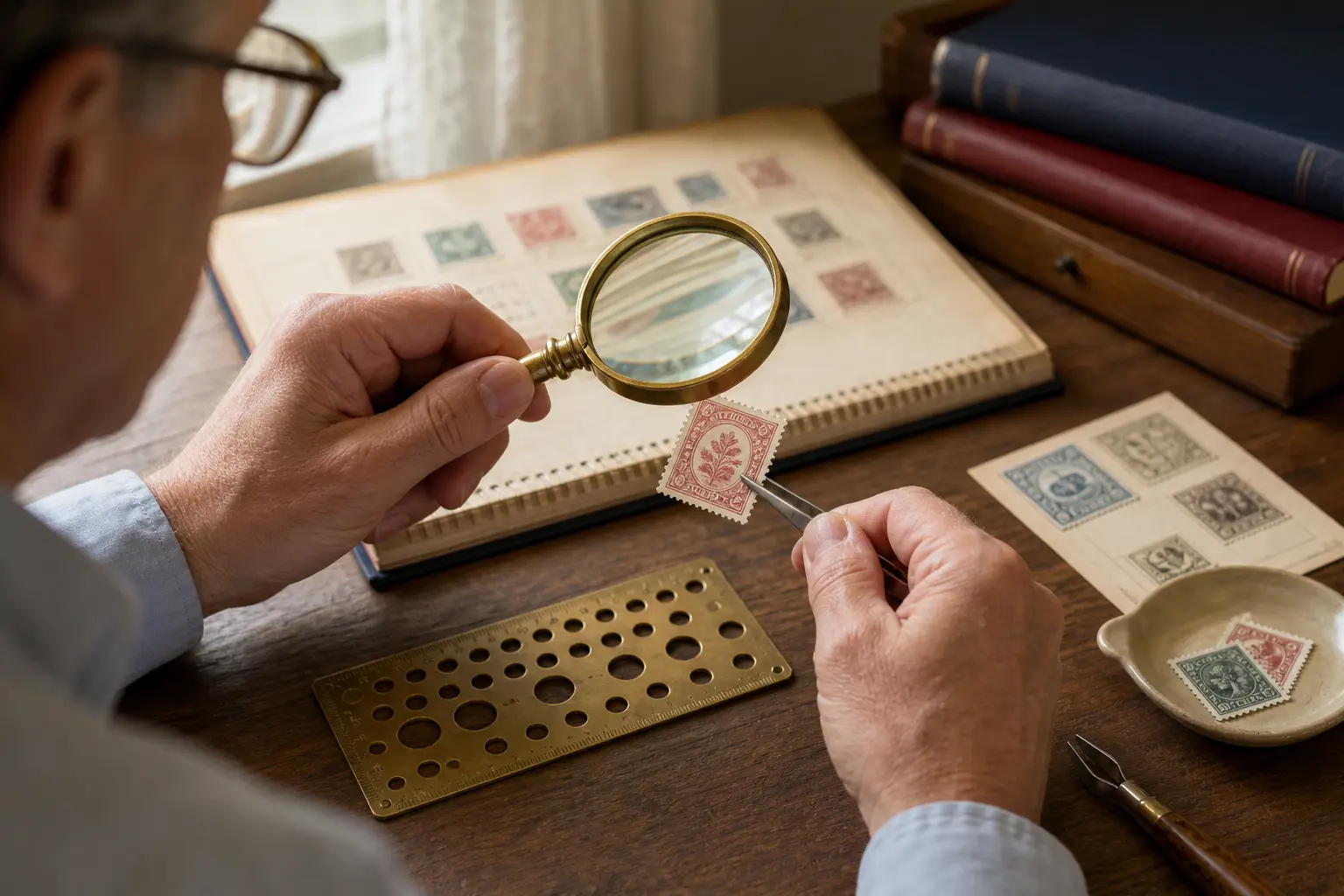
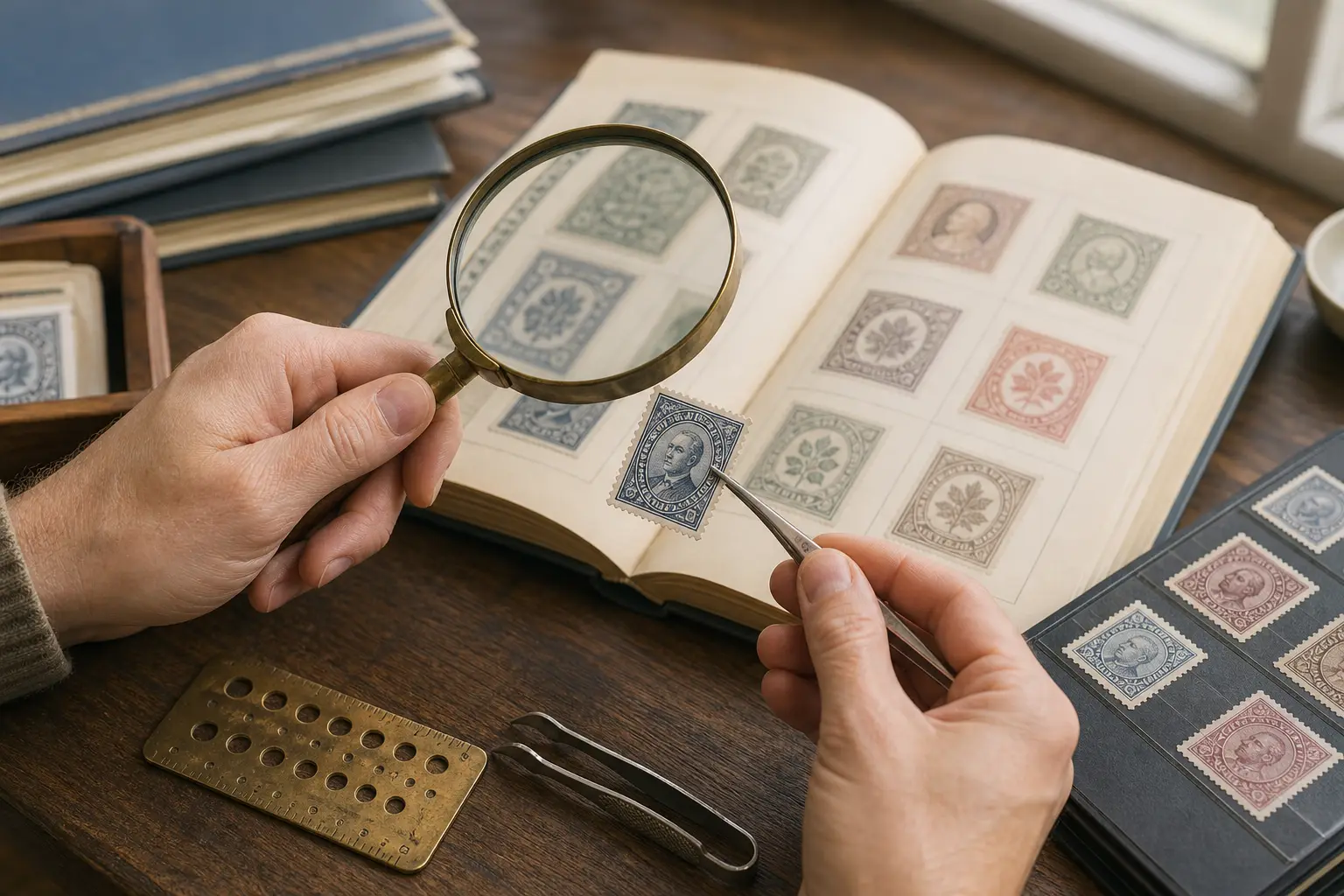
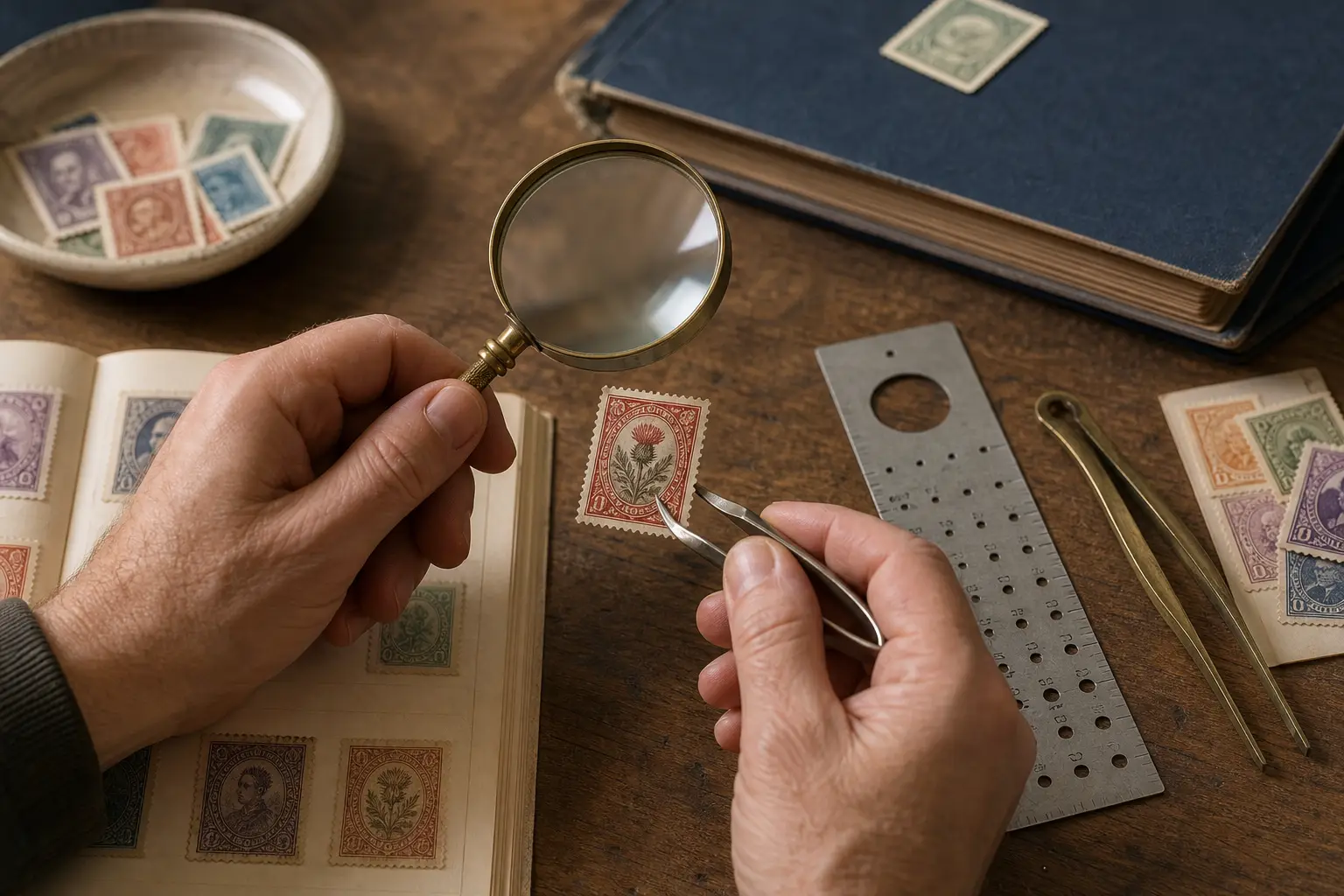
Stamp tongs look similar to household tweezers, but they are manufactured with a highly smooth gripping surface designed specifically to handle dry stamps without tearing the paper or disturbing the gum. Using tongs allows you to safely manipulate the stamp under different lighting angles and position it for precise measurements without ever touching the paper with your fingers.
Revealing Fine Details with Magnification
Once the stamp is safely positioned, a magnifying glass is required to inspect the fine details of the design. Many stamp varieties differ only by a tiny line, a secret mark, or a specific printing method that is invisible to the naked eye. Close inspection under proper magnification is often the only way to spot these critical diagnostic features.
When selecting a magnifying glass, choose a lens that magnifies clearly without causing visual distortion. A magnification strength of at least 5 times to 10 times is highly recommended for philatelic work. Additionally, selecting a magnifier that folds into a protective case will help prevent scratches on the lens, ensuring clear viewing for years to come.
Measuring Perforations Accurately
Another key diagnostic feature of stamp varieties is the perforation measurement. Stamps with the identical design are frequently issued with different numbers of perforations, which are the holes along the edges that allow stamps to be separated. Perforations are officially measured by counting how many holes appear within a span of 20 millimeters along the edge of the stamp.
Because counting these tiny holes manually can be confusing and prone to error, collectors use a perforation gauge. These gauges are typically made of cardboard, plastic, or metal and feature various printed scales. By sliding your stamp along the scales until the perforations match the gauge's markings exactly, you can quickly and accurately determine the perforation measurement.
Cross-Referencing with Reference Catalogs
With your physical measurements and visual observations in hand, you can cross-reference your findings using a stamp catalog. Stamp catalogs are comprehensive reference books filled with illustrations, issue dates, descriptions, printing methods, and values for both used and unused conditions. These valuable resources can often be borrowed from local libraries to assist in your research.
During this stage, you can use StampSnap to log a likely identification and compare your specimen against digital reference images. Combining the detailed historical records found in a printed catalog with modern digital tools allows you to narrow down the exact issue date and printing variety of your stamp with confidence.
Documenting and Storing the Identified Variety
After successfully identifying your stamp, the final step is to secure it in safe, long-term storage. You can store your stamps in specialized stamp albums, which often feature designated spaces and pictures for specific issues, or in stock books that utilize paper or plastic pockets for custom organization. If you use a photo album, ensure it features acid-free paper and absolutely avoid any pages with sticky backings, as these will cause permanent damage.
To secure stamps within an album, always use proper hinges or mounts. Hinges are small, thin, folded pieces of translucent paper or plastic with special gum on one side, while mounts are clear plastic sleeves. Never use household tape or glue, as these adhesives will destroy the stamp's paper and drastically decrease its value. Once your stamp is safely mounted, you can update your collection record in StampSnap to keep your inventory perfectly organized.
Frequently asked questions
Why should I use stamp tongs instead of my fingers?
Even clean hands carry natural skin oils that can transfer to paper and cause gradual, irreversible damage. Stamp tongs feature a smooth gripping surface designed to handle dry stamps safely without tearing the paper or leaving oily residues.
What magnification strength is recommended for identifying stamps?
A magnifying glass with at least 5 times to 10 times magnification is recommended. Ensure the lens magnifies clearly without distortion, and choose a model that folds into a case to prevent scratches.
How does a perforation gauge help identify stamp varieties?
Stamps with the same design often have different perforation sizes, which are measured by the number of holes along a 20-millimeter span. A perforation gauge made of cardboard, plastic, or metal allows you to match the stamp's edges against printed scales to find the exact measurement easily.