The Role of the Stamp Catalog in Philately
A stamp catalog is one of the most valuable reference books a collector can own or borrow from a local library. It serves as an illustrated guide that helps philatelists identify, organize, and understand the historical context of their collections. Whether you are a beginner or an experienced collector, learning how to navigate a catalog is a fundamental skill that transforms a simple accumulation of stamps into an organized, educational collection.
By combining catalog data with physical observations, you can systematically solve the mystery of any unidentified stamp in your possession. Using these reference materials allows you to transition from casual collecting to methodical study, preserving the historical value of your material.
Understanding the Information in a Stamp Catalog
A standard stamp catalog is filled with detailed illustrations and structured data for thousands of global issues. For every stamp listed, the catalog typically provides the exact date when the stamp was issued, a physical description of the design, and the historical reason why it was issued.
Additionally, it details the specific printing method used to produce the stamp and provides estimated values for both used and unused conditions. It is important to remember that these estimated values are purely informational and highly dependent on the stamp's actual condition, centering, and preservation.
How to Match Your Stamp to Catalog Illustrations
Identifying a stamp begins with a visual comparison against the illustrations in the catalog. Some stamps appear to be completely alike at first glance, but close inspection often reveals small differences in design, color, or printing method that distinguish a common issue from a rare variety.
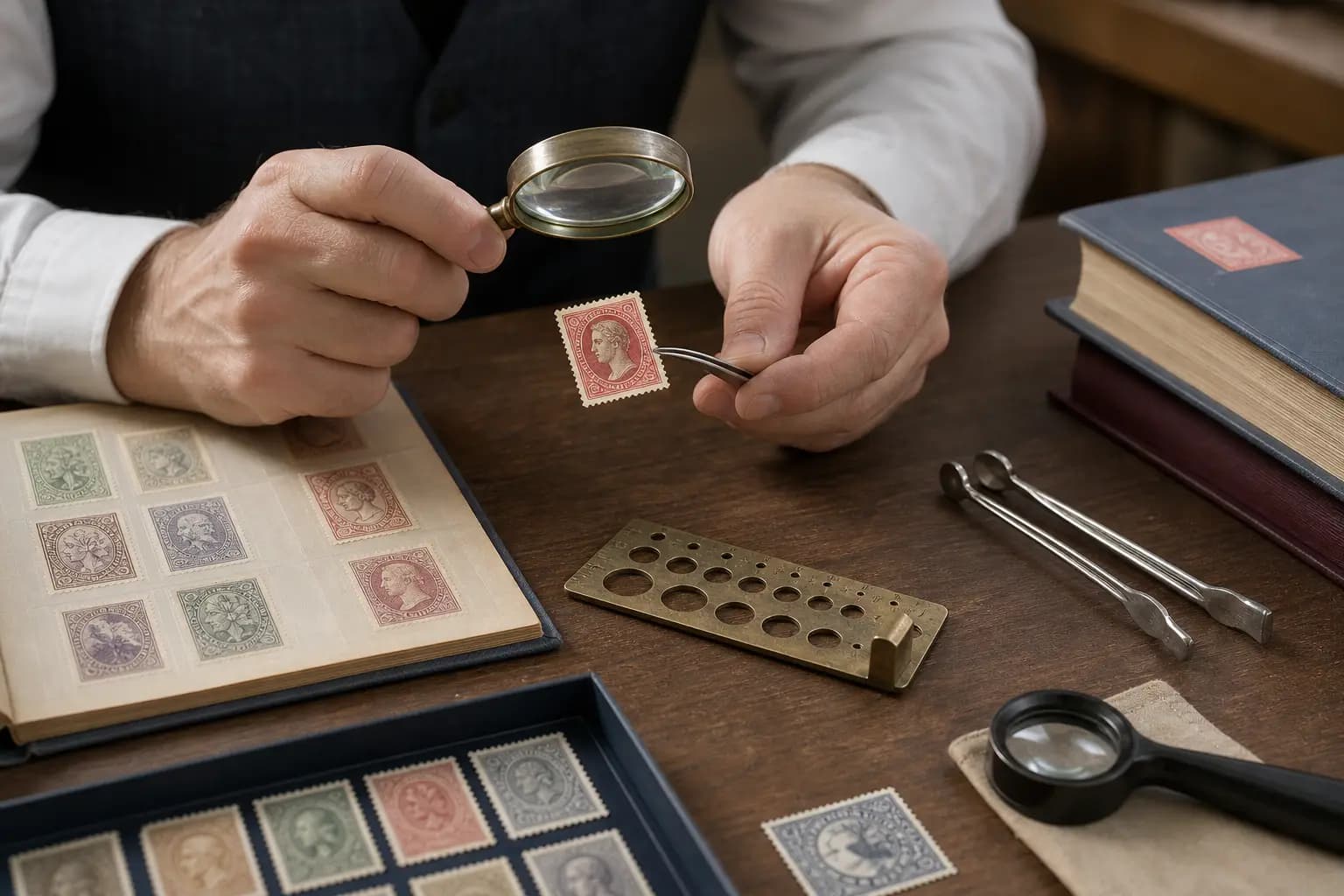
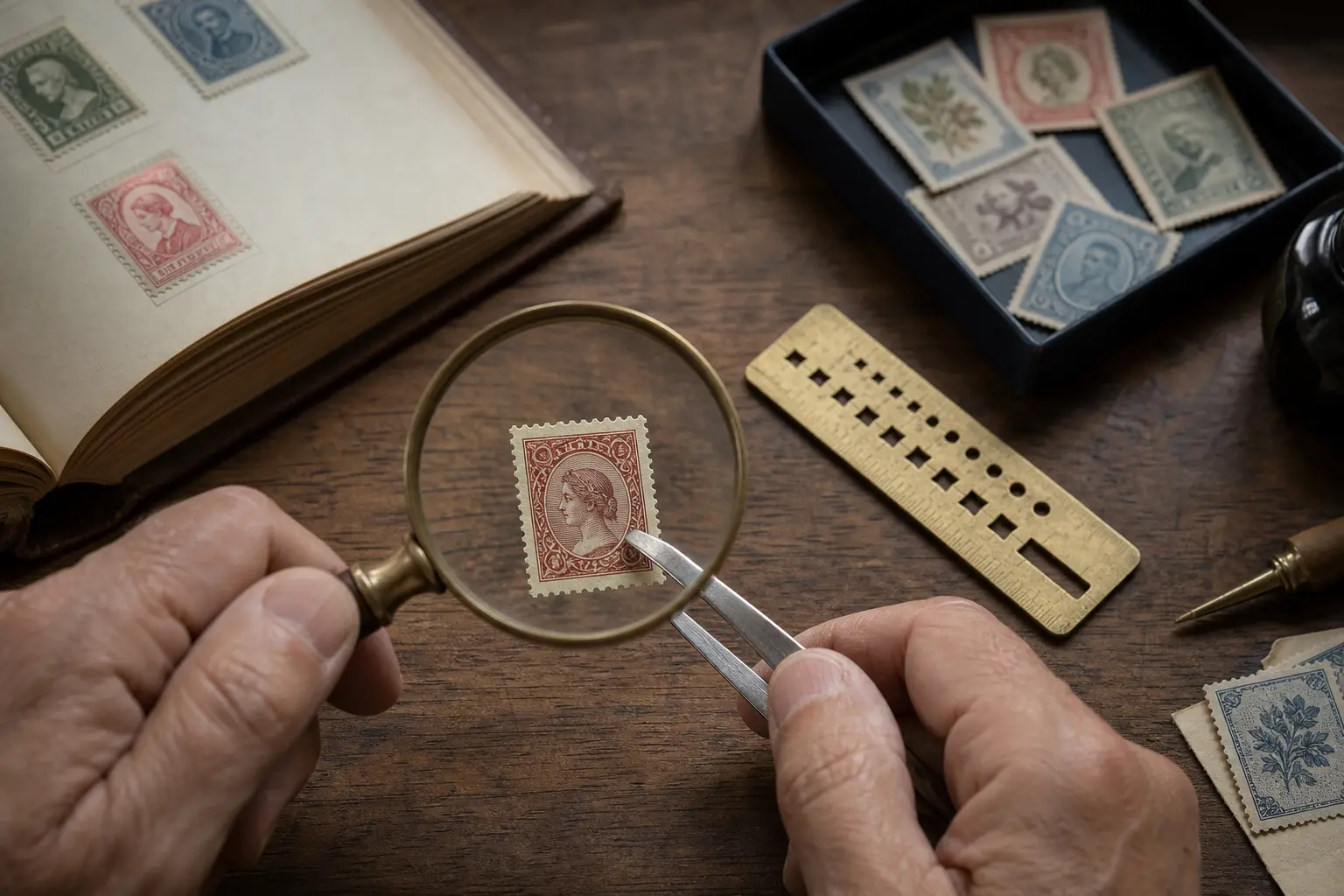
To find these subtle differences, collectors use a magnifying glass with at least 5 times to 10 times magnification, preferably one that folds into a protective case to prevent scratches on the lens. To simplify this process, you can use StampSnap to scan your stamp and get a likely identification, which provides a helpful starting point for your catalog search.
Using Perforation Measurements to Narrow Down Varieties
Many stamps share the exact same design but differ in their perforations, which are the small holes between stamps that make them easy to separate. To identify the precise variety, you must measure these perforations.
While you could manually count how many perforations appear along a row 20 millimeters long on each edge of the stamp, using a perforation gauge is much simpler and more accurate. These gauges, which are usually made of cardboard, plastic, or metal, feature different scales so you can place your stamp against each scale until the perforations match the gauge exactly.
Handling Your Stamps Safely During Identification
The process of identifying stamps requires careful handling to prevent permanent damage to the paper, gum, or perforations. You should always use stamp tongs to handle dry stamps during your examination. Even if you wash your hands thoroughly, natural oils from your skin will transfer to the paper and cause damage over time.
Stamp tongs look similar to household tweezers but feature a smooth gripping surface designed specifically to handle delicate paper without tearing or marking it. Never use household tools like standard tweezers, which have ridged tips that can puncture or crease the stamp.
Safe Storage and Mounting After Identification
Once you have successfully identified your stamp, the next step is to store it safely to preserve its condition for the future. Storing your stamps in albums or stock books helps protect them from environmental hazards and physical wear. If you use a photo album, ensure it features acid-free paper and avoid any albums with sticky pages, as the adhesive will cause severe, irreversible damage.
When placing stamps in an album, always use proper hinges or clear plastic mounts. Avoid tape or household glue entirely, as these adhesives will decrease the stamp's value and cause damage if you ever attempt to remove them. After securing your stamp, you can record your findings in StampSnap to build a permanent digital collection record.
Frequently asked questions
What information can I find in a standard stamp catalog?
A stamp catalog provides essential details including the date when the stamp was issued, a physical description of the design, the historical reason for its release, the printing method used, and estimated values for both used and unused conditions.
Why is it unsafe to handle dry stamps with my bare hands?
Even if you wash your hands thoroughly, natural oils from your skin will transfer to the stamps and cause gradual damage over time. Using professional stamp tongs with smooth gripping surfaces prevents this oil transfer and protects the paper.
How do I measure stamp perforations without counting them manually?
You can use a perforation gauge made of cardboard, plastic, or metal. The gauge features different scales representing various perforation sizes, allowing you to slide your stamp along the scales until the perforations match exactly.
Can I use tape or glue to mount stamps in my album?
No, you should never use tape or glue. These adhesives will permanently damage the stamps, make them difficult to remove, and significantly decrease their value. Instead, use specialized stamp hinges or clear plastic mounts.