
Introduction to Planographic Printing
Identifying the printing method of a postage stamp is one of the most rewarding skills a collector can develop. The American Philatelic Society identifies four major families used for postage stamps: line-engraved intaglio, gravure, letterpress, and lithography. Among these, offset lithography is widely used for modern issues, sometimes appearing alongside other processes on a single stamp. However, because modern printing techniques can produce highly detailed results, distinguishing lithography from other families requires a structured approach. Relying on a single visual characteristic can easily lead to misidentification, so collectors must learn to gather cumulative clues.
Understanding the Offset Lithography Process
According to the Smithsonian National Postal Museum, offset lithography is a planographic process, meaning the image is formed on a completely smooth surface rather than being cut, etched, or raised. During production, oil-based ink adheres to the designated image area on the plate. A rubber blanket then transfers, or offsets, that inked image directly onto the stamp paper. In modern stamp production, lithography commonly combines separate process-color layers made from very fine dots to build the final multi-colored image. This chemical and mechanical transfer creates a flat, uniform ink layer on the paper.
The Pitfalls of Relying on Single Visual Clues
A common misconception among philatelists is that lithographic prints always feature soft or blurred edges. The Smithsonian National Postal Museum notes that modern lithography can be exceptionally sharp, meaning soft edges are not a dependable identifying rule. Similarly, while magnification may reveal a dot pattern, this structure must be interpreted alongside other evidence. Because gravure and other printing processes can also show screened structures under magnification, a dot pattern alone is never enough to diagnose the printing family. Collectors must avoid making hasty assumptions based solely on the presence of dots.
Comparing Lithography with Line-Engraved Intaglio
To safely distinguish lithography from line-engraved intaglio, collectors must look for the physical characteristics of recess printing. Line-engraved intaglio transfers ink from deliberately incised lines, resulting in a design constructed from lines, hatching, cross-hatching, and stippling. Under non-contact magnification and oblique light, you can sometimes see raised ink on the surface of an intaglio stamp, and the printing pressure may leave debossing on the reverse side. Because lithography is planographic, it will lack these raised ink and debossing features, presenting a completely flat profile.
Distinguishing Lithography from Gravure and Letterpress
Distinguishing lithography from gravure and letterpress also requires evaluating cumulative clues. Gravure is another recess process, but unlike line-engraved intaglio, it forms tone using screened cells. Letterpress, on the other hand, is a relief process. Because more than one process may appear on a modern stamp, collectors should never rely on a single test. Instead, you must combine your visual observations with official production records to confirm which printing methods were authorized for that specific stamp issue. This dual approach of visual inspection and historical research prevents errors.
The Importance of Verifying Paper and Watermarks
In addition to analyzing the ink and printing family, examining the stamp paper itself can provide critical context. Watermarks are a security measure incorporated in stamp paper to deter counterfeiting, formed from dies that result in thin places in the paper pulp. Some stamps with identical designs exist on both unwatermarked and watermarked paper, and these differences can distinguish common stamps from scarce varieties. When examining a stamp's printing method, checking for watermarks using commercial watermark fluid in a dark tray can help you verify the exact production run, further narrowing down the printing family used during that specific era.
A Safe, Methodical Identification Workflow
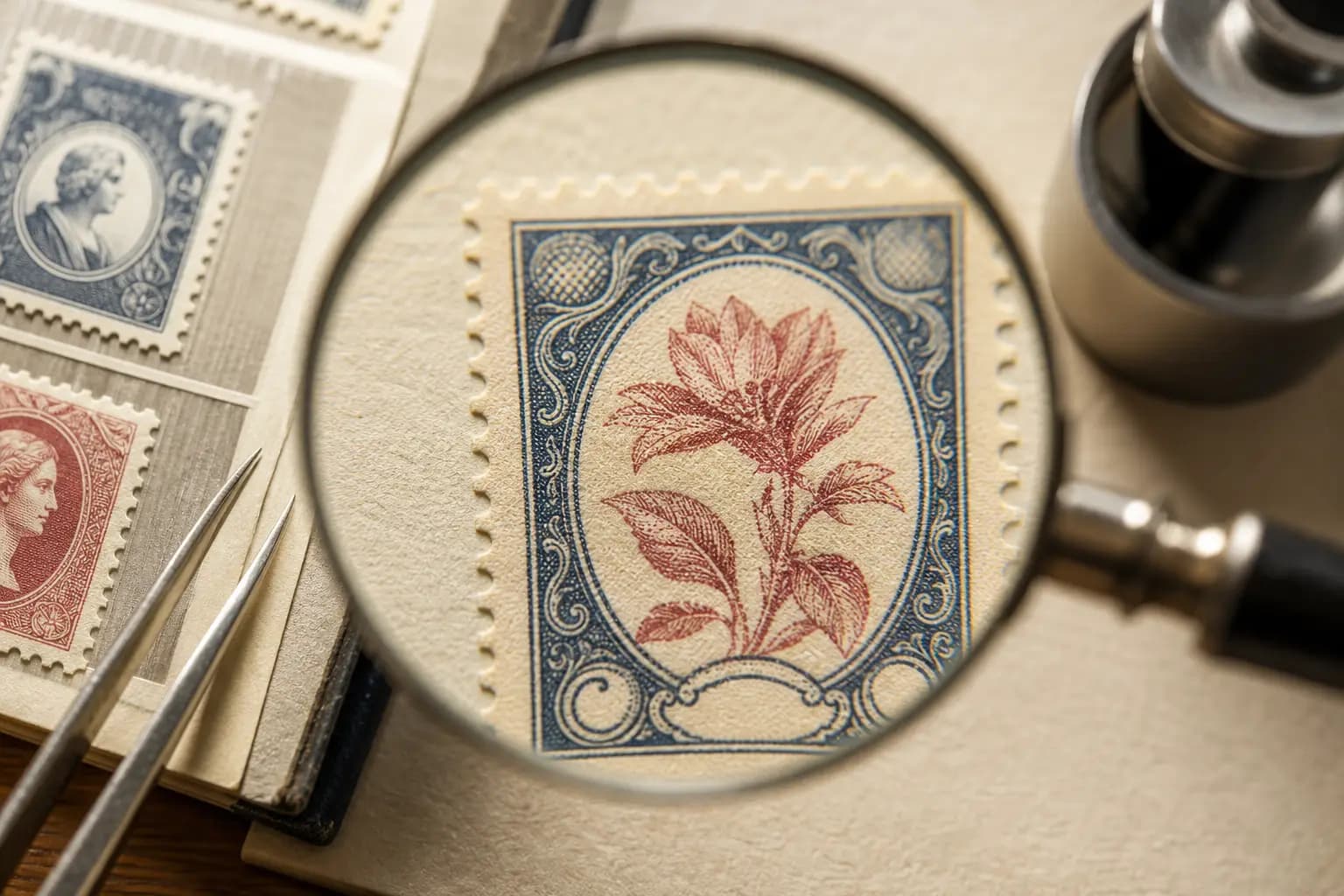
To analyze your stamps safely, always use non-contact magnification under diffuse or oblique light to avoid physical contact with fragile paper. Examine the surface for ink texture, edge sharpness, and dot structures. Using a digital tool like StampSnap can help you log a likely identification and keep your notes organized as you study these features. Once you have gathered your visual clues and cross-referenced them with catalog listings, you can use StampSnap to create a permanent collection record of your findings. This methodical workflow ensures your collection is accurately documented.
Frequently asked questions
Can I identify offset lithography simply by looking for soft edges?
No. While older lithographic prints sometimes had softer edges, the Smithsonian National Postal Museum notes that modern offset lithography can be exceptionally sharp. Soft or blurred edges are not a dependable identifying rule on their own.
Does the presence of a dot pattern always mean a stamp is lithographed?
No. Under magnification, both gravure and other printing processes can show screened structures or dot patterns. You must combine your visual observations with official production records rather than relying on a single visual clue.
How does offset lithography differ from line-engraved intaglio?
Offset lithography is a planographic process where the image is printed from a flat surface using oil-based ink and a rubber blanket. Line-engraved intaglio is a recess process where ink is transferred from incised lines, often leaving raised ink on the surface and debossing on the reverse.
What tools should I use to inspect stamp printing methods?
To protect your stamps, use non-contact magnification and oblique or diffuse light. This allows you to examine surface texture, raised ink, and dot structures safely without risking physical damage to the paper or gum.