Start with one topic you genuinely enjoy
The safest and simplest way to begin a topic-based stamp collection is to choose one subject you already like. The American Philatelic Society notes that there is no right or wrong way to collect, and that many people begin with stamps that represent a topic they enjoy. That makes topical collecting a practical entry point because it gives your collection a clear purpose from the start.
A good topic can be broad, such as animals, ships, space, sports, flowers, birds, or scouts, or it can be more unusual if you want a narrower challenge. The key is not how common the topic is, but whether it will keep you interested over time. If your topic feels too broad later, you can refine it without restarting the collection.
Set clear limits before you buy or sort
A topical collection works best when you decide, in advance, what counts. The APS explains that topical collectors often include stamps from all over the world, and many also collect special postmarks, first day covers, and postal stationery when those items match the theme. That flexibility is useful, but it can also make a collection hard to manage unless you set boundaries early.
Write down your rules for inclusion. For example, you might collect only stamps showing your topic directly, or you might also include related cancellations and covers. You might choose mint stamps, used stamps, or a mixture, since the APS says that choice is entirely up to the collector. Clear limits help you avoid buying items that do not fit your plan.
Use safe tools and handle each item carefully
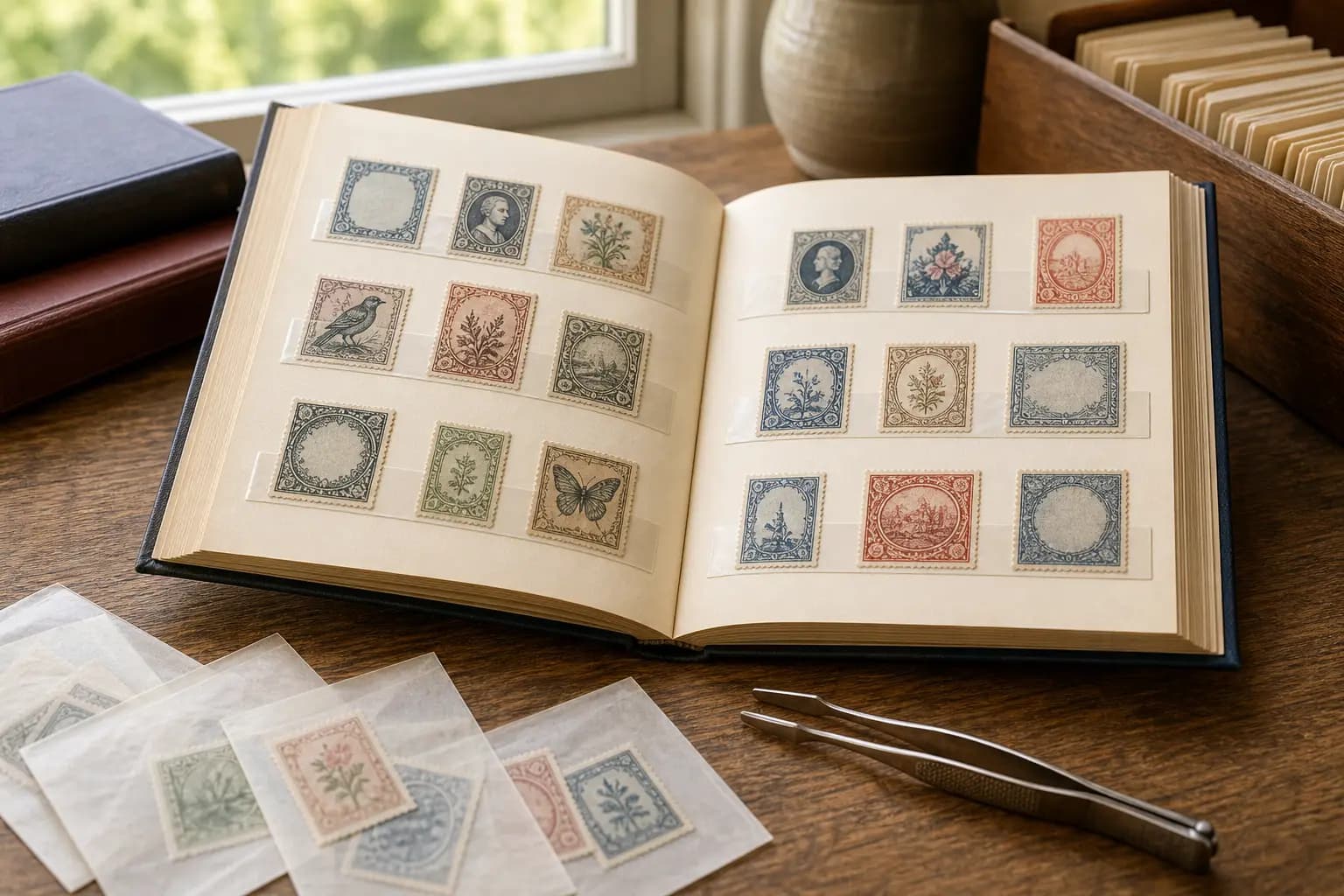
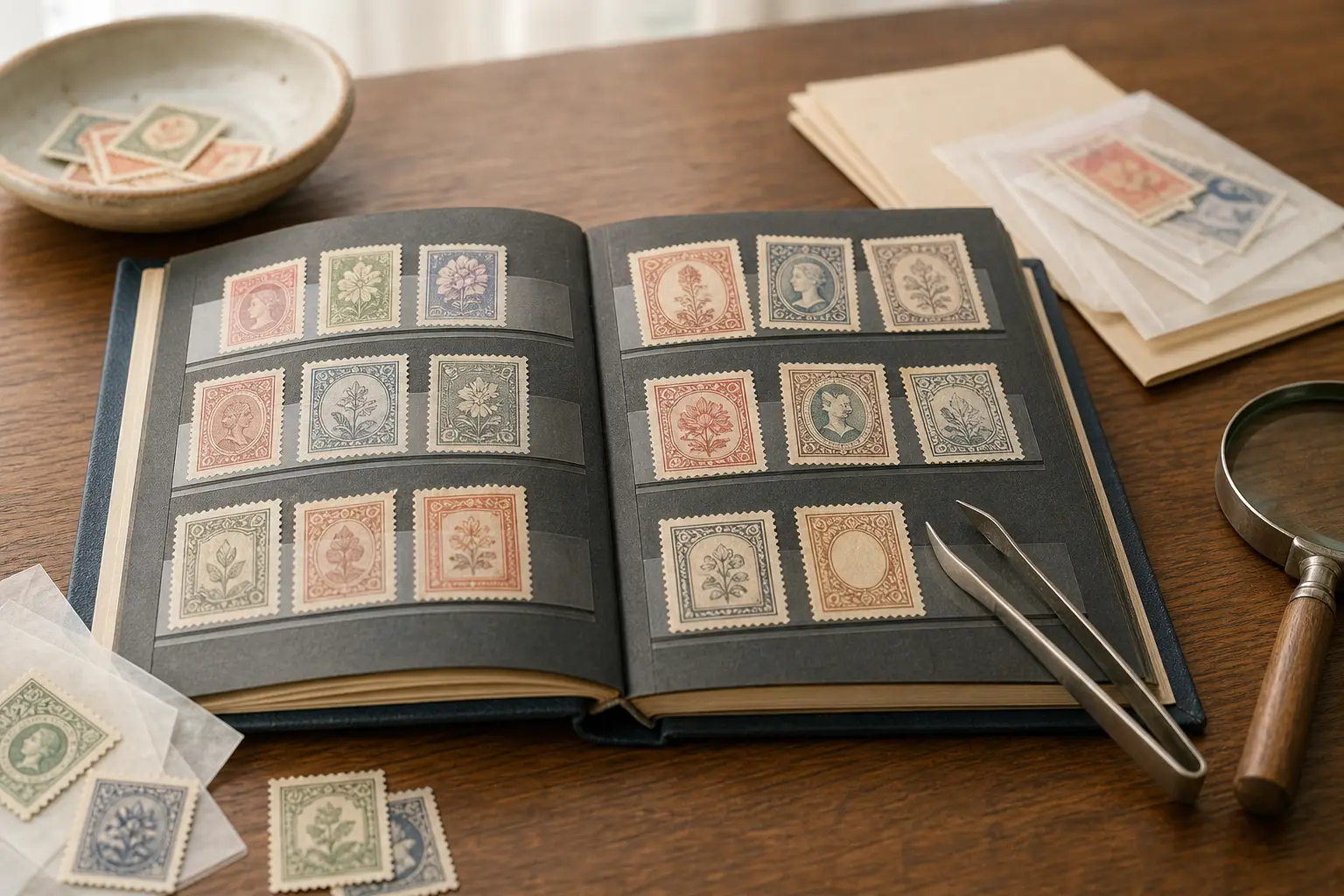
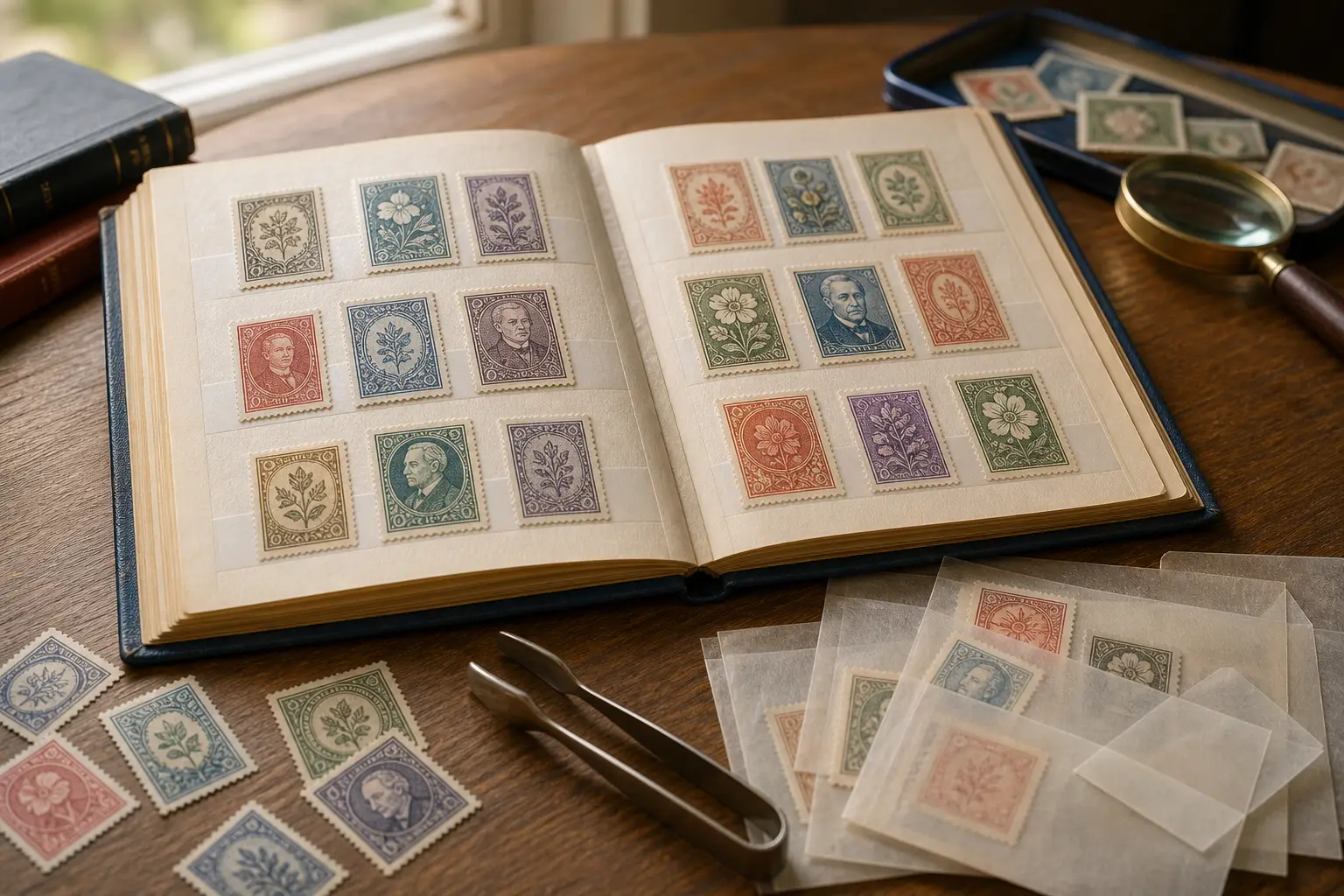
Begin with basic tools rather than complicated equipment. The Smithsonian National Postal Museum identifies stamp tongs, an album, and a general reference book as sufficient starting tools for a new collector. Tongs with smooth ends let you pick up loose stamps without direct finger contact, which helps reduce damage from oils, bending, and accidental creasing.
A magnifying glass can help you see small design details, and a perforation gauge can help distinguish look-alike issues by measuring perforations. The museum also mentions watermark detectors, color guides, and catalogs as specialist aids. These tools are helpful, but they do not replace careful comparison with reliable references. If a stamp is fragile, damp, or stuck to another item, pause and use appropriate tools rather than forcing it.
Compare what you see with trusted references
A topic-based collection often includes similar stamps from different countries, years, or formats, so visual sorting alone is not always enough. The Smithsonian National Postal Museum advises comparing physical observations with reliable references rather than treating them as conclusive on their own. That is especially important when a design looks familiar but small details may differ.
Catalogs can help you record issue date and printing method, while your own notes can capture the subject, country, and format of each stamp. If you use StampSnap to create a likely identification or a collection record, treat that as a working note, not a final authority. The safest approach is to verify important details against trustworthy references before you decide where an item belongs.
Build the collection in a way that stays manageable
Topical collecting is often popular because it can be flexible, relatively inexpensive, and easy to personalize, but the collection can still grow quickly. The APS notes that the world’s countries issue a very large number of postage stamps each year, so no one needs to try to collect everything. A topic gives you a natural filter that keeps the hobby practical and enjoyable.
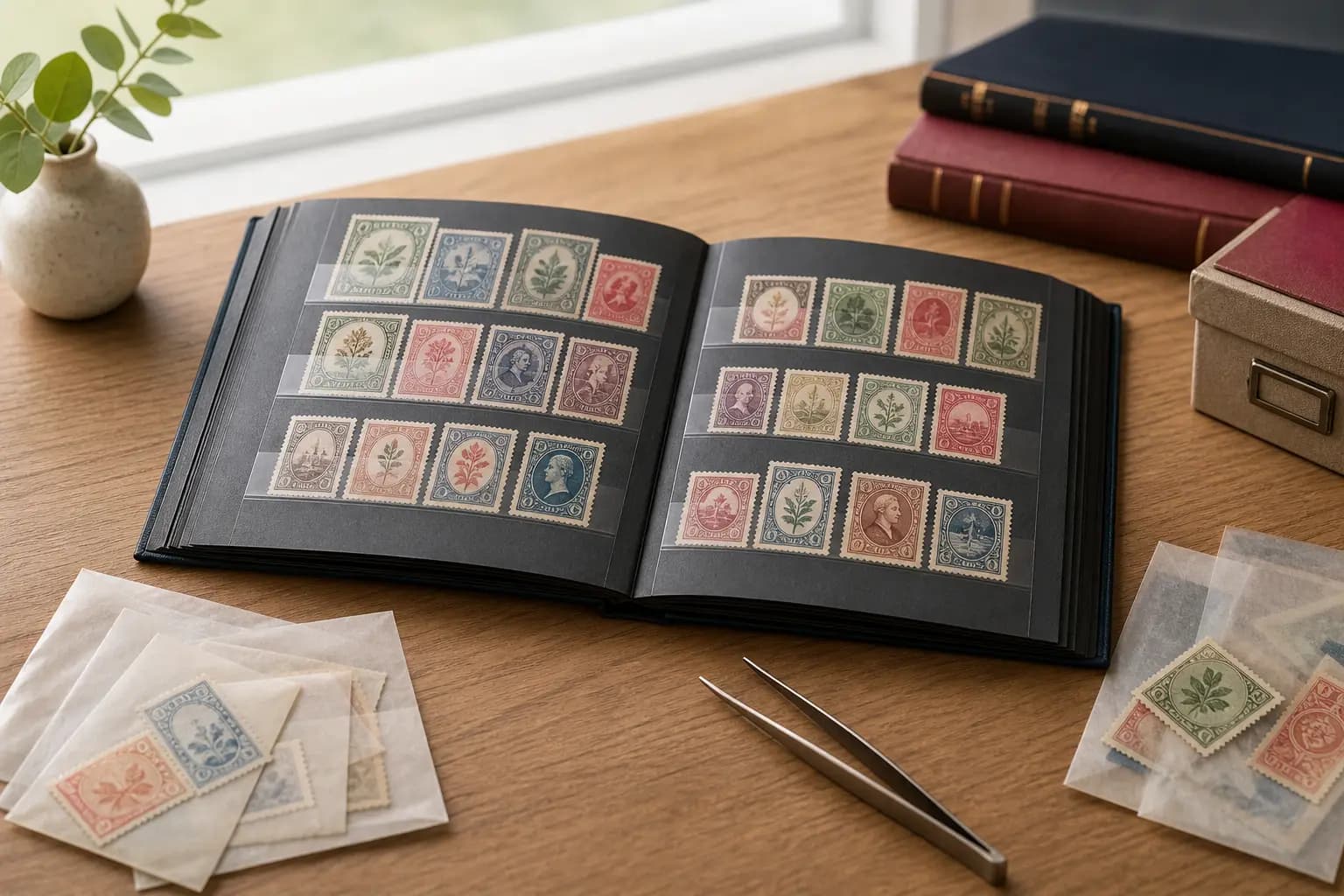
As you build, choose a system that lets you track what you already own and what you still want. Many collectors organize by subtopic, country, or format. Others separate mint and used material, or keep special items such as first day covers together. The best system is the one you can maintain consistently without confusion.
Sort, label, and store with preservation in mind
Once you have selected a stamp, store it in a way that avoids unnecessary handling. The APS explains that used stamps do not require you to preserve gum, while mint stamps need more care because their original condition matters. Whatever you collect, keep items in an album or other orderly storage so they are easy to review and less likely to be damaged by repeated handling.
Label each item or page with the details you know: topic, country, issue date if known, and whether the stamp is mint, used, or part of a cover or stationery item. If an identification is uncertain, mark it as tentative rather than guessing. That practice keeps your collection honest, makes later review easier, and helps you update records when you find better evidence.
Keep the hobby flexible and enjoyable
One of the main strengths of topical collecting is that it can evolve with your interests. You may begin with a broad subject and later focus on a narrower one, or you may add related material when it genuinely improves the story of the collection. The APS emphasizes personal enjoyment as the most important part of stamp collecting, and that applies especially well to topical work.
If you are uncertain whether a stamp belongs in your theme, set it aside and review it later with a catalog or other reference. There is no need to force a decision immediately. A careful, relaxed approach will usually produce a stronger collection than a rushed one, and it will also reduce the chance of handling mistakes.
Frequently asked questions
What is the easiest topic for a new stamp collector?
The easiest topic is usually one you already enjoy and can recognize quickly, such as animals, flowers, ships, space, or sports. A familiar subject makes it easier to sort and stay motivated.
Should a topical collection include used stamps, mint stamps, or both?
Either is acceptable. The APS says the choice to collect mint, used, or a mixture is entirely up to the collector.
Do I need special tools to start a topical collection?
No. The Smithsonian National Postal Museum says a simple pair of stamp tongs, an album, and a general reference book are enough to begin.
Can I include first day covers or postal stationery in a topical collection?
Yes, if your collecting rules allow it. The APS notes that many topical collectors also include first day covers and postal stationery when those items fit the theme.
Should I trust a visual match alone when sorting topical stamps?
No. The Smithsonian National Postal Museum advises comparing physical observations with reliable references, because visual clues alone are not conclusive.