The short answer: start small and choose one focus
If you have limited space, the best way to start a stamp collection is to choose one narrow focus and build slowly. The American Philatelic Society notes that there is no right or wrong way to collect, and that collectors may choose worldwide material, one country, a topic, a stamp type, or even a trait such as shape or colour. In a small home, the practical choice is usually the one that keeps your collecting organised and enjoyable instead of sprawling across too many albums and boxes.
A focused approach also helps you avoid the common beginner mistake of trying to collect everything at once. Worldwide collecting is possible, but the same source notes that the world issues a very large number of postage stamps each year, so a complete worldwide run is usually unrealistic unless you have substantial money, space, and time. A smaller specialty gives you a clearer target and makes it easier to store, sort, and review what you already have.
Pick a collecting style that fits your room and time
A space-conscious collector can choose a topic, a single country, stamps from a certain period, or a simple preference such as mint or used. The APS explains that topical collecting can include stamps, special postmarks, first day covers, and postal stationery, which lets you shape the collection around a theme without needing to keep every kind of related material. If you like a particular country or period, country collecting may be even simpler because the scope stays fixed.
It also helps to think about what you want the collection to do for you. Some collectors enjoy the look of mint stamps, while others prefer used stamps because they often cost less and do not require concern about preserving gum on unused examples. Used stamps can also bring cancellations into the story. Stamp collecting works best when the collection matches your available space, not when it imitates somebody else’s much larger setup.
Use only a few basic tools at first
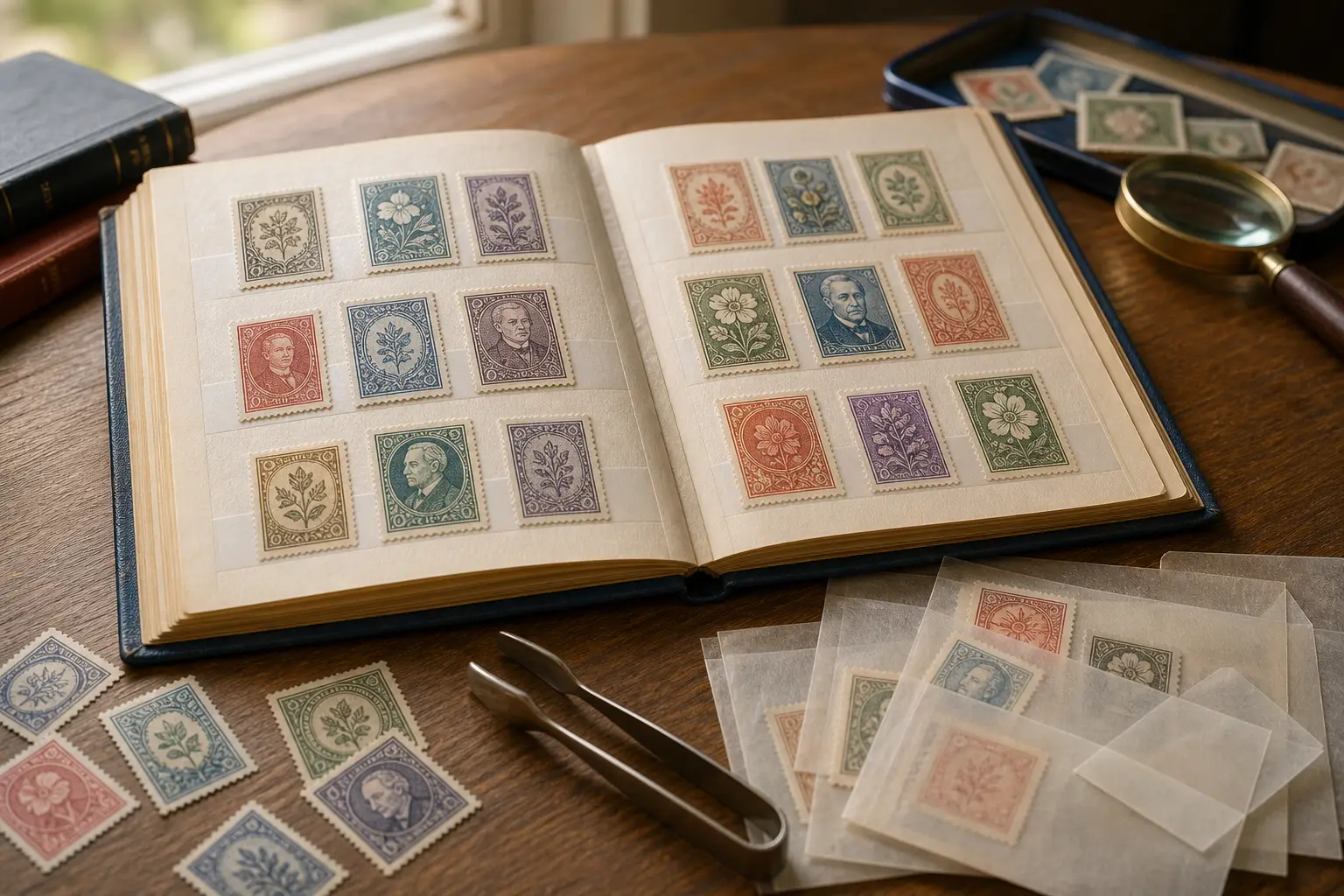
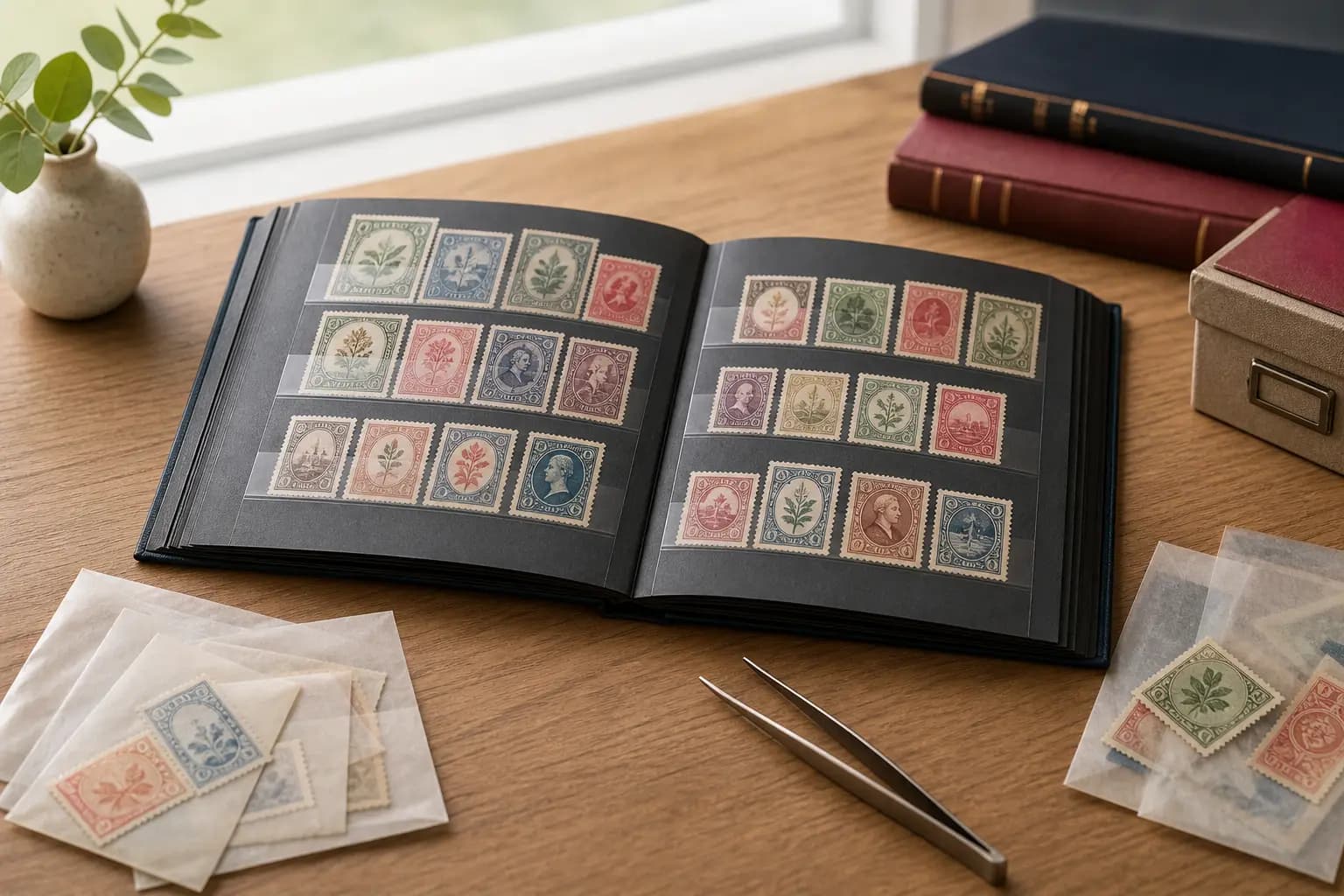
You do not need a large toolkit to begin. The Smithsonian National Postal Museum says a simple pair of stamp tongs, an album, and a general reference book are enough for a new collector. Tongs help you pick up loose stamps without direct finger contact, which is important for keeping material clean and reducing handling damage. An album gives your collection a fixed home, which matters even more when storage space is tight.
A magnifying glass can help you see small design details, and a perforation gauge can distinguish look-alike issues by measuring perforations. The museum also describes watermark detectors, colour guides, and catalogs as specialist aids. Those references are useful, but the museum cautions that physical observations should be compared with reliable references rather than treated as conclusive on their own. That is a good rule for small collections too: observe, compare, and only then record your conclusion.
Store stamps in a way that does not consume extra space
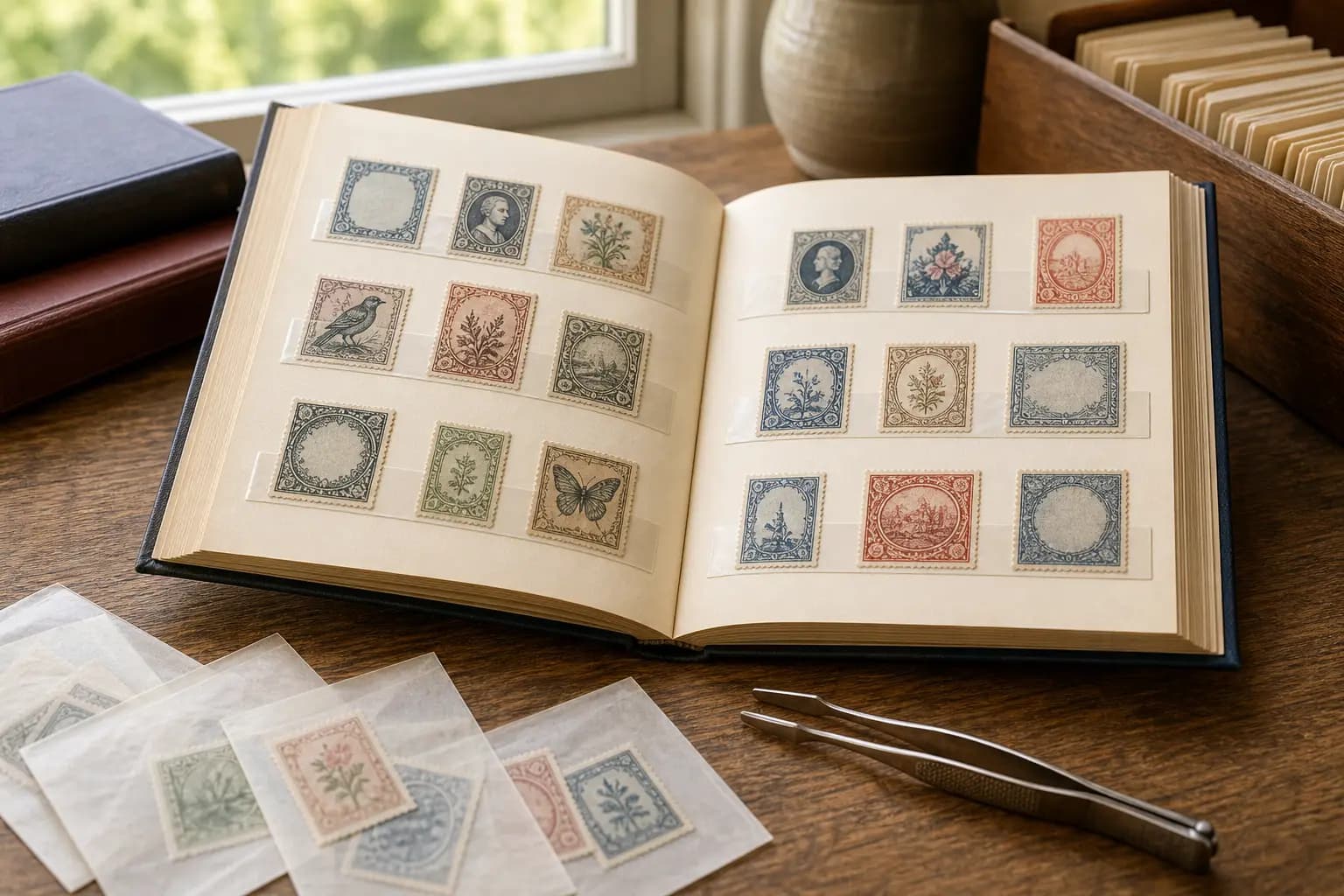
Good storage is about control, not volume. Since you are working with limited room, keep your stamps in an album or other orderly system rather than spreading them through drawers or envelopes. The APS explains that collectors can safely use inexpensive stamp hinges for mounted used stamps, and that the choice between mint and used affects how you need to think about gum preservation. Organised pages make it easier to see gaps, avoid duplicates, and know what you still want.
Do not let a small space tempt you into rough shortcuts. The sources provided do not recommend household solvents or improvised methods, and they do emphasise careful handling with tongs and reference-based checking. If a stamp seems delicate or uncertain, set it aside for later review rather than forcing a decision in the moment. A small, well-kept collection is easier to enjoy than a larger one that has been handled carelessly.
How to decide what belongs in the collection
A simple rule for beginners is to add only material that clearly fits your chosen scope. If you are building a topical collection, ask whether each stamp, postmark, first day cover, or piece of postal stationery genuinely supports that topic. If you are collecting one country, decide whether you want all issues, only a certain time period, or only one format such as mint or used. This keeps the collection coherent and makes future sorting much easier.
It can also help to record your choices as you go. A short note for each item about why it was added can prevent confusion later, especially if you are comparing similar stamps. StampSnap can be useful here as a way to create a likely identification or collection record, but the final decision should still be checked against reliable references. For a small-space collector, the goal is a tidy, understandable collection, not a room full of unsorted material.
Keep the hobby enjoyable and manageable
The strongest advantage of stamp collecting is that it can be flexible. The APS says it is suitable for nearly all ages, can be done throughout the year, and does not require special skills or great wealth. That means limited space is not a barrier; it simply shapes the style of collecting you choose. A compact collection can still be rich in interest if it reflects your own preferences and is built with care.
If your space remains tight, resist the pressure to expand too quickly. A narrow, well-defined collection can teach you more than a broad, disorganised one because you will spend less time moving material around and more time learning from it. Start with one album, one reference book, and one clear goal. Add only when the existing system still feels easy to manage.
A practical beginner method you can follow today
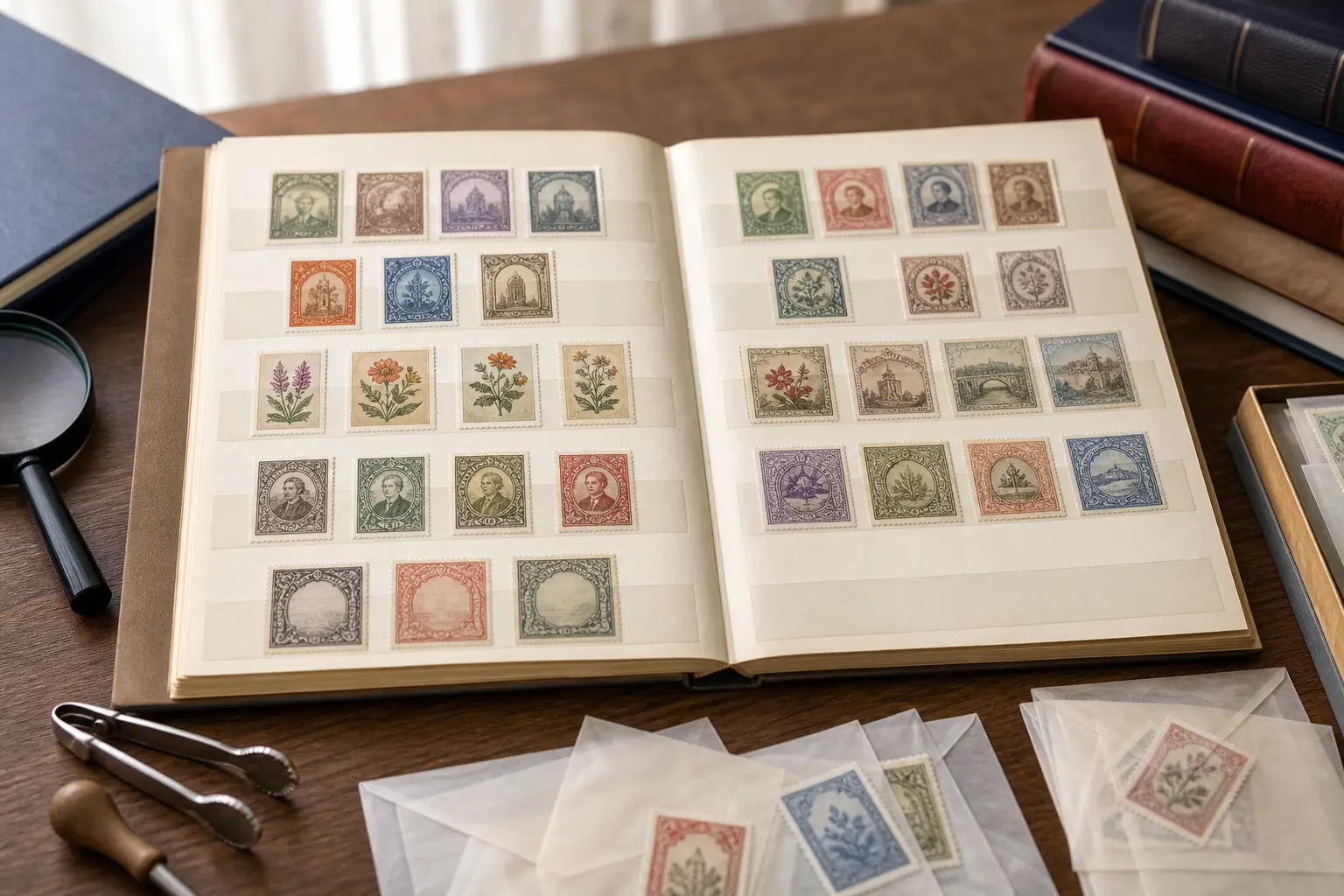
Begin by choosing one collecting focus that fits your space, such as a country, a topic, or mint versus used. Then gather the minimum tools: tongs, an album, and a general reference book. Sort what you already have into the chosen scope, and compare uncertain items with reliable references instead of guessing. This keeps the hobby safe, simple, and financially restrained.
After that, set a basic storage rule and stick to it. Keep the collection together, handle stamps with tongs, and use your album pages to show what you have and what is missing. Over time, you can add specialised tools such as a magnifying glass or perforation gauge when they are genuinely useful. The right pace for a small-space collector is slow enough to stay organised and steady enough to keep the hobby enjoyable.
Frequently asked questions
Can I start stamp collecting if I only have one small shelf?
Yes. The evidence shows stamp collecting is flexible, and a small collection can be built around one country, one topic, one stamp type, or another narrow focus.
What is the easiest type of stamp collection for a beginner with little space?
A focused collection is easiest to manage. The supplied sources mention worldwide, country, topical, mint or used, and type-based collecting, so the best choice is the one that stays small and organised.
Do I need expensive tools to begin?
No. The Smithsonian National Postal Museum says a simple pair of tongs, an album, and a general reference book are enough to start.
Should I trust my first guess about a stamp?
No. The museum advises comparing physical observations with reliable references, because clues like perforations or other features should not be treated as conclusive on their own.
Is it better to collect mint or used stamps in a small space?
Either can work. The APS says the choice is personal, though used stamps often cost less and do not require preserving gum.