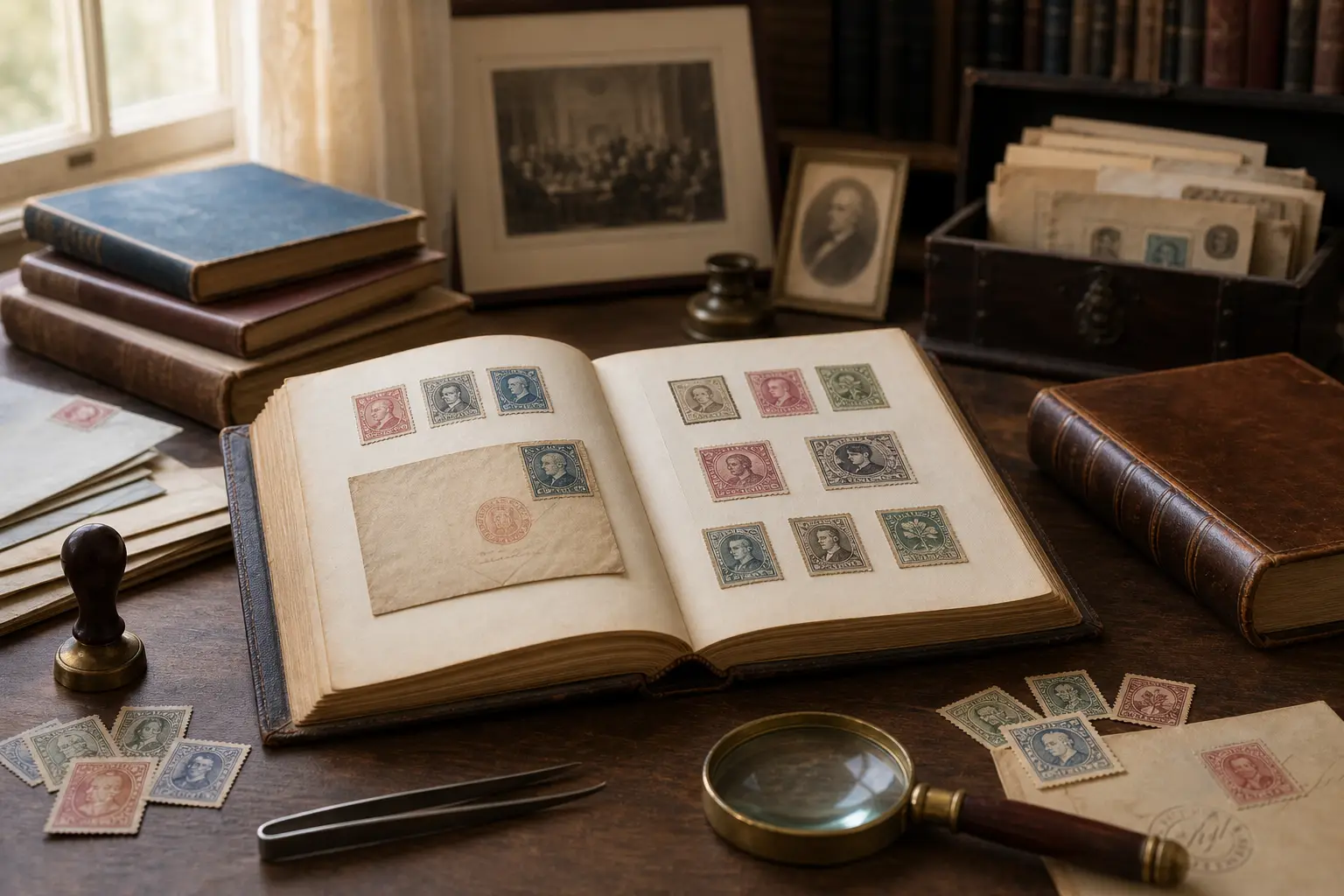
Short answer: they preserved history by organizing knowledge
Early philatelic clubs preserved stamp history by turning scattered collecting into shared, recorded activity. The Smithsonian National Postal Museum says organized philately began with collectors gathering to compare, discuss, and exchange stamps, and that shared interests encouraged local clubs and societies devoted to particular countries, periods, or subjects. Those clubs did more than hold social meetings; they published research, created reference material, and helped collectors share specialist knowledge.
That matters for history because private collections are easy to lose, separate, or forget, while club publications and reference tools can outlast individual owners. If you are trying to understand a stamp’s background today, a club-made journal, handbook, or research note may preserve details that would otherwise be hard to recover. A tool such as StampSnap can help you create a likely identification or collection record, but the historical record itself usually depends on published sources and careful comparison.
The 1886 American Philatelic Association shows the shift to organised record-keeping
The American Philatelic Society’s history gives a clear dated example of this shift. By the 1880s, the hobby had grown from a few enthusiasts in the 1850s to an estimated 25,000 collectors in the United States, and in 1886 several prominent collectors discussed forming a national organization. By April 1886, the Committee on National Organization had been formed, and 219 collectors sent proxies so they could vote by proxy for the new body.
On September 13, 1886, a committee met in New York City and adopted the name American Philatelic Association. Its constitution said the association existed to help members gain knowledge in philately, cultivate friendship among philatelists, and connect them with similar societies in other countries. That combination of education, fellowship, and international contact helped transform stamp collecting from a private pursuit into a recorded, collaborative field.
Journals and libraries made philatelic knowledge durable
One of the most important ways clubs preserved history was through print. The APS history notes that the first five issues of The American Philatelist were published in Altoona, Pennsylvania, beginning on January 10, 1887. A journal does not just announce events; it records ideas, debates, descriptions, and collecting interests that future readers can consult. When club editors preserve information in print, they create a trail that later collectors and researchers can follow.
The same source also shows an early commitment to libraries. The association’s Library Department was still developing, but the members were already expected to depend in large measure on donations for its growth. The APS club resources page continues that tradition by listing sample forms, bibliographies, and books on club work, speakers’ programmes, youth clubs, newsletters, and quizzes. In practical terms, clubs helped turn expert knowledge into something searchable, borrowable, and teachable rather than oral only.
Exchanges and duplicate books preserved material as well as ideas
History in philately is not only written history. The APS history explains that its Exchange Department was designed to facilitate the exchange of duplicate stamps, entire envelopes, and postal cards among members through exchange books and boxes. This mattered because duplicates could be redistributed, compared, and kept in active collector use instead of disappearing into drawers or being overlooked.
The purchasing department also helped members obtain new issues or obsolete stamps at or near face value, while the annual convention created a regular meeting place for collectors. These services were specific to the American Philatelic Association, not universal to every club, but they show how an organization could support both collecting practice and historical continuity. By moving material and information through a network, clubs helped preserve the evidence collectors study today.
Why clubs mattered for research, not just socialising
The Smithsonian account is explicit that societies did more than provide social meetings: they published research, created reference material, and helped collectors share specialist knowledge. This is the core reason early philatelic clubs matter to history. They created a setting where a collector could compare a stamp, discuss what was seen, consult a reference, and then pass on the result in a newsletter, journal, or talk.
That process also made specialist collecting possible. The Smithsonian says clubs and societies formed around particular countries, periods, or subjects, which means they helped collectors narrow their focus and build expertise. When a club supports a specialist topic, it can preserve details that broader general collecting might miss, such as issue distinctions, postal usage, or historical context. Even when the organisation changes over time, the records it creates may remain useful to later researchers.
Counterfeit detection and reference work protected the record
Preserving history also meant protecting accuracy. The APS history says fraudulent stamps plagued the organization in its early days, and the association responded by electing E. A. Holton as a counterfeit detector, a role described as a forerunner of today’s expertizing agency. That is an important historical milestone because it shows clubs actively trying to separate reliable material from deceptive material.
A club that records questionable items, compares examples, and names an expert contact helps keep the hobby’s documentary record cleaner. This does not make every club a certifying authority, and it does not mean every questioned item can be resolved quickly. It does show that philatelic societies were part of the early infrastructure for research, reference, and careful checking, which is exactly what historians need.
How collectors can use this history safely today
If you want to research a stamp or build a historical collection now, follow the same method early clubs used: compare, record, and consult references before drawing conclusions. Keep the stamp in its current state, avoid trying to clean or alter it, and note any envelope, card, or accompanying material because context can matter. When a stamp is part of a larger postal item, that context may be more historically informative than the stamp alone.
Use published references, club literature, and society resources to build your notes. If you are making a digital collection record, StampSnap can help you organise a likely identification and keep track of observations, but it should be treated as a starting point rather than an appraisal or authentication. The best historical habits are the oldest ones: document what you see, compare with reliable sources, and preserve original evidence.
Frequently asked questions
What did early philatelic clubs do that helped preserve history?
They published journals, created reference material, kept libraries, organised exchanges, and shared specialist knowledge, which preserved information that might otherwise have been lost.
Did the American Philatelic Association have a historical role?
Yes. According to the APS history, it formed in 1886, began publishing The American Philatelist in 1887, and created services such as a library, exchange department, and counterfeit detector.
Were club services the same everywhere?
No. The evidence shows specific services of the American Philatelic Association and general functions described by the Smithsonian. Other clubs could differ in size, programmes, and offerings.
How did clubs help with stamp research?
They let collectors compare material, discuss findings, use reference material, and publish results, which turned individual observations into shared research.
Can I use a phone app instead of club records?
A digital tool can help you organise a likely identification or collection record, but historical conclusions should still be checked against published references and, where possible, specialist literature.