The safest answer: store dry stamps with minimal handling
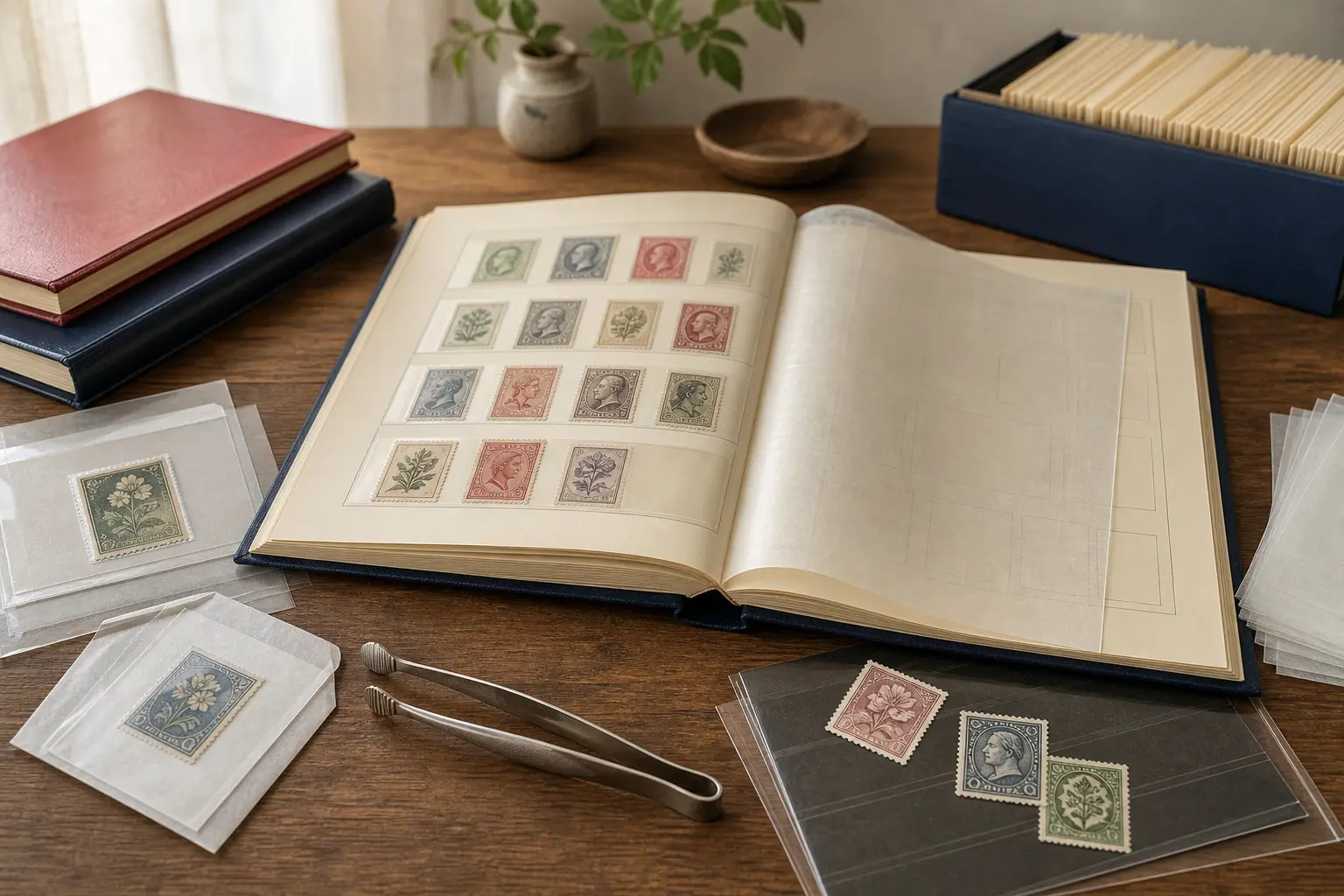
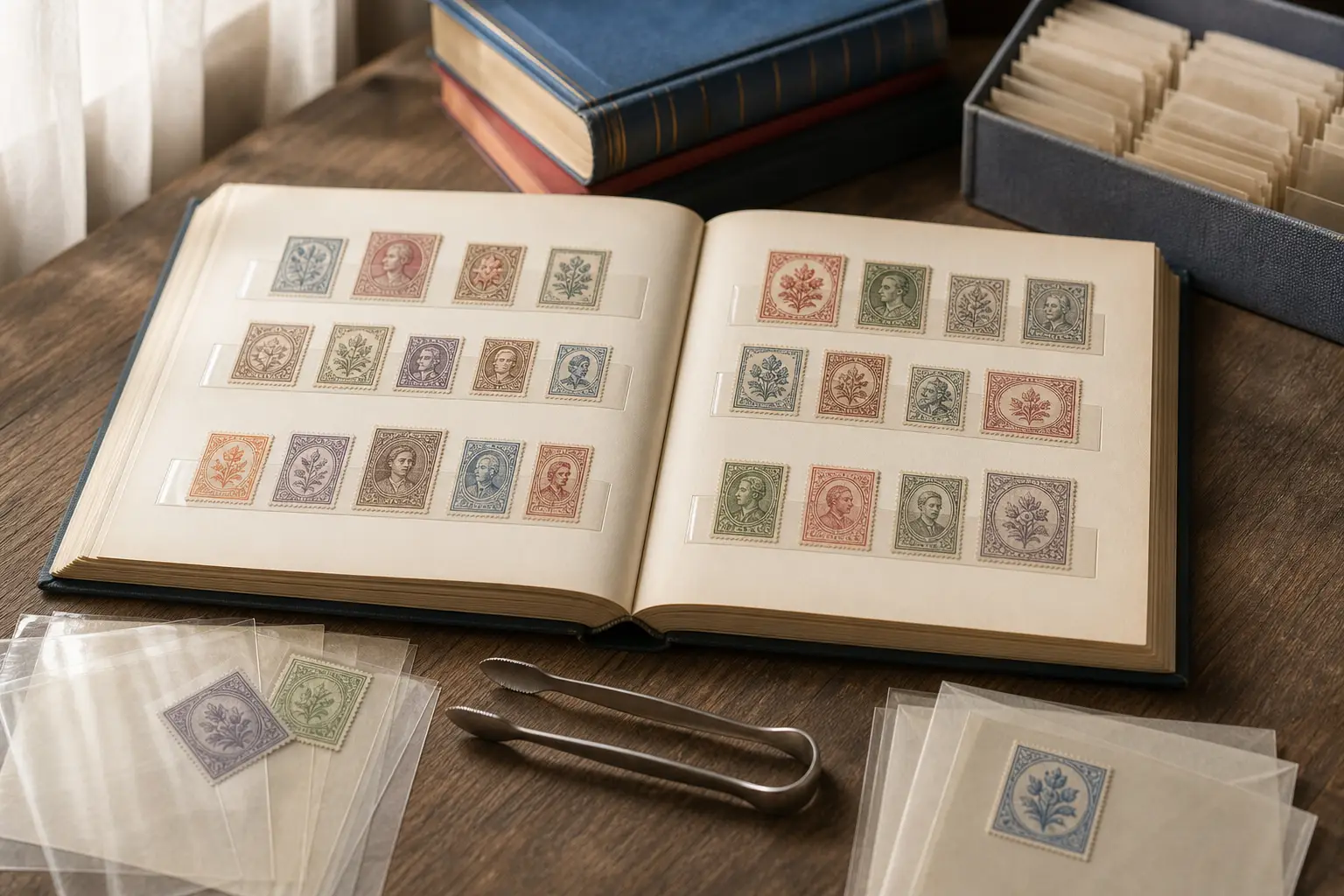
The safest way to store dry stamps is to handle them as little as possible, keep them in a proper holder, and avoid anything sticky or abrasive. For dry material, stamp tongs are a useful tool because skin oils can damage stamps even after careful handwashing. A magnifying glass can help you inspect details without repeated touching, and it is best to choose one that gives a clear, undistorted view.
If your stamps are already dry, do not treat them like wet or softened material. Wet stamps are more fragile and can tear easily, so they should be dried first before any normal storage step. That distinction matters: dry stamps can be handled with tongs and sorted more safely, while damp stamps need patience and a drying stage before you move them into an album or stock book.
Use albums, stock books, or glassine as a temporary home
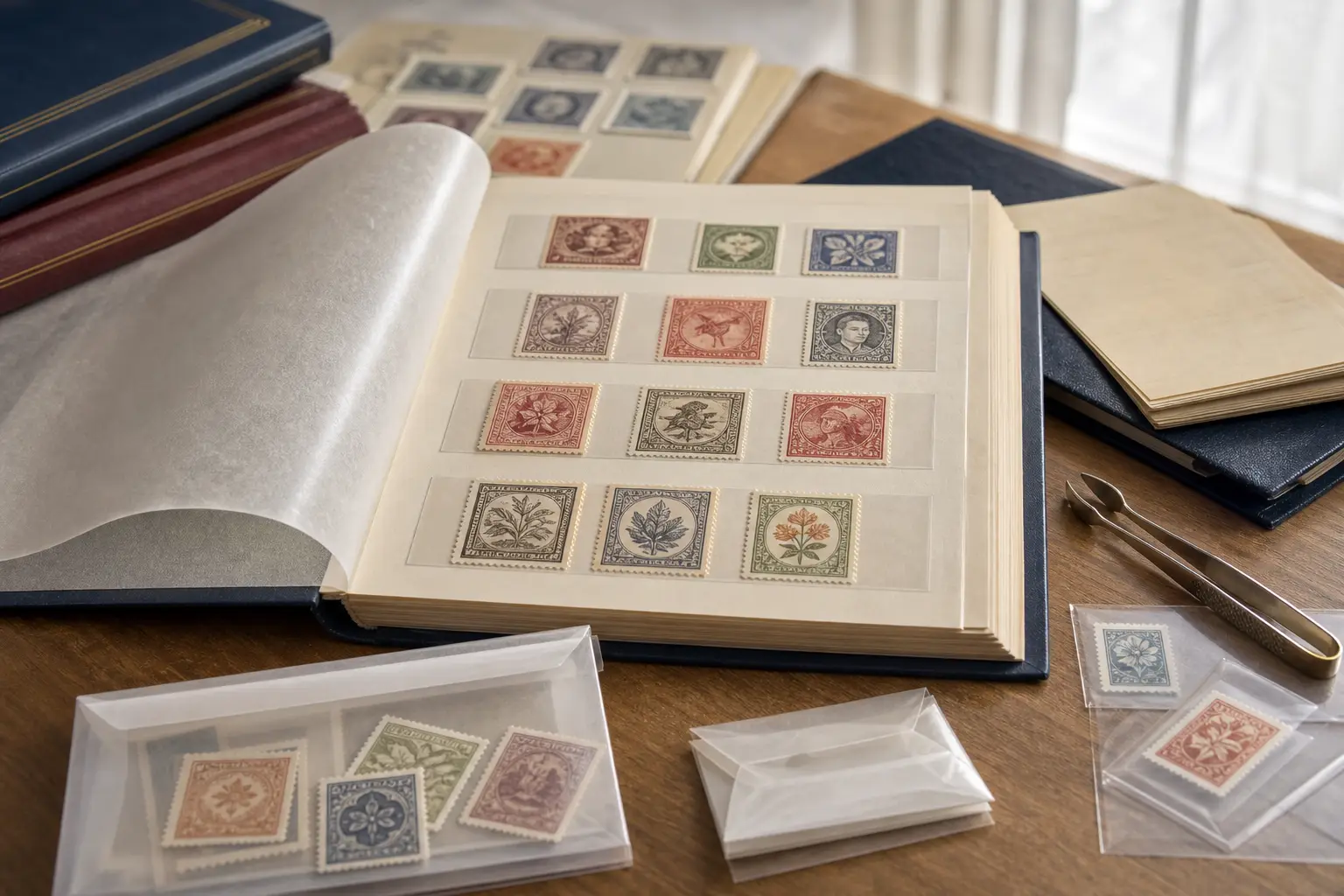
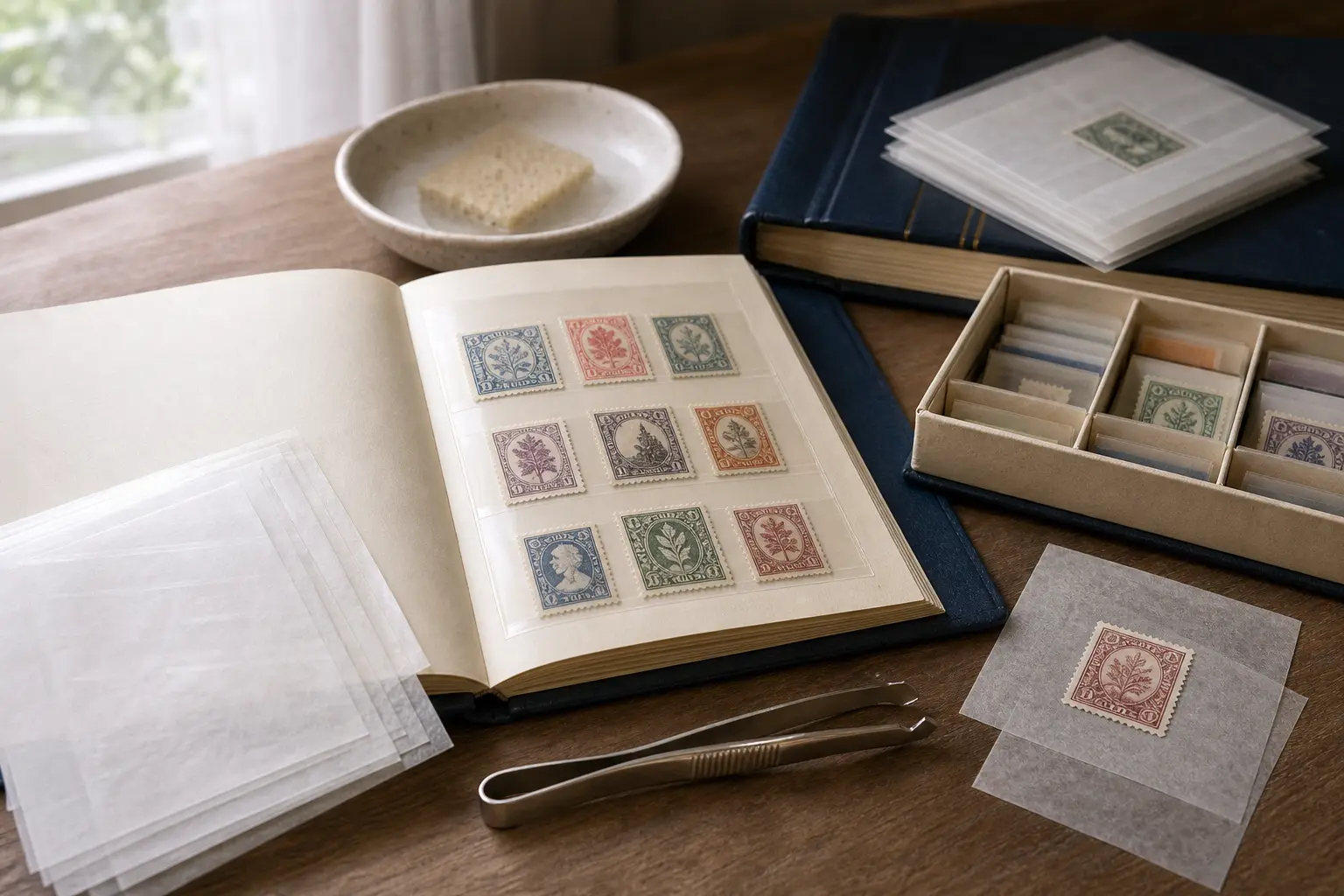
Stamp albums are a good long-term storage choice because they help protect stamps from handling and random bending. APS notes that you can buy albums from dealers, make your own with acid-free paper, or use a photo album only if the pages are not sticky. Sticky pages can damage stamps, so they should be avoided. Stock books are another practical option when you want flexible organisation without preprinted page layouts.
Glassine envelopes are useful as a temporary place to keep stamps before final mounting. They are not the same as an album, but they can help keep material together while you sort by country, topic, or service type. This is especially helpful when you are still comparing similar stamps and want to keep them separated until you are ready to make a final placement decision.
Choose hinges or mounts, never tape or glue
When you are ready to place a dry stamp in an album, use a hinge or a mount. Both are designed for stamp storage, and both are removable in a way that is much safer than tape or glue. APS specifically warns that tape and glue can lower a stamp’s value and may also damage the stamp when you try to remove it later.
A hinge is a small folded piece of translucent paper or plastic with special gum on one side, while a mount is a clear plastic sleeve. Which one you choose depends on your collecting goals and the type of stamp, but the basic preservation rule is the same: use a method intended for stamps, not ordinary household adhesives. If you are unsure, start conservatively and keep especially important items in protective storage until you have a better plan.
Sort before you mount so you do not keep moving stamps around
Before mounting, sort your stamps in a way that matches your collection plan. APS suggests sorting by country, by topic, or by the service the stamp was meant to provide, such as airmail, special delivery, postage due, parcel post, or revenue. Sorting first reduces unnecessary handling later, because you are less likely to move stamps from one place to another after they are already stored.
While sorting, look for the best copy if you have duplicates. APS recommends keeping the best example, often meaning well centred and lightly cancelled, and saving the extras for trading. That approach helps you preserve the strongest material while avoiding repeated repositioning. A stamp catalogue can also help you identify issue details, date, purpose, and whether a similar stamp may differ in print or value information.
Drying matters before storage if the stamp is not fully dry
If a stamp has been soaked or has come in contact with moisture, let it dry fully before putting it into regular storage. APS describes placing stamps between paper towels and adding a book on top to help prevent curling, then leaving them to dry overnight. That is a practical drying step for material that has already been soaked, but it should not be confused with normal storage for dry stamps.
Do not rush a stamp from wet to album. A damp stamp can curl, stick, or tear more easily than a dry one, so it deserves a separate workflow. Keep it away from other stamps until it is completely ready. If the stamp still has gum or moisture, handling it with tongs can still be risky because a wet stamp is more easily damaged than a dry one.
How to handle mixed-condition stamps without causing avoidable damage
Collectors often have a mix of dry stamps, damp stamps, and stamps still attached to paper. The safest method is to separate them immediately and treat each condition differently. Dry stamps can be handled with tongs and stored in glassine, albums, or stock books. Damp or softened stamps should remain apart until fully dry, and stamps on envelope corners may be better left on the envelope if the cover or cancel is the main reason you want them.
If you are building a collection record, note what you received, how it was stored, and whether it is dry, damp, or still attached to paper. A simple note in a catalogue entry or in StampSnap can help you remember what needs drying, sorting, or mounting later. The goal is not speed; the goal is to keep each item in the safest condition you can until you are ready for the next step.
A practical preservation routine for everyday collectors
A good routine is simple: let the stamp dry if needed, sort it once, store it in a suitable temporary holder, and mount it with a hinge or mount only when you are sure of its place in the collection. This reduces repeated handling and lowers the chance of accidental bending, tearing, or adhesion damage. It also makes your collection easier to organise over time.
For everyday preservation, the best habits are also the easiest to maintain. Use tongs for dry stamps, keep hands off the stamp surface, use a magnifier when two examples look alike, and avoid sticky album pages, tape, and glue. Those small habits do more to protect a collection than any complicated method, and they are suitable for beginners as well as more experienced collectors.
Frequently asked questions
What is the safest way to store dry stamps?
Store dry stamps in an album, stock book, or glassine envelope, and handle them as little as possible. Use tongs for dry stamps and avoid tape or glue.
Should I use tongs on wet stamps?
No. Wet stamps are more easily damaged, so it is safer to let them dry first before using tongs or other normal handling methods.
Can I use tape or glue to mount stamps?
No. Tape and glue can lower value and may damage the stamp when you try to remove it later. Use a hinge or a mount instead.
What should I do with a stamp that is still damp?
Keep it separate from dry stamps and let it dry fully before placing it into an album or stock book. A damp stamp is more vulnerable to curling and tearing.
Why sort stamps before storing them?
Sorting by country, topic, or service helps you avoid moving stamps repeatedly. It also makes it easier to choose the best copy when you have duplicates.