The safe short answer
Store stamps dry, handle them as little as possible, and use stamp tongs for loose, dry stamps. If you are not ready to mount them, keep them in glassine envelopes, an album, or a stock book so they stay protected and organised.
Do not use tape or glue. For album display, use either a hinge or a mount, and only work with stamps that are dry and stable. If a stamp is wet, softened, or freshly soaked, set it aside and let it dry completely before any further handling.
Start with sorting before storage
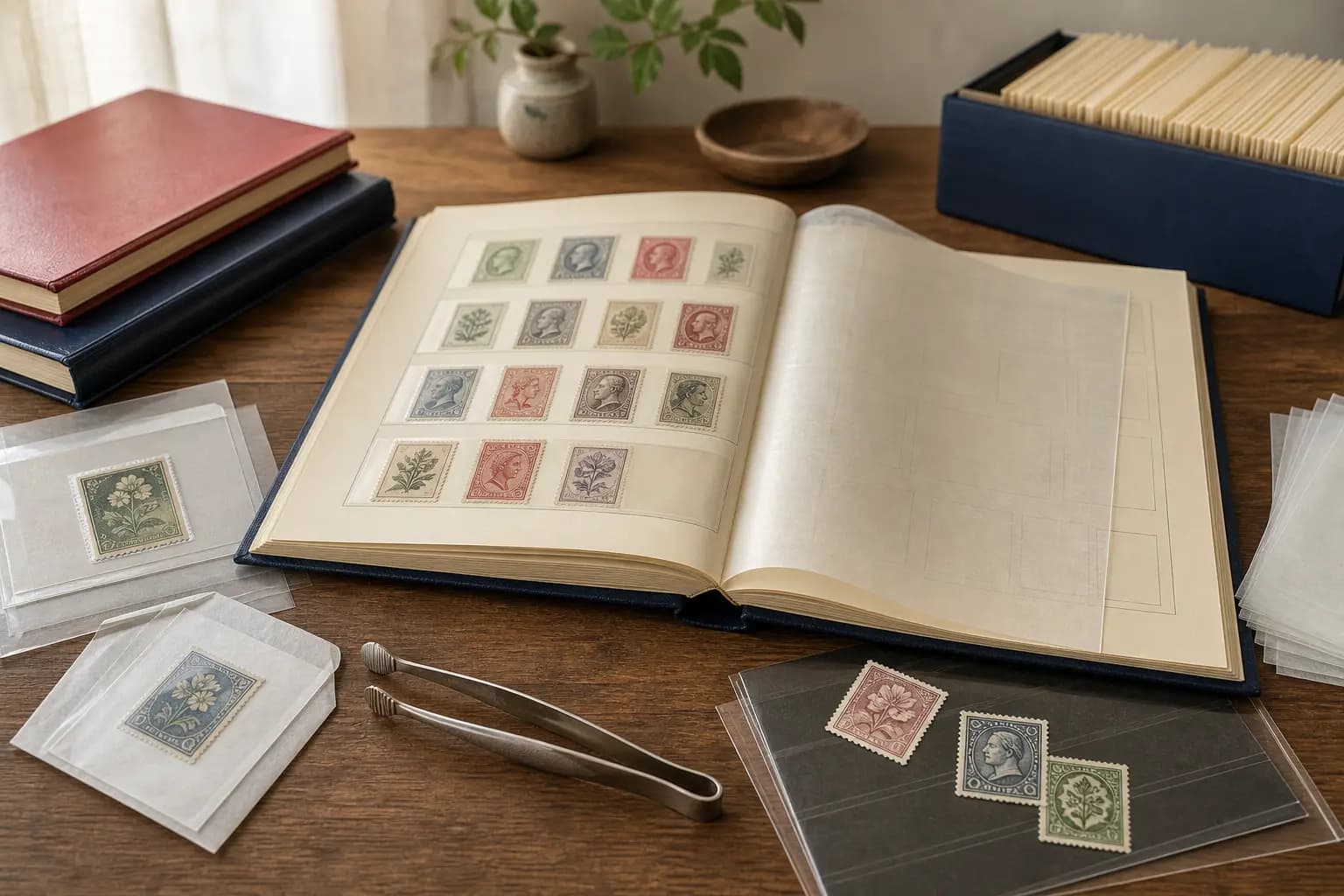
Good storage begins with sorting, because an organised collection is easier to protect and review. The American Philatelic Society notes that collectors often sort by country, topic, or service type such as airmail, special delivery, postage due, parcel post, or revenue stamps.
As you sort, remove badly damaged stamps unless they are difficult to replace and still worth keeping in your collection. If you have more than one copy of a stamp, choose the best one for the main collection, such as a well-centred and lightly cancelled example, and keep duplicates aside for trading or study.
Choose the right temporary home
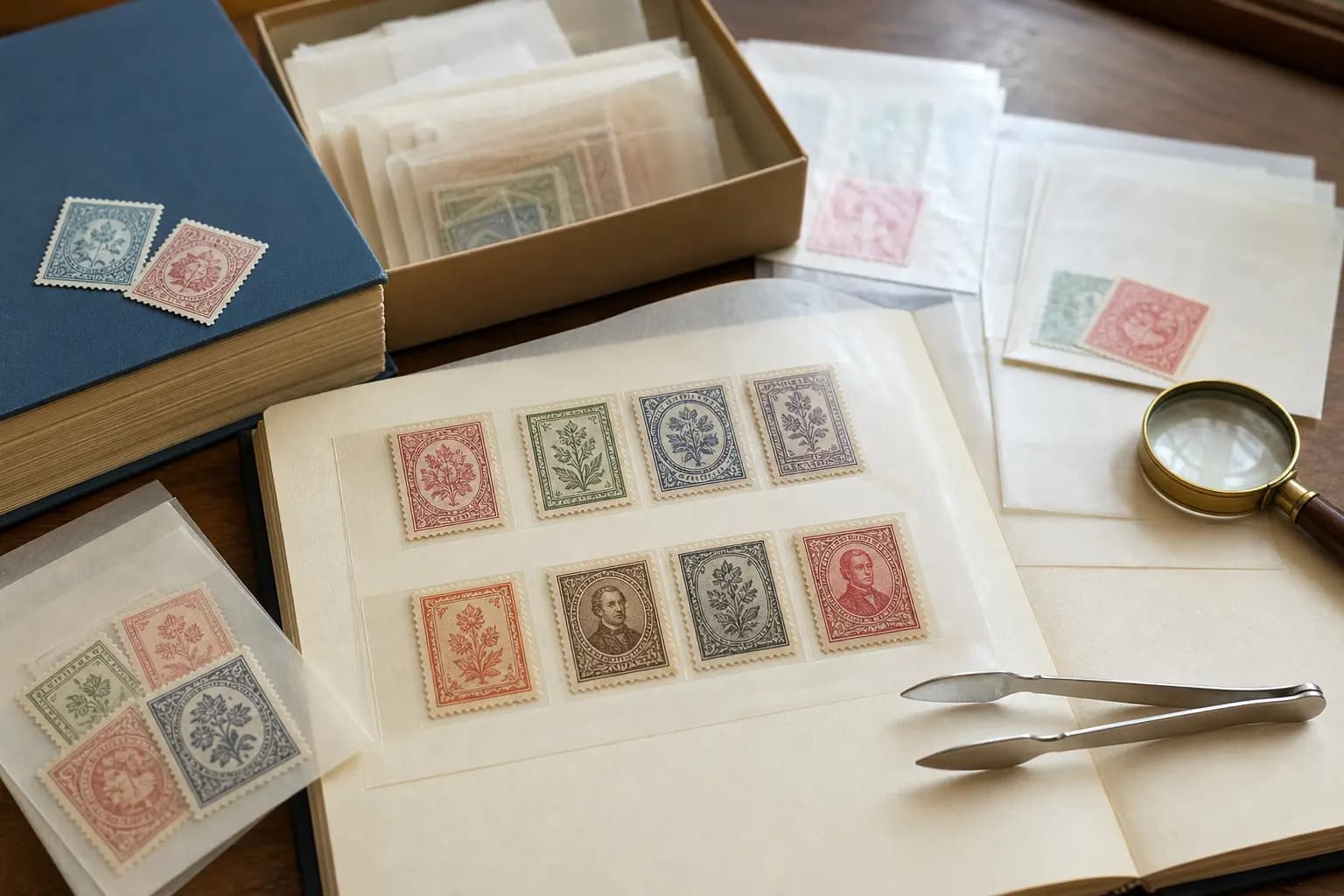
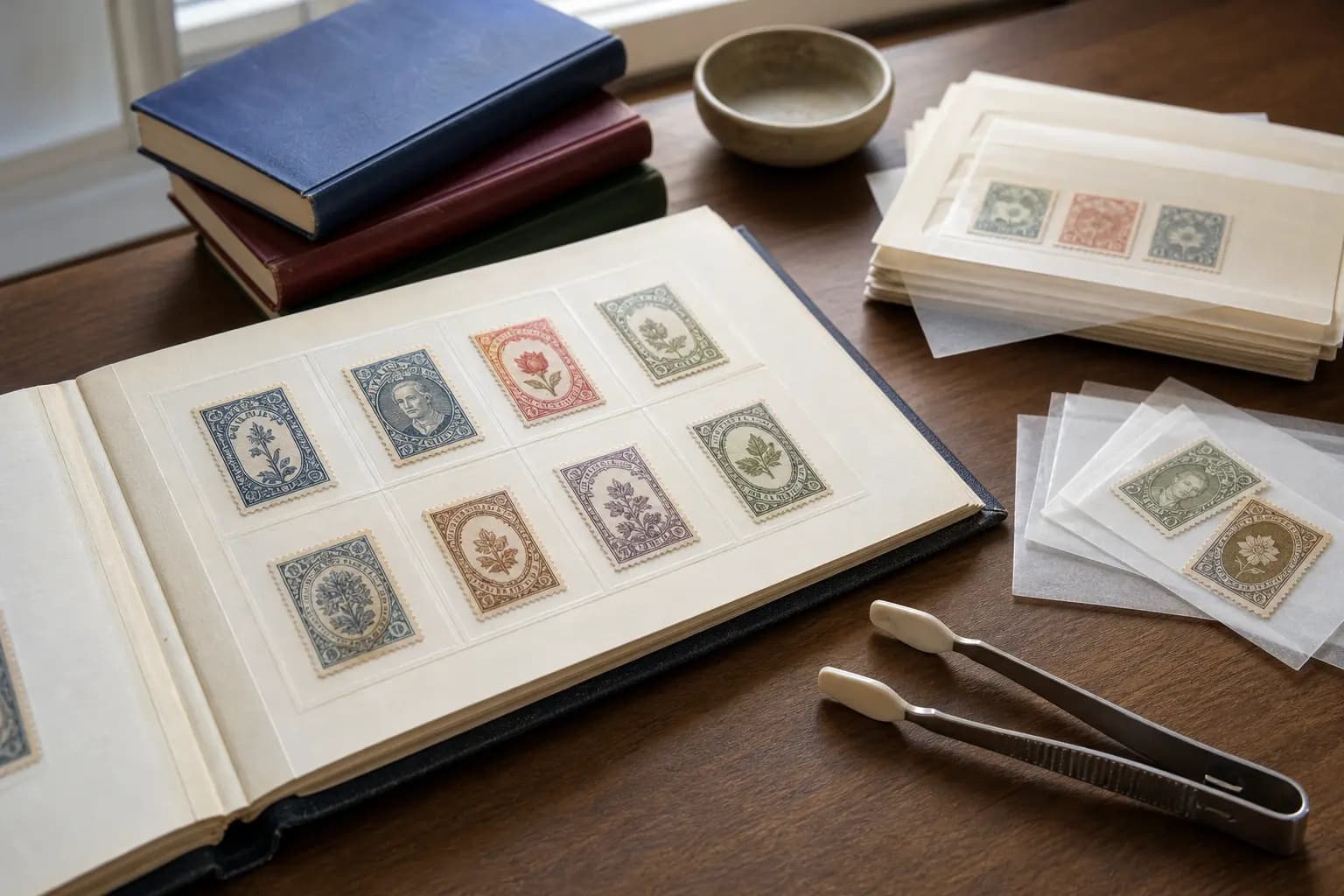
If stamps are not yet ready for album pages, store them in glassine envelopes until you decide where they belong. Glassine is useful because it lets you keep items together without sticking them down, which makes later sorting and mounting safer.
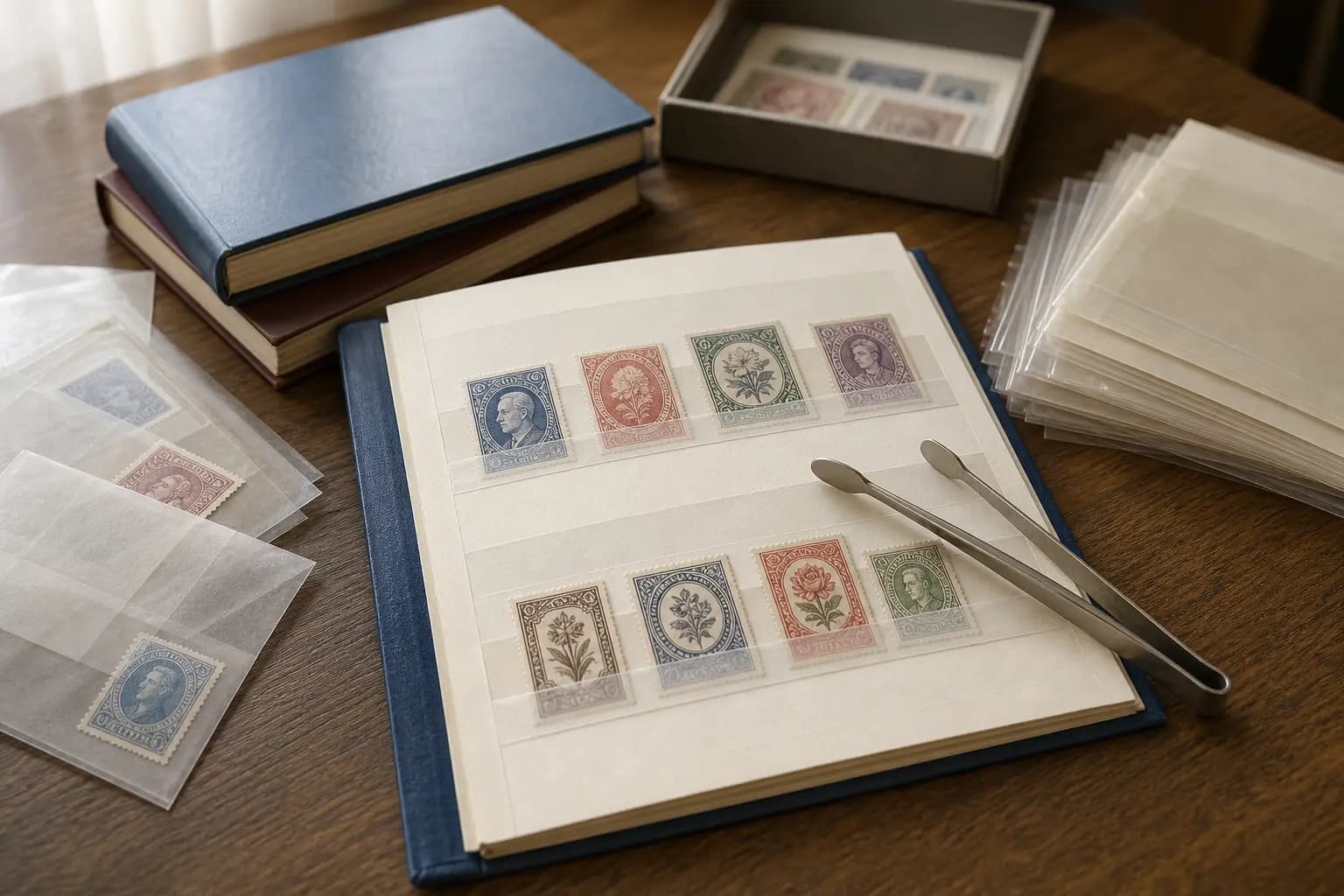
Albums and stock books are both practical for protection. An album can be arranged in a planned order, while a stock book offers pockets that let you organise stamps more flexibly. The APS also notes that you can use an album made by a dealer, one you create yourself, or even a photo album with acid-free paper, but sticky pages should be avoided because they can damage stamps.
Handle dry stamps with tongs, not fingers
For loose, dry stamps, stamp tongs are the safest everyday tool. They are shaped like tweezers but have a smooth gripping surface made for stamps, and they reduce the skin oil transfer that can damage paper and gum. The APS recommends handling stamps as little as possible and using tongs for dry material.
A magnifying glass is also helpful for checking small differences before you file a stamp away. The APS recommends one that gives clear, undistorted viewing, ideally around 5x to 10x magnification. If you are building a basic identification record in StampSnap, use the image and notes as a reference only; the key point is still careful physical storage of the actual stamp.
Hinges, mounts, and when to use each
When you are ready to place a dry stamp into an album, use a hinge or a mount. Hinges are small folded pieces with special gum on one side, and mounts are clear plastic sleeves. Both are designed to hold stamps in albums without the damage associated with tape or glue.
The APS and related guidance both stress that tape and glue should never be used, because they can lower value and may tear the stamp if removal is attempted later. A hinge is attached lightly to the back of the stamp and then to the page, while a mount keeps the stamp enclosed. Choose the method that best fits your collection goals and the stamp’s condition, but only after the item is fully dry.
What to do with stamps that were soaked
Sometimes a stamp comes off an envelope only after soaking. That is normal, but soaked stamps need extra patience because they are easier to damage while wet. The APS advises removing them only when they float free, rinsing off gum gently, and then drying them between paper towels with a book on top to help prevent curling.
Never use tongs on a wet stamp. Wet or softened material should be lifted as little as possible and allowed to dry overnight before any album work. If the stamp came from bright-coloured envelope paper, separate those items during soaking because colour can bleed and affect other stamps.
A simple preservation routine you can repeat
A practical routine is easy to remember: sort, dry, protect, then mount. First decide whether the item should stay on cover or be removed. If it should be removed, soak it carefully only when appropriate, let it dry fully, and then store it flat in a temporary holder until you are ready to organise it permanently.
Then select the best example from duplicates, keep the rest for exchange or study, and move only dry stamps with tongs. This method keeps your collection organised without forcing quick decisions. It also reduces the chance of accidental tearing, curling, or sticking, which are some of the most common avoidable storage problems.
Frequently asked questions
Should I use tongs on wet stamps?
No. Use tongs only on dry stamps. Wet or softened stamps are easier to damage, so let them dry completely before handling them further.
Can I store stamps in any album I already own?
Not every album is suitable. Choose an album with acid-free pages or a stock book, and avoid sticky pages because they can damage stamps.
Is tape ever acceptable for mounting stamps?
No. Tape and glue should never be used because they can damage the stamp and reduce its value if removal is attempted later.
What is the safest temporary storage before mounting?
Glassine envelopes are a practical temporary holder for dry stamps until you are ready to place them in an album or stock book.
Do I need special tools to start storing stamps safely?
No tools are strictly required, but tongs, a magnifying glass, and a catalog are useful for careful handling, identification, and organisation.