Start with the safest answer: use several clues, not one
If you want to tell stamp printing families apart, the safest approach is to build a conclusion from several non-damaging clues. The American Philatelic Society identifies four major families used for postage stamps: line-engraved intaglio, gravure, letterpress, and lithography. A modern stamp may even combine more than one process, so the first goal is often to narrow possibilities rather than force a single label.
That means you should not rely on one feature such as a dot pattern, a soft edge, or a shiny surface. The sources specifically warn that screened or raised effects can appear in more than one process, and that modern lithography can be sharp. A careful collector should use diffuse or oblique light, non-contact magnification, and the stamp’s overall look together with any available production information.
What line-engraved intaglio looks like
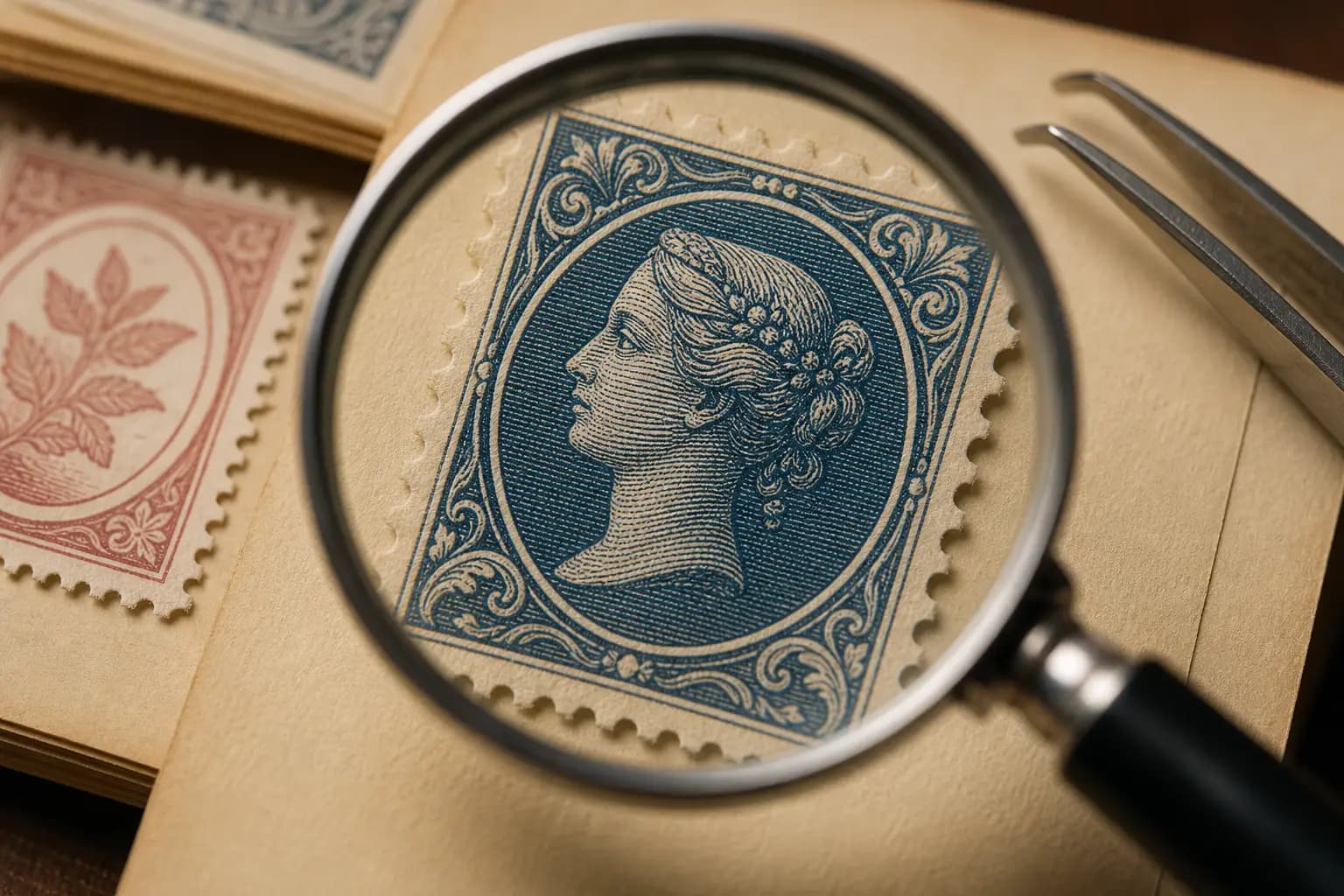
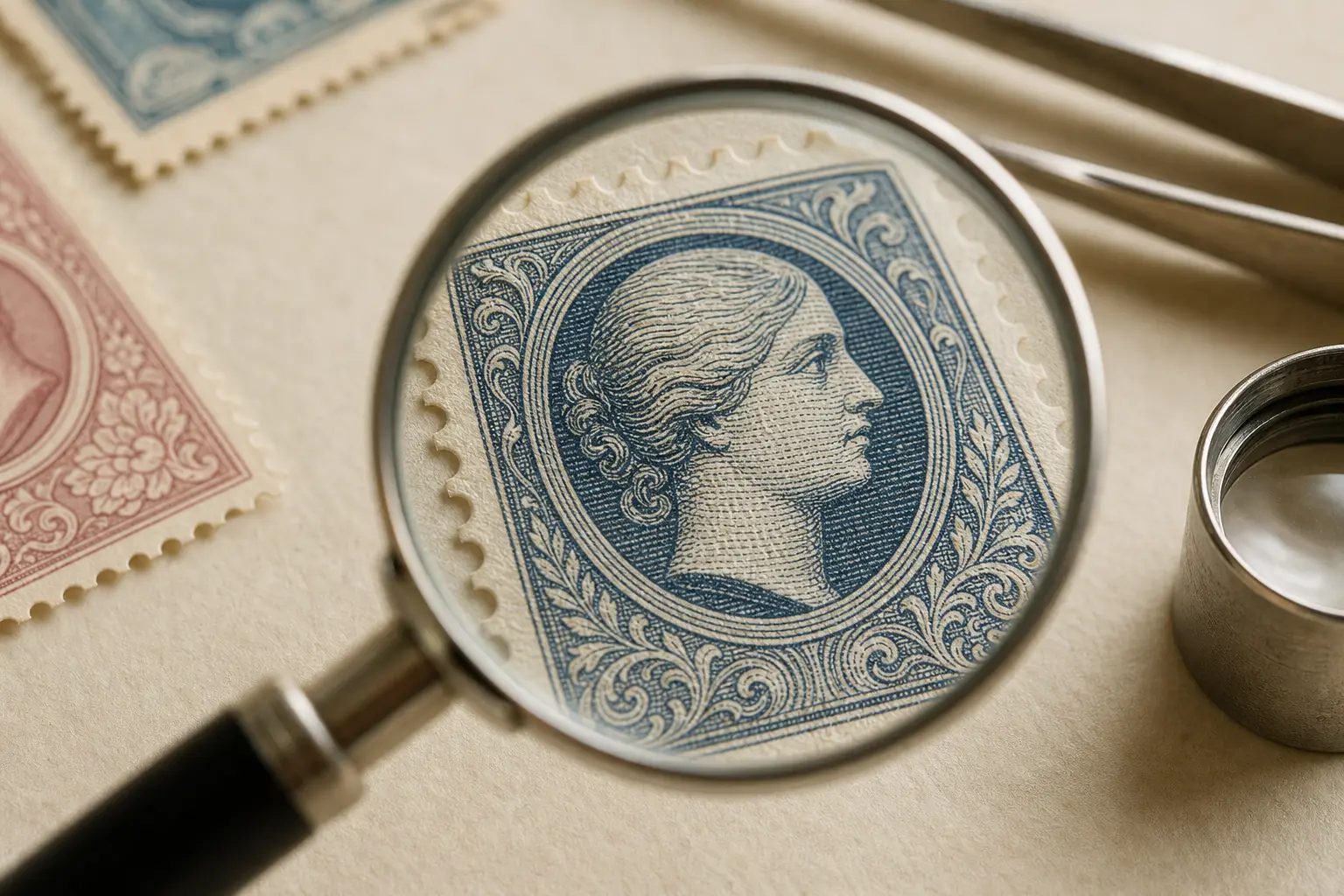
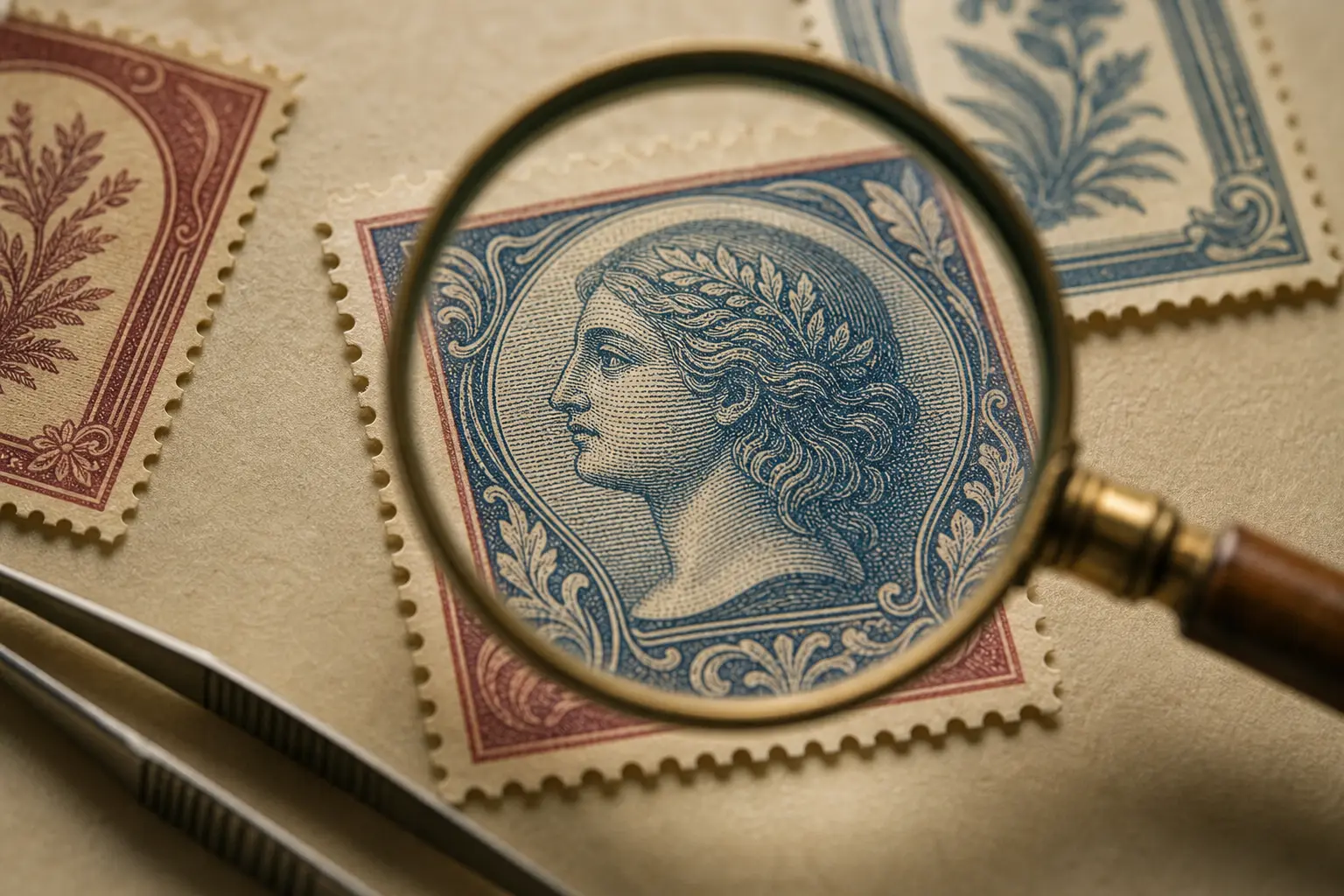
Line-engraved intaglio is a recess process in which ink is transferred from deliberately incised lines. In the APS description, the design is normally built from lines, hatching, cross-hatching, and stippling. Those drawn-looking elements are important because the image structure itself often gives the strongest clue that you are seeing line-engraved intaglio rather than a smoother printed surface.
Under magnification and oblique light, collectors may sometimes see raised ink, and pressure may leave debossing on the reverse. These are supporting features, not a single test. If you see a convincing line-built image with possible surface relief and matching reverse pressure, that supports line-engraved intaglio, but it still should be weighed against other observations and, when available, production records.
How gravure differs from line-engraved intaglio
Gravure is also a recess process, so it can be confused with line-engraved intaglio if you look only at whether ink seems to sit in low areas. The important distinction in the APS material is that gravure forms tone from screened cells rather than from the line-built structure typical of line-engraved intaglio. That means a gravure image may appear tonal or screened rather than primarily constructed from engraved line work.
However, the sources also caution that screened or raised effects can appear in other processes. For that reason, do not diagnose gravure from dots alone. If your stamp seems to show a screened structure, ask whether the overall image is built from tone cells, whether the print has the line-and-hatching character of intaglio, and whether the stamp may include more than one printing process.
Where letterpress fits in the comparison
Letterpress belongs in the same four-family comparison, even when a stamp does not look obviously engraved or lithographed. The APS source lists it as one of the major families used for postage stamps, which means collectors should keep it in mind when the image impression and paper behaviour do not fit the other three families neatly.
The practical lesson is restraint: use the family comparison to narrow your options, then compare the stamp’s structure, surface impression, and any documented production details. Because modern stamps may combine processes, a stamp that seems to match one family in one area may still have another process elsewhere on the design. A careful record in StampSnap can help you keep those observations together for later comparison.
How lithography should be recognised safely
Offset lithography is a planographic process, which means the image is formed on a smooth surface rather than cut or etched into a plate. The Smithsonian National Postal Museum explains that oil-based ink adheres to the image area, and a rubber blanket transfers, or offsets, that image to paper. Modern lithography commonly uses separate process-color layers made from very fine dots.
This is where many collectors go wrong. The museum notes that modern lithography can be sharp, so soft or blurred edges are not a dependable identifying rule. It also warns that a dot pattern must be interpreted with other evidence because gravure and other processes can also show screened structures under magnification. The safest method is to look for a consistent set of clues, not to treat dots or softness as proof by themselves.
Use paper and production clues to confirm, not to guess
Paper evidence can help, but it should be used carefully. The APS notes that some stamps exist on unwatermarked paper and on paper with different watermarks, and that stamps with the same design may receive separate catalog numbers when the watermark differs. That means a paper clue may change the identification outcome even when the printed design appears unchanged.
Because watermarks are part of the paper, they belong in the same methodical review as the printing family. Hold the stamp face down only when needed for watermark study, and use the recommended safe method rather than improvising. The APS recommends commercial watermark fluid, and says it evaporates quickly and should not impact the gum on an unused stamp. If you are documenting a possible match, record the watermark, paper appearance, and printing clues together rather than as isolated facts.
A practical, safe workflow for uncertain stamps
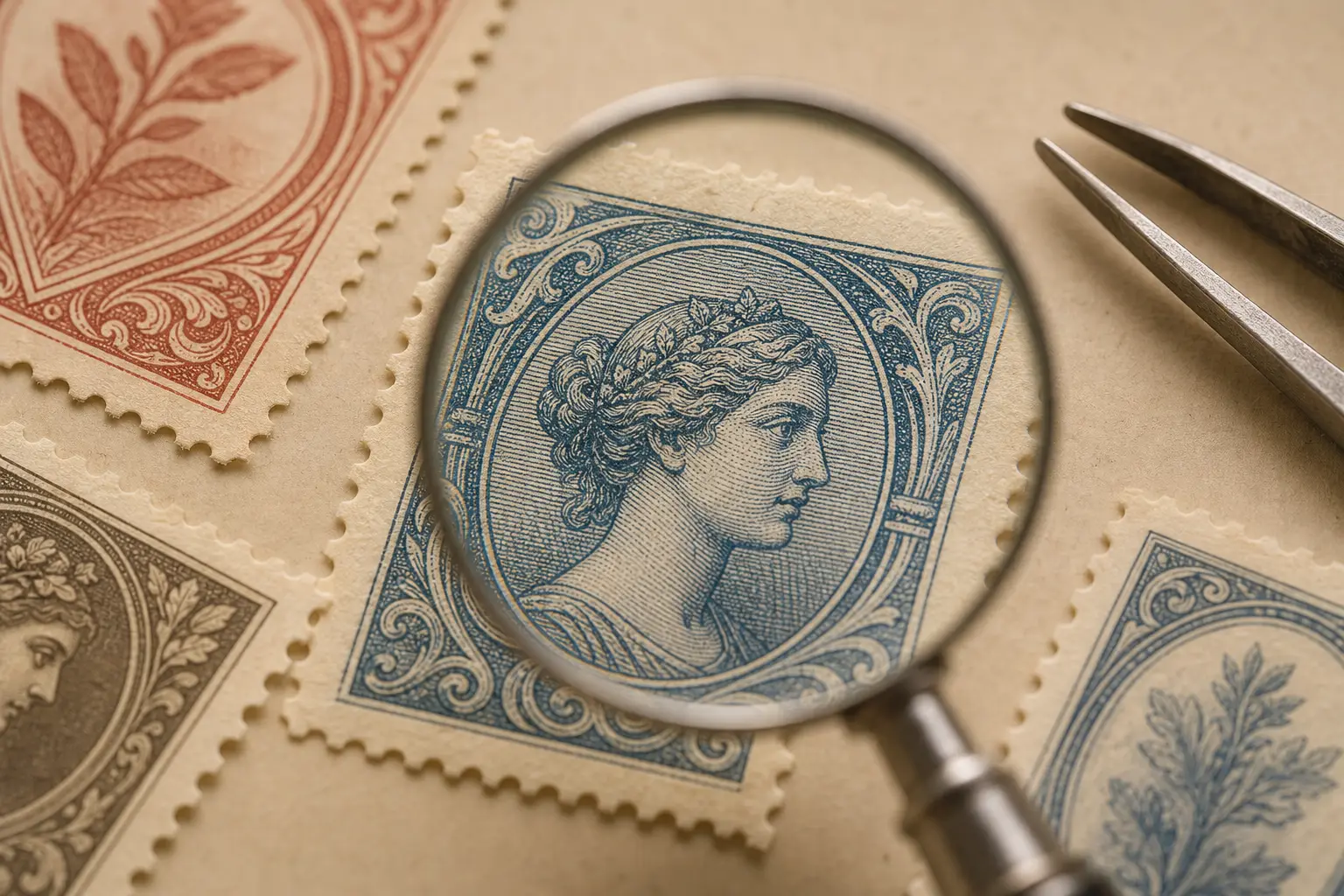
Begin with a clean, dry work area, diffuse or oblique light, and non-contact magnification. First ask whether the image is line-built, screened, or planographic in feel; then check whether there are supporting signs such as raised ink, debossing, or consistent process-color dot layers. After that, compare the whole stamp against production records or reliable references if you have them.
If the stamp remains uncertain, that is a useful result. The sources repeatedly show that one clue is rarely enough, especially on modern material where multiple processes may appear together. Keep your notes modest and factual. A collection record in StampSnap can help you revisit the same stamp later with better references, but it should be treated as a working note, not a final authority.
Frequently asked questions
Can I identify a stamp’s printing family from dots alone?
No. Dots or screened structures must be interpreted with other evidence, because gravure and other processes can also show similar structures under magnification.
Is a soft or blurred edge a reliable sign of lithography?
No. The Smithsonian National Postal Museum notes that modern lithography can be sharp, so softness is not a dependable identifying rule.
What is the safest first clue for line-engraved intaglio?
Look for a design built from lines, hatching, cross-hatching, and stippling, then confirm with supporting clues such as raised ink under oblique light or debossing on the reverse.
Can one modern stamp show more than one printing process?
Yes. The APS states that more than one process may appear on a modern stamp, so collectors should combine observations.
Should I use a safe watermark method when paper clues matter?
Yes. The APS recommends commercial watermark fluid and notes that it evaporates quickly and should not impact the gum on an unused stamp.