Start with the safest answer: use several clues, not one
If you want to tell letterpress from lithography on a stamp, the safest approach is to treat every visible feature as a clue rather than a verdict. The American Philatelic Society identifies four major families used for postage stamps: line-engraved intaglio, gravure, letterpress, and lithography. Modern stamps may combine more than one process, so a single look at the design is often not enough.
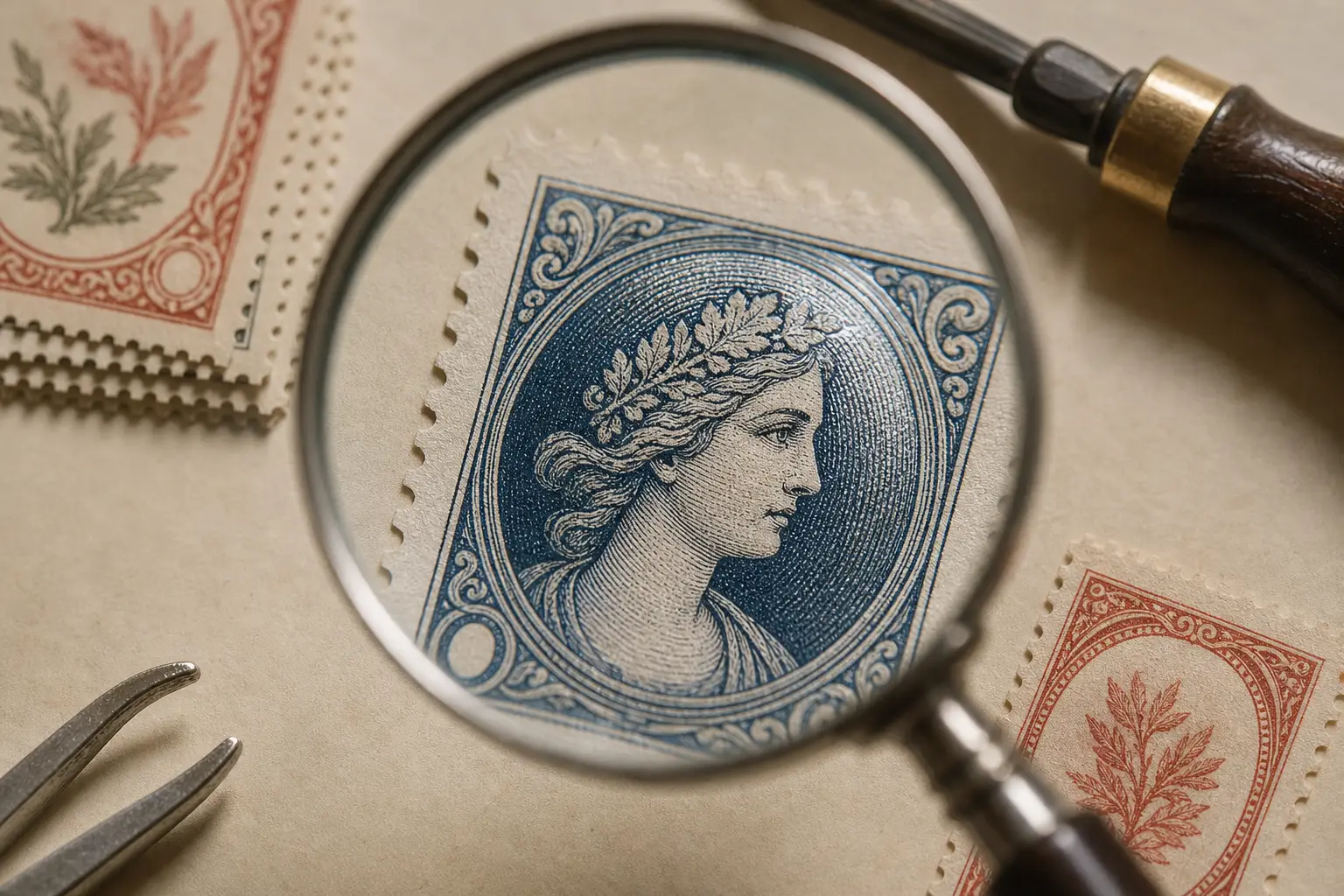
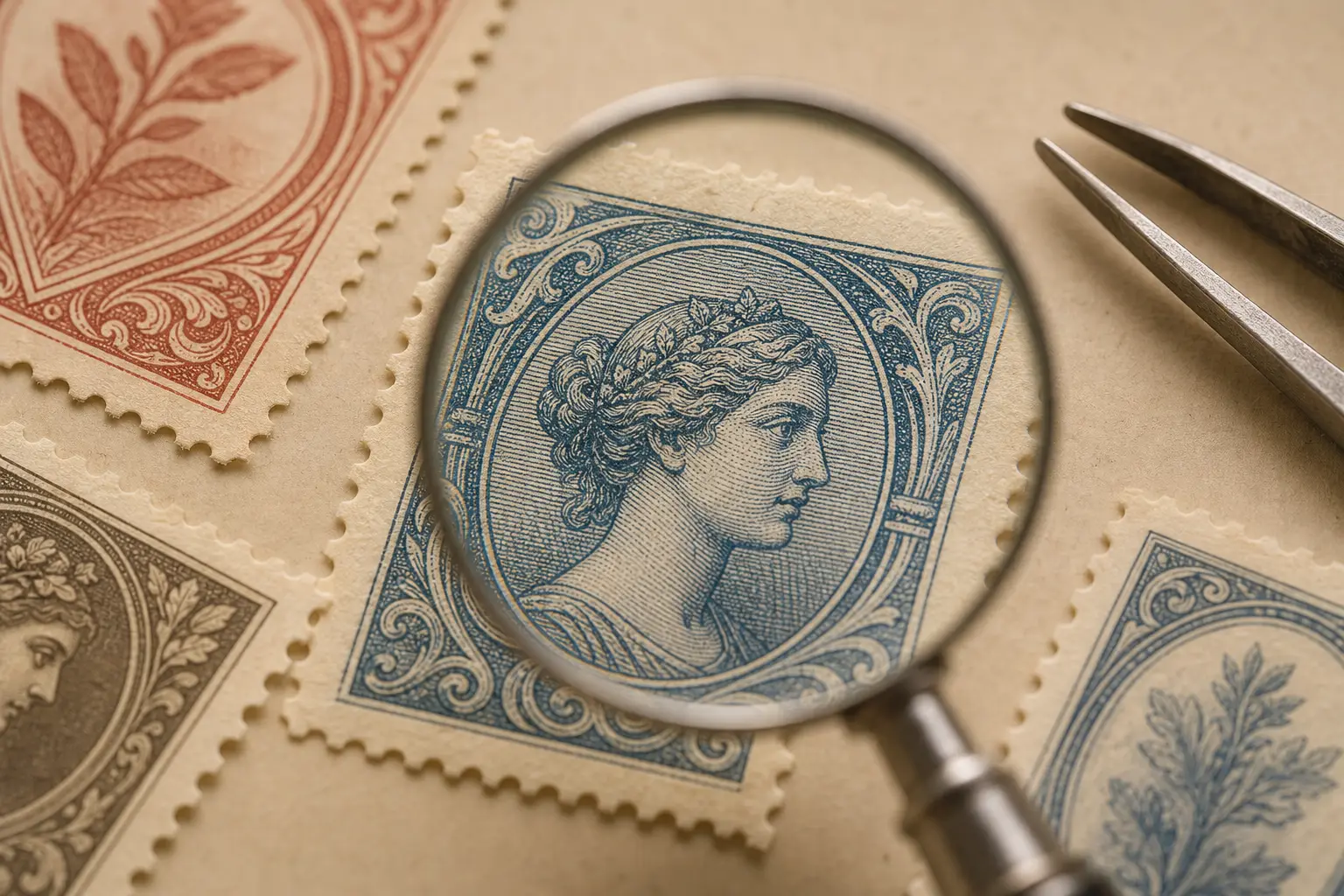
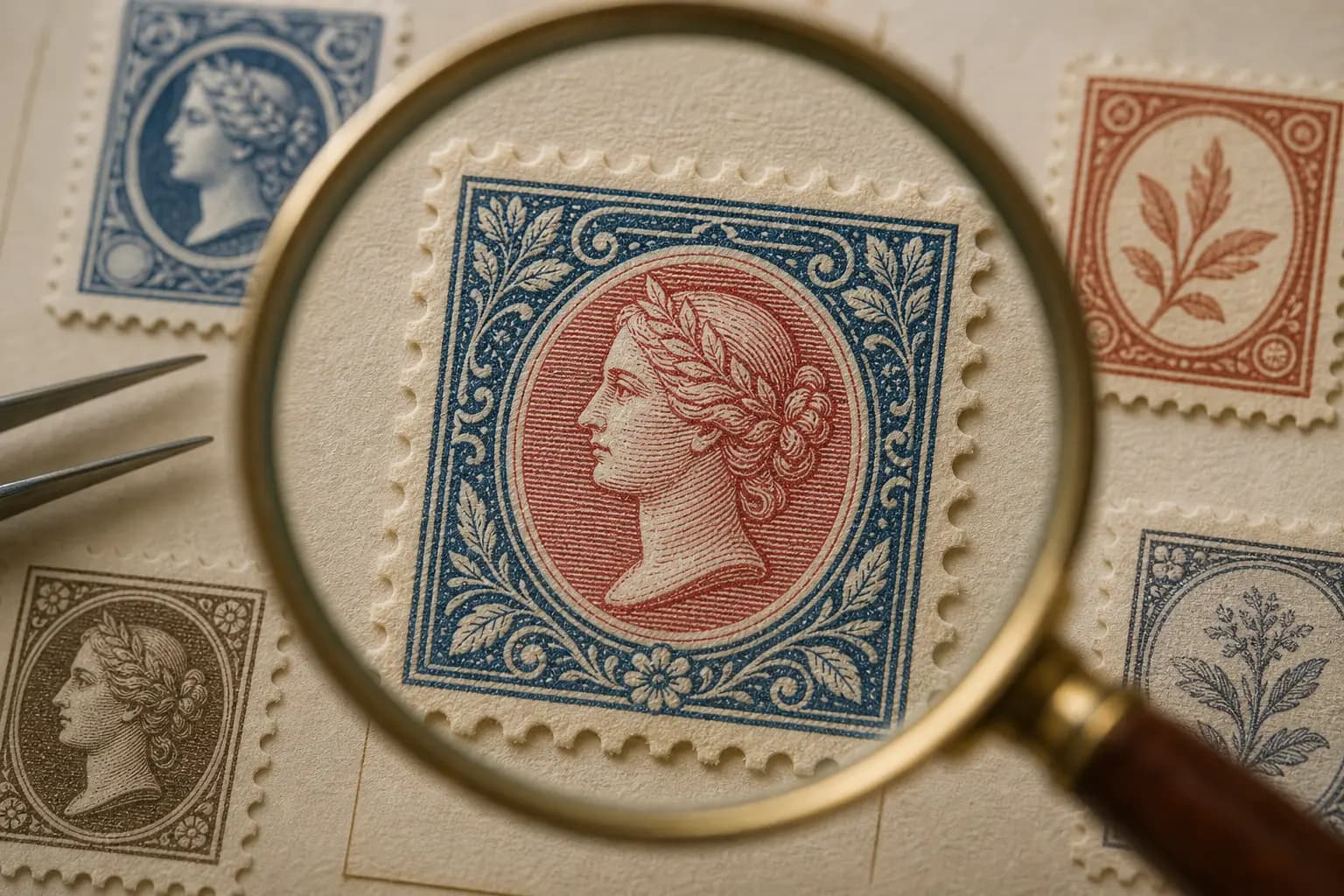
A practical first step is to study the stamp with non-contact magnification and diffuse or oblique light, then compare what you see with production records when available. This is the same cautious approach a collector would use when building a likely identification or collection record in StampSnap. It is methodical, reversible, and safer than relying on a quick visual guess.
What letterpress usually contributes to a design
Letterpress belongs to the major printing families used on postage stamps, but the key point for collectors is that it should be identified as part of a broader set of observations. Unlike line-engraved intaglio, which transfers ink from deliberately incised lines, letterpress is not identified by those recessed line structures. That means the line architecture of the image matters before any conclusion about the process is made.
When you examine a stamp, do not try to force one feature into a single answer. A crisp outline, visible texture, or a particular kind of edge can be suggestive, but the source evidence supports using such features only as supporting clues, never as a standalone test. If the design appears to include multiple printing styles, record that possibility rather than choosing the first process that seems plausible.
How lithography differs from engraved and relief-style clues
Lithography is a different family from line-engraved intaglio and gravure. The Smithsonian National Postal Museum explains that offset lithography is planographic: the image is formed on a smooth surface rather than cut or etched into a plate. Oil-based ink adheres to the image area, and a rubber blanket transfers, or offsets, that image to paper. That description is especially important when you are trying to separate lithography from engraved-looking designs.
Modern stamp lithography commonly combines separate process-color layers made from very fine dots. However, the museum warns that modern lithography can be sharp, so soft or blurred edges are not a dependable identifying rule. In other words, a neat-looking image does not prove lithography, and a slightly soft image does not rule it out. Use the dot pattern only as part of a larger comparison, not as the main diagnosis.
Why dots, screening, and surface texture can mislead collectors
Collectors often look for dot patterns first, but the source evidence is clear that dots must be interpreted with caution. The Smithsonian notes that a dot pattern must be read alongside other evidence because gravure and other processes can also show screened structures under magnification. The American Philatelic Society makes the same practical point: screened or raised effects can appear in more than one process, so collectors should combine observations and consult production records.
That warning matters because many visual shortcuts are too simple. Raised-looking detail, screen texture, or a slightly grainy area may point in the right direction, yet none of them is decisive by itself. A safe study routine is to inspect the same stamp under different lighting, note the overall line structure, and then compare the result with reliable reference information before writing down a process name.
How to separate line-engraved intaglio from gravure without guessing
The APS source gives two especially useful distinctions. Line-engraved intaglio transfers ink from deliberately incised lines, and its design is normally constructed from lines, hatching, cross-hatching, and stippling. Under magnification and oblique light, raised ink can sometimes be seen, and pressure may leave debossing on the reverse. These are supporting features, not a single test, but they are valuable because they focus your attention on how the design was made.
Gravure is also a recess process, but it forms tone from screened cells rather than from the line construction associated with line-engraved intaglio. Because screened effects can appear in other processes too, the safest method is to build a profile: line structure, tone structure, surface relief, and any record of how the stamp was produced. When those clues agree, your identification becomes much stronger than any one clue alone.
A practical study routine for your desk or stock book
For a careful home examination, keep the stamp flat and use only non-contact magnification with diffuse or oblique light. Avoid rubbing, flexing, or testing the surface with anything that could disturb the paper or ink. If the stamp is used or delicate, reduce handling and support it on a clean, stable surface so you can study the front and, only when needed, the reverse without strain.
Next, compare what you see to known process descriptions. Ask whether the design is built from lines and hatching, whether the surface suggests screened tone, and whether the image behaves like a smooth planographic print. If the stamp is likely to be kept as part of a reference set, create a note or image record in StampSnap so you can compare it later with similar material. The goal is not to prove everything at once, but to narrow the field safely and consistently.
When to stop at a probable identification
Some stamps will not reveal a clean answer from appearance alone, especially modern issues that combine more than one process. The APS source explicitly notes that more than one process may appear on a modern stamp. In those cases, the most responsible conclusion is often a probable identification based on cumulative evidence, not a final statement that pretends certainty.
If the clues conflict, record the uncertainty. That is not failure; it is good collecting practice. A cautious note such as likely lithography, mixed process possible, or needs production-record check is far more useful than a forced label. Over time, those careful notes create a stronger personal reference file and help you avoid repeating the same guess on similar stamps.
Frequently asked questions
Can I identify a stamp’s printing process from dots alone?
No. Dots and screened structures are only one clue, because gravure and other processes can also show screened patterns. Use line structure, surface evidence, light, magnification, and production records together.
Is a soft or blurred edge proof of lithography?
No. The Smithsonian National Postal Museum says modern lithography can be sharp, so soft or blurred edges are not a dependable identifying rule.
What is the safest way to study a stamp’s printing method?
Use non-contact magnification with diffuse or oblique light, keep handling minimal, and compare the stamp with process descriptions and production records when possible.
How do line-engraved intaglio and gravure differ?
Line-engraved intaglio is built from deliberately incised lines, with line, hatching, cross-hatching, and stippling effects. Gravure forms tone from screened cells.
Can a modern stamp use more than one printing process?
Yes. The APS source says more than one process may appear on a modern stamp, so a careful identification should allow for mixed-process printing.