The short answer: dry them flat and do not rush
If a stamp is damp, the safest approach is to let it dry completely before you store or mount it. Wet paper is fragile, and a softened stamp can tear, curl, or stick if you move it too soon. For most collectors, the goal is simple: keep the stamp flat, keep it separate from other material, and wait until it is fully dry before any album placement.
The American Philatelic Society advises placing stamps between two paper towels and adding a book on top to help prevent curling, then leaving them to dry overnight. That is a practical starting point for ordinary soaked stamps. The same source also notes that a wet stamp is more easily damaged than a dry one, so patience matters as much as technique.
First decide whether the stamp should be removed at all
Before you dry anything, decide whether the stamp should even come off the envelope. Some covers are worth keeping intact because the envelope itself may have a special cancel or image that adds collector interest. In that case, storing the whole envelope can be the safer choice, because you avoid unnecessary handling and avoid the risk of damaging both the stamp and the cover.
If you do choose to remove the stamp, do it by soaking only when appropriate. The same APS guidance says most ordinary stamps can be soaked free, but it also warns that many United States self-adhesive stamps issued in 2004 or later will not soak easily, if at all. A stamp that does not release readily should not be pulled free by force, because tearing is far more likely than a clean release.
How to handle wet stamps without causing new damage
Once a stamp is wet, handle it as little as possible. Do not use tongs on a wet stamp if you can avoid it, because even well-made tongs are meant for dry stamps. The American Philatelic Society specifically recommends tongs for dry stamps and explains that oil from hands can damage stamps, but that advice changes once the stamp is wet: fragile paper and softened gum mean extra pressure can deform or tear it.
Move wet stamps only when they are ready to release and only by the edges if you must lift them. Do not try to speed the process by pulling, scraping, or separating fibres by force. If several stamps are drying together, keep them apart so they do not touch as they dry, and change the surrounding paper if it becomes too damp to do its job.
Drying methods that help prevent curling and sticking
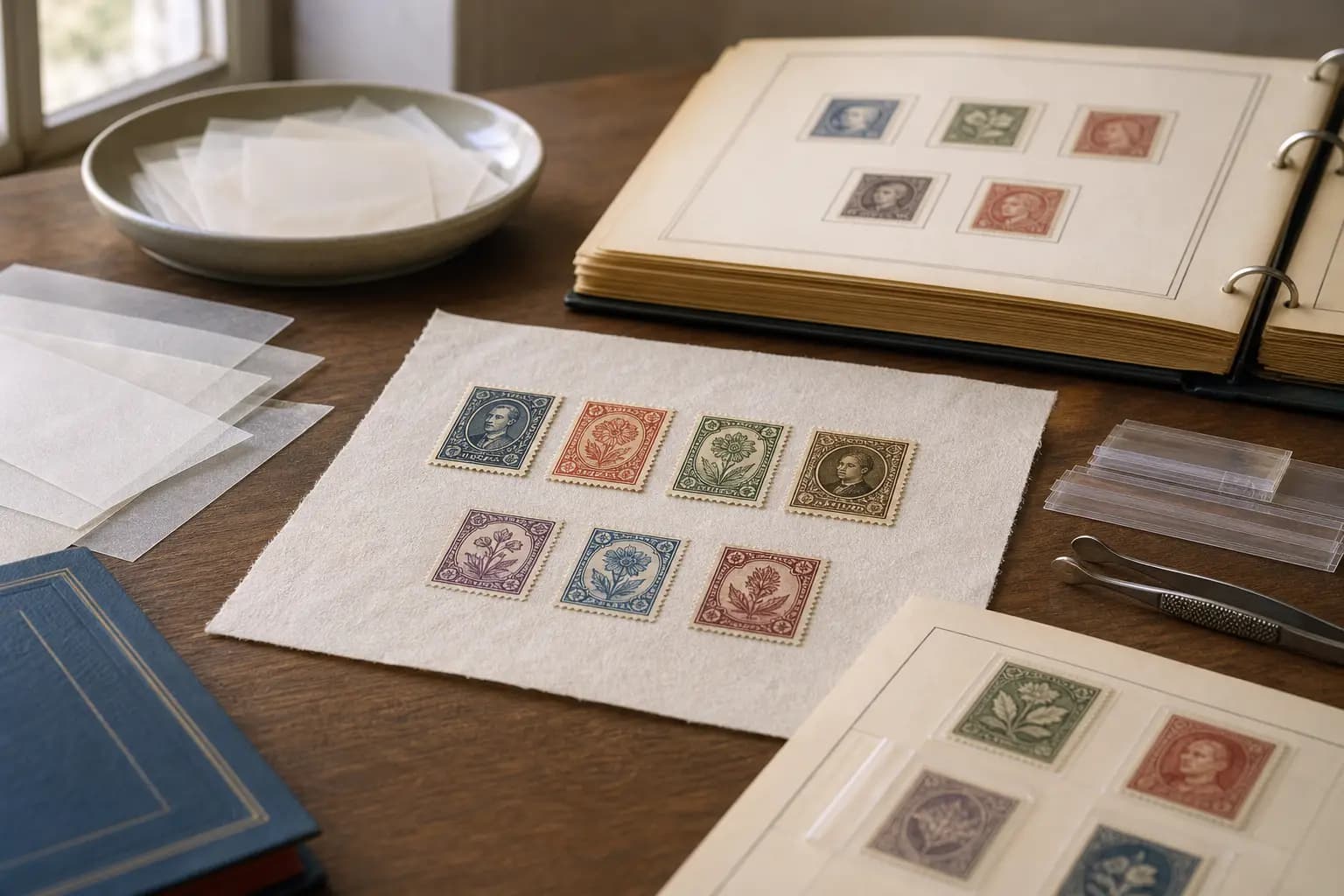
Flat drying is the safest method for ordinary material. After rinsing off any remaining gum, place the stamp between absorbent paper layers so moisture can leave evenly. A light, even weight on top can help the stamp dry flat rather than ripple at the edges. The aim is not to press hard, but to stop the paper from lifting while it is still flexible.
If you are drying a batch, keep them in a single layer and do not crowd them. A stamp needs room to dry without touching another stamp or a rough surface. Brightly coloured envelopes should be separated before soaking because their colour may bleed, and hot water should be avoided because it may damage the stamp. These are small steps, but they reduce the chance of staining, curling, and surface disturbance.
What to do after the stamp is fully dry
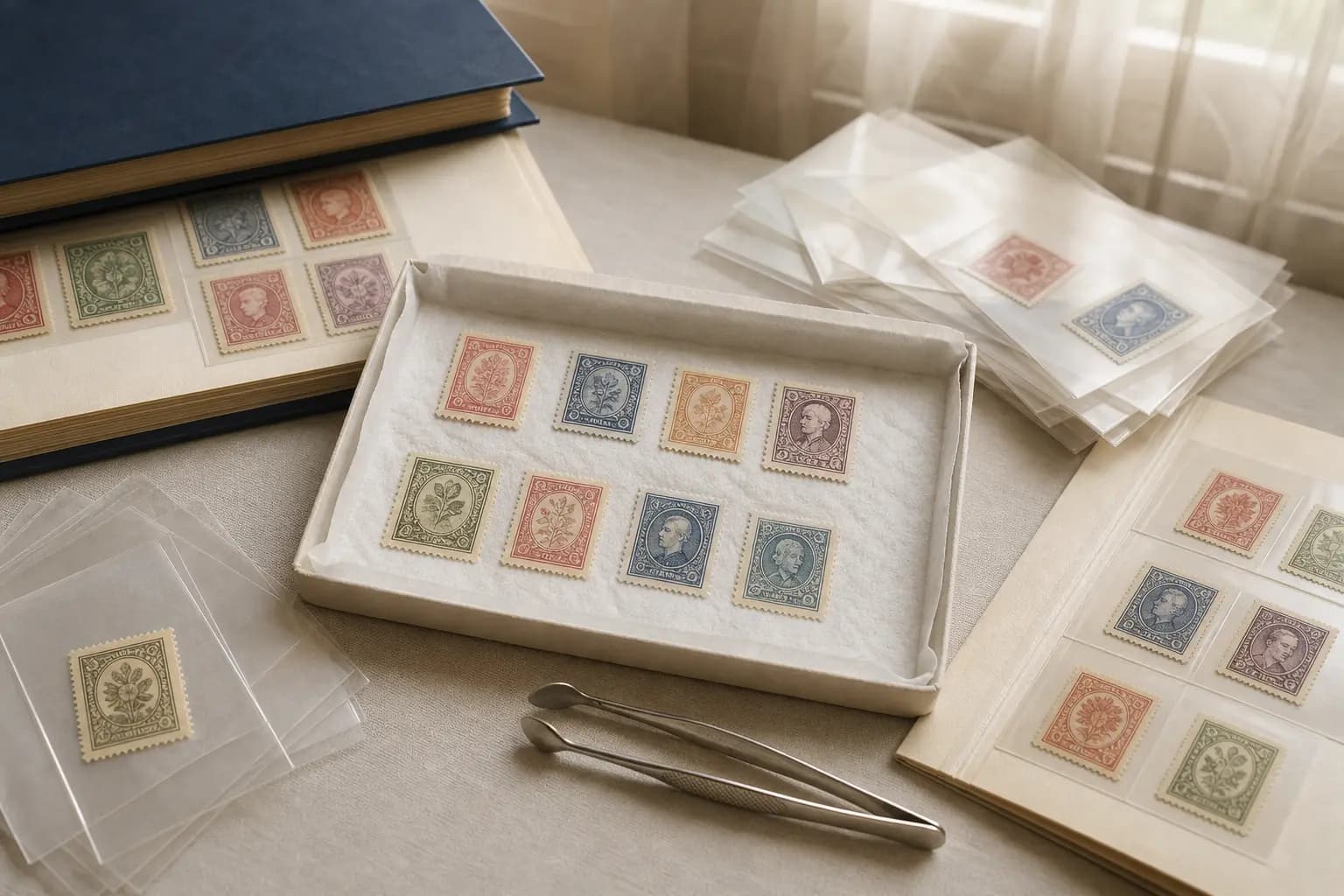
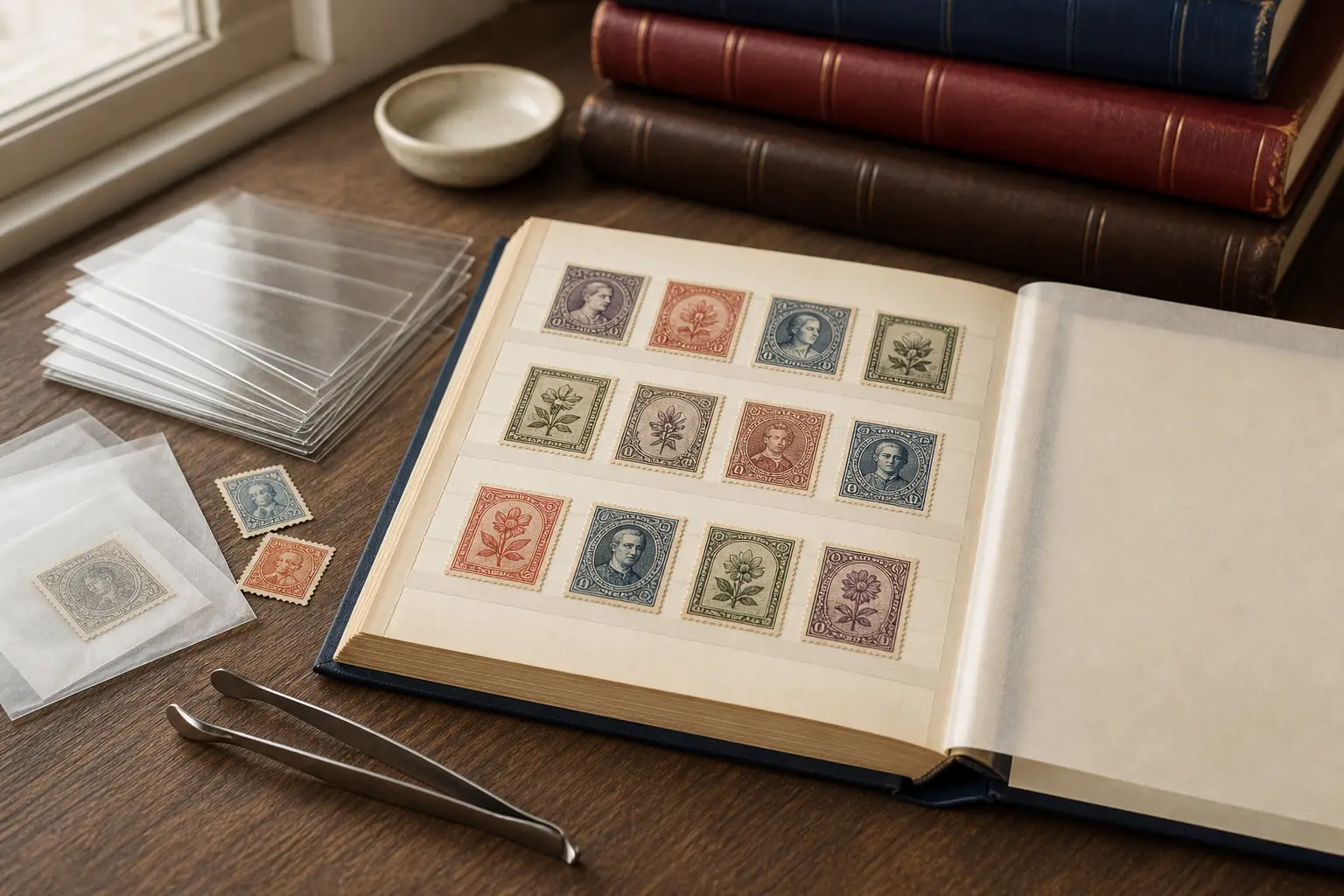
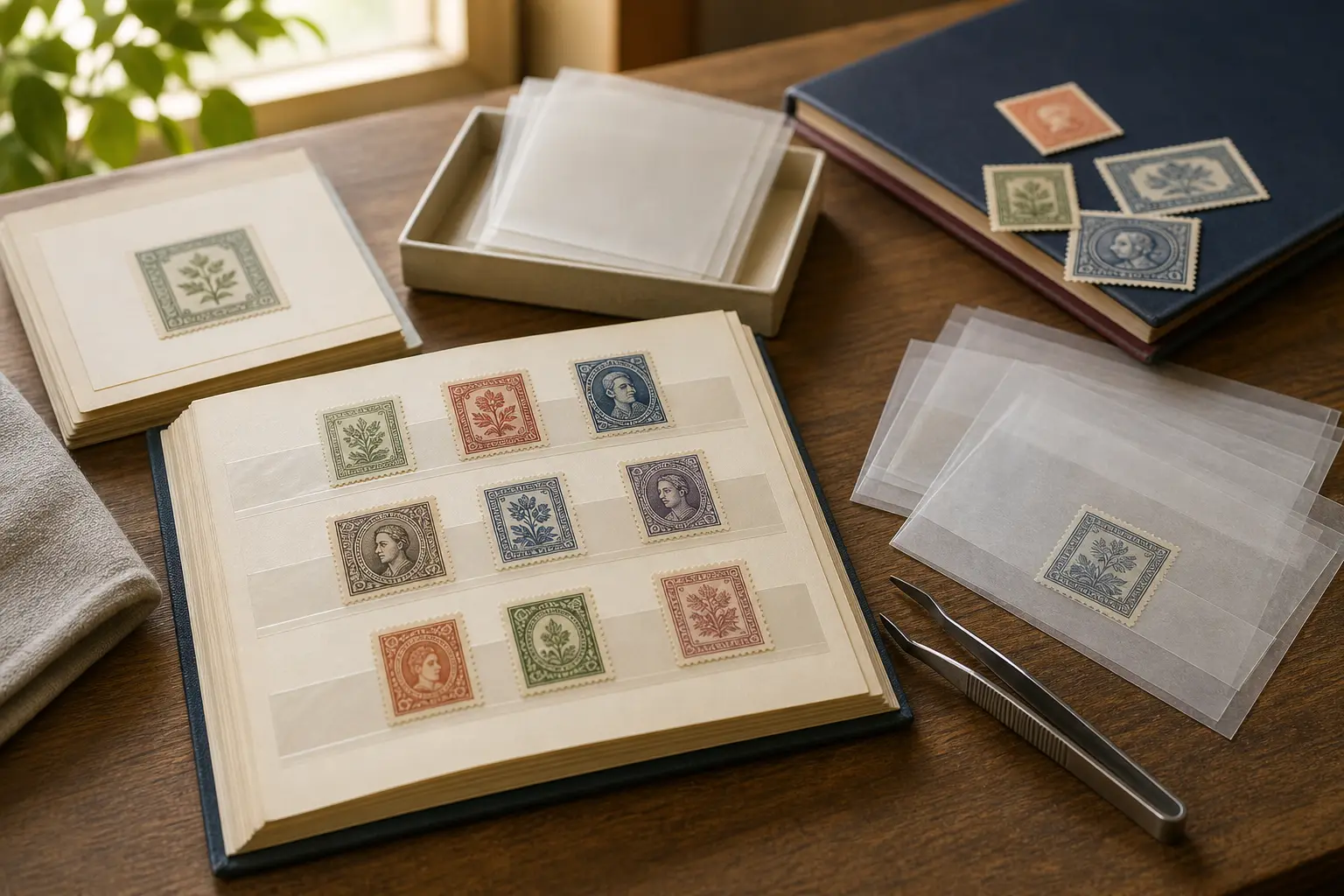
Only after the stamp is completely dry should you sort, sleeve, or mount it. At that point, the paper is stronger and less likely to crease or tear. The APS recommends storing stamps in glassine envelopes until you are ready to place them in an album or stock book, which is a useful interim step when you are not yet ready to organize a page.
When the stamp is ready for an album, use a hinge or mount rather than tape or glue. Tape and glue can lower value and can damage the stamp when removal is attempted later. If you are making a record of the item first, StampSnap can help you keep a simple identification note for the stamp before it goes into storage, but it should be treated as a collecting aid, not as an appraisal or authentication tool.
A safe drying routine for mixed-condition material
Collectors often sort through mixed material, and not all items should be treated the same way. Keep dry stamps in one place and damp or softened stamps in another. Dry material can be handled with tongs and organized more freely, while wet material should remain still until it is safe to move. This separation helps you avoid transferring moisture to pieces that were already dry and ready for storage.
If a stamp is badly damaged, assess it before spending time on careful drying. The APS notes that damaged duplicates may be saved for trading unless they are valuable or hard to replace. That means the right preservation choice depends on the item in front of you, not on a fixed rule. Conservative handling protects both ordinary stamps and the better material in your collection.
Common mistakes that cause avoidable damage
The biggest errors are usually simple: using too much force, drying with heat, handling wet paper with tongs, or storing a stamp before it has fully dried. Another common mistake is using tape or glue during temporary handling, which can create permanent damage and make later removal risky. A stamp that looks dry on the surface may still hold moisture in the fibres, so it is best to wait overnight when in doubt.
A second mistake is treating all self-adhesive stamps the same way. Some modern self-adhesives do not soak off easily, and the backing may be oil based rather than water based. If a stamp resists normal soaking, stop and check a reliable reference before proceeding. Safe preservation means accepting uncertainty and choosing the least damaging path.
A simple preservation workflow you can repeat
A practical routine is easy to remember. Decide whether the stamp should be removed at all. If removal is appropriate, soak only when the material is suitable, let the stamp release naturally, rinse away remaining gum, and dry it flat between absorbent layers with light pressure. When the stamp is fully dry, move it to glassine, a stock book, or an album page with a hinge or mount.
This workflow is conservative by design. It protects ordinary stamps, reduces curling, and avoids the kind of handling that can turn a simple drying job into a repair problem. If you are building a longer-term collection record, use your notes, a catalog, or a collection app to keep the identification details together before storage, then store the stamp in the least stressful way available.
Frequently asked questions
Should I use tongs on a wet stamp?
No. The APS recommends tongs for dry stamps, and wet stamps are more easily damaged. Let the stamp dry enough to handle safely before using tongs.
How can I stop a damp stamp from curling?
Dry it flat between absorbent paper layers and place a light book on top. The APS says this helps prevent curling while the stamp dries overnight.
Can I speed drying with heat or a hair dryer?
Do not use hot water or heat. The supplied sources advise lukewarm water for soaking and warn that hot water may damage stamps; gentle air drying is safer.
What should I do if the stamp will not soak off easily?
Stop and do not force it free. Some modern self-adhesive stamps, especially many U.S. issues from 2004 or later, may not soak off easily and need a different removal approach.
When is a stamp ready for album storage?
Only when it is fully dry and flat. After that, store it in glassine, a stock book, or mount it in an album with a hinge or mount rather than tape or glue.