Start with the safest rule: treat dry and wet stamps differently
If you want to avoid damage, begin by separating loose, dry stamps from anything wet, softened, or still attached to paper. Dry stamps can be handled with stamp tongs so you keep skin oils off the surface. Wet stamps are more fragile and should never be treated the same way as dry ones.
The key practical idea is simple: handle as little as possible. The American Philatelic Society advises that tongs are useful for dry stamps because skin oil can damage them, even if your hands are clean. That guidance matters most when a stamp is loose, flat, and ready to be moved into a safe place.
Use the right tool for loose, dry stamps
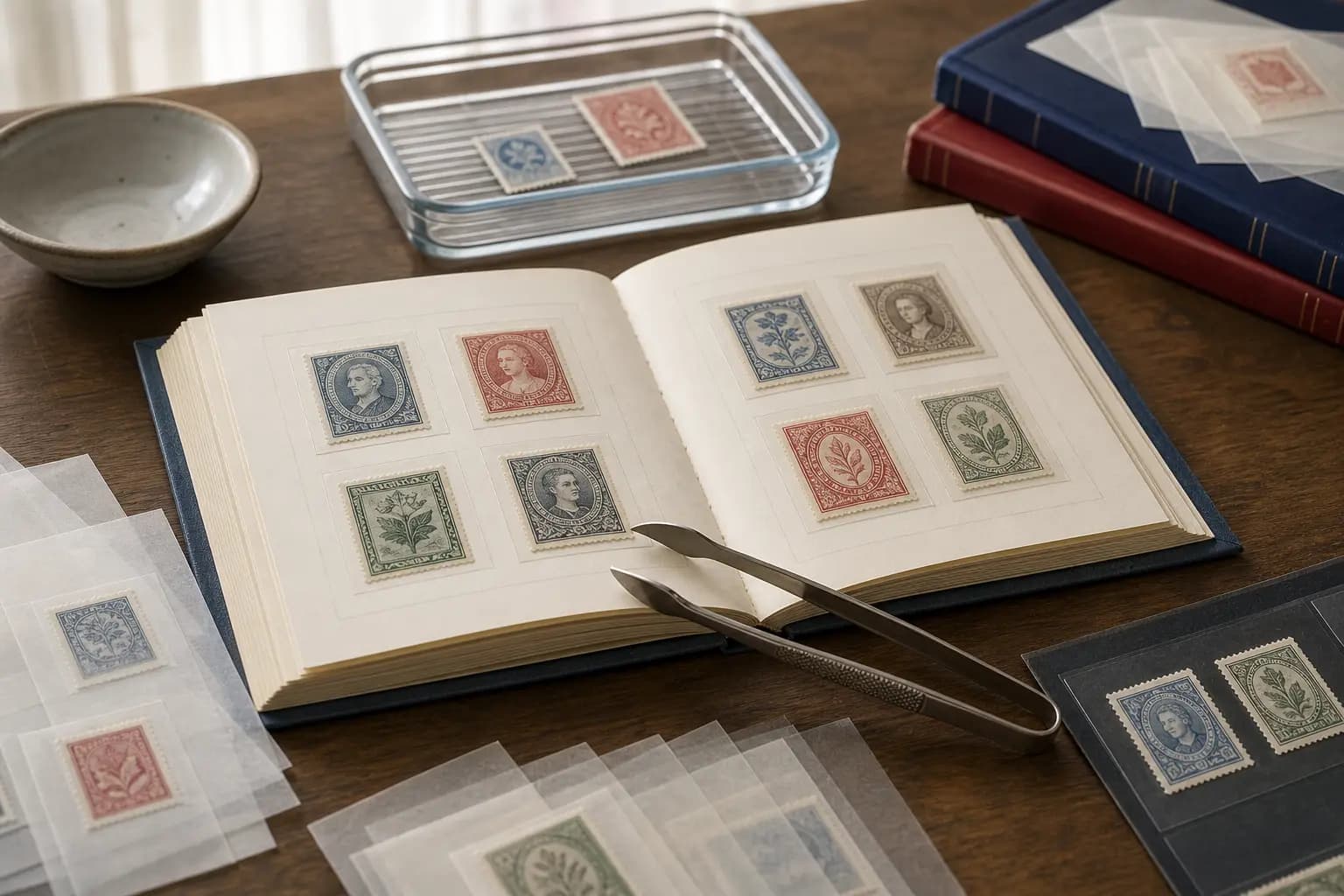
For stamps that are already dry, stamp tongs are the safest everyday tool. They look like tweezers, but their smooth gripping surface is designed for stamps rather than forceful pinching. When you choose tongs, look for a pair that grips smoothly and lets you move the stamp without bending the paper or touching the face.
A magnifying glass is also useful during sorting because some stamps look alike at a glance but show small differences when viewed closely. The APS suggests magnification of at least 5x to 10x, without distortion. That helps you compare details, read perforations, and decide whether a stamp belongs in a main collection, a duplicate group, or a temporary holding area.
Do not use tongs on wet or softened stamps
Wet stamps are more easily damaged than dry stamps, so do not pick them up with tongs until they are fully ready to move. If a stamp has just been soaked, is still attached to paper, or feels soft, the safest approach is patience. Forcing it free can tear the paper or distort the stamp surface.
When soaking is appropriate, use lukewarm water in a shallow bowl and give the stamps room to float. The APS says to avoid hot water, avoid overcrowding, and change the water after a few batches if you are working with many stamps. Brightly coloured envelopes should be separated first because colour can bleed. Once the stamp floats free, remove it carefully, rinse the back gently, and dry it between paper towels with a book on top to reduce curling.
Decide whether the stamp should be removed at all
Before any handling, ask whether you need to remove the stamp from the envelope. Sometimes the envelope itself is worth keeping because of a special cancel, marking, or design that is part of the material's story. In that case, leaving the item intact may be the safest choice for preservation and future study.
If removal is the goal, check whether the stamp is a self-adhesive issue and whether it belongs to a period that may resist soaking. The APS notes that many United States self-adhesives issued in 2004 or later do not soak easily, if at all. The FAQ adds that most current U.S. self-adhesives have an oil-based backing rather than a water-based one, so the old soak-and-lift approach may not work as expected.
Sort and store before you build a permanent album page
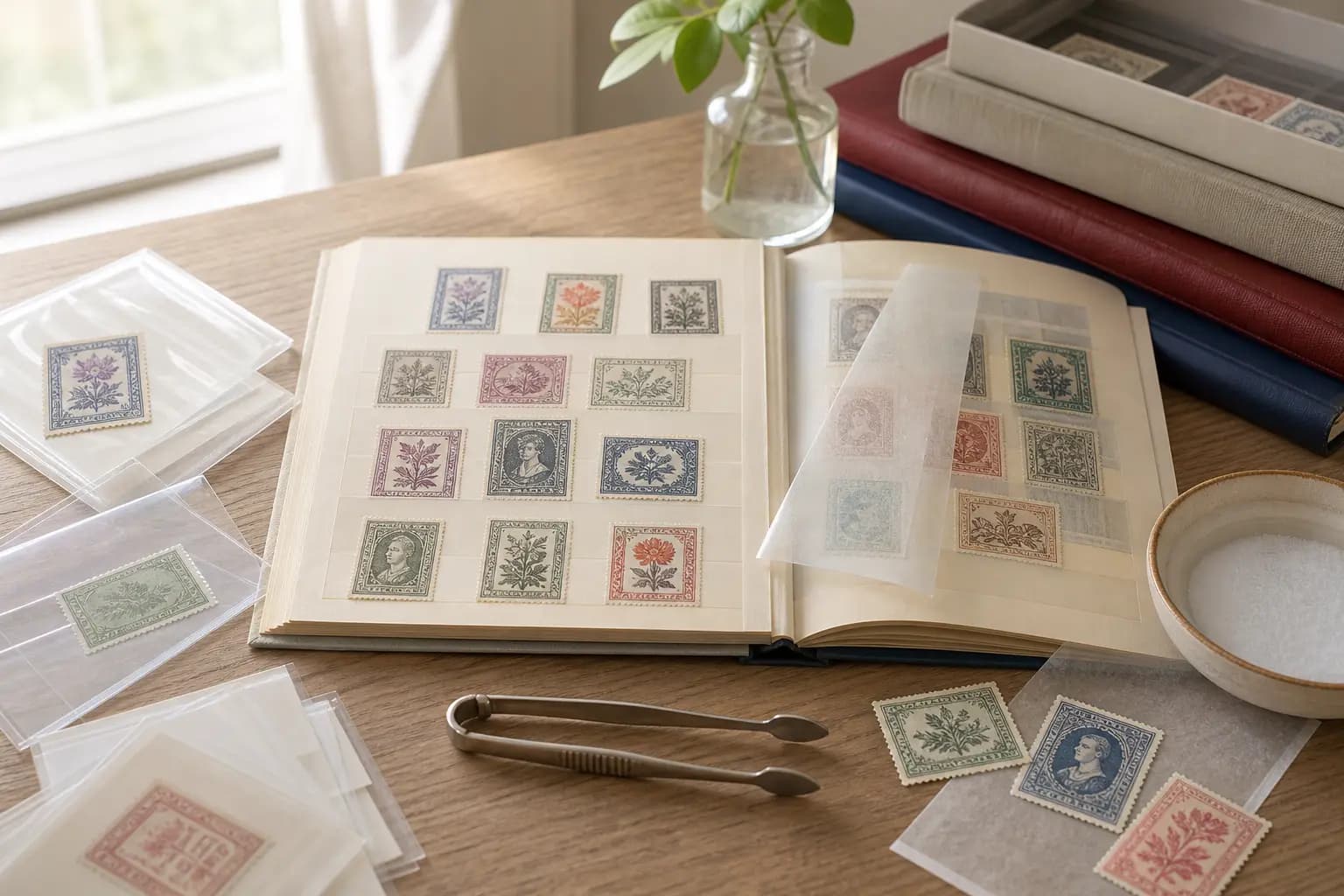
After stamps are dry, sort them before mounting them. You may sort by country, topic, or by service type such as airmail, special delivery, postage due, parcel post, or revenue. There is no single right or wrong way to collect, but a consistent method reduces handling later and makes it easier to notice duplicates or condition differences.
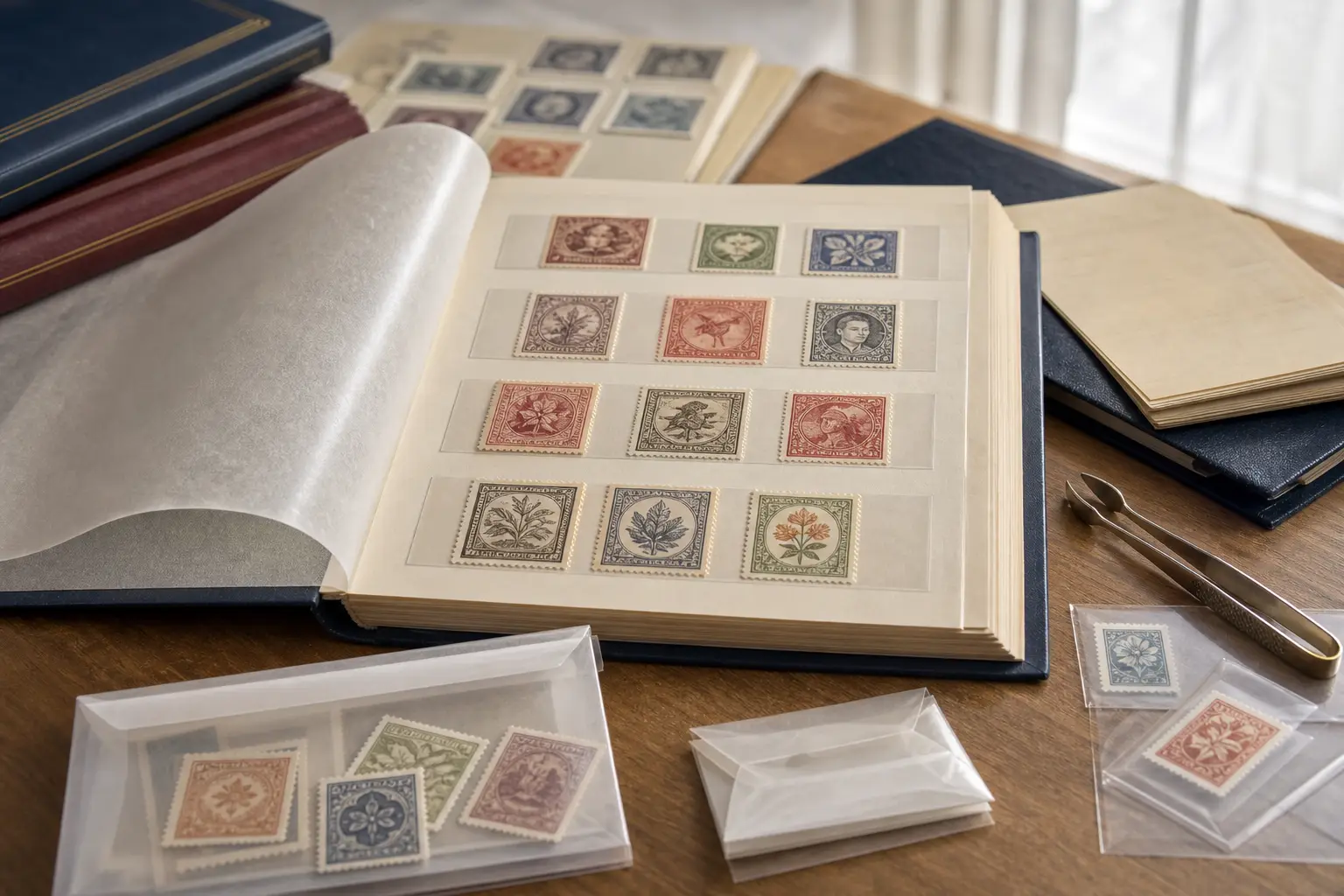
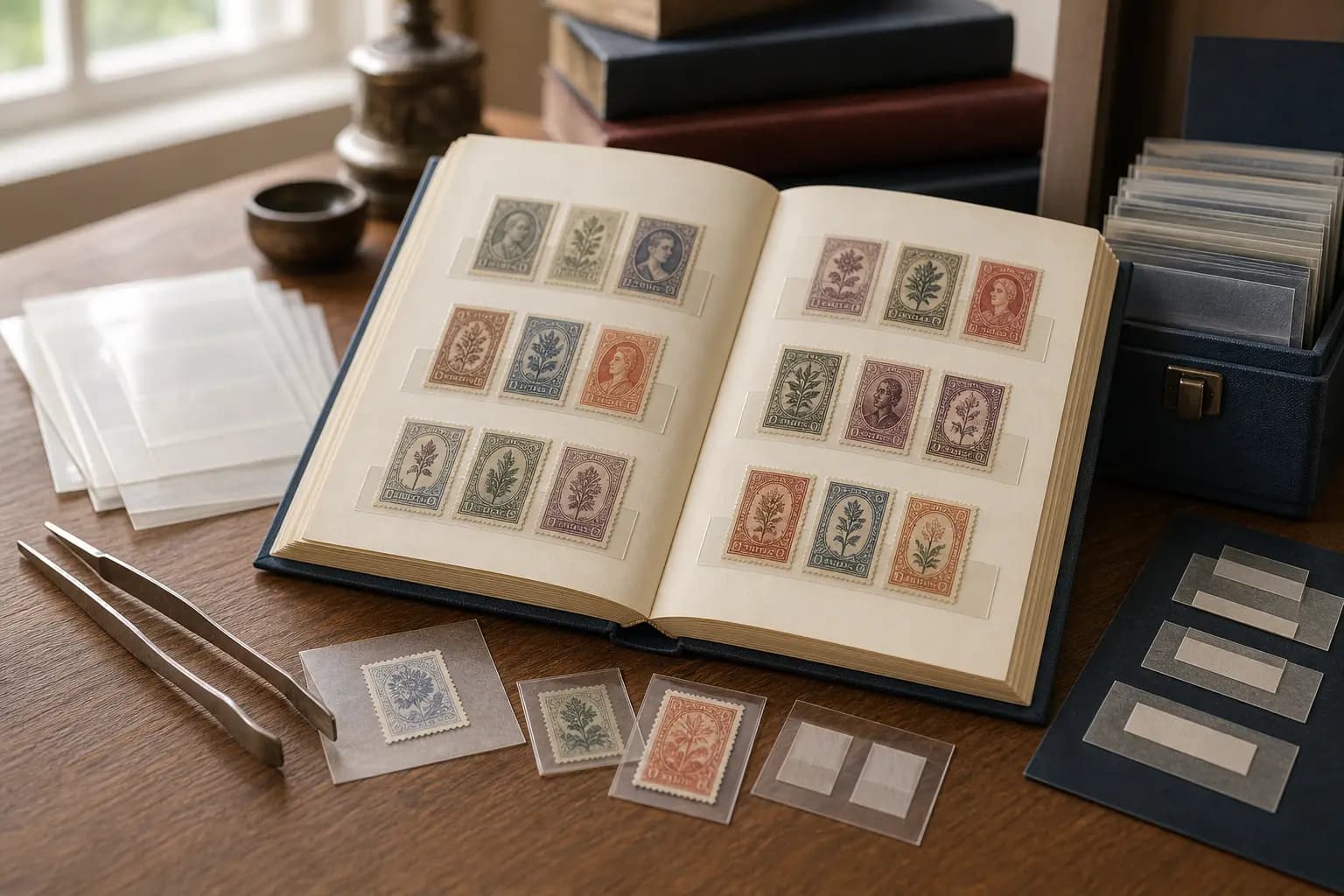
Until you are ready to mount them, store stamps in glassine envelopes, albums, or stock books rather than leaving them loose on a desk. The APS recommends albums for protection and notes that stock books can be useful when you want flexible organisation. If you are choosing between stamps for your main set, keep the best copy and set aside duplicates for trading or later review.
Mounting should protect the stamp, not trap it
When a stamp is ready for an album page, use a hinge or a mount rather than tape or glue. Tape and glue can decrease value and can also damage the stamp if you later try to remove it. Hinges are small folded pieces with special gum; mounts are clear plastic sleeves. Both are intended to support safe removal from the album page later.
If you are building records as well as a physical collection, StampSnap can help you create a likely identification or collection record, but it should be used only as an organising aid. The preservation decision still depends on your own careful handling, the stamp's condition, and whether you are dealing with a dry item, a wet item, or material that may be better left attached.
A practical preservation routine you can repeat
A safe routine is to sort first, handle second, and mount last. Keep dry stamps on a clean surface, use tongs instead of fingers, and return delicate pieces to storage quickly. For anything wet or softened, slow down and let drying happen naturally; do not rush the process with heat or rough handling.
This method is useful because many preservation problems begin with good intentions and too much movement. If you remember only one rule, make it this one: dry stamps may be handled with tools, but wet stamps need restraint. That distinction prevents tears, curling, skin-oil transfer, and unnecessary loss of original condition.
Frequently asked questions
Should I use stamp tongs on a wet stamp?
No. Tongs are recommended for dry stamps. Wet stamps are more fragile and can be damaged more easily, so wait until they are fully dry or properly ready to move.
What is the safest first step when I find stamps on envelopes?
Decide whether you need to remove them at all. If the envelope has a special cancel or image you want to keep, preserving the entire envelope may be the safest choice.
How should I dry stamps after soaking?
Rinse the back gently, place the stamps between paper towels, put a book on top to help prevent curling, and leave them to dry overnight.
What should I use instead of tape or glue in an album?
Use a hinge or a mount. Both are designed for album storage and are less damaging than tape or glue.
Can self-adhesive stamps be soaked off paper?
Not always. The APS notes that many United States self-adhesives issued in 2004 or later do not soak easily, and the FAQ says most current U.S. self-adhesives use an oil-based backing rather than a water-based one.