The short answer: start with the country-name rule
If a postage stamp does not include a country name, the first and most important check is whether it may be from Great Britain. According to the American Philatelic Society, Great Britain is the only country permitted to issue postage stamps without including its name, because it was the first country to issue postage stamps in 1840. In place of the country name, Great Britain is allowed to use an image of the ruling monarch, often in the upper right hand corner.
That rule gives you a practical starting point, but it is not a full identification by itself. A missing country name does not mean the stamp is automatically British in every case you will encounter. You still need to compare the design, any portrait, and any other inscriptions with reliable references before you write a final identification into an album or collection record.
Check the obvious visual clues before you go deeper
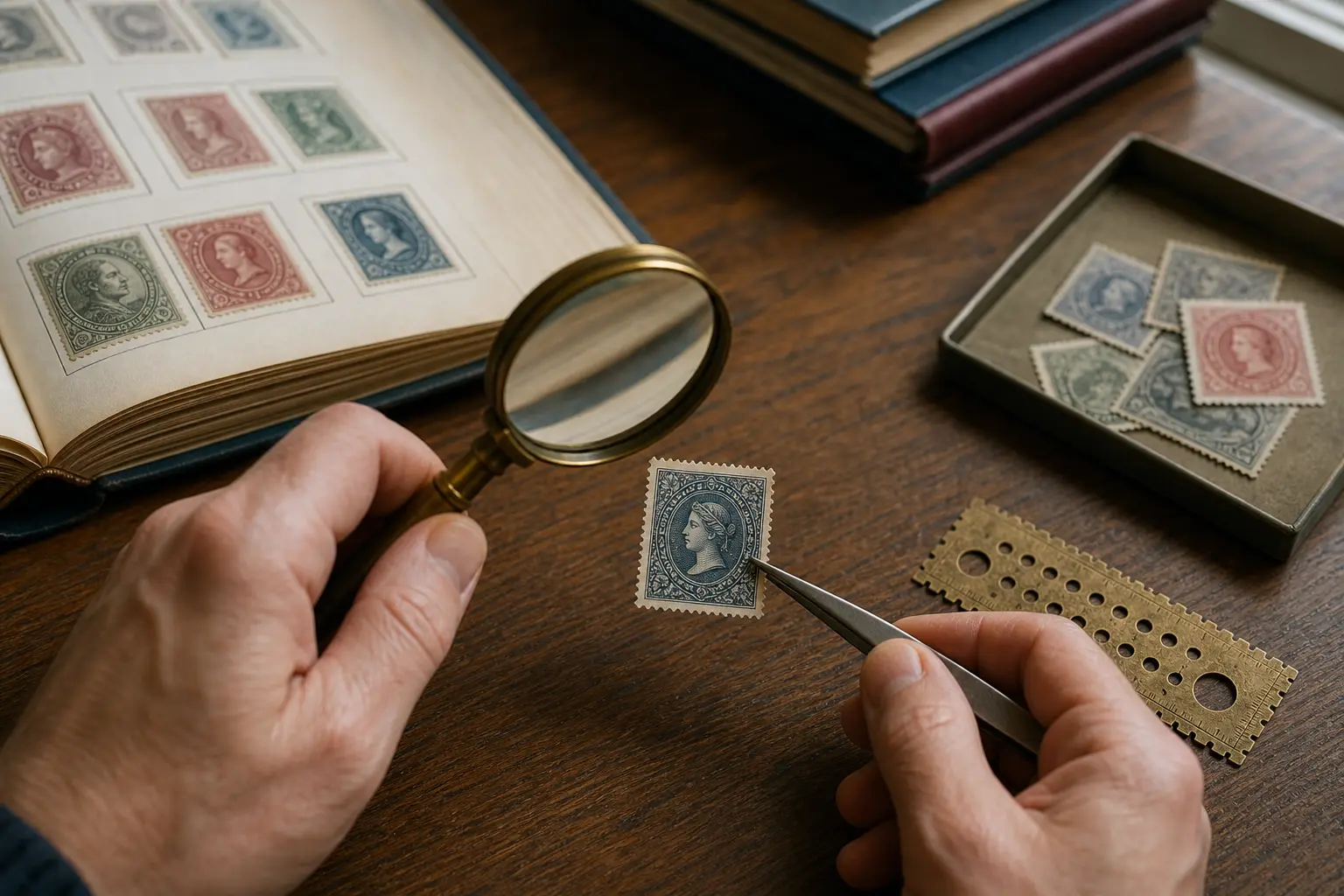
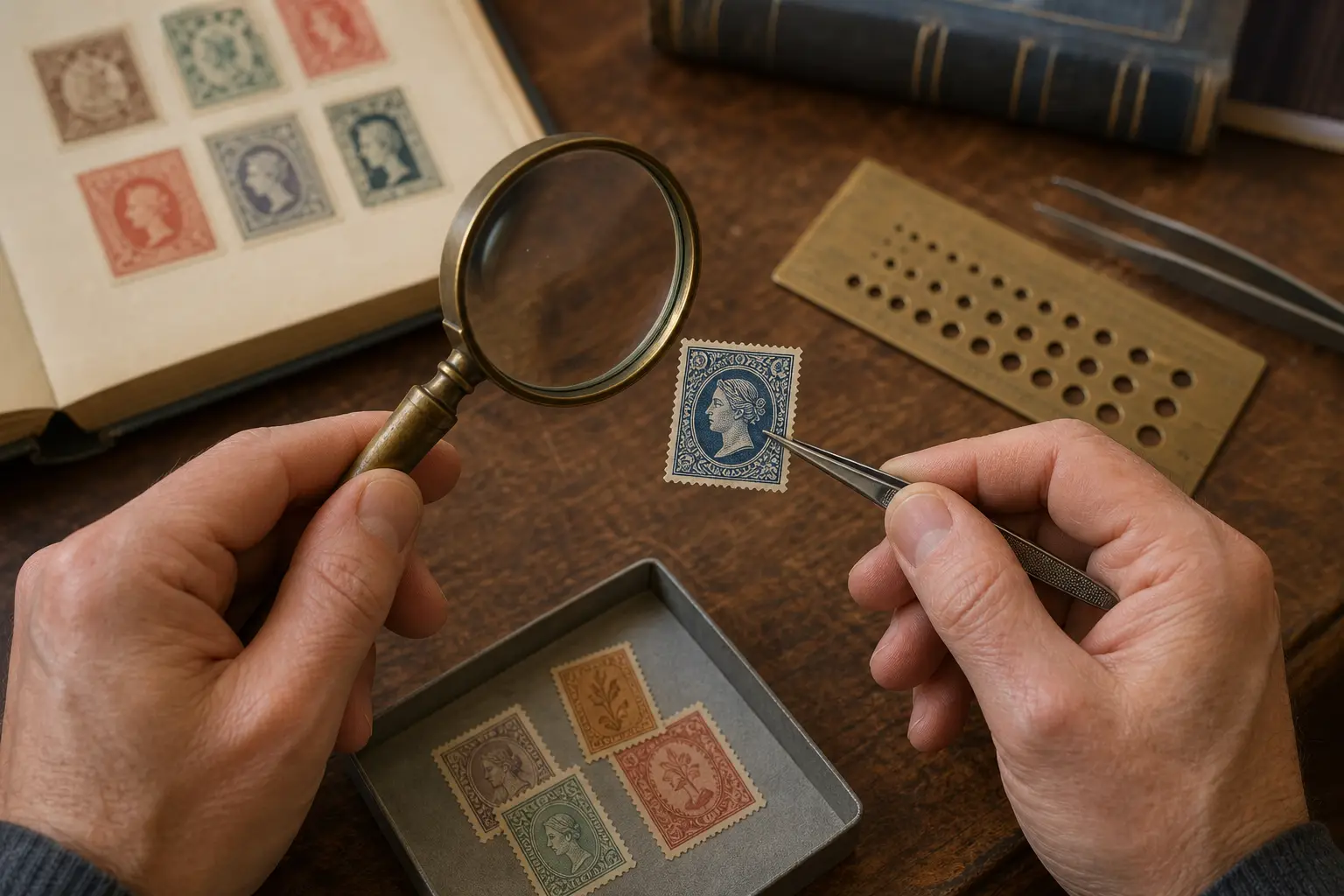
Begin with the elements you can see clearly without touching the stamp more than necessary. Look for a monarch portrait, especially if it appears where a country name would normally be expected. The APS notes that Great Britain may use the image of the ruling monarch instead of naming the country, so a portrait is a useful clue, not proof on its own.
Also note whether the design includes words in a language other than English. The APS reminds collectors that many countries do not use English, so a name can be present even when you do not recognise it at first glance. This is a common reason beginners think a stamp has no country name when it actually does.
Use a magnifier and compare details carefully
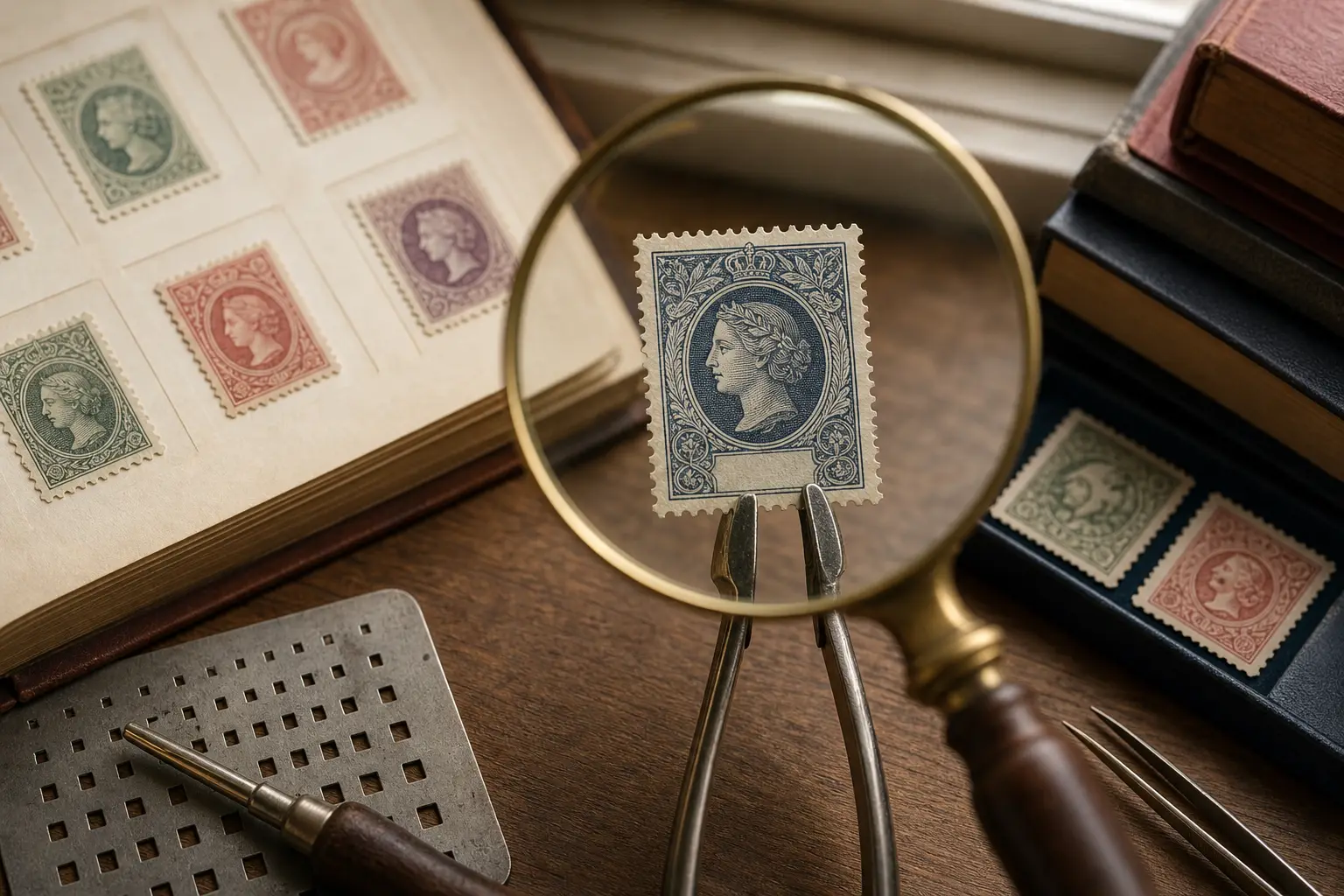
A magnifying glass is one of the most useful tools for this kind of identification. The APS recommends a lens that magnifies clearly without distortion and suggests at least 5x to 10x magnification. Under magnification, you may notice lettering, tiny design differences, or fine portrait details that are difficult to see with the naked eye.
Close inspection is especially helpful when several stamps look alike. The APS says some stamps appear to be the same, but close inspection reveals small differences that can help identify a rare stamp. For country identification, those differences may also help you separate a British stamp from a similar-looking issue from another place. If you are building a record, StampSnap can help you save a note and image for later comparison, but it should still be treated as a reference aid, not a final authority.
Use a stamp catalog to confirm what you are seeing
Once you have a visual guess, confirm it against a catalogue. The APS describes stamp catalogues as reference books with illustrations that help collectors identify and learn about stamps. They can provide the date of issue, a description of the stamp, why it was issued, how it was printed, and the value in used and unused condition.
For a stamp with no obvious country name, the catalogue comparison step is important because it adds context to the design and issue details. If the portrait, inscriptions, and overall format match a listed British issue, that supports your conclusion. If they do not match, leave the identification open and continue comparing rather than forcing a quick answer.
Handle the stamp safely while you inspect it
Safe handling matters because a careful identification should not damage the stamp. The APS advises handling dry stamps as little as possible and recommends stamp tongs because skin oil can damage stamps even when hands are washed. Tongs have a smooth gripping surface designed for stamps, which helps you examine the item without adding fingerprints or bending the paper.
Do not use tape or glue when placing a stamp into a collection or temporary holding system. The APS says tape and glue can decrease value and may damage the stamp when removal is attempted later. If you need to keep the stamp organised while you research it, use an album, stock book, hinge, or mount designed for philatelic use, and keep your identification notes separate from the stamp itself.
What to do when the country still is not certain
Sometimes a stamp remains uncertain after you check the country-name rule, the portrait, the language, and the catalogue illustrations. That is normal. A cautious identification is better than an incorrect one, especially when a design has been copied, reused, or simplified across different issues. In those cases, record what you can verify and keep the item labelled as provisional until you find stronger evidence.
A methodical note might include the visible text, whether a monarch is shown, the colour and denomination placement, and any catalogue match you can confirm. That kind of record makes later review much easier. It also helps if you ask another collector or compare the stamp with a second reference source, because the goal is to document evidence rather than guess.
A practical beginner workflow you can repeat
Use the same sequence each time: first, check whether the stamp includes a country name; second, look for a monarch portrait or other obvious design clue; third, inspect the stamp with a clear magnifier; fourth, compare it with a catalogue illustration or description; and fifth, store the result as a confirmed or provisional identification. This order keeps the process safe and repeatable.
For many collectors, this simple workflow is enough to sort everyday material confidently. It also keeps you from rushing to conclusions based on a single clue. If the stamp is dry and stable, use tongs, compare it under good light, and keep your notes consistent. Over time, that habit will make country identification much faster and more reliable.
Frequently asked questions
If a stamp has no country name, is it always from Great Britain?
No. Great Britain is the only country permitted to omit its name on postage stamps, but you should still confirm the design and inscriptions with a catalogue before finalising the identification.
What is the most useful visual clue for an unnamed stamp?
A monarch portrait is one of the strongest clues, because Great Britain may use the ruling monarch’s image instead of a country name.
Why should I use a magnifying glass for country identification?
The APS recommends magnification because small lettering and design details can reveal differences that are hard to see with the naked eye.
What if I still cannot identify the country with confidence?
Record the stamp as provisional, note the clues you can verify, and compare it again with a catalogue or another reliable reference before making a final decision.
Can I attach the stamp to my notes with tape or glue while I study it?
No. The APS advises against tape and glue because they can damage the stamp and reduce its value.