Begin with a neutral inventory of visible clues
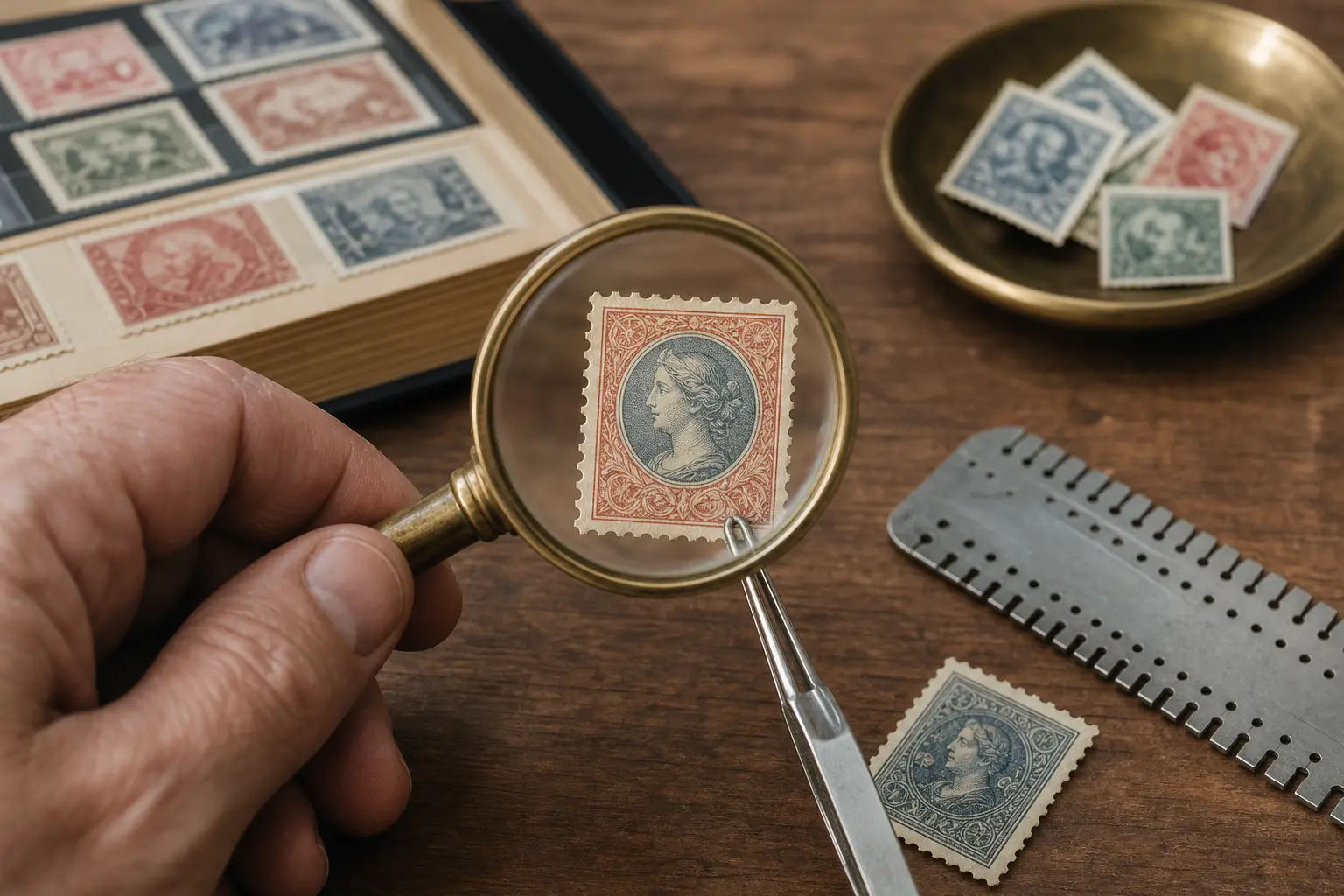
Before opening a catalog or running an image search, write down what the stamp actually shows. Record every readable word, number, currency symbol, portrait, emblem, landmark, overprint, and cancellation. Note the dominant colors, the shape and orientation of the design, and whether the stamp is mint, used, attached to an envelope, or mounted in an album. This first inventory matters because a promising search result can make you reinterpret a blurred letter or overlook a feature that does not fit. Treat the stamp as evidence and your first notes as a record of that evidence.
Country is often the fastest clue, but it is not always printed plainly. Some classic issues rely on a monarch, national symbol, language, or currency. Great Britain has historically been able to omit its country name from many stamps, while other postal administrations changed names as borders and governments changed. If the text is unfamiliar, copy the characters carefully instead of guessing the language. Search engines and photo identifiers work better when the query combines several independent clues, such as a denomination, portrait, color, and emblem.
Measure the format instead of trusting a similar picture
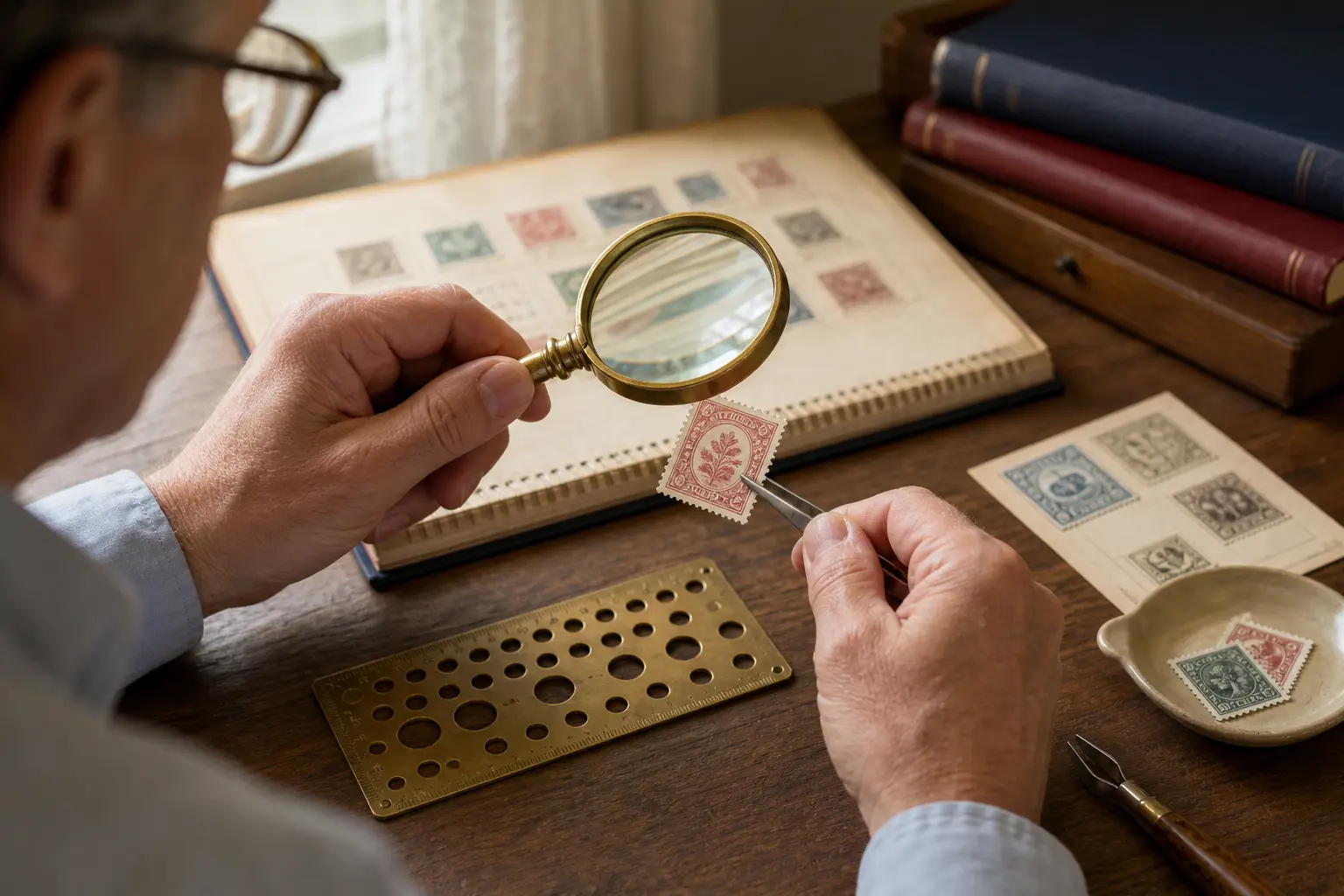
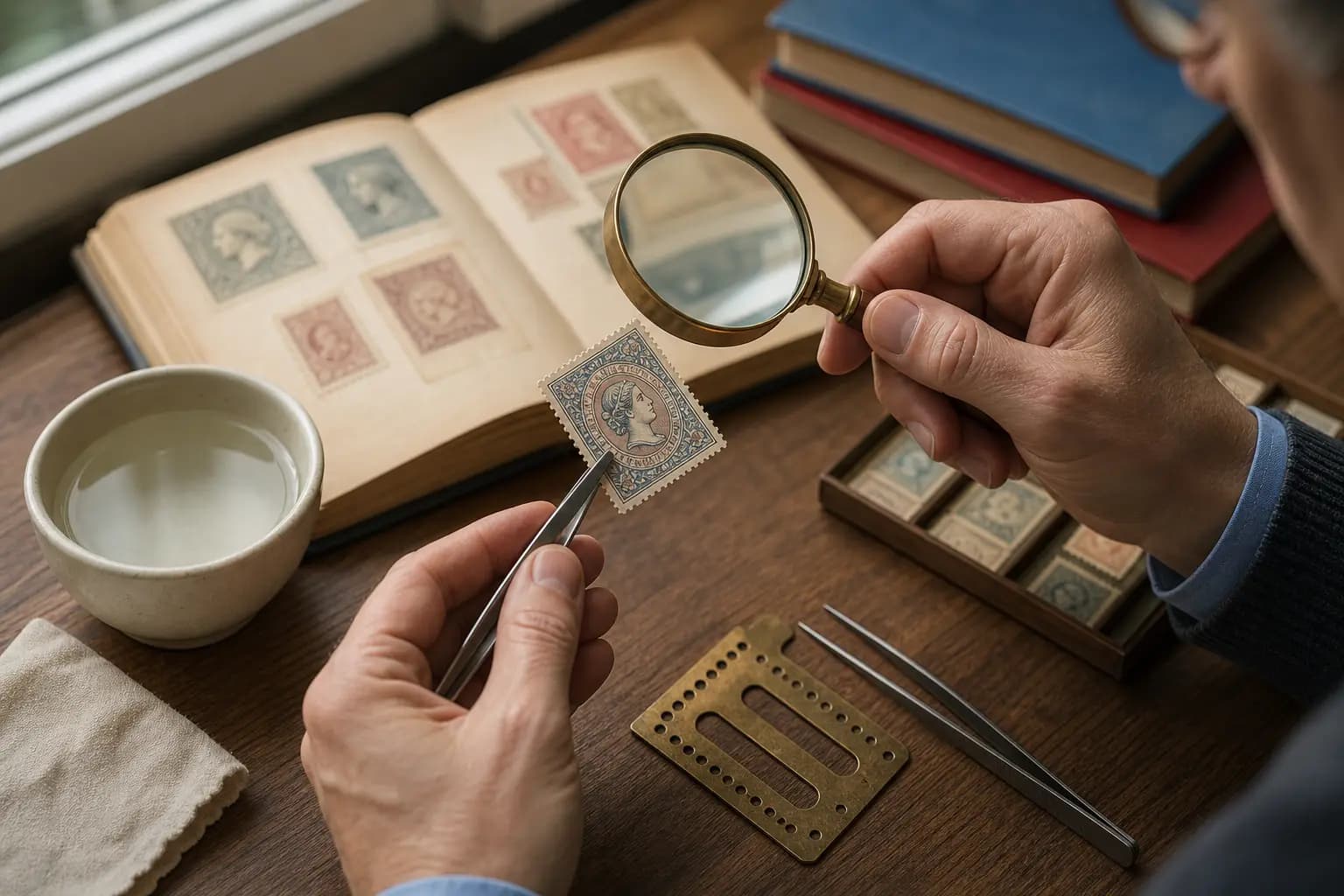
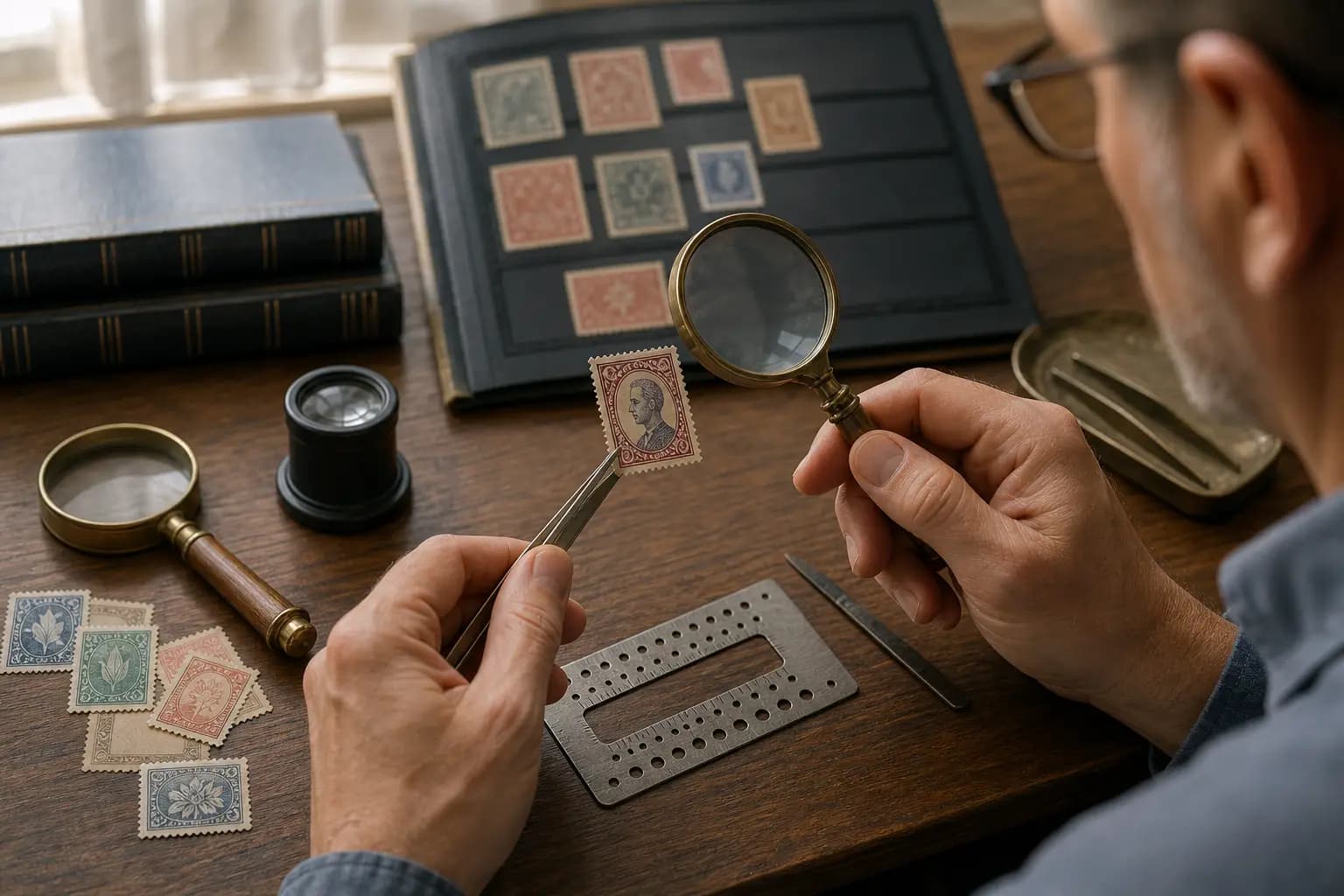
A stamp that looks identical at screen size may be a different catalog listing because of its measurements or perforations. Measure the printed design and the overall stamp in millimeters. Inspect all four edges and note whether they are perforated, rouletted, die-cut, or imperforate. A perforation gauge counts the holes or teeth across a standardized distance; it is more reliable than counting the entire edge. Keep the full edge visible in photographs because trimmed or damaged perforations can remove one of the best identification clues.
Also record anything that may have been added after the original printing. An overprint can change a denomination, postal purpose, territory, or period of use. A cancellation can hide part of the design but may also supply a date or location. Do not soak a stamp from paper simply to make identification easier. A complete cover, unusual cancellation, or original postal context can be more important than the loose stamp, and self-adhesive or fugitive inks may be damaged by an inappropriate soaking method.
Use paper, watermark, and printing as tie-breakers
When two candidates share the same face design, the difference may be in the material. Watermarks are patterns formed in the paper and can separate common and scarce varieties. Some are visible when the back is viewed against a dark surface or transmitted light; others require specialist equipment or an appropriate commercial watermark fluid. Do not improvise with household solvents. A watermark test is a handling procedure, and an important or fragile stamp is better left for someone with the correct tools and ventilation.
Printing method can also narrow a result. Engraved stamps often show crisp recessed lines and a tactile impression, while lithography, letterpress, and photogravure leave different patterns under magnification. Paper thickness, fluorescence, tagging, gum, and shade may matter as well. Color is helpful but rarely decisive by itself: aging, sunlight, scanners, phone white balance, and catalog terminology can make the same color appear different. Compare color only under consistent light and alongside other confirmed features.
Build a shortlist, then test every decisive feature
Now use a general catalog, specialist reference, trusted collection database, or photo identifier to produce a shortlist. Start broad with country or issuing authority, approximate era, denomination, and design. Then compare each candidate against your measurements, perforation gauge, watermark orientation, overprint, printing method, and postal use. Do not stop because the central picture matches. Definitive stamps were often reprinted for years, and small changes in frame lines, numerals, paper, or perforation can create separate listings.
StampSnap is useful at this stage because a photograph can turn the visible design into a likely identification and structured details without requiring you to know the correct catalog vocabulary first. Save the result with the image, add it to a review folder, and record which clues still need confirmation. The app should shorten the search, not erase uncertainty. If the stamp might be altered, forged, repaired, or financially significant, compare it with certified examples and seek qualified expertizing.
Preserve the physical context while you research
Handle a loose stamp as little as possible and use clean stamp tongs rather than fingers. Keep it on a stable, contrasting surface for photography, away from drinks, tape, glue, direct sun, and strong heat. If it is already in a sound archival mount, photograph it there. Good identification work should not trade the condition of the object for a slightly easier image.
Finally, record where the stamp physically lives. A digital identification is most useful when it points back to an album, stock book, page, row, or envelope. Store the photograph, likely issue, unresolved questions, and source links together. That turns a one-time search into a catalog entry you can review when you obtain a better reference, measure the watermark, or ask an expert.
Frequently asked questions
What is the first thing to look for on an old stamp?
Start with readable country or postal-authority text, denomination and currency, then record the portrait, emblem, color, overprint, cancellation, and complete edge pattern before searching.
Can a stamp be identified from color alone?
Color can narrow a shortlist, but fading, lighting, printing variation, and inconsistent color names make it unsafe as the only deciding feature.
When should a collector use an expertizing service?
Seek expertizing when authenticity, a scarce variety, a possible alteration, or a consequential sale depends on physical characteristics that a photograph cannot confirm.