How Organized Philately Emerged
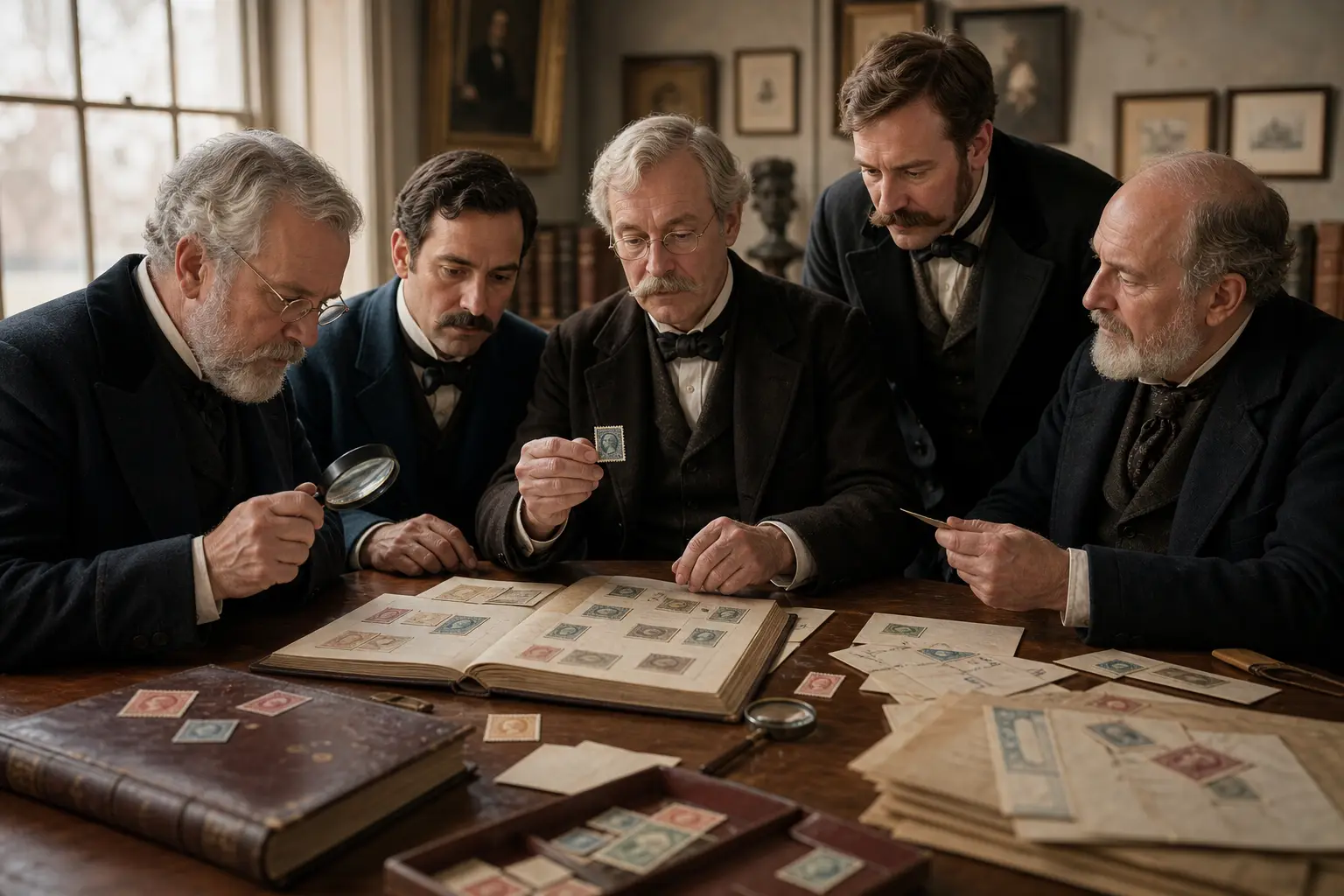
Postage stamps created a new field of study as well as a collecting hobby. The American Philatelic Society traces growing enthusiasm in the United States to the 1850s and estimates that about 25,000 people in the country collected stamps by the 1880s. Collectors needed ways to compare unfamiliar issues, exchange duplicates, and share information that was difficult to obtain alone.
Meetings and correspondence turned those individual interests into organized philately. Clubs could connect people in one city, while larger societies linked collectors across regions. Their lasting contribution was not simply sociability: they created recurring places for research, discussion, exchange, publication, and the careful examination of philatelic material. The exact mix of activities has always varied between organizations.
The Founding of the American Philatelic Association
In 1886, several collectors discussed forming a national organization. The APS history records that roughly 400 collectors indicated support and 219 sent proxies to participate in the founding process. A committee met in New York City on September 13, 1886, adopted the name American Philatelic Association, and elected collector and attorney John K. Tiffany as president the following day.
The association's original constitution described three connected aims: helping members acquire philatelic knowledge, cultivating friendship among collectors, and enabling contact with similar societies in other countries. Those aims explain why organized collecting developed around both scholarship and community. The association later adopted the name American Philatelic Society permanently at its 1908 convention.
From Meetings to Publications and Reference Work
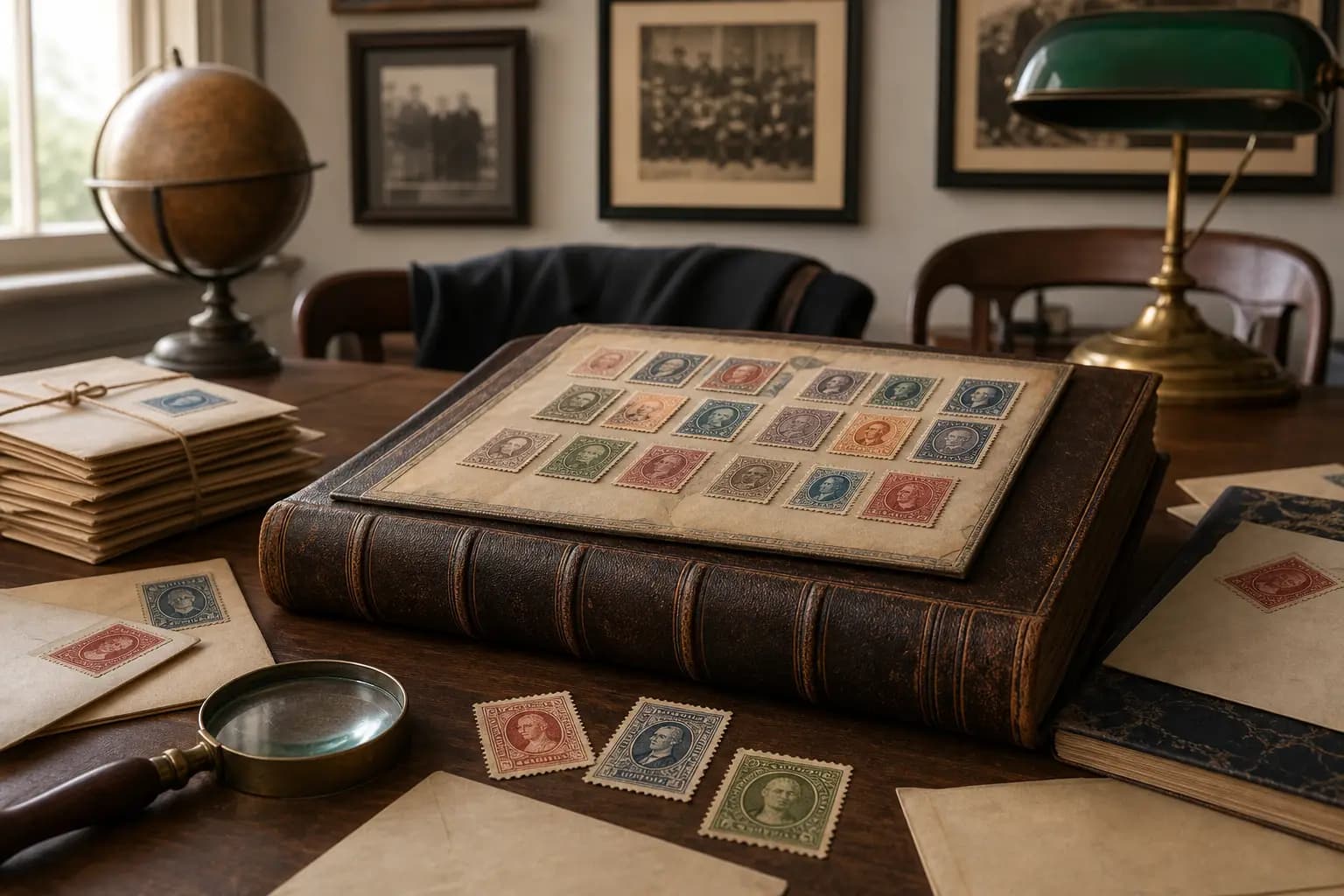
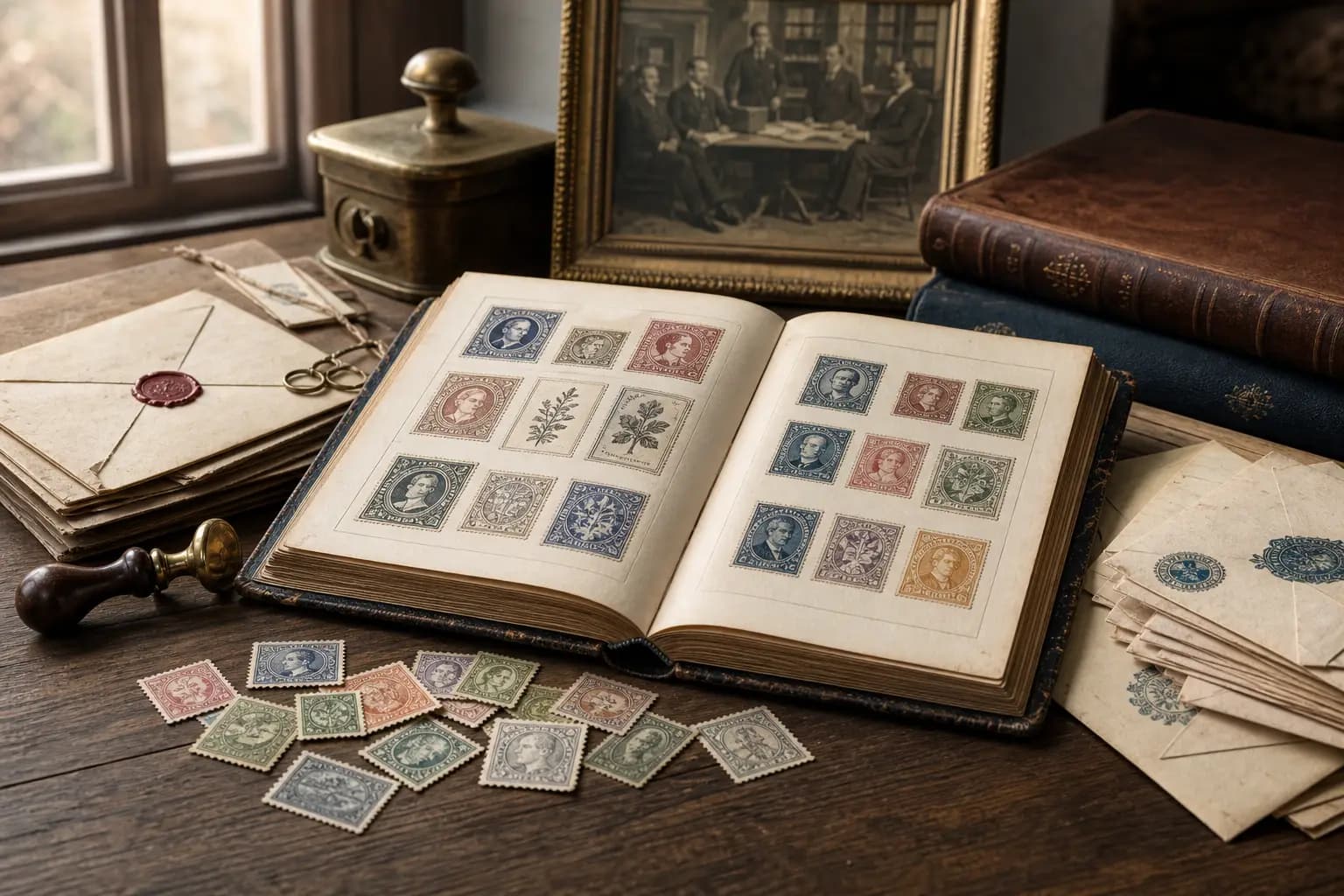
A society can preserve and circulate knowledge more consistently than an informal conversation. The first issues of The American Philatelist appeared in 1887, giving the young association a recurring publication for research and collector information. Over time, organized philately also developed libraries, specialist publications, expertizing services, directories, exhibitions, and educational programs, although these services belong to particular organizations rather than every local club.
This institutional record matters to collectors because identifications often depend on accumulated evidence. Printing details, postal routes, issue dates, and varieties may be documented across catalogs, journals, or exhibits. A club meeting can introduce a question, while a society's library or publication can provide the reference trail needed to investigate it responsibly.
What a Local Stamp Club Can Offer
APS guidance for starting a club describes core activities such as buying, selling, trading, gaining knowledge, and sharing other philatelic pursuits. It also stresses a balance between social and collecting activities. That balance is useful for beginners: a welcoming meeting can make it easier to ask basic questions, while a focused program can introduce tools, catalog use, postal history, exhibiting, or a specialist collecting area.
No two clubs should be assumed to provide the same experience. Some concentrate on talks and study, some organize exchanges or auctions, and others support exhibitions or youth programs. Before joining, check the meeting format, collecting scope, fees, code of conduct, and rules for sales or appraisals. A club should be treated as a community and learning resource, not as an automatic guarantee that every opinion is authoritative.
Documented Benefits for APS Chapters
The APS says chapters have been part of the society since its founding and lists local clubs in the United States and several other countries as chapters. Its chapter benefits include an online directory, event listings, access to The American Philatelist, sales circuits for meetings, and use of the American Philatelic Research Library. These are APS chapter services, not universal promises made by all stamp clubs.
APS chapters may also draw on exhibition resources, accredited judges, awards, recruiting materials, and hosted websites. The practical value depends on a club's program and participation. A collector interested in research may prioritize library access and talks, while someone seeking community may care more about regular meetings and exchanges. Reviewing a recent program or attending as a visitor is often more informative than relying on a short membership description.
Research, Exhibiting, and Responsible Exchange
Clubs and societies can help collectors turn an accumulation into a researched collection. Presentations and exhibits encourage members to explain why items belong together, document their postal or production context, and cite references. Feedback from experienced collectors may reveal a missing comparison or a better source, but important conclusions should still be checked against catalogs, specialist literature, or qualified expert opinion.
Exchange is another historic function of organized philately. Clear rules are important whenever material is bought, sold, or traded, especially when condition or authenticity is uncertain. Ask how disputes are handled and whether sellers must describe repairs, regumming, or other alterations. A trustworthy club culture favors transparent descriptions and leaves room for further expert examination rather than treating an informal meeting-room opinion as certification.
How to Choose a Club or Society Today
Start with the collecting question you want help answering. A local general club may suit someone building broad knowledge, while a specialist society may be better for one country, period, printing process, or branch of postal history. Use an official directory where possible, confirm that meeting information is current, and ask whether visitors may attend before joining. Online or hybrid meetings can be useful when no suitable group meets nearby.
At a first meeting, look for clear leadership, a published program, respectful discussion, and careful treatment of members' material. Ask what resources are available and what membership does not include. You can use StampSnap to maintain a working inventory or record questions before a meeting, then add references or corrections after researching them. The app remains an organizational aid rather than a substitute for society expertise.
Why Organized Philately Still Matters
The tools available to collectors have changed since 1886, but the original goals of knowledge, friendship, and connection remain recognizable. Digital catalogs and online meetings make information easier to reach, while clubs and societies provide context, discussion, and continuity. Their archives and publications also preserve research that might otherwise disappear when an individual collection changes hands.
The strongest reason to join is therefore practical: an active organization can expose a collector to better questions, more reliable references, and people with complementary experience. Choose a group whose documented activities match your interests, verify current benefits with that organization, and contribute what you learn. Organized philately works best as a shared research community rather than simply a membership label.
Frequently asked questions
When was the American Philatelic Society founded?
The organization was founded as the American Philatelic Association in New York in September 1886. It permanently adopted the name American Philatelic Society in 1908.
What did early philatelic societies aim to do?
The 1886 association emphasized acquiring philatelic knowledge, cultivating friendship among collectors, and connecting with similar societies in other countries.
What can a modern stamp club help with?
Depending on the club, activities may include talks, research, trading, exhibitions, catalog use, and community events. Check the actual program because services vary widely.
Are APS chapter benefits available through every stamp club?
No. Journal access, directory listings, sales circuits, library use, and exhibition support described here are specific APS chapter benefits and should not be assumed for an unaffiliated club.
How should I evaluate a club before joining?
Confirm current meeting details, program topics, fees, exchange rules, and visitor access. Choose a group whose activities and collecting scope match the questions you want to explore.