Handle stamps less and use the right tool
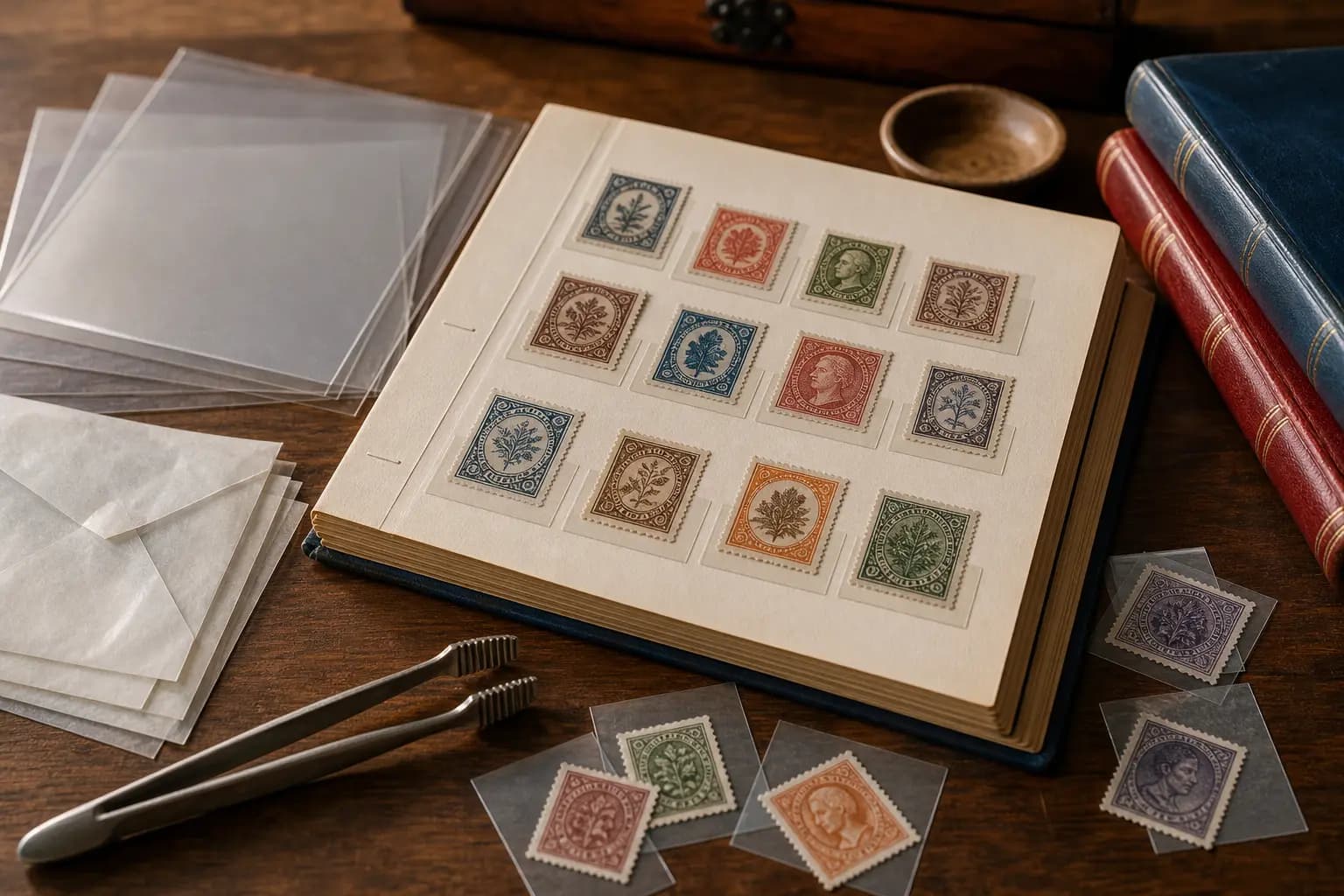
Clean hands still leave oils and moisture, so use smooth stamp tongs for loose stamps and hold only the edge when a different method is unavoidable. Work over a clean, dry surface with good light. Keep food, drinks, pens, adhesive notes, and cleaning sprays away from the table. Do not stack tools on album pages or slide a stamp across a rough surface. The easiest damage to prevent is the damage that never gets a chance to happen.
Leave stamps on covers or original paper when that postal context may be significant. Soaking is not a universal cleaning method, and many modern self-adhesive stamps, colored envelopes, fugitive inks, and fragile papers react poorly. If a stamp is stuck, curled, moldy, or attached with an unknown adhesive, pause before trying to improve it. A conservator or experienced philatelist can help determine whether intervention is safer than leaving it alone.
Choose archival albums, stock books, and mounts
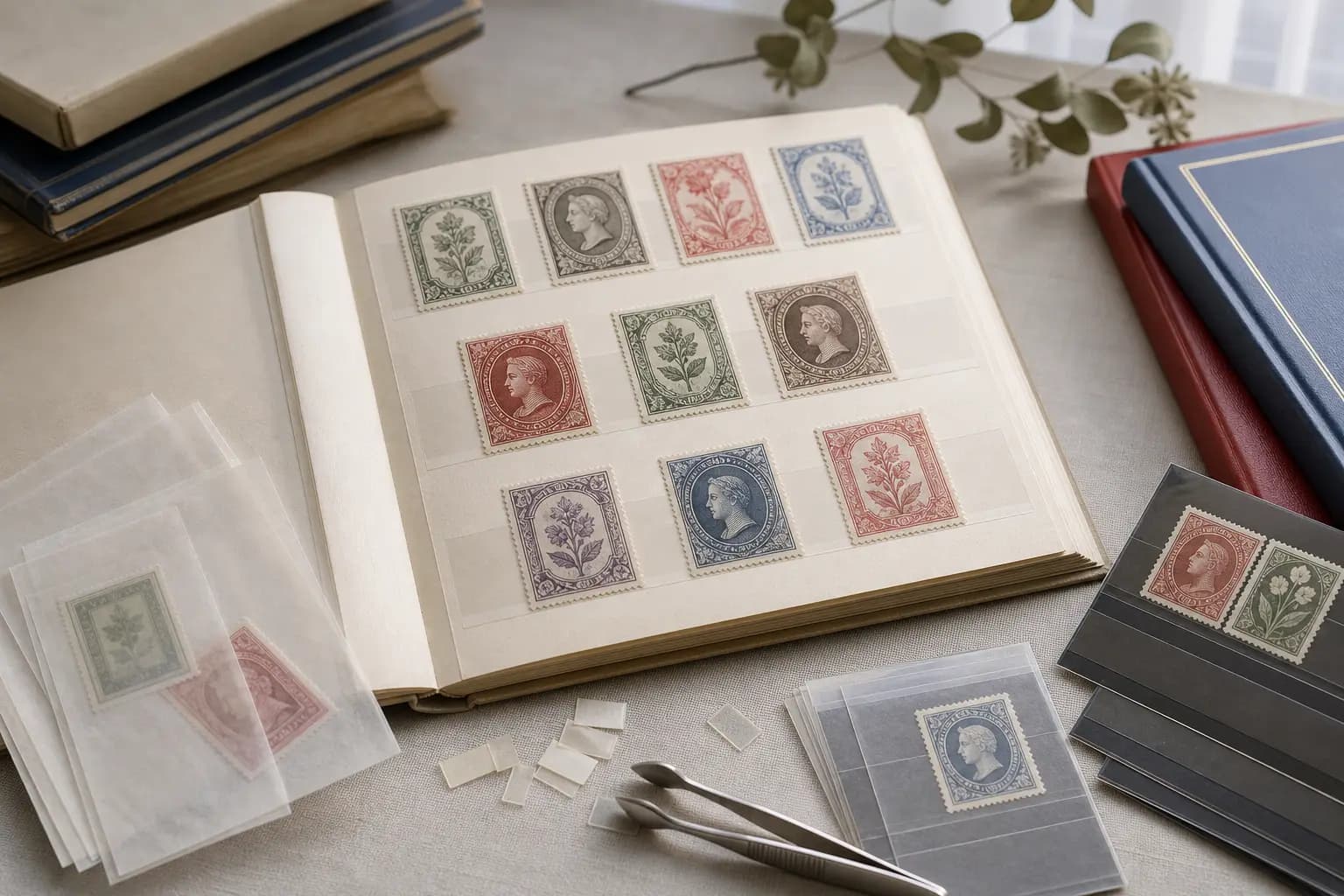
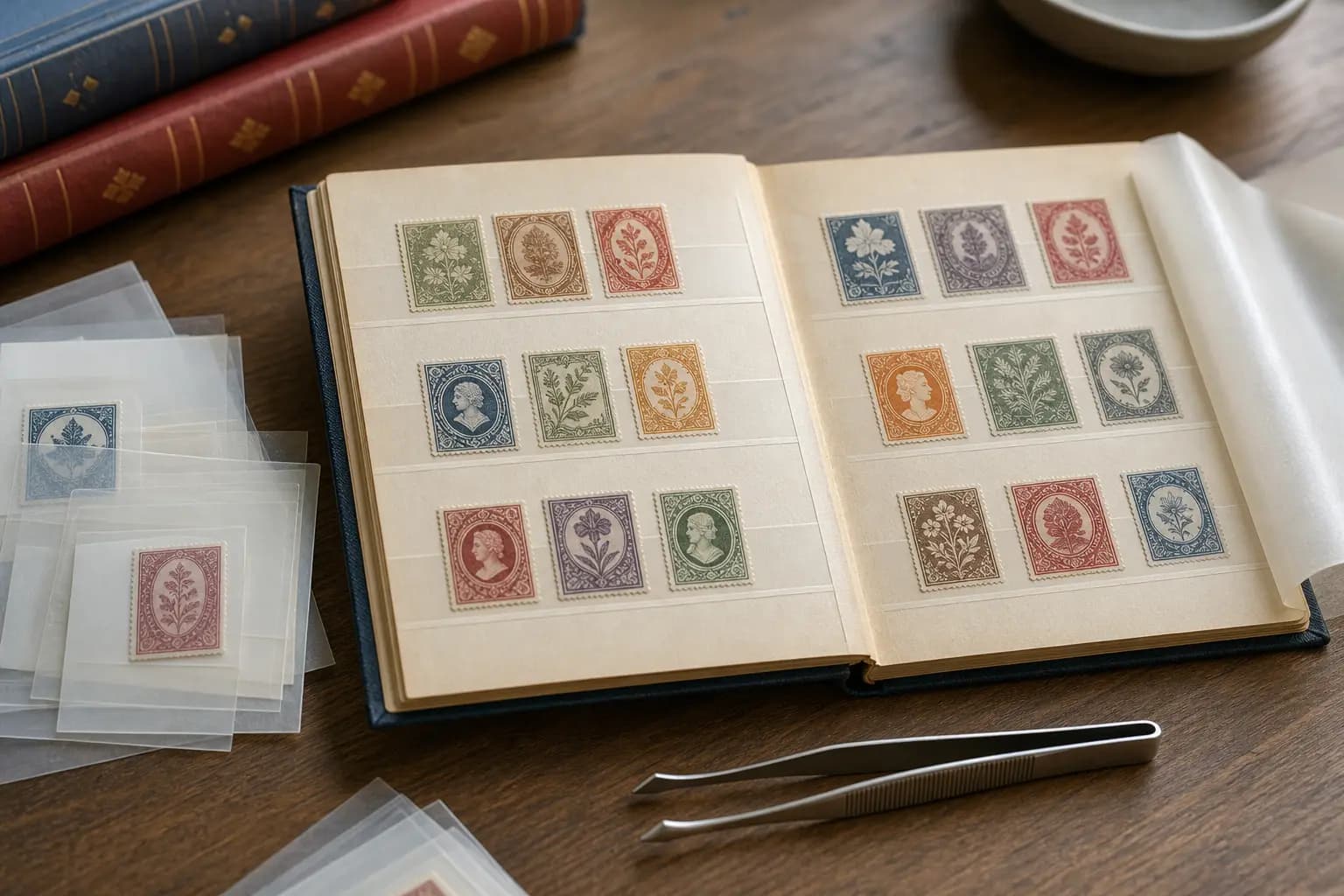
Use products sold for long-term philatelic or archival storage by a reputable supplier. Albums, stock books, glassine envelopes, and clear mounts should be made from stable materials that will not release plasticizers, acids, or adhesive into the stamp. When plastic is used, look for a clear conservation specification rather than assuming every transparent sleeve is archival.
Never use household tape, glue, self-stick photo corners, or pressure-sensitive laminating film. These products can stain paper, pull fibers, trap moisture, and turn a reversible album arrangement into a repair problem. Traditional stamp hinges and mounts serve different purposes, and even a peelable hinge changes the back of a mint stamp. Decide whether the item should be mounted at all before attaching anything to it.
Control light, temperature, and humidity together
Light damage accumulates and cannot be reversed. Store albums away from direct sun and strong display lighting, and do not leave a valuable page open as permanent room decoration. Heat accelerates chemical change, while large temperature and humidity swings can distort paper and encourage mold. Basements, attics, garages, exterior walls, and areas near radiators or air-conditioning outlets are usually harder to keep stable.
The National Postal Museum advises stable, moderate conditions and highlights incorrect humidity as a major source of damage. A practical home target is more important than chasing a perfect number: choose a clean interior location, avoid rapid fluctuations, allow air circulation, and monitor for dampness. If the room regularly feels humid or develops condensation, fix the environment before placing the collection there.
Store albums upright and protect them from ordinary accidents
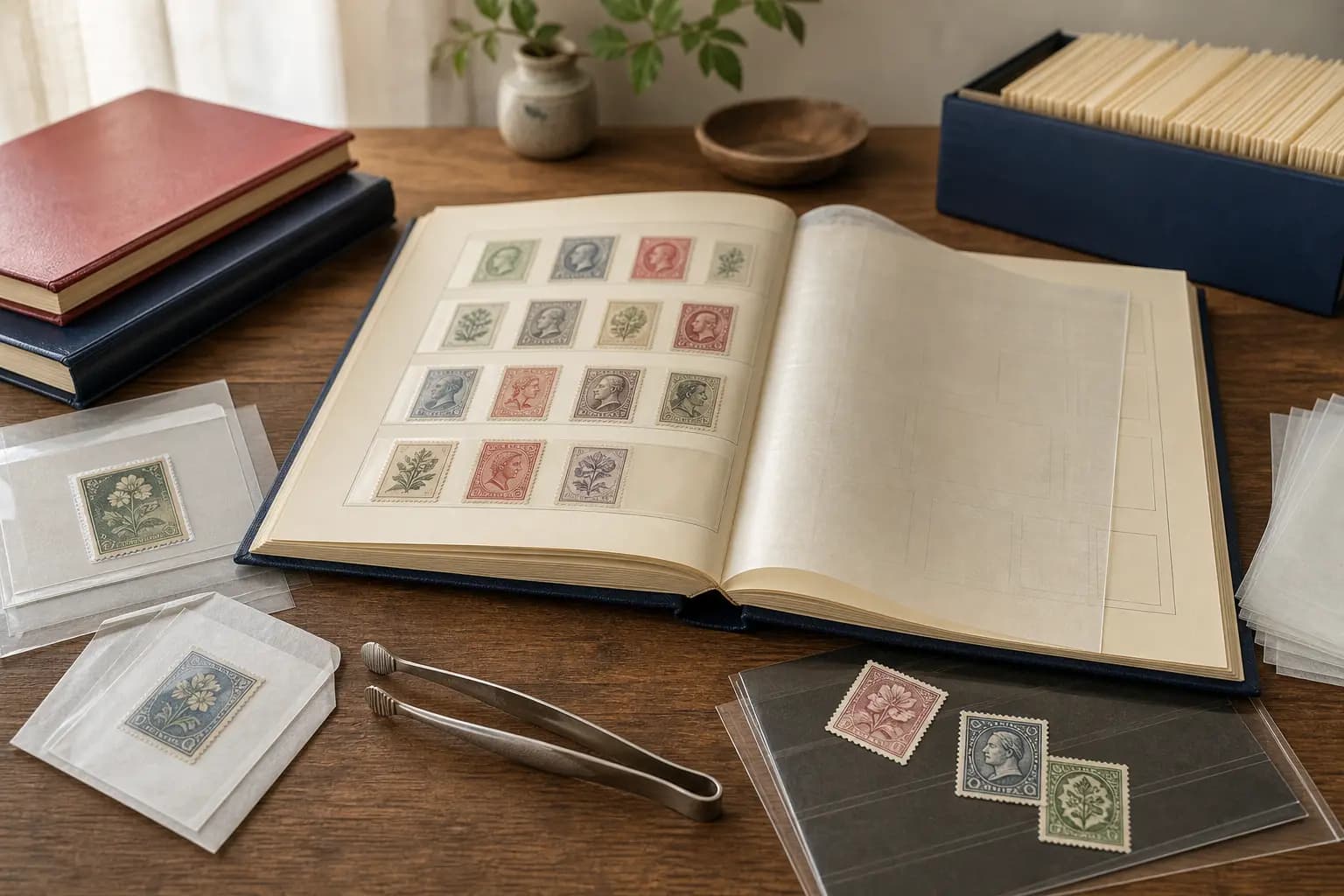
Support albums upright like books unless the manufacturer recommends flat storage, and do not pack shelves so tightly that bindings and pages are crushed. Keep boxes and albums off the floor, especially below plumbing or in rooms where water may enter. A closed cabinet reduces dust and light, but it should not trap moisture. Use clean shelving and inspect nearby materials for pests or mold.
Label each album and box clearly so you do not need to open everything to find one item. Avoid overfilling stock books, which can press stamps against one another and stress the binding. Keep certificates and acquisition records in their own archival sleeves, linked to the stamp by a stable reference rather than a sticky label on the object.
Build a digital location record without replacing the original
A photograph reduces repeated handling and makes it easier to compare, share, and research a stamp. Save the physical location with the image: album name, page, row, pocket, or cover number. StampSnap lets you group identifications in folders and export a PDF or CSV, so the catalog can remain useful even when the albums are stored safely.
Back up the digital catalog after meaningful changes and keep one copy separate from the phone or computer used to manage it. The record does not replace the stamp, and the stamp does not replace the record. Together they help a future owner understand what is present, where it is stored, which identifications are tentative, and which items have certificates or special handling requirements.
Inspect on a schedule instead of waiting for visible damage
A few times each year, check the storage area for moisture, pests, dust, unusual odors, page distortion, and changes in plastic sleeves. Look at representative albums rather than handling every stamp. After a leak, heat wave, move, or long period of high humidity, inspect sooner. Isolate anything with active mold from the rest of the collection and seek professional advice; brushing spores in the storage room can spread the problem.
Preservation is a routine, not a one-time purchase. Stable conditions, careful handling, safe materials, clear organization, and regular checks do more for most collections than elaborate display. If an item is exceptionally fragile or important, ask a paper or philatelic conservator for storage guidance specific to that object.
Frequently asked questions
Can I store stamps in ordinary plastic sleeves?
Use sleeves or mounts specifically documented as archival or conservation approved. Unspecified plastics can contain additives that migrate or age poorly.
Should stamp albums be kept in a basement or attic?
Usually not. Those areas often experience larger temperature and humidity swings and greater water risk than an interior living-space cabinet.
Is it safe to attach stamps with tape or glue?
No. Household adhesives can stain, tear, and permanently alter stamp paper. Use appropriate philatelic mounts or seek advice for valuable material.