
Start with the safest answer: use several clues, not one
If you want to know whether a stamp was printed by lithography, gravure, line-engraved intaglio, or letterpress, the safest answer is to compare more than one clue at the same time. The American Philatelic Society identifies these as the four major families used for postage stamps, and it also notes that more than one process may appear on a modern stamp. That means a single visual detail is rarely enough on its own.
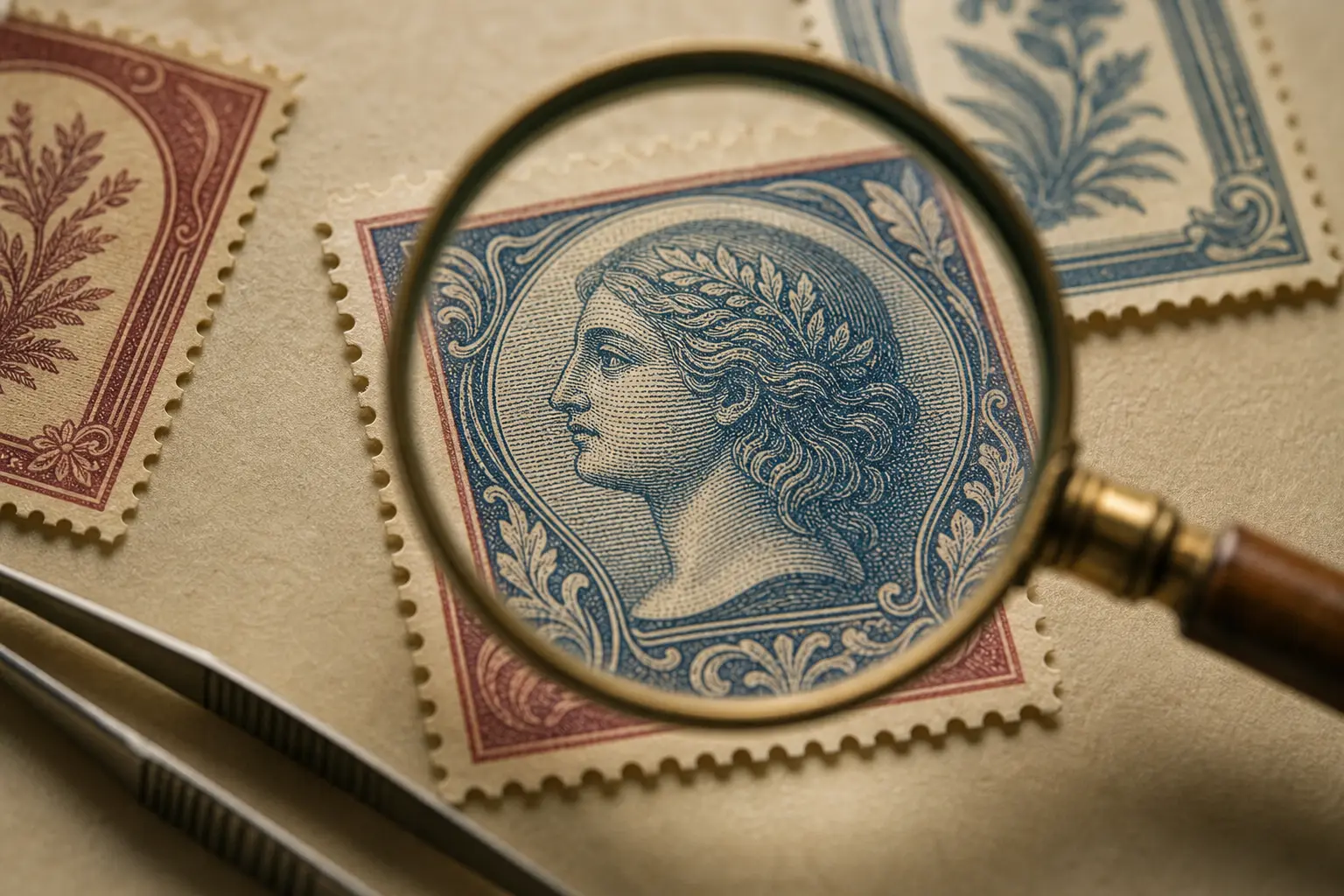
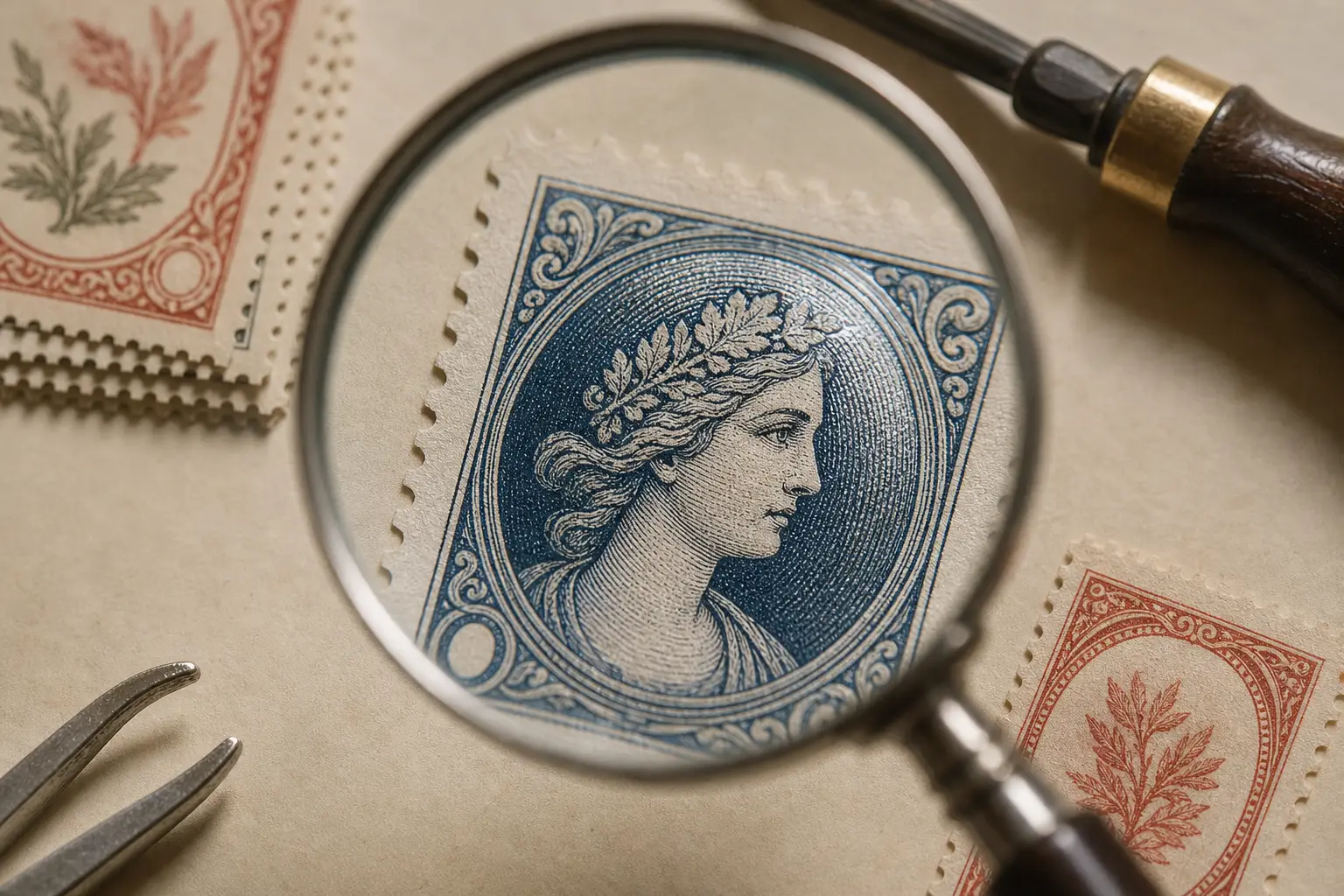
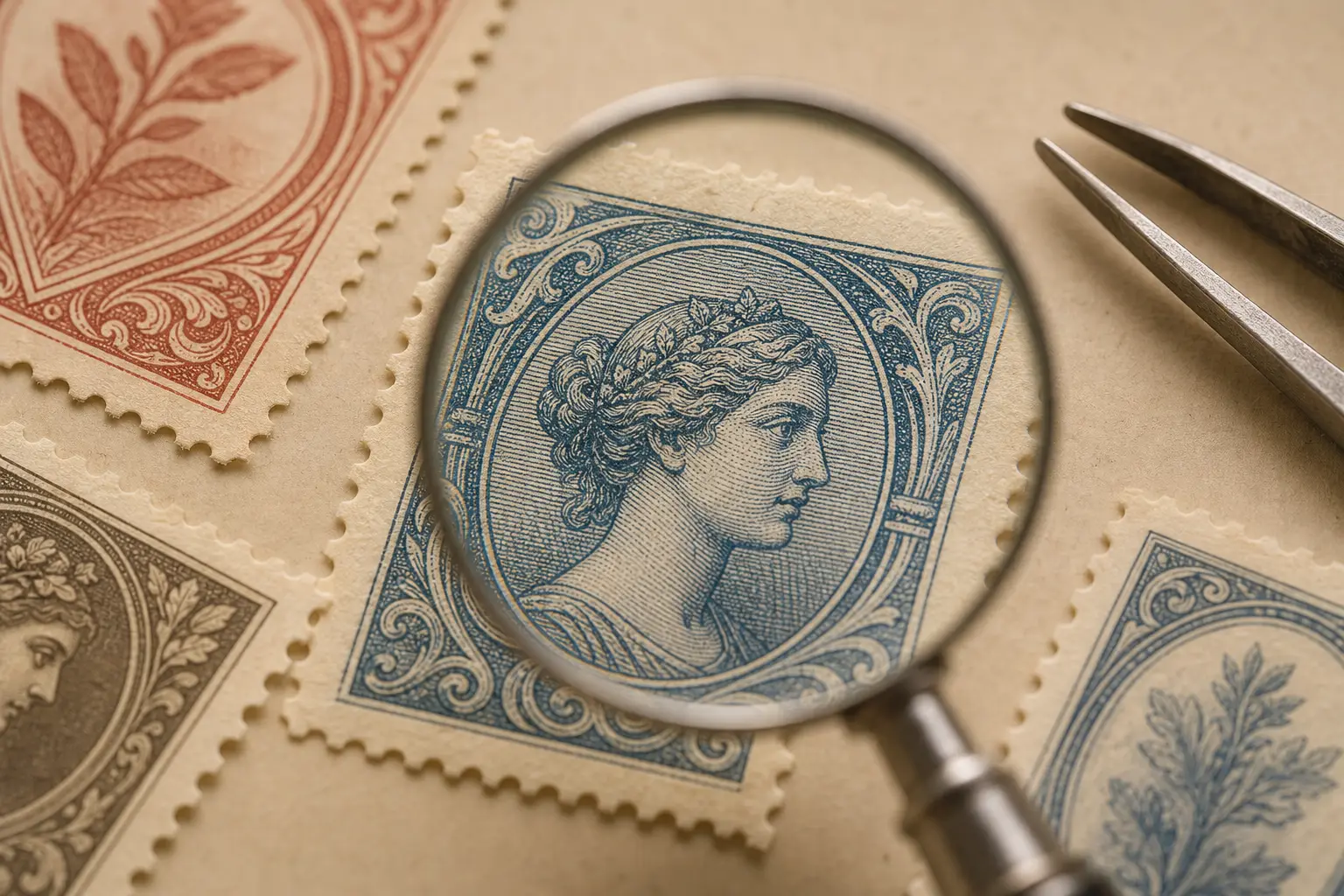
The best practical approach is to treat the stamp as evidence, not as a puzzle with one hidden switch. Look first with the naked eye, then under magnification, and use diffuse or oblique light so you can observe surface structure without touching or pressing the stamp. If you are making a collection record in StampSnap, note what you can see and what you still cannot confirm.
What line-engraved intaglio usually leaves behind
Line-engraved intaglio is a recess process in which ink is transferred from deliberately incised lines. Its designs are normally built from lines, hatching, cross-hatching, and stippling, so the image may look structured rather than flatly painted. Under magnification and oblique light, collectors may sometimes see raised ink, and pressure can sometimes leave debossing on the reverse.
Those are useful supporting features, but they are not single tests. A stamp can show some apparent relief without proving line-engraved intaglio, so it is better to ask whether the design language, surface behavior, and known production information all fit together. If the reverse is not safe or necessary to inspect, do not manipulate the stamp just to chase one clue.
How gravure differs from line-engraved intaglio
Gravure is also a recess process, but the tone is formed from screened cells rather than the incised-line structure typical of line-engraved intaglio. This is why gravure can sometimes seem similar at first glance: both are recess families, and both may show texture under magnification. The American Philatelic Society cautions that screened or raised effects can appear in other processes too.
For that reason, do not diagnose gravure from dots, screening, or surface texture alone. Instead, compare the whole image structure: are you seeing a design built mainly from fine linework, or tonal areas created through screened cells? Then check whether the item’s production records support what your eyes suggest. That combination is much more reliable than any one isolated feature.
What lithography looks like when you study it carefully
The Smithsonian National Postal Museum describes offset lithography as a planographic process, which means the image is formed on a smooth surface rather than cut or etched into a plate. Oil-based ink adheres to the image area, and a rubber blanket transfers, or offsets, that image to paper. Modern stamp lithography often combines separate process-color layers made from very fine dots.
A dot pattern can be part of the evidence, but it is not a stand-alone answer. The museum notes that modern lithography can be sharp, so soft or blurred edges are not a dependable identifying rule, and screened structures can also appear in gravure and other processes. Use non-contact magnification, and treat dots as one clue among several rather than a shortcut to certainty.
Where letterpress fits in a modern comparison
Letterpress is one of the four major families the American Philatelic Society identifies for postage stamps, so it belongs in the comparison even when the visual clues are subtle. The key point for collectors is not to force every stamp into an intaglio-versus-lithography choice. Some items may show characteristics that make more than one family seem possible until you consult production records.
That is especially important for modern issues, where the printing method can involve more than one process on the same stamp. If you suspect letterpress, record the visual clues you used and compare them with the issue information you can trust. The most useful habit is to write down what was actually observed, not what you hope the stamp should be.
A safe, methodical identification routine
Begin with a clean workspace, good light, and non-contact magnification only. Study the front of the stamp first under diffuse light, then oblique light, and look for the overall character of the design: line structure, screened tone, dot layers, or a planographic appearance. If you are using a collection app such as StampSnap, save the visible clues and keep the identification tentative until the evidence is stronger.
Next, compare your observations with production records or reliable issue information. This step matters because the same visual clue can appear in different processes, and modern stamps may combine processes. If a stamp still remains uncertain, leave it as unconfirmed rather than making a forceful claim. Careful records are better than overconfident labels.
What not to do while you are checking printing clues
Do not rely on softness, blur, dots, or raised-looking texture by themselves. The Smithsonian and the American Philatelic Society both warn, in different ways, that these features can mislead if they are treated as single tests. Also avoid pressing, rubbing, or any other handling that could damage the stamp while you are trying to study it.
Just as important, do not use household solvents or other risky materials in an attempt to “reveal” printing details. The method here is observation first, comparison second, and confirmation third. When in doubt, record the item as uncertain and return to it later with better reference information rather than forcing an answer.
Frequently asked questions
Can I identify a stamp’s printing method from dots alone?
No. Dot patterns can support an identification, but they are not enough by themselves because gravure and other processes can also show screened structures.
Is a blurred or soft edge proof of lithography?
No. The Smithsonian National Postal Museum notes that modern lithography can be sharp, so soft or blurred edges are not a dependable rule.
What is the safest way to study printing clues?
Use non-contact magnification with diffuse or oblique light, and compare several clues together instead of relying on a single feature.
Why should I check production records too?
Because more than one process may appear on a modern stamp, and the same visual clue can occur in different printing families.
What are the main printing families collectors should know?
The American Philatelic Society identifies line-engraved intaglio, gravure, letterpress, and lithography as the four major families used for postage stamps.