Why Printing Methods Matter in Stamp Collecting
The printing method used to produce a postage stamp is a key cataloging characteristic. It can explain why two issues with nearly identical designs show different line structures, color behavior, or surface effects. Learning to describe those observations gives collectors better notes and a more useful starting point for catalog research.
Printing technology also reflects the production choices of a postal authority and its printer. However, condition, paper, ink, plate wear, later coatings, and reproduction quality can change what a feature looks like. Identification should therefore rest on several compatible clues plus documentary confirmation, not on one dot, edge, shine, or apparent relief seen in isolation.
The Four Broad Printing Families
The American Philatelic Society groups the basic methods into four broad families: line-engraved intaglio, gravure, letterpress, and lithography. Line engraving and gravure are both intaglio processes because ink is transferred from recessed areas, but they form the image differently. In line engraving, deliberately cut or transferred lines carry the design; in gravure, a pattern of recessed cells carries varying amounts of ink.
Letterpress transfers ink from raised printing elements and may leave characteristic edge effects or pressure evidence. Lithography is planographic: image and non-image areas share one plane and are separated through surface chemistry. Modern offset lithography can reproduce exceptionally clean, sharp designs, so a crisp image is not proof of engraving and a soft image is not proof of lithography.
Safe Tools and Lighting for Inspection
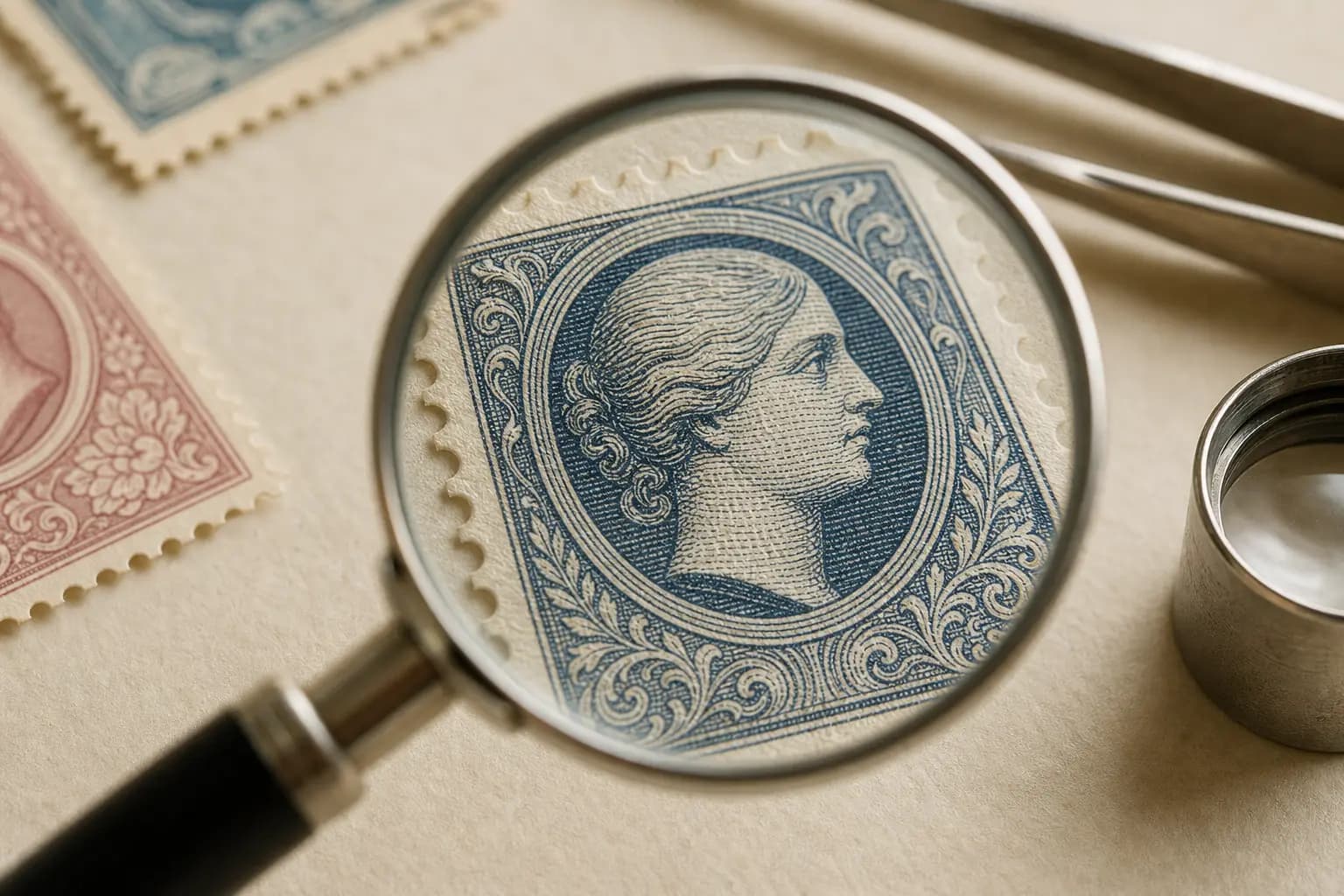
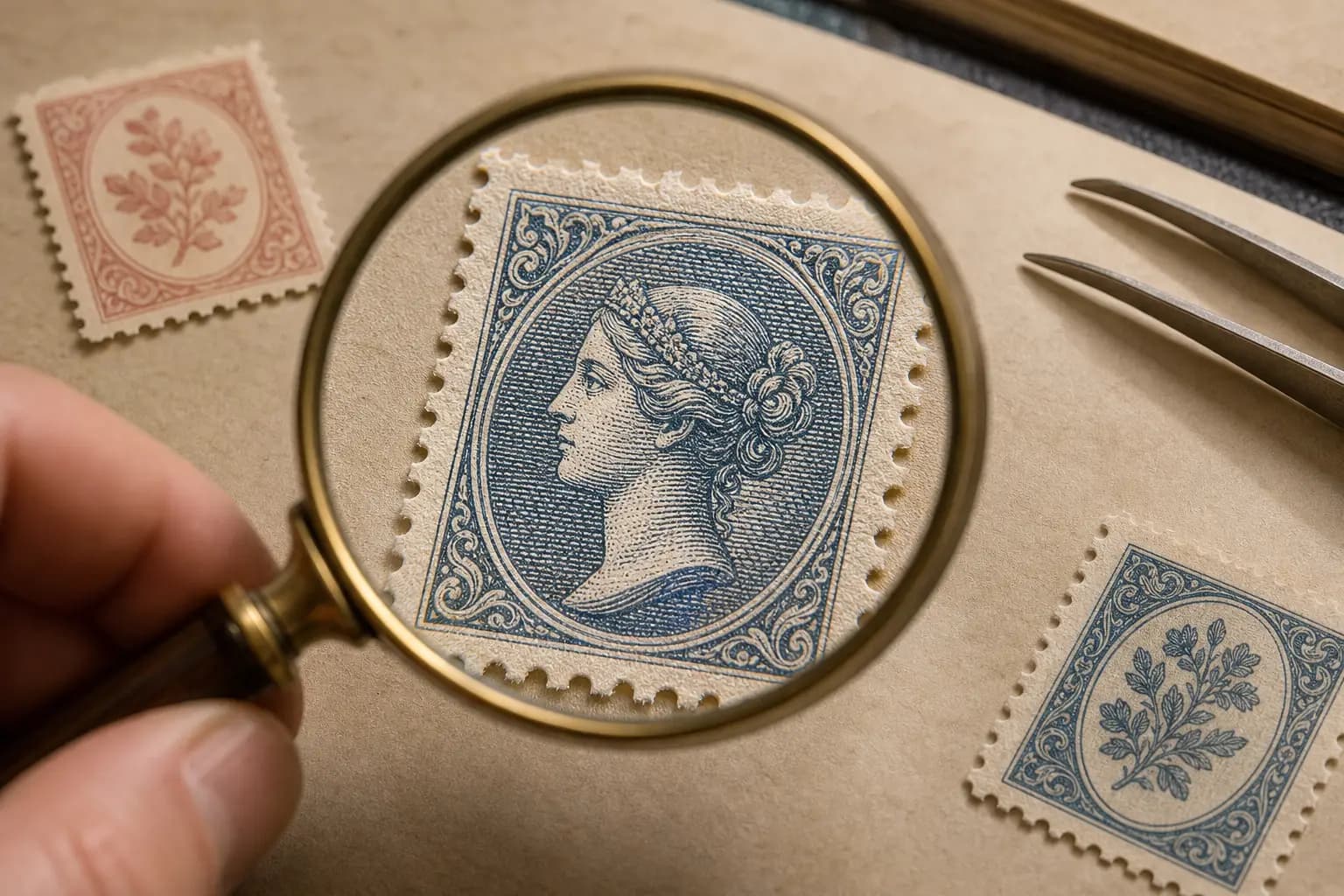
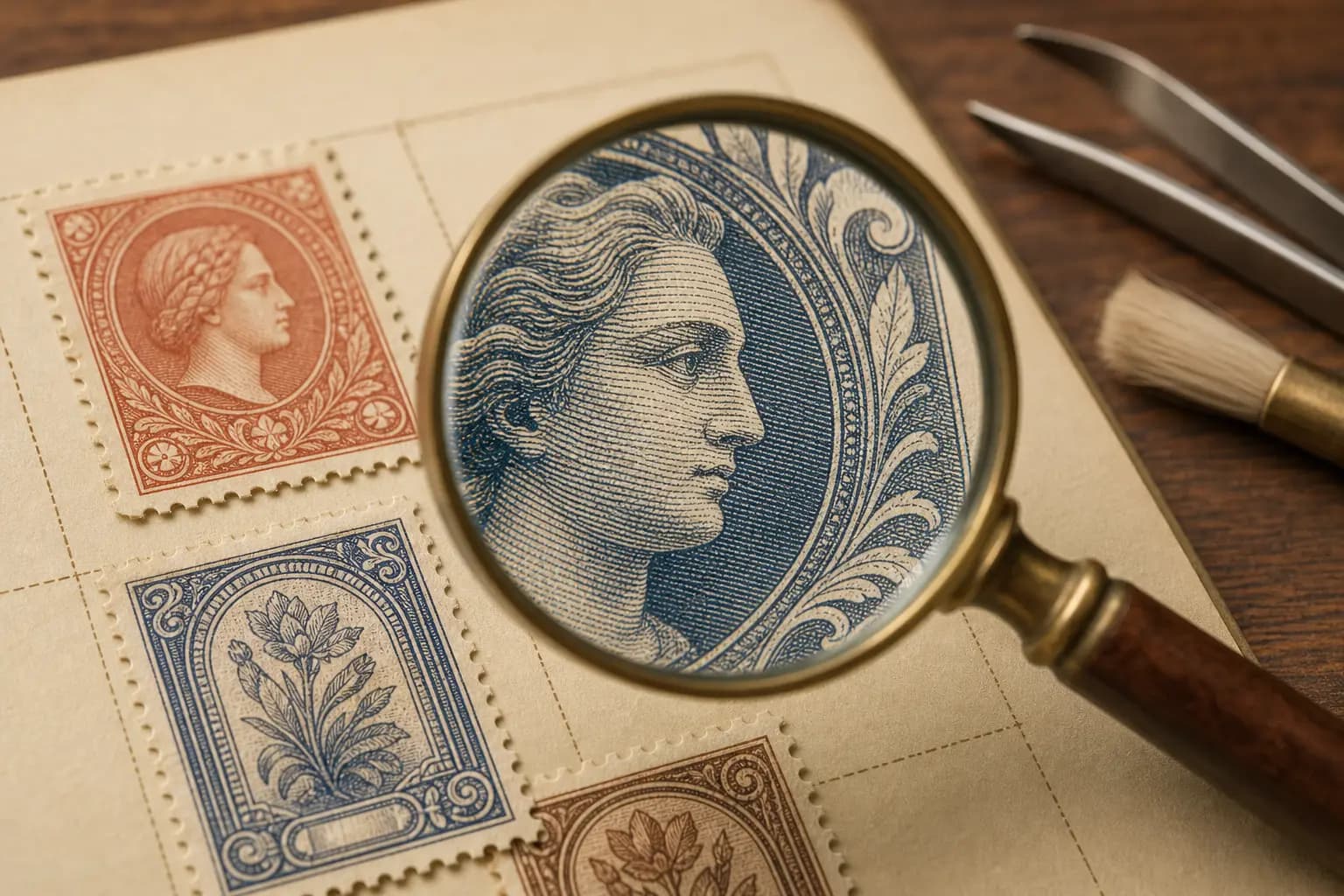
Use a philatelic loupe or magnifying glass and a neutral white light. First view the stamp straight on, then change only the direction of the light so it falls obliquely across the surface. This raking light may make printed lines, cell patterns, plate pressure, or paper texture easier to see without physical contact. Compare several areas, including lettering, solid color, fine shading, and the boundary between printed and unprinted paper.
Hold loose stamps with stamp tongs and support them on a clean, stable surface. Never rub the image, drag a tool across it, press on it, or probe the ink to test whether it is raised. Do not use solvents, moisture, adhesives, or abrasive materials. Leave stamps on covers and other postal-history objects in place; identification does not justify detaching them.
Clues for Line-Engraved Intaglio
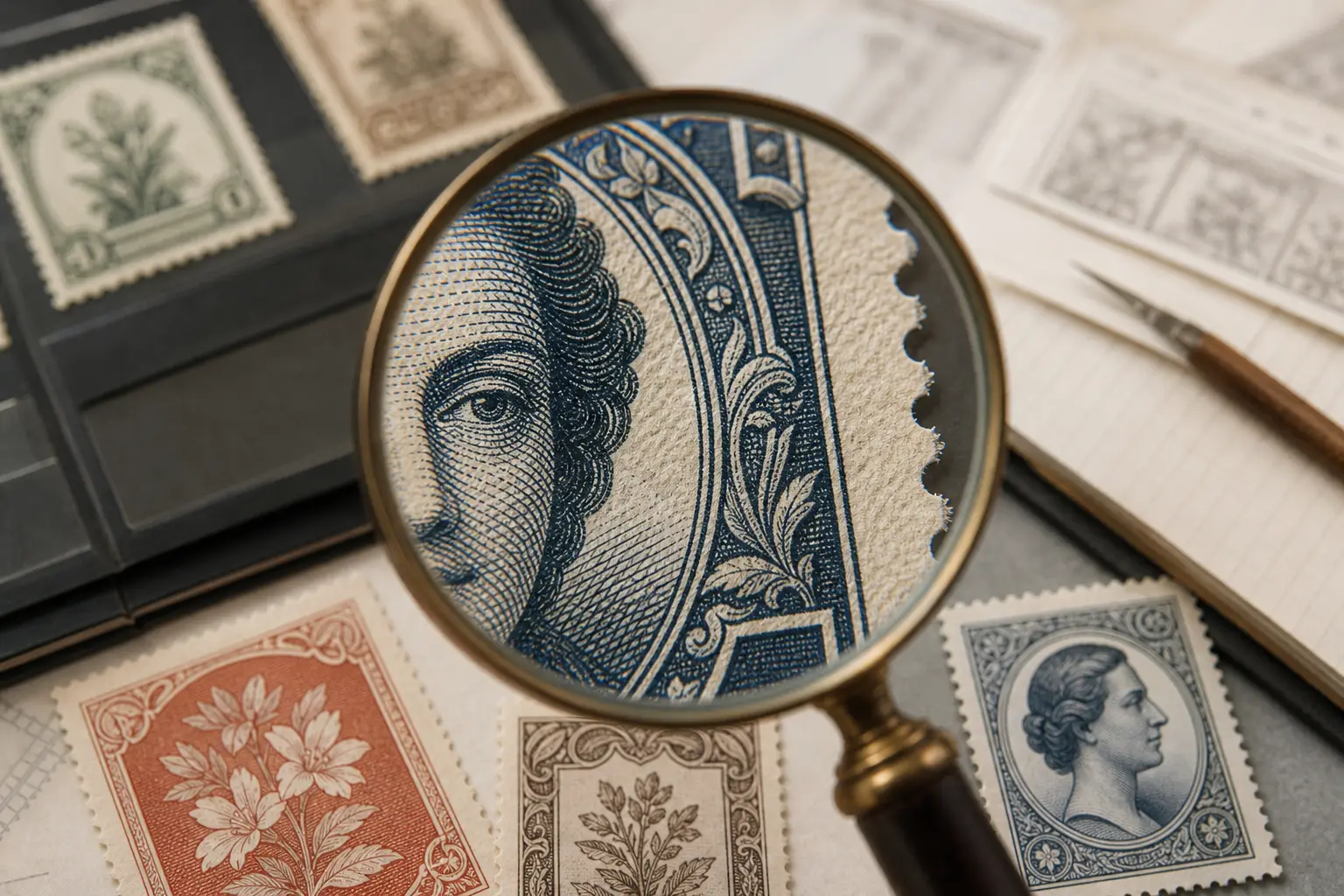
Under magnification, line-engraved stamps often build outlines and tonal areas from purposeful strokes, cross-hatching, dots, and short dashes. Curved lines can remain individually legible even in dark shading. Oblique light may reveal a surface effect where ink was deposited from recessed lines under pressure, but age, ink quantity, paper, and handling can make that effect weak or absent.
Look for a consistent line-based vocabulary across the portrait, lettering, frame, and background. One apparently raised line is not enough, and sharpness alone is not diagnostic. A modern lithographic stamp may be very sharp, while a worn engraved plate or heavily canceled example may look indistinct. Record the combination of line structure and surface appearance, then compare it with a cataloged printing method for that exact issue.
Clues for Gravure
Gravure is also an intaglio method, but it should not be treated as another name for line engraving. Its image is carried by tiny recessed cells rather than a design composed primarily of engraved strokes. Under a loupe, areas of tone may resolve into a regular screen or cell structure, and the edges of letters or solid shapes may show a subtly serrated or broken pattern produced by those cells.
Cell size or ink density can vary to create tone, and multicolor gravure uses separate printing units for different inks. Screening is supporting evidence, not an automatic verdict: other processes can show halftone dots, and scanning or reproduction can introduce patterns that are not on the stamp. Compare the original under several light angles and seek documentation for the issue and printer.
Clues for Letterpress
Letterpress prints from raised elements. Under magnification, solid characters and ornaments may show ink concentrated near their edges, while the centers appear slightly lighter. Oblique light can sometimes reveal pressure into the paper, especially around strong typographic forms, but thin paper, light impression, condition, and later mounting may hide that evidence.
Inspect several repeated letters, frame segments, and blocks of color rather than relying on one irregularity. An uneven edge can also result from wear, excess ink, paper fibers, or damage. Do not bend the stamp to inspect the reverse and do not feel for an impression with a fingertip or tool. Treat any edge halo or pressure effect as one clue to compare with the issue's recorded production method.
Clues for Lithography
Lithography is a flat, or planographic, process. Traditional and offset forms can present smooth areas of color without the intentionally incised line structure of line engraving or the same pressure clues associated with letterpress. Depending on the date and production system, magnification may reveal transferred textures, halftone screens, or color separations.
Do not assume lithography must look blurred. Modern lithographic and offset equipment can produce crisp lettering, precise registration, fine detail, and strong color. Instead, consider the absence of intaglio line or cell evidence together with the observed dot or color structure and known production date. That combination can support a lithography hypothesis, but a catalog or postal production record should settle the classification whenever possible.
Record Observations, Then Confirm the Method
Write down what you actually observed: line-based shading, a possible gravure cell screen, edge inking, pressure evidence, halftone structure, or color registration. StampSnap can keep those notes with an image and a tentative method. Use language such as “consistent with” or “possible” until external evidence confirms the conclusion, and never mark the stamp itself.
Finally, check a specialized catalog, the postal authority's records, printer documentation, or a trusted philatelic reference for the exact country, issue, denomination, date, and variety. Some stamps combine processes, and wear or overprinting can obscure the original method. If the catalog and visual evidence disagree, preserve the uncertainty and consult an experienced collector or qualified expertizing service rather than forcing a diagnosis.
Frequently asked questions
How can I tell if a stamp is engraved or lithographed?
Line engraving often builds detail from deliberate strokes and cross-hatching; lithography is planographic and may show transferred or screened color structure. Modern lithography can also be very sharp, so combine several visual clues and confirm the exact issue in a catalog or production record.
What tools are safe for inspecting stamp printing methods?
Use a magnifying glass or philatelic loupe, neutral direct and oblique light, and clean stamp tongs. Never touch, rub, press, or probe the ink, and avoid solvents, moisture, adhesives, and abrasive materials.
Should I remove a stamp from its cover to inspect the printing?
No. Do not remove stamps from covers or albums for inspection. Examine the stamp as it is to prevent damage.
Are line engraving and gravure the same process?
No. Both are intaglio families, but line engraving carries the image in deliberately formed lines, while gravure uses recessed cells that create tone and may form a visible screen under magnification.
What should I do if I am unsure about a stamp’s printing method?
Record the individual clues without forcing a conclusion, then check a specialized catalog, postal record, or printer documentation for the exact issue. Seek qualified philatelic advice when the evidence remains uncertain.