The safest way to preserve original gum is to do less
If your main goal is to keep original gum on an unused stamp, the safest answer is simple: avoid moisture, avoid adhesives, and handle the stamp as little as possible. Any extra step that softens the back of the stamp can change the gum, so preservation starts with deciding whether the stamp needs any intervention at all.
The American Philatelic Society notes that no tools are required to be a stamp collector, but that tools can help with organizing, identifying, and handling. For gum preservation, the key idea is restraint. A stamp that is already dry and intact should usually stay dry and intact, with minimal contact and no attempt to clean, soak, or separate anything unnecessarily.
Handle only dry stamps, and use the right tool
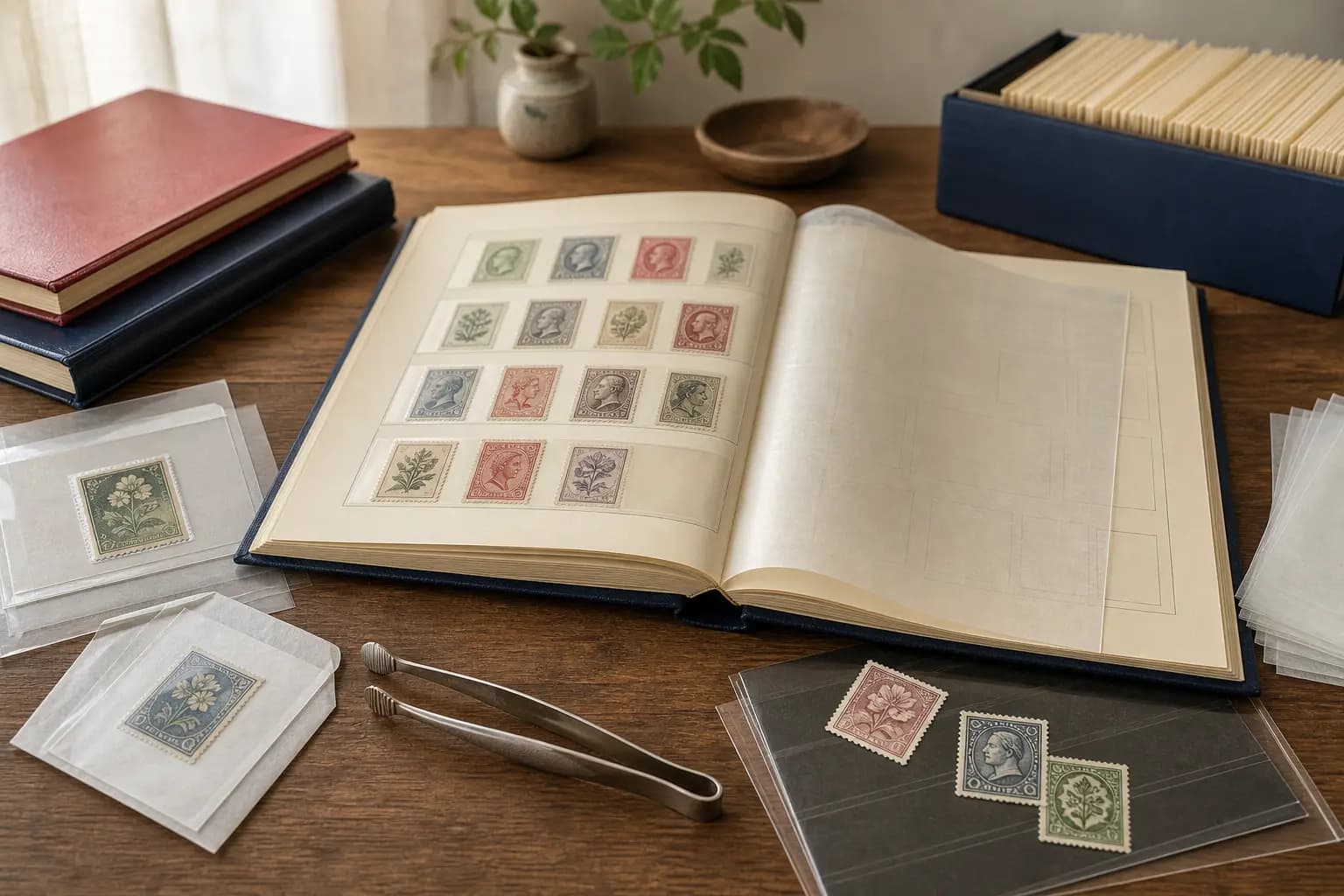
When you do need to move an unused stamp, use stamp tongs rather than fingers. The source evidence is clear that tongs are meant for dry stamps, because skin oil can damage stamps even if hands are washed. Tongs are designed with a smooth gripping surface so you can reduce contact without scraping the paper or disturbing the gum on the back.
Do not use tongs on a wet or softened stamp. Wet paper is more easily damaged than dry paper, and the handling guidance for soaking specifically warns that a wet stamp can tear more easily. If a stamp has been softened by moisture for any reason, stop handling it with ordinary collector tools and let it dry in a controlled way before touching it again.
Choose storage materials that will not attack the back of the stamp
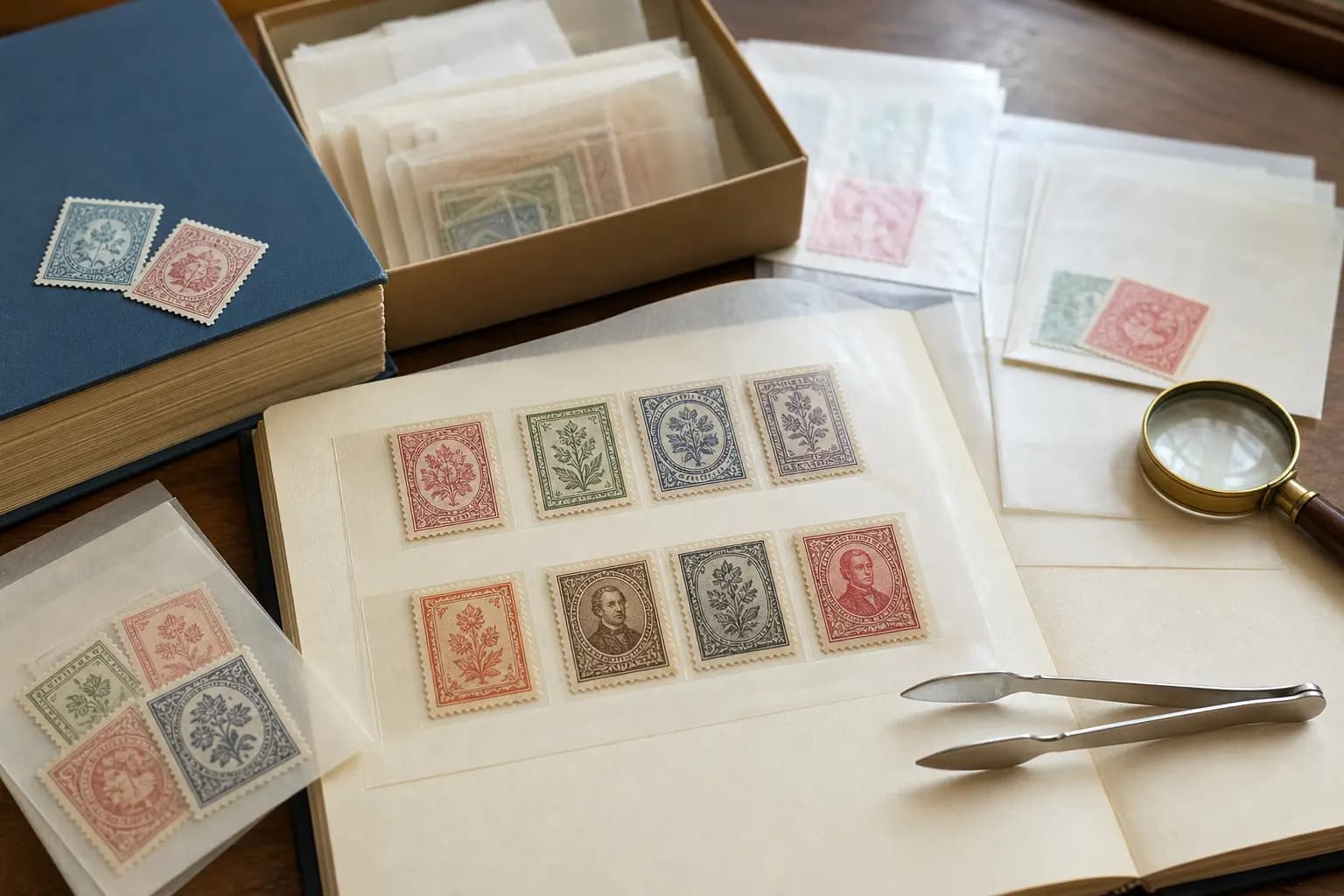
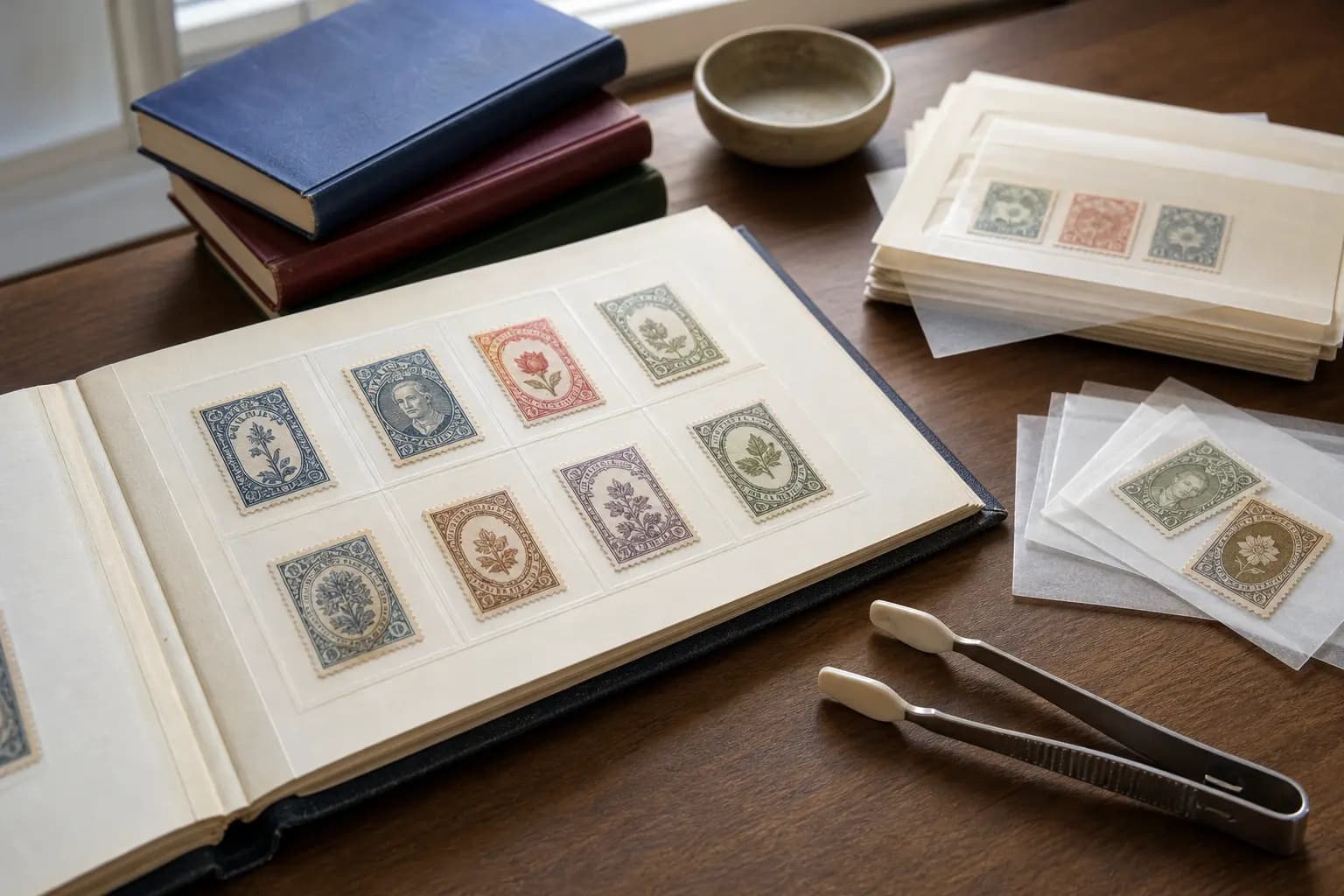
The most reliable long-term protection is storage that does not stick to the stamp. The supplied evidence recommends stamp albums or stock books, and says albums should use acid-free paper. It also warns against sticky photo-album pages, which can damage stamps. For mounting, the sources support peelable hinges or stamp mounts, not tape or glue.
This matters even more for original gum because any adhesive contact can alter the back of the stamp and reduce its collectible value. A hinge places gum on the hinge, not on the stamp itself, while a mount keeps the stamp in a clear sleeve. If you are trying to preserve untouched gum, a mount is usually the safer choice because it avoids adding adhesive to the back.
Decide before soaking whether the stamp should be left on the envelope
If an unused stamp is still attached to a cover or envelope, first decide whether removal is necessary. The source evidence says collectors should consider keeping the entire envelope if the cancel or image is of interest. That same logic applies to preservation: if removing the stamp risks changing its back or gum, the safer record may be to keep it on cover rather than forcing a separation.
If you do choose to remove a stamp from paper, the supplied guidance says soaking is the usual method for most stamps, but it also notes that many U.S. self-adhesives issued in 2004 or later will not soak easily, if at all. The collector FAQ adds that most current U.S. self-adhesives will not simply soak off because their backing is oil based rather than water based. That means a one-method approach is not enough; you need to know the stamp type before you try anything.
Why moisture and drying methods matter to gum preservation
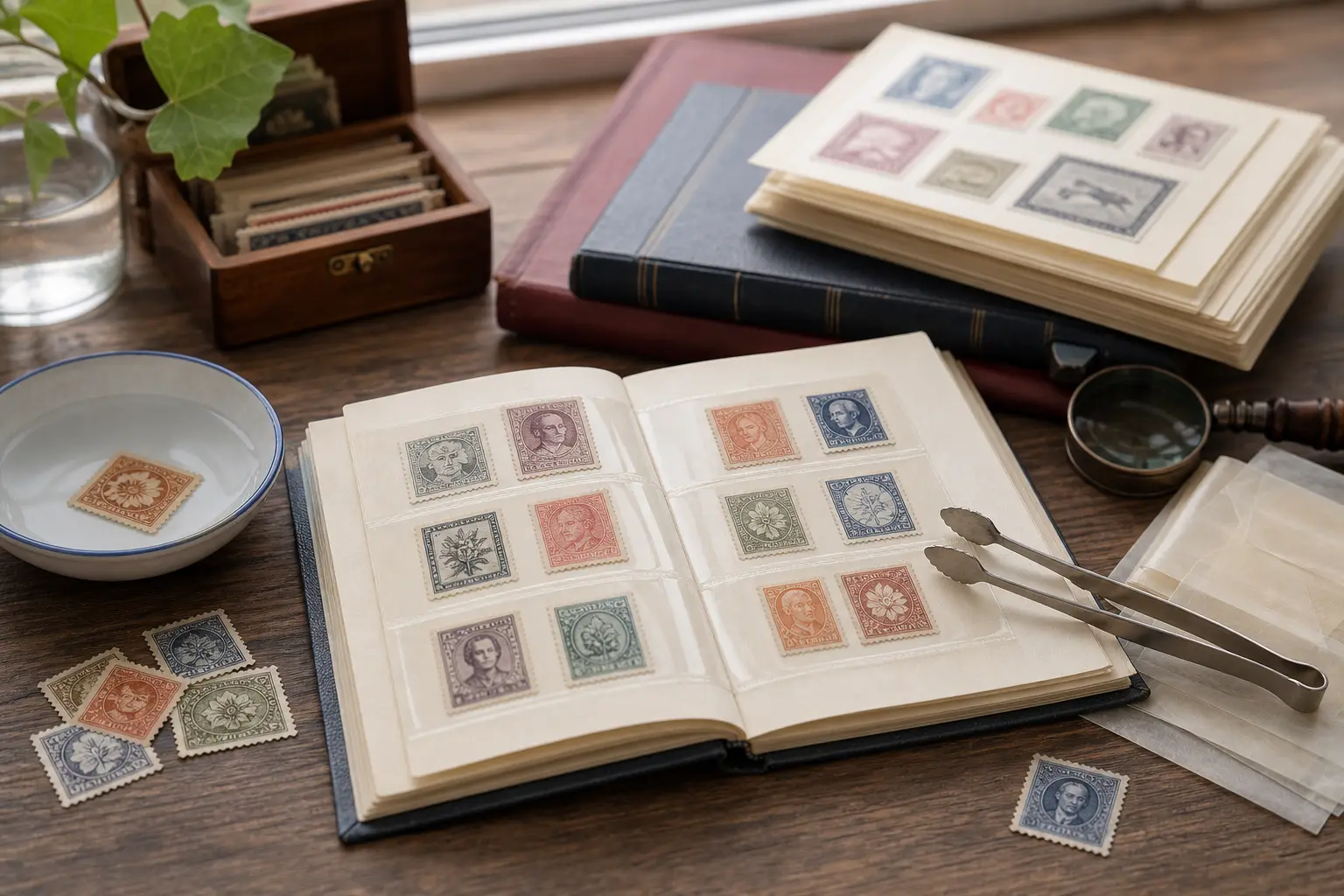
Original gum is vulnerable because moisture can soften paper and change how surfaces behave. The soaking guidance says to use lukewarm water, never hot water, and to avoid pulling a stamp free before it is ready. It also recommends rinsing the back gently and then drying the stamp between paper towels with a book on top to prevent curling. These are removal and drying instructions, but they also show why moisture should be treated as a preservation risk, not a routine cleaning step.
If a stamp has already been soaked, the objective changes from gum preservation to safe recovery. At that stage, the stamp should be treated as wet material until fully dry. Place it flat, leave it alone, and do not rush to inspect or sort it with fingers. Once dry, it can be handled more safely with tongs and stored in a way that avoids further contact.
Build a simple preservation routine for unused stamps
A practical routine begins with identification, because knowing whether you have a mint adhesive, a self-adhesive issue, or a stamp still on paper affects the safest next step. A catalog can help identify issue date, description, and how a stamp was printed, while a magnifying lens can help you see small differences without touching the stamp. If you keep a collection record in StampSnap, use it to note whether the back appears undisturbed, hinged, mounted, or still on piece.
After identification, move only the dry stamp with tongs, place it into a mount or suitable album page, and store it away from sticky surfaces, tape, and glue. The goal is not to make the stamp look improved; it is to keep the stamp as close as possible to its existing state. For original gum, that means a conservative process, minimal handling, and no unnecessary exposure to water or adhesives.
When to pause and ask for help
Some stamps are not good candidates for home handling if preserving original gum is important. If the stamp is tightly attached, may have been treated already, or appears to be a self-adhesive issue with unfamiliar backing, stop before experimenting. The source material supports the idea that different stamps require different approaches, especially with current self-adhesives.
If you are unsure, identify the stamp first, then decide whether the safest choice is to leave it as found. A careful collector often preserves more value by doing less. That is especially true when the stamp is unused, clean, and already stable in dry condition.
Frequently asked questions
How do I preserve original gum on an unused stamp?
Keep it dry, avoid tape and glue, handle it only with tongs when dry, and store it in a mount or album material that will not stick to the back of the stamp.
Should I soak an unused stamp to clean it?
No. Soaking is for removing stamps from paper when necessary, not for routine cleaning. Moisture can change or damage original gum.
Can I use tongs on a wet stamp?
No. Tongs are for dry stamps. Wet stamps are more easily damaged, so let them dry before handling them again.
What if the stamp is a self-adhesive issue?
Many U.S. self-adhesives issued in 2004 or later, and most current U.S. self-adhesives, will not simply soak off because the backing is oil based. Identify the issue before trying removal.