The short answer: start simply and choose a focus
You do not need special knowledge to begin stamp collecting. The American Philatelic Society says the hobby is suitable for nearly all ages, does not require great wealth, and can be enjoyed year-round. The easiest way to begin is to decide what kind of material interests you most, then build slowly and keep your process simple.
A beginner can collect worldwide issues, a single country, a topic such as animals or ships, mint or used stamps, or a specific type such as airmail or postage due. There is no right or wrong way to collect, and the best choice is the one you will enjoy enough to continue. If you want a record of your stamps as you go, StampSnap can help you create a likely identification or collection note, but it is not an official authentication or appraisal tool.
Choose a collecting direction that matches your time and space
The best collecting plan is the one you can sustain. Worldwide collecting gives you variety, but the number of stamps issued each year is large, so trying to collect everything is usually unrealistic for most people. A single-country collection is often easier to manage, especially if you choose your home country, a country you visited, or one whose stamps you simply enjoy looking at.
Topical collecting is another practical option because it lets you focus on a subject you already like. The source material notes that collectors often build topical collections around animals, birds, flowers, ships, space, scouts, Disney, sports, and many other themes. You may also include related postmarks, first day covers, or postal stationery if they fit your chosen subject. The main point is to create a collection that stays enjoyable rather than becoming overwhelming.
Start with safe tools and careful handling
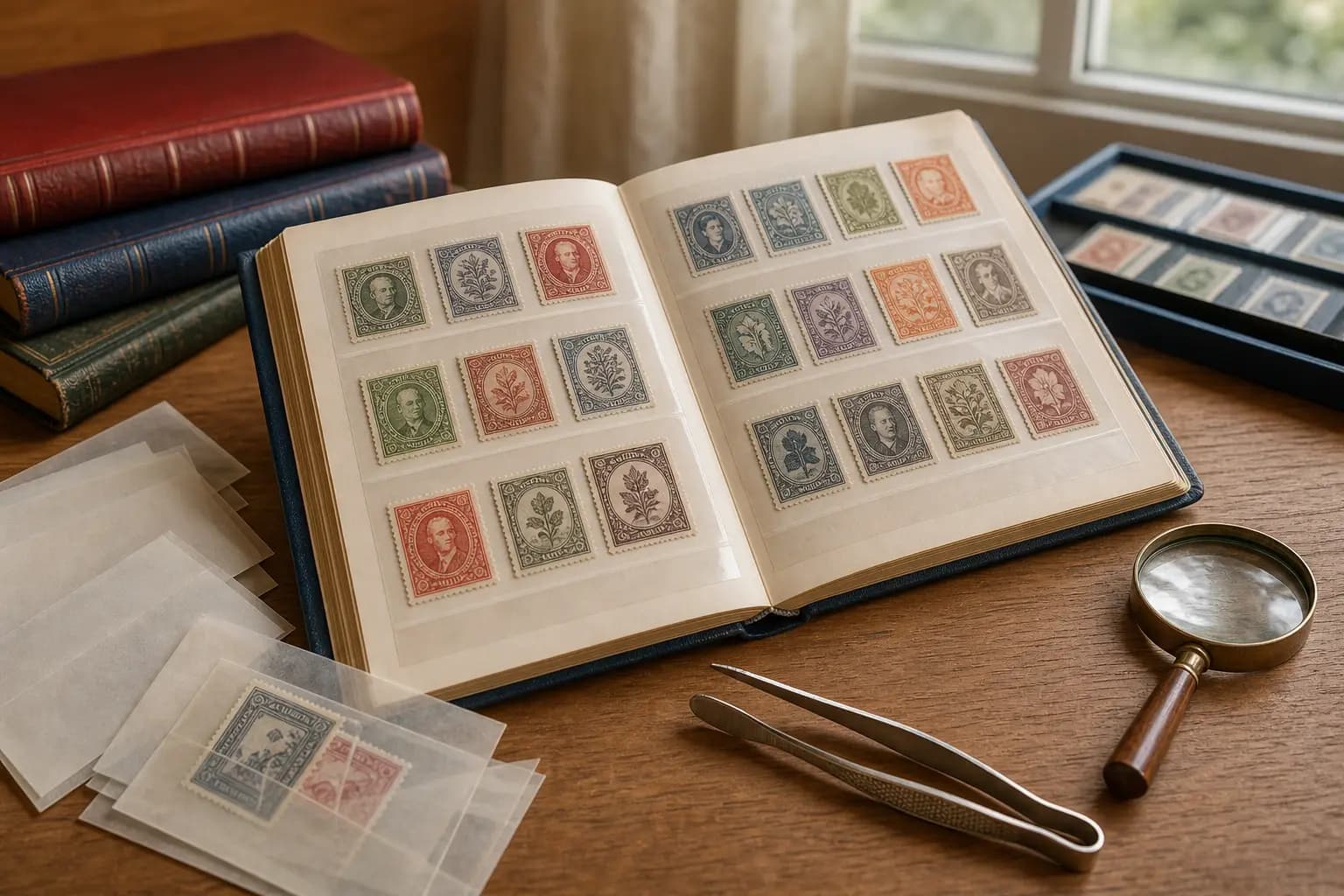
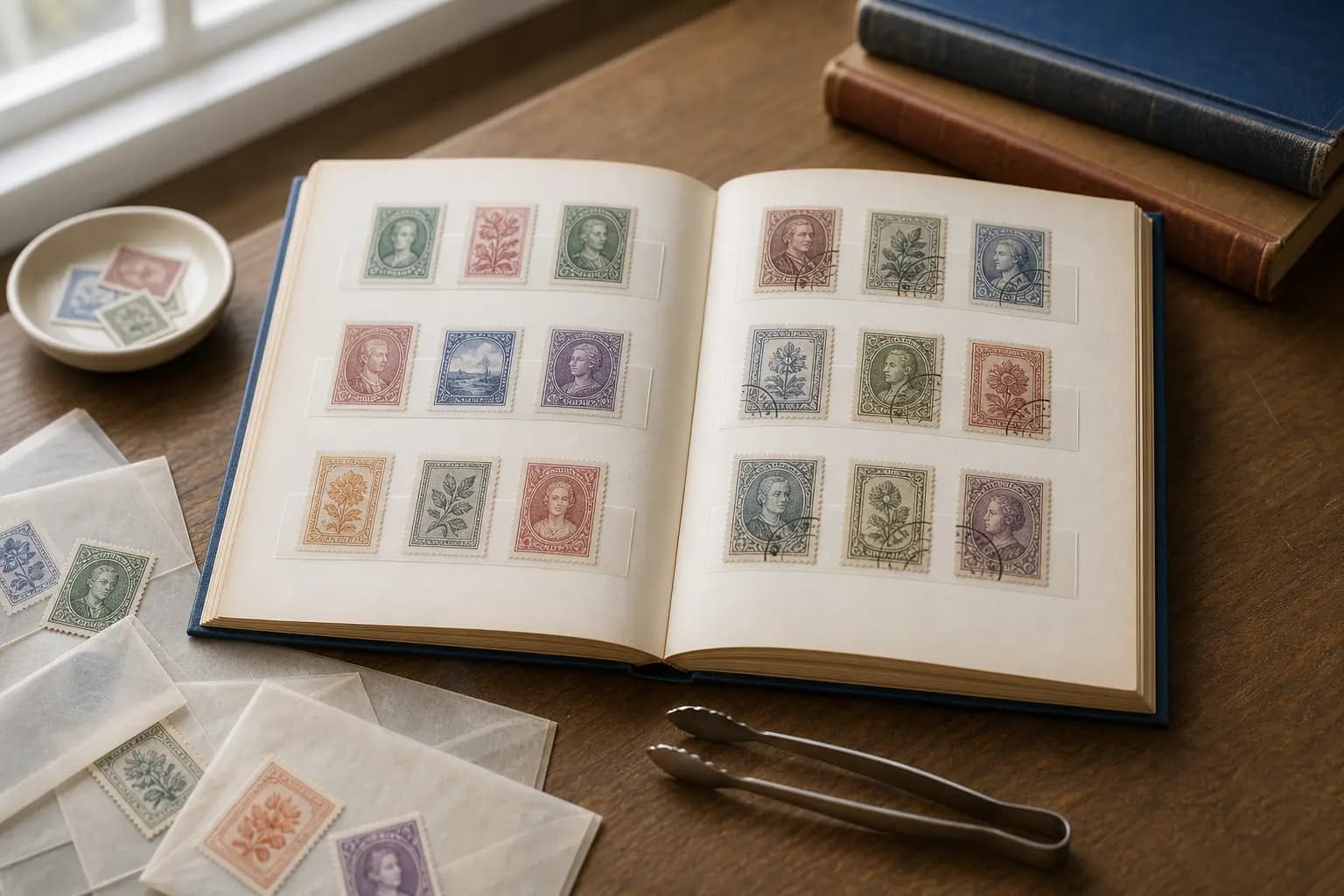
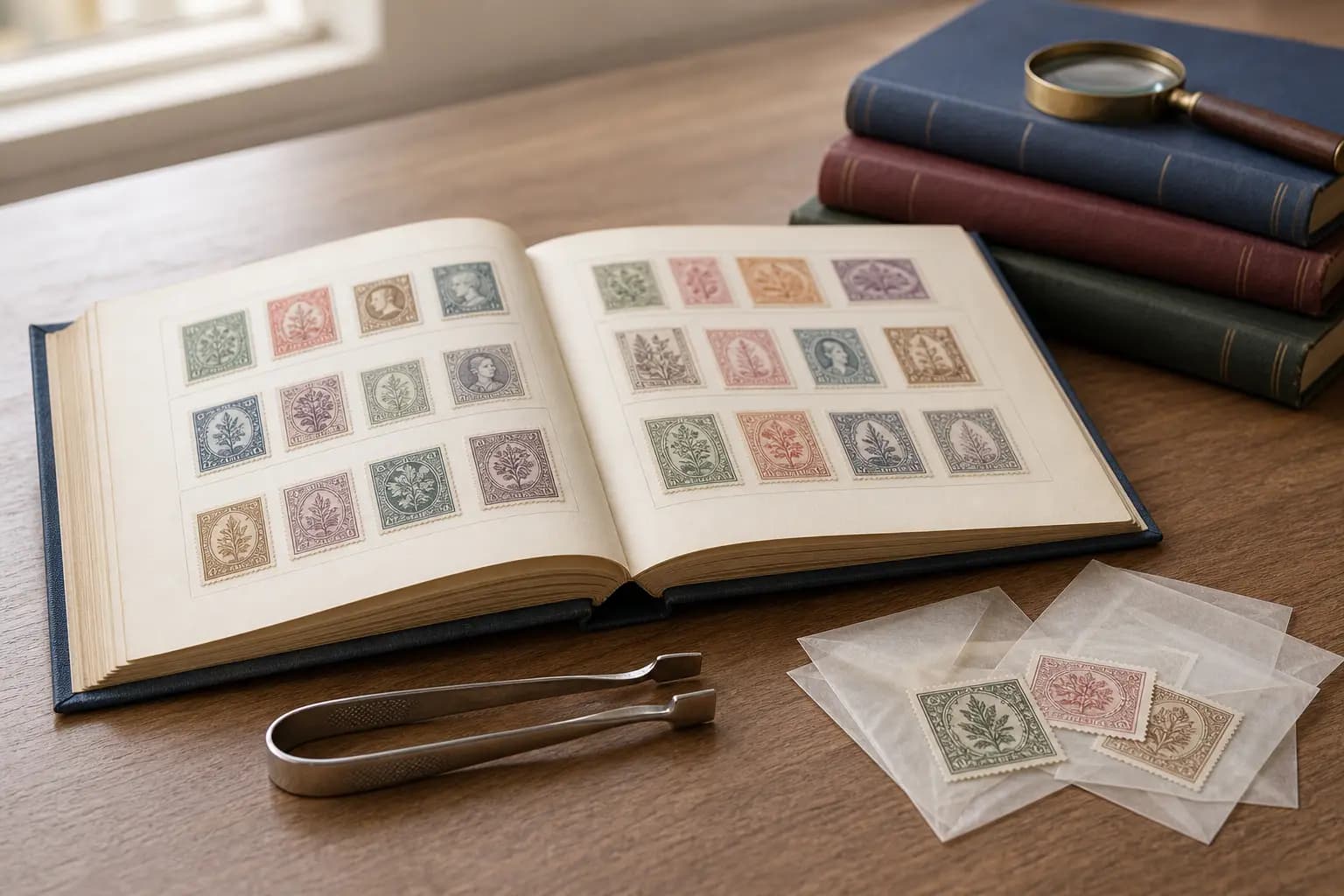
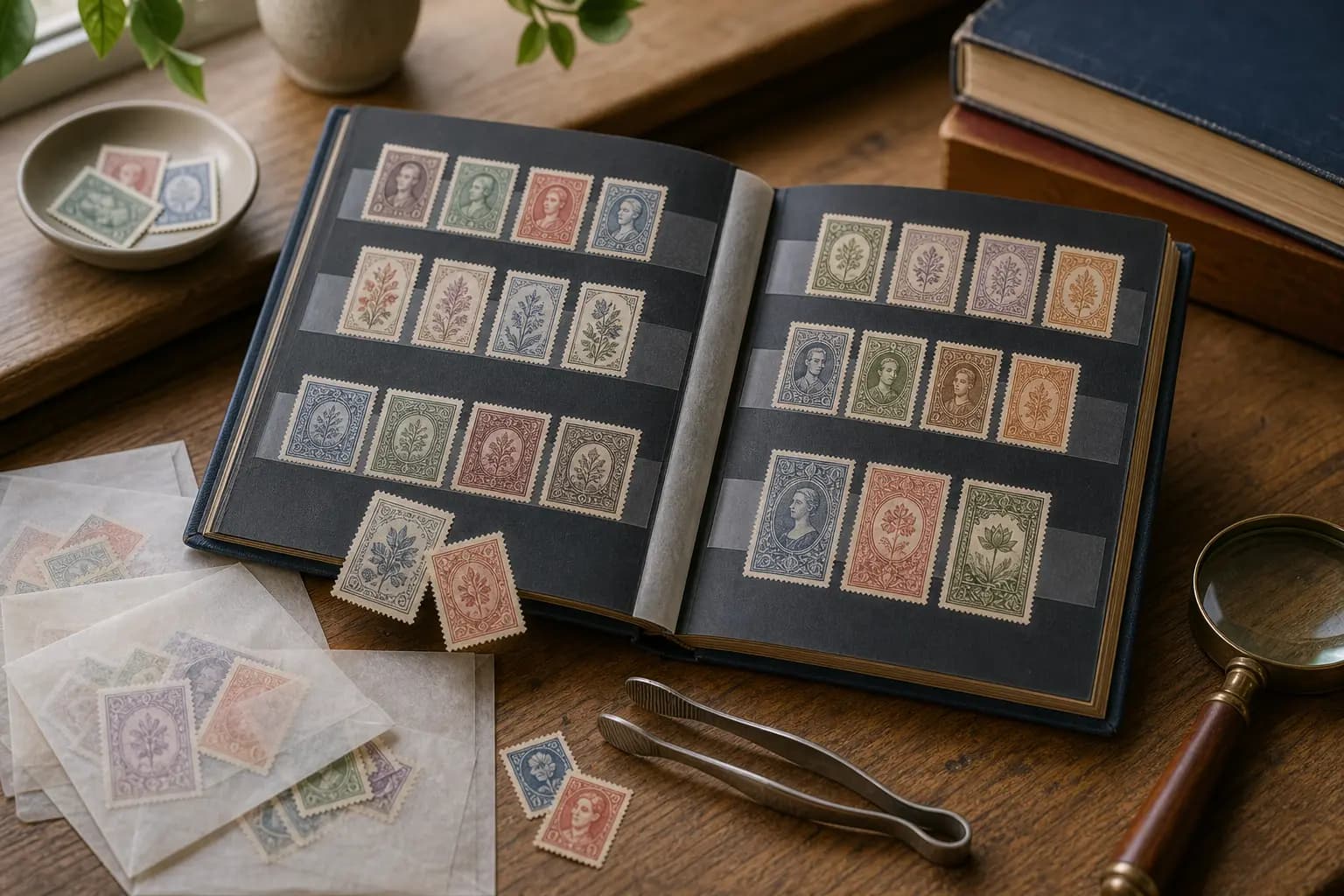
The Smithsonian National Postal Museum identifies three basic tools as enough to begin: stamp tongs, an album, and a general reference book. Tongs have smooth ends so you can pick up loose stamps without direct finger contact. That matters because handling by hand increases the chance of damage, especially to delicate edges or surfaces.
A magnifying glass can help you see small design details, and a perforation gauge can help distinguish look-alike issues by measuring perforations. These tools are useful, but they do not replace references. The museum advises comparing physical observations with reliable catalog information rather than treating one visual clue as final proof. That is a cautious and useful habit for any collector.
Use references before you decide what you have
A stamp may look straightforward at first glance, but identification is often a matter of comparing several clues. The Smithsonian National Postal Museum notes that catalogs can record details such as issue date and printing method, which makes them useful for checking what you see. The American Philatelic Society also recommends learning basic stamp vocabulary and using identification tools as part of the hobby.
This is why a careful collector should avoid rushed conclusions. If a stamp seems unusual, compare it against a reference book or catalog entry and note the observable features first. When you later organize your collection, keep the stamp, its description, and any supporting notes together so you can revisit the identification if needed. A simple record now can save confusion later.
Decide whether to collect mint, used, or a mix
Many collectors eventually prefer either mint stamps or used stamps, but you do not need to decide immediately. Mint stamps have never been used and look as they did when sold at the post office. Used stamps have served their postal purpose. The American Philatelic Society notes that used stamps often cost less than mint examples, though there are exceptions.
Used stamps also remove one common preservation concern because you do not have to worry about keeping the gum intact. On the other hand, mint stamps may appeal if you want a cleaner appearance or if the original condition matters to you. Some collectors enjoy a mixture of both. The safest approach is to choose what fits your budget, space, and collecting goals rather than following a rule set by someone else.
Build your collection at a pace you can maintain
Once you have a focus, start sorting what you already own or what you receive in the mail. The hobby does not require a huge starting set. A few interesting stamps, a simple album, and basic reference checking are enough to begin learning. Collecting by topic, country, or type becomes easier when you label material consistently and keep like items together.
If you like to collect what comes through your own mailbox, that can be a steady and low-pressure way to begin. If you prefer buying or trading, keep your standards clear so you do not accumulate material you do not actually want. The American Philatelic Society emphasizes that enjoyment is the important thing, not the value of the collection or whether other people collect the same subject.
A practical beginner routine you can repeat
A repeatable routine makes collecting easier. First, select a focus such as one country, one topic, or one stamp type. Second, gather only a few tools: tongs, an album, a reference book, and, when needed, a magnifier or perforation gauge. Third, handle stamps carefully and avoid direct finger contact when you can. Fourth, compare what you see with references before recording it.
This method keeps the hobby manageable and reduces avoidable mistakes. It also leaves room to change direction later if your interests shift. Many collectors begin broadly and then narrow their specialty over time, or they start with whatever arrives in the mail and gradually shape that material into a more defined collection. That flexibility is one of the strongest reasons stamp collecting stays popular.
Frequently asked questions
Do I need special knowledge to start stamp collecting?
No. The American Philatelic Society says stamp collecting is suitable for nearly all ages and does not require special skills or great wealth.
What is the easiest way to choose a collecting focus?
Choose whatever you enjoy most: worldwide stamps, one country, a topic, mint or used stamps, or a specific stamp type.
What tools do I really need at the start?
The Smithsonian National Postal Museum says a pair of stamp tongs, an album, and a general reference book are enough to begin.
Can I identify a stamp from appearance alone?
Not always. Visual clues help, but the museum advises comparing them with reliable references such as catalogs, which can record issue date and printing method.
Is it better to collect mint or used stamps?
Either is fine. Mint stamps are unused, used stamps have been through the mail, and many collectors choose whichever best fits their interests and budget.