The short answer: dry them flat before storing
If a stamp is damp, the safest immediate step is to stop handling it as much as possible and let it dry flat before putting it into long-term storage. Wet or softened stamps are easier to tear, crease, or distort, and the APS advises patience rather than pulling a stamp free before it is ready.
For most collectors, the goal is not to rush the stamp into an album. Instead, place the damp item where it can dry without sticking to anything, and only move it again once it is fully dry. This is the best way to reduce curling, paper stress, and accidental surface damage.
When you should keep a stamp on the envelope
Before removing any stamp from a cover, decide whether you really want to separate it at all. The APS notes that if a special cancel or envelope image is important, the entire envelope can be kept in the album rather than forcing the stamp off the paper.
That choice can protect context as well as condition. A cover may carry postal markings, routing evidence, or a design element that matters to the collector. If you are unsure, keep the item together until you can sort it more confidently.
How to dry stamps safely after soaking
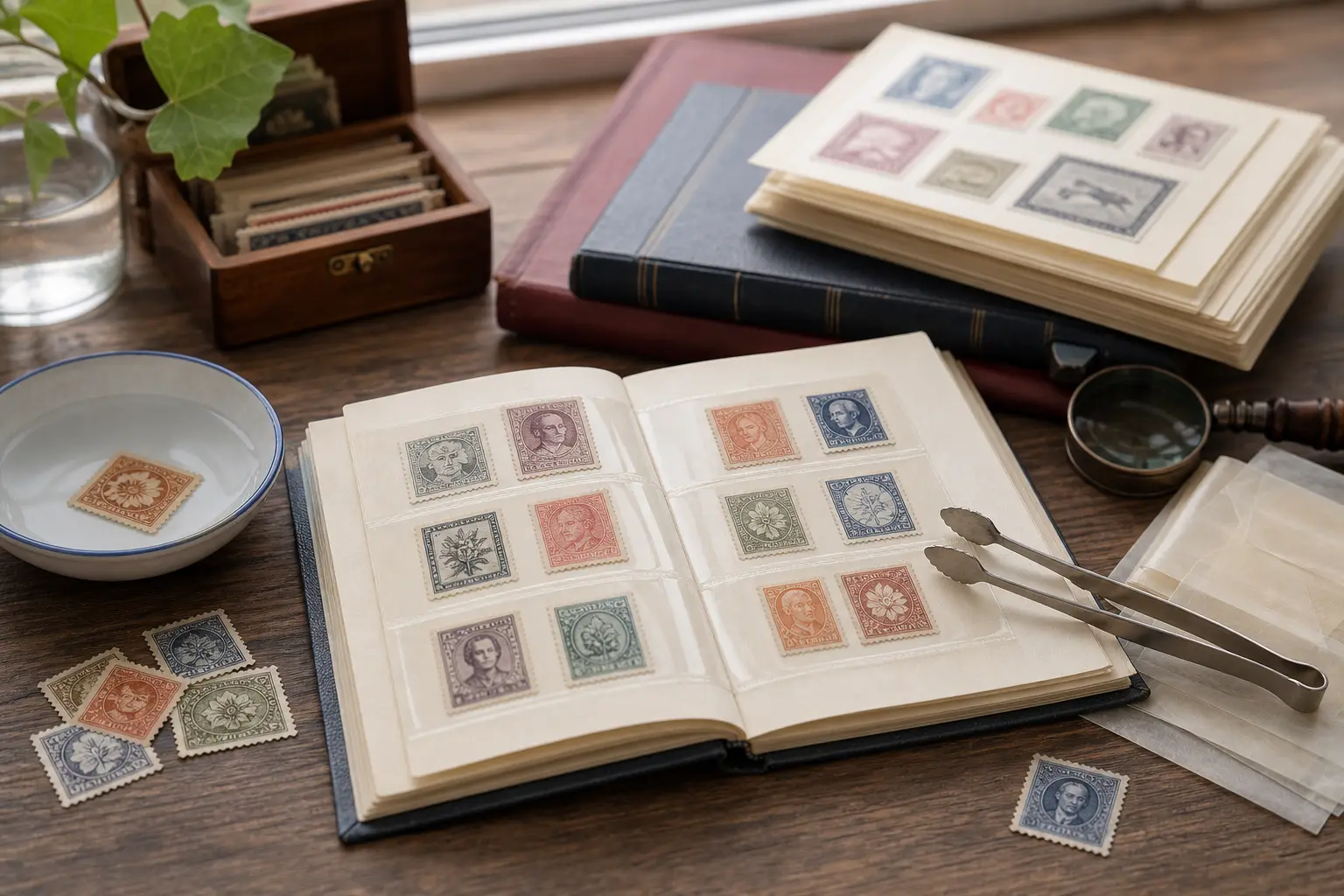
If you do choose to remove stamps from paper, use a careful soaking process. The APS recommends lukewarm water in a shallow bowl, not hot water, and advises separating brightly coloured envelopes because the colour may bleed. Do not overcrowd the bowl; stamps need room to float free naturally.
Once the stamp releases, remove it gently. The APS says wet stamps are more easily damaged than dry ones, so avoid using tongs on a wet stamp unless you are extremely careful and fully comfortable doing so. The safest practice is to minimise handling until the stamp is no longer soft or fragile.
After soaking, place the stamps between two paper towels and add a book on top if you want to reduce curling. Leave them to dry overnight. This simple weighted drying step helps keep the paper flatter without forcing the stamp into an album before it has stabilised.
Why tongs, albums, and glassine matter after drying
For dry stamps, tongs are strongly preferred because skin oil can damage stamps even when hands are clean. APS describes stamp tongs as having a smooth gripping surface designed for handling dry stamps, which helps preserve condition and avoid fingerprints or abrasion.
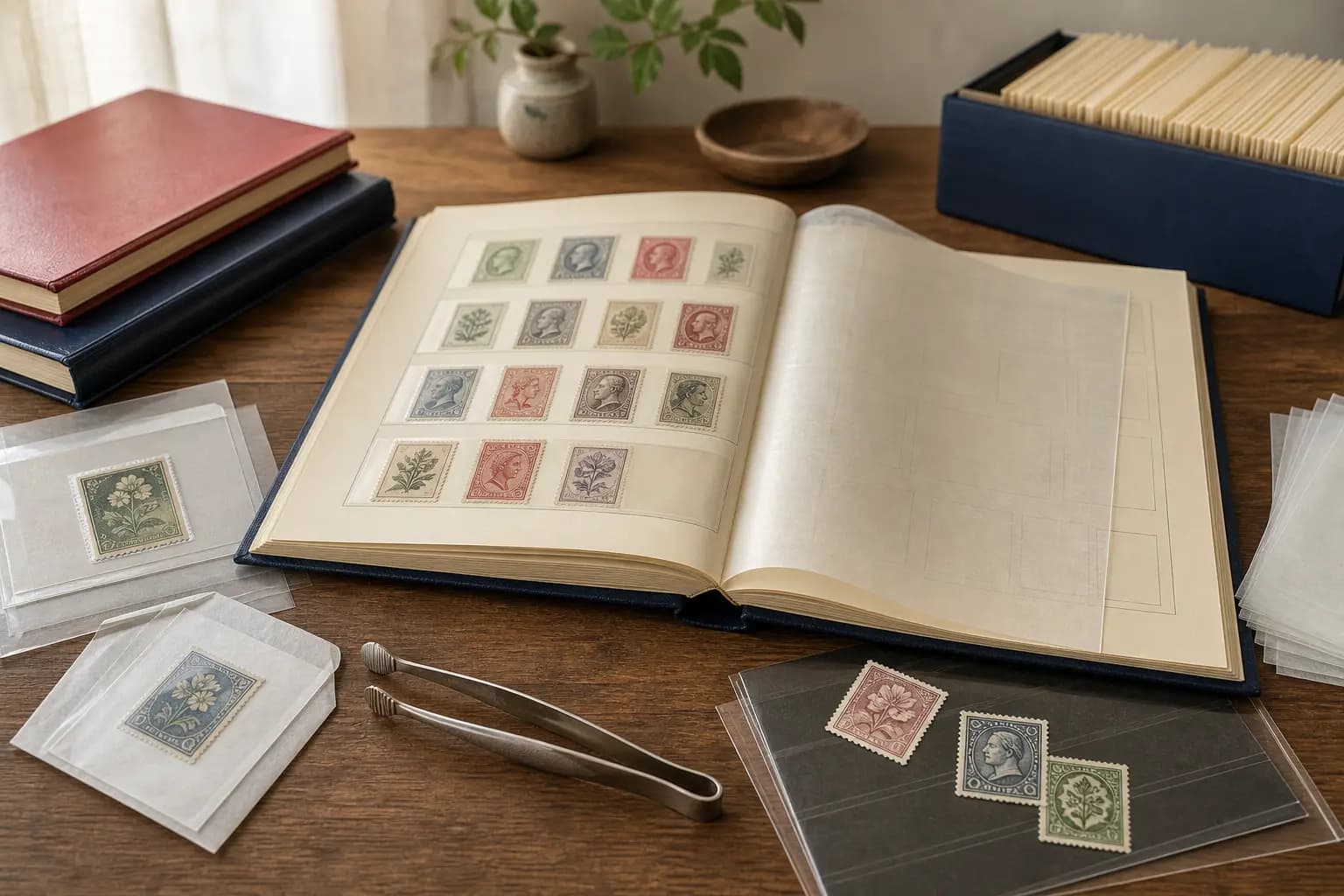
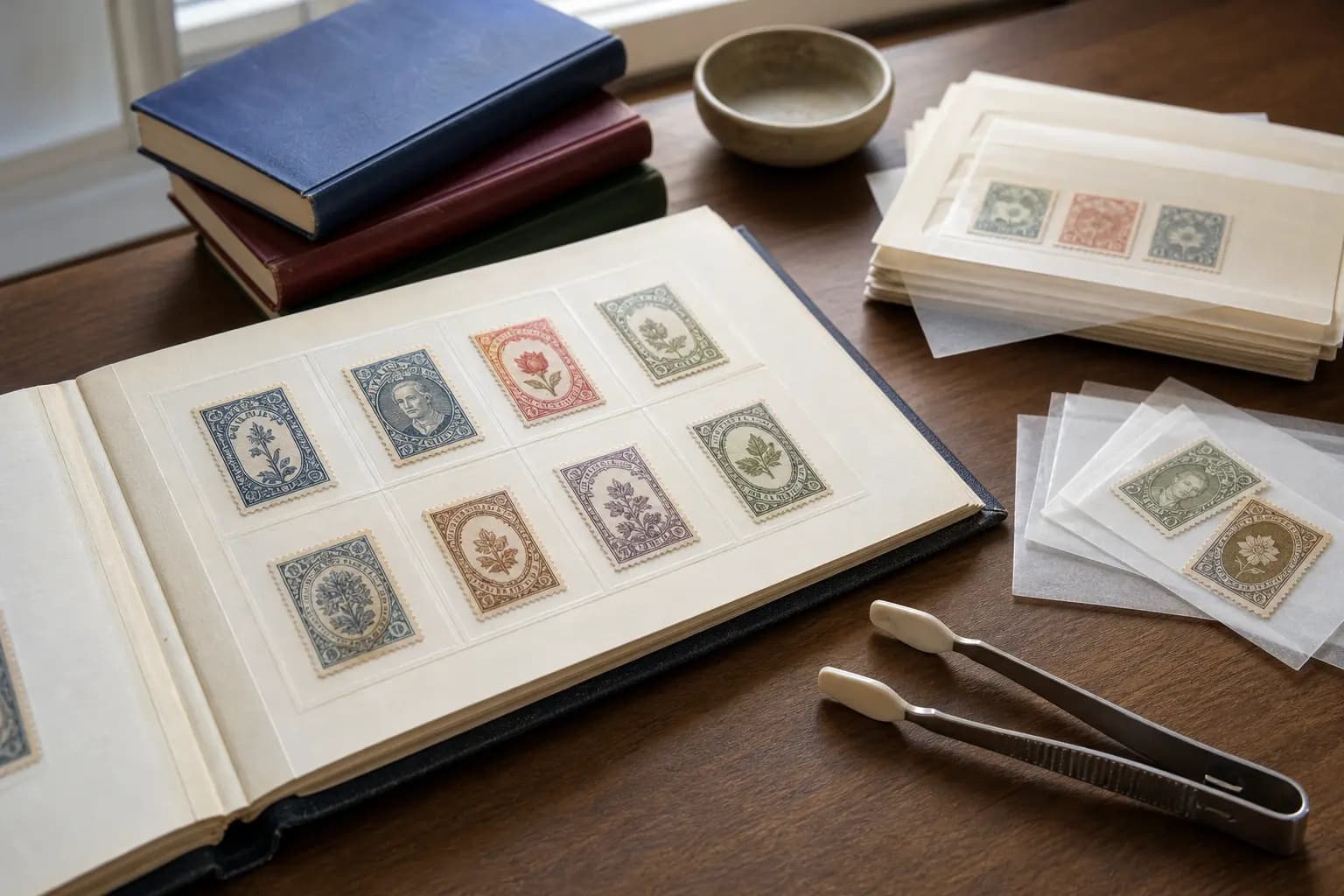
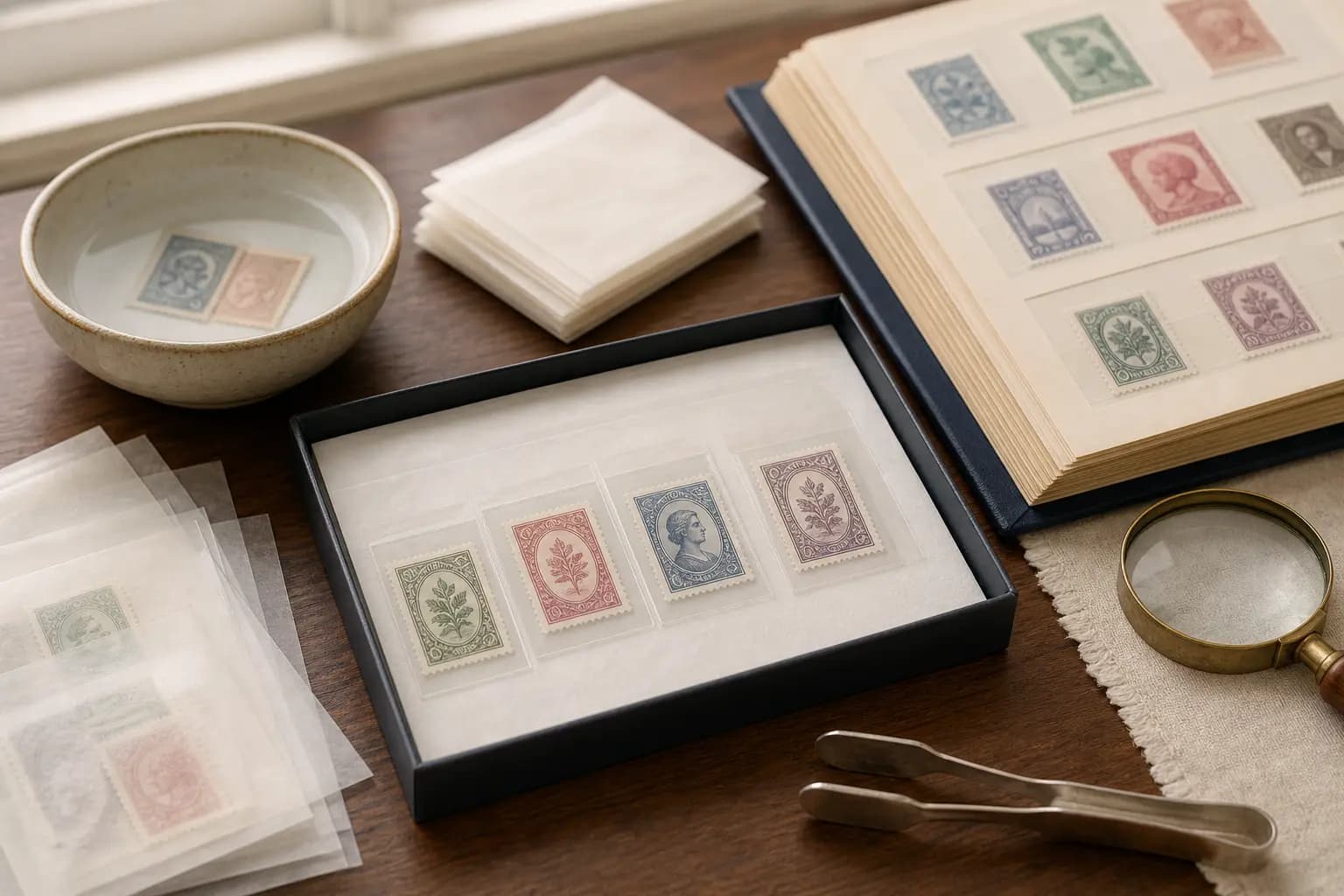
Once the stamp is fully dry, store it in an album, stock book, or glassine envelope until you are ready to mount it. The APS specifically warns against sticky pages, and recommends acid-free paper if you use a photo album. Safe storage starts with materials that will not grip, stain, or transfer adhesive to the stamp.
Hinges, mounts, and what not to use
If the stamp is dry and you are ready to place it in an album, use a hinge or a mount, not tape or glue. The APS explains that tape and glue can decrease value and may damage the stamp if removal is ever attempted later.
Hinges are small folded pieces with gum on one side, while mounts are clear plastic sleeves. Both are designed to hold a stamp while still allowing future removal with less risk than permanent adhesives. For valuable or delicate material, many collectors prefer the least invasive option that still keeps the stamp secure.
A practical sorting routine for mixed material
A safe preservation routine begins with sorting. The APS suggests organising by country, topic, or service type, and also advises setting aside damaged stamps unless they are unusual or difficult to replace. If you have duplicates, keep the best-centred and lightly cancelled example for the main collection and store the extras separately.
This is also a good moment to record what you have. A stamp catalog can help identify issue date, basic description, printing method, and used or unused context, while a tool such as StampSnap can help you create a likely identification or collection record for later review. Just remember that records support collecting; they do not replace careful observation or specialist confirmation.
A conservative workflow you can repeat
A dependable workflow is simple: decide whether the stamp should stay on the cover, remove it only when that makes sense, soak gently if needed, dry flat, and store only once it is fully dry. This sequence protects the stamp at each step instead of forcing it into the next stage too soon.
If you are unsure whether an item is dry enough to handle, wait longer. If you are unsure whether it is better on cover, keep the cover. And if the paper is fragile, stained, or likely to be important, handle it as little as possible and use the safest storage materials available.
Frequently asked questions
Should I use tongs on a damp stamp?
No. Tongs are intended for dry stamps. Wet stamps are more easily damaged, so the safest approach is to let them dry first and handle them as little as possible.
How can I stop a stamp from curling after soaking?
Place the soaked stamp between paper towels and put a book on top, then leave it to dry overnight. This weighted drying method helps reduce curling.
Is it always better to remove a stamp from the envelope?
No. If the envelope has a special cancel or image that matters, it may be better to keep the entire envelope in your album.
What should I avoid when storing newly dried stamps?
Avoid tape, glue, and sticky album pages. Store dry stamps in acid-free albums, stock books, or glassine envelopes until you are ready to mount them.