Start with the safest answer: compare, do not guess
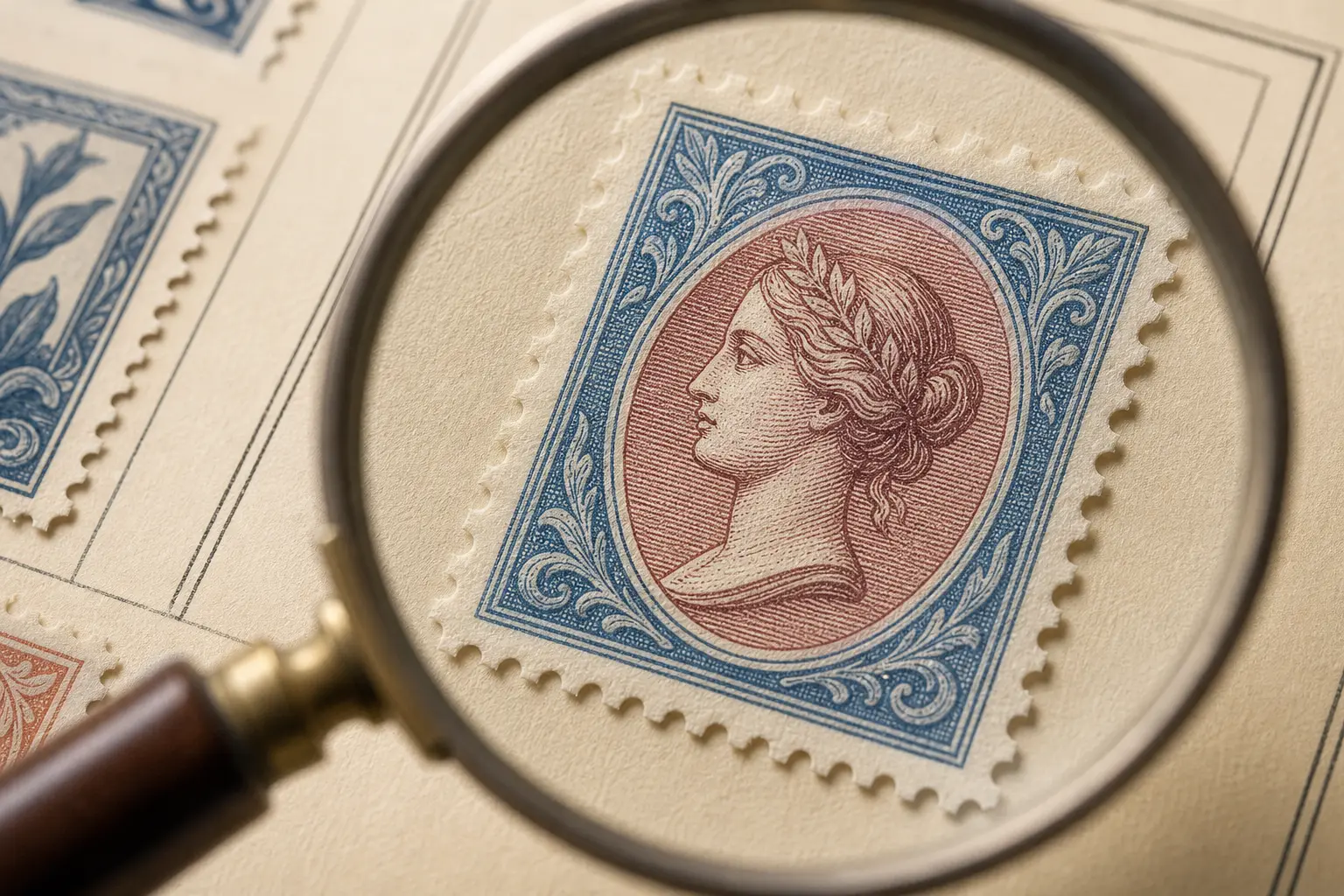
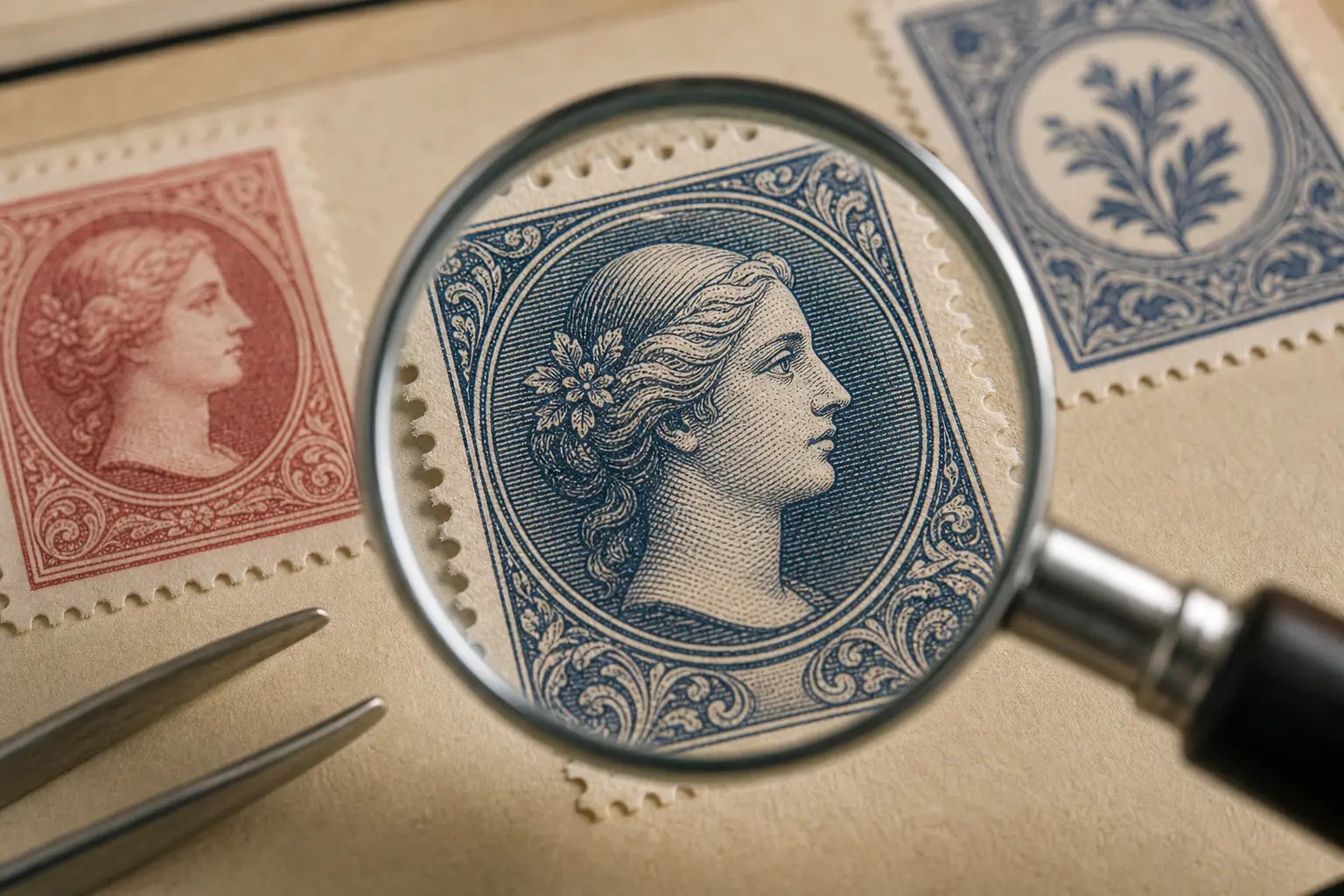
If you want to tell lithography from gravure on a stamp, start by treating every visible feature as a clue, not a final diagnosis. The safest approach is non-contact observation under diffuse light and oblique light, using magnification only to compare surface structure, ink appearance, and any plate-related effects. A single dot pattern, a sharp edge, or a soft edge is not enough by itself.
The American Philatelic Society identifies four major printing families used for postage stamps: line-engraved intaglio, gravure, letterpress, and lithography. That matters because a stamp may show features that overlap between families, and modern stamps may even combine more than one process. Your job is to build a cumulative case from several clues and then, when needed, check production records instead of forcing a quick answer.
What lithography usually shows
The Smithsonian National Postal Museum describes offset lithography as a planographic process, meaning the image is formed on a smooth surface rather than cut or etched into a plate. Oil-based ink adheres to the image area, and a rubber blanket transfers the image to paper. Modern stamp lithography commonly uses separate process-color layers made from very fine dots, so dot structure may be part of the picture you see under magnification.
Even so, the museum warns that modern lithography can be sharp, so soft or blurred edges are not a dependable identifying rule. A fine dot pattern may suggest lithography, but it must be interpreted with other evidence because gravure and other processes can also show screened structures under magnification. In practice, that means you should look at the overall construction of the design rather than trying to read one feature as proof.
What gravure and line-engraved intaglio add to the comparison
Gravure is also a recess process, but the APS explains that it forms tone from screened cells rather than from the same line-built construction seen in line-engraved intaglio. Because screened or raised-looking effects can appear in other processes too, the safest comparison is not gravure versus lithography in isolation, but gravure against the whole set of possible printing families. That keeps you from overcalling a process based on one visual trait.
Line-engraved intaglio is different again: the design is normally constructed from lines, hatching, cross-hatching, and stippling, because ink transfers from deliberately incised lines. Under magnification and oblique light, raised ink can sometimes be seen, and pressure may leave debossing on the reverse. Those are supporting features rather than single tests, but they can help you separate a line-engraved stamp from one printed by lithography or gravure.
Use a step-by-step visual check
Begin with the entire design. Ask whether the image looks built from engraved lines, from screened cells, or from a planographic dot structure. Then move to a small area and compare the same feature in more than one place on the stamp. If the stamp is modern, look for signs that more than one printing process may have been used, because the APS notes that modern stamps can combine processes.
Next, change the light rather than the stamp. Diffuse light helps you see overall structure, while oblique light can reveal raised ink or surface relief. Use magnification only as a non-contact aid, and do not rely on softness, sharpness, or dot presence alone. The most reliable method is to combine visual clues with what you already know about the issue, such as country, period, and any available production information.
When to think about mixed printing or a catalog check
If one part of the stamp suggests lithography but another part suggests gravure or line-engraved intaglio, do not assume the stamp is damaged or unusual in a bad way. Mixed printing is a real possibility on modern material, and different parts of the design may be made by different processes. That is one reason visual identification should stay cautious and descriptive rather than absolute.
If you are building a collection record in StampSnap, note what you observed rather than trying to force a final answer too early. Record the light direction, the magnification used, and whether the clue came from line structure, dot structure, or surface relief. That gives you a useful comparison file if you later consult catalog descriptions, specialist literature, or production records.
Watermarks are separate evidence, not a printing clue
Watermarks do not identify the printing process itself. The APS explains that watermarks are security features incorporated in stamp paper to deter counterfeiting, and stamps with the same design may differ by the presence, absence, or design of a watermark. In some cases, the watermark is the only difference that changes catalog treatment and value, so it should be checked as its own question, not as a substitute for print identification.
The safest way to study a watermark is the one described by the APS: lay the stamp face down in a dark tray and use watermark fluid, which brings up the watermark in dark lines against a lighter background. The source also notes that some stamps can be checked by holding the paper up to light, but many require more careful study. Do not use household solvents or rough handling, and do not let the watermark check distract you from the separate task of identifying the printing family.
A conservative method for collectors
A practical workflow is simple. First, decide whether the stamp shows line-built, screened, or planographic clues. Second, check whether those clues are consistent across the whole design. Third, consider whether the issue may combine more than one process. Fourth, compare your notes with reliable references rather than trusting a single visual impression. This method is slower, but it reduces false certainty.
If the stamp matters to your collection, keep the item safe while you examine it and avoid contact methods that could disturb gum, paper, or surface texture. Non-contact magnification, diffuse light, and oblique light are enough for an initial study. When the clues remain ambiguous, the correct answer is often not a guess but a note that the printing family is uncertain pending further reference.
Frequently asked questions
Can I identify lithography from gravure by looking only at dots?
No. Fine dots may appear in modern lithography, but gravure can also show screened structures. Use dots as one clue among several, not as a single test.
Does soft or blurred printing mean a stamp is lithographed?
No. The Smithsonian National Postal Museum says soft or blurred edges are not a dependable rule, because modern lithography can be sharp and other processes can overlap in appearance.
What clues support line-engraved intaglio?
Line-engraved intaglio is usually built from lines, hatching, cross-hatching, and stippling. Raised ink may sometimes be visible under magnification and oblique light, and pressure may leave debossing on the reverse.
Should I use watermark evidence to identify the printing process?
No. Watermarks are paper security features and belong to a separate identification step. They can affect catalog treatment and value, but they do not by themselves identify lithography, gravure, letterpress, or intaglio.
What if a modern stamp seems to show more than one process?
Treat that as possible, not impossible. The APS notes that modern stamps may combine more than one process, so compare each part of the design and then check production records or specialist references if needed.