The short answer: start with one focus you will enjoy
If you are asking what to collect first, the safest and most useful answer is: choose a narrow focus that matches your interests and the time, space, and money you want to spend. The American Philatelic Society says there is no right or wrong way to collect, and that collecting should be based on personal enjoyment rather than comparison with other collectors.
A first collection does not need to be ambitious. You might choose one country, one topic, one format, or one simple rule such as collecting only stamps with a certain color, shape, or cancellation style. The important thing is to begin with something specific enough that you can sort material confidently, but broad enough that you will keep finding it interesting.
The main collecting choices for beginners
One common starting point is worldwide collecting, where you keep stamps from many countries. That approach can be exciting because it gives you variety, but the APS notes that trying to collect every stamp ever issued is probably unrealistic unless you have a lot of money, space, and time. For many beginners, worldwide collecting works best as a casual, mixed accumulation rather than a complete set.
Another option is country collecting. Many collectors choose their home country, a country they visited, or a country whose stamps they simply like. This can be easier to organise because you can learn one postal history and one issuing pattern at a time. The APS also notes that some collectors narrow a country collection further, such as by collecting only stamps issued since they were born.
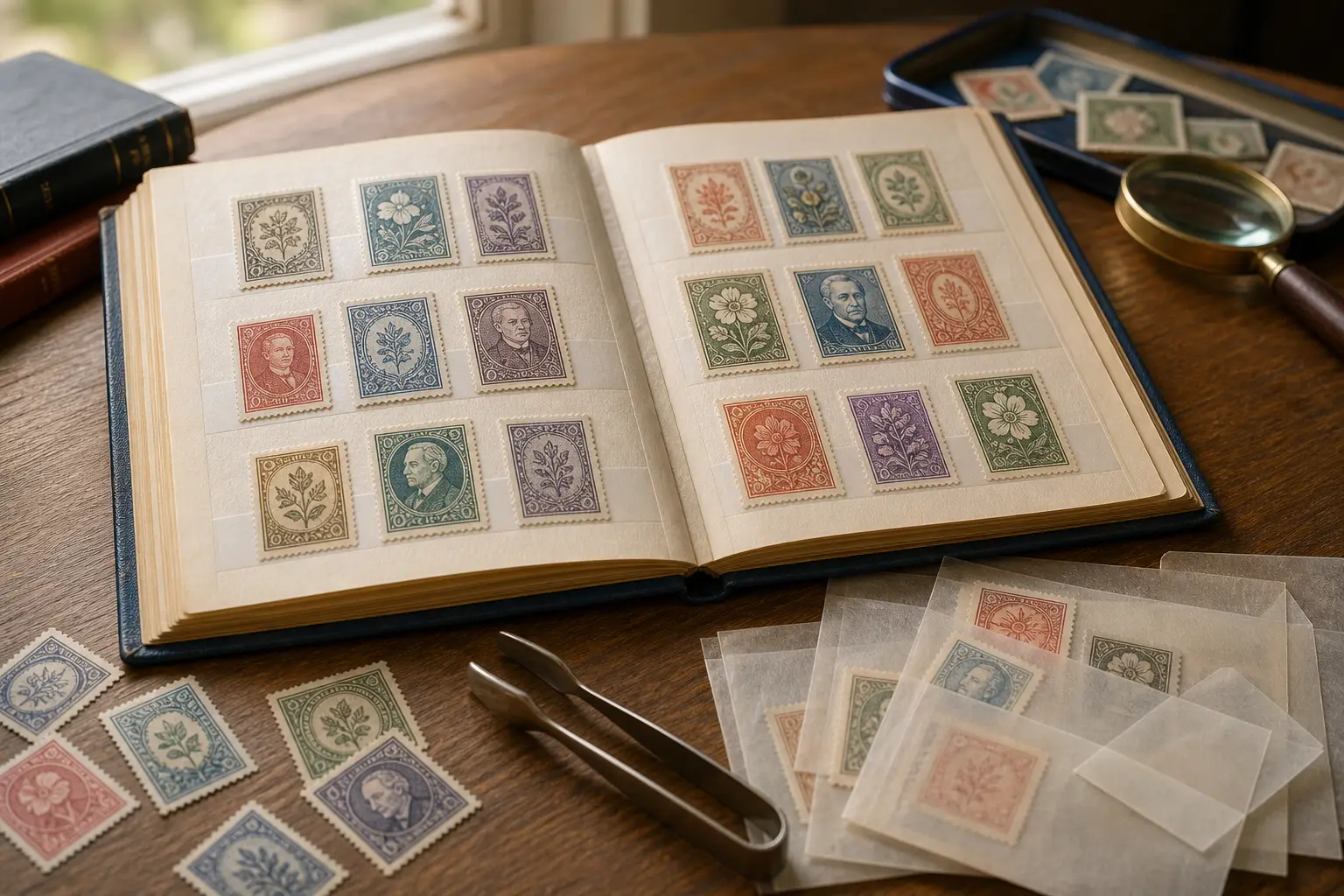
Topical collecting is often the easiest way to make a collection feel personal from the start. The APS gives examples such as animals, birds, flowers, ships, space, scouts, Disney, and sports. Topicals can also include related material such as special postmarks, first day covers, and postal stationery, which gives you room to build a collection around a theme rather than around one nation or one period.
Mint, used, or mixed: choose the handling style that suits you
Once you have a focus, decide whether you want mint stamps, used stamps, or a mixture of both. Mint stamps have never been used and look as they did when sold at the post office. Used stamps have carried mail. The APS says the choice is yours, and either option can support a meaningful collection.
Used stamps are often simpler for beginners because you do not need to worry about preserving original gum, and you can mount them with inexpensive stamp hinges on album pages. Some collectors also enjoy cancellations as part of the design or history of the piece. Mint stamps can be just as rewarding, but they usually require more care in handling and storage if you want to keep them in good condition.
If you are unsure, a mixed approach is acceptable. You can collect mint when it is available and used when it is the better or more practical choice. A mixed collection can still be orderly if you define your rules clearly from the beginning.
How to choose a specialty that will not overwhelm you
A good beginner specialty is one you can explain in a single sentence. For example, you might say, “I collect birds from different countries,” or “I collect stamps from my home country issued after my birth year.” Simple rules make sorting easier and prevent the collection from becoming too broad too quickly.
You can also collect by type, such as airmail or coil stamps, if you enjoy the postal function behind the issue. Another simple path is to collect by visible traits such as shape or color. The APS specifically mentions collectors who choose yellow stamps, birthday issues, or even numbered cancellations. These examples show that a specialty does not need to be traditional to be valid.
The practical test is whether you can keep adding to the collection without confusion. If you find yourself buying many stamps that do not fit your own rules, your scope may be too wide. A smaller, clearer specialty is usually better for learning identification, organising pages, and building confidence.
Use basic tools and reliable references from the start
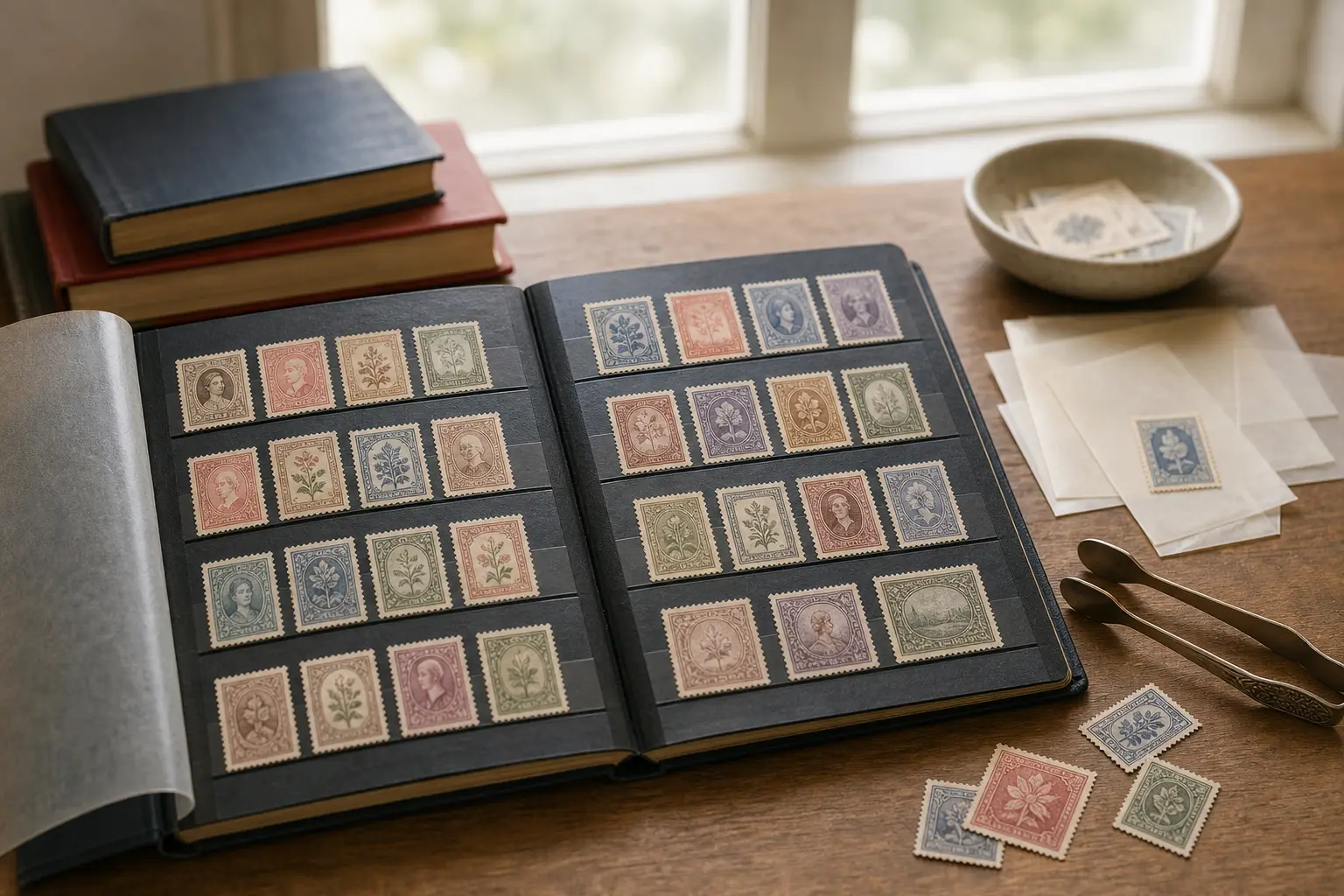
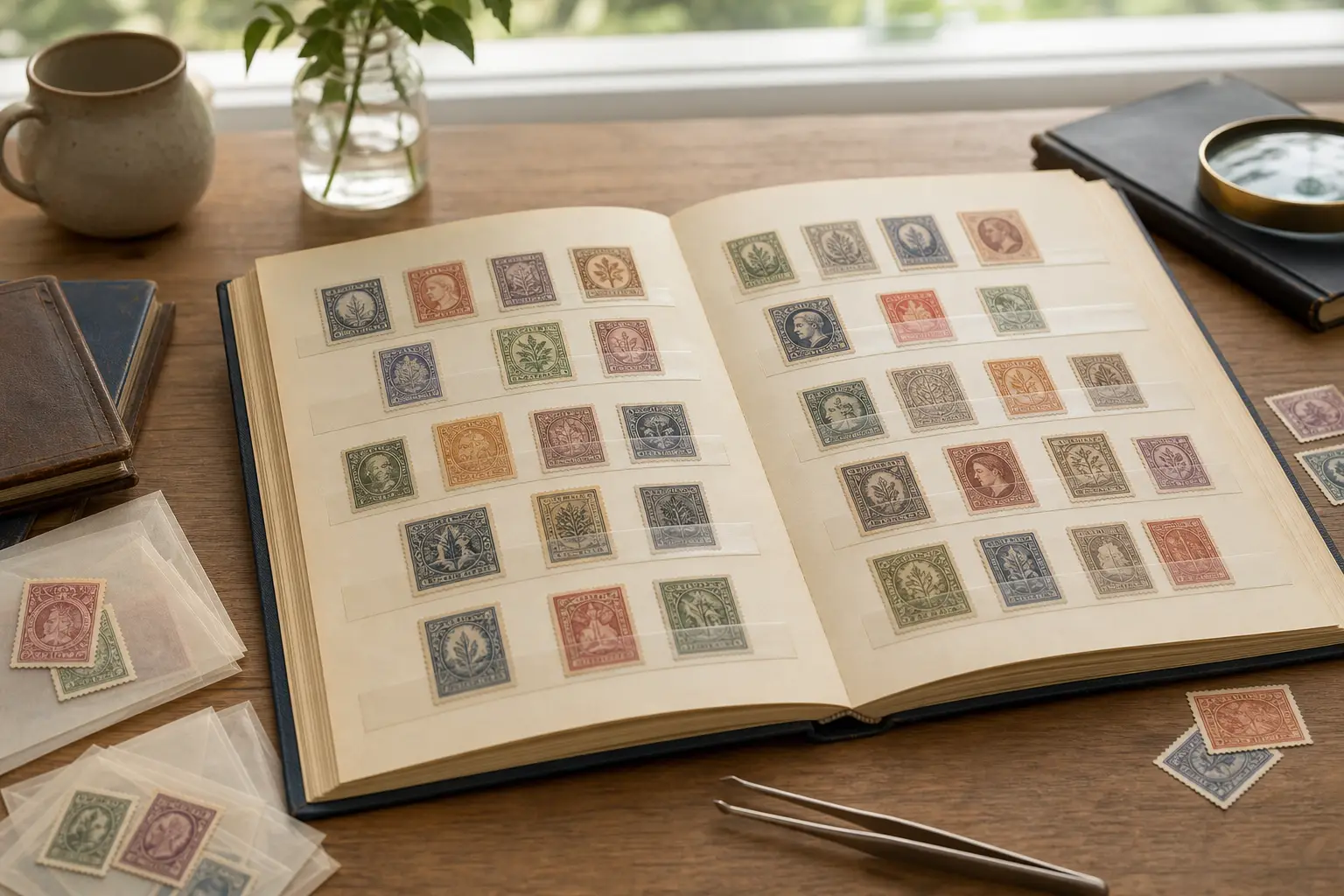
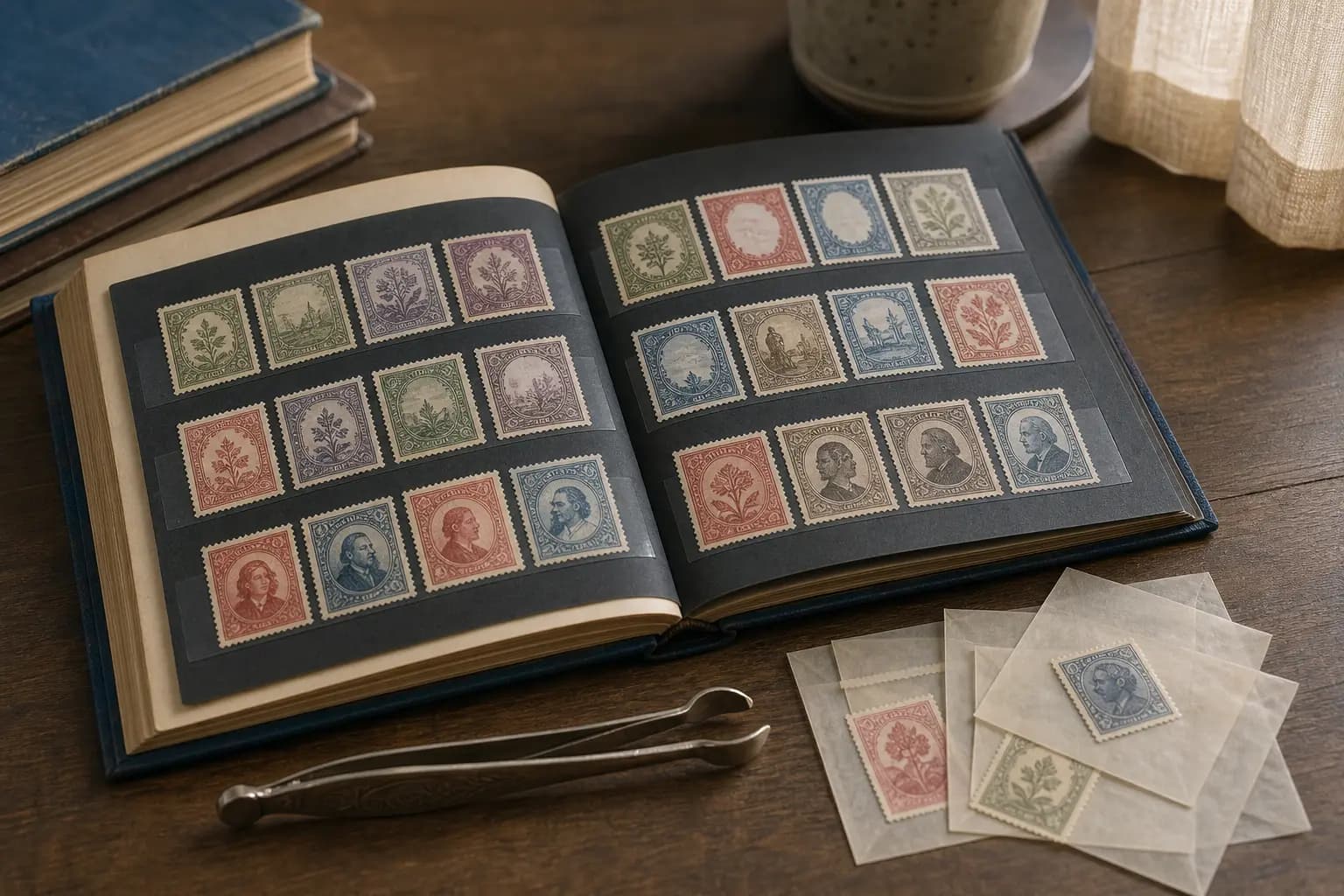
You do not need a large toolkit to begin. The Smithsonian National Postal Museum says a simple pair of stamp tongs, an album, and a general reference book are enough for a new collector. Tongs help you pick up loose stamps without direct finger contact, which reduces the chance of bending, smudging, or tearing them.
A magnifying glass can help you see small design details, while a perforation gauge can distinguish look-alike issues by measuring their perforations. The museum also lists watermark detectors, color guides, and catalogs as specialist aids. These tools are useful because some stamps can look very similar at a glance.
Even with good tools, physical observations are not always conclusive on their own. The museum advises comparing what you see with reliable references, such as catalogs, rather than treating one visual clue as final proof. If you want to create an identification or collection record while you compare references, StampSnap can help you organise that information, but it should not be treated as an official verdict.
A safe beginner method for building your first group of stamps
Start by deciding your collecting rule in writing. Then sort incoming material into only a few groups that match your rule, such as keep, trade, or set aside for later checking. This keeps the process calm and prevents you from forcing uncertain items into the wrong category.
Handle stamps with tongs whenever possible, especially loose stamps. Keep them flat, dry, and separated from anything that could stick to them or crease them. If you are unsure whether a stamp belongs in your chosen focus, store it temporarily with a note instead of guessing. That method is safer than making a permanent decision too quickly.
As your collection grows, review your rules every so often. You may decide to stay with one topic, add related material, or switch to a narrower country or type collection. There is no wrong answer if the collection remains manageable and enjoyable.
What to avoid when you are just starting
Do not choose a first collection only because someone else says it is the most valuable or the most serious. The APS is clear that enjoyment is the main purpose of collecting, and beginners usually learn faster when they care about the subject they are building.
Also avoid collecting in a way that depends on rough handling or guesswork. If you do not know whether a stamp is mint or used, or whether it fits your specialty, leave it unforced and compare it with a reference later. Your early goal is to build habits that protect the material and keep the collection organised, not to solve every question immediately.
Frequently asked questions
What should I collect first if I am completely new to stamps?
Start with a simple focus you already like, such as one country, one topic, one type, or one clear trait like shape or color. The best first collection is the one you can keep building with confidence.
Is worldwide collecting a good first choice?
It can be a good way to enjoy variety, but the APS notes that collecting every stamp ever issued is probably unrealistic for most people. Many beginners do better with a narrower specialty.
Should I collect mint or used stamps first?
Either is fine. Used stamps are often simpler for beginners because you do not need to preserve original gum, while mint stamps can be rewarding if you want that style of collecting.
What tools do I need to start safely?
The Smithsonian National Postal Museum says a basic starter set can be stamp tongs, an album, and a general reference book. A magnifying glass and perforation gauge are helpful extras.
Can I build a collection around a very unusual idea?
Yes. The APS says collectors can choose almost any topic or trait, and even unusual ideas can make a valid collection if the rules are clear and enjoyable for you.