Self-adhesive stamps require different handling than traditional water-activated stamps. Learn how to identify these modern issues and safely separate them from paper using water or specialized oil solvents.
A stamp catalog is an essential reference book for identifying postage stamps. By learning how to navigate its illustrations, issue dates, and printing descriptions, you can systematically identify unknown stamps in your collection and understand their history.
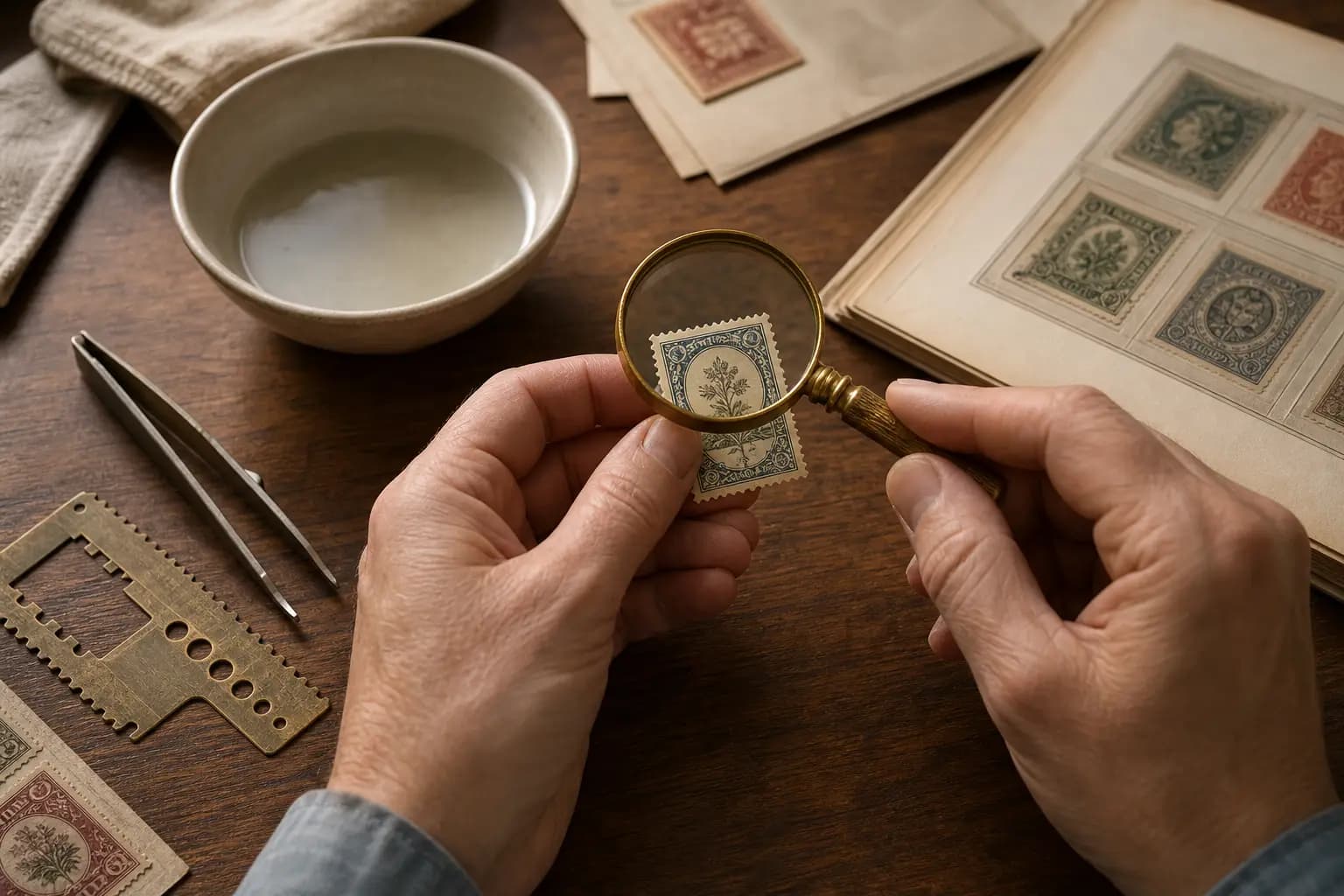
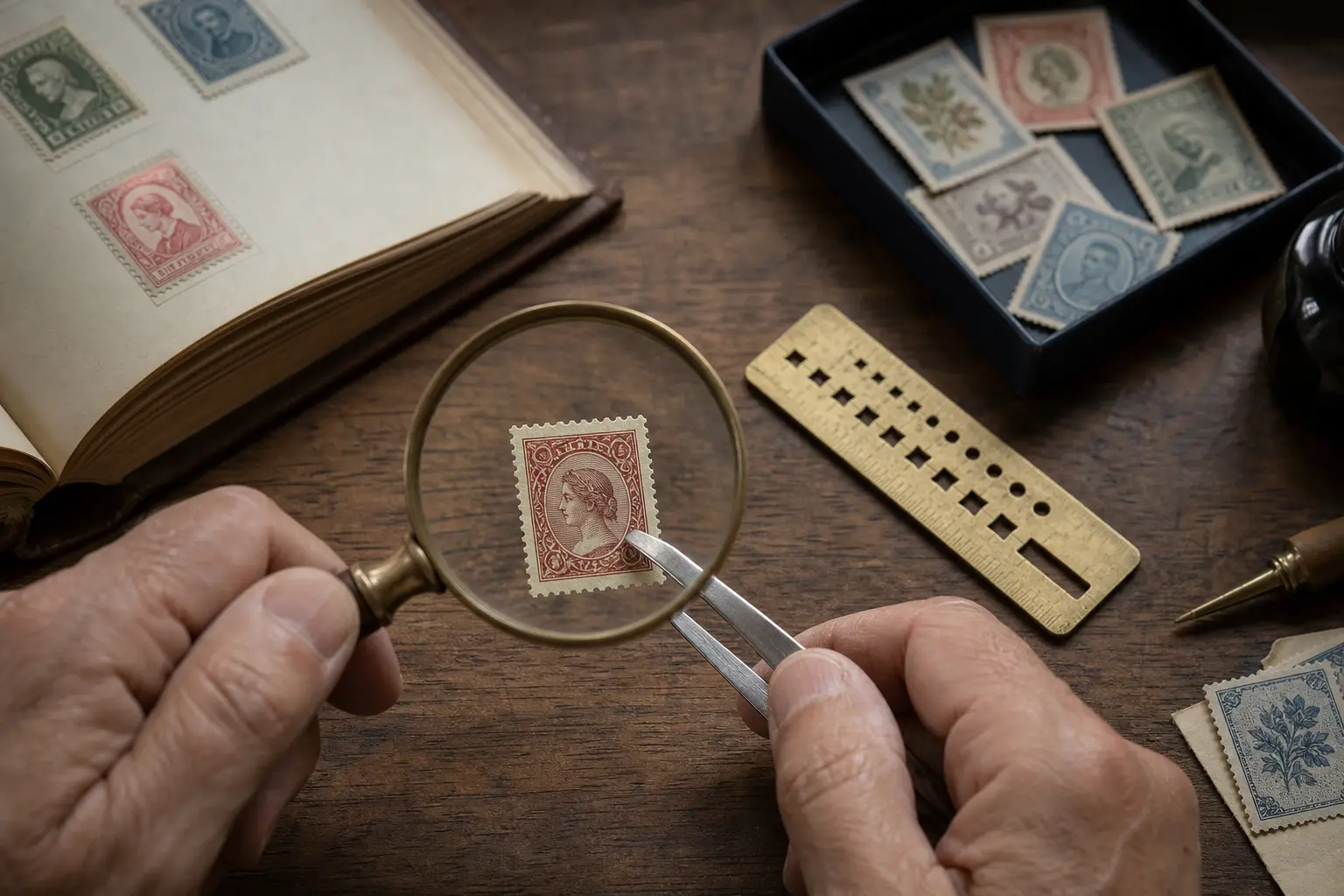
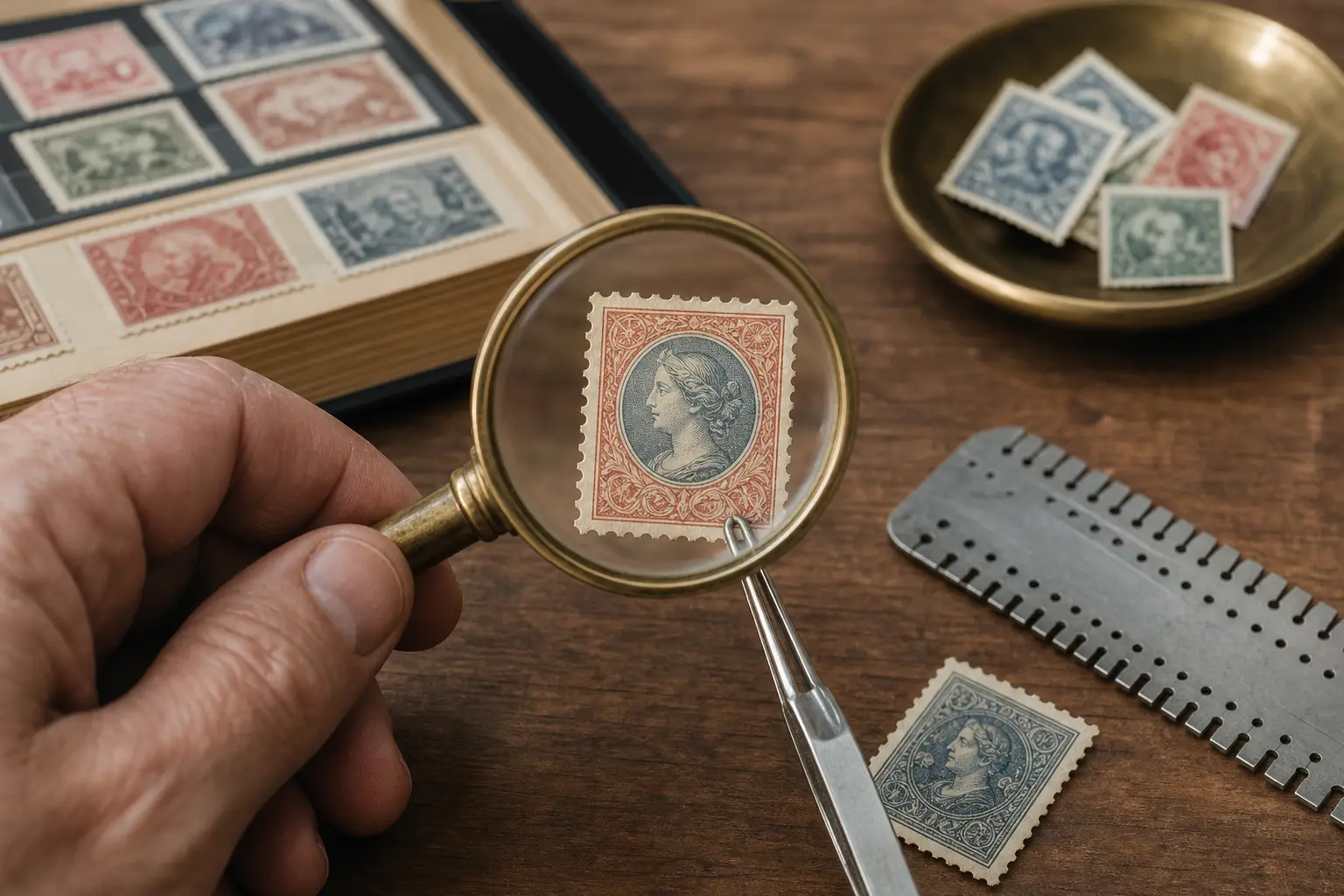
A perforation gauge helps collectors distinguish stamps with nearly identical designs by measuring the number of perforations along the edges. This article explains how to use a perforation gauge safely and effectively, including step-by-step instructions and tips for accurate identification.
Identifying watermarks on postage stamps is essential for collectors, as watermarks can distinguish between similar issues and affect value. This guide explains safe, practical methods and the tools needed, helping you avoid damage while learning to recognize watermarks accurately.
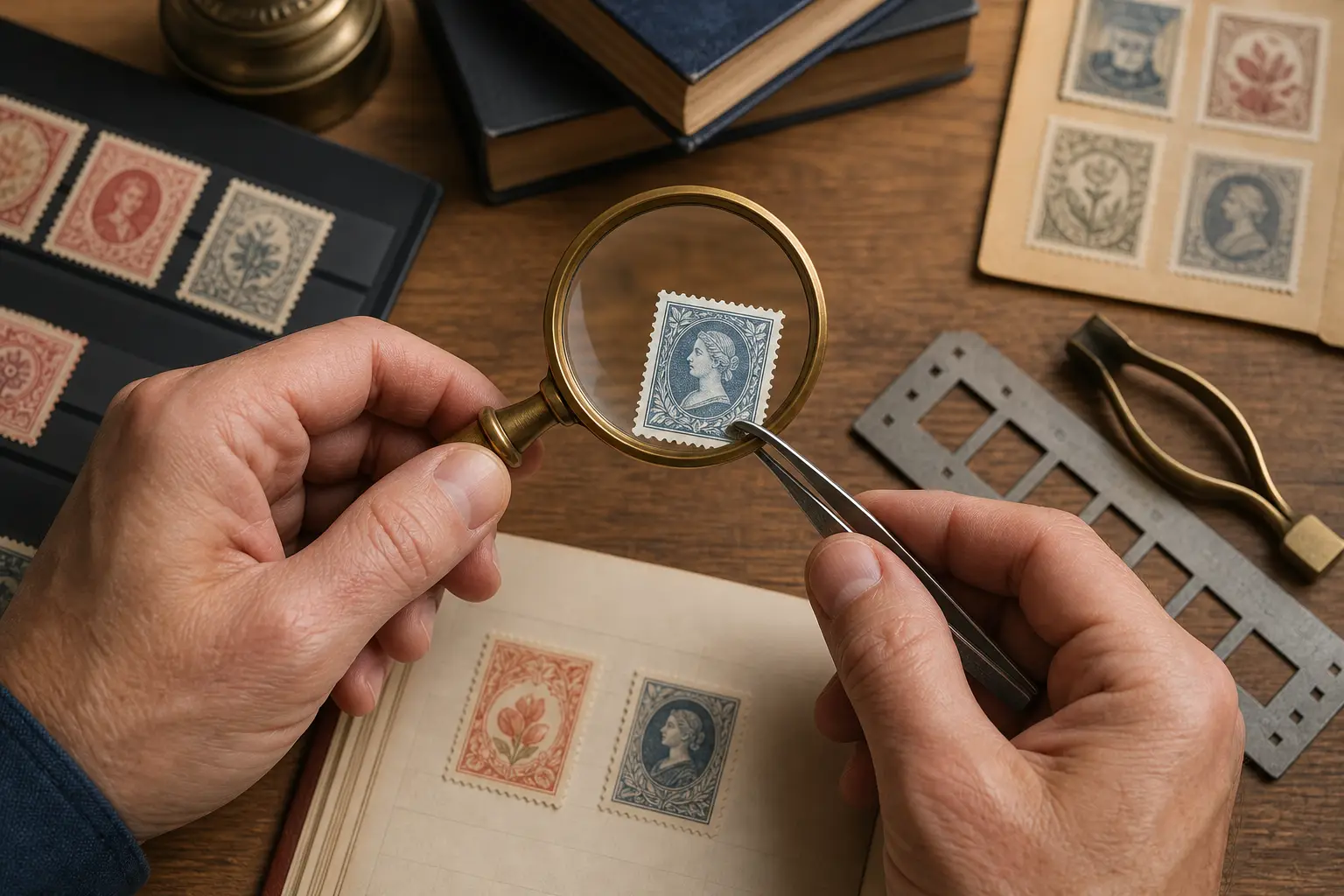
If you find a postage stamp without a country name, you can still identify its origin using clues like monarch portraits, language, and catalog references. Great Britain is the only country allowed to issue stamps without its name, but many stamps from other countries may use unfamiliar scripts or symbols. This guide explains a safe, step-by-step process for
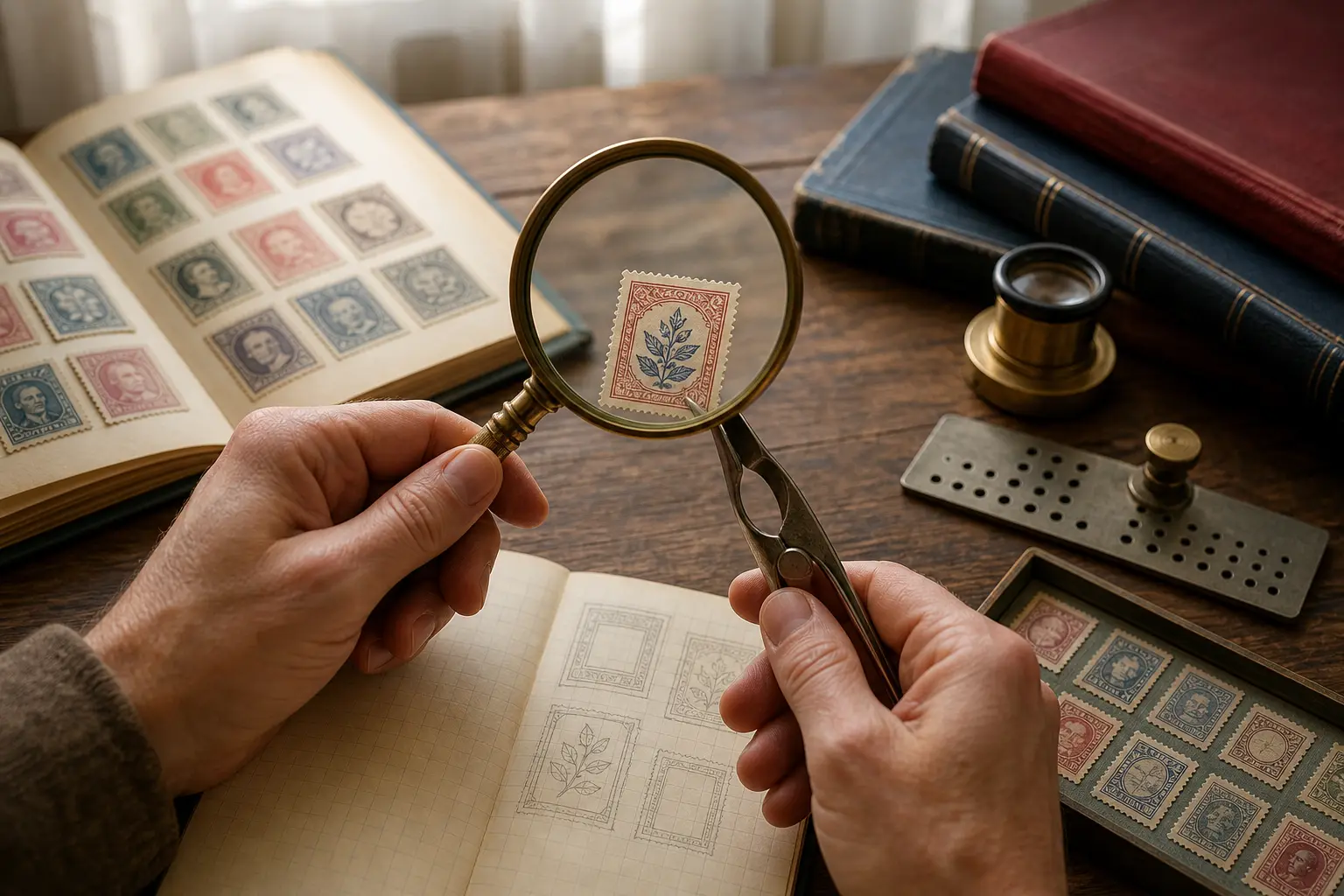
A reliable stamp identification is built from several clues, not one matching picture. Use this field method to record what you see, narrow the issue, and verify the variety without risking the stamp.