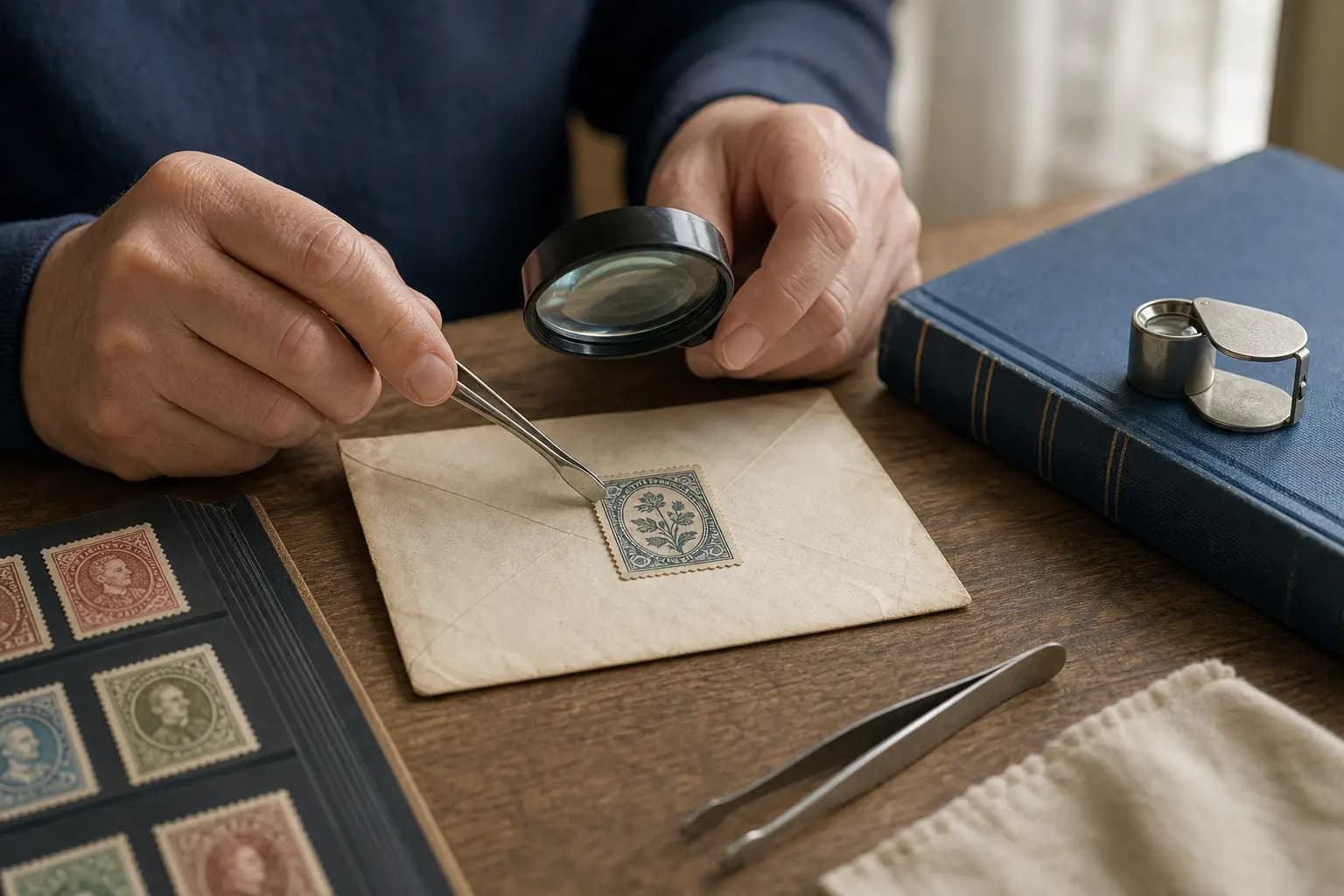
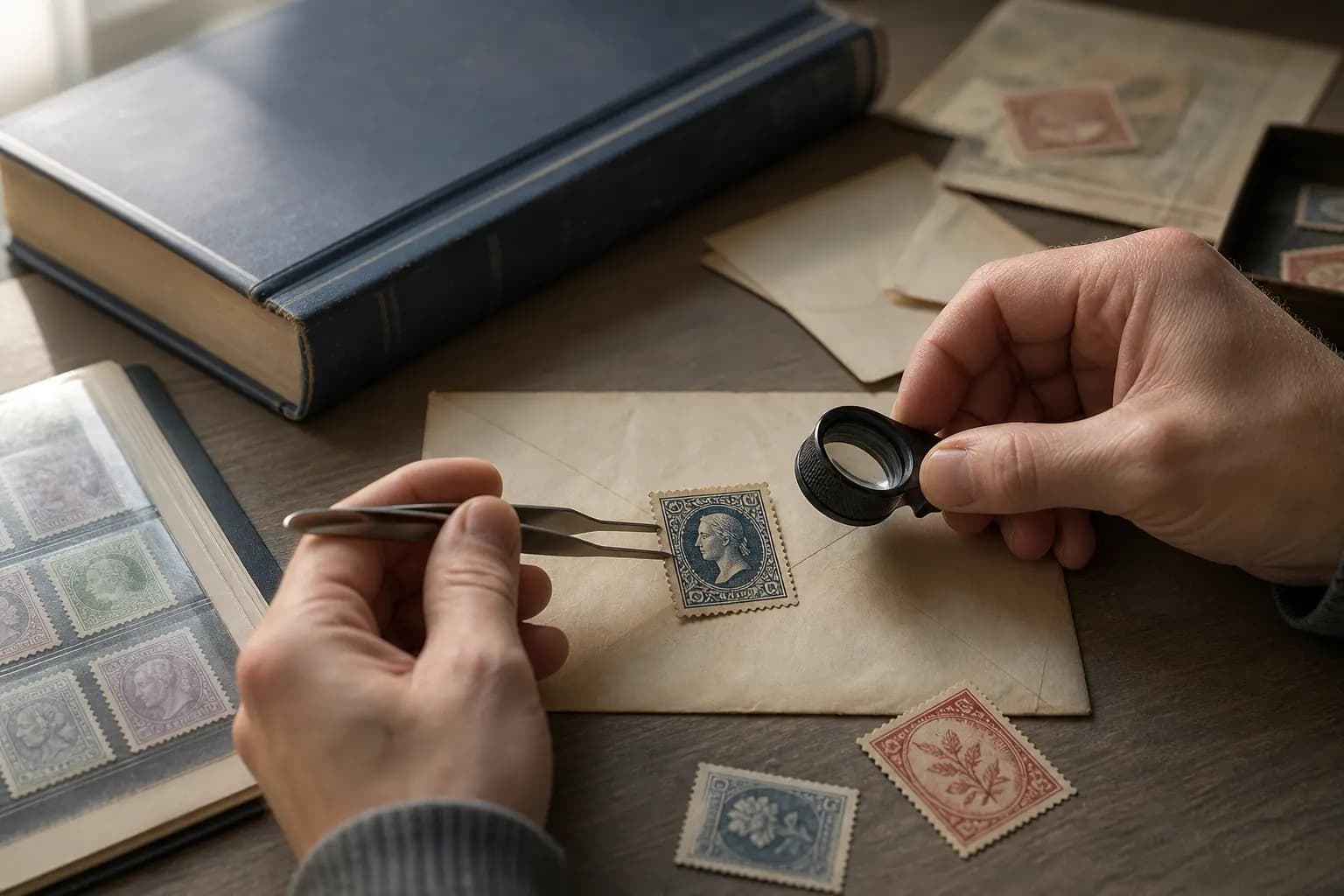
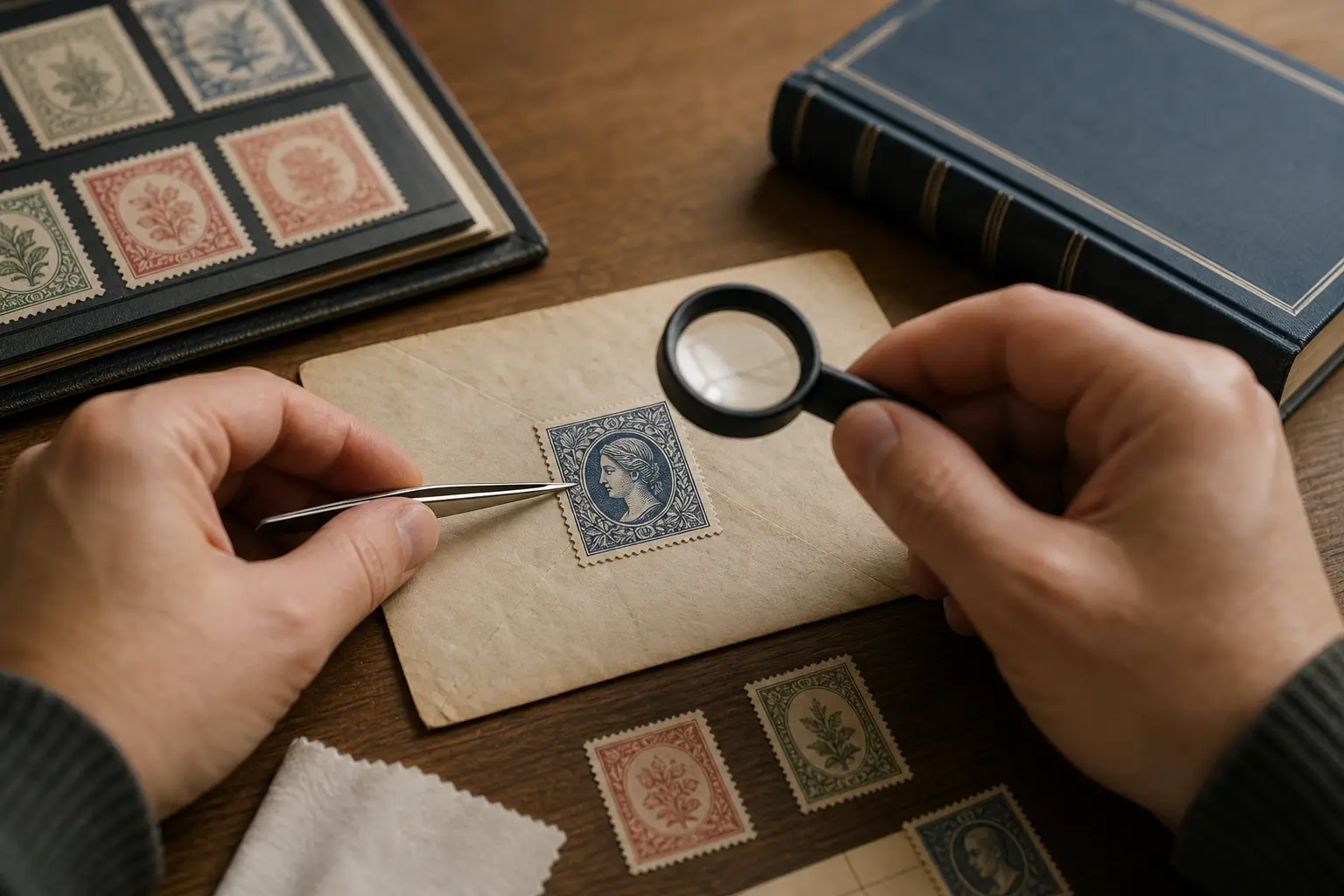
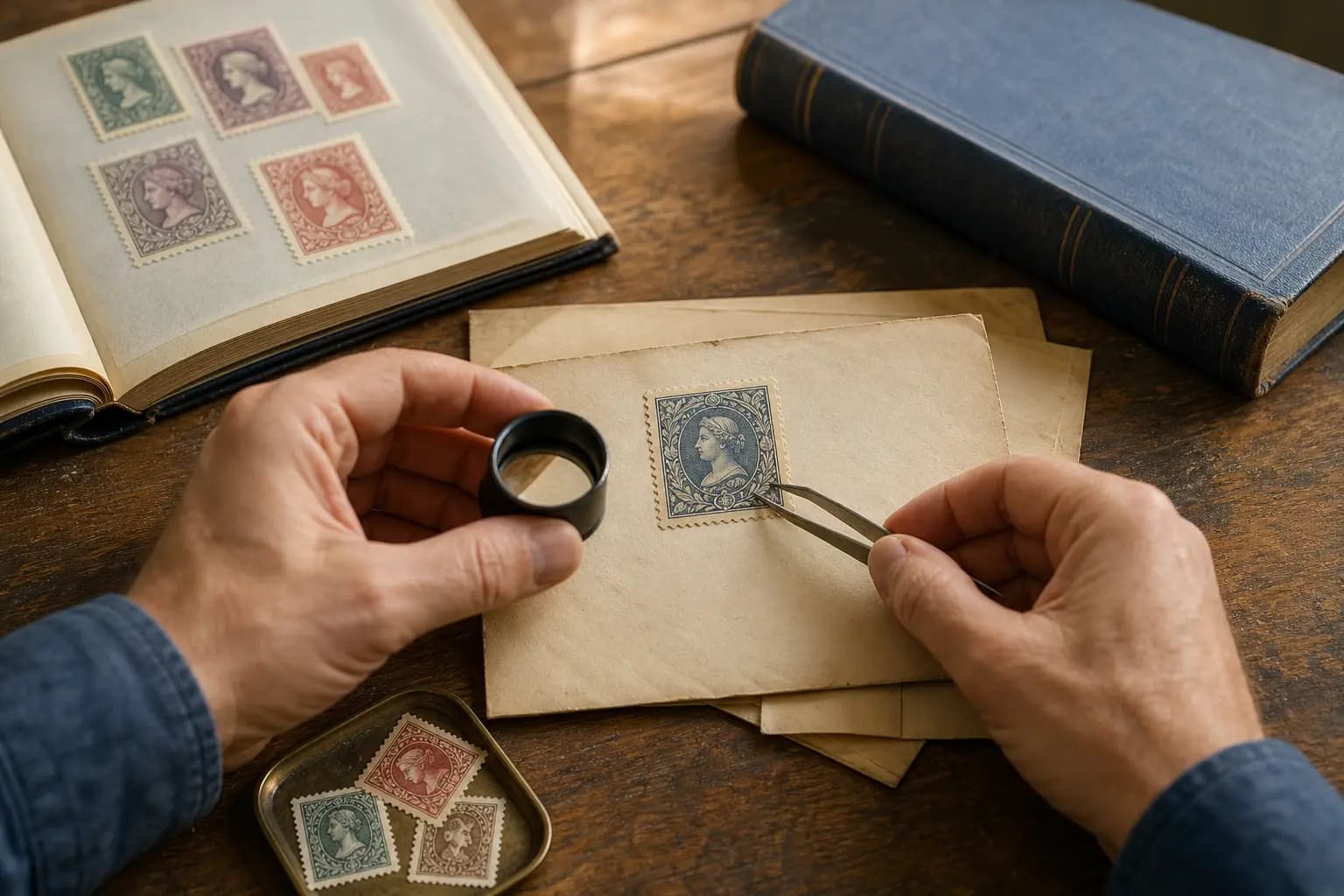
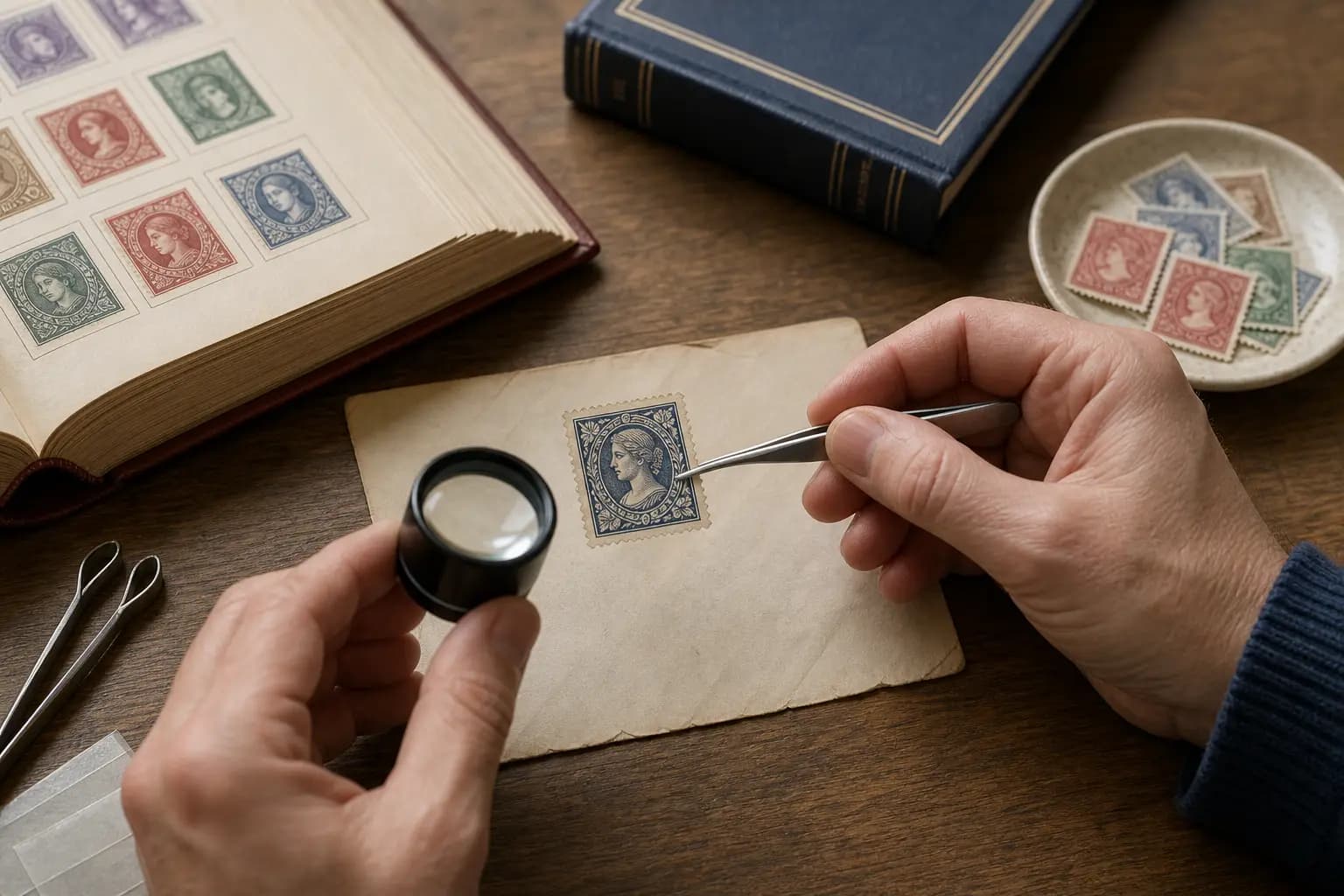
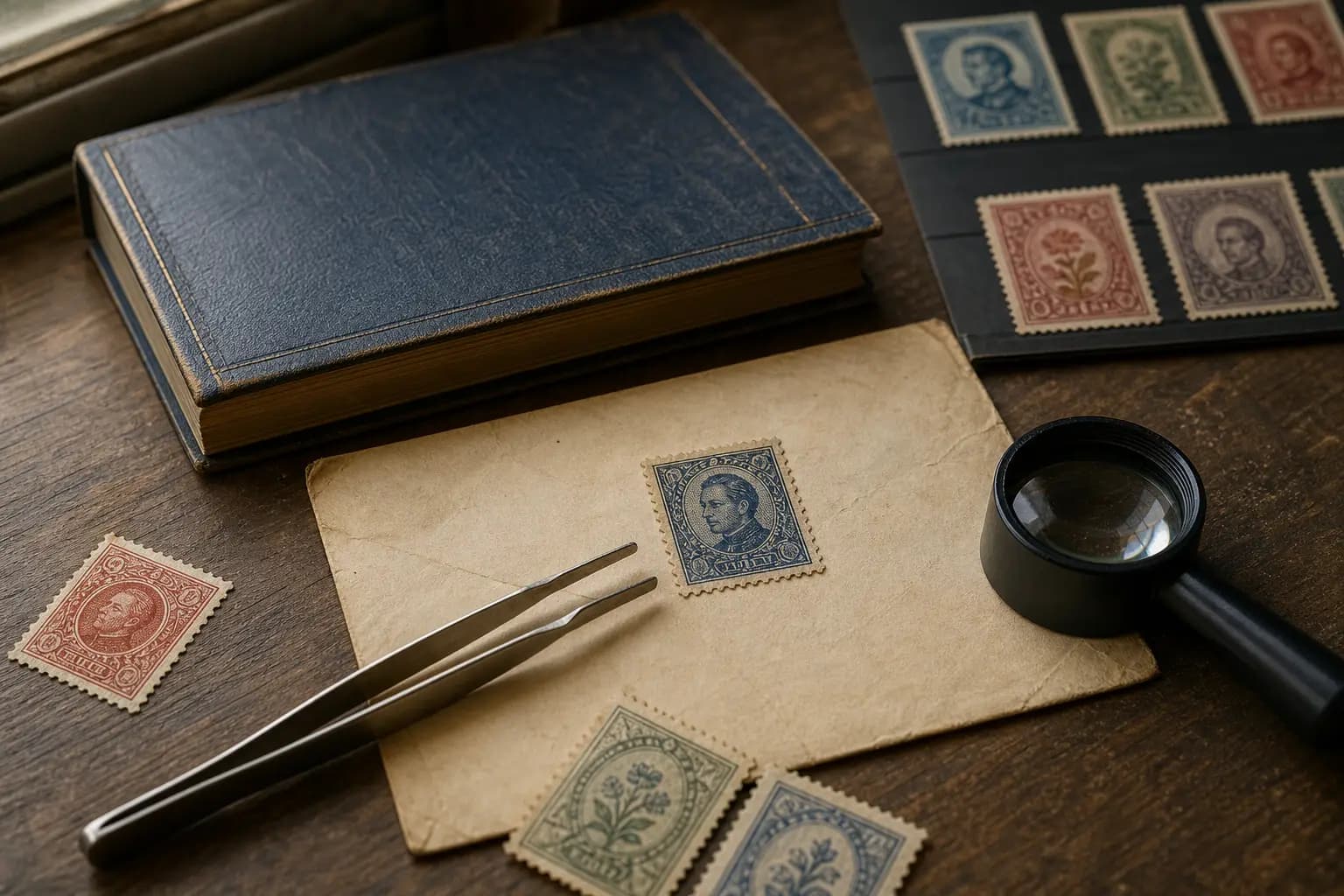
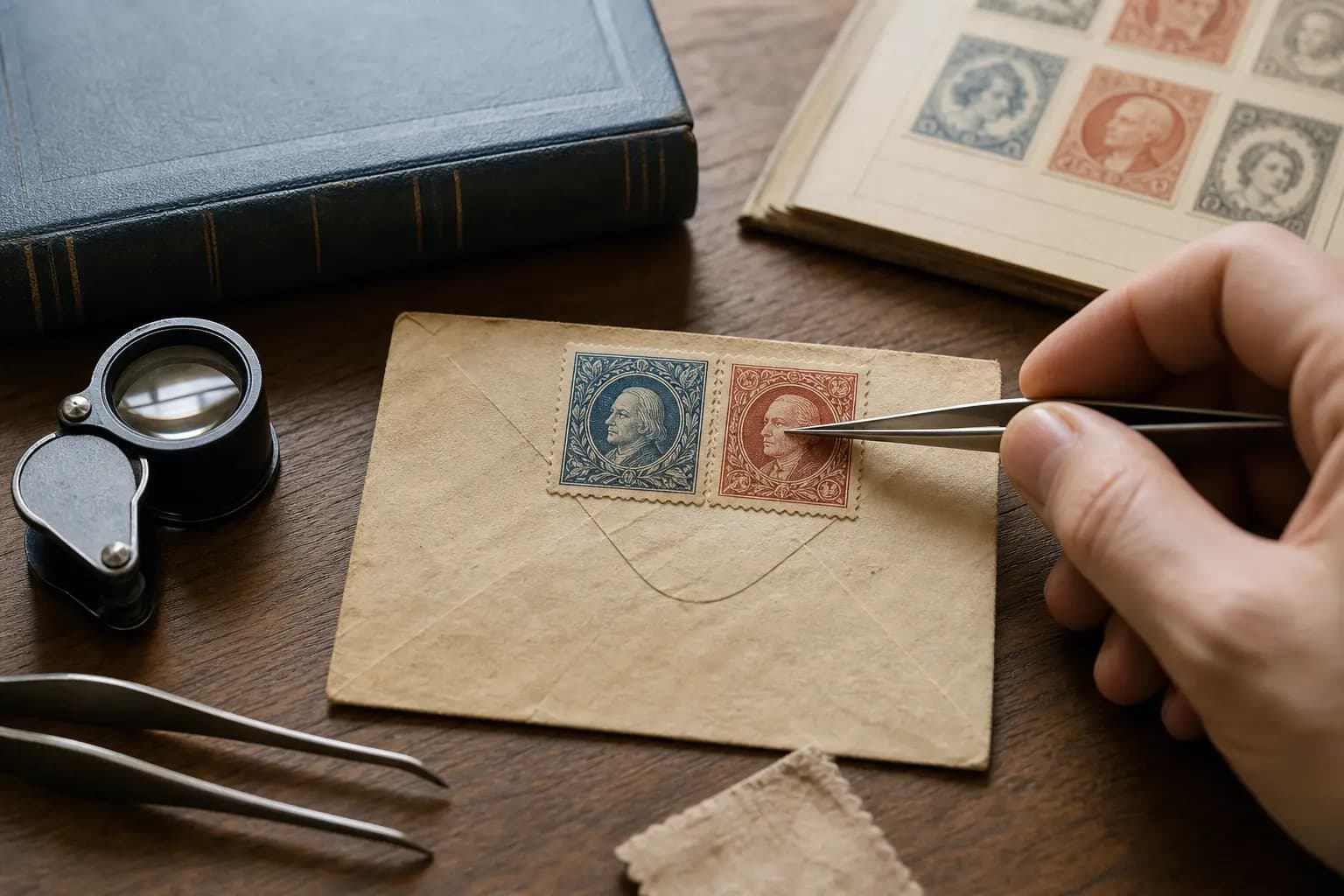
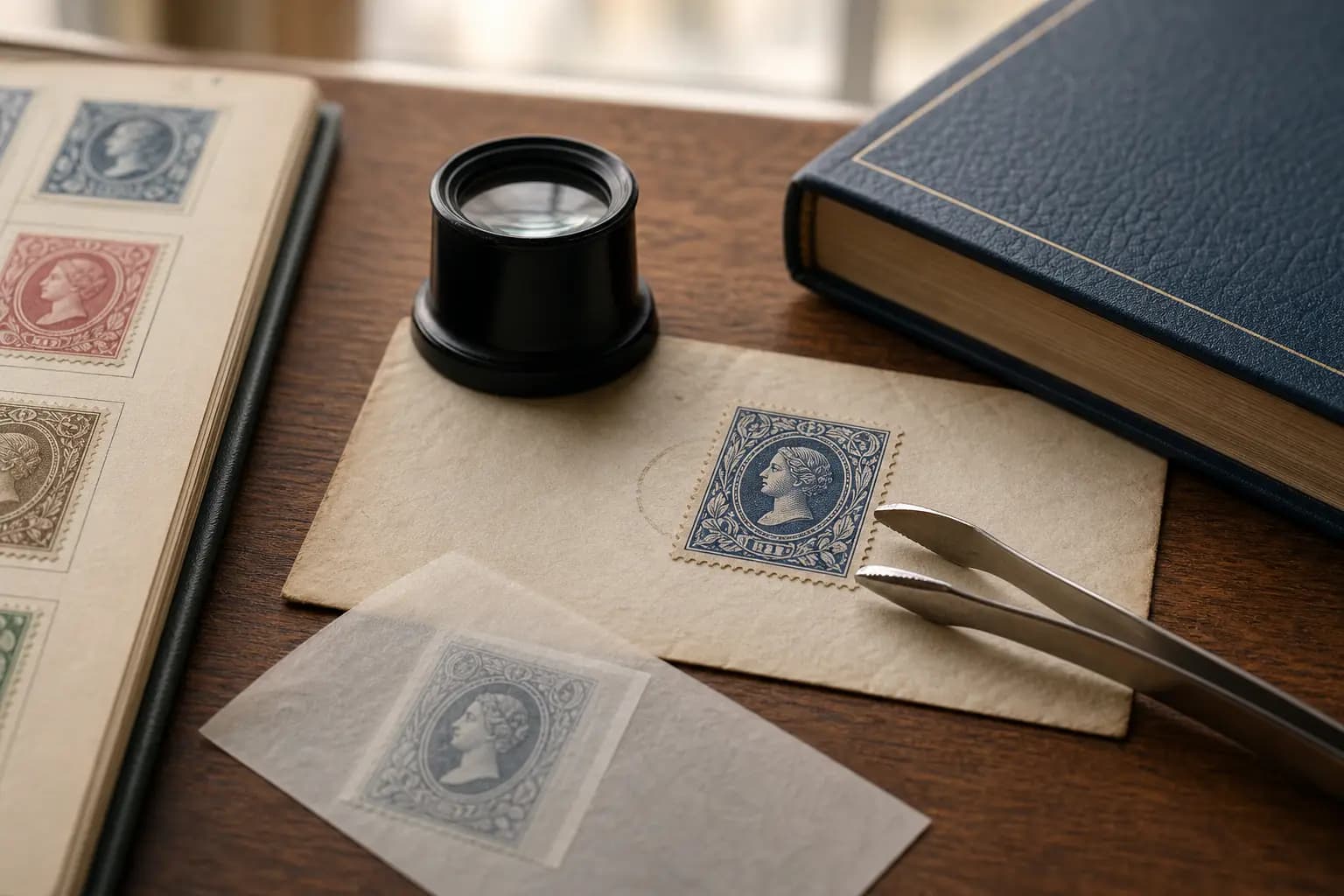
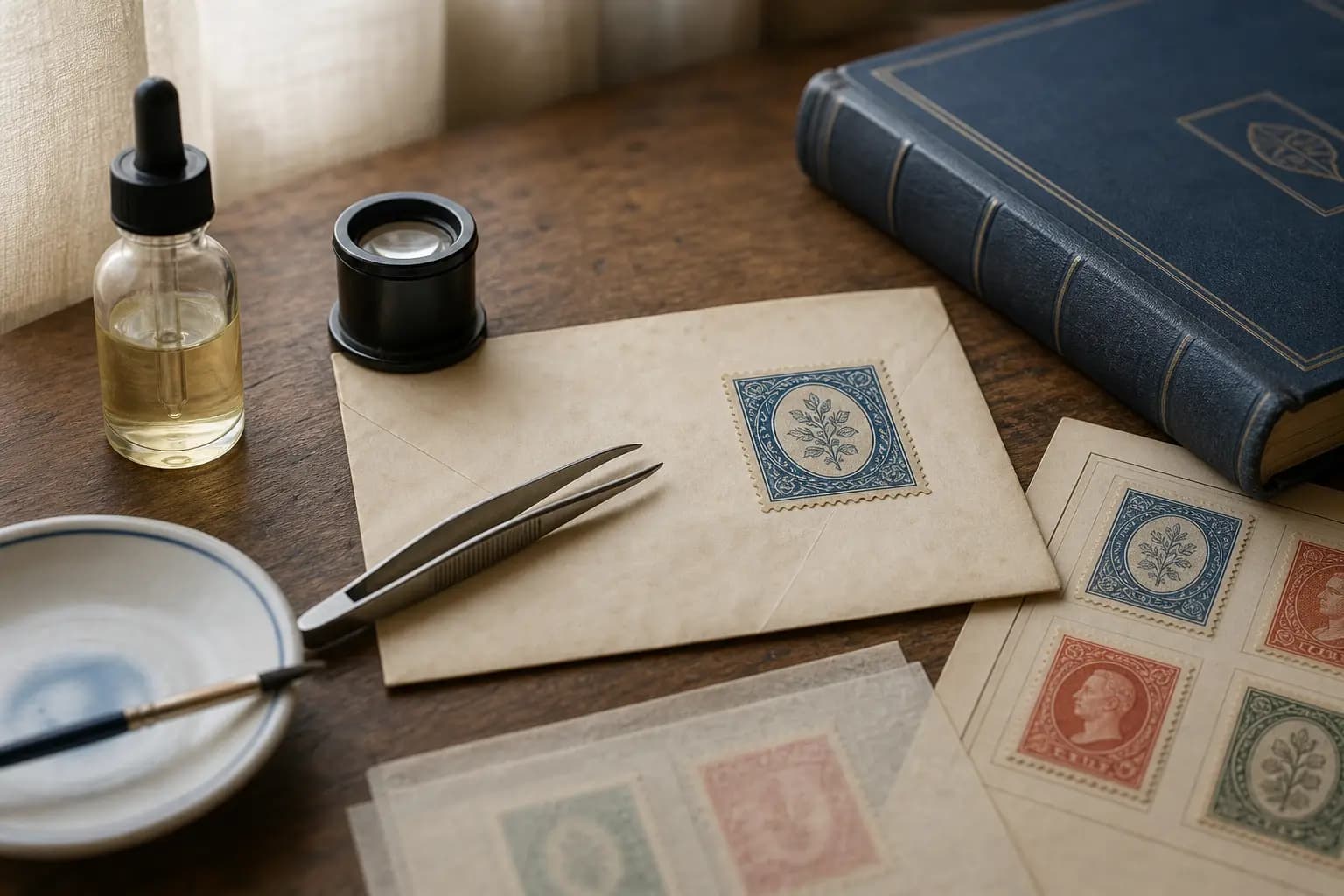
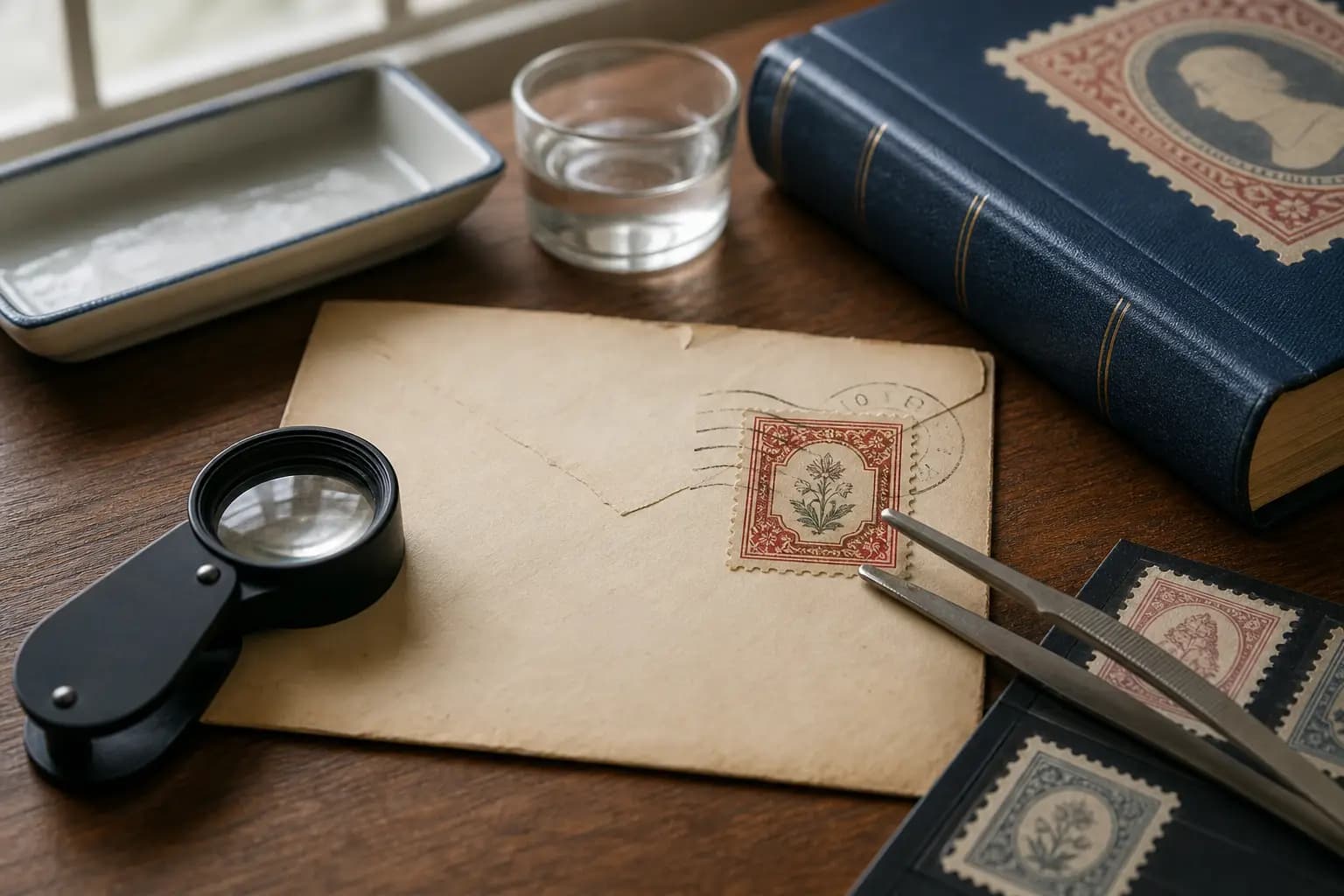
Yes, watermarks can affect a stamp’s value because they may be the only difference between a common issue and a separate, much scarcer one. Check them carefully and safely, since visual clues alone are not always conclusive.
Yes, a watermark can make a stamp more valuable when it changes the catalog listing or separates common paper from scarcer paper. Check it safely from the back with proper fluid or a detector, and treat uncertainty carefully if only part of the watermark shows.
A watermark can make two stamps with the same design into separate catalog issues. Check carefully, use safe watermark fluid or light, and record uncertainty when the mark is only partly visible.
A watermark can be the only difference between a common stamp and a much scarcer one. Learn how to check safely, why look-alike designs matter, and when to stop and note uncertainty instead of guessing.
A watermark can be the only difference between a common stamp and a much scarcer variety. Learn how to check watermarks safely, why they matter for value, and when careful records are more useful than guesses.
Early Liechtenstein stamps featuring Prince Johann II can look nearly identical, but key design details—specifically the presence of accession dates in the upper corners—and paper characteristics determine their catalog number and value. Learn how to safely identify these issues.
The first United States postage stamps, issued on July 1, 1847, feature iconic portraits of Benjamin Franklin and George Washington. Learn how to identify these historic issues, understand their production by Rawdon, Wright, Hatch and Edson, and safely analyze their physical characteristics to distinguish them from later look-alikes.
Discover how the transition to prepaid mail and early production runs shaped the rarity and value of the 1840 Penny Black and the first 1847 United States postage stamps.
When evaluating stamps with identical designs, minor physical details like watermarks, subtle text inscriptions, and paper structure determine their true identity and value. Learn how to safely analyze these features to distinguish common issues from rare varieties.
Watermarks are security features formed by dies pressing into paper pulp, leaving thin places. Learn how to safely detect these structural variations using watermark fluid to identify and classify your stamps.
Separating self-adhesive stamps from paper requires understanding their backing chemistry. While pre-2007 U.S. self-adhesives often release in water, modern issues feature oil-based adhesives that require specialized solvents to prevent paper damage and preserve value.
Watermarks and paper dies have long served as critical security features to deter counterfeiting. Learn how these thin places in stamp paper are formed during manufacturing and how to safely identify them to distinguish rare varieties from common issues.