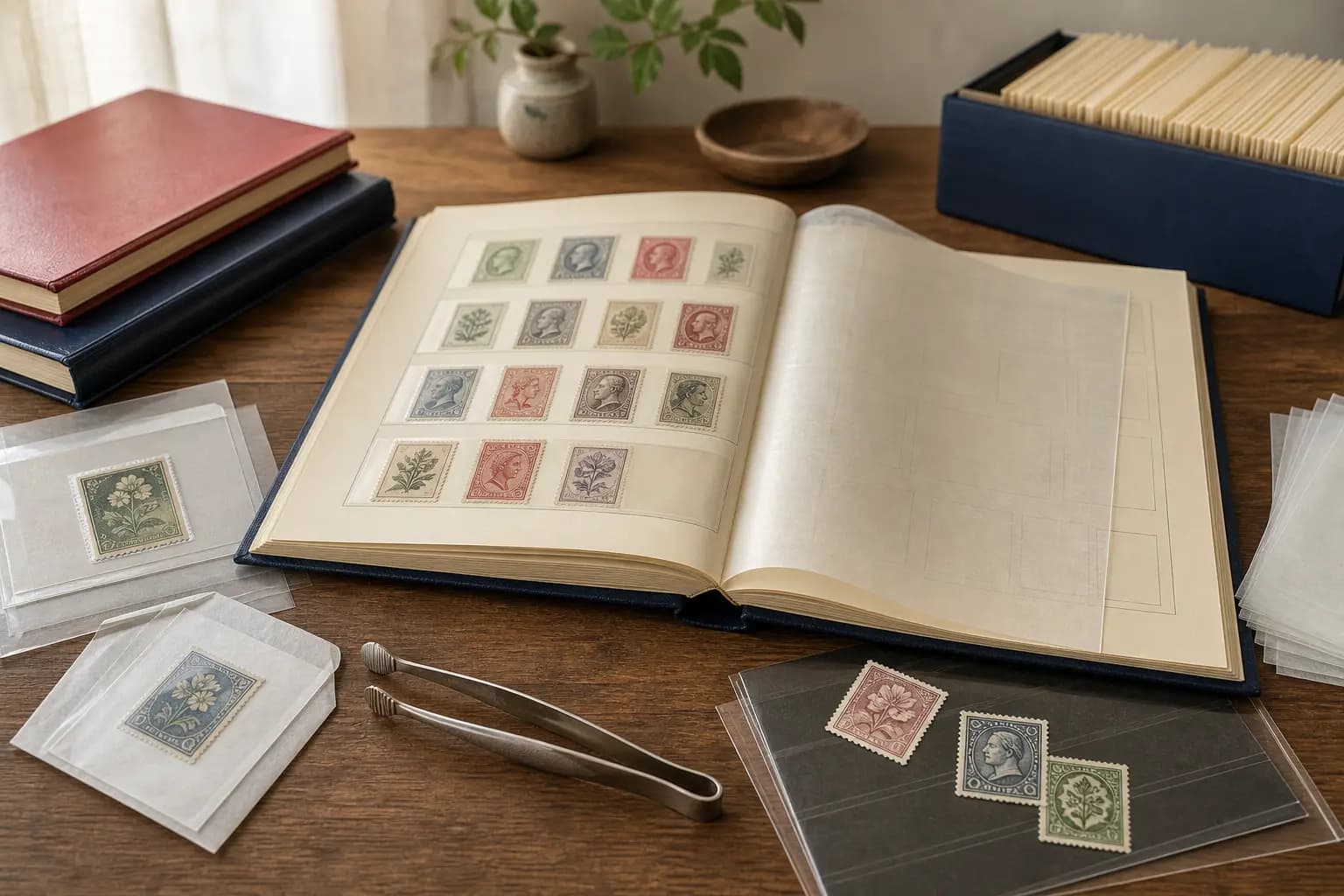
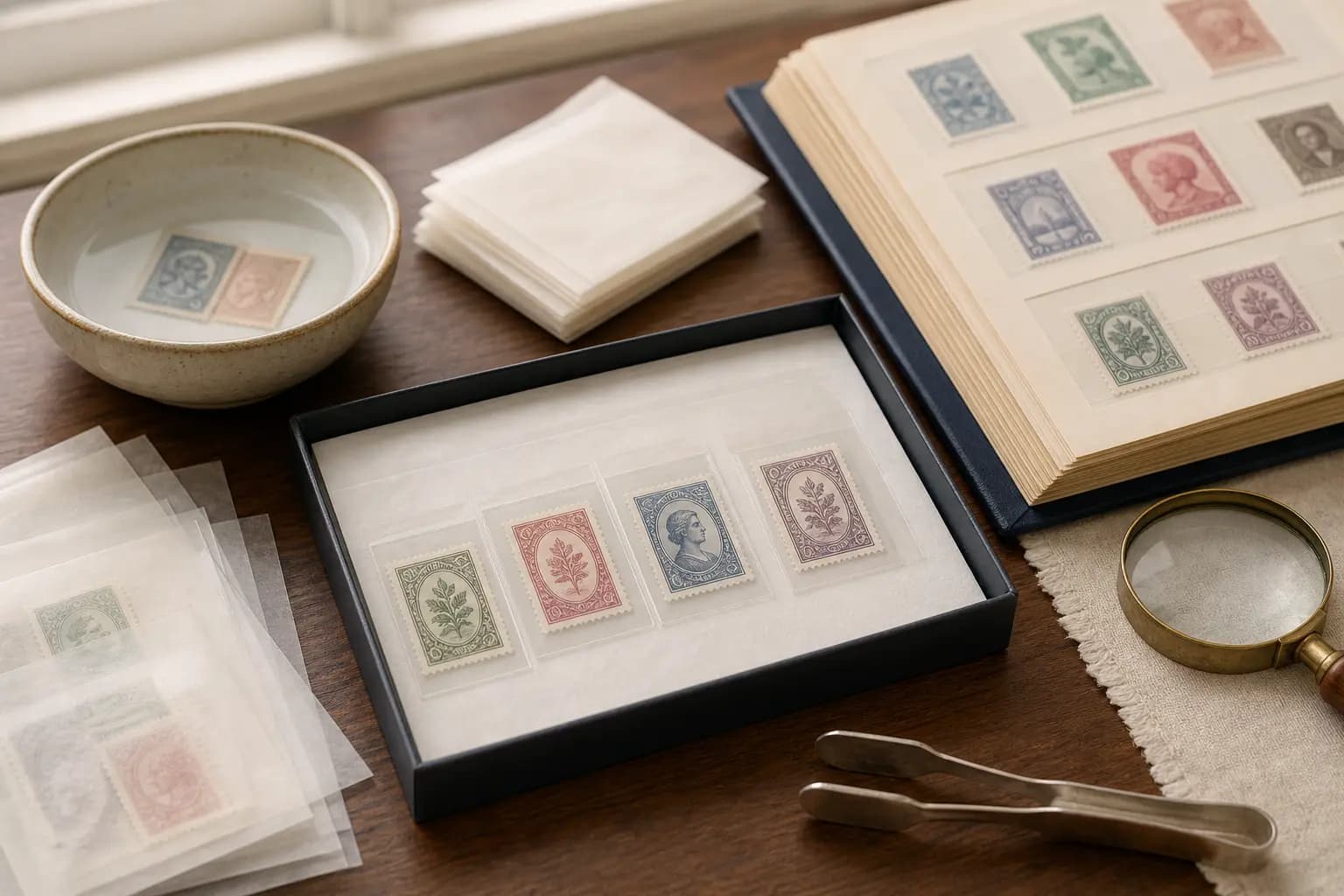
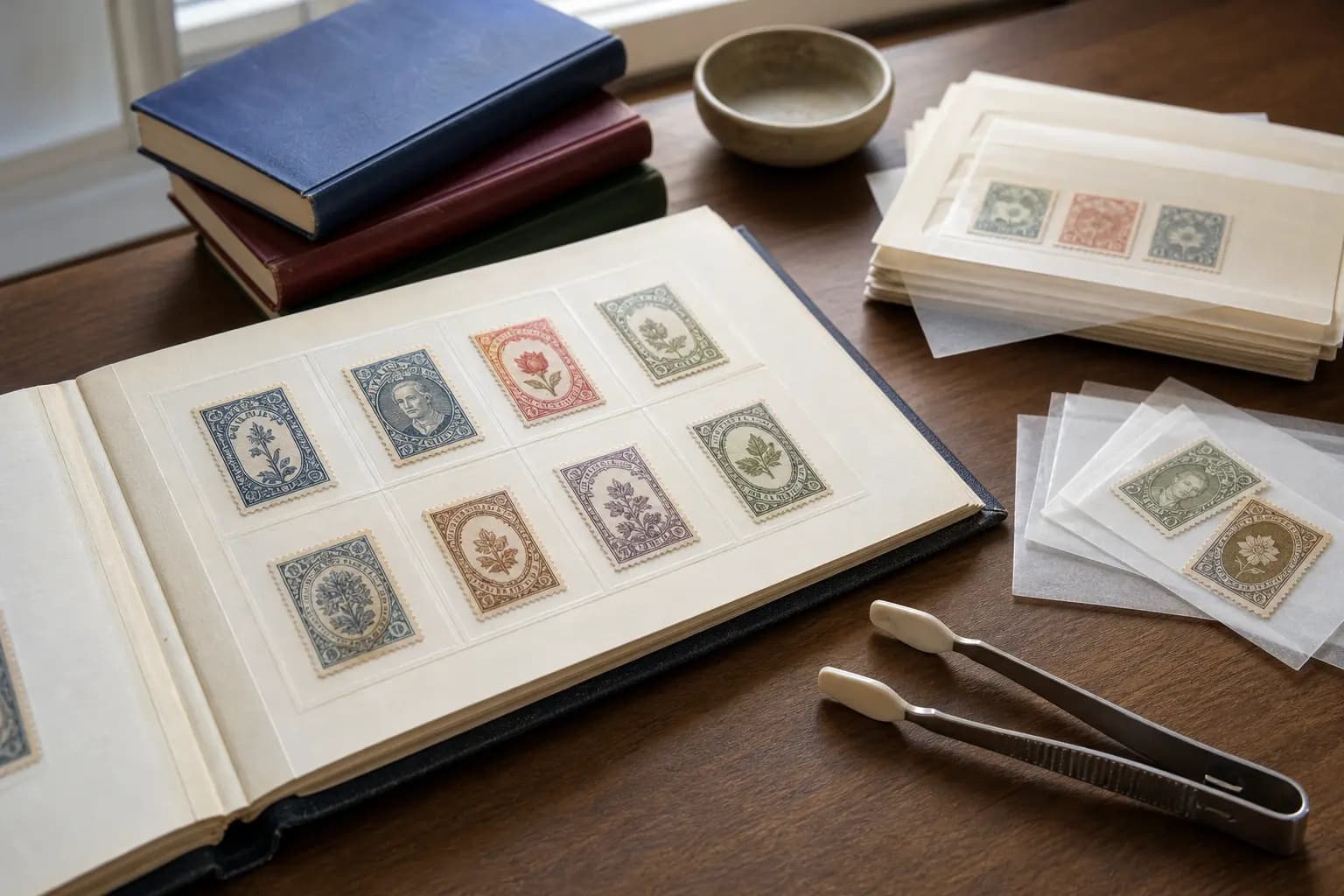
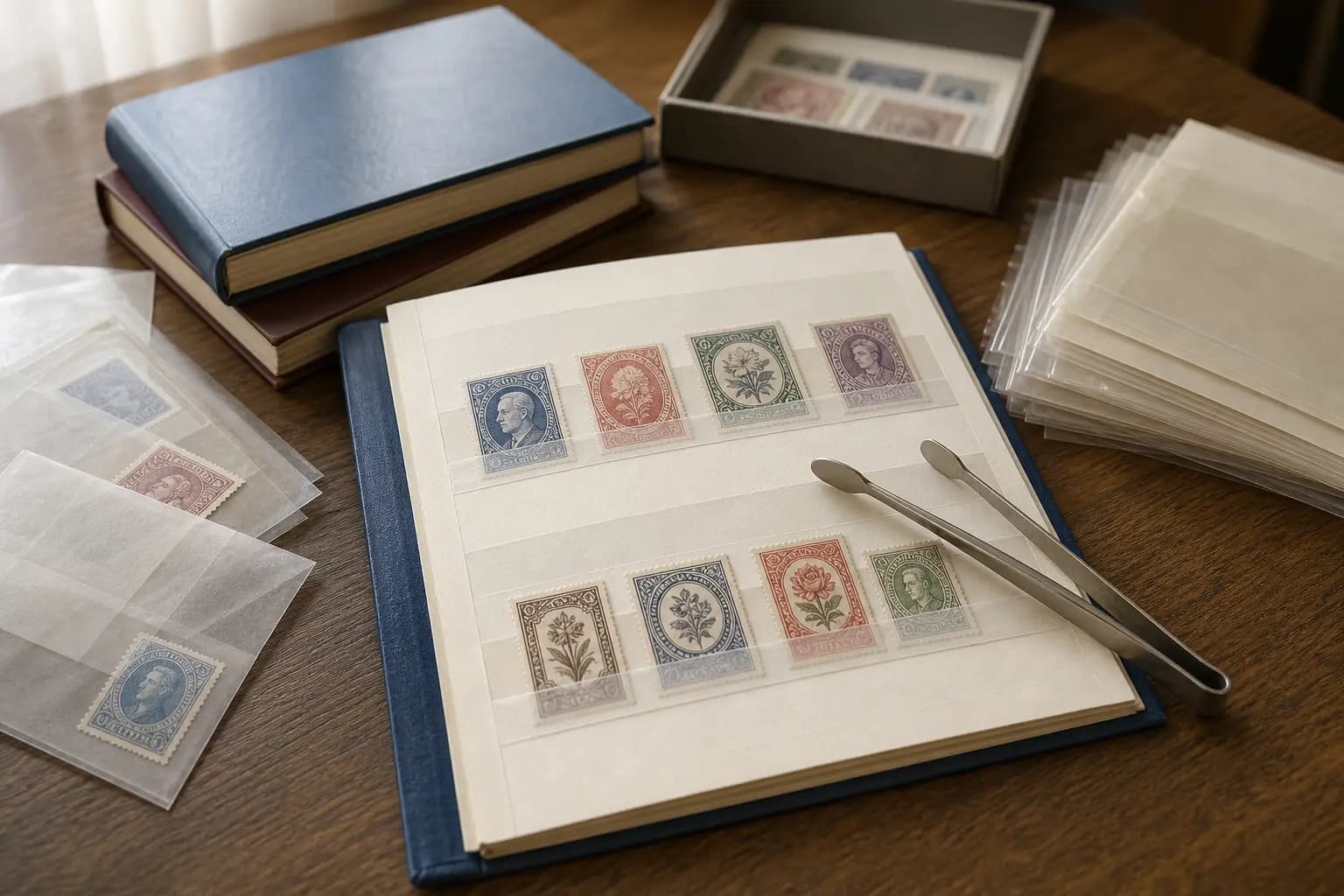
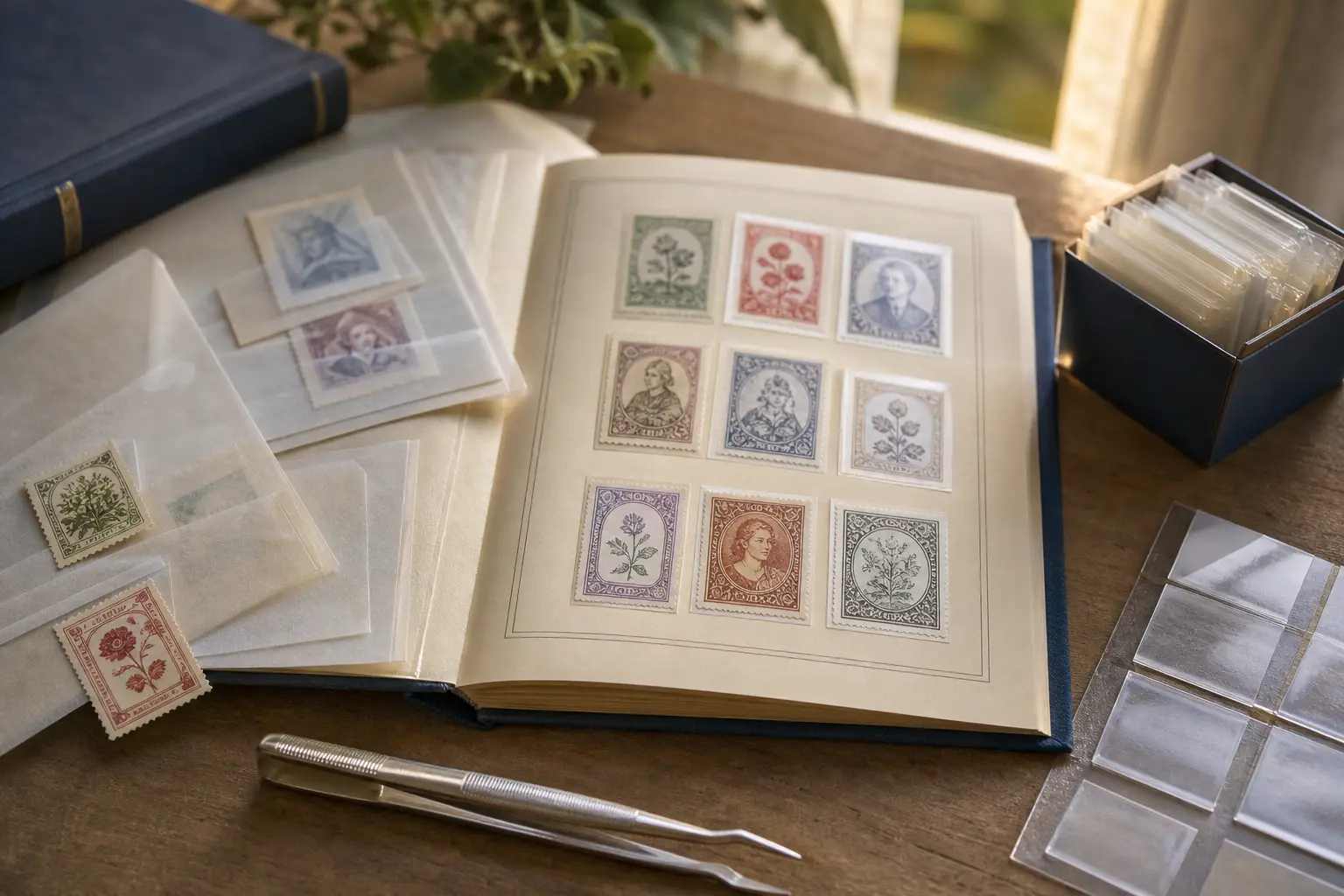
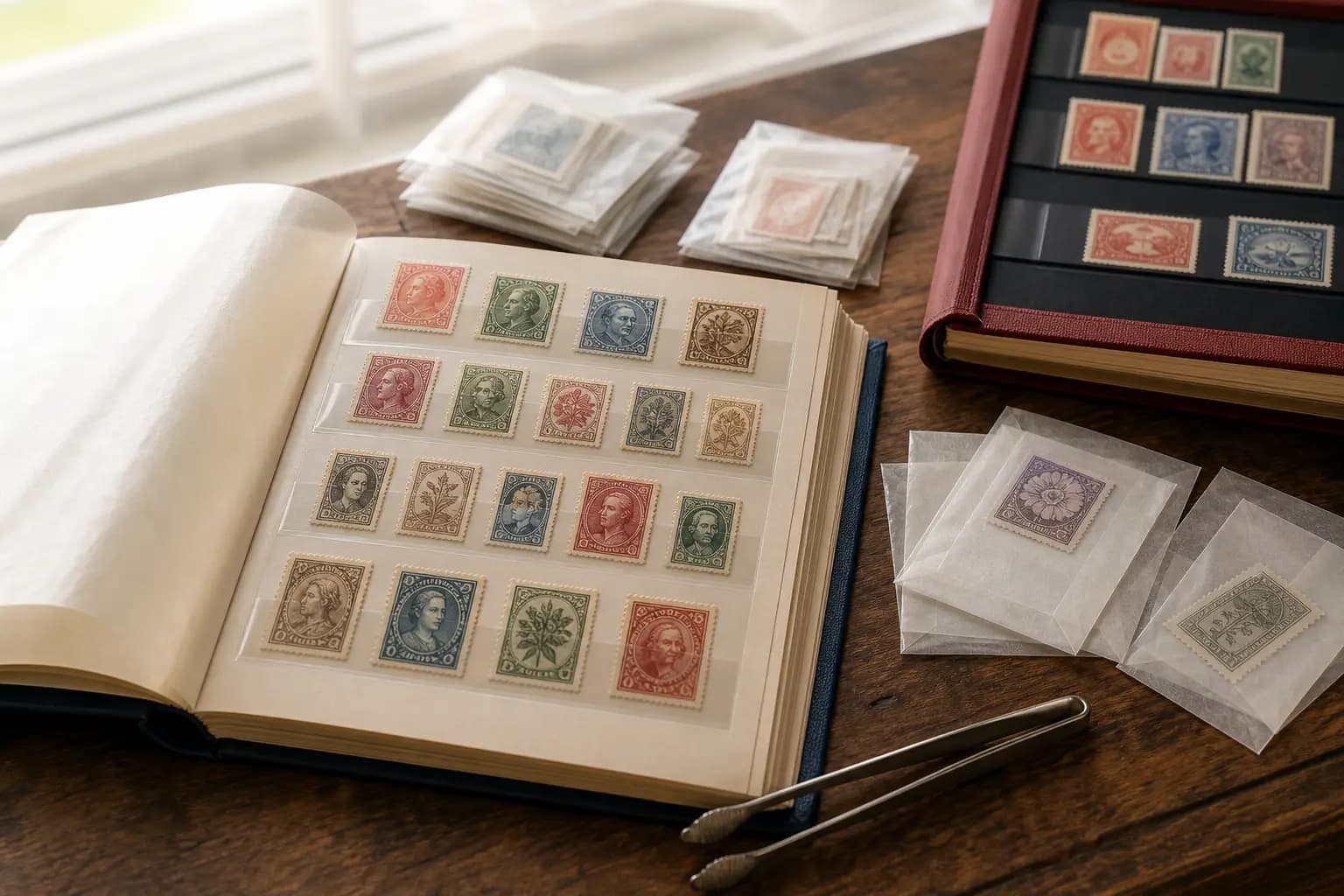
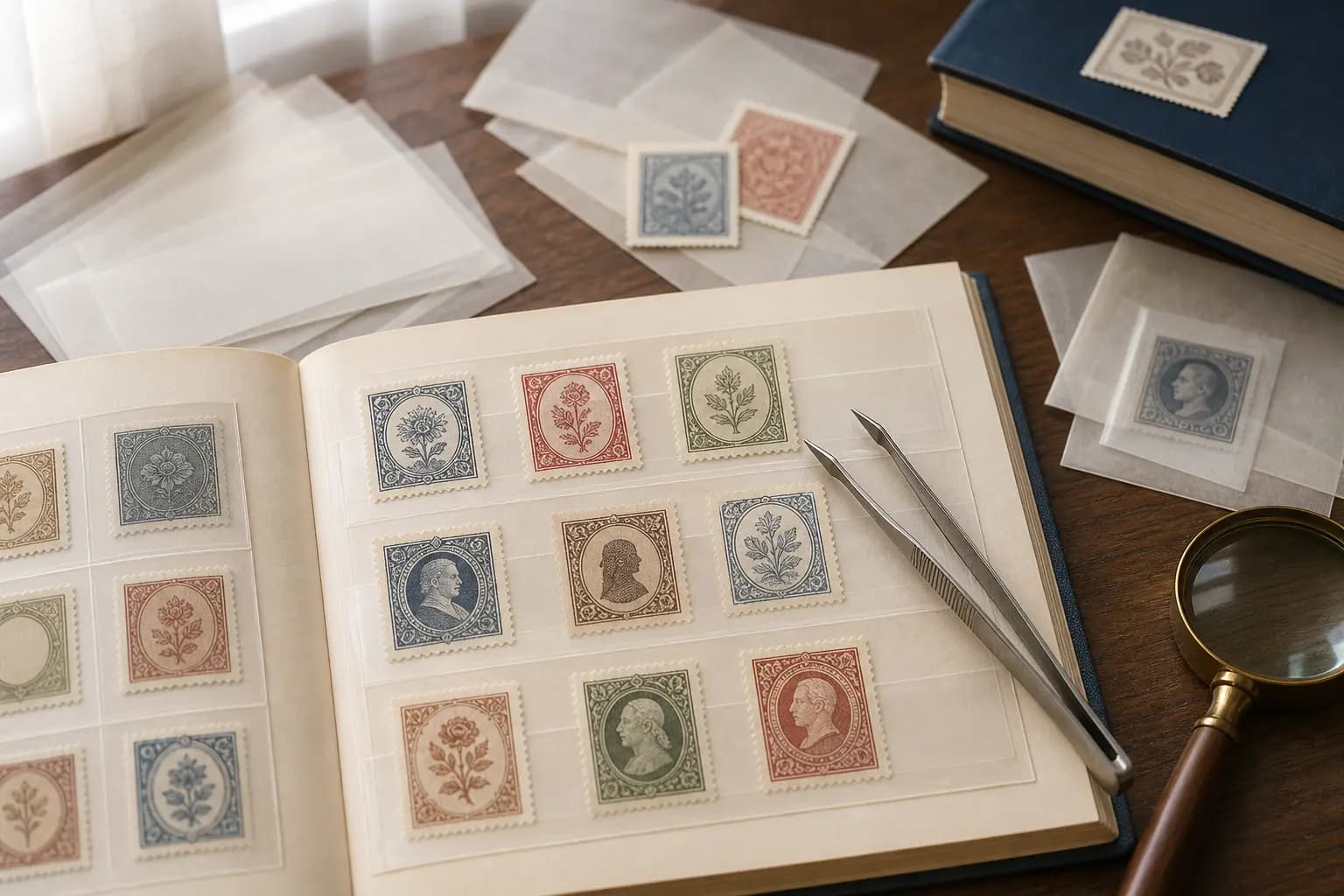
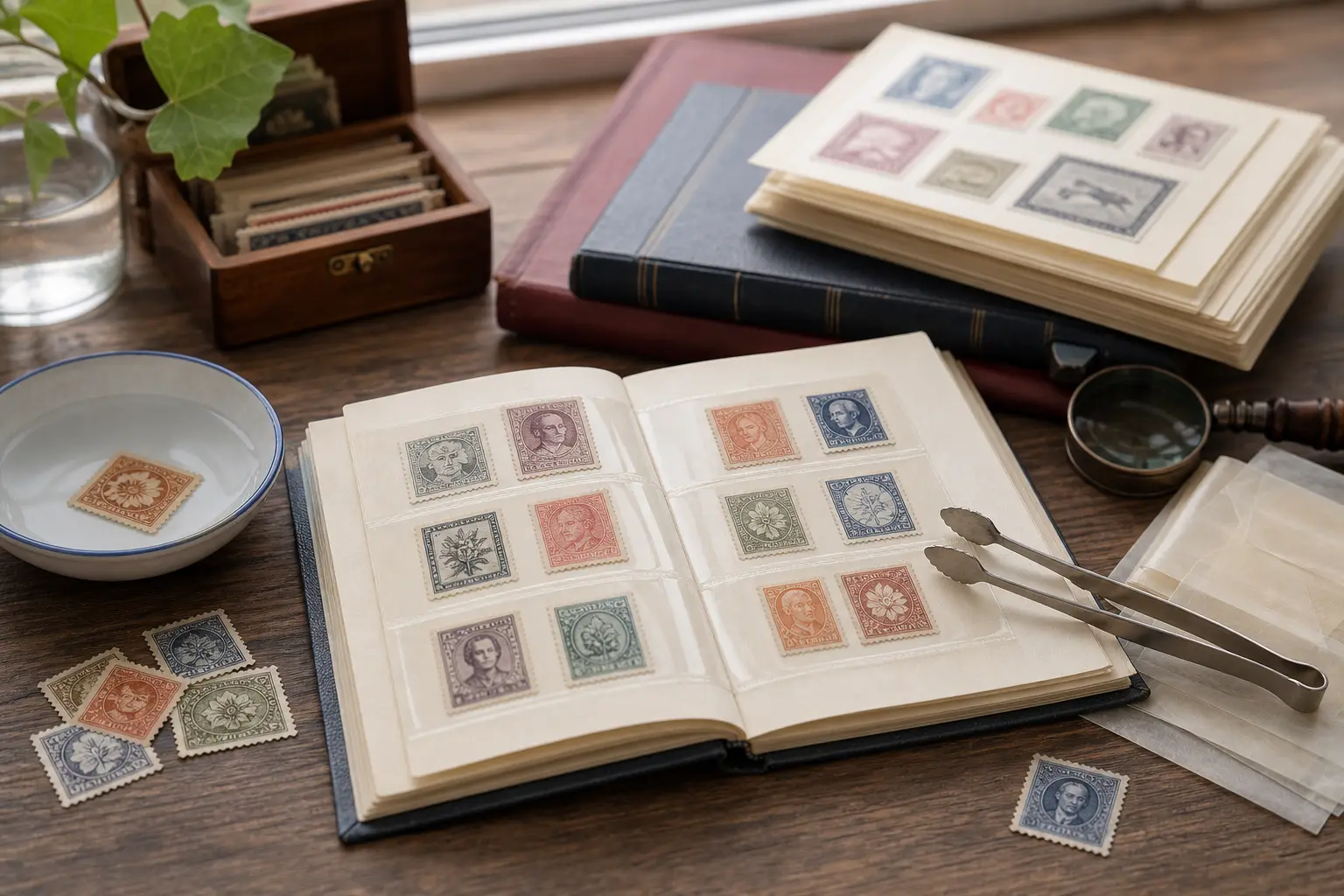
Store dry stamps by sorting them first, then keep them in glassine envelopes, albums, or stock books until you are ready to mount them. Use tongs for dry stamps, never tape or glue, and choose hinges or mounts only when the stamp is fully dry and ready for album placement.
The safest approach is to let damp stamps dry flat, handle them gently, and store them only after they are fully dry. If a cover has important cancellations or images, preserve the entire envelope instead of forcing removal.
Original gum is easiest to preserve by avoiding unnecessary handling, moisture, and adhesive contact. For unused stamps, the safest approach is careful storage, dry handling with tongs, and album materials that do not damage the back of the stamp.
Prevent stamp damage by handling only dry stamps with tongs, storing them in acid-free albums or glassine, and avoiding tape, glue, sticky pages, heat, and rough sorting. Wet or softened stamps need gentler, hands-off drying first.
Mounting your postage stamps safely requires the right tools and techniques. Learn how to choose between peelable hinges and clear plastic mounts, and follow a step-by-step workflow to secure your dry stamps without risking permanent damage from tape or glue.
Managing duplicate stamps is a key part of philately. Discover how to safely evaluate, handle, and store your duplicate stamps using glassine envelopes and stock books without risking damage.
Once your soaked postage stamps are completely dry, the sorting and organizing phase begins. Learn how to safely handle dry stamps using tongs, identify nameless issues, select the best duplicates, and store your collection in glassine envelopes without risking physical or chemical damage.
To protect your postage stamps from destructive skin oils, always handle dry stamps using specialized stamp tongs. Learn the safe, methodical workflow to transition stamps from wet soaking to dry handling without risking tears or paper degradation.
Drying soaked postage stamps requires patience and the right technique to prevent curling and paper damage. Discover how to safely transition stamps from water to storage using the weighted paper towel method, keeping your collection flat and intact.
Deciding whether to keep a stamp on its original envelope or soak it off is a fundamental preservation choice. Learn how to evaluate covers, safely soak classic stamps, handle modern self-adhesives, and protect your collection from damage.
Preserving postage stamps requires understanding the physical state of the paper. Learn the critical differences between handling dry and wet stamps, why to avoid tongs on wet paper, and how to safely dry, sort, and mount your collection.
When managing duplicate stamps, selecting the best specimen requires a careful evaluation of centering and cancellation quality. Discover a safe, step-by-step workflow to inspect your stamps, handle dry and wet paper safely, and store your spares without causing damage.