The safest first test is to look for how the stamp is attached and whether it was designed to separate in water. Recent U.S. self-adhesives often have an oil-based backing and may not soak off normally, so identification should be careful and methodical.
Start with the portrait rule: Great Britain is the only country permitted to issue postage stamps without its name. Then use safe, methodical clues like catalog illustrations, perforations, and watermarks to narrow uncertain matches without damaging the stamp.
Start by checking the issue period and backing clues, then use a cautious test rather than force. Older self-adhesives often soaked off, while many current U.S. self-adhesives have oil-based backing and need a different approach.
Not all self-adhesive stamps will soak off in water. Current U.S. issues may have oil-based backing, so identification starts by checking the stamp’s type and handling the piece safely before you try any removal method.
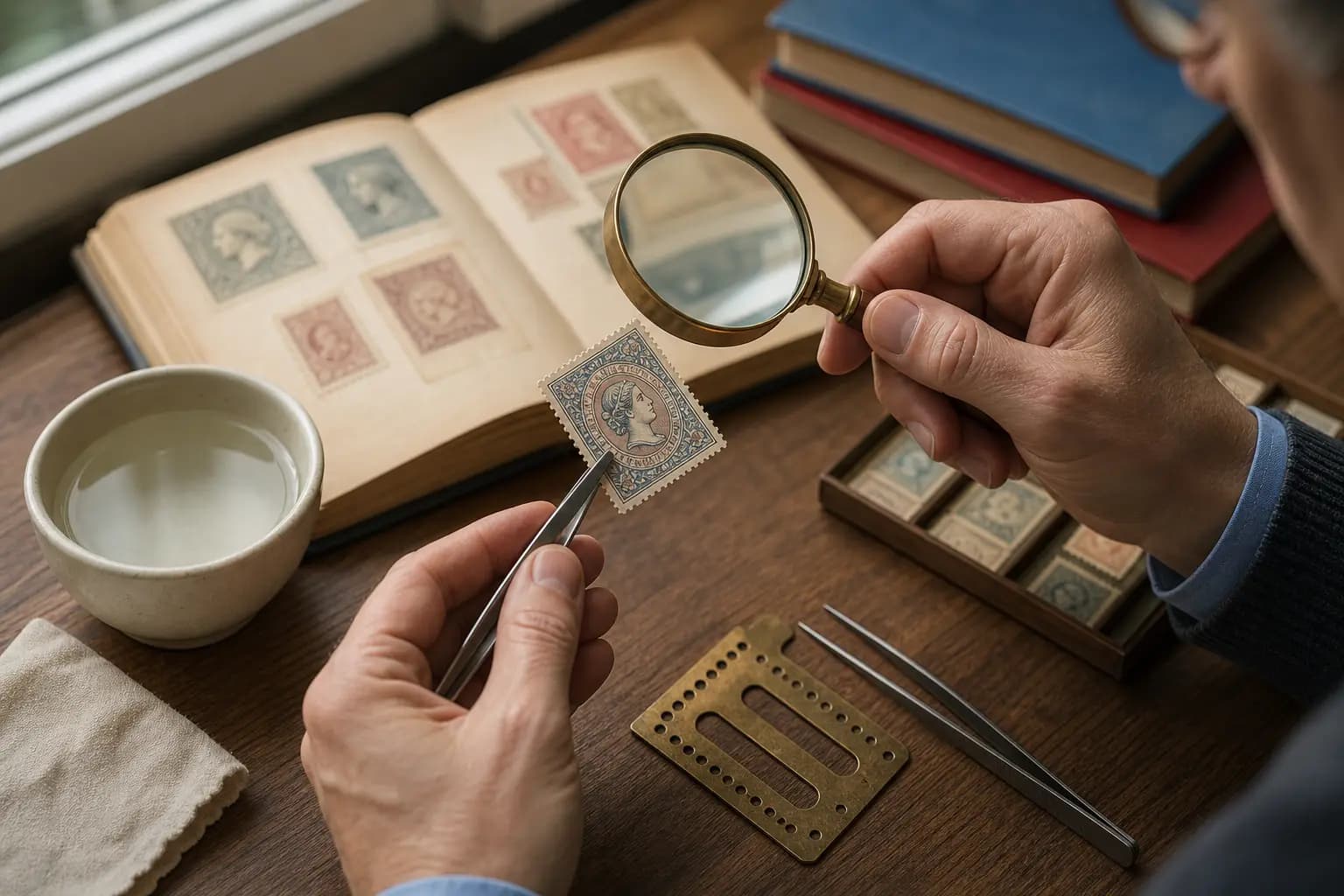
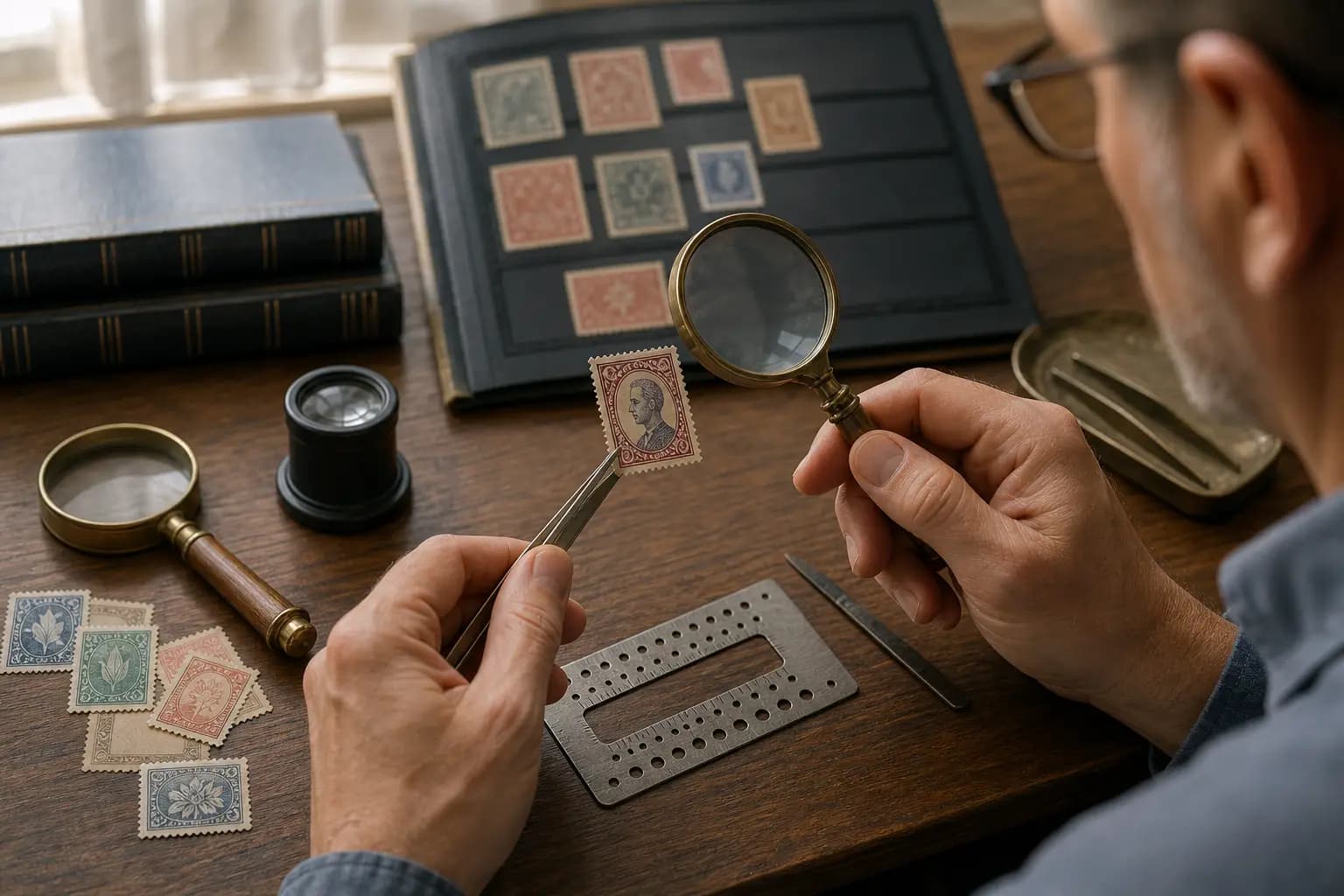
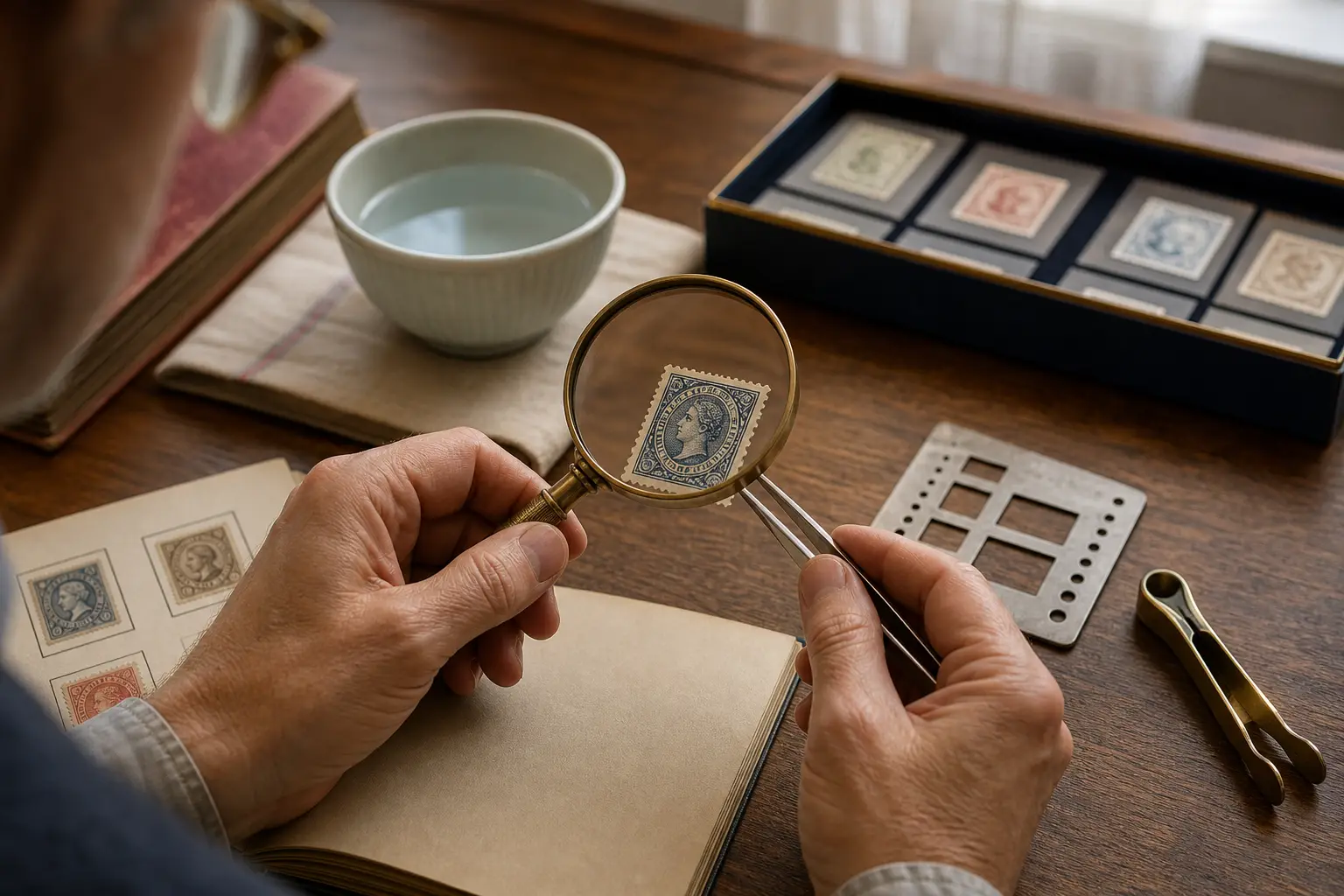
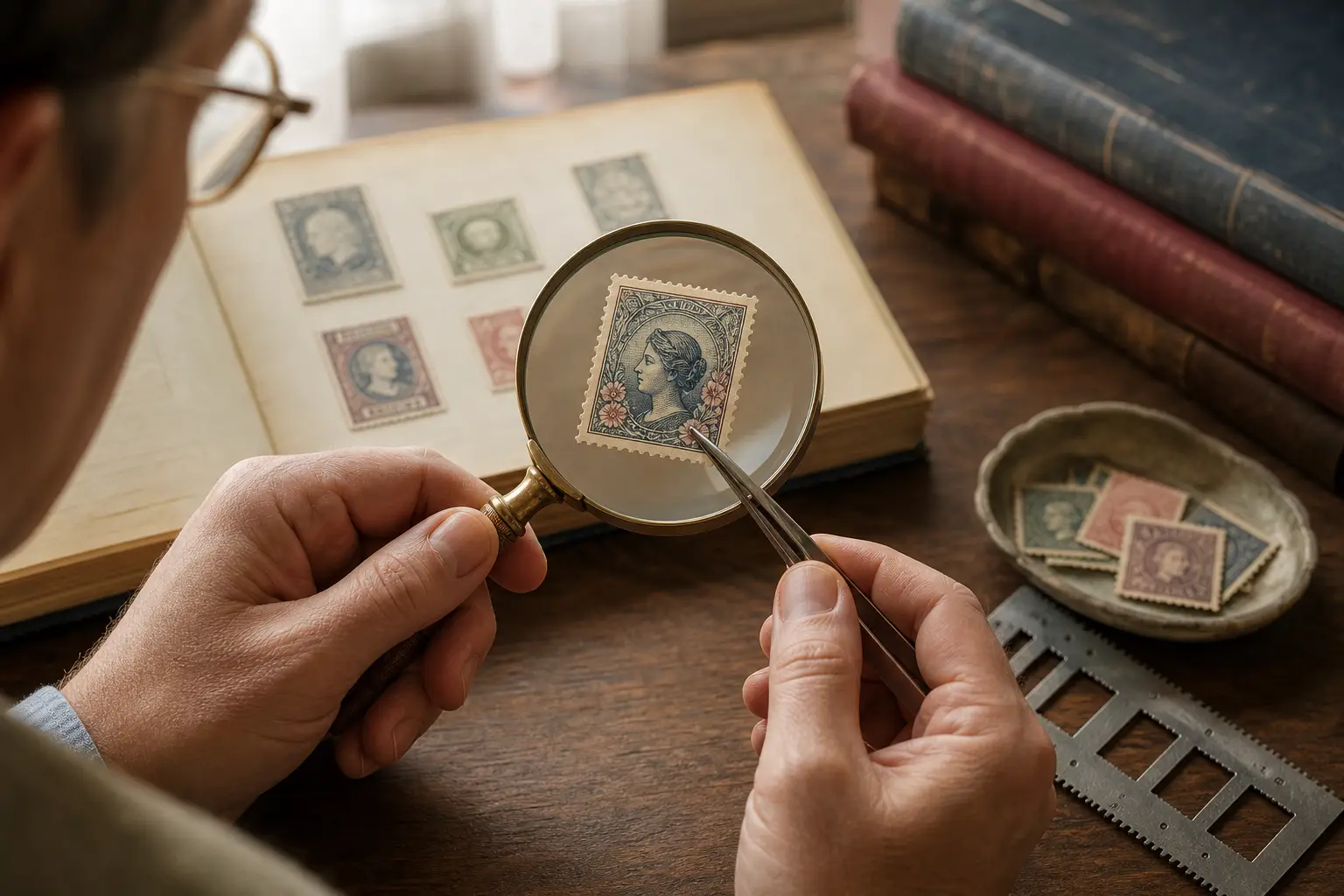
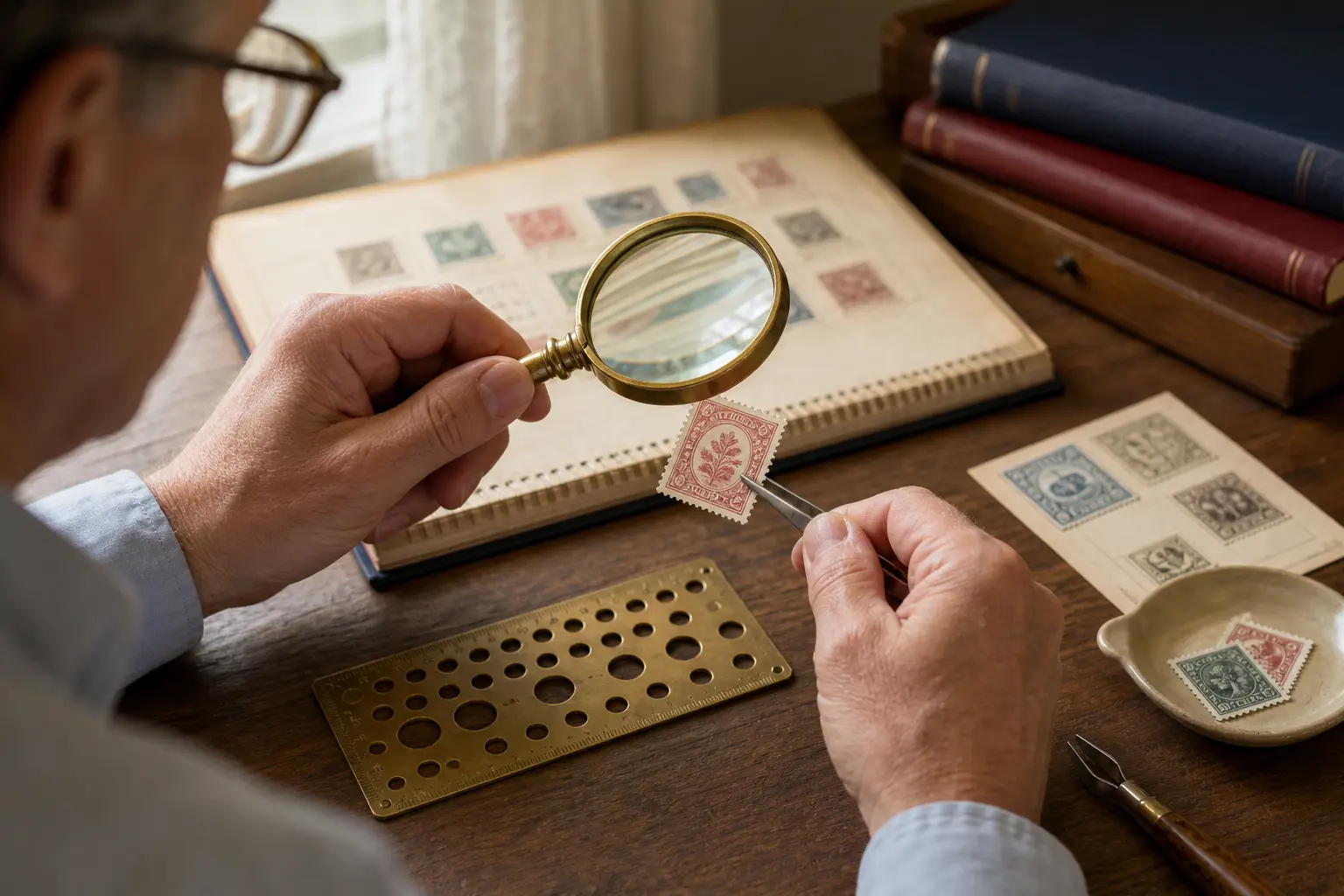
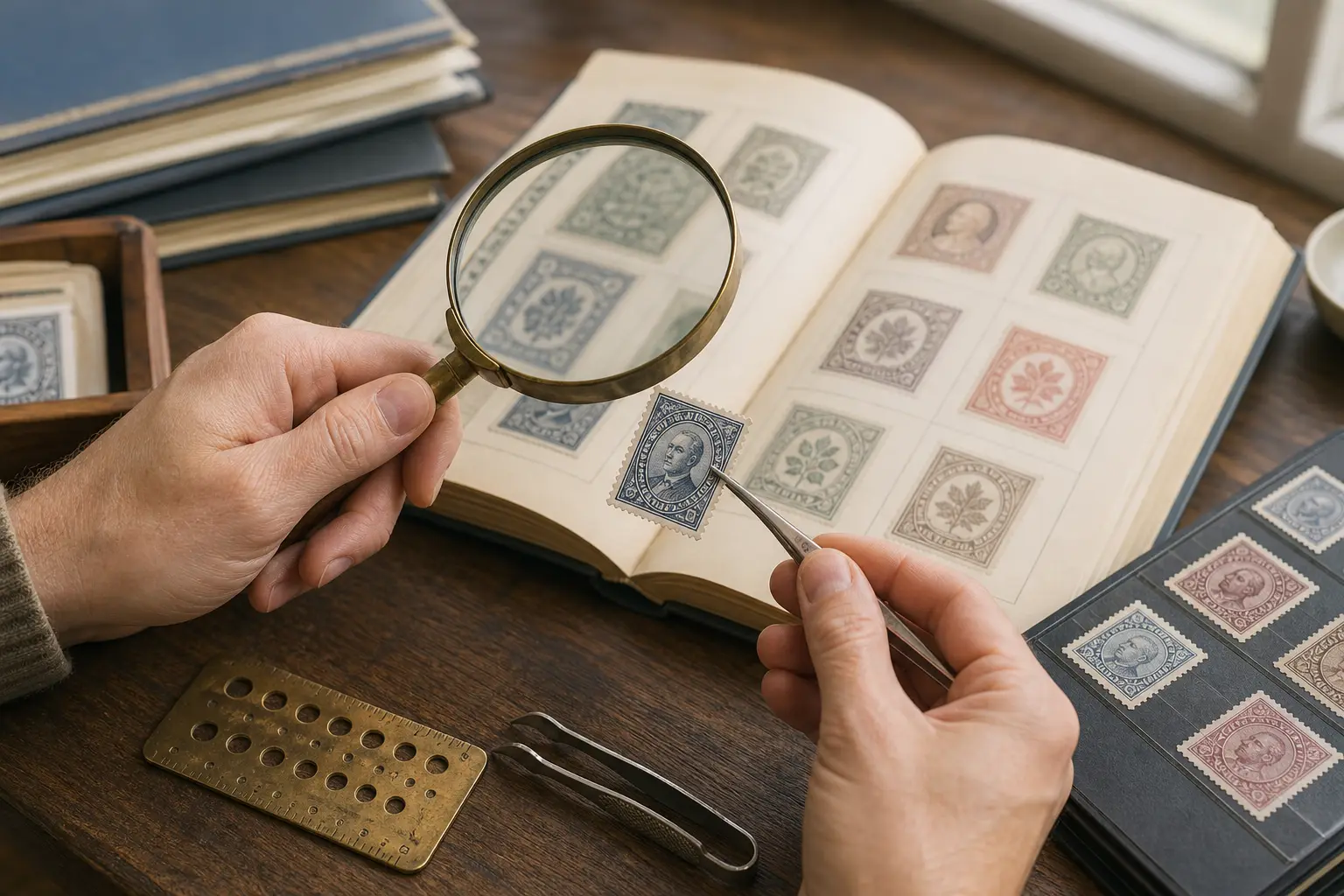
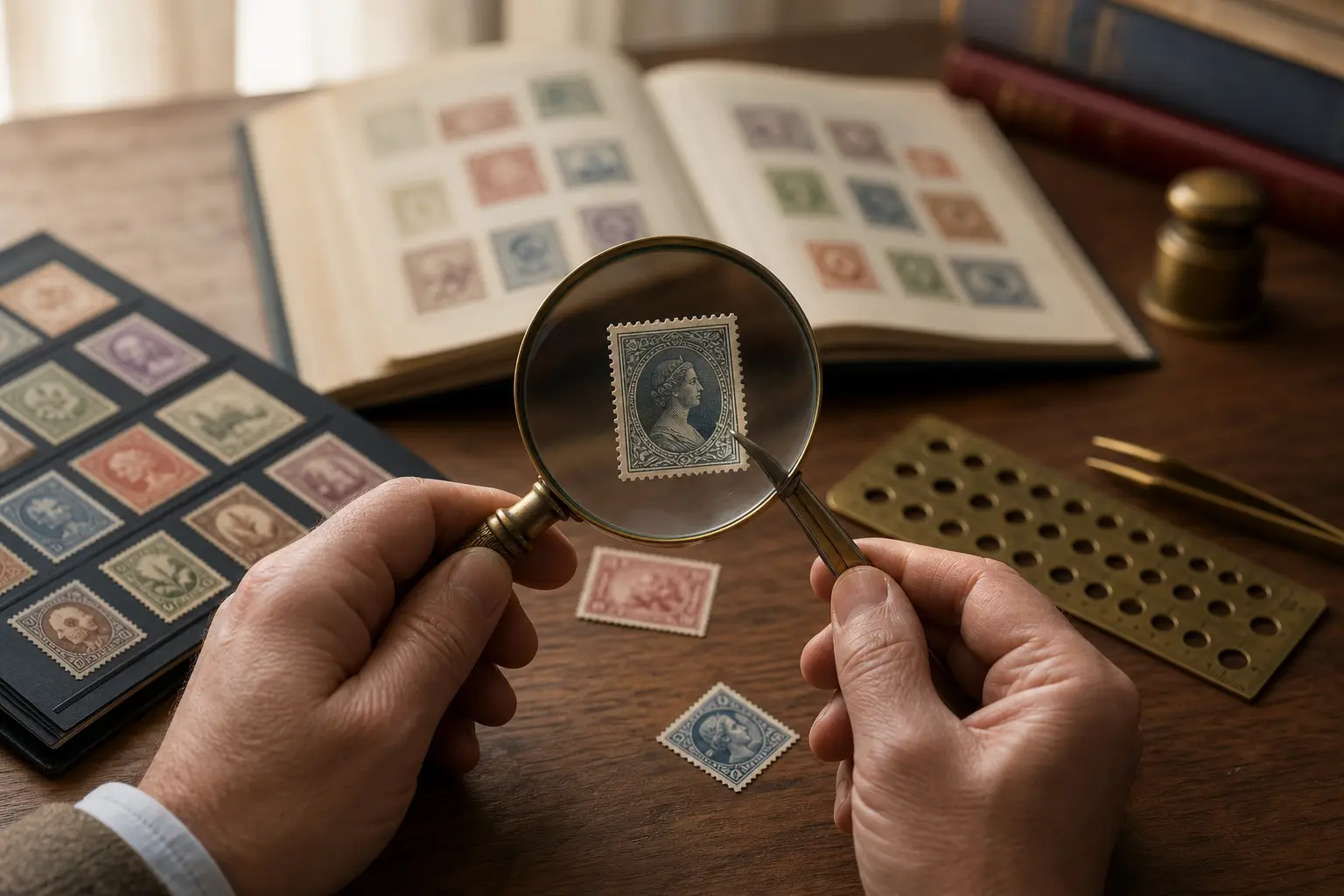
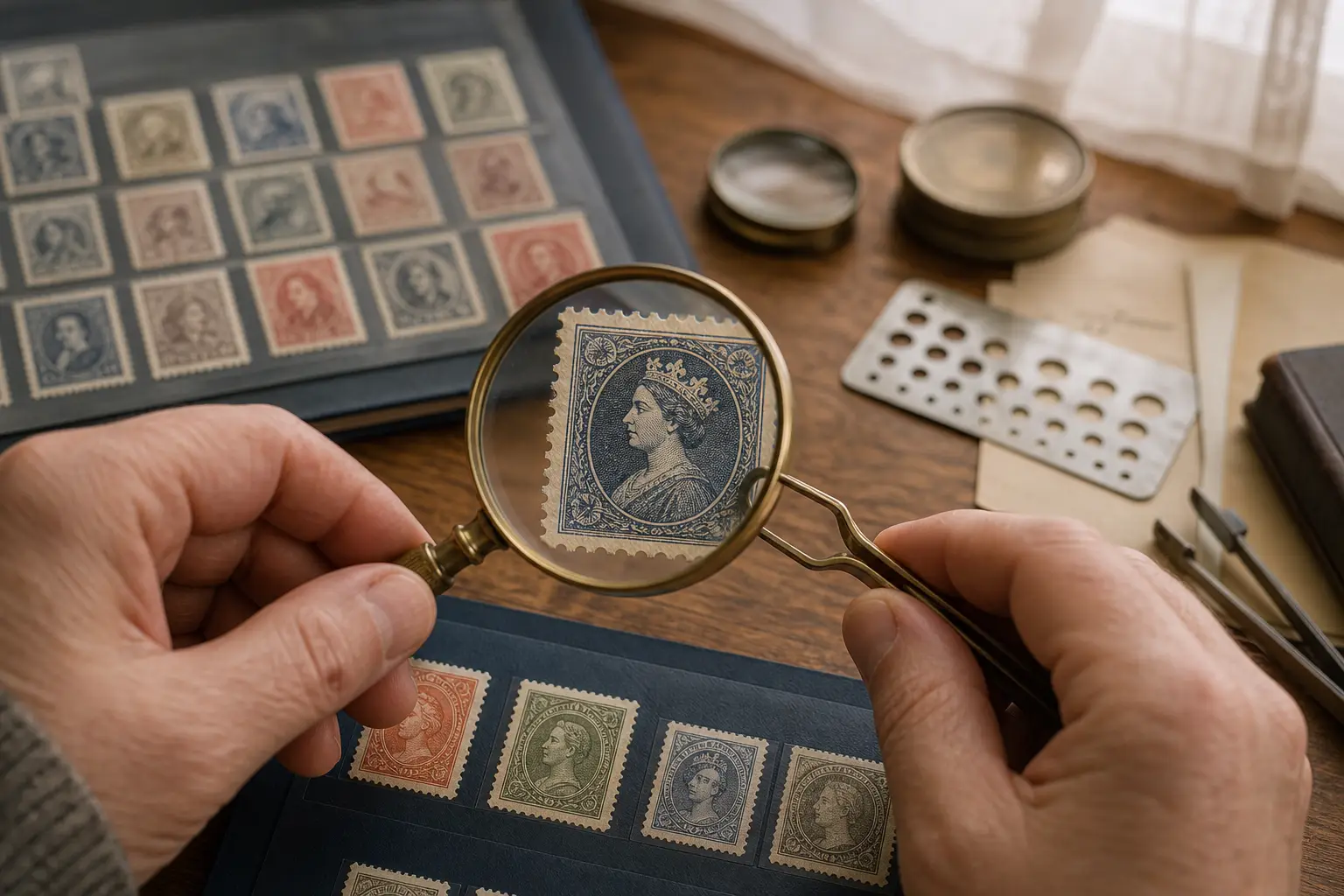
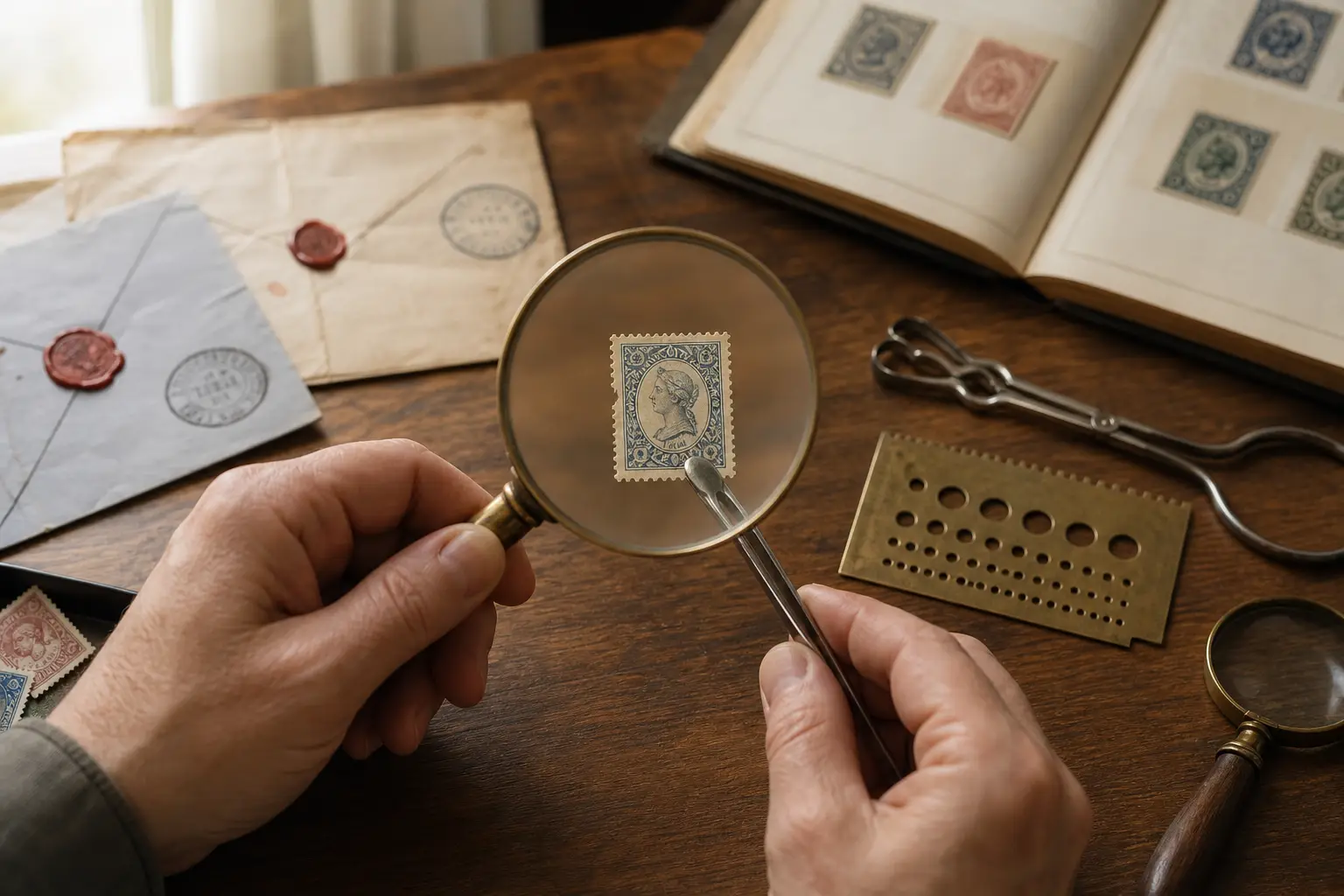
The safest way to identify stamp perforations is to compare the hole pattern along the edges with a perforation gauge, then confirm the result in a catalog. Handle dry stamps lightly with tongs and use magnification when details are close.
Discover how to navigate a stamp catalog to identify unknown varieties, measure perforations, and evaluate values safely using professional philatelic tools.
Explore the universal appeal of stamp collecting, known historically as the hobby of kings. Learn about famous philatelists from Franklin Roosevelt to John Lennon, and discover the basic tools needed to safely start and organize your own collection.
Encountering a postage stamp with no country name can be puzzling. Learn how the historic monarch portrait rule identifies Great Britain's issues, how to recognize non-English inscriptions, and how to safely inspect your mystery stamps using professional tools.
Before adhesive postage stamps, mail delivery relied on complex postal markings and recipient-funded postage. Discover how to identify pre-stamp mail, the historic 1840 Penny Black, and the first United States issues of 1847 using safe handling practices and essential philatelic tools.
An effective stamp identification kit protects your collection while revealing the subtle details that define rare varieties. By combining essential tools like smooth tongs, clear magnifiers, perforation gauges, and reference catalogs, you can safely analyze your stamps and build a reliable philatelic record.
Protecting your stamp collection starts with choosing the right storage. Learn how to identify safe, acid-free stamp albums and stock books while avoiding the catastrophic damage caused by sticky photo album pages, tape, and glue.
Discover how to safely identify look-alike stamps using essential philatelic tools. Learn to measure perforations, select magnifying lenses, and use catalogs to verify your collection.