Discover how to identify the world's earliest postage stamps, from Great Britain's 1840 Penny Black to the United States' 1847 classics. Learn the key design features, historical context, and safe handling methods to verify these iconic philatelic treasures.
Expand your philatelic horizons by learning how to identify and organize non-standard materials. This guide explains how to recognize Christmas Seals, revenue stamps, and historical postal covers while practicing safe preservation techniques.
A stamp catalog is an essential reference tool for identifying and researching postage stamps. Learn how to use catalog descriptions, issue dates, and printing details alongside basic tools to build and value your collection safely.
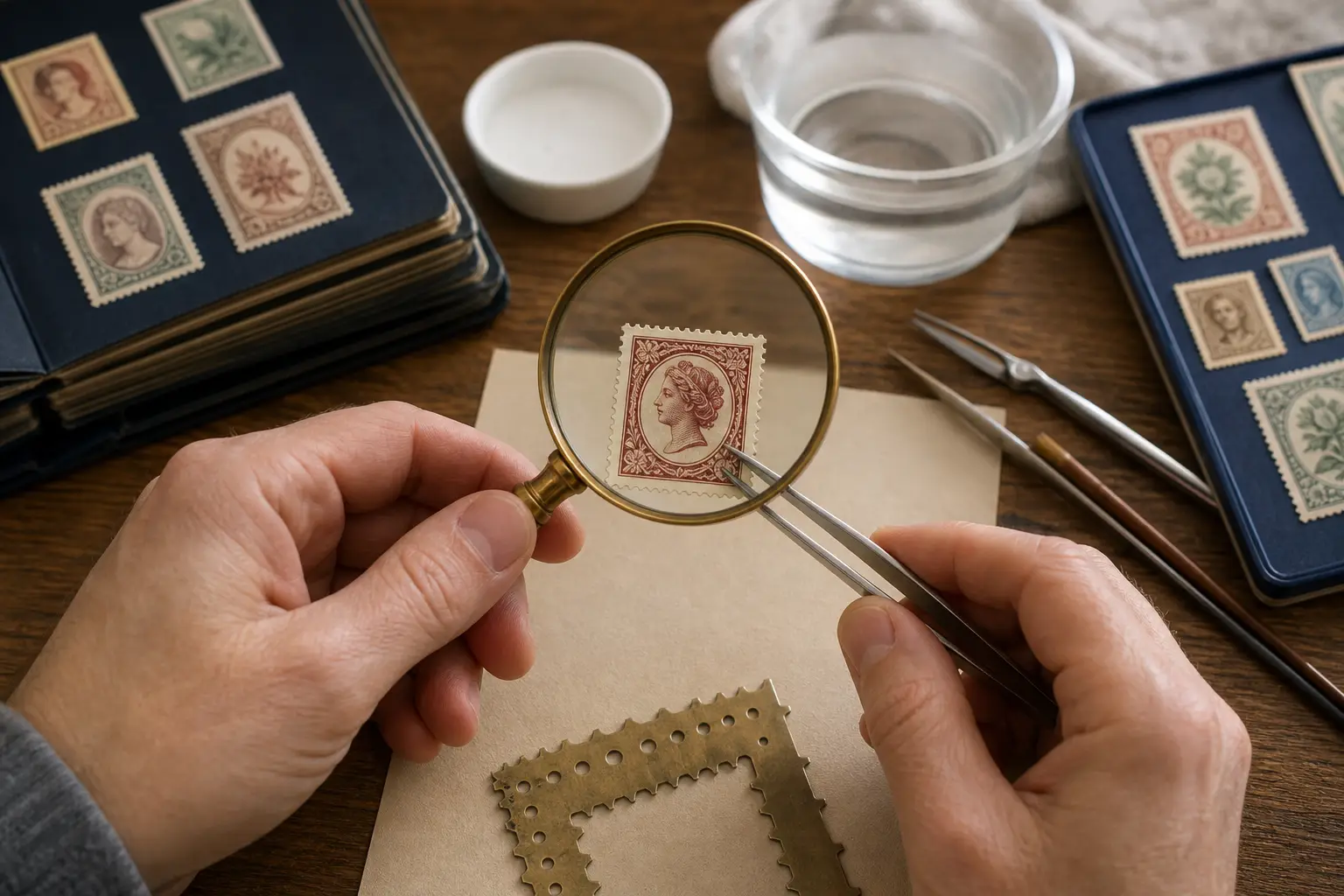
Distinguishing look-alike stamps often comes down to measuring their perforations. Learn how to use a perforation gauge safely with stamp tongs to identify subtle stamp varieties and record your findings.
Identify the first United States postage stamps issued on July 1, 1847. Learn how to distinguish the five-cent red-brown Benjamin Franklin and the ten-cent black George Washington using design details, printer characteristics, and safe handling tools.
Handling postage stamps with bare hands introduces invisible skin oils that cause long-term damage. Discover why professional stamp tongs are the single most important tool for protecting your collection, how they differ from household tweezers, and how to use them safely during identification.
Before the invention of the postage stamp, mail delivery relied on complex recipient-pay systems and clever pre-stamp codes. Learn how to identify these historical markings, postage meters, and early postal ephemera on covers using safe philatelic tools.
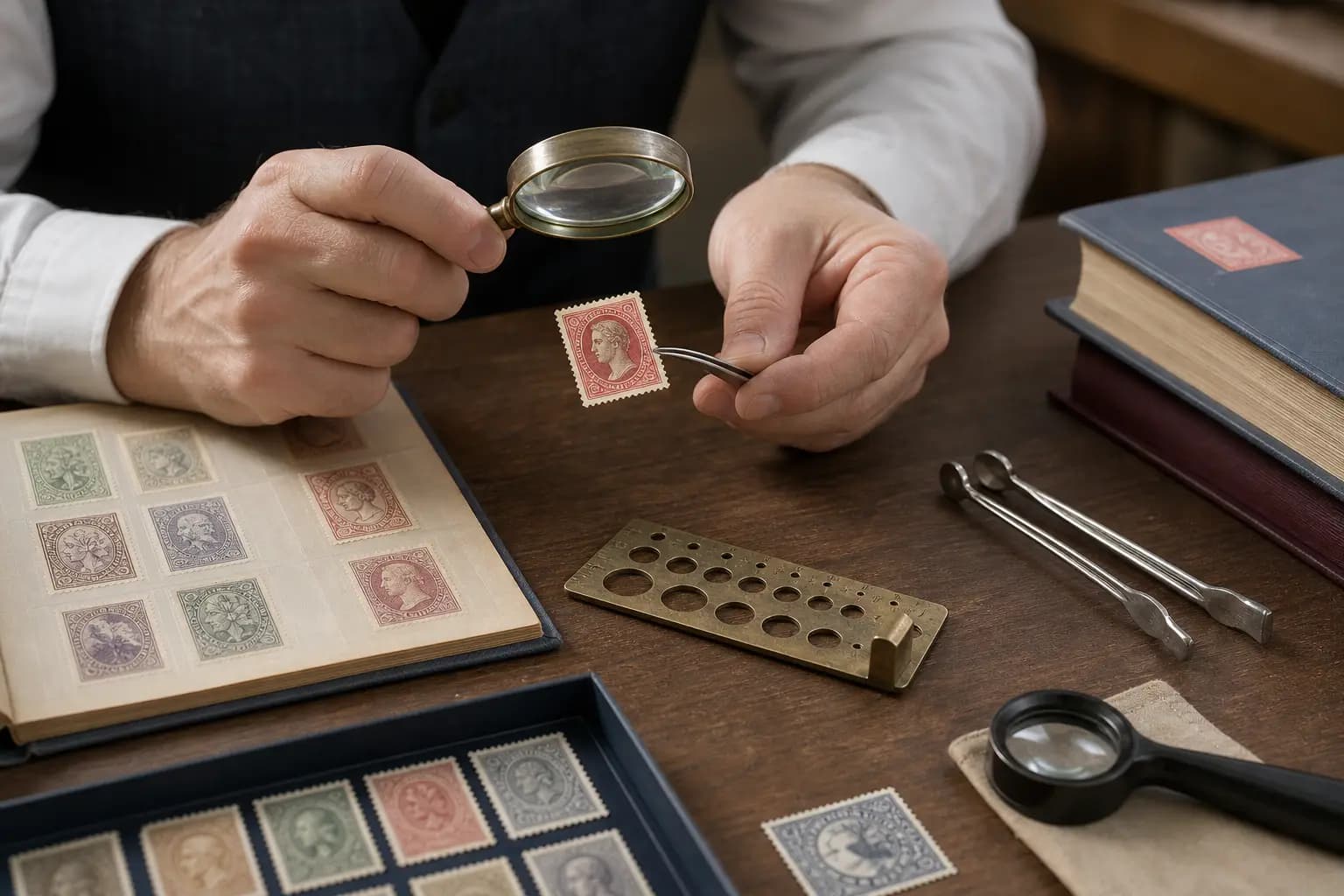
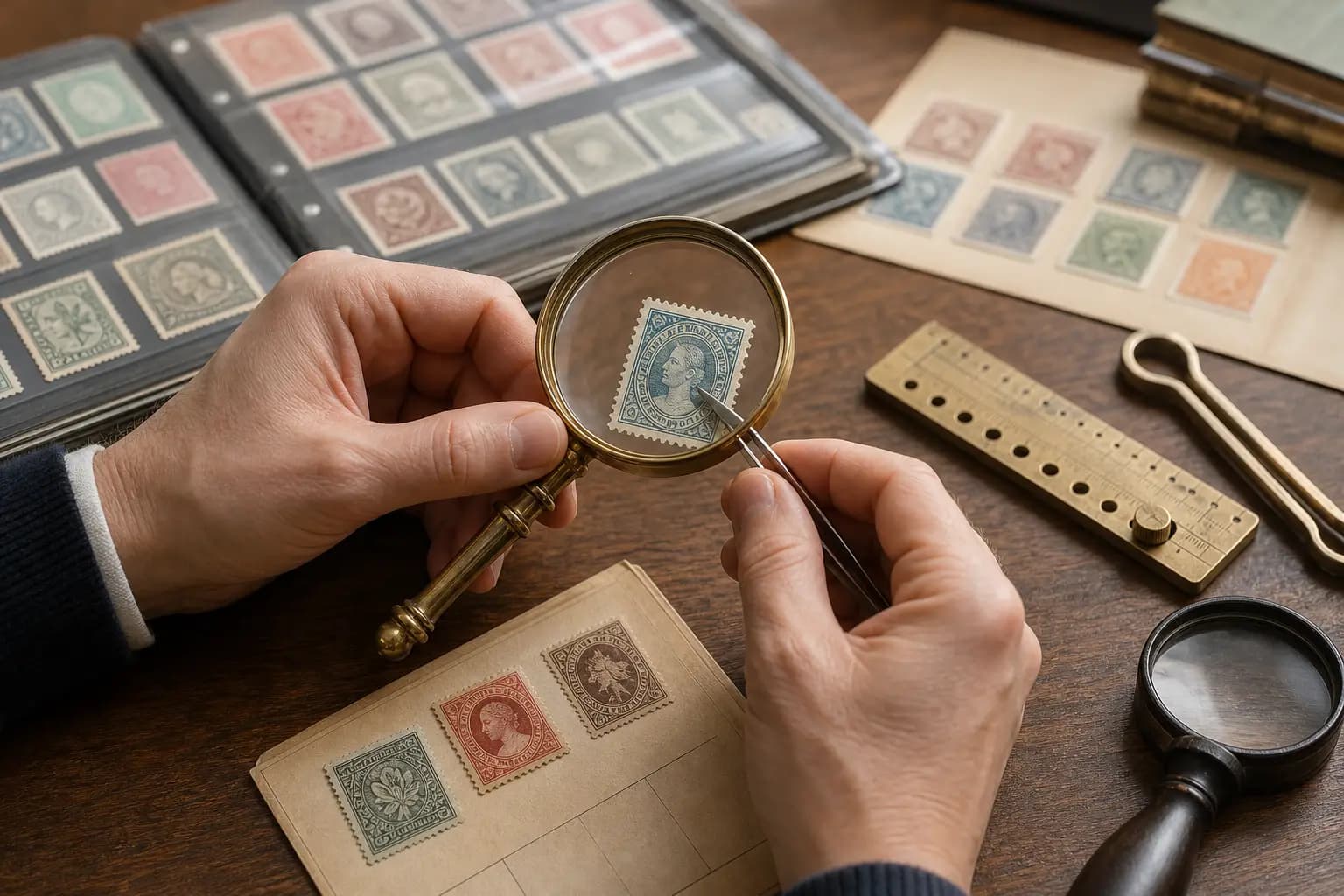
Accurately identifying postage stamps requires a methodical physical examination. Learn how to use essential philatelic tools—including stamp tongs, magnifying glasses, perforation gauges, and catalogs—to safely identify and document your stamp varieties.
If you have tried soaking modern U.S. self-adhesive stamps in water only to find they remain stuck, you are likely dealing with post-2007 issues. Learn how the USPS transition to oil-based adhesives changed stamp processing, and discover the safe, methodical steps to identify and separate these modern issues without causing damage.
Choosing the right storage is essential for protecting and organizing your collection. Learn how to identify the differences between traditional stamp albums and stock books, and discover which option best suits your philatelic goals.
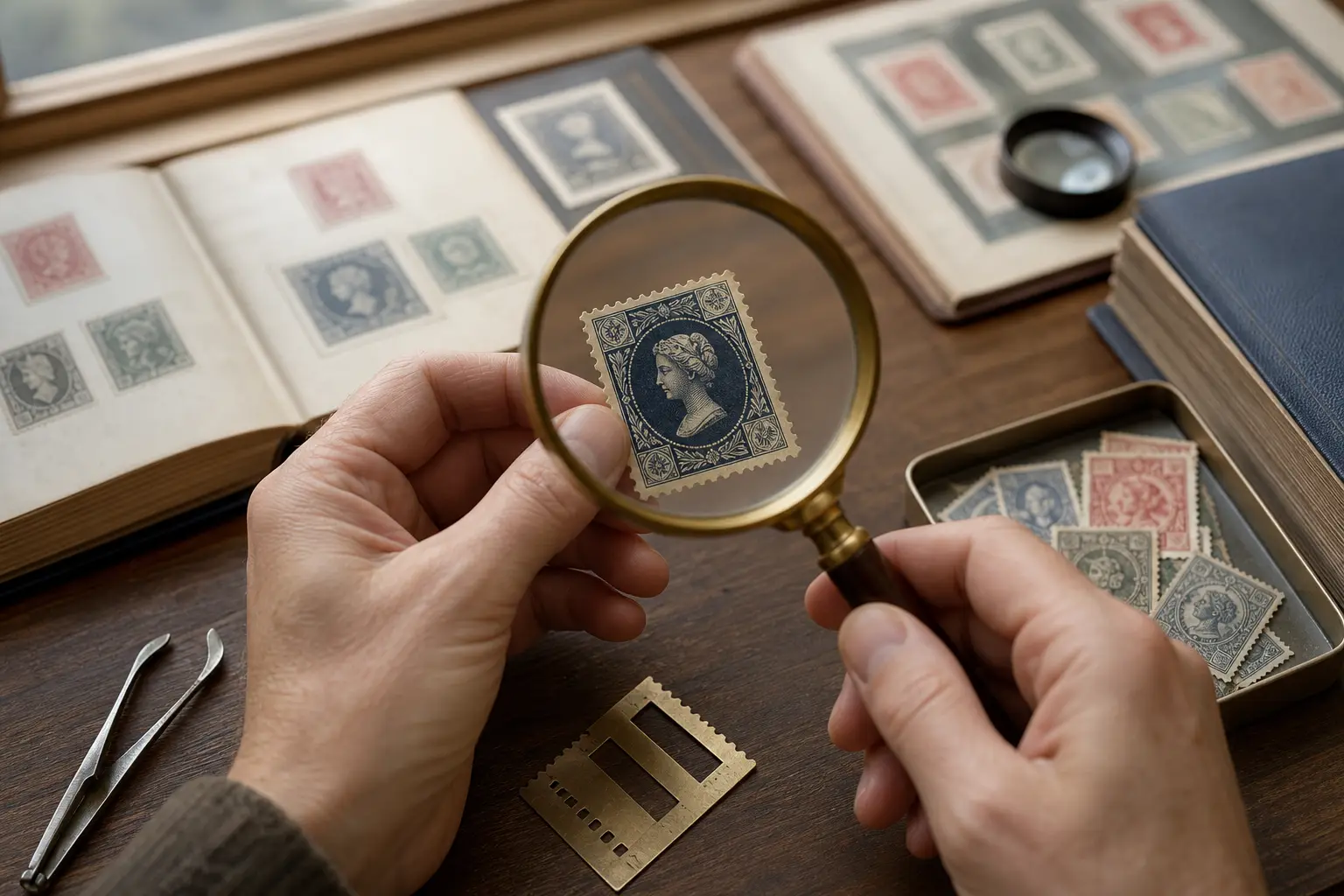
Identifying rare stamp varieties requires a close look at microscopic details. Learn how to select the right magnifying glass, handle your stamps safely with tongs, and verify design variations using reference catalogs.
Identifying the world's earliest postage stamps requires looking for specific historical portraits, design details, and printing characteristics. Learn how to recognize the British 1840 Penny Black and the United States 1847 issues using safe, methodical identification techniques.