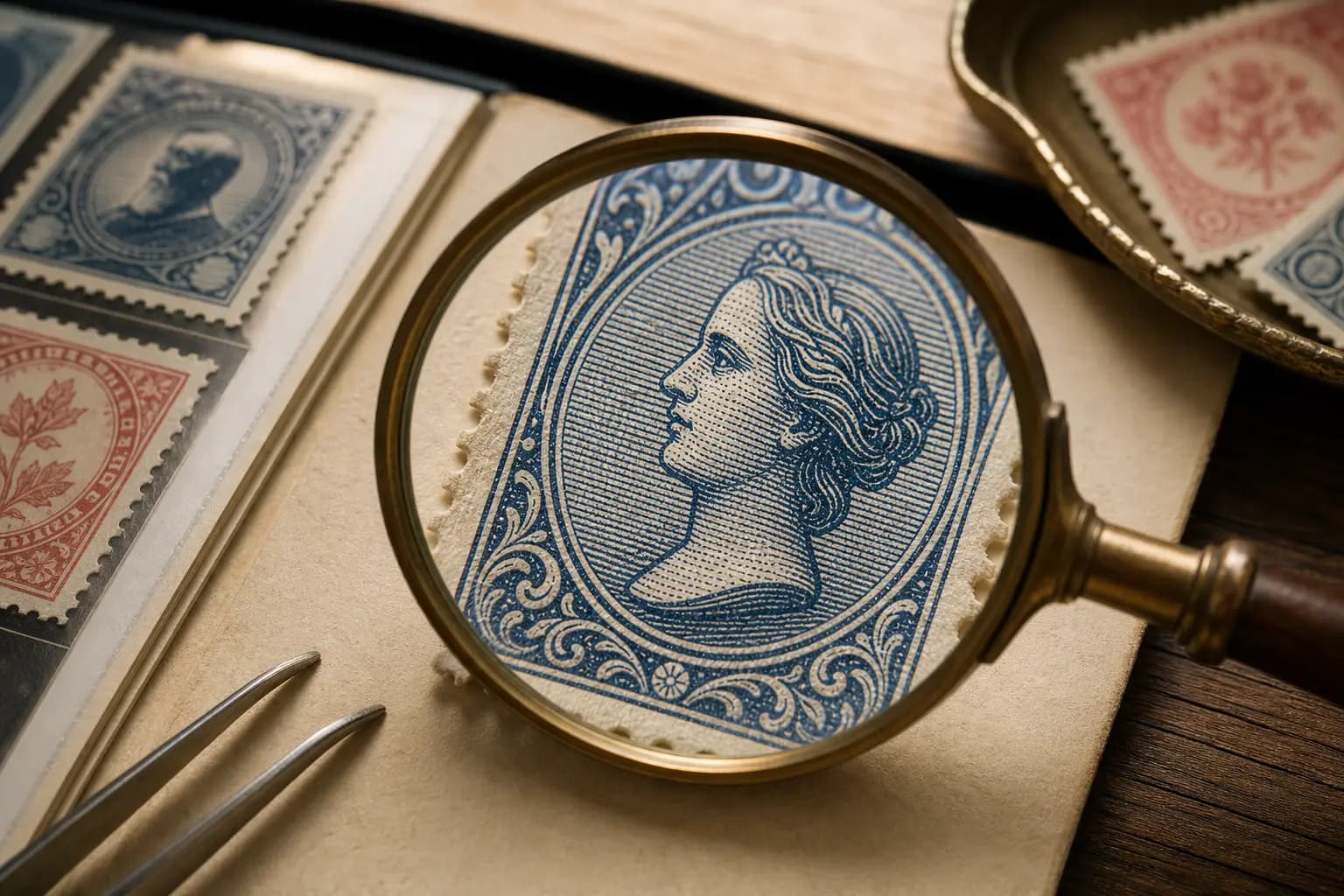
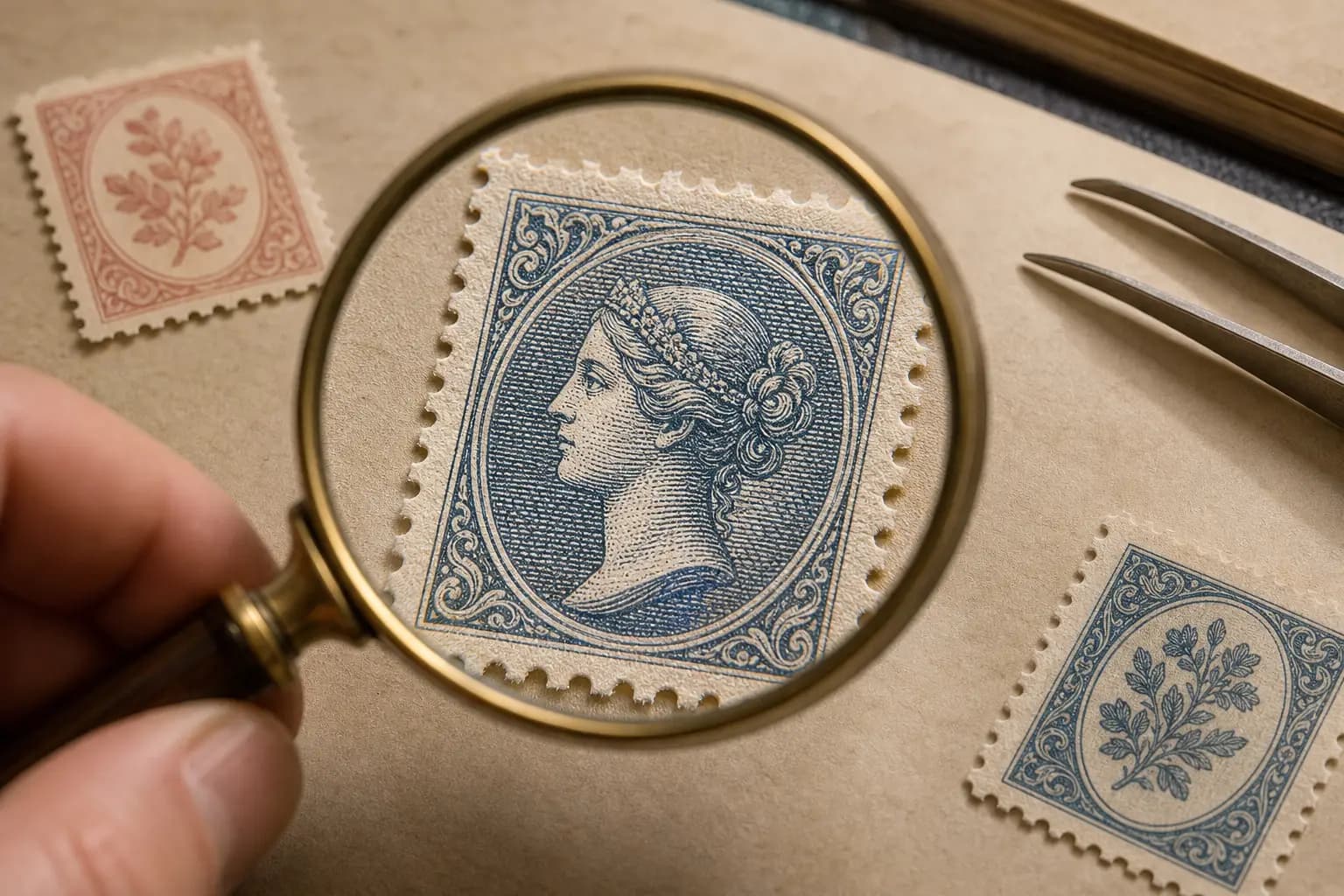
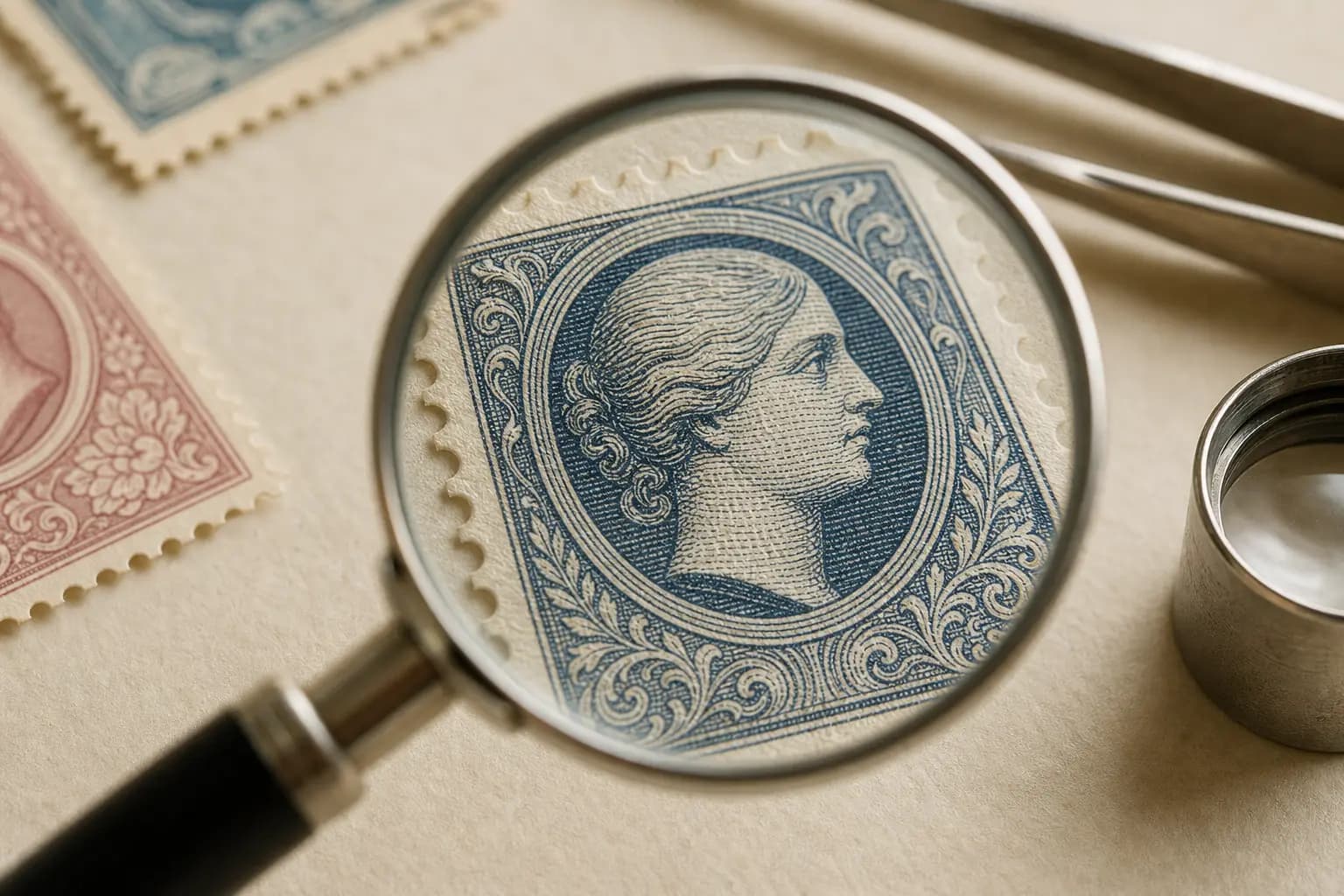
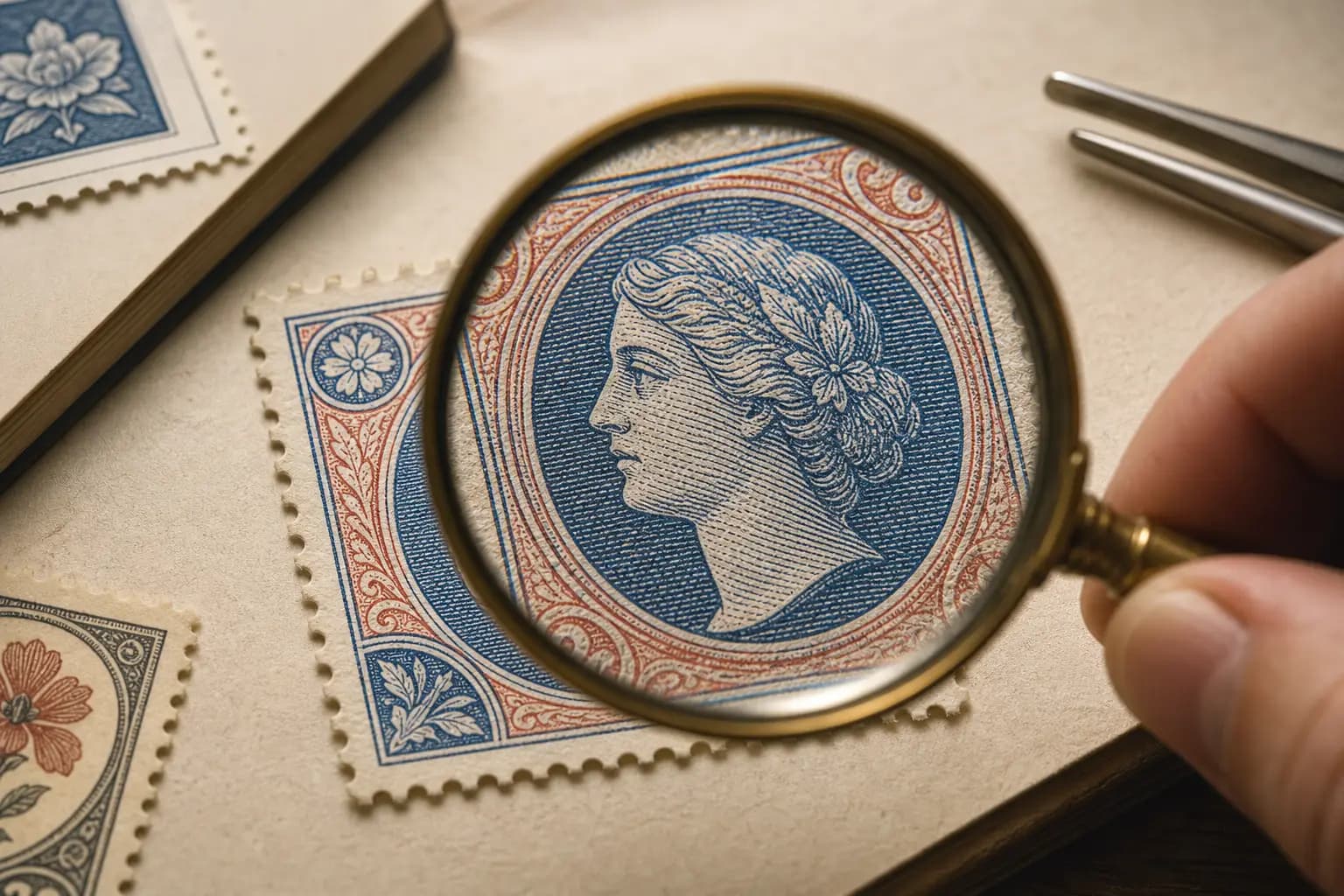
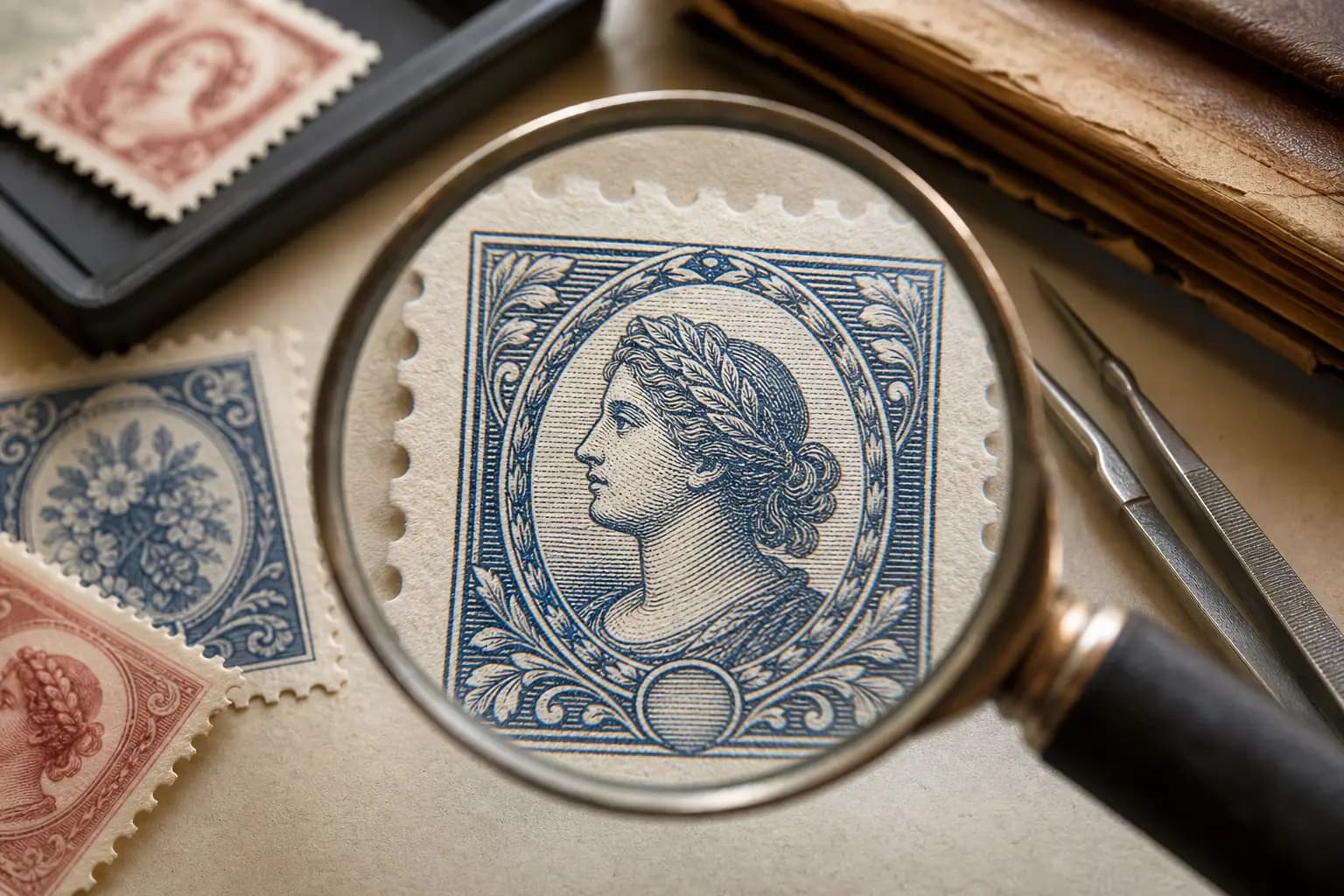
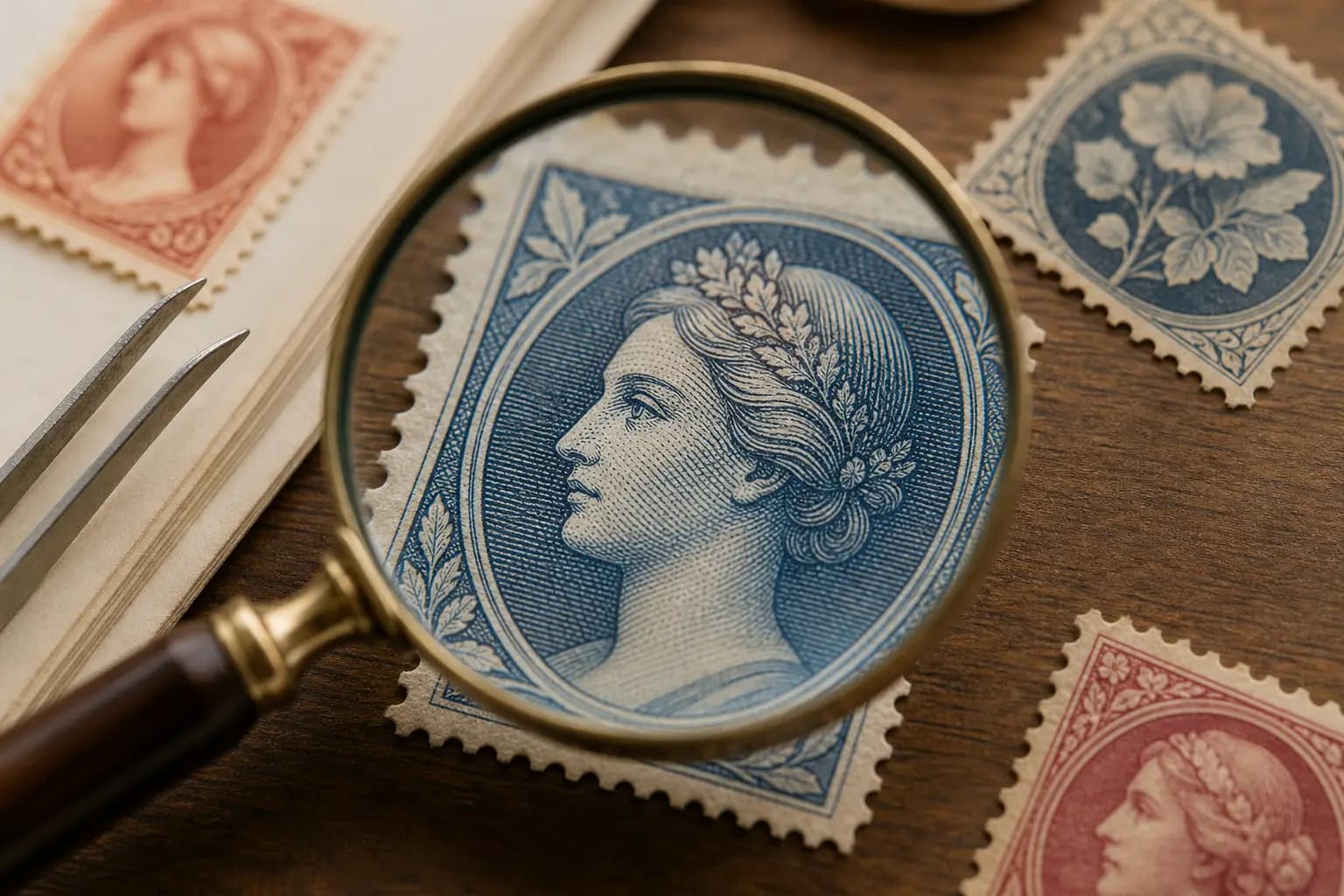
You can often identify a stamp’s printing process by combining paper, ink, texture, and production records. Use non-contact magnification and diffuse or oblique light, and treat every visible feature as a clue rather than a final answer.
You can often narrow a stamp’s printing process by combining non-contact magnification, diffuse or oblique light, and production records. Treat lines, raised ink, screened tone, and watermark evidence as clues, not single tests.
You can often identify a stamp’s printing family by combining visual clues, non-contact magnification, and production records. Treat line-engraved intaglio, gravure, letterpress, and lithography as cumulative possibilities, not single-test answers.
Some modern stamps are printed by more than one process. The safest way to identify them is to combine visible clues, use non-contact magnification and light, and confirm with production records when possible.
Identifying offset lithography requires analyzing planographic ink transfers and rubber blanket offsets. Learn how to safely evaluate these cumulative visual clues using non-contact magnification and oblique light without risking damage to your stamps.
Distinguishing gravure from offset lithography requires looking beyond simple dot patterns. Learn how to safely analyze screened structures on postage stamps using non-contact magnification, oblique light, and official production records to build a reliable identification workflow.
Identifying stamp printing methods requires a methodical approach. Learn how to distinguish line-engraved intaglio, gravure, letterpress, and lithography using cumulative visual clues, safe non-contact magnification, and official production records.
Identifying the printing methods of modern multi-color stamps requires a methodical approach. By analyzing process-color layers, screened structures, and ink behaviors under non-contact magnification, collectors can safely distinguish between offset lithography, gravure, and other major printing families without risking damage to their specimens.
Distinguishing recess printing from planographic printing requires a methodical analysis of ink structure and paper surfaces. By using non-contact magnification and oblique light, collectors can identify cumulative clues like raised ink, debossing, and screened cells without risking damage to fragile stamps.
Discover how to safely identify and distinguish the four major stamp printing families—intaglio, gravure, letterpress, and lithography—using non-contact magnification and oblique lighting techniques.
Distinguishing the four major stamp printing families requires a methodical approach. Learn how to combine cumulative visual clues using non-contact magnification and oblique light to safely identify line-engraved intaglio, gravure, letterpress, and lithography.
Learn how to identify letterpress printing on postage stamps by analyzing cumulative visual clues. Compare relief, recess, and planographic methods safely using non-contact magnification and oblique light to build your collection records.