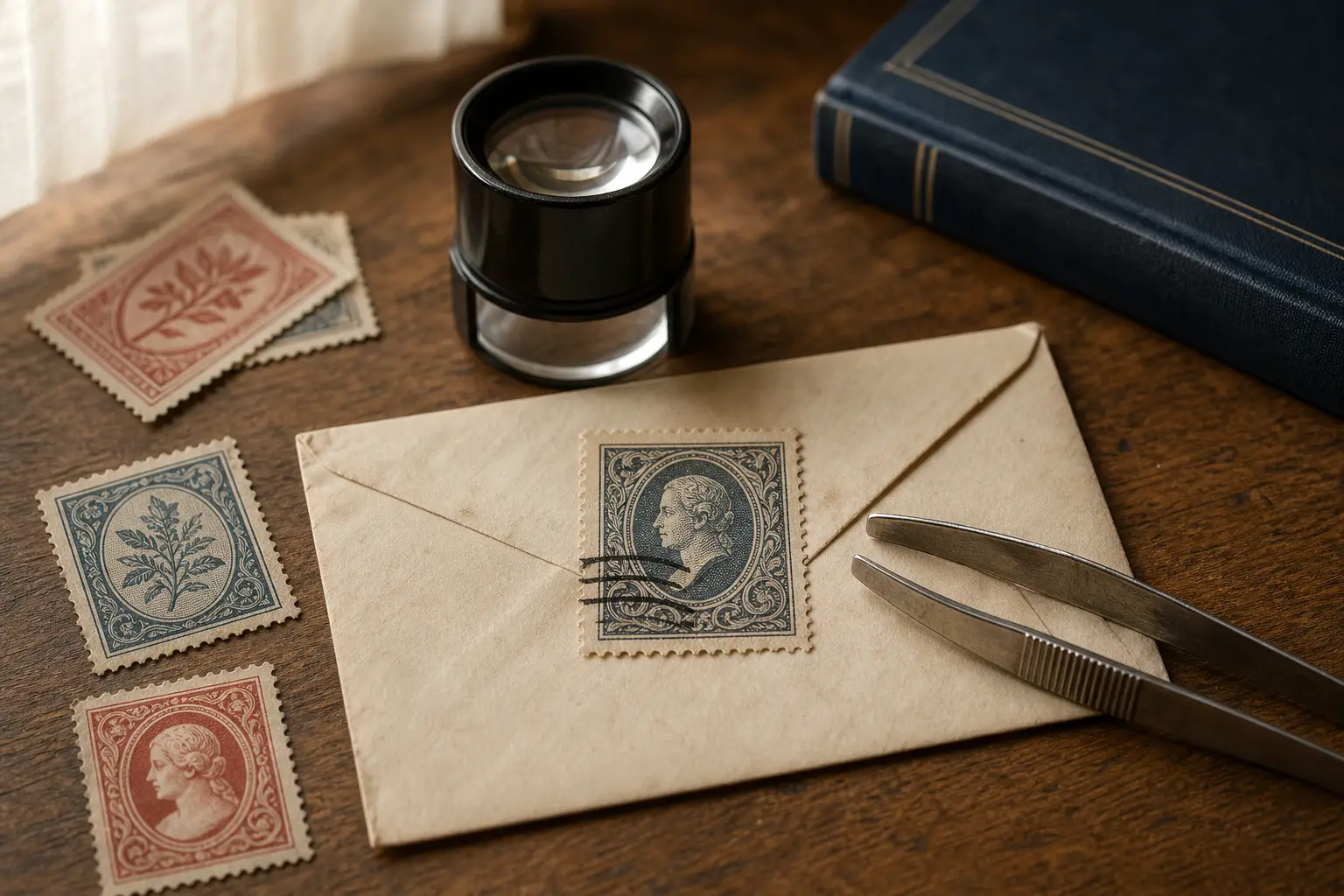
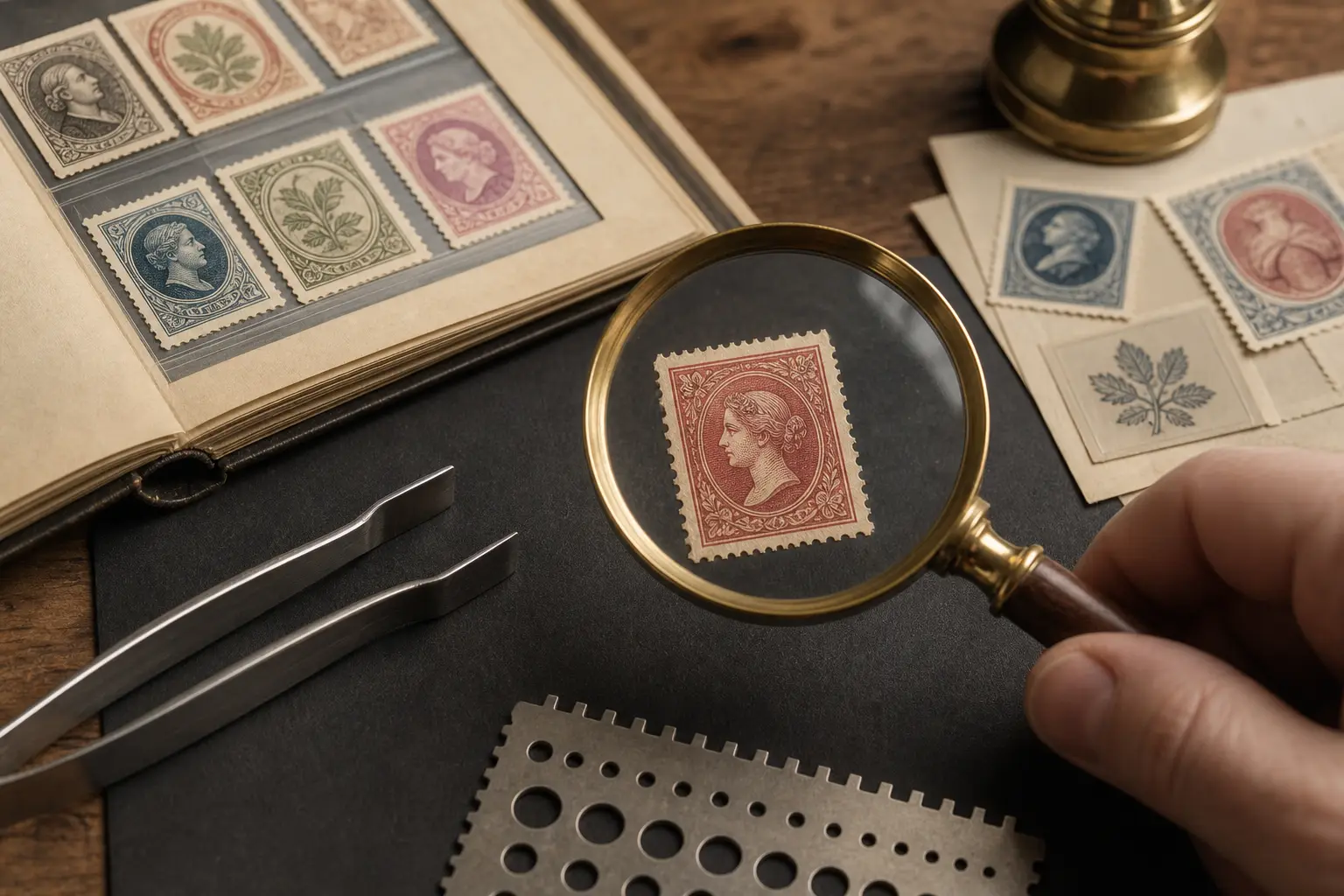
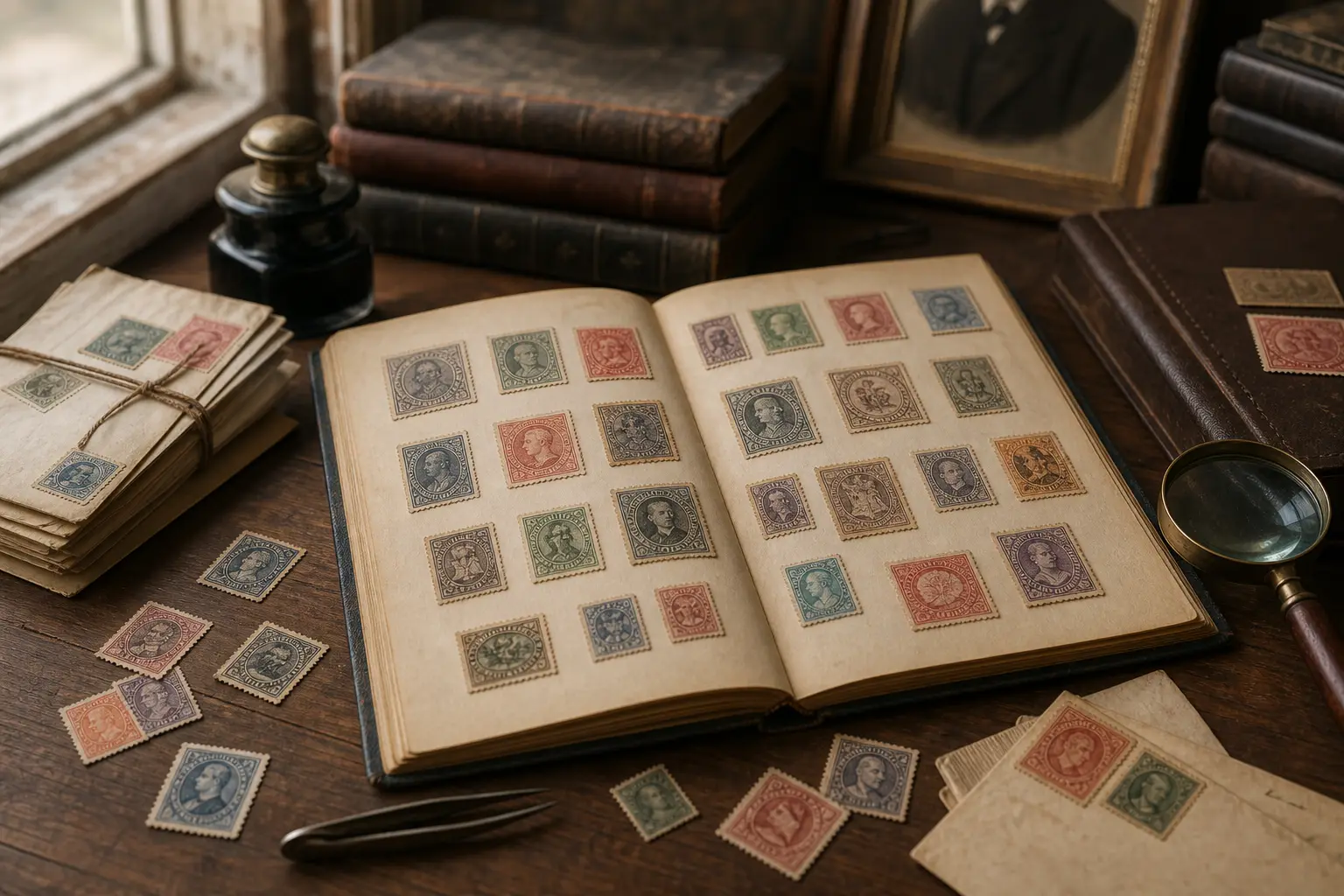
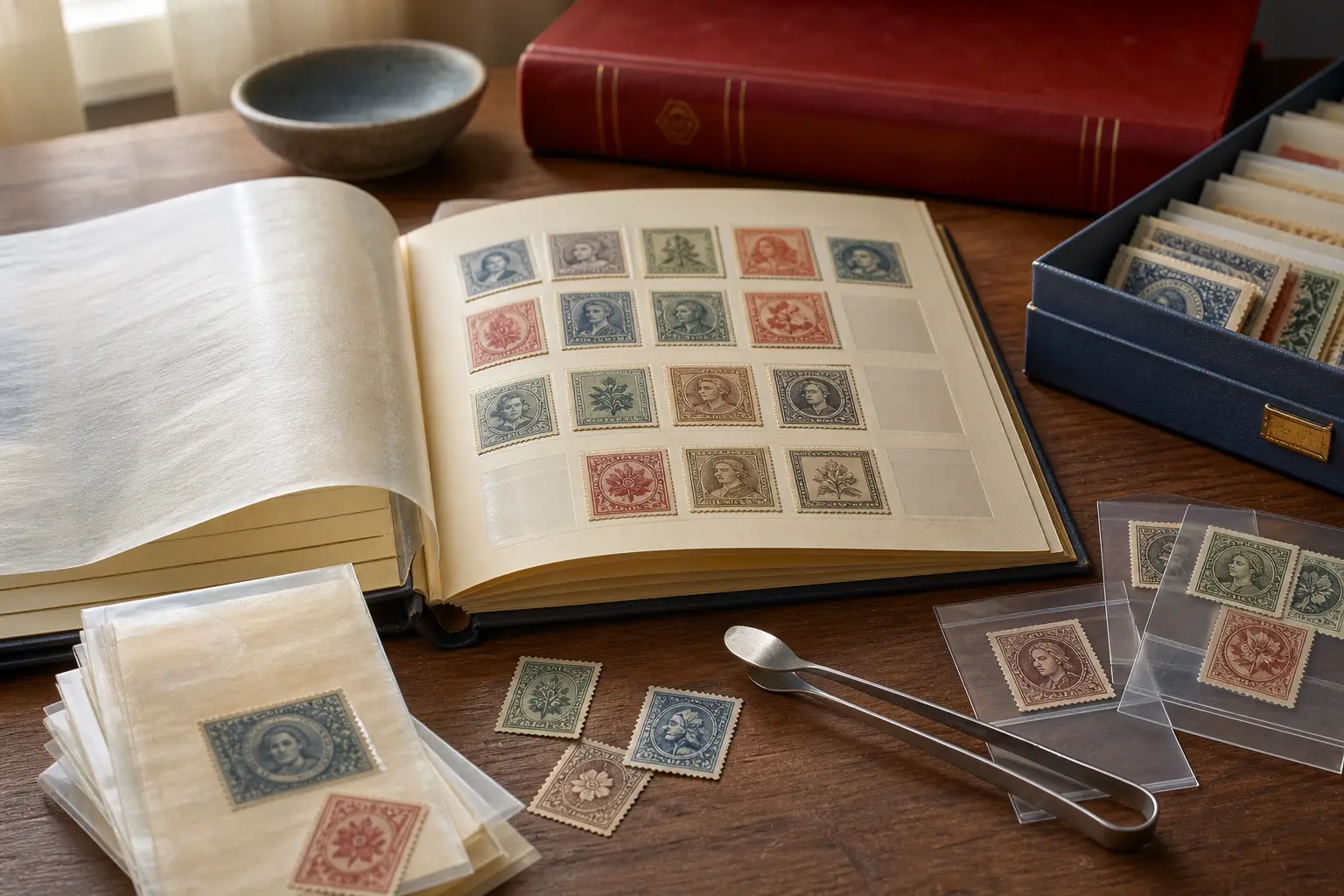
Starting a specialized stamp collection requires the right balance of organizational methods and basic philatelic tools. Learn how to transition from worldwide collecting to country or topical specialties using essential tools like stamp tongs, magnifying glasses, and reference catalogs to safely handle and identify your stamps.
Stamps with nearly identical designs can have vastly different values. Discover how to safely identify watermarks, inscription changes, and hidden dates to accurately value your postage stamps.
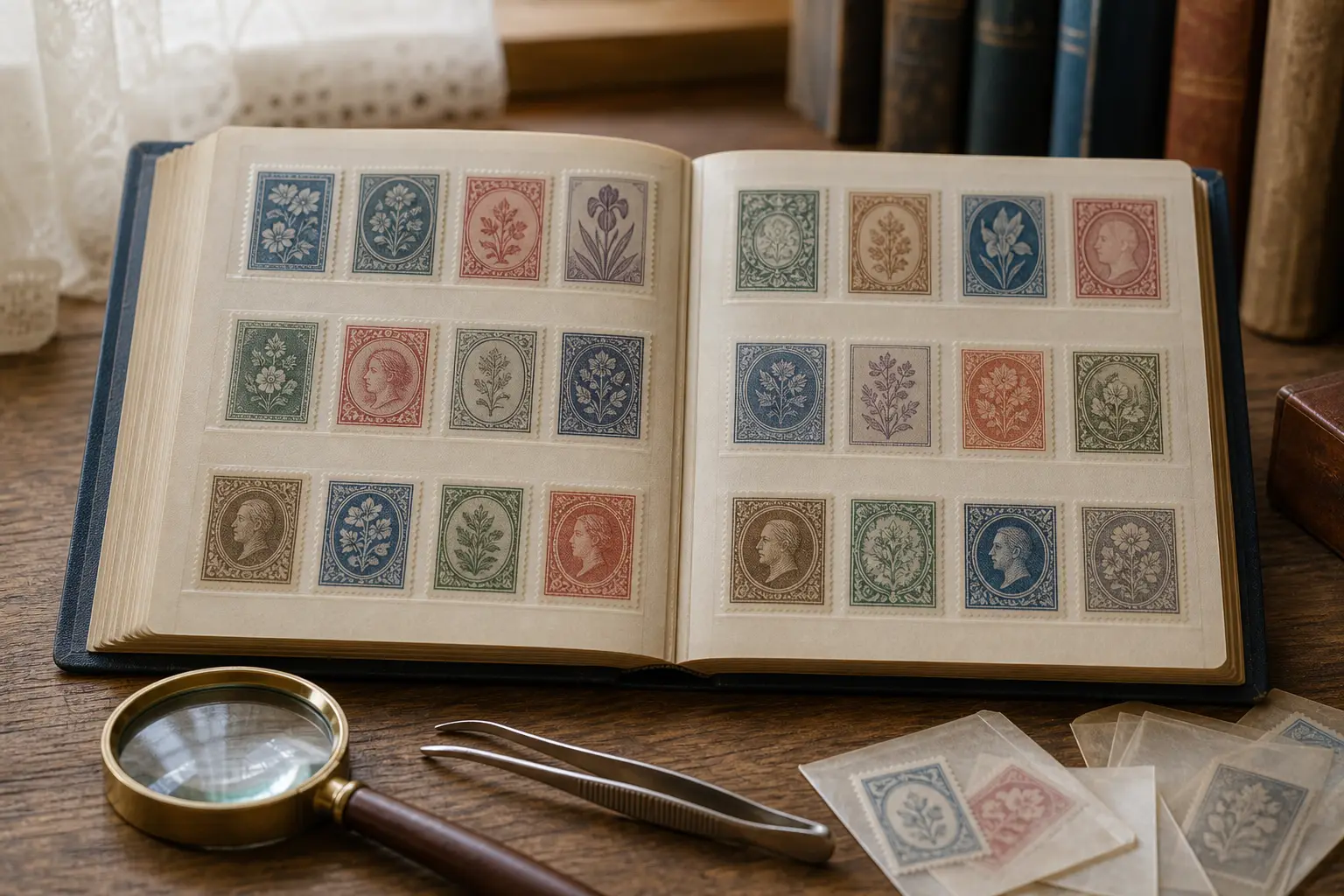
Choosing the right storage is essential for protecting and organizing your collection. Learn how to identify the differences between traditional stamp albums and stock books, and discover which option best suits your philatelic goals.
Distinguishing between the four major stamp printing families requires a systematic approach. Learn how to combine visual clues under magnification to identify line-engraved intaglio, gravure, letterpress, and lithography safely.
In September 1886, a group of pioneering collectors established the American Philatelic Association. By analyzing their early structure, modern collectors can understand how foundational services like counterfeit detection, exchange departments, and library resources first took shape to support the hobby.
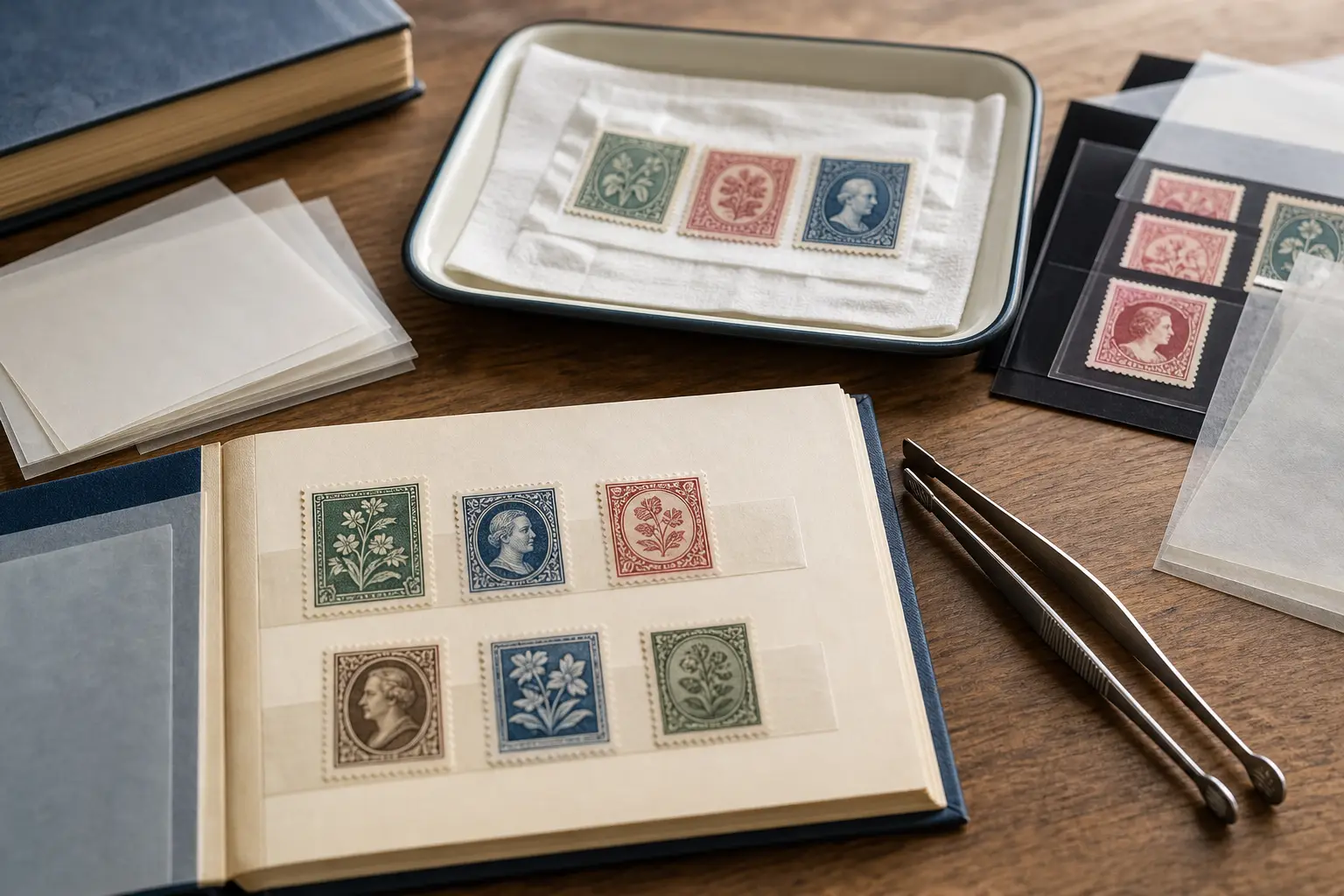
Soaking stamps to remove them from paper is only half the battle. Discover how to dry and flatten your soaked postage stamps safely overnight, avoiding common pitfalls like curling, tearing, and residual gum sticking, while keeping your collection in pristine condition.
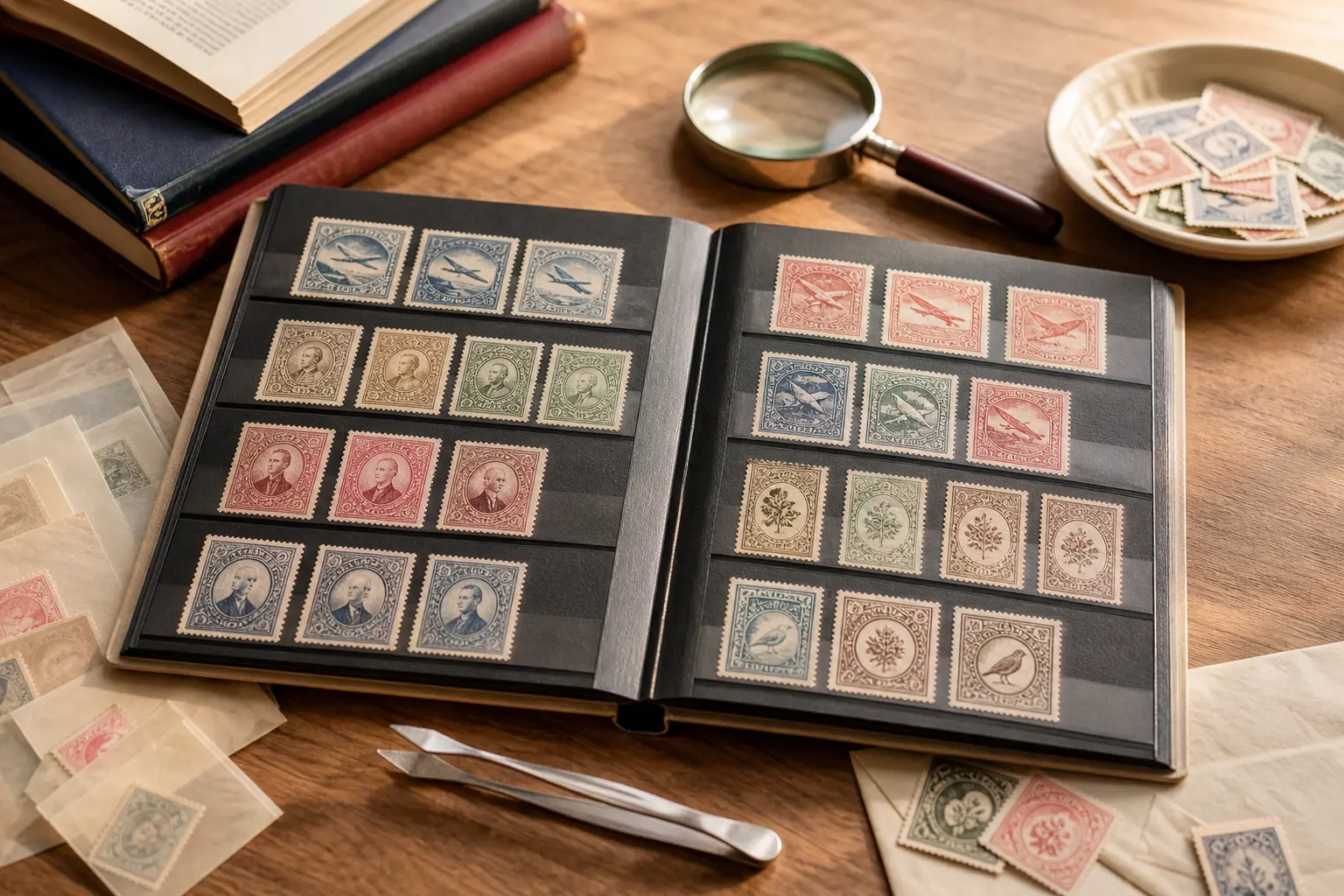
Collecting postage stamps by type or physical traits offers an exciting, structured way to build your collection. Learn how to identify and organize airmails, coil stamps, special delivery issues, and unique shapes using basic philatelic tools and references.
Distinguishing between look-alike stamps that serve different purposes—such as postage, revenue, or commemorative issues—requires a keen eye for detail. Learn how to spot subtle text and date variations to accurately identify your collection.
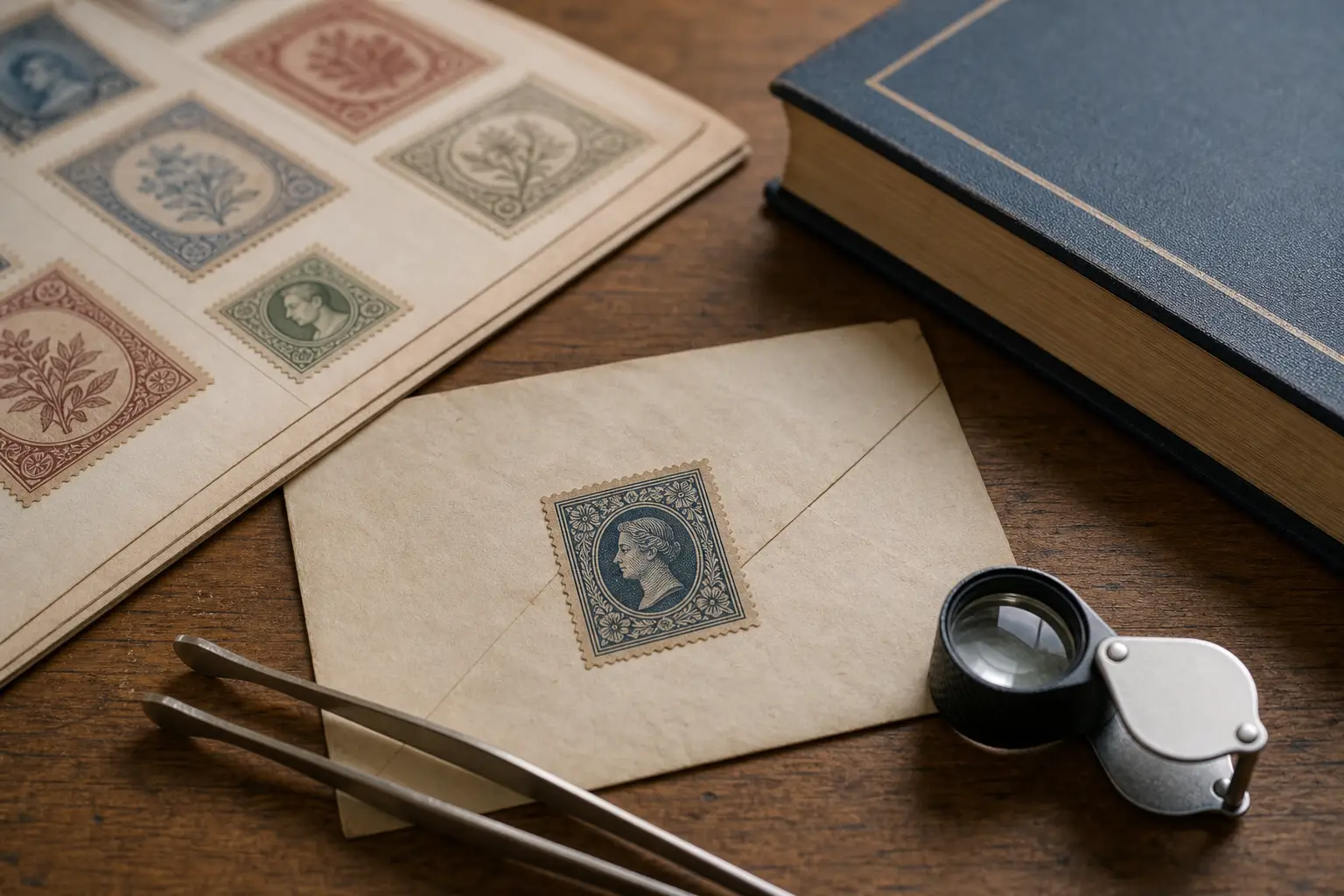
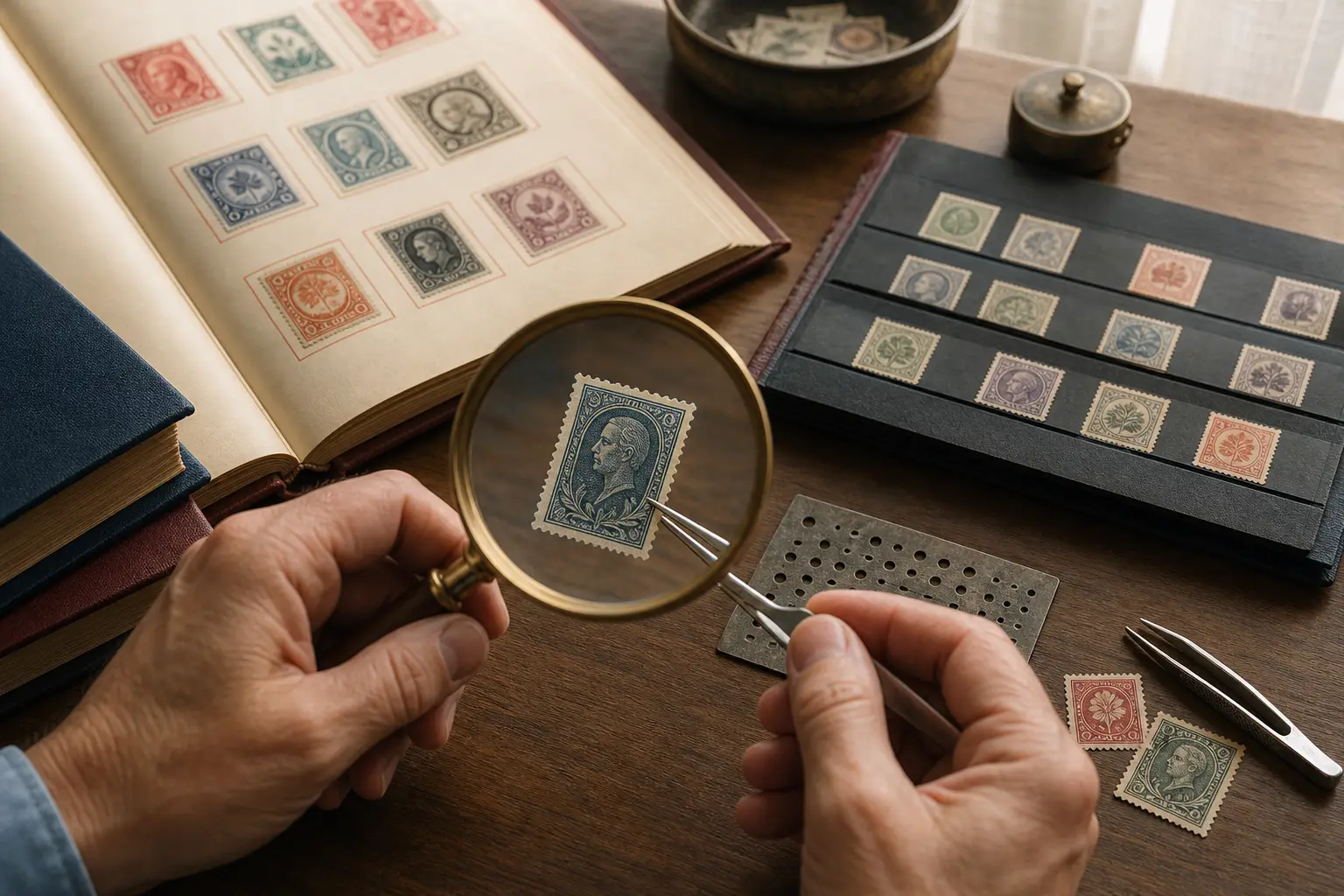
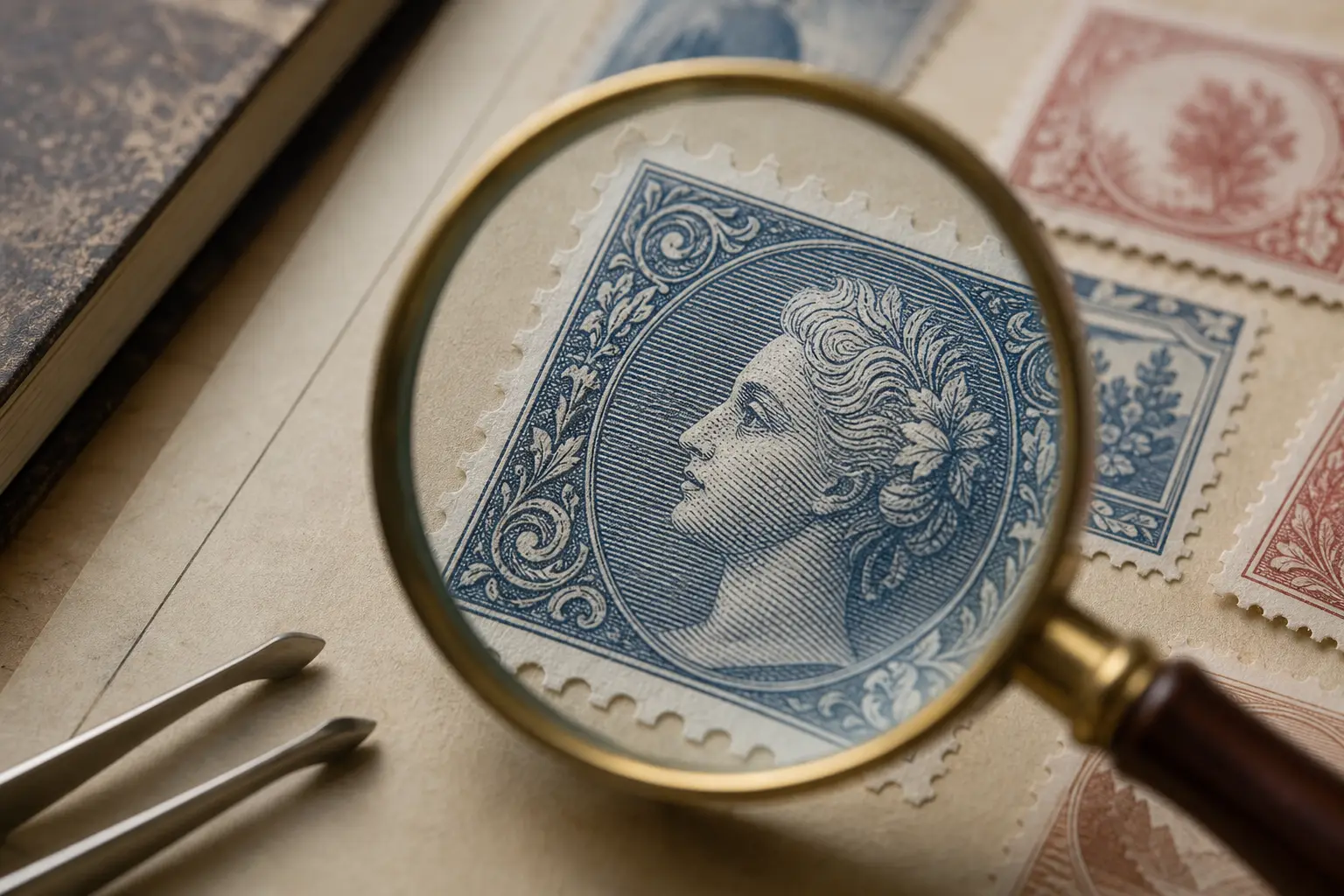
Identifying rare stamp varieties requires a close look at microscopic details. Learn how to select the right magnifying glass, handle your stamps safely with tongs, and verify design variations using reference catalogs.
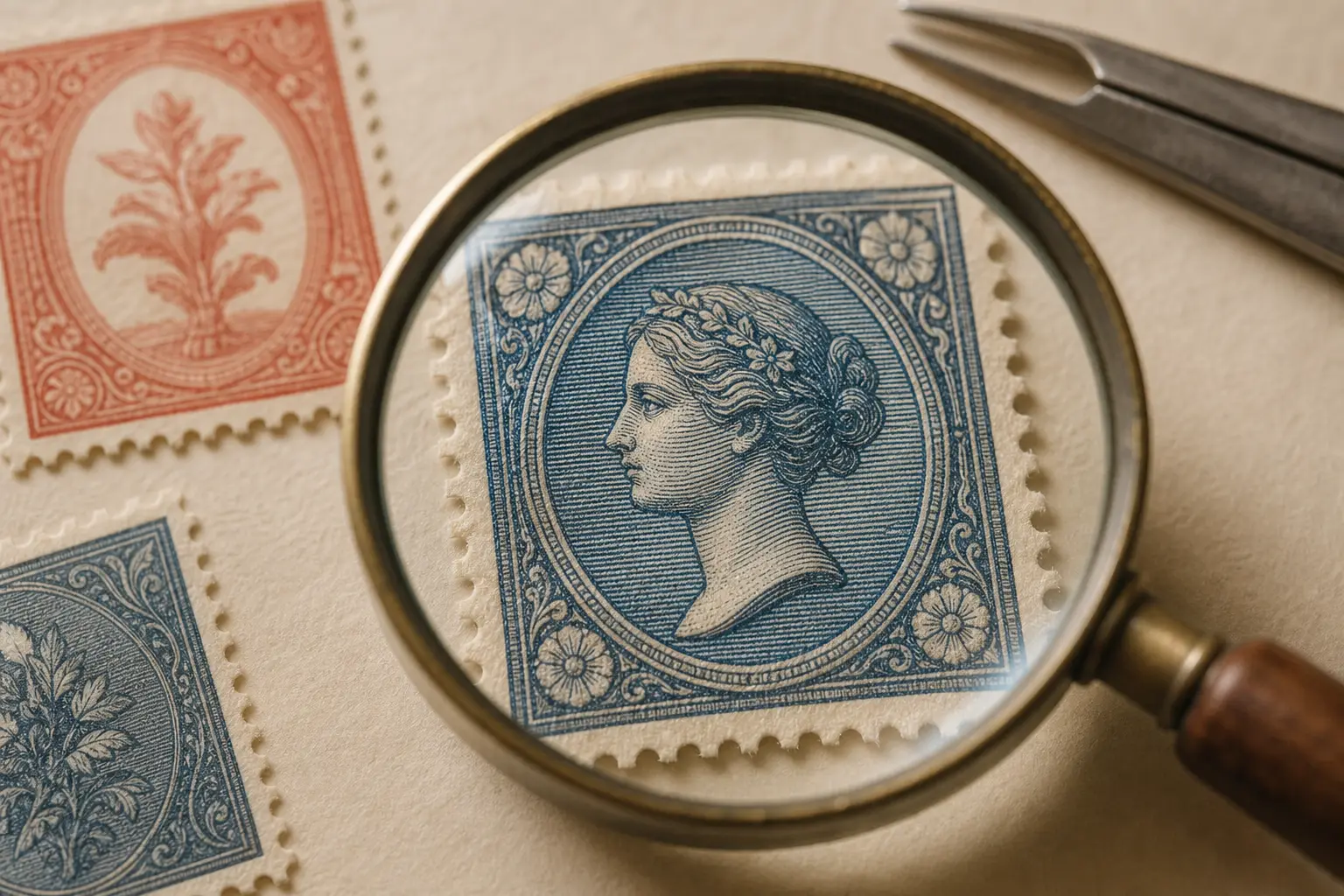
Identifying line-engraved intaglio postage stamps requires looking for cumulative clues like raised ink, debossing, and distinct line patterns. Learn how to safely analyze your stamps using non-contact magnification and oblique light.
In the late 19th century, stamp collecting grew from a quiet hobby into a national movement. Learn how early collectors organized the first societies, established journals, and fought counterfeits.
Sorting and selecting stamps is a fundamental skill for every collector. Learn how to safely handle dry stamps, evaluate duplicates for centering and cancellations, identify damaged copies, and organize your collection by country, topic, or service without risking physical damage.