Identical stamp designs can carry vastly different values based solely on their paper watermarks. Learn how to safely identify double-line and single-line USPS watermarks to accurately value your collection.
Valuing look-alike stamps requires a keen eye for minor design variations. Discover how to identify subtle text inscriptions, commemorative dates, and security watermarks to safely distinguish common issues from scarce varieties.
Many collectors assume that the oldest stamps are the most valuable, but philatelic value is driven by scarcity and condition rather than age alone. Learn how to identify subtle design and watermark variations to determine the true value of your early issues.
Differentiating look-alike stamps requires a keen eye for detail. Discover how to identify subtle text variations, commemorative dates, and security watermarks to determine the true identity and value of your stamps.
Discover how to safely identify watermarked and unwatermarked stamp varieties. Learn the history of paper security features and step-by-step methods to detect hidden watermarks for accurate valuation.
Discover why some postage stamps do not feature a country name, how to identify these unique issues using monarch portraits or foreign inscriptions, and the safe steps to determine their catalog value.
Watermarks can be the sole difference between a common stamp and a highly valuable variety. Learn how to safely identify USPS, USIR, and USPOD watermarks using professional fluid testing methods to accurately assess your collection.
Discover how subtle design changes, such as commemorative date inscriptions in the upper corners of look-alike stamps, can significantly alter catalog numbers and market value. Learn a safe, methodical process to identify these variations.
Valuing stamps with nearly identical designs requires a keen eye for minor text changes, hidden dates, and paper watermarks. Discover how these subtle variations can differentiate a common stamp from a rare variety.
Stamps with nearly identical designs can have vastly different values. Discover how to safely identify watermarks, inscription changes, and hidden dates to accurately value your postage stamps.
Distinguishing between look-alike stamps that serve different purposes—such as postage, revenue, or commemorative issues—requires a keen eye for detail. Learn how to spot subtle text and date variations to accurately identify your collection.
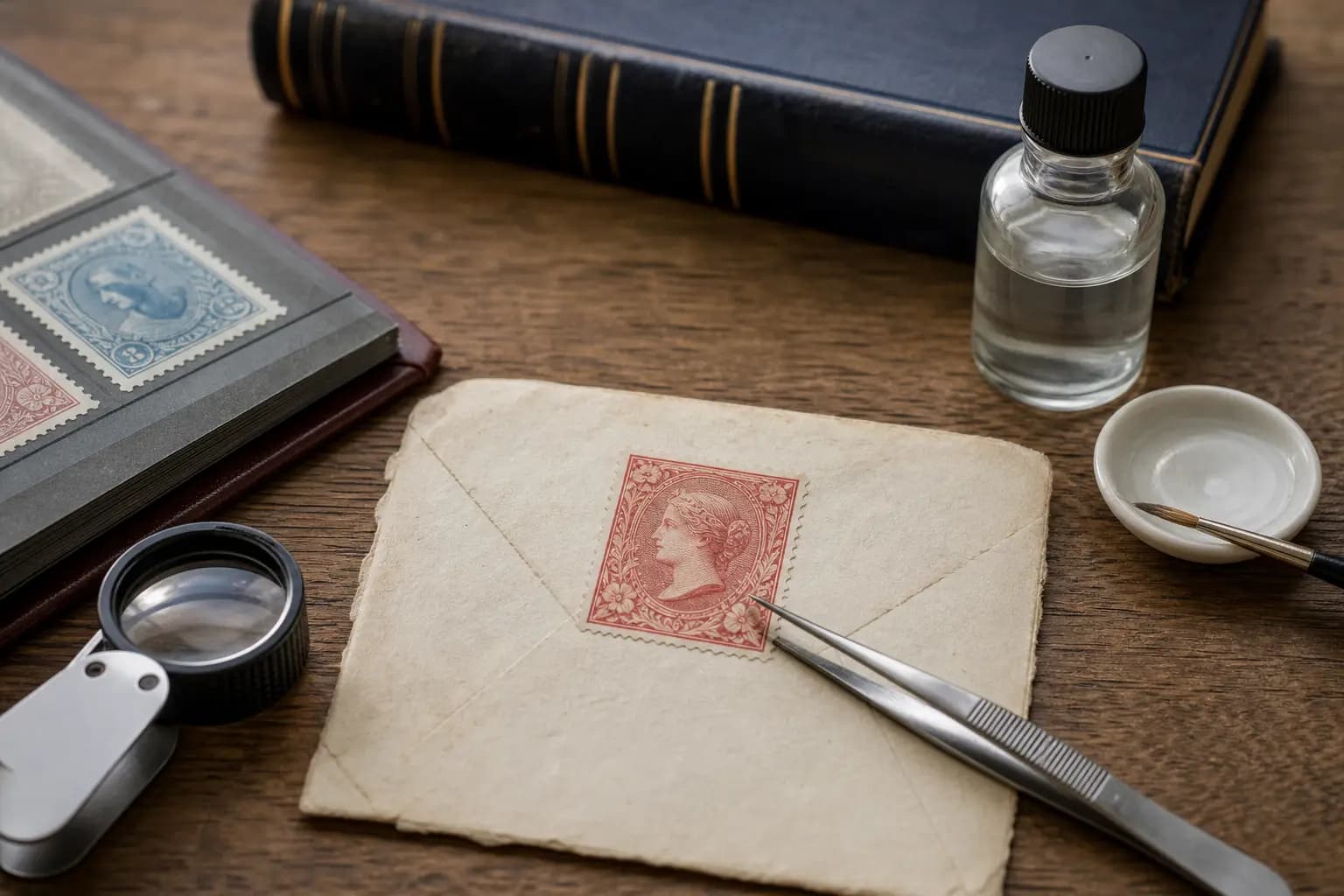
Discovering hidden paper faults is a critical step in assessing a postage stamp's true condition. Learn how to safely use commercial watermark fluid to reveal hidden thins, creases, and other structural defects that are invisible to the naked eye.