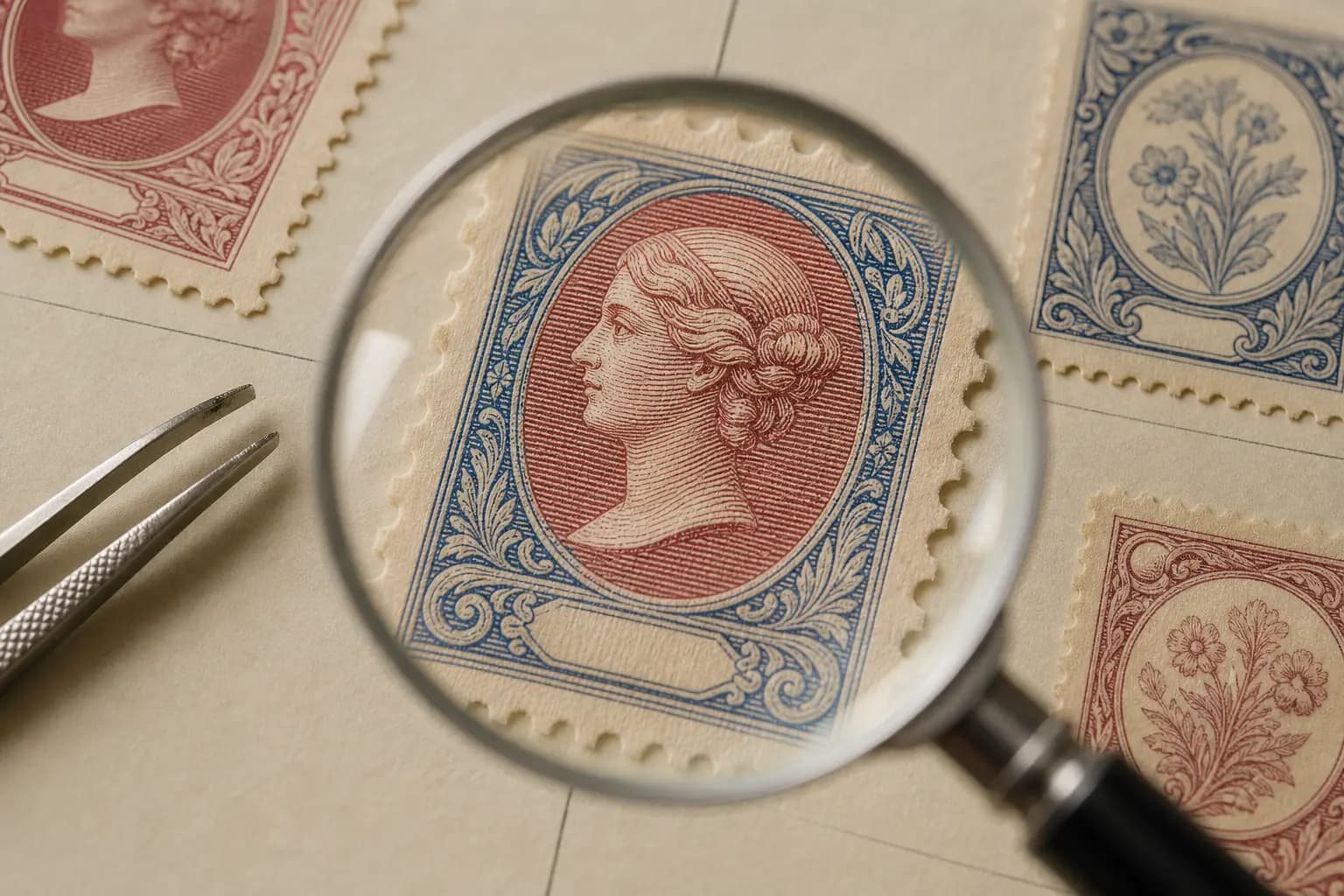
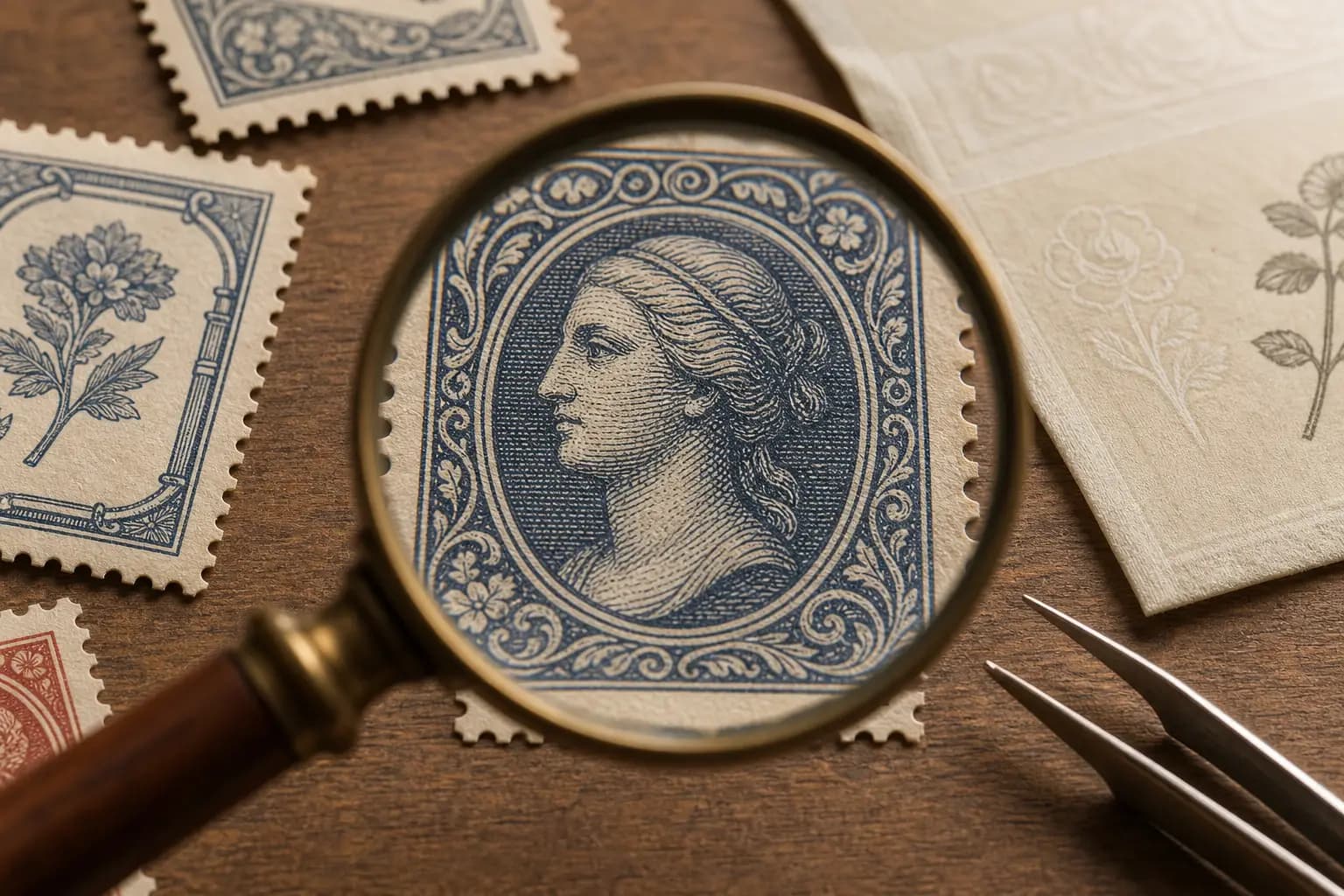
Identifying stamp printing methods requires a systematic approach. Learn how to combine official production records with cumulative visual clues under non-contact magnification to safely distinguish intaglio, gravure, letterpress, and lithography.
Identifying how a postage stamp was printed requires a safe, methodical approach. By using non-contact magnification and oblique light, collectors can examine physical characteristics like raised ink, debossing, and dot patterns. Learn how to combine these visual observations with production records to identify stamp varieties safely.
Modern postage stamps often combine multiple printing methods on a single issue. Learn how to safely analyze these complex stamps using non-contact magnification, oblique lighting, and cumulative visual clues to identify the four major printing families.
Distinguishing line-engraved intaglio from gravure printing requires a methodical approach. By using non-contact magnification, oblique light, and cumulative visual clues, collectors can safely identify these distinct recess printing families without risking damage to their stamps.
Many postage stamps share identical designs but differ by printing method or watermark. Learn how to safely analyze these physical characteristics using non-contact magnification and watermark fluid to identify your stamps accurately.
Differentiating modern offset lithography from gravure on postage stamps requires a methodical approach. Learn how to combine cumulative visual clues, non-contact magnification, and production records to identify these printing methods safely without relying on unreliable single-feature shortcuts.
Determining how a postage stamp was printed requires looking beyond basic design elements. By systematically analyzing physical texture, relief, and ink behavior under oblique light and non-contact magnification, collectors can gather cumulative clues to distinguish between major printing families.
Discover how to safely analyze screened dots and printing patterns on postage stamps. Learn why dot structures are cumulative clues rather than single tests, and how to combine visual evidence with production records.
Distinguishing between the four major stamp printing families requires a systematic approach. Learn how to combine visual clues under magnification to identify line-engraved intaglio, gravure, letterpress, and lithography safely.
Identifying line-engraved intaglio postage stamps requires looking for cumulative clues like raised ink, debossing, and distinct line patterns. Learn how to safely analyze your stamps using non-contact magnification and oblique light.
Identifying letterpress printing on postage stamps requires understanding relief methods. Learn how to distinguish letterpress from line-engraved intaglio, gravure, and lithography using non-contact magnification, oblique lighting, and production records.