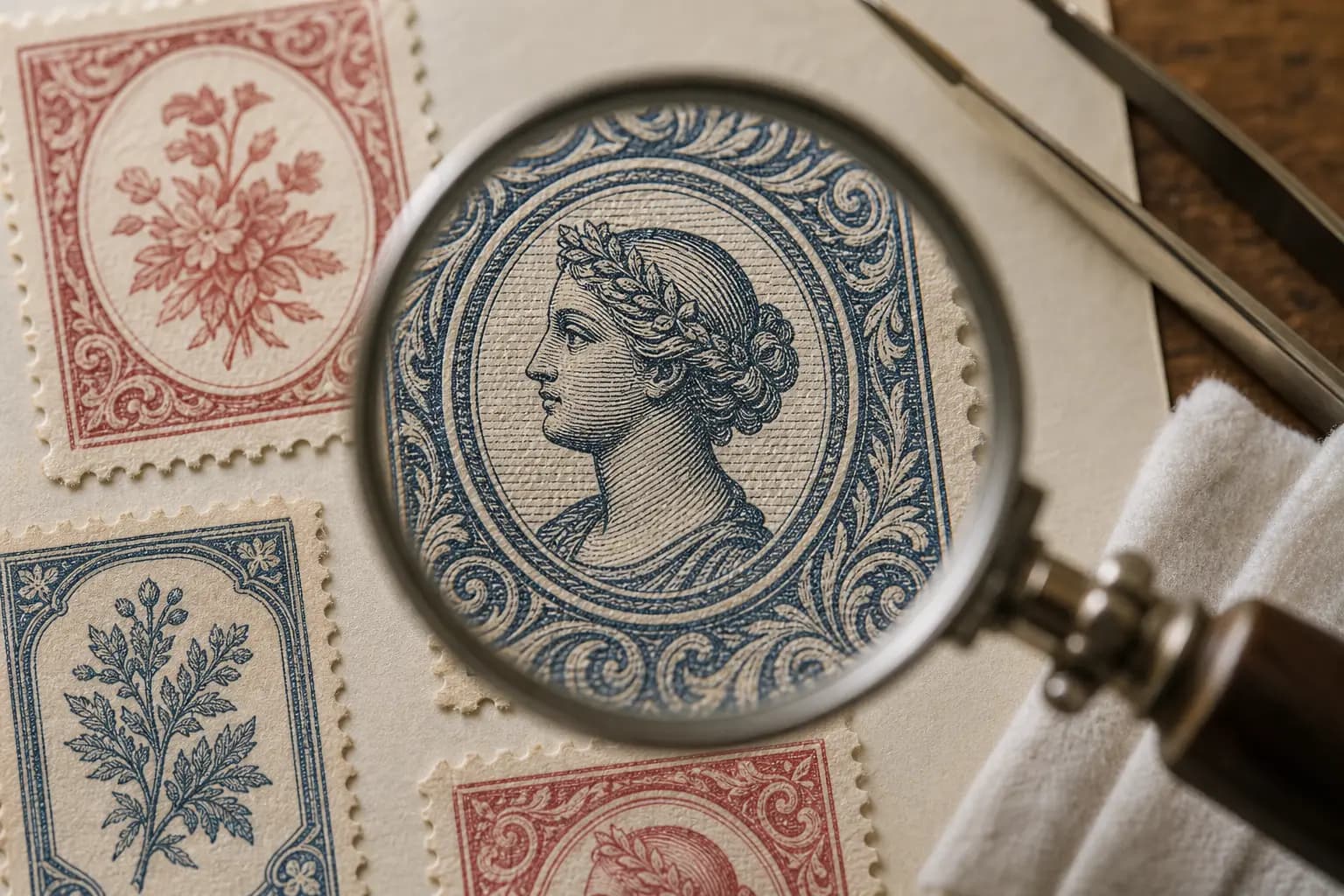
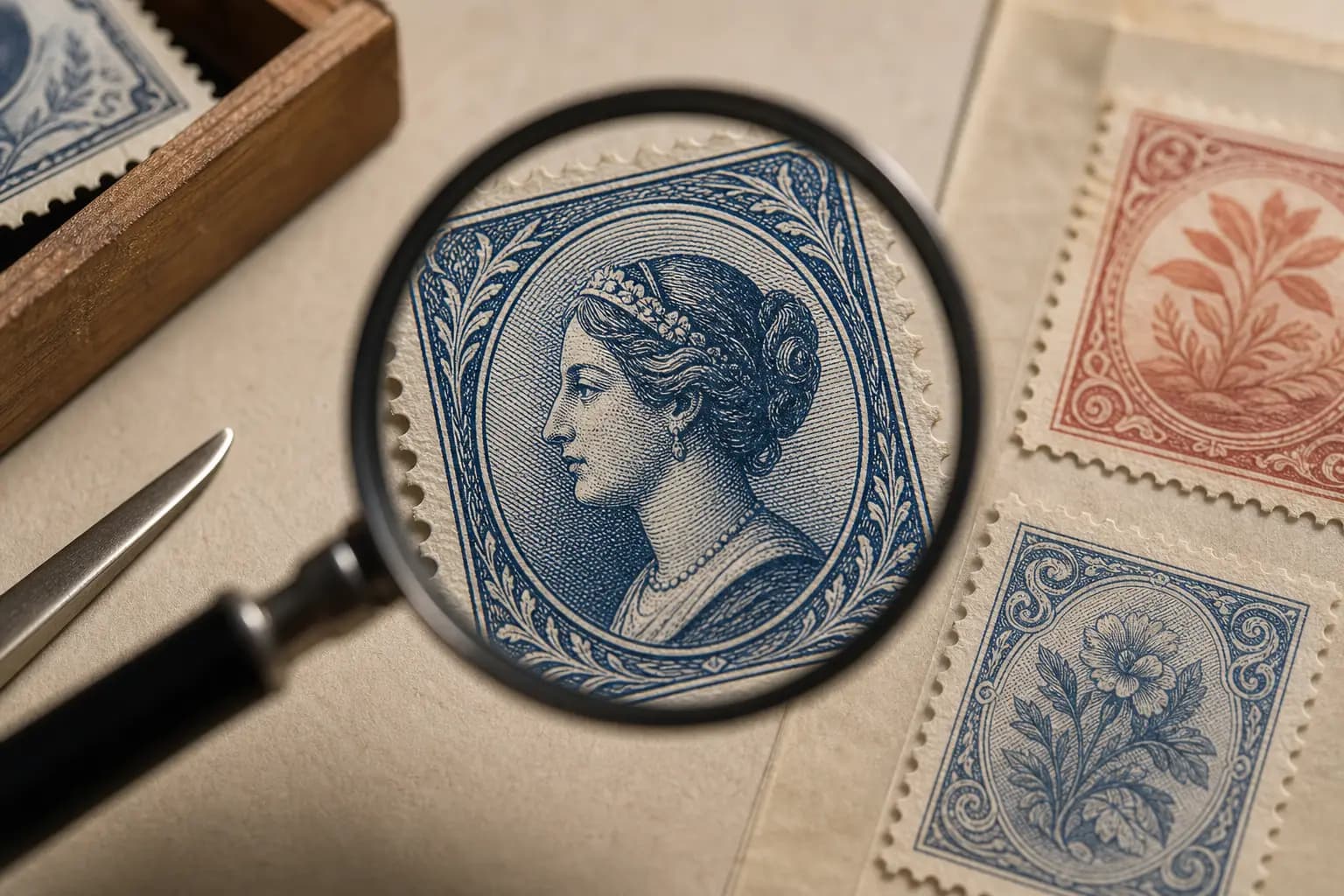
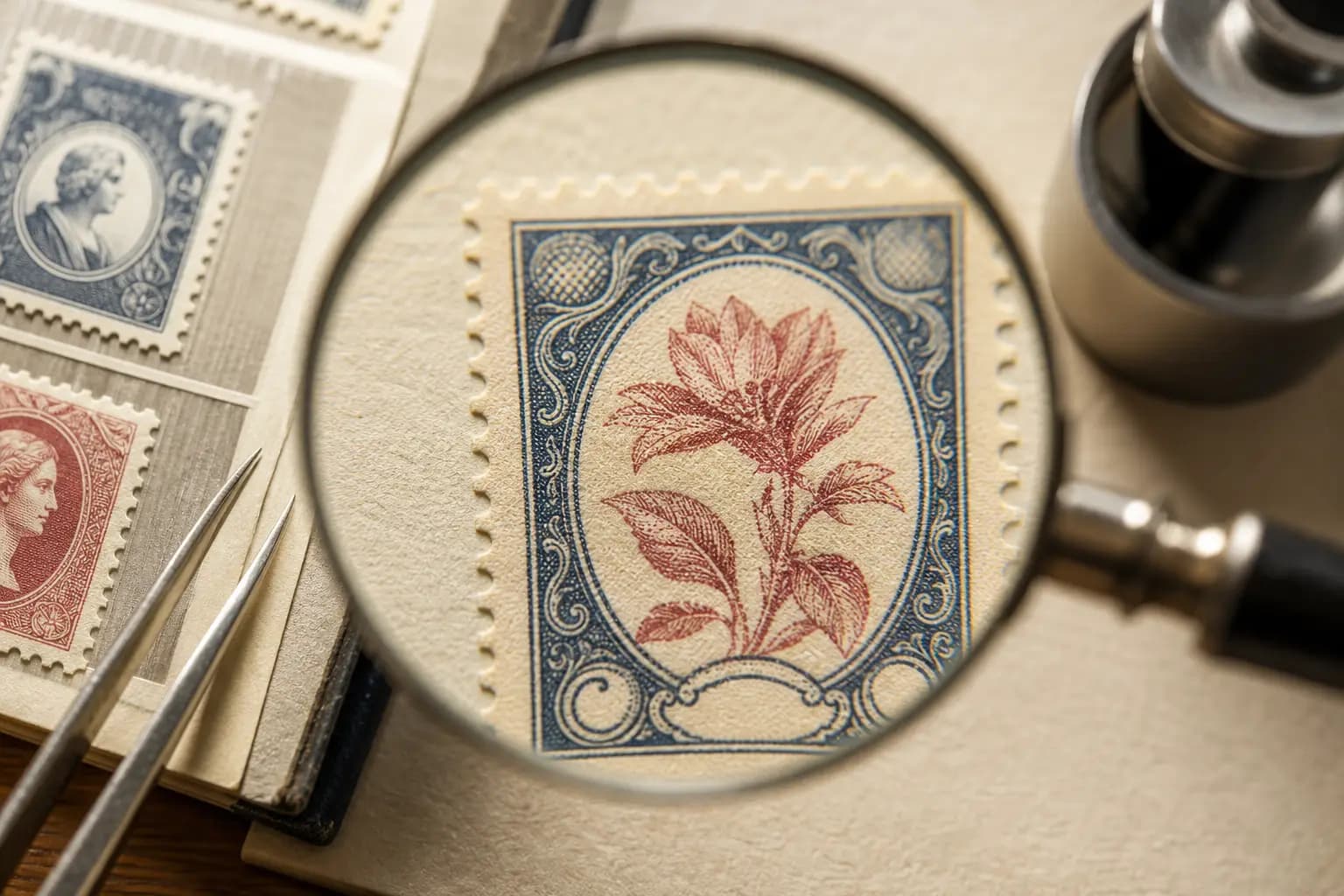
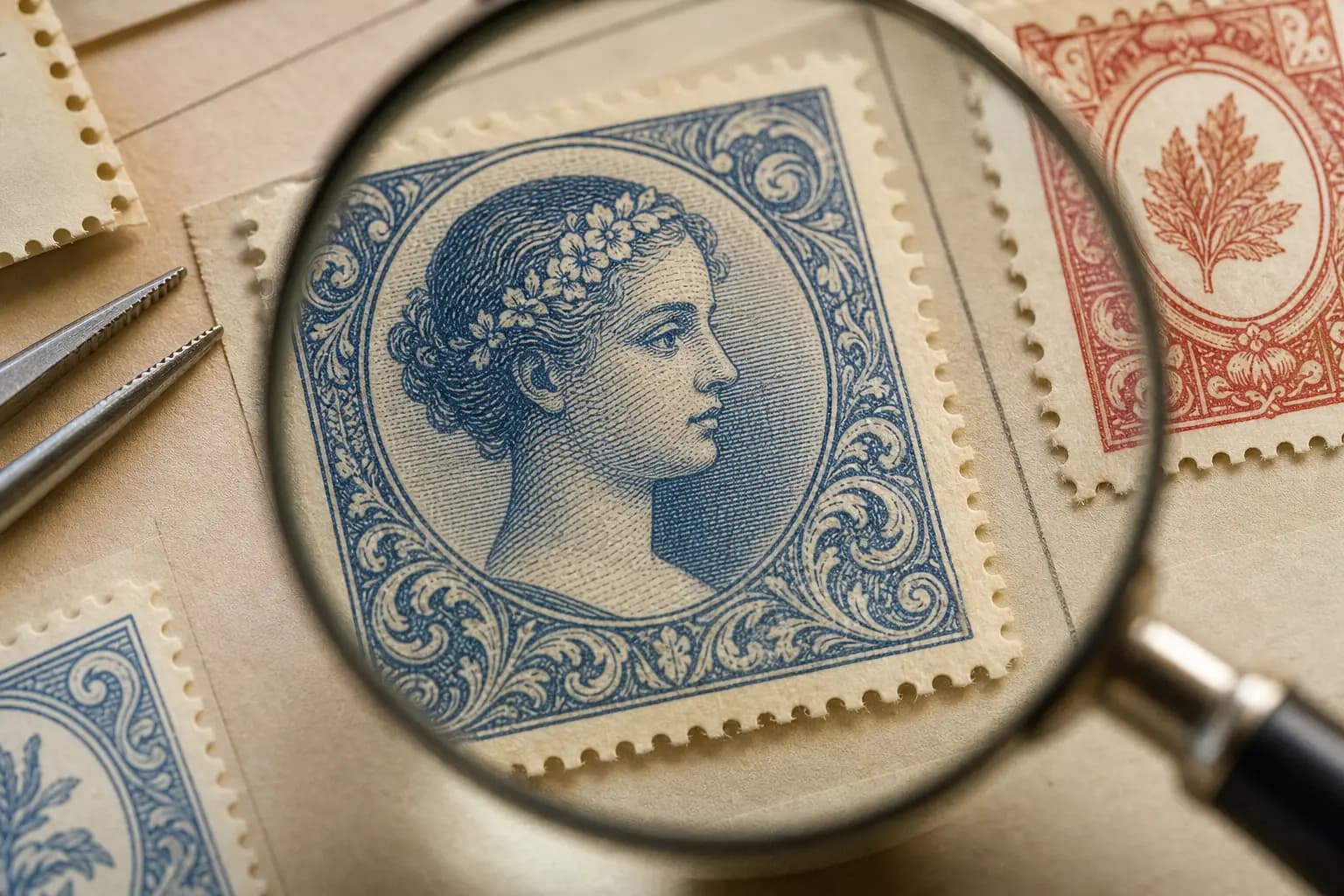
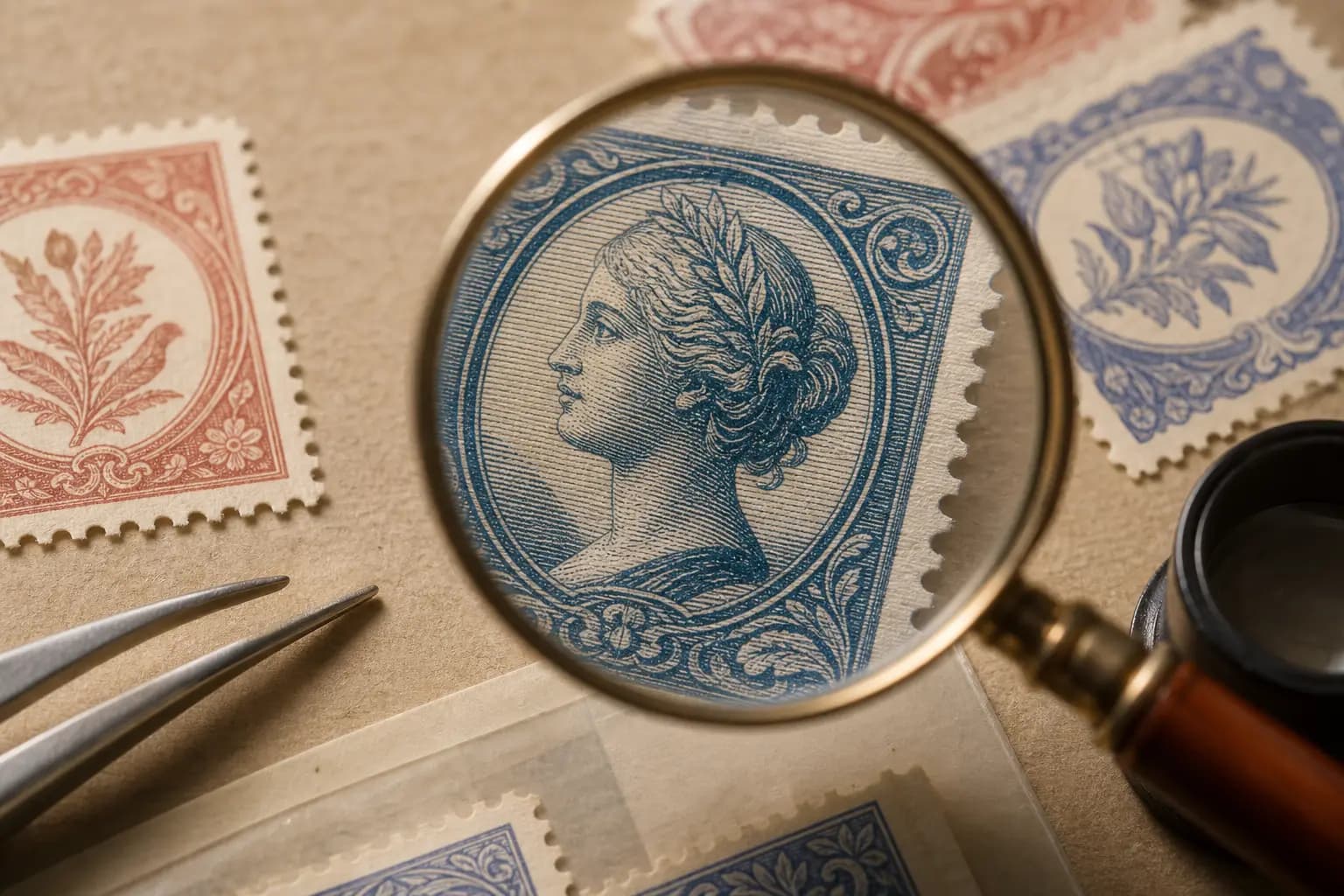
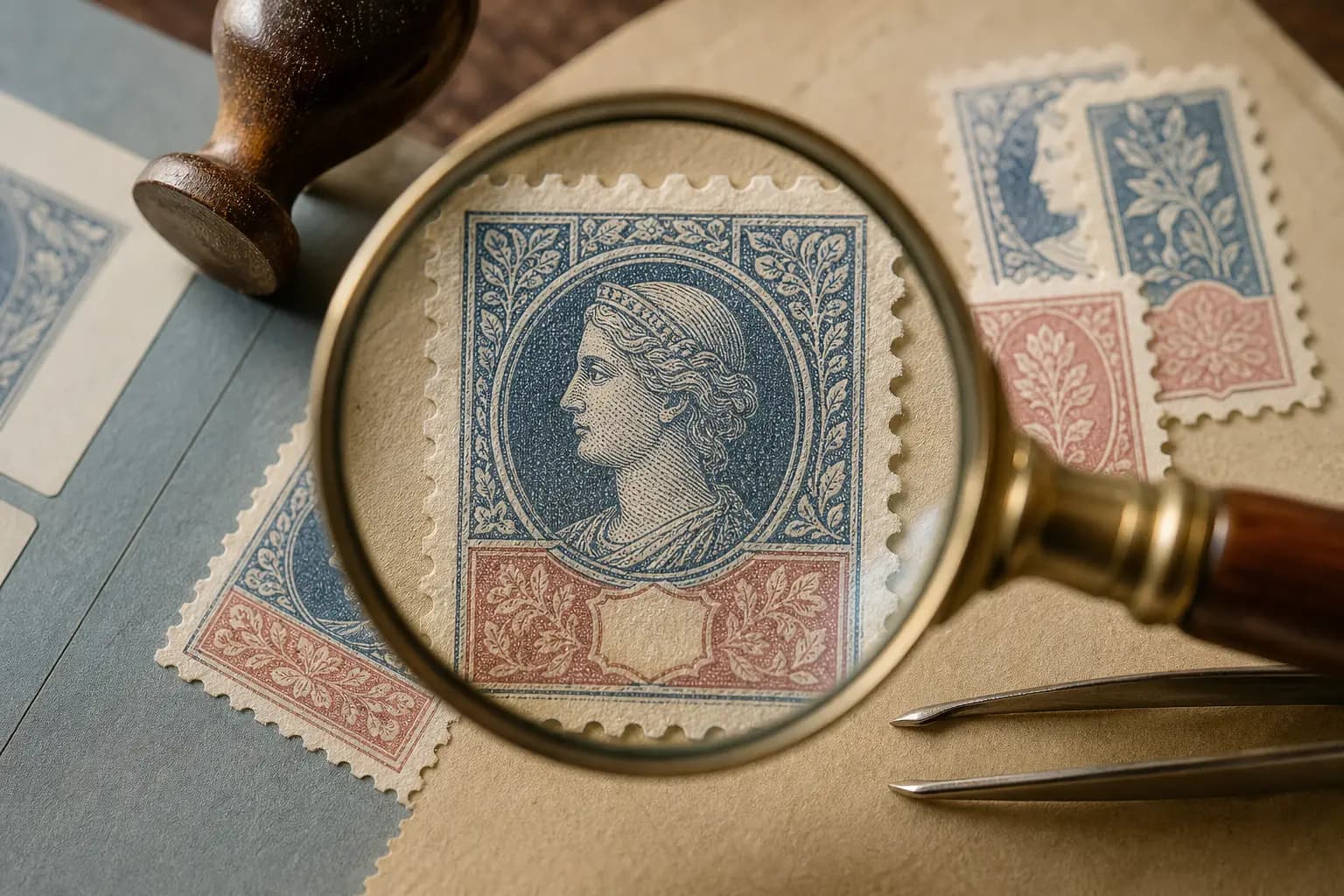
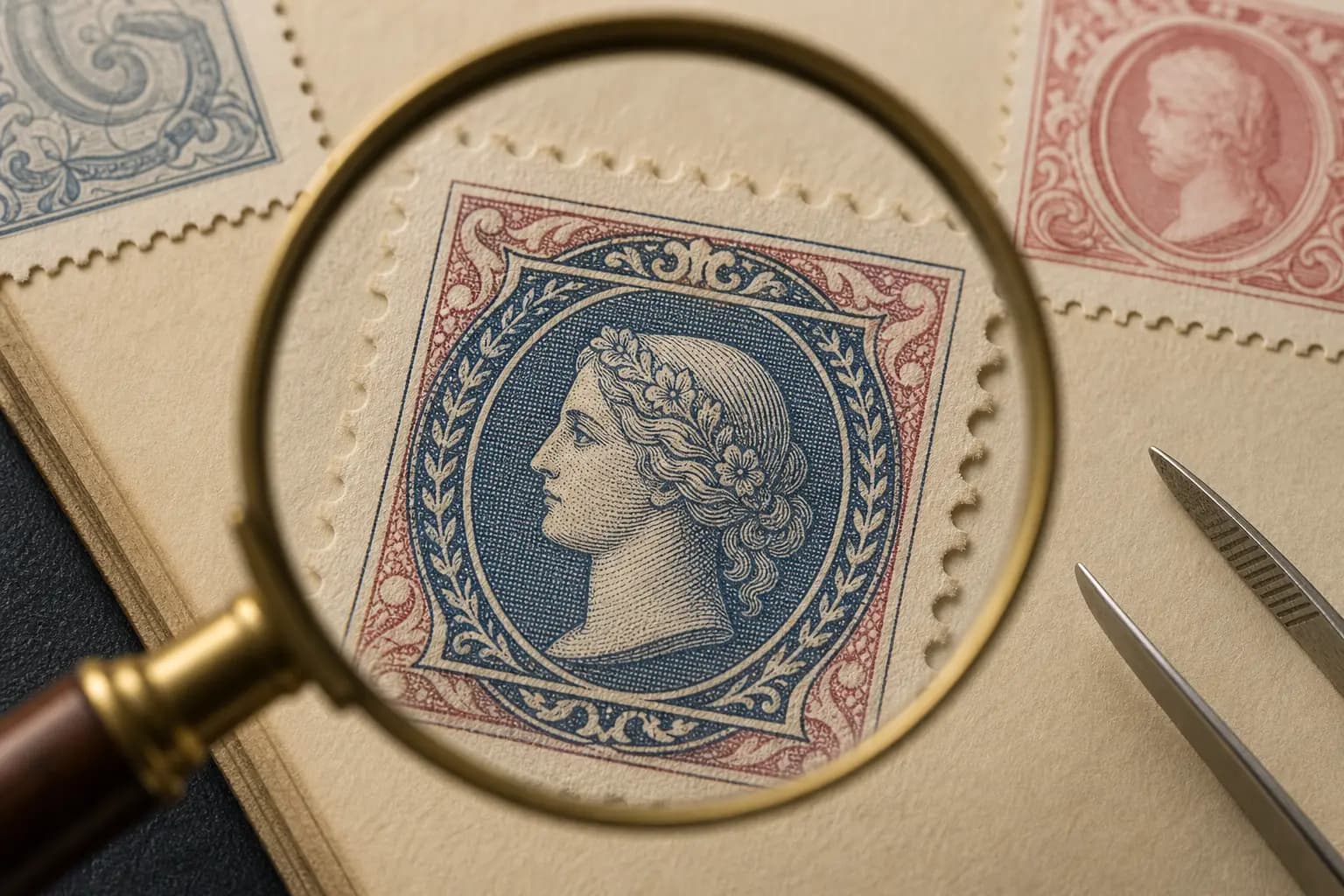
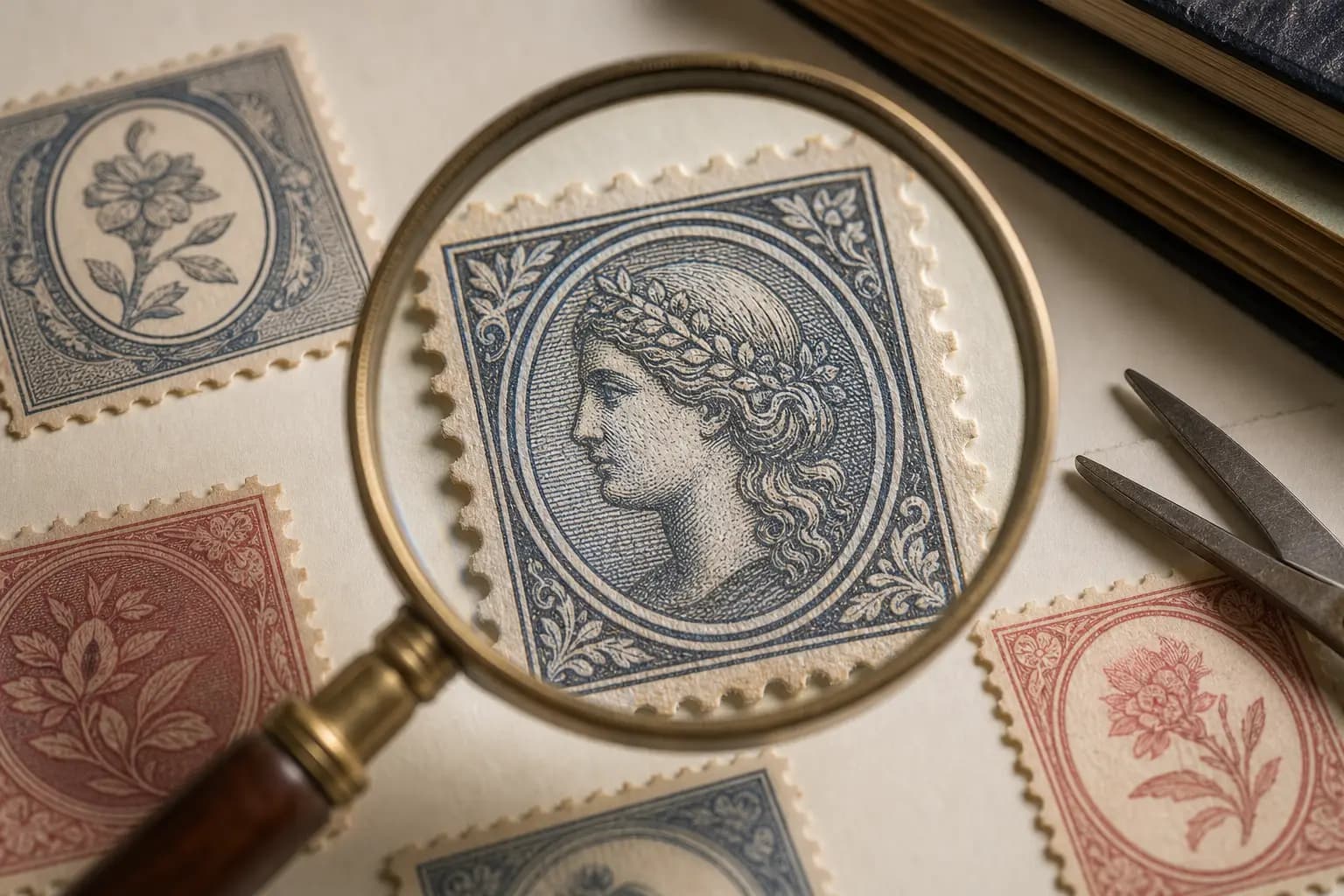
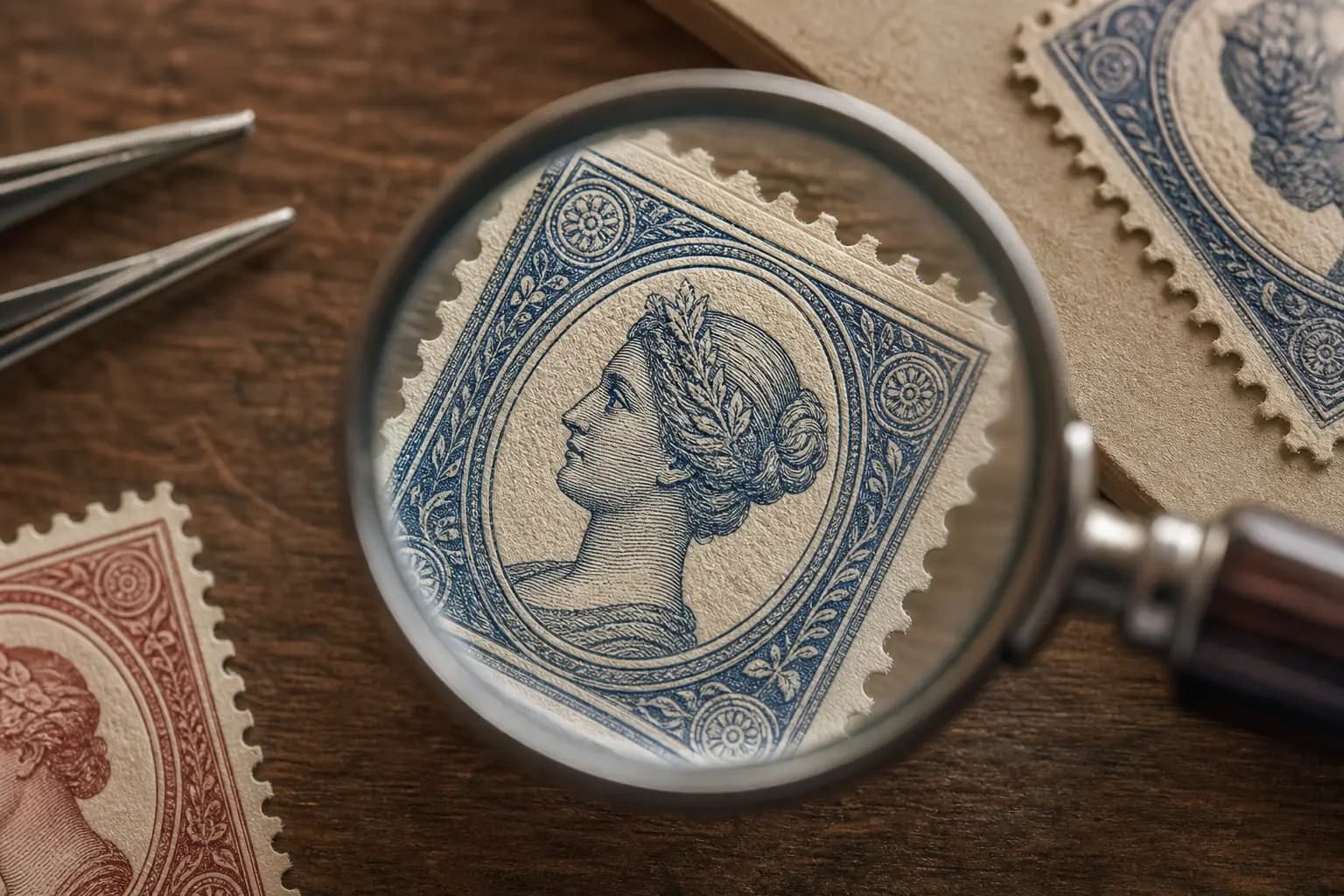
Learn how to safely identify line-engraved intaglio stamps by analyzing raised ink, debossing, and engraving lines. Discover how to use non-contact magnification and oblique light to distinguish intaglio from other major printing families.
Modern postage stamps often combine multiple printing methods on a single issue. Learn how to safely identify these hybrid stamps by treating visual features as cumulative clues and using non-contact magnification under oblique light.
Discover how to safely identify double-line and single-line USPS watermarks and combine these findings with printing family analysis to classify classic United States stamps accurately.
Distinguishing between the recess printing methods of line-engraved intaglio and gravure requires a methodical approach. By analyzing ink texture, screened structures, and paper debossing under oblique light, collectors can safely identify these classic and modern printing families.
Distinguishing offset lithography from other printing families requires looking beyond soft edges. Learn how to combine observations of process-color dots, ink behavior, and production records to safely identify planographic stamp printing.
Distinguishing gravure from offset lithography can be challenging because both methods utilize screened structures. Learn how to safely analyze these printing families using non-contact magnification, oblique light, and official production records.
To accurately classify classic stamps, collectors must look beyond surface designs. Discover how to combine printing family analysis with safe watermark detection to distinguish look-alike varieties.
Distinguishing offset lithography from other printing families requires a methodical approach. Learn how to combine cumulative visual clues, non-contact magnification, and official production records to identify planographic stamp issues safely.
Distinguishing between the four major stamp printing families requires a methodical approach. By combining non-contact magnification, oblique light, and safe watermark detection, collectors can reliably identify complex stamp varieties.
Identifying stamp printing methods requires looking beyond simple dot patterns. Learn how to analyze screened structures across lithography, gravure, and other printing families using non-contact magnification, oblique light, and official production records to make accurate identifications.
To identify letterpress printing on postage stamps, collectors must analyze relief characteristics alongside the other three major printing families: line-engraved intaglio, gravure, and lithography. By using non-contact magnification and oblique light, you can examine cumulative clues like ink squeeze and paper indentation to safely classify your stamps.
To identify line-engraved intaglio stamps, look for physical relief clues like raised ink and reverse debossing. Learn how to combine non-contact magnification, oblique light, and production records to distinguish intaglio from gravure, letterpress, and lithography.