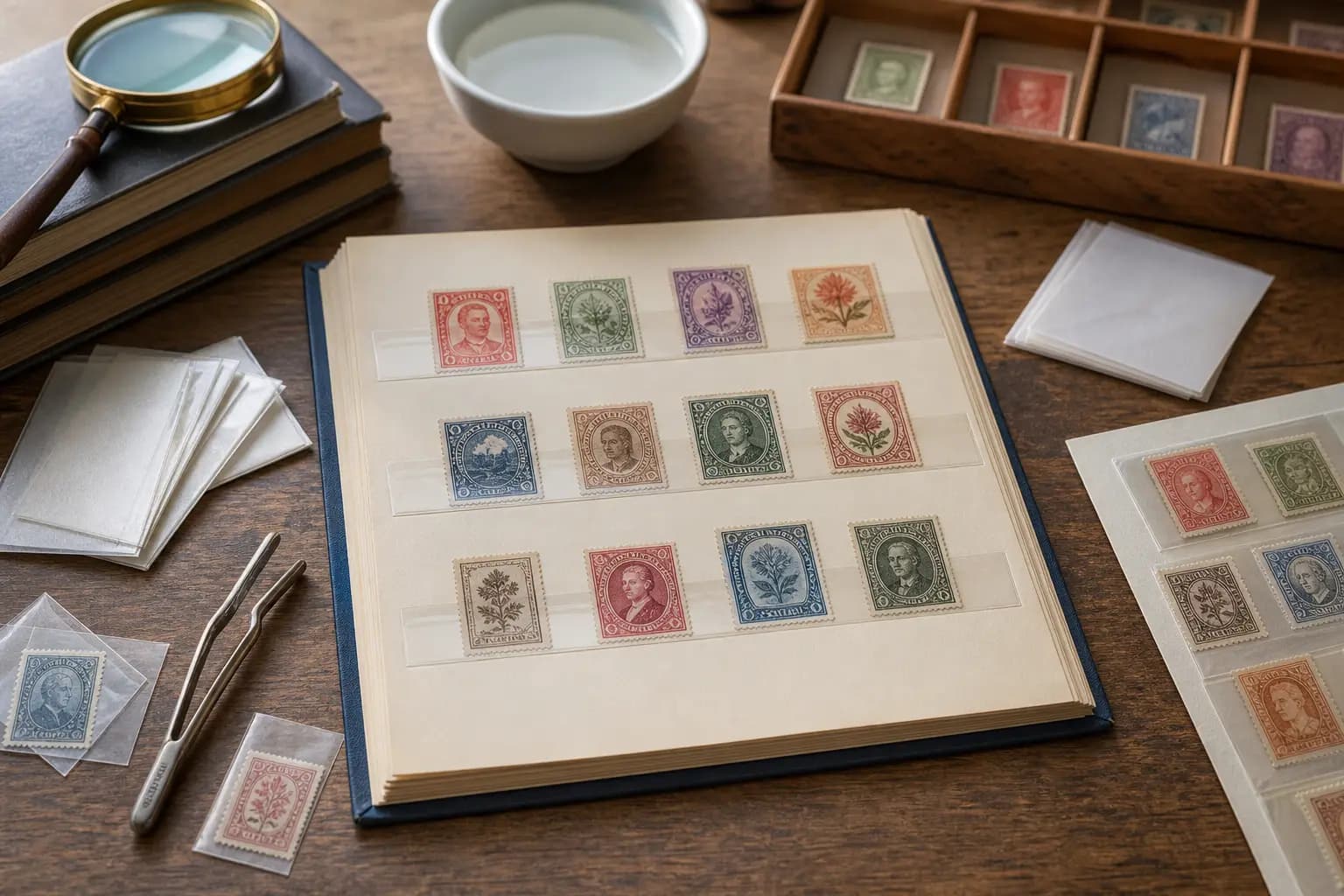
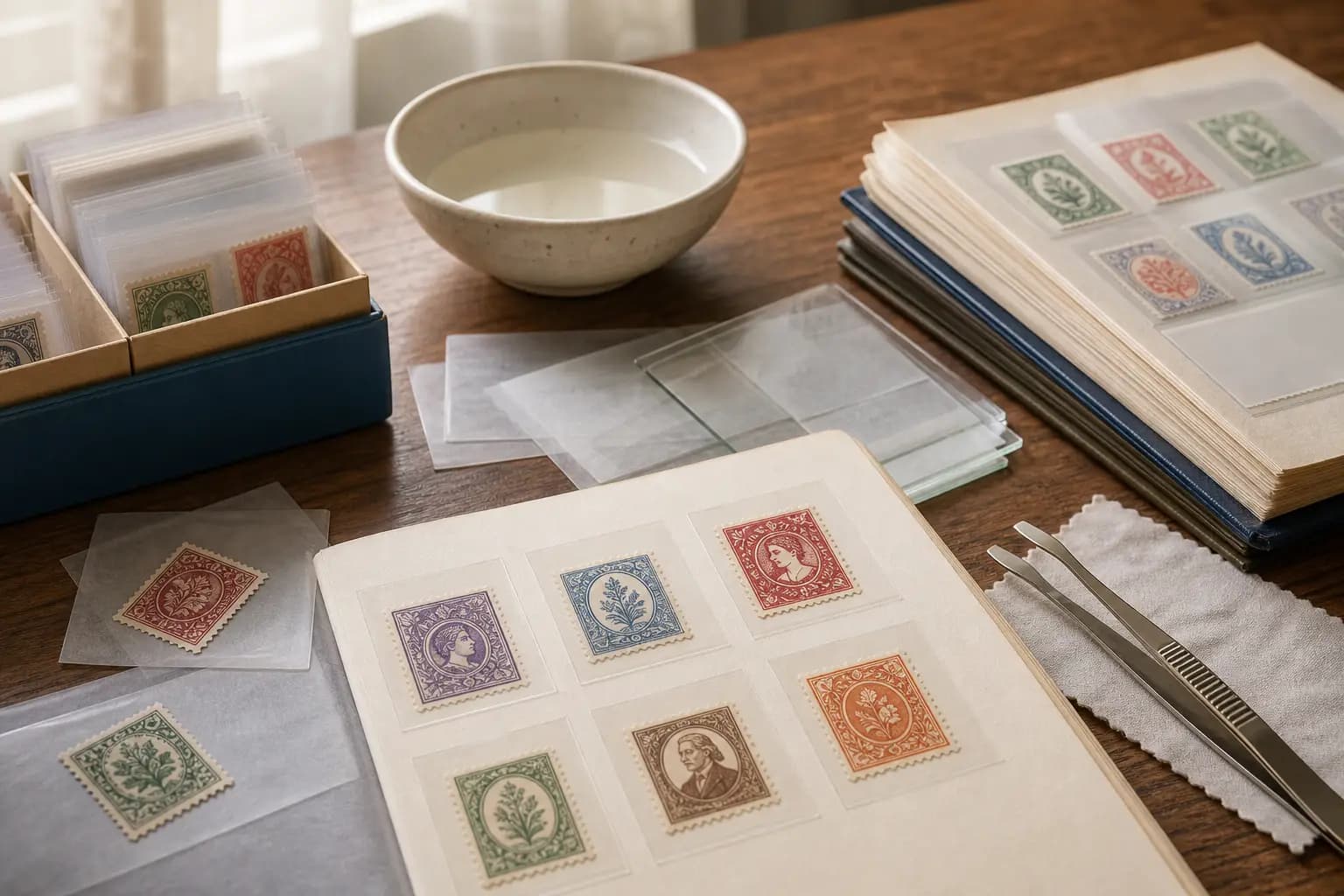
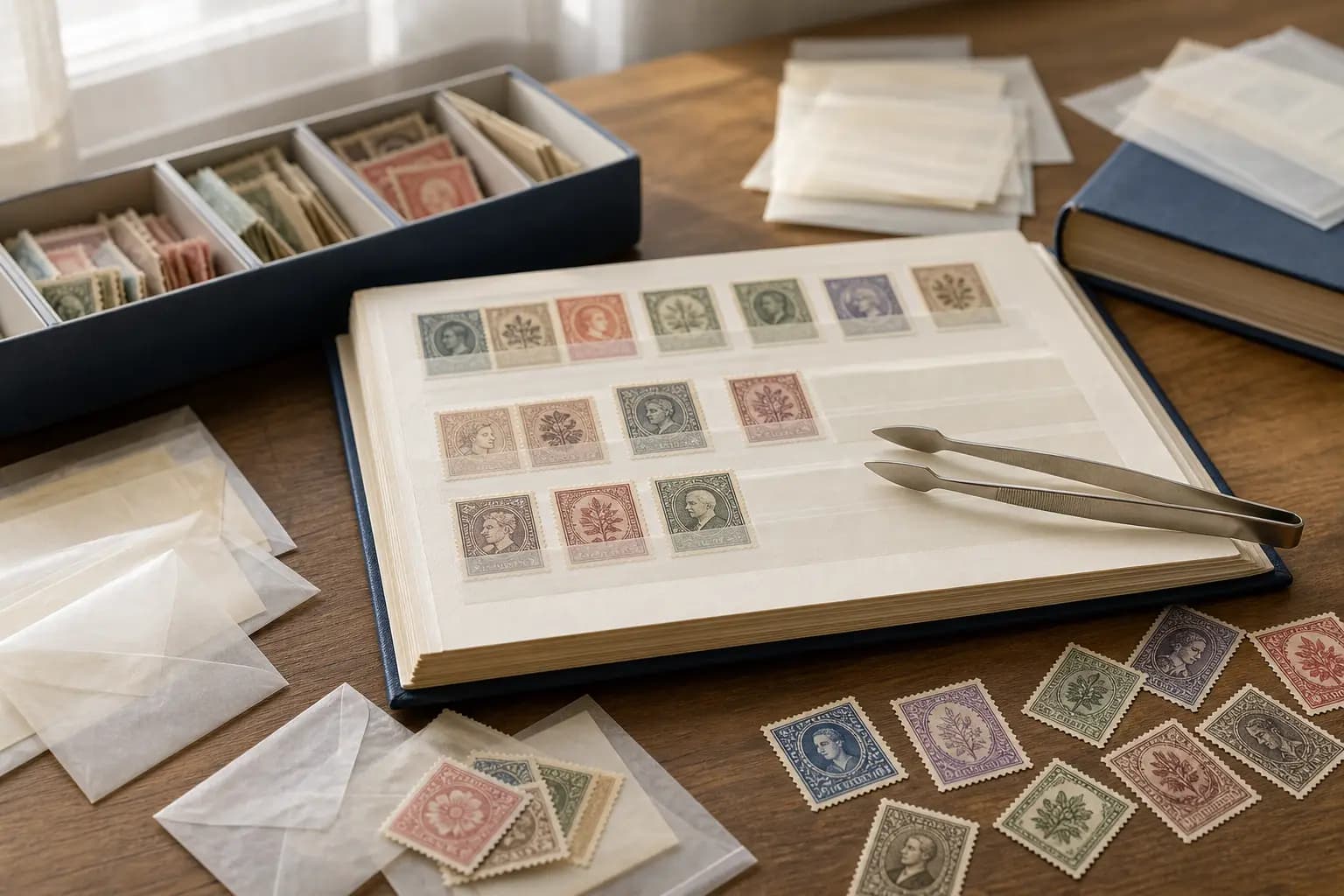
When managing duplicate stamps, selecting the best specimen requires a careful evaluation of centering and cancellation quality. Discover a safe, step-by-step workflow to inspect your stamps, handle dry and wet paper safely, and store your spares without causing damage.
Soaking stamps off paper is a classic philatelic skill, but the drying phase is highly critical. Discover how to safely dry wet stamps, prevent curling, and handle fragile paper without causing permanent damage.
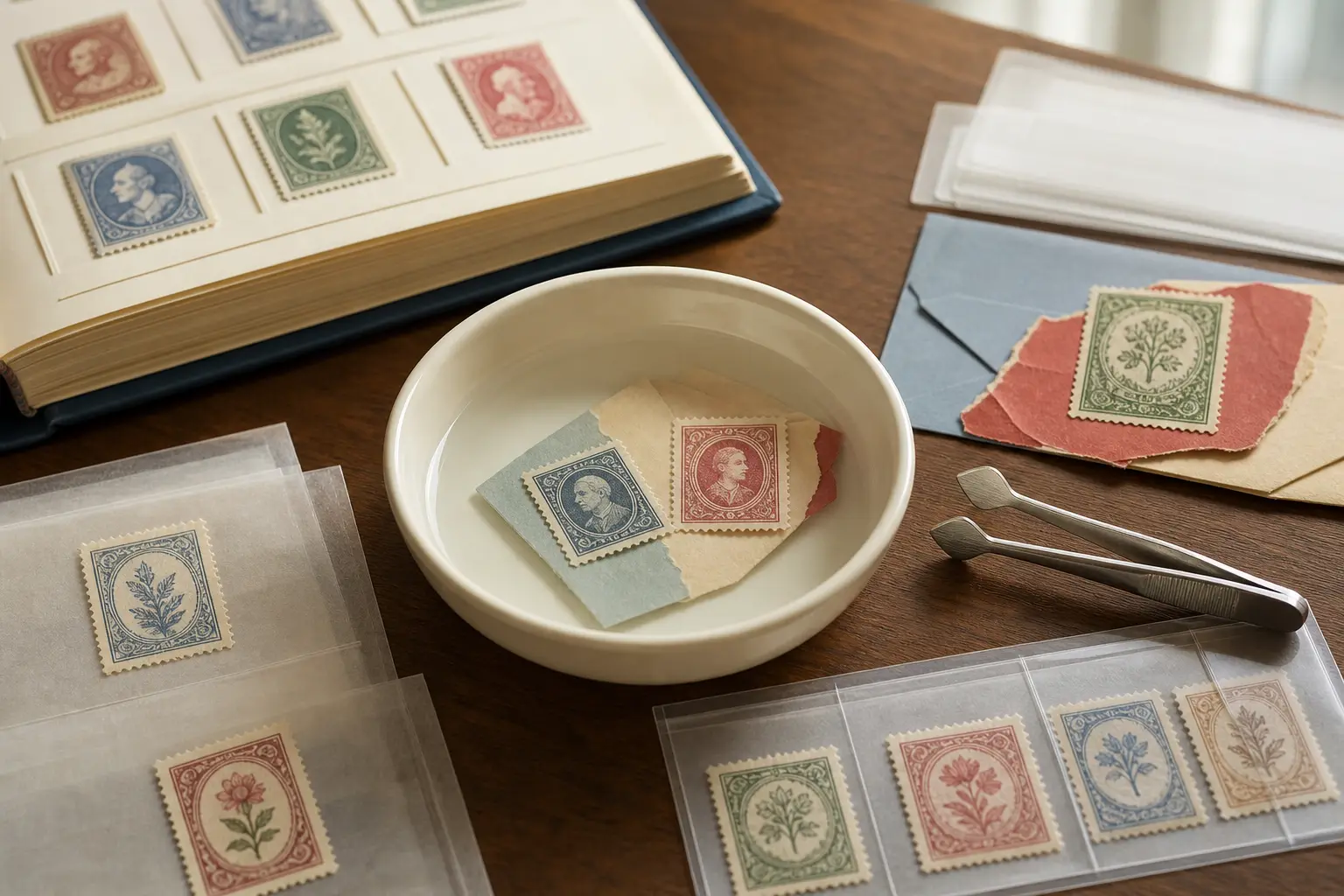
Acquiring vintage stamps on paper is an exciting milestone, but processing them requires care. Discover a safe, step-by-step workflow to soak, dry, sort, and mount your stamps without risking tears, stains, or paper thinning.
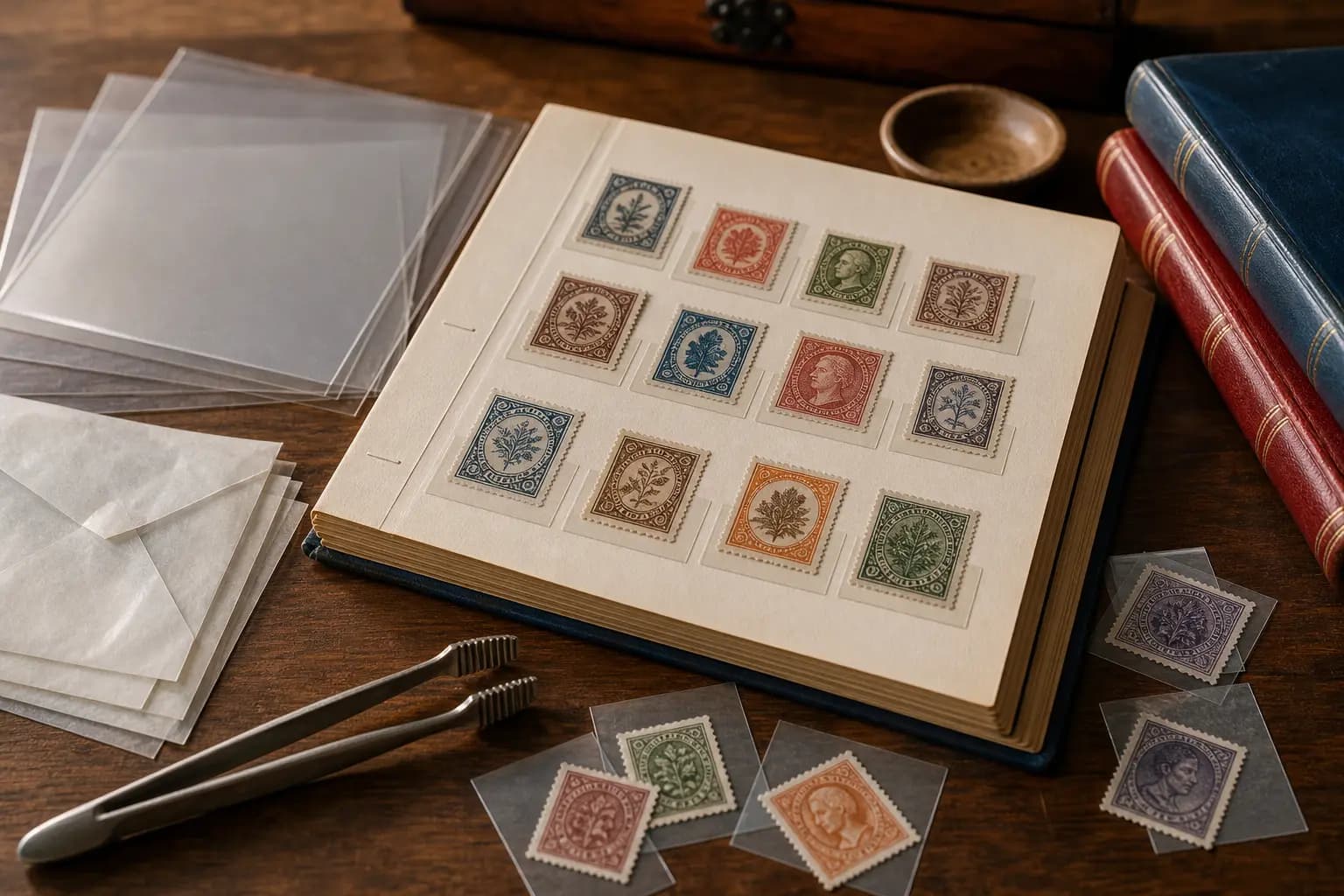
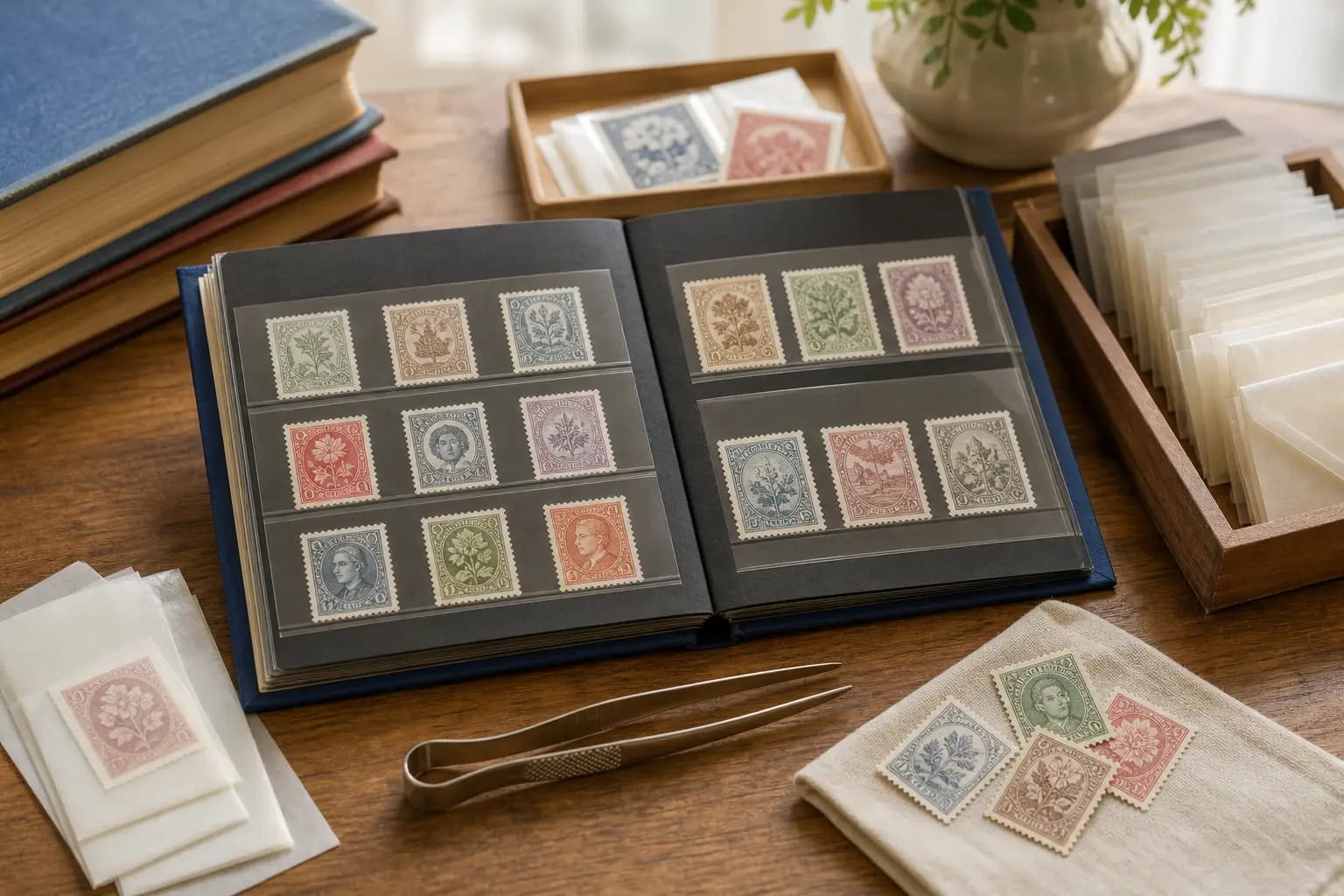
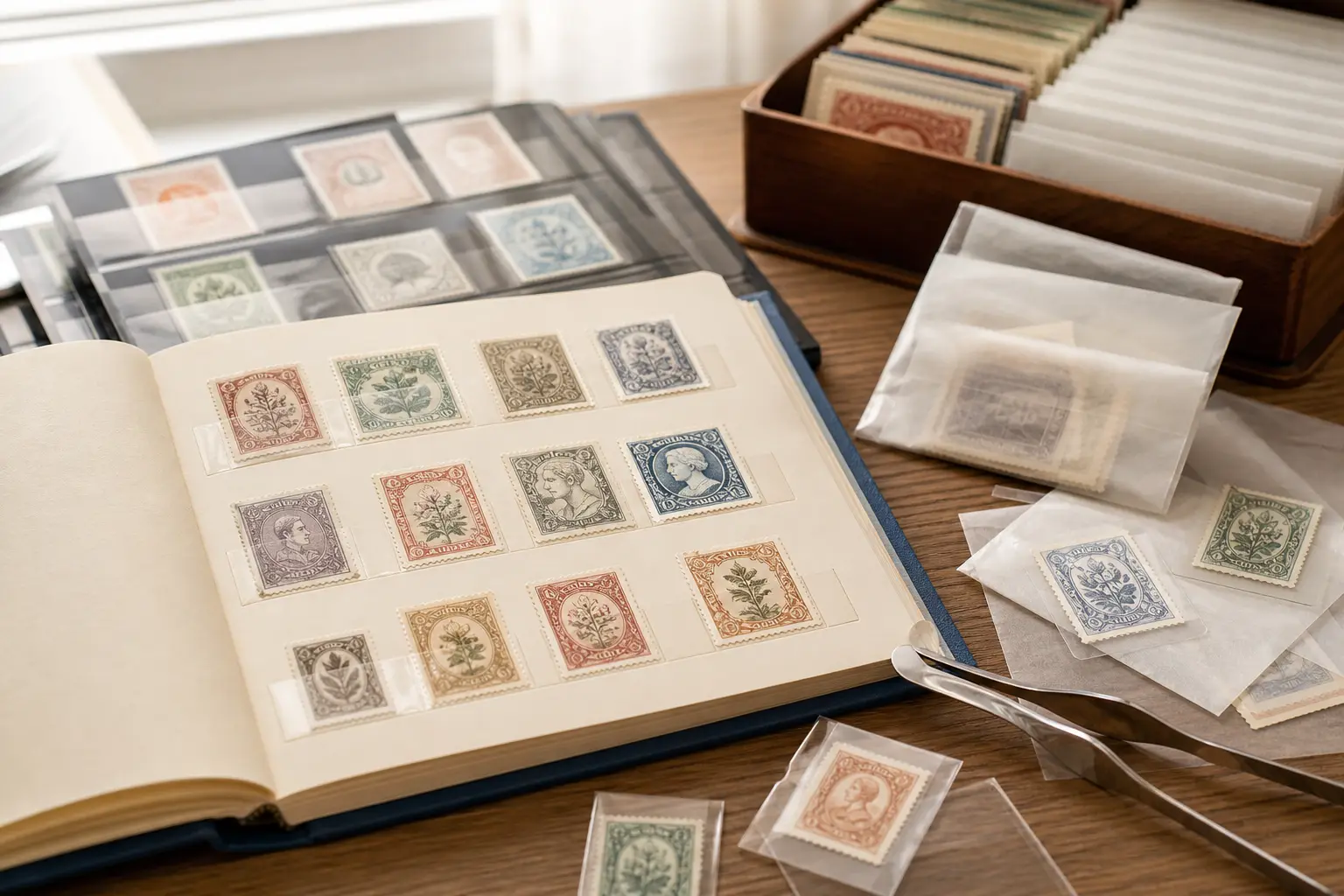
To protect loose postage stamps from damage, store them in glassine envelopes, stock books, or acid-free albums. Always handle dry stamps with specialized tongs to prevent skin oil transfer, and avoid using tape, glue, or handling wet stamps with tools.
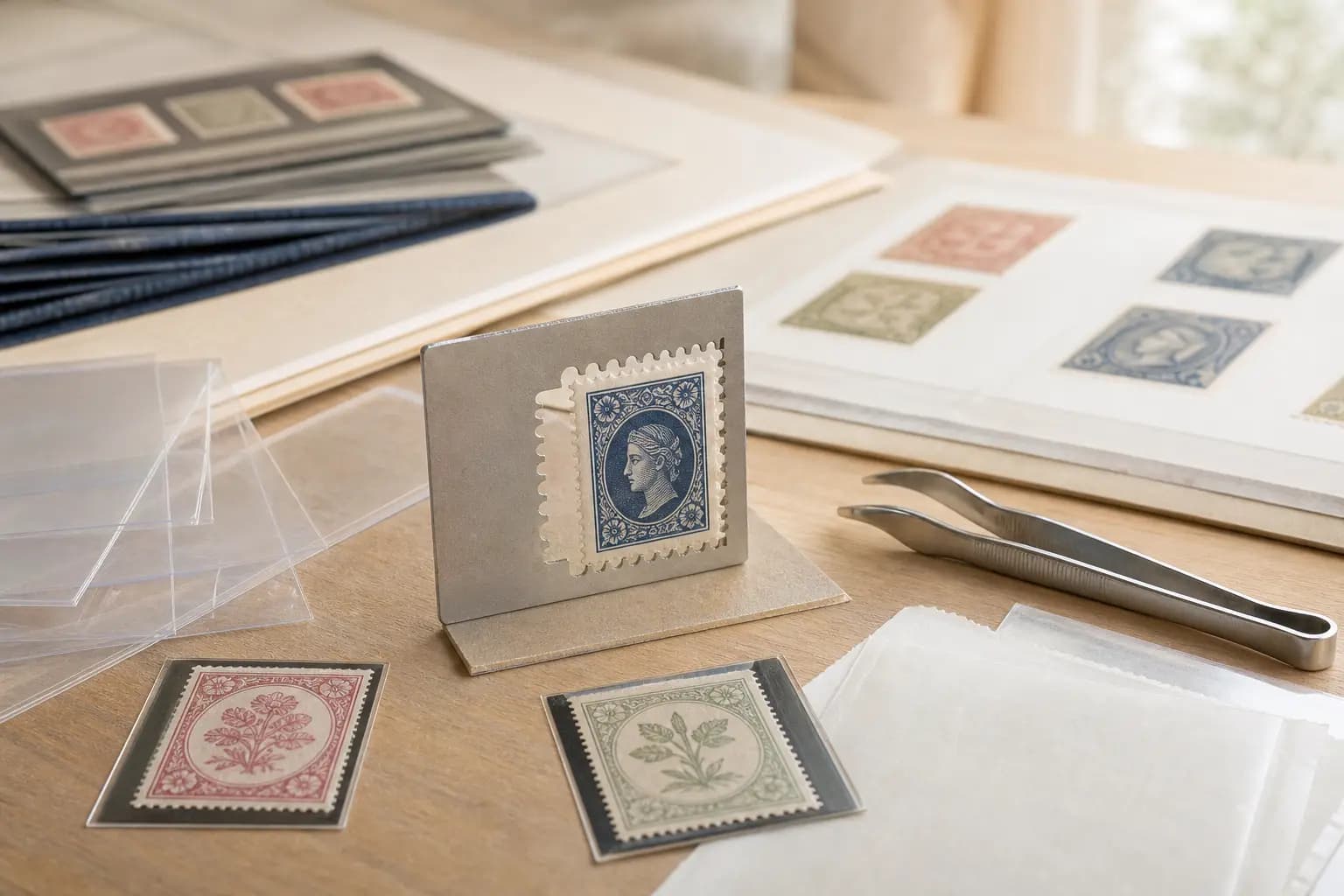
Discover the safest methods for mounting postage stamps in your album. Learn how to use hinges and mounts correctly, why you must avoid household adhesives, and how to handle dry and wet stamps safely to preserve their condition and value.
Discover how to safely measure stamp perforations using a specialized gauge. Learn to protect fragile paper teeth, handle dry stamps with tongs, and identify rare varieties without causing damage.
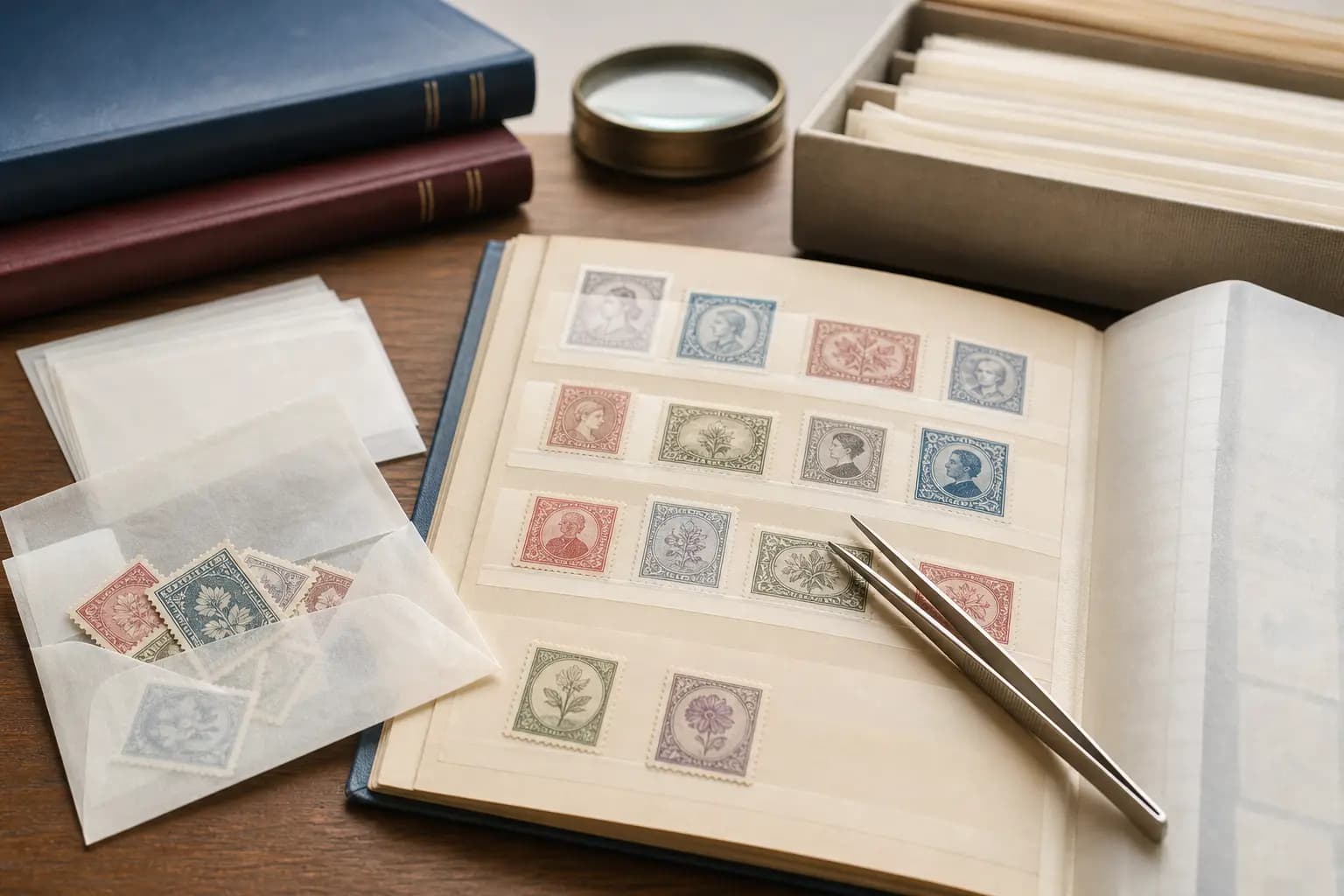
Protect your stamp collection from environmental damage and handling wear. Discover how to use glassine envelopes and stock books as safe, flexible storage solutions for your loose, dry stamps before final mounting.
After soaking stamps from paper, the next critical step is evaluating their condition and sorting them. Learn how to safely identify damaged stamps, select the best-centered duplicates, and organize your collection for long-term storage.
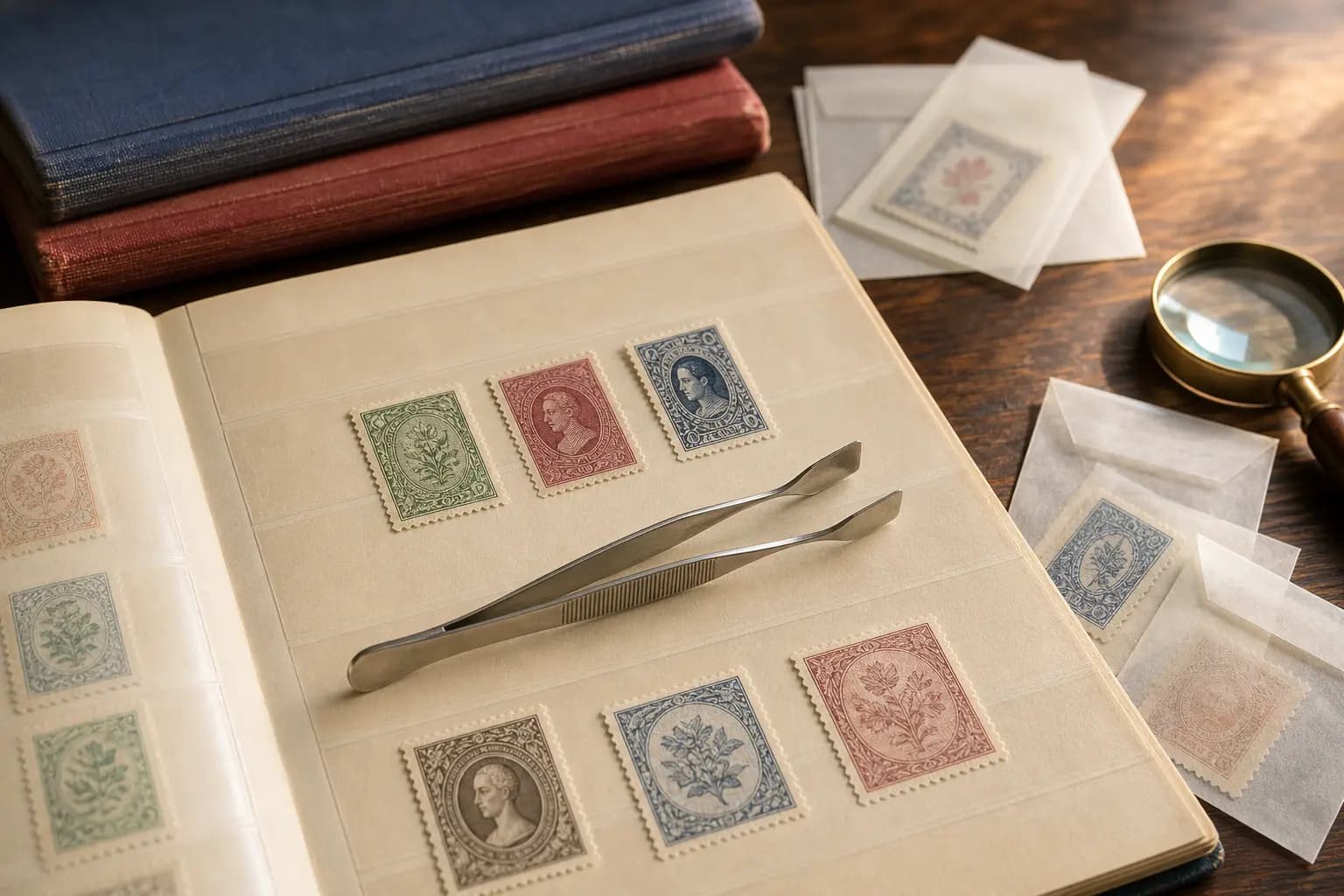
Protecting your postage stamps from invisible skin oils is a fundamental step in preservation. Learn how to choose and use specialized stamp tongs safely, understand why you should never use them on wet stamps, and discover how to keep your collection in pristine condition.
Soaking postage stamps off paper is a classic philatelic technique, but brightly colored envelopes pose a serious risk of color bleeding. Learn how to isolate red or green paper backings, manage water temperatures, and dry your stamps safely to protect their original colors and paper integrity.
Separating self-adhesive stamps from paper envelopes requires understanding their adhesive type. While older self-adhesives can be soaked in water, modern issues with oil-based backings require specialized solvents. Learn the safe, step-by-step methods to protect your stamps from tearing and adhesive damage.
Once your postage stamps are dry, they require careful handling and systematic organization. Learn how to safely sort your stamps by country, topic, or service, inspect them with magnification, and store them temporarily in glassine envelopes without causing damage.