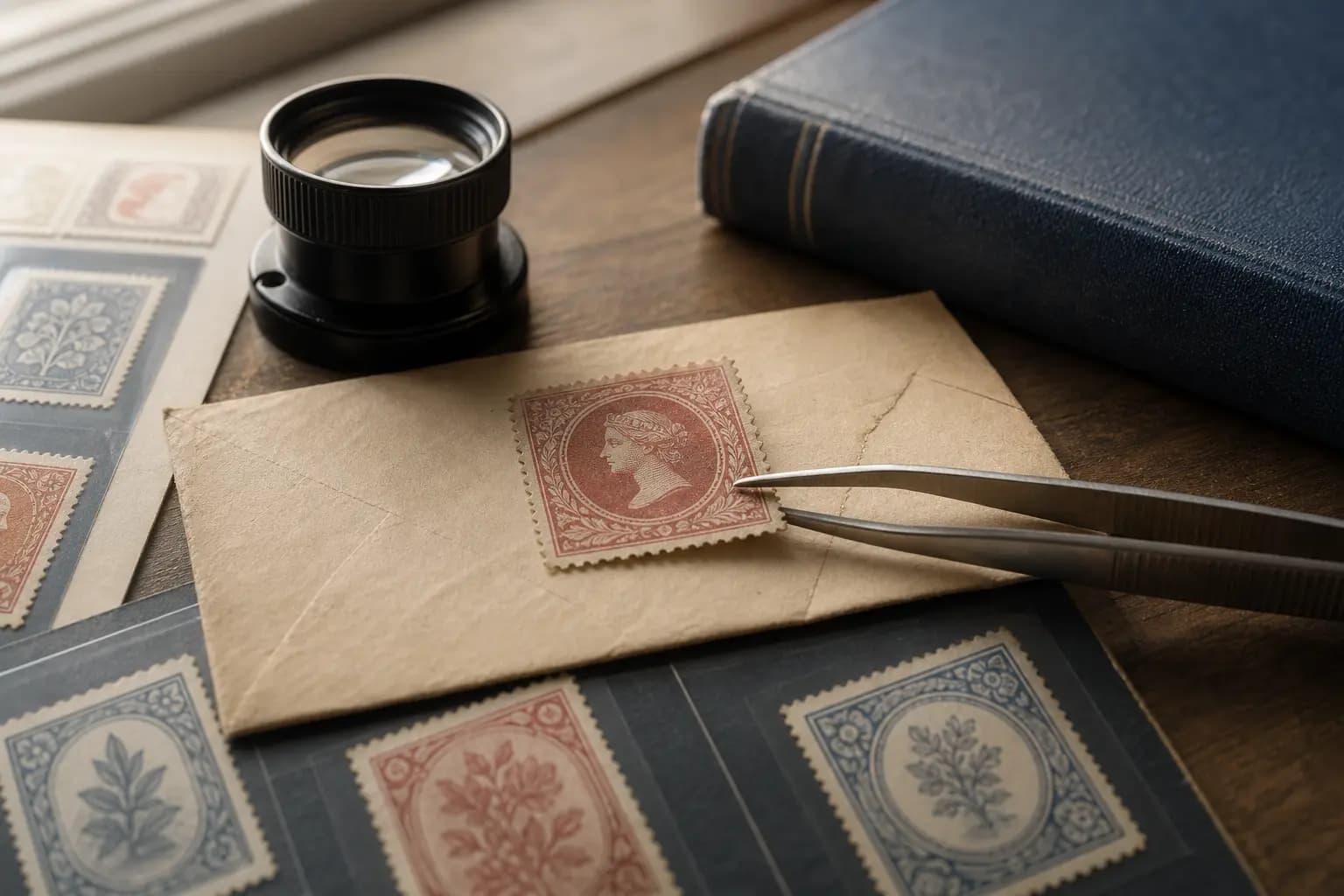
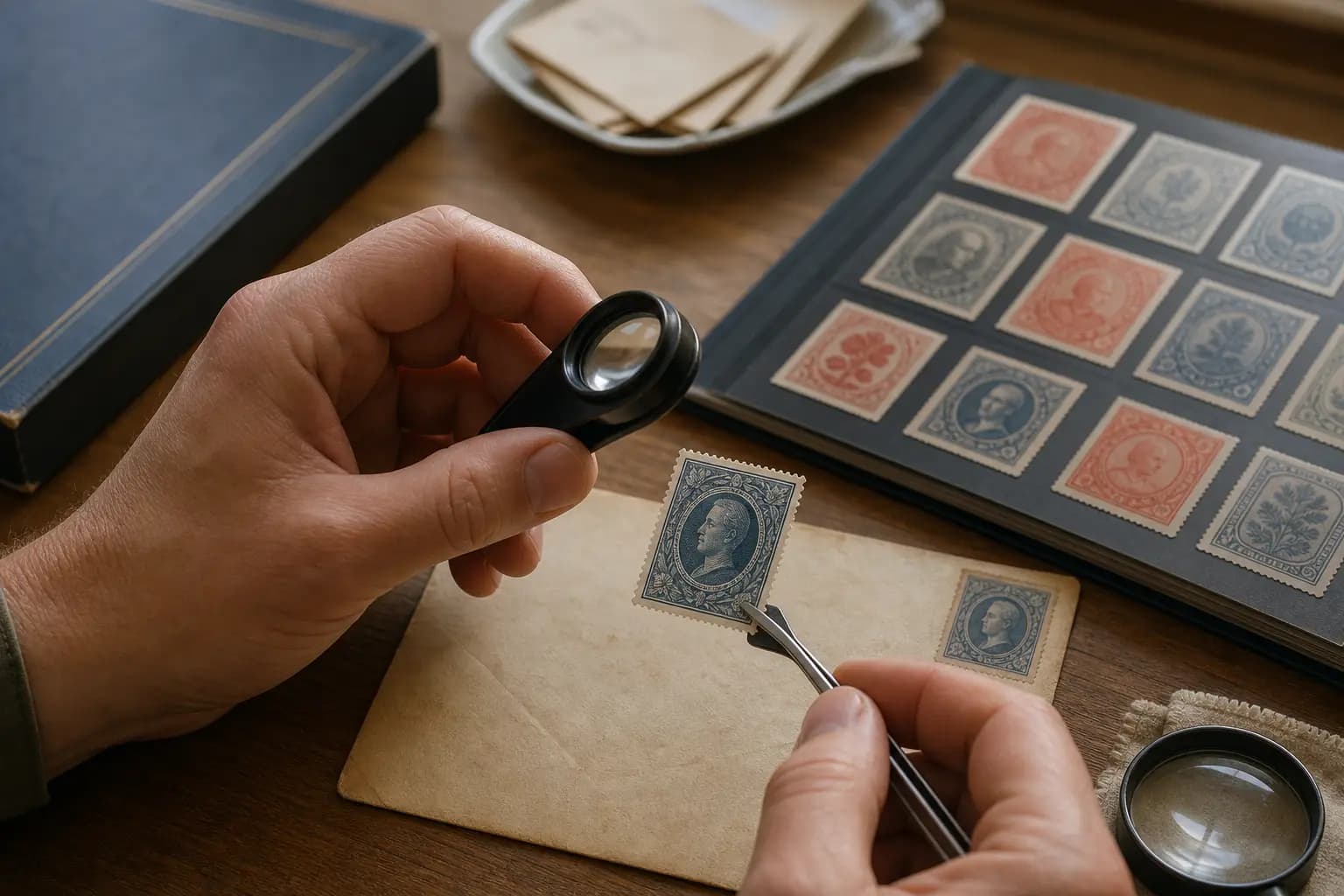
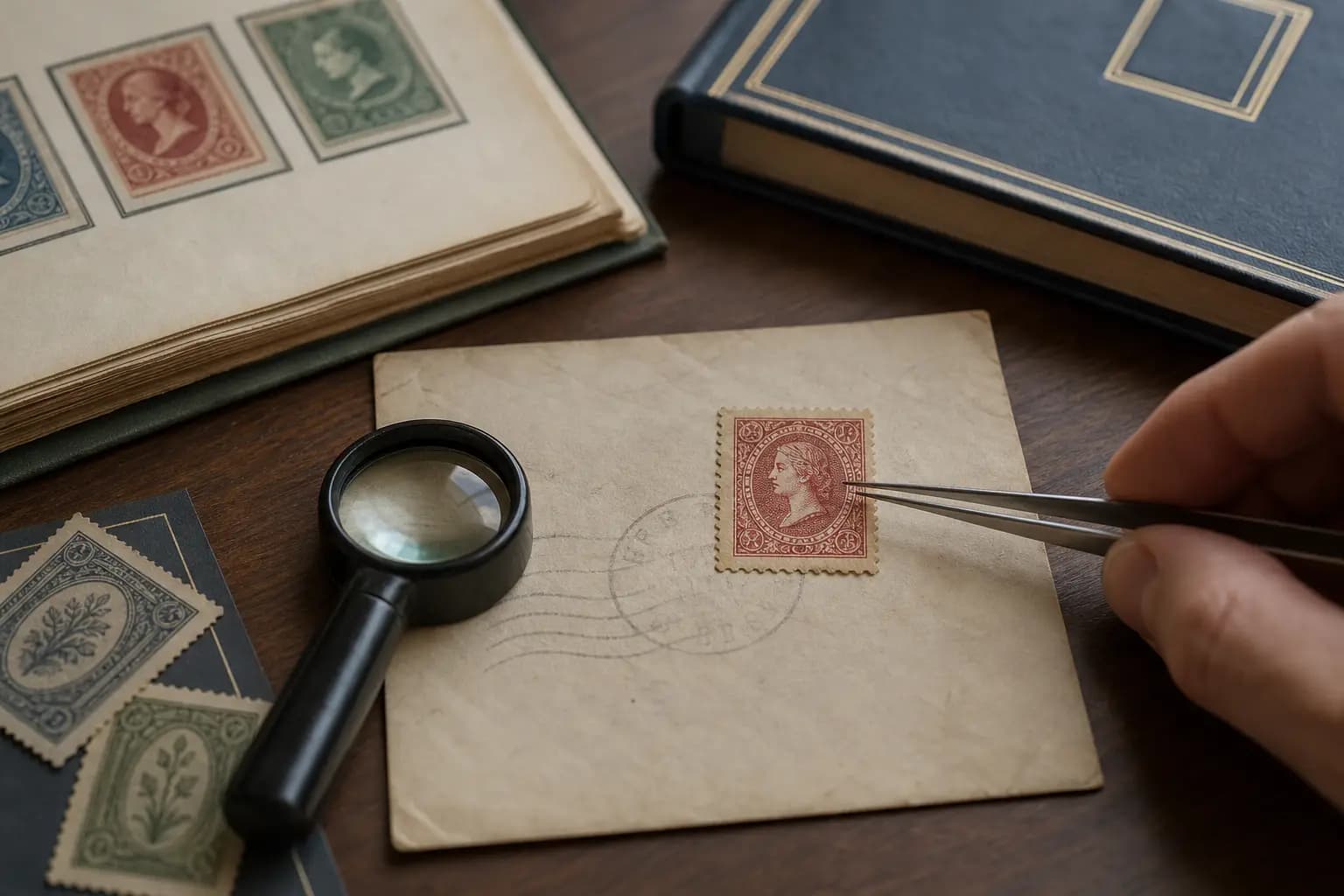
A watermark can be the only difference between a common stamp and a much more valuable catalog issue. Check the paper safely, compare the design carefully, and verify whether the stamp exists on different watermarked or unwatermarked paper before you decide what you have.
You can often tell a self-adhesive stamp by looking for its backing and handling clues, then confirming with a catalogue or watermark check. Do not soak current self-adhesives unless you know the adhesive type, and avoid forcing removal from paper.
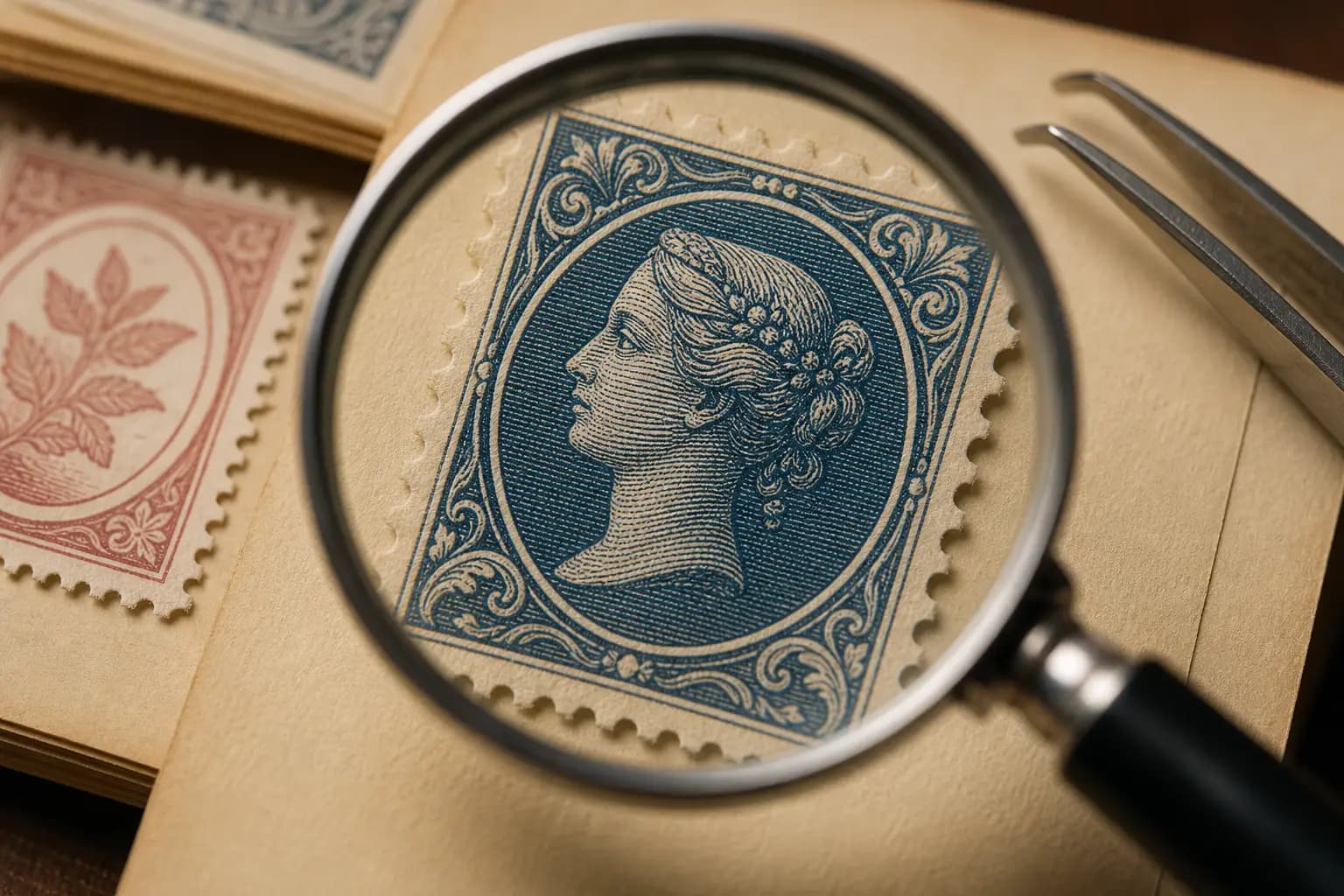
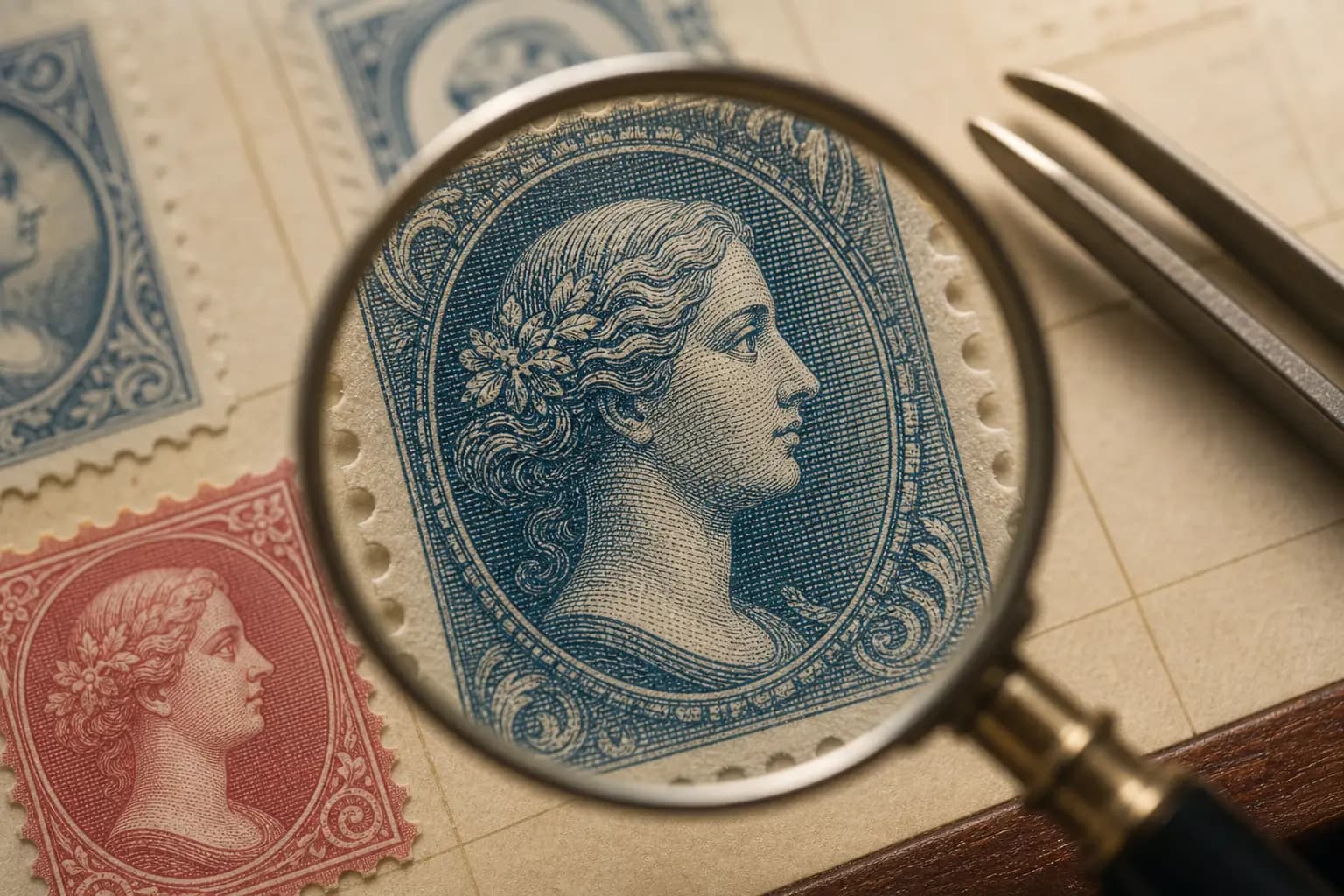
Start by asking which printing family is most likely: line-engraved intaglio, gravure, letterpress, or lithography. Use non-contact magnification, diffuse or oblique light, and production records together, because single visual clues can mislead.
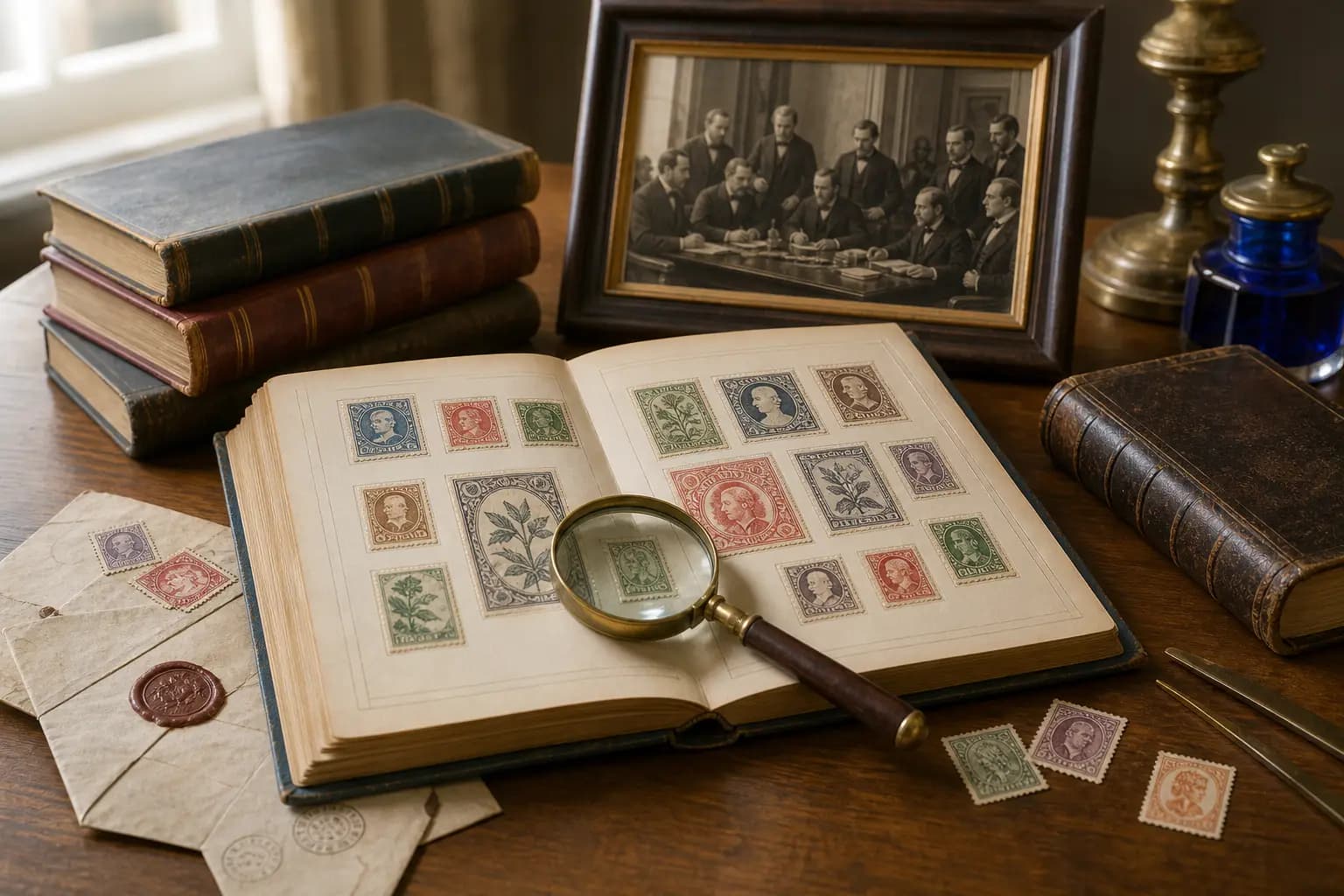
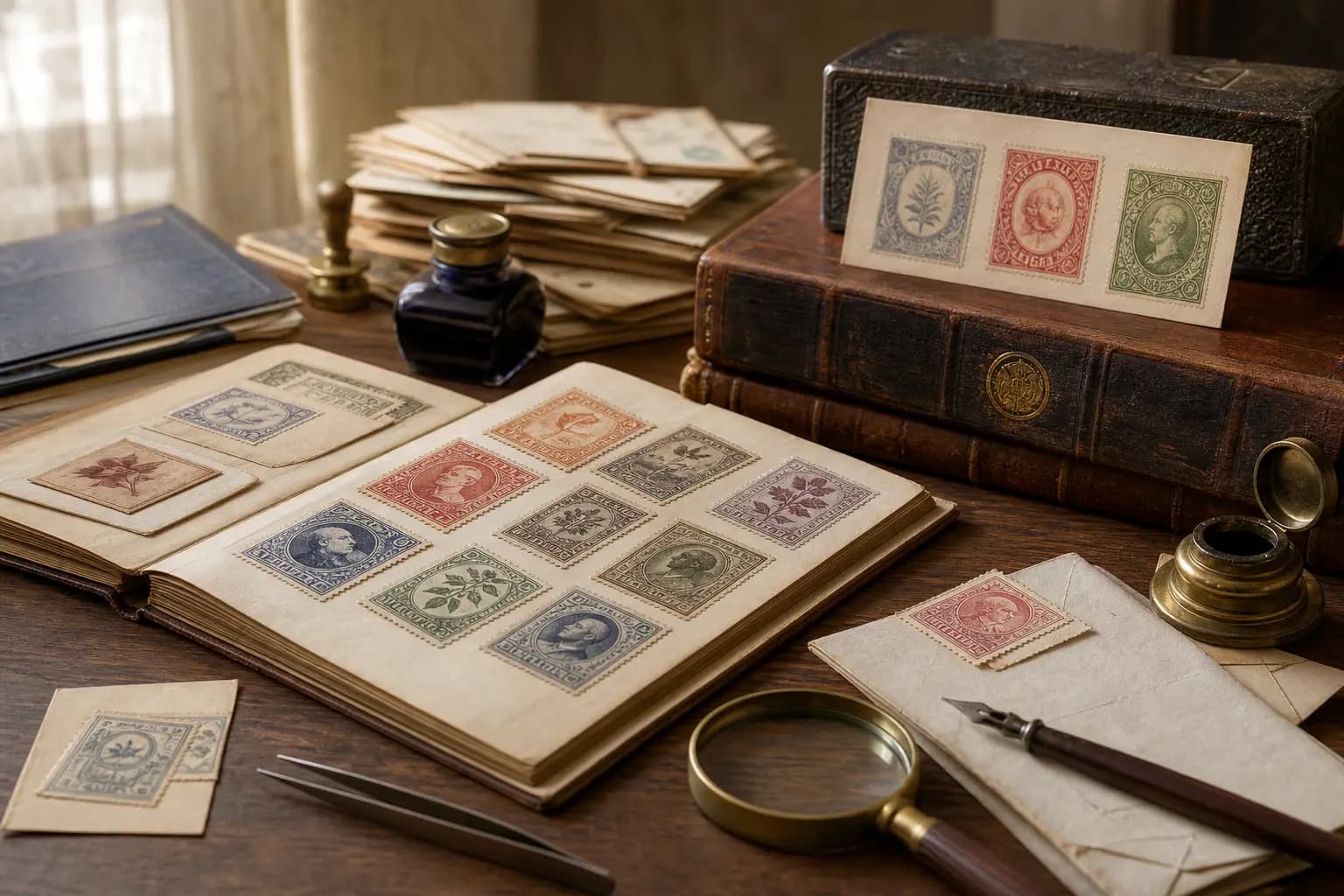
Philatelic clubs shaped stamp history by turning scattered collectors into organized communities. They compared stamps, exchanged duplicates, published journals, built libraries, and recorded knowledge that still helps collectors today.
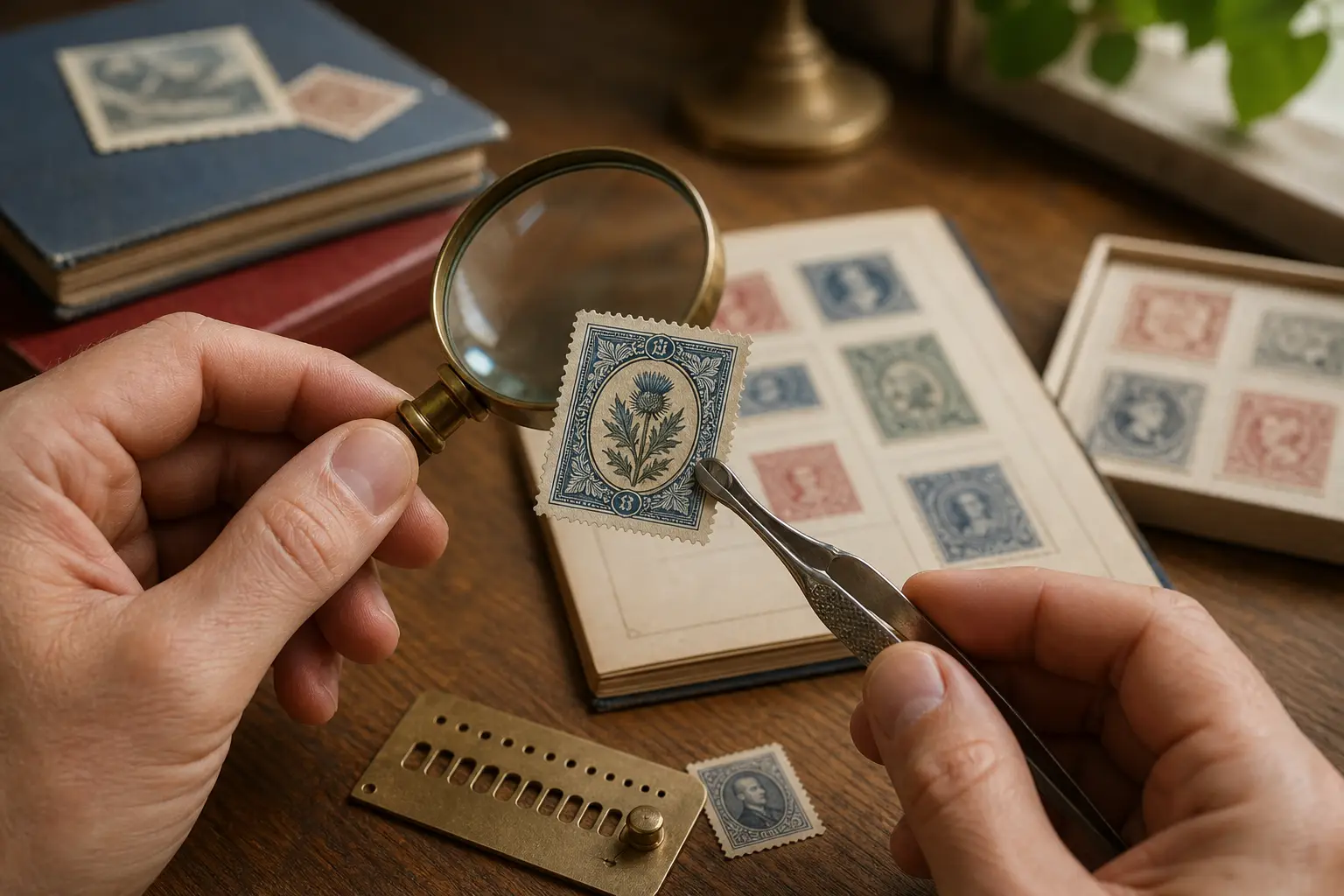
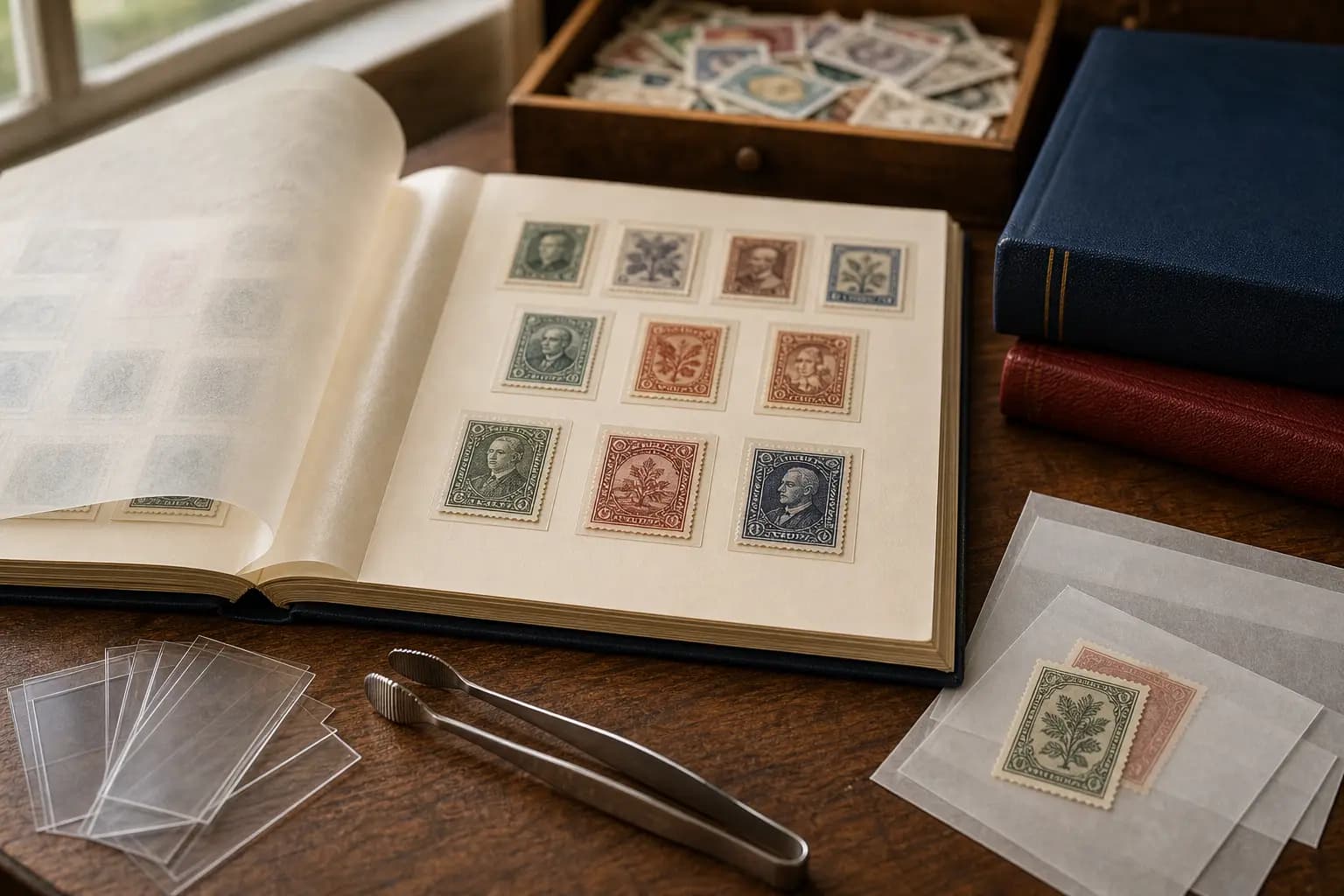
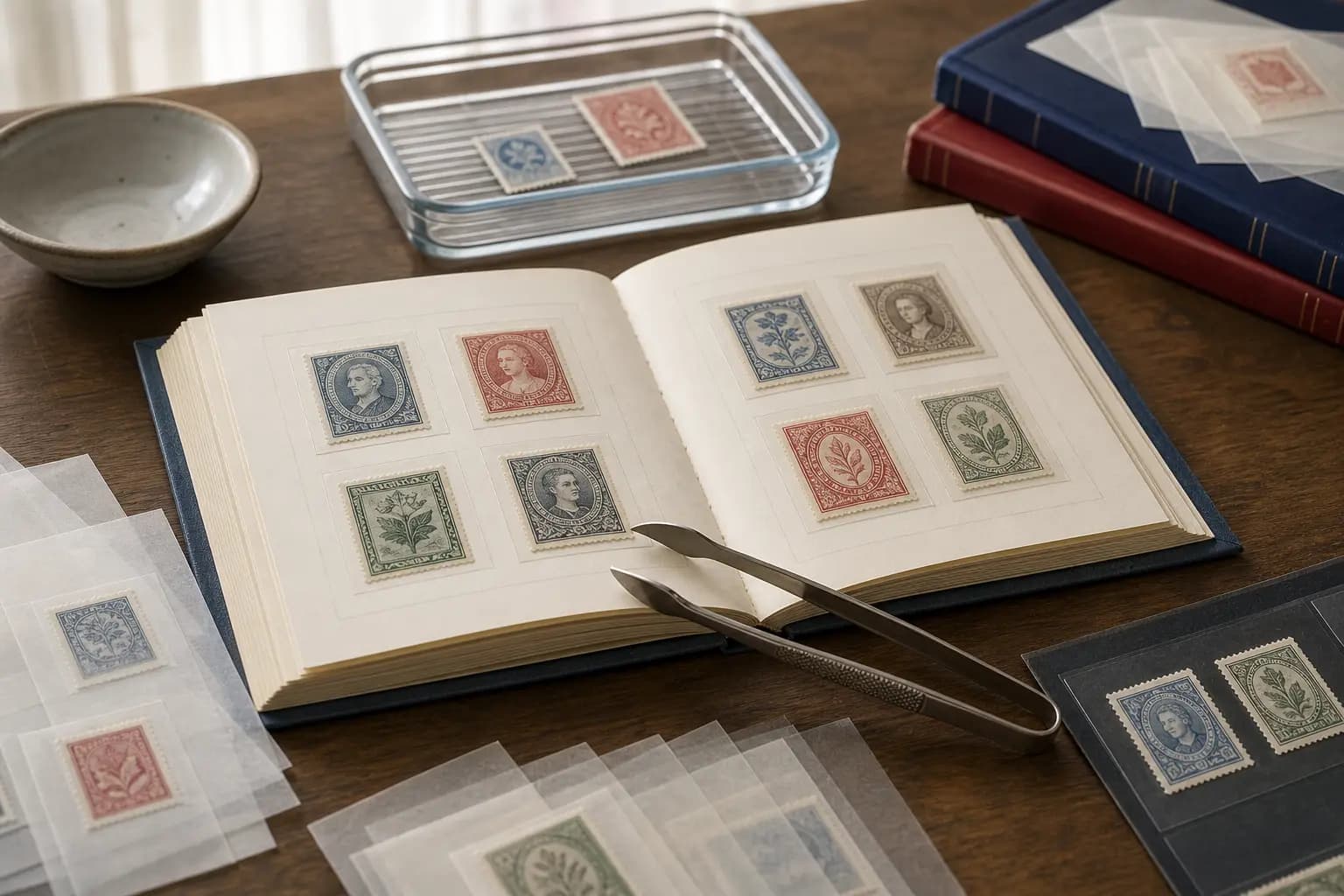
Store loose, dry stamps in an album or stock book with hinges or mounts, keep wet or softened stamps separate until fully dry, and never use tape or glue. If a stamp is still damp, handle it gently and do not use tongs on it.
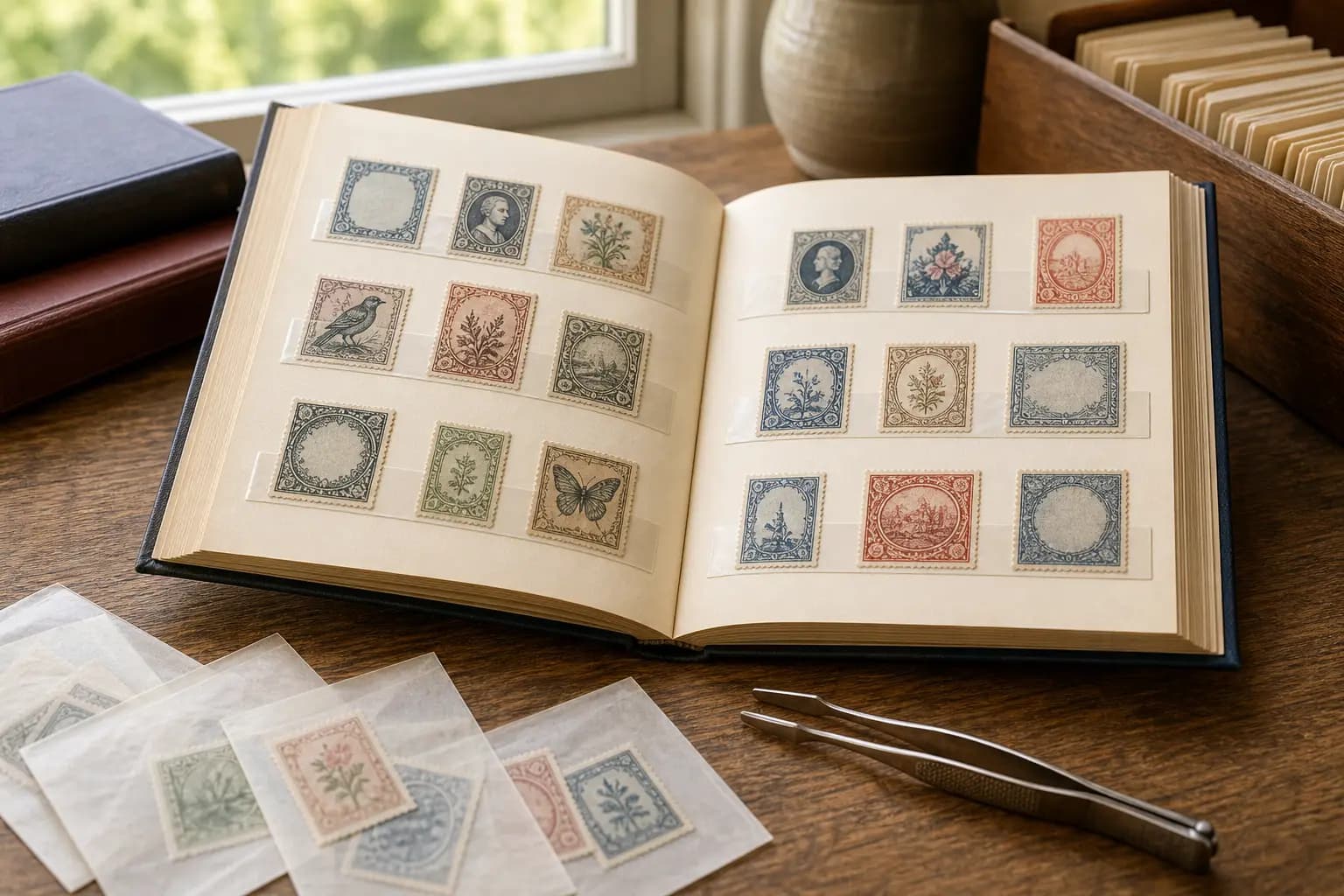
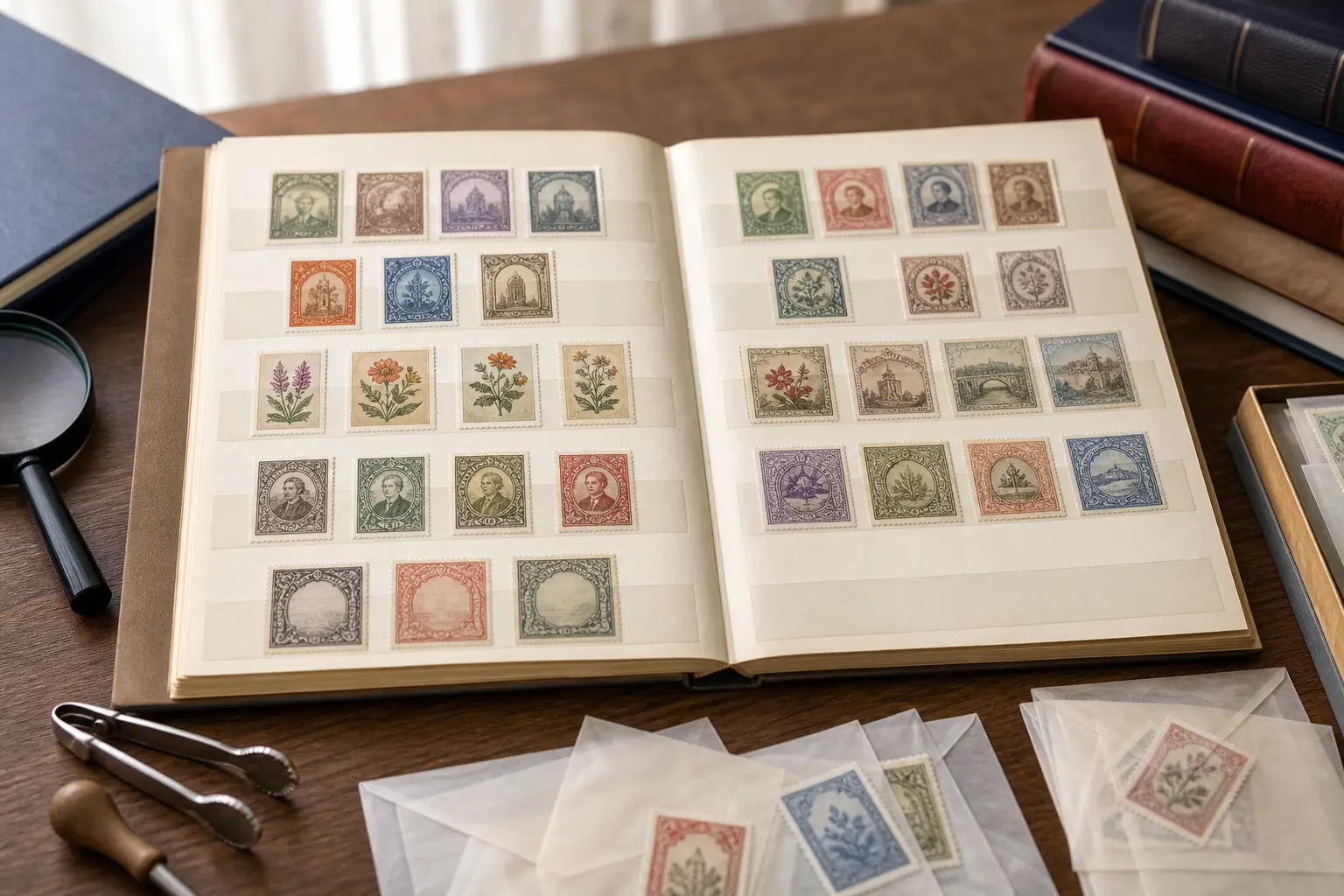
A topic-based collection starts with a subject you enjoy, then grows by choosing what material to include and recording details against reliable references. Use basic tools, handle stamps carefully, and keep your scope realistic.
Stamps that look almost identical can have very different values. The safest approach is to compare watermark, perforation, color, and tiny design details before you assume two stamps are the same issue.
You can often narrow a stamp’s printing method by combining non-contact magnification, diffuse or oblique light, and production records. Use visual clues as a set, not a single test, and do not rely on softness, dots, or one feature alone.
Stamp clubs helped build philatelic research by bringing collectors together to compare stamps, exchange knowledge, publish studies, and create reference material. The best-known examples show how organized collecting turned shared interest into records, libraries, and specialist learning.
Handle dry stamps with tongs and minimal contact, but keep wet or softened stamps still and supported until they are fully dry. Safe handling starts with the stamp’s condition, then moves through drying, sorting, and storage without tape, glue, or force.
Start with a simple goal, basic tools, and a clear scope. Worldwide collecting can be as broad or focused as you like, but a good plan helps you sort, compare, and store stamps safely from the beginning.
Watermarks and small design differences can separate a common stamp from a much scarcer one. The safest approach is to check the design, paper, and watermark methodically, and treat uncertain identifications as provisional until you can confirm them.