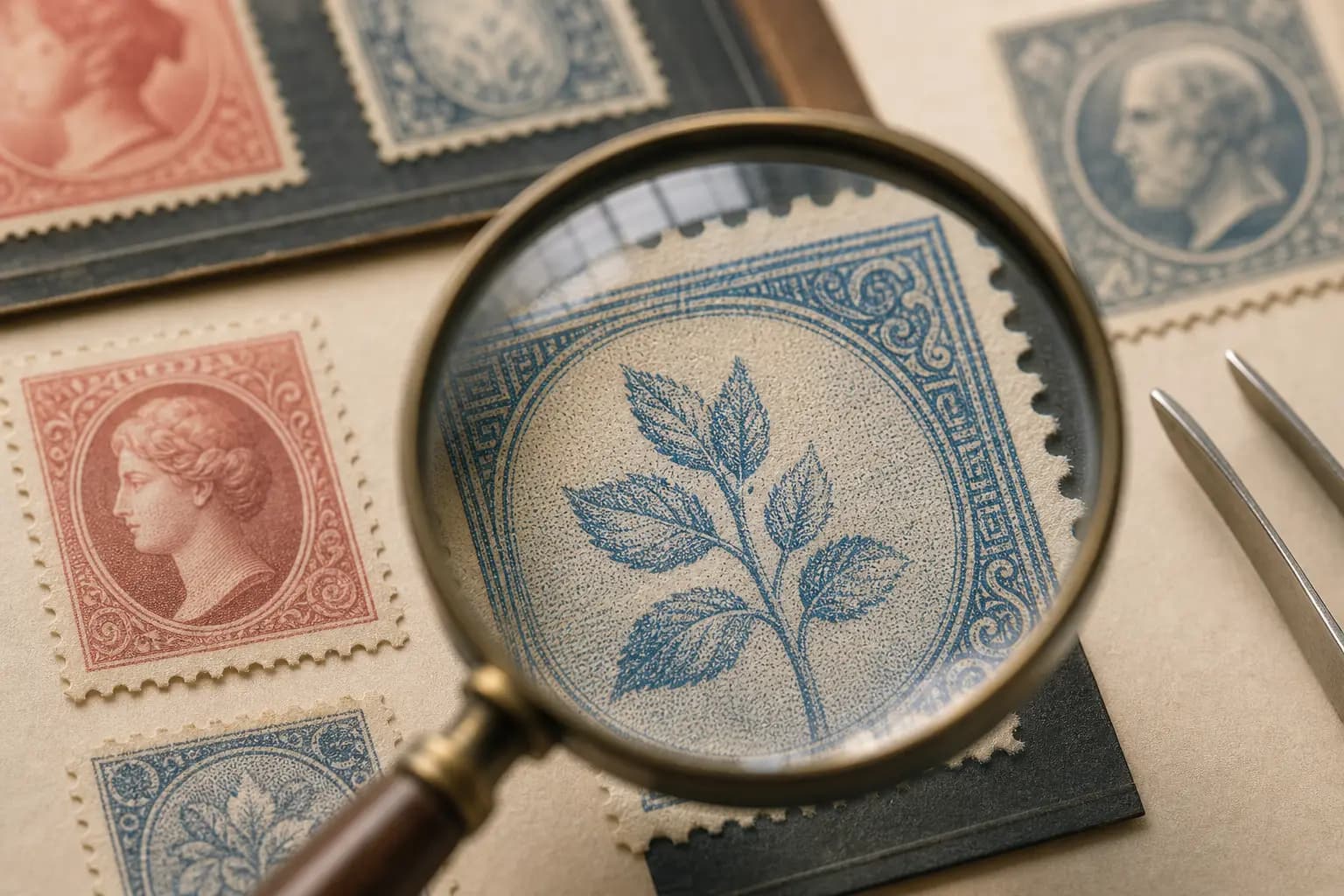
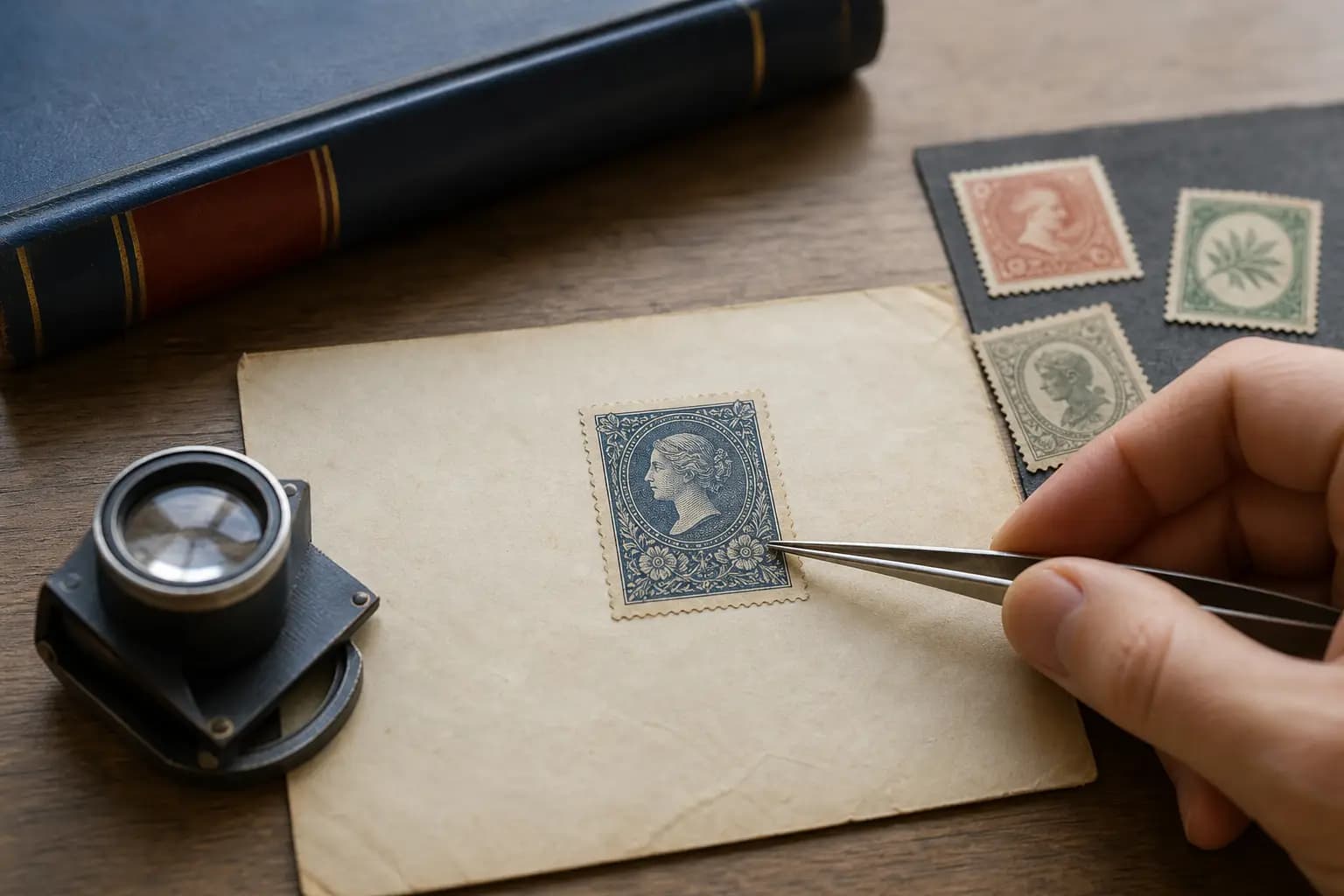
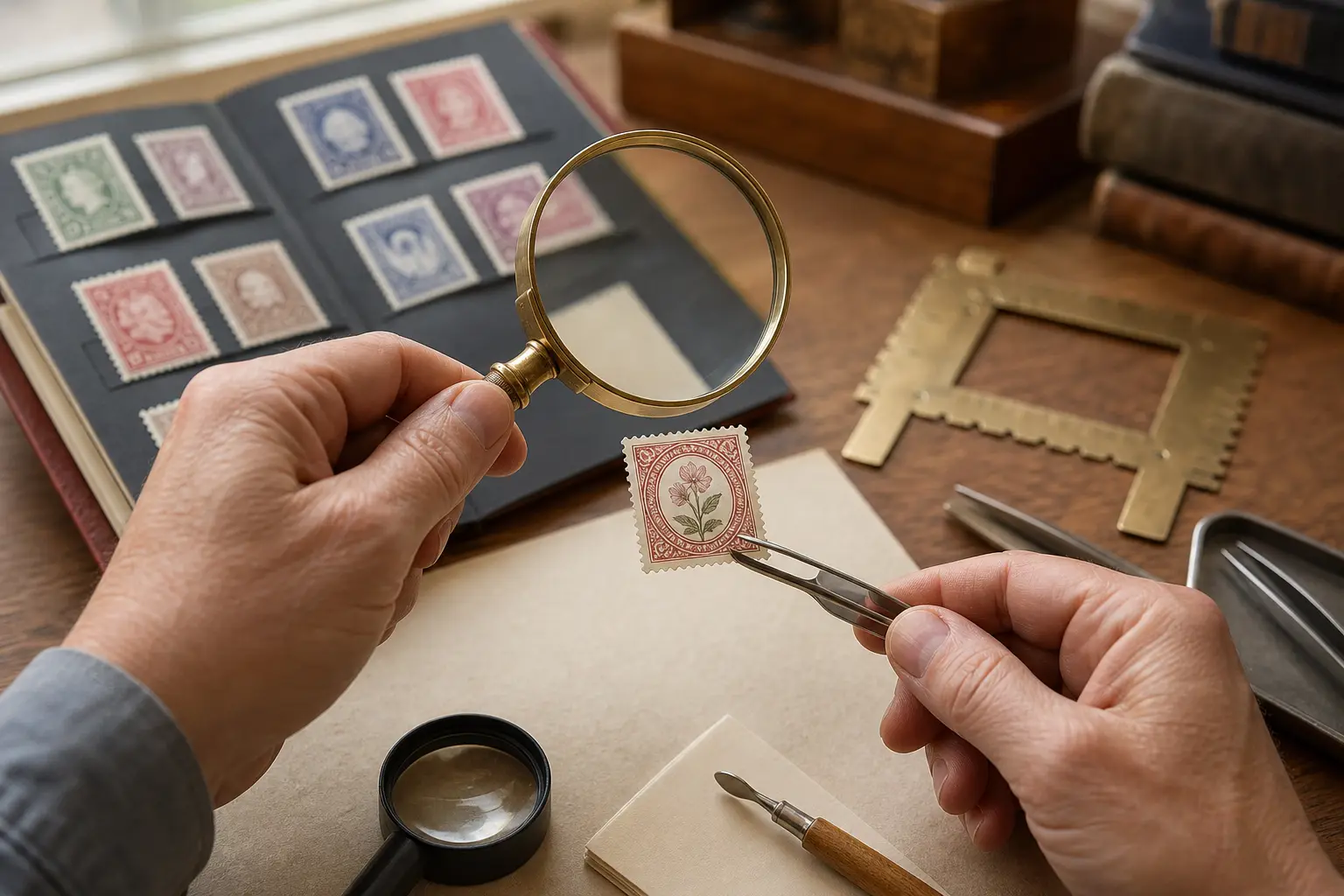
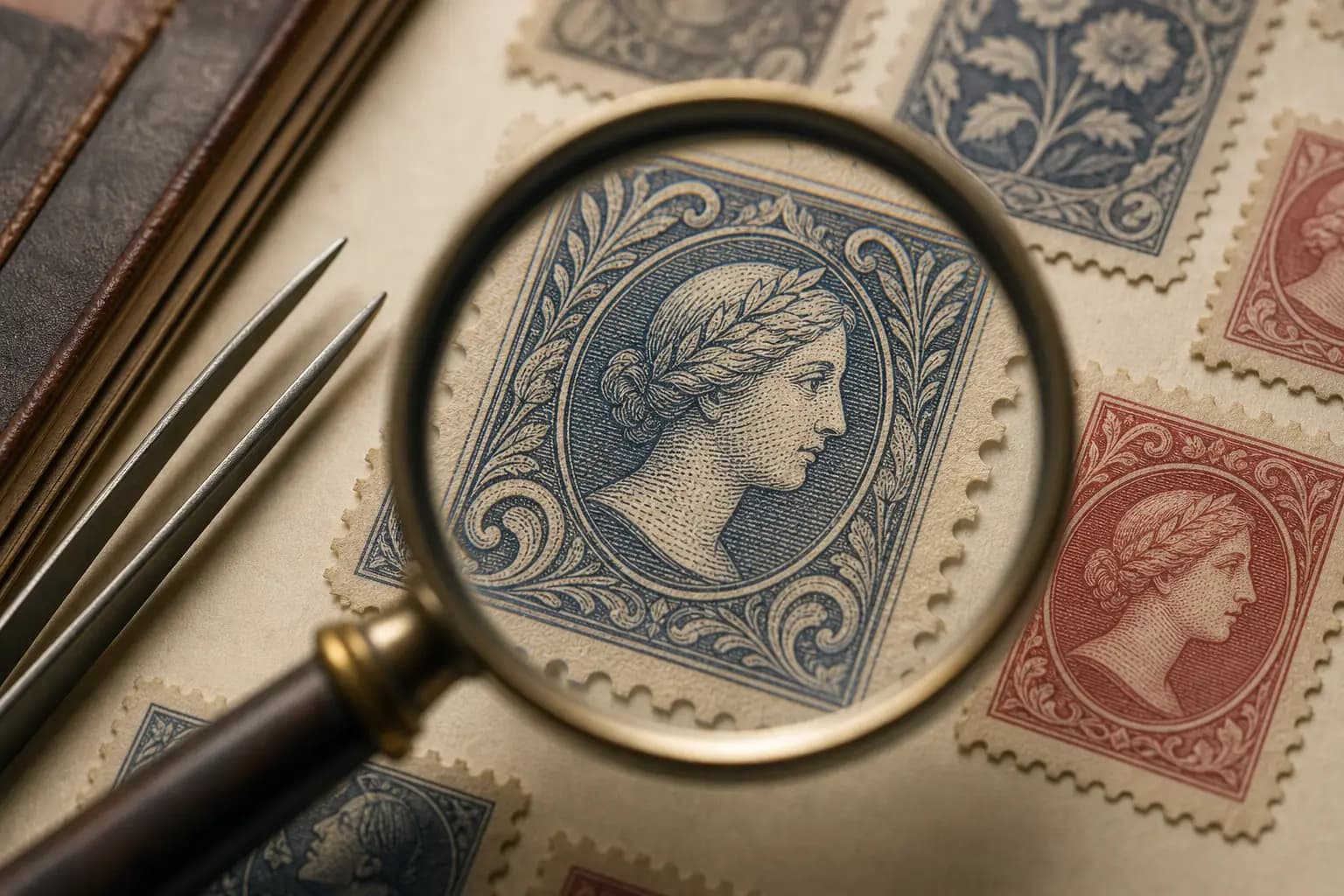
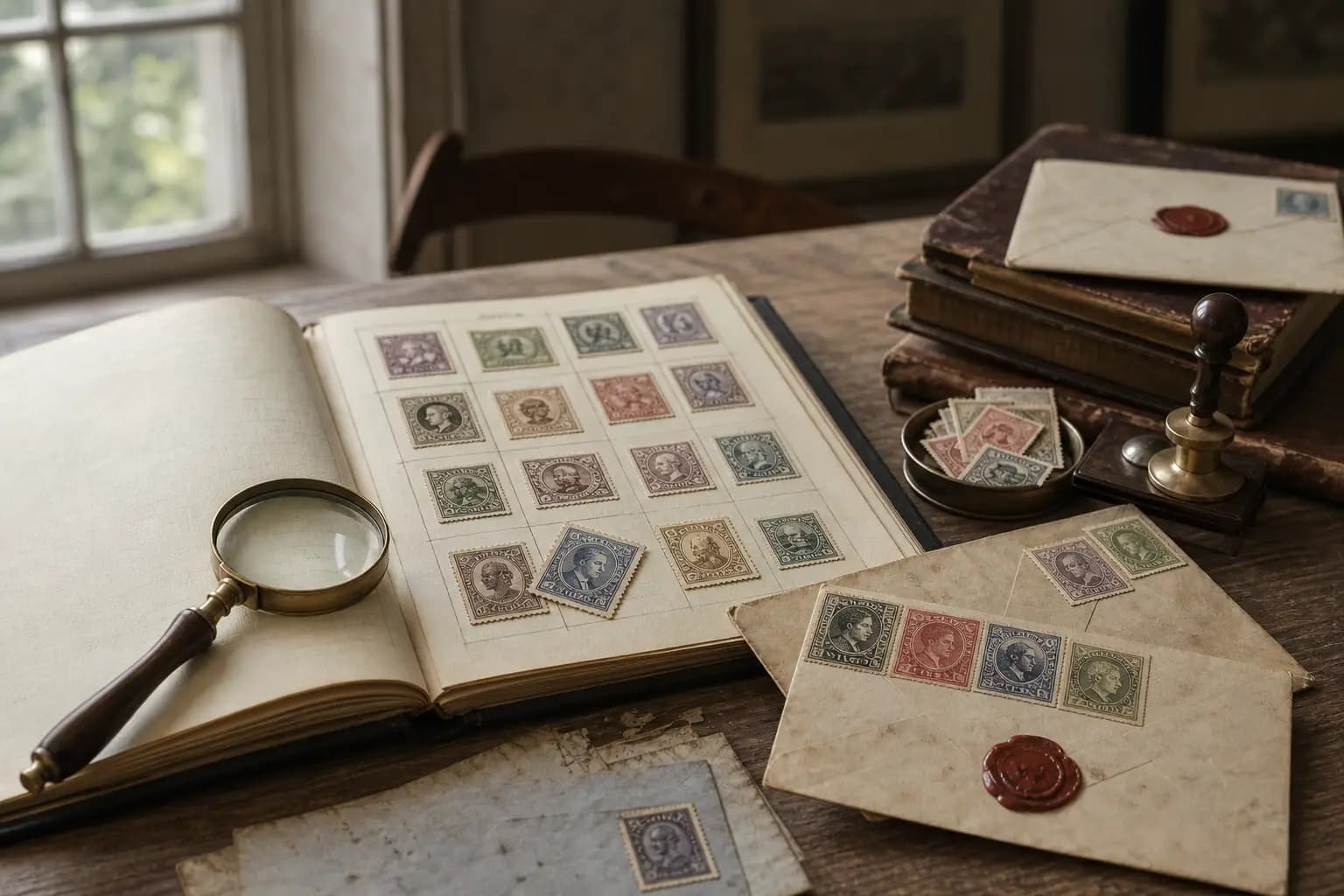
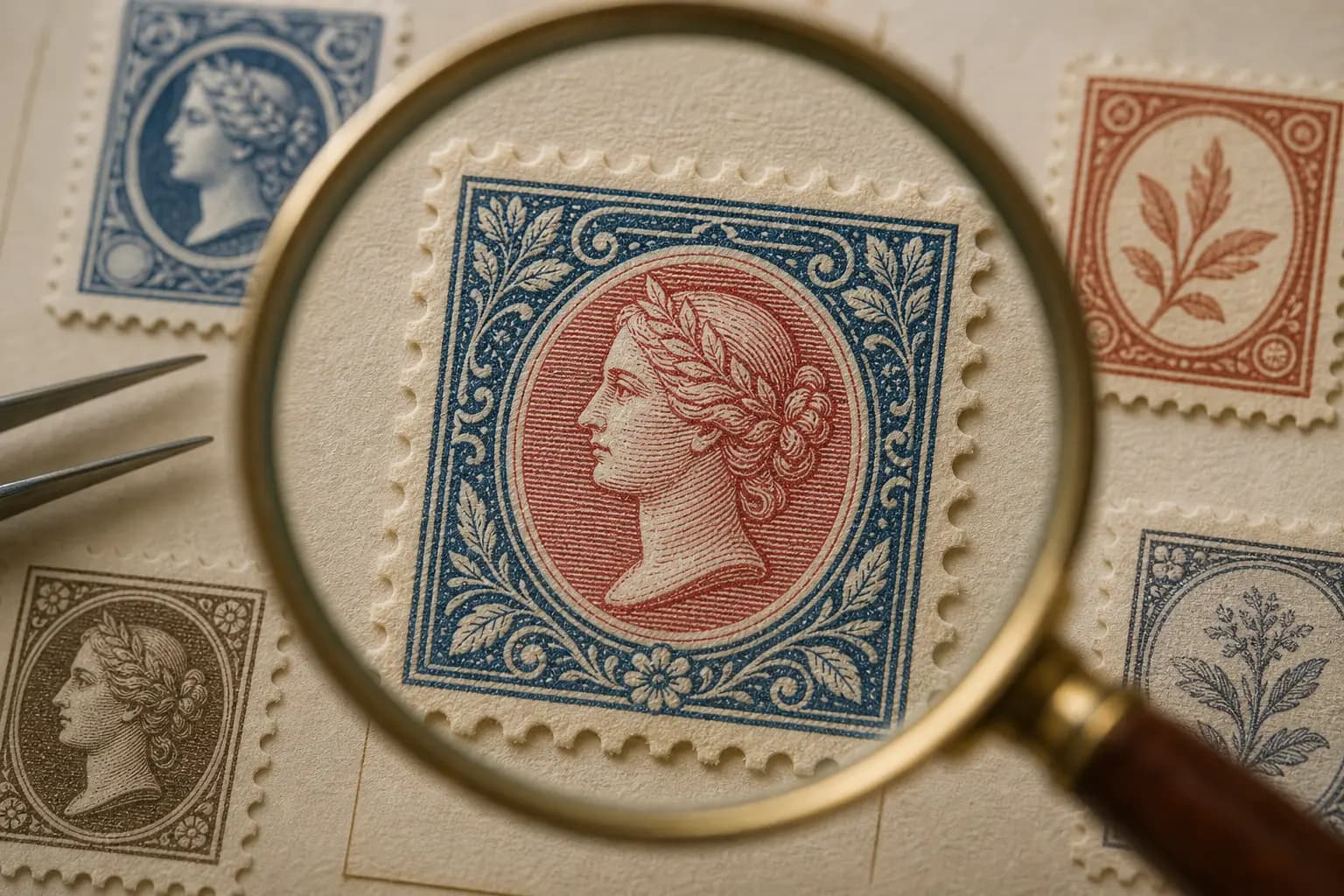
Offset lithography can be recognised by combining several non-contact clues, not by one feature alone. Use magnification, diffuse or oblique light, and production records to separate it from intaglio, gravure, letterpress, and other modern combinations safely.
Stamp clubs helped collectors turn shared interest into reference material, journals, libraries, and exhibitions. They did not replace expert study, but they made knowledge easier to compare, record, and pass on.
Dry stamps flat, patiently, and away from heat. After soaking, remove them carefully, let them rest on paper towels, and store them only when fully dry to reduce curling, sticking, and damage.
The best first stamp collection is the one you will enjoy and keep building. Start with a clear focus, use basic tools, and choose a scope that fits your time, space, and interests.
Yes. A watermark can define a separate stamp issue, so two stamps with the same design may belong to different catalogue entries and different values. Learn a safe, methodical way to check for them without risking damage.
You can often identify a self-adhesive stamp without soaking it by checking the backing, catalog notes, and visual clues with careful handling. If the stamp is current U.S. material, water alone may not be enough, so use a methodical, non-damaging approach.
You can narrow a stamp’s printing method by combining safe visual clues, magnification, oblique light, and watermark study. No single feature is decisive, and modern stamps may mix more than one process.
Stamp clubs became philatelic networks by turning casual collecting into organised exchange, education, publishing, and recordkeeping. In the 1880s, collectors formed national structures, journals, and libraries that helped preserve philatelic history.
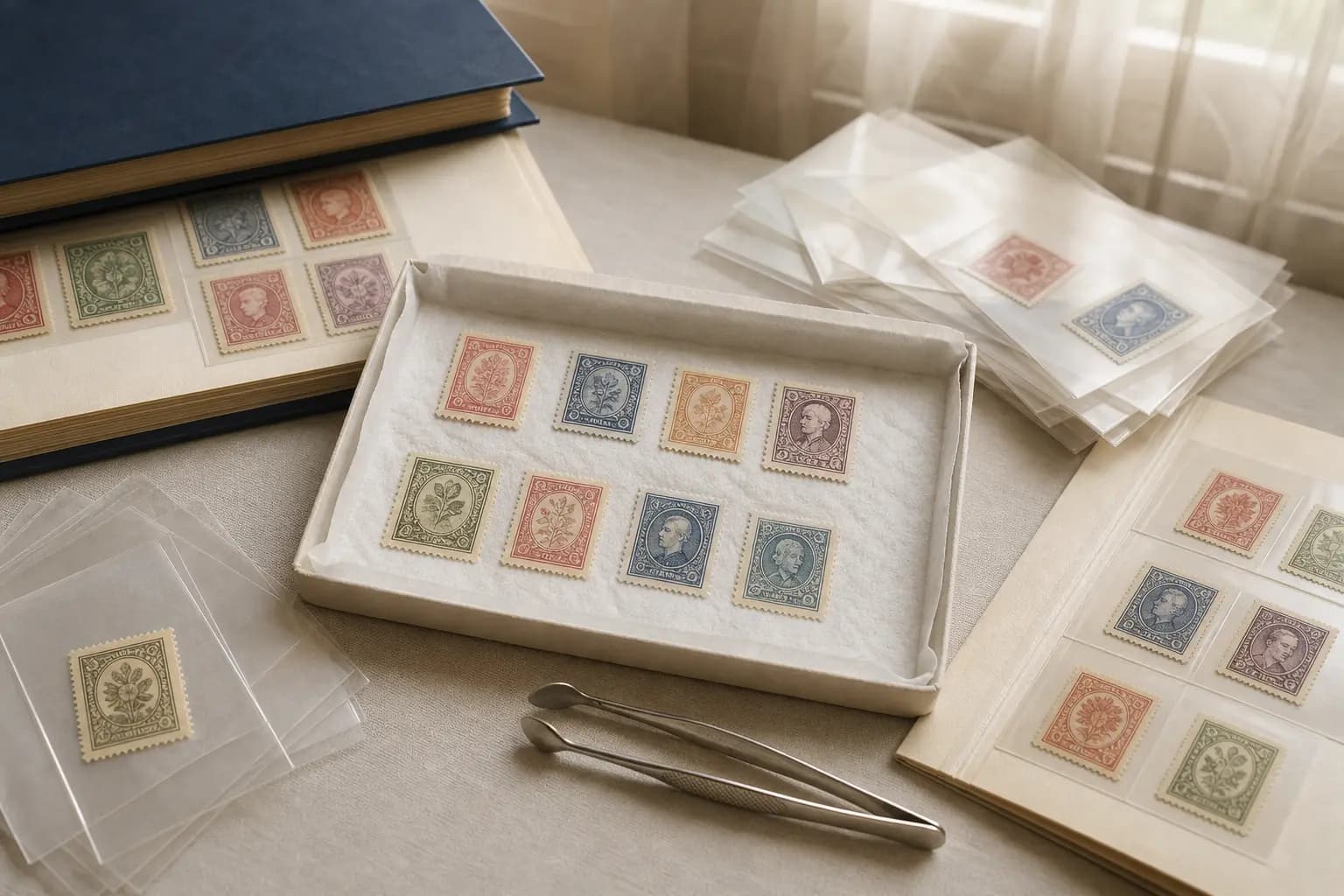
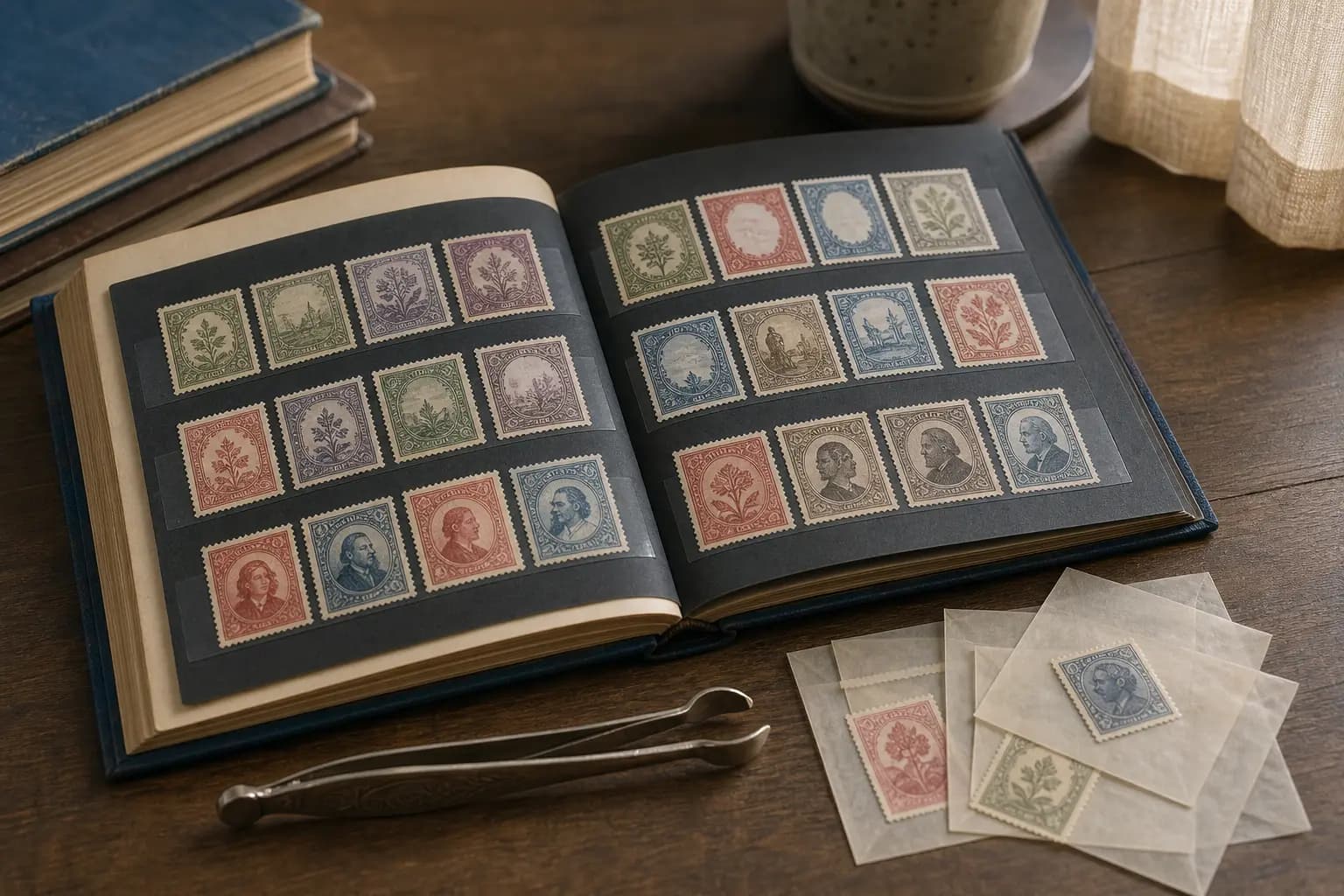
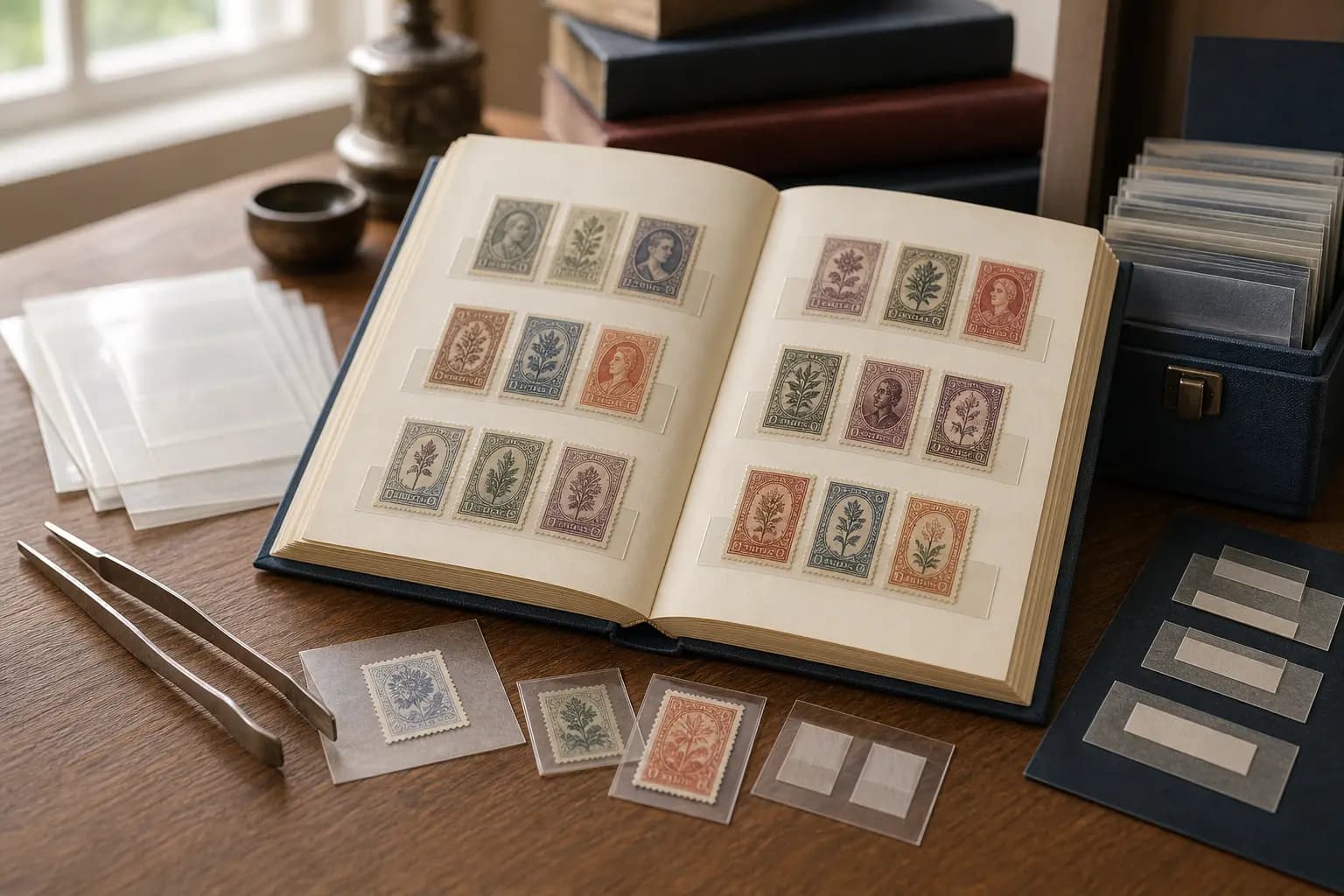
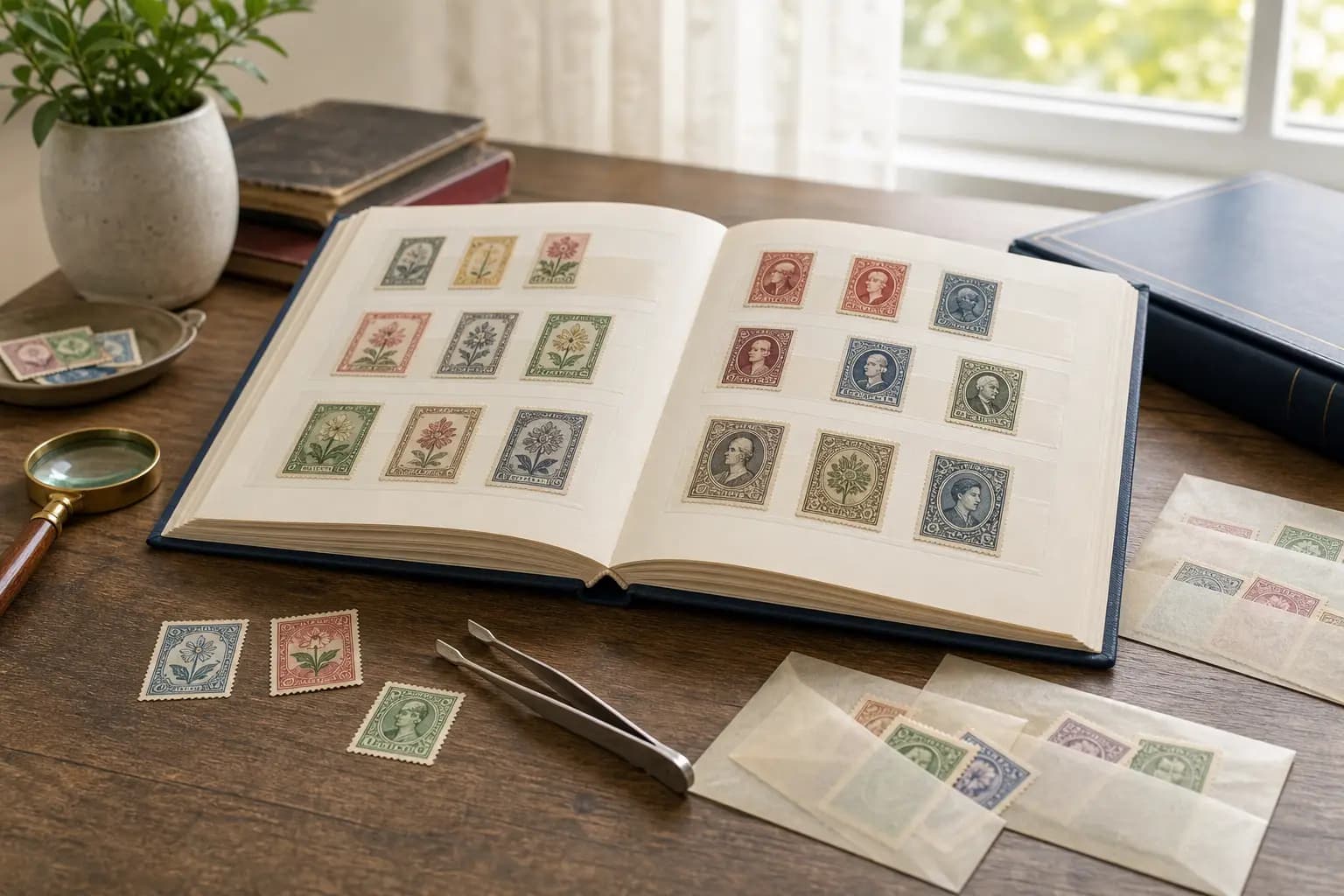
Store stamps by keeping them dry, handling them minimally, and using the right album supplies. Dry stamps can be handled with tongs; damp stamps should be left to dry first. Avoid tape, glue, and sticky pages.
You can start stamp collecting with very little time by choosing one simple focus, gathering a few basic tools, and sorting carefully. Begin with safe handling, then use references to record what you have and decide what to collect next.
You can usually separate letterpress from lithography by combining several clues, not one feature alone. Use non-contact magnification, oblique light, and production records to build a careful identification.
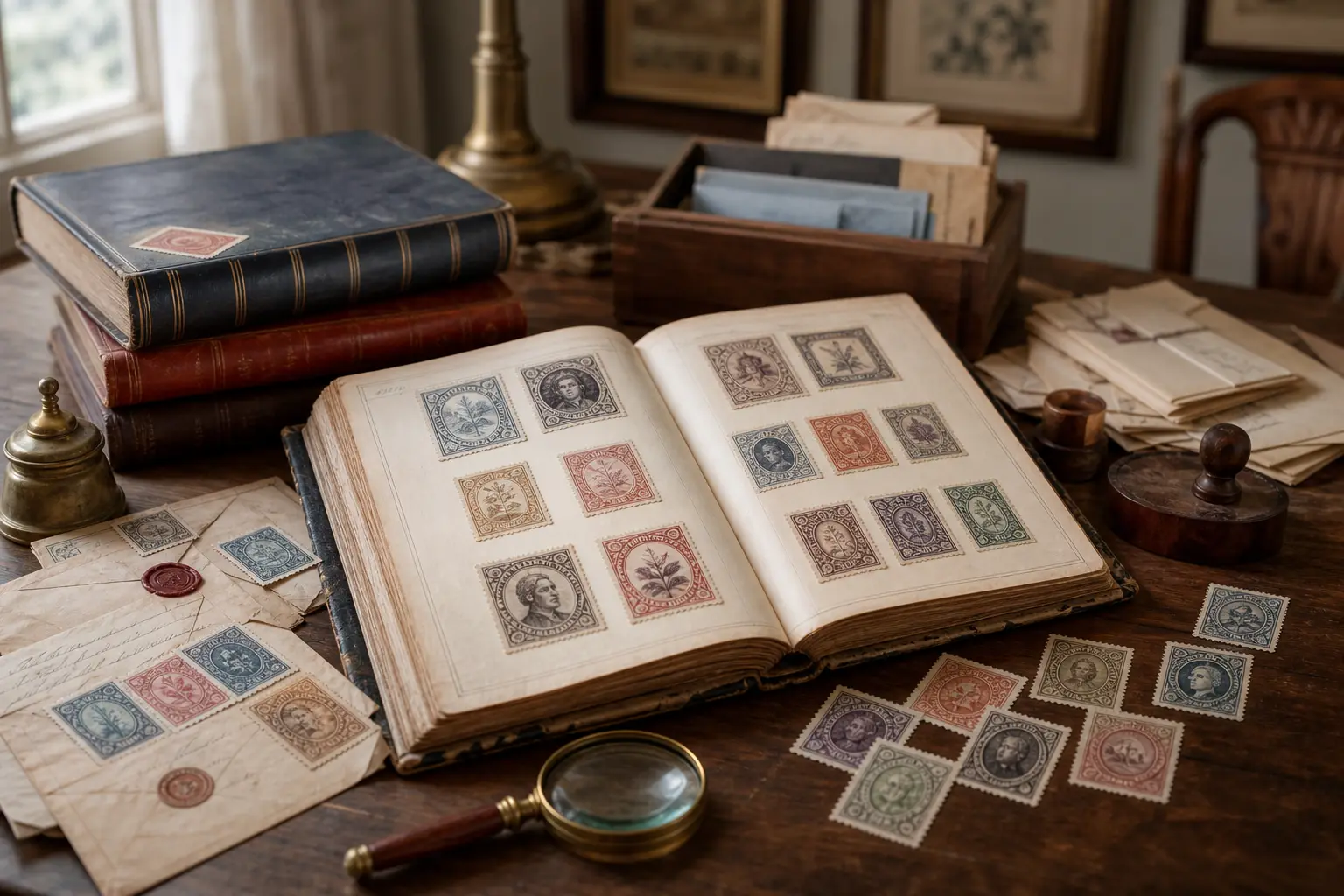
Stamp clubs helped build philatelic history by bringing collectors together to compare, discuss, and exchange material, then turning that activity into journals, libraries, research, and exhibitions. Here is how those records developed and how collectors can use them safely today.