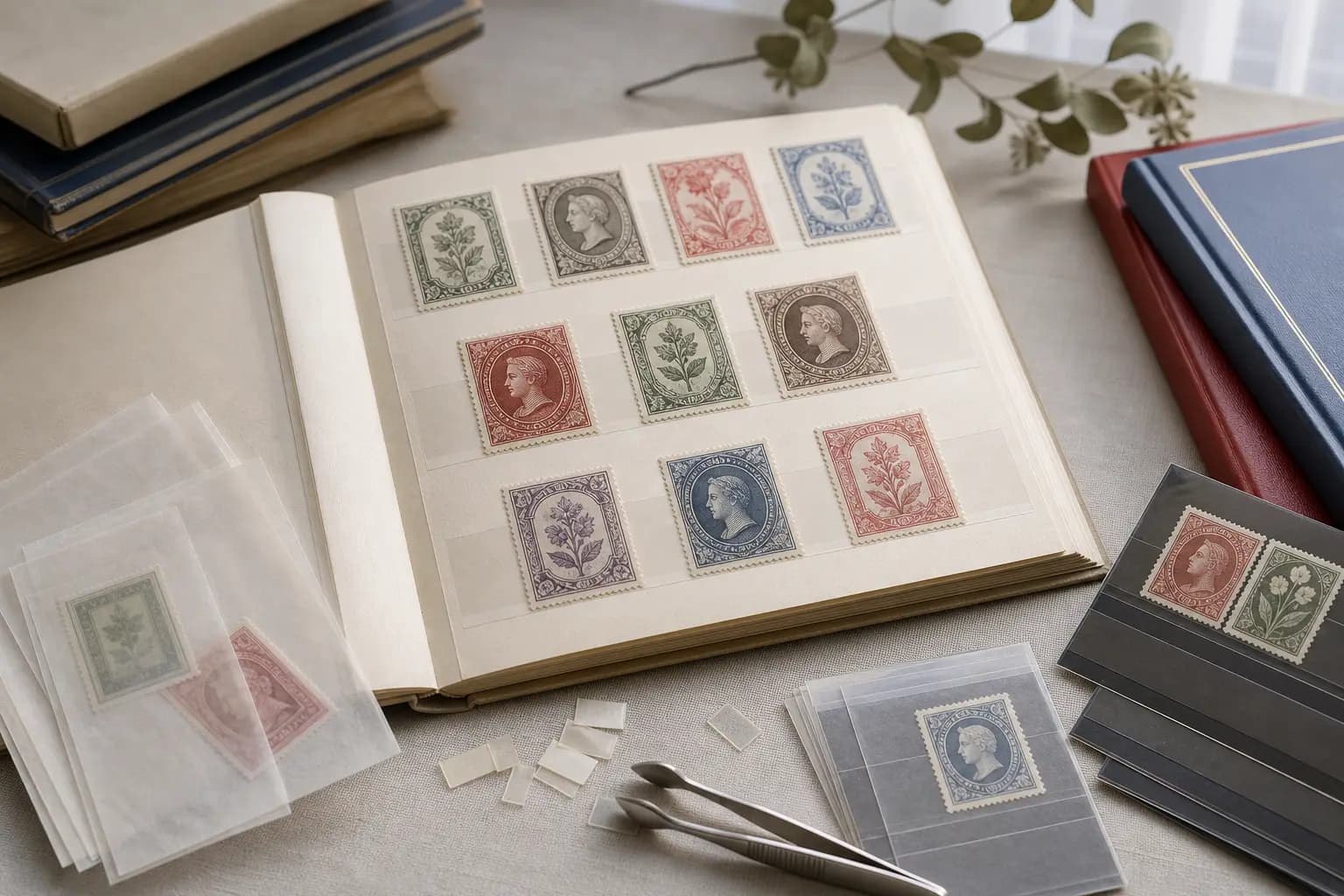
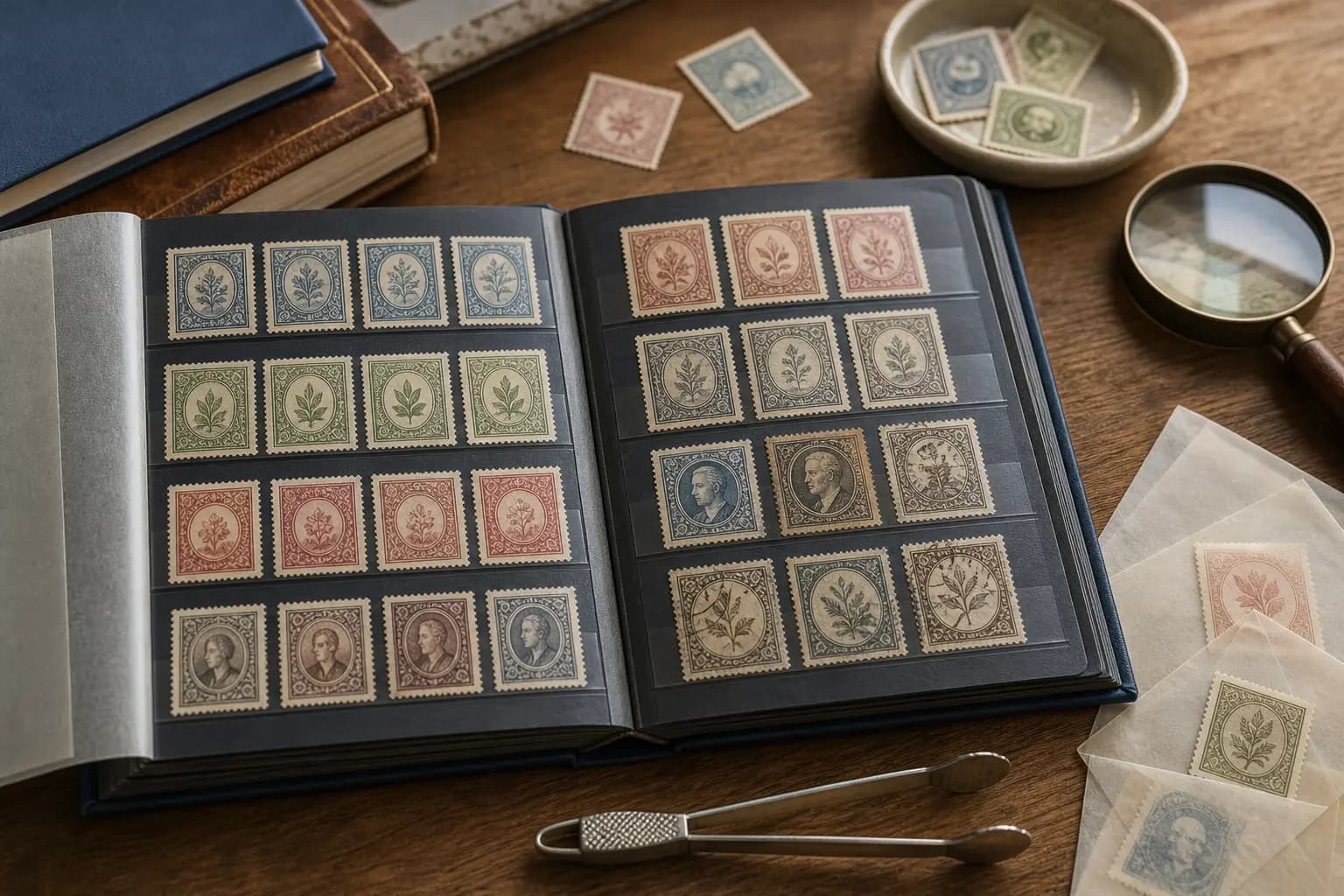
Preserving postage stamps requires a clear understanding of when to use tools and when to let nature do the work. Discover the critical differences between handling wet and dry stamps, why you should avoid using tongs on wet paper, and how to safely dry and sort your collection.
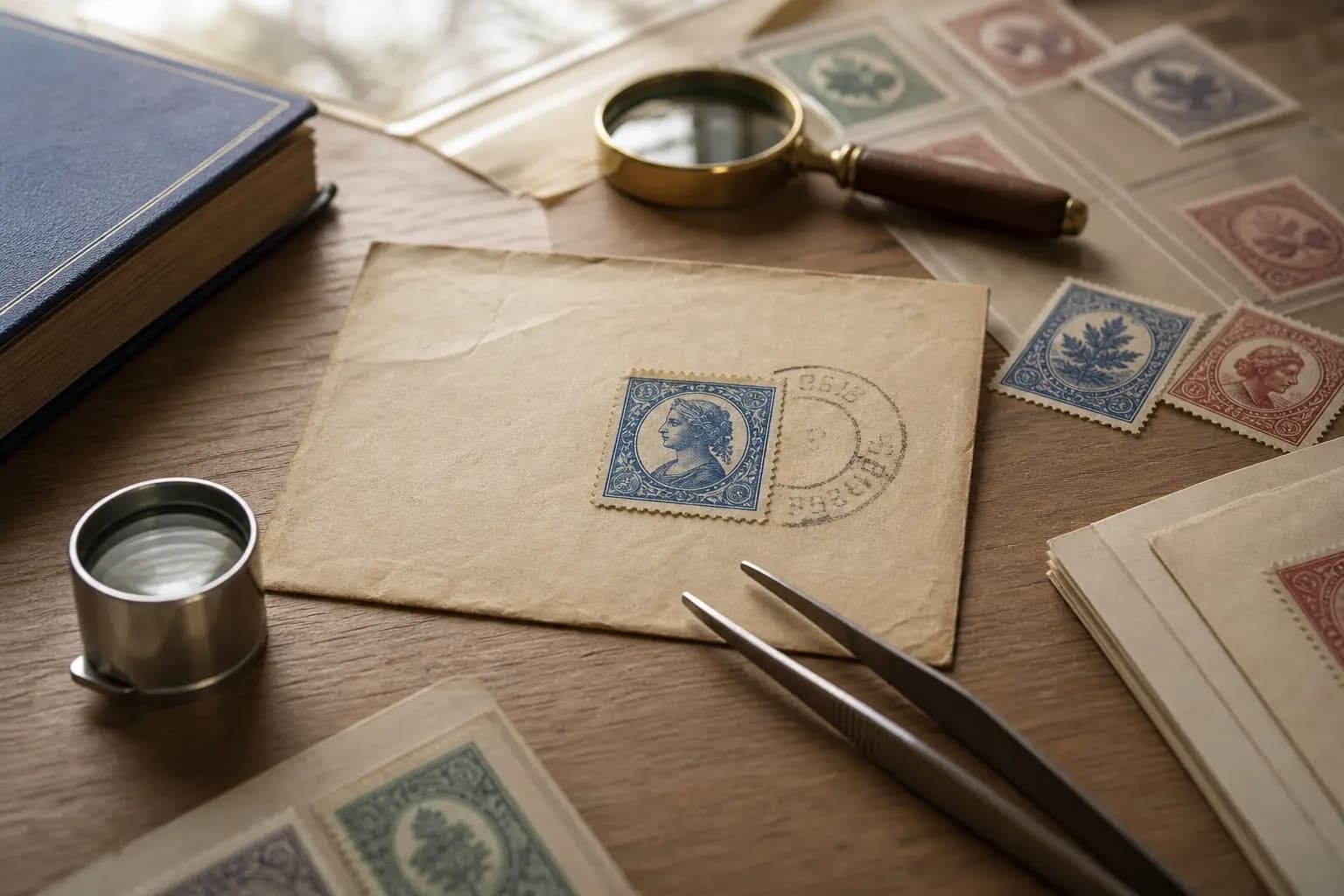
Philatelic ephemera includes covers, postage meters, Christmas Seals, and revenue stamps. Learn how to safely identify, handle, and organize these unique historical items using essential tools like tongs and reference catalogs.
Determining the value of classic early postage stamps requires careful attention to design variations, printing details, and paper watermarks. Learn how to safely identify these historic issues and understand their true market value.
Self-adhesive stamps require different handling than traditional water-activated stamps. Learn how to identify these modern issues and safely separate them from paper using water or specialized oil solvents.
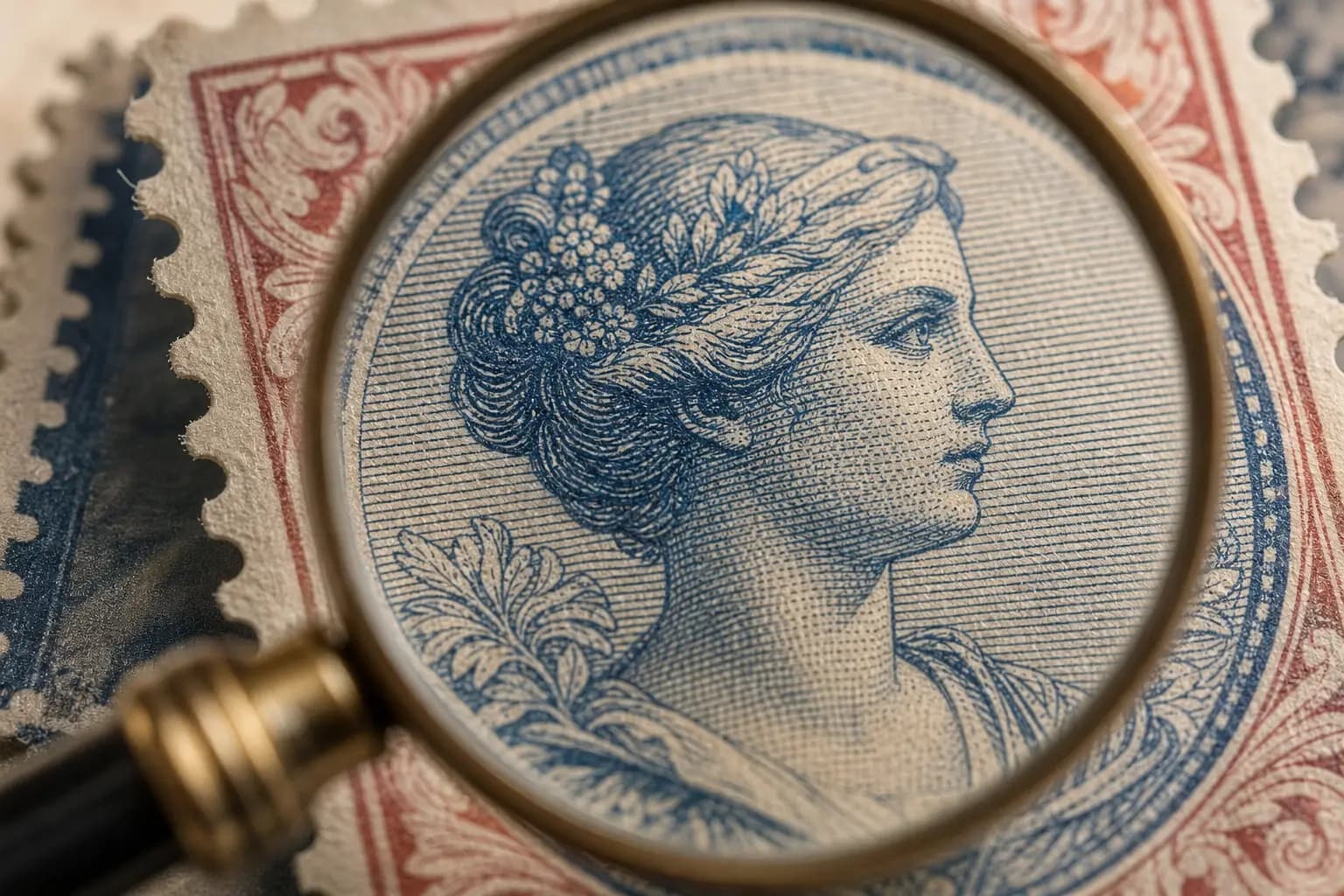
Modern postage stamps often combine multiple printing methods, such as line-engraved intaglio and offset lithography, on a single design. Learn how to safely identify these combined processes using cumulative visual clues, non-contact magnification, and oblique lighting.
In the late 19th century, the rapid growth of stamp collecting was accompanied by a rise in fraudulent stamps. Discover how early philatelists organized the first counterfeit detection services, established reference libraries, and laid the groundwork for modern stamp expertizing.
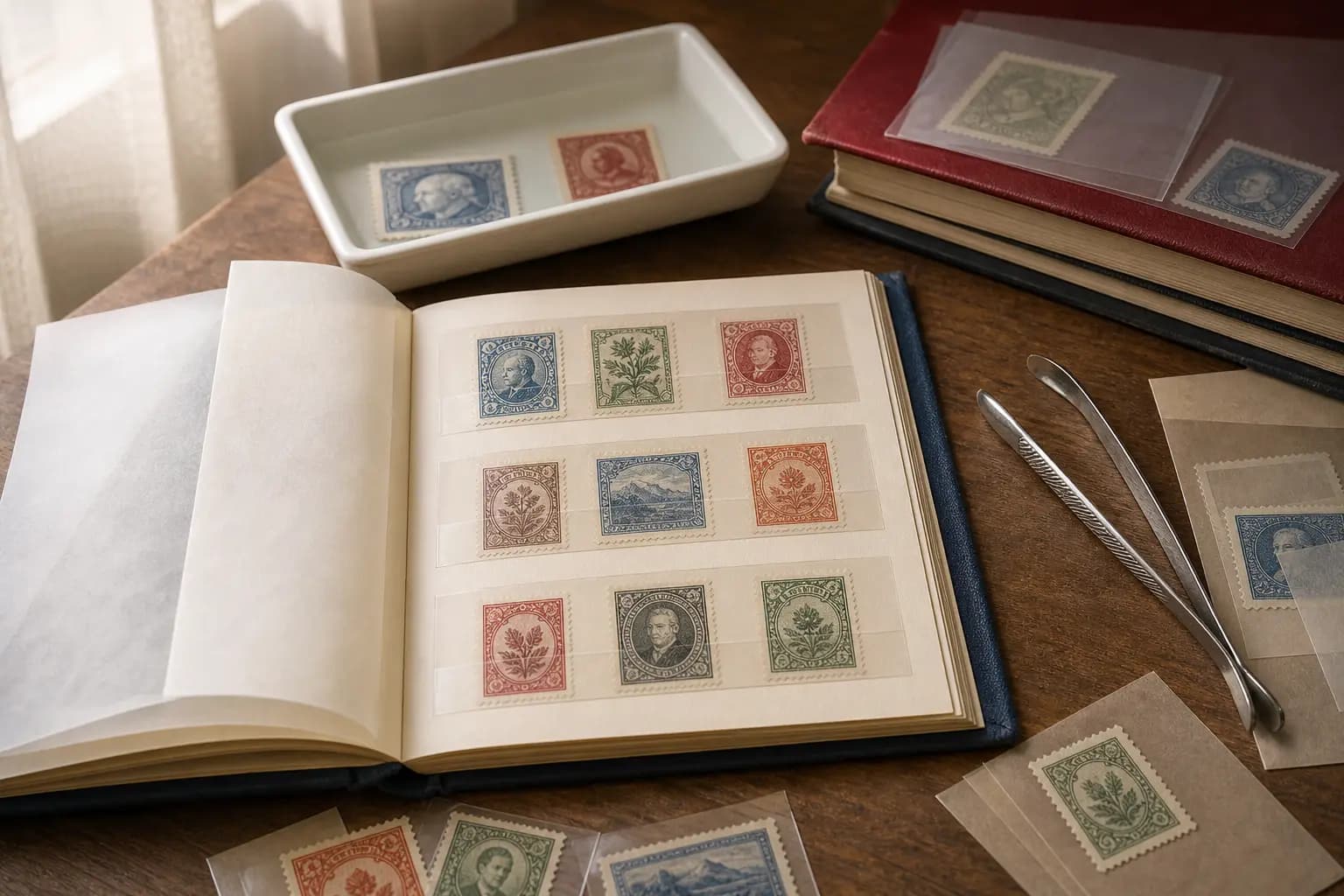
Preserving your postage stamps requires safe mounting techniques. Discover how to use peelable hinges and clear plastic mounts to secure your collection without causing permanent damage.
Deciding between mint and used postage stamps is one of the first choices a collector makes. This guide explains the differences in cost, preservation, and historical appeal to help you choose the style that fits your goals.
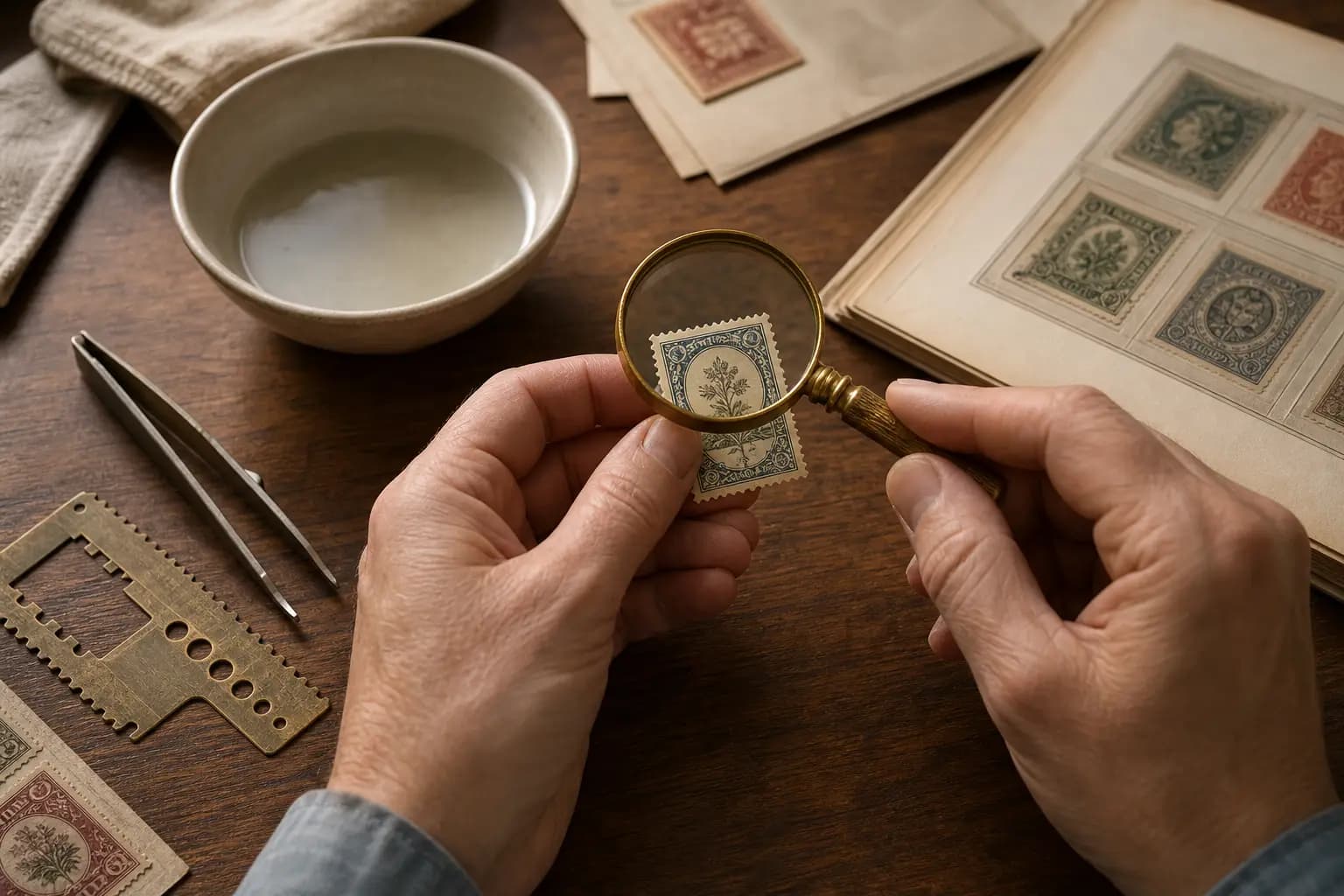
Look-alike postage stamps often appear identical at first glance, but minor inscription changes, text variations, or hidden dates can signify entirely different catalog listings. Learn how to spot these subtle differences and safely verify your stamps using proper philatelic tools.
A stamp catalog is an essential reference book for identifying postage stamps. By learning how to navigate its illustrations, issue dates, and printing descriptions, you can systematically identify unknown stamps in your collection and understand their history.
Offset lithography is a widely used planographic printing process for postage stamps. Learn how to safely identify lithographic stamps by analyzing cumulative visual clues under magnification and comparing them with other major printing families.
In the late nineteenth century, early philatelic societies like the American Philatelic Association introduced vital services to combat counterfeits, facilitate stamp exchanges, and distribute research. Discover how these historic services laid the groundwork for modern stamp collecting.