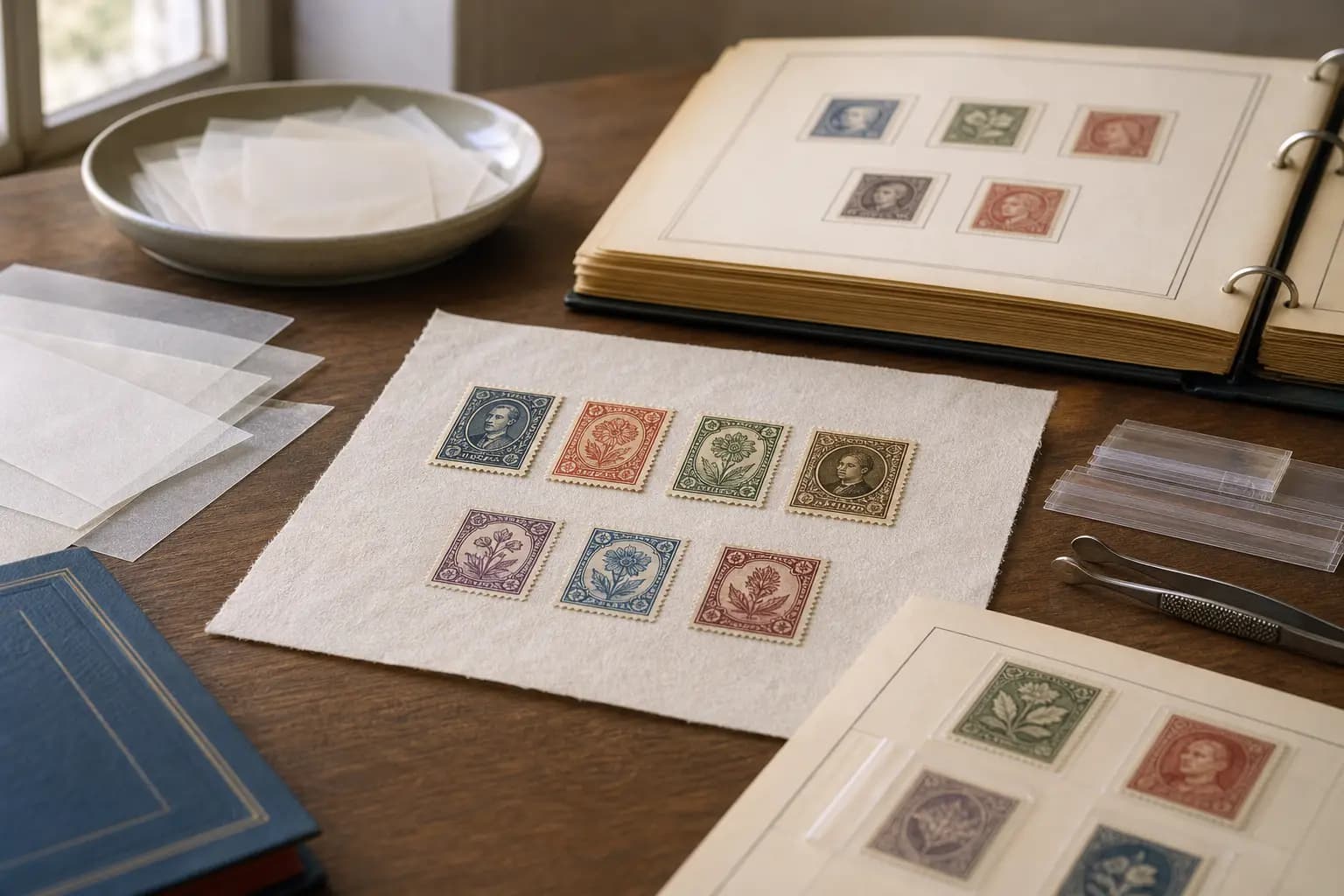
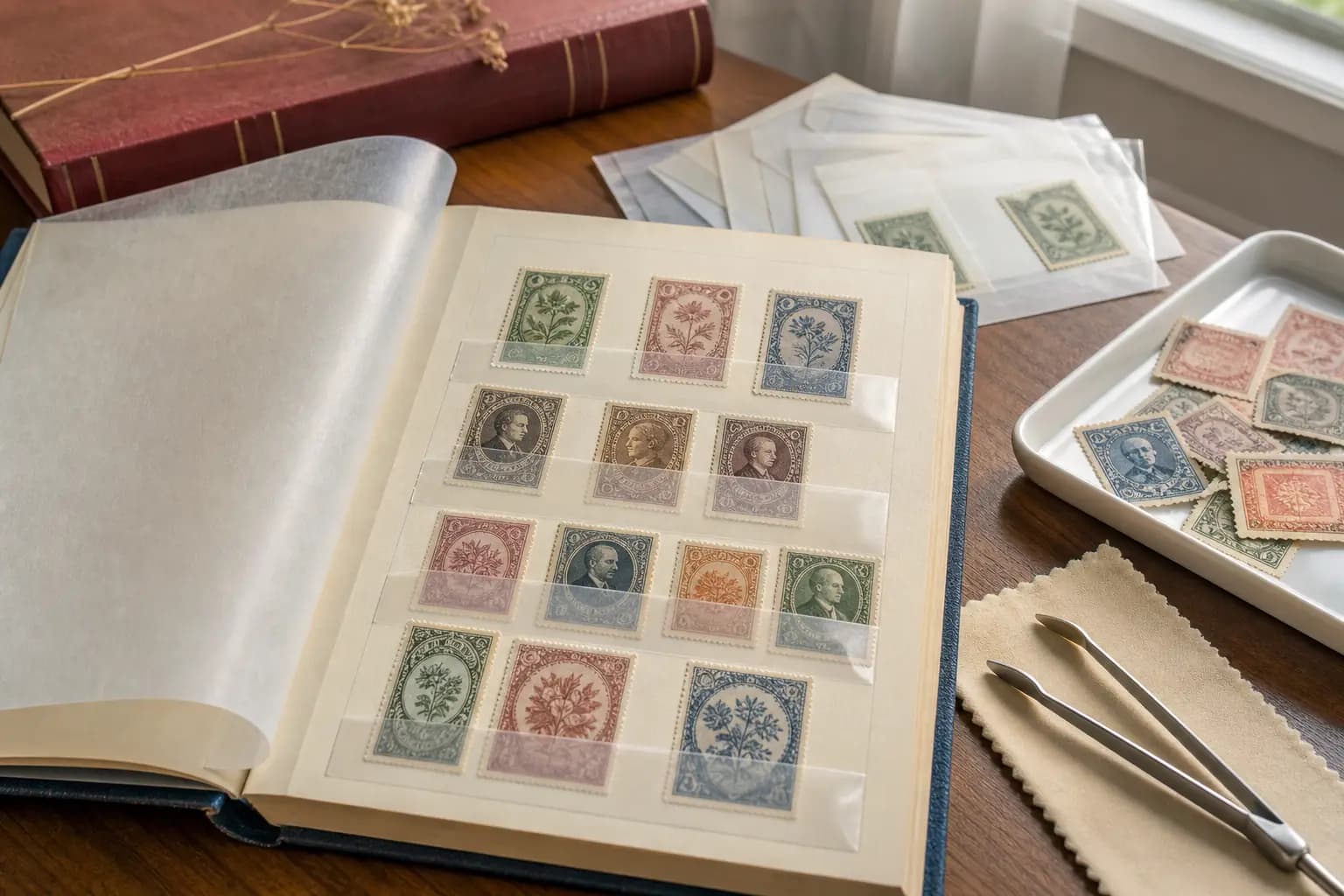
Dry stamps should be dried flat, gently, and completely before album storage. Wet material tears easily, so handle it minimally, keep it separated, and avoid tongs until the stamp is fully dry.
Choose the collecting style that matches your interests and limits. Mint, used, topical, country, and type collections all work; the safest choice is the one you can sustain and enjoy.
Yes. A watermark can turn a look-alike stamp into a separate catalog listing, which may change its value materially. The safest approach is careful comparison of paper, watermark type, and other details before drawing any valuation conclusion.
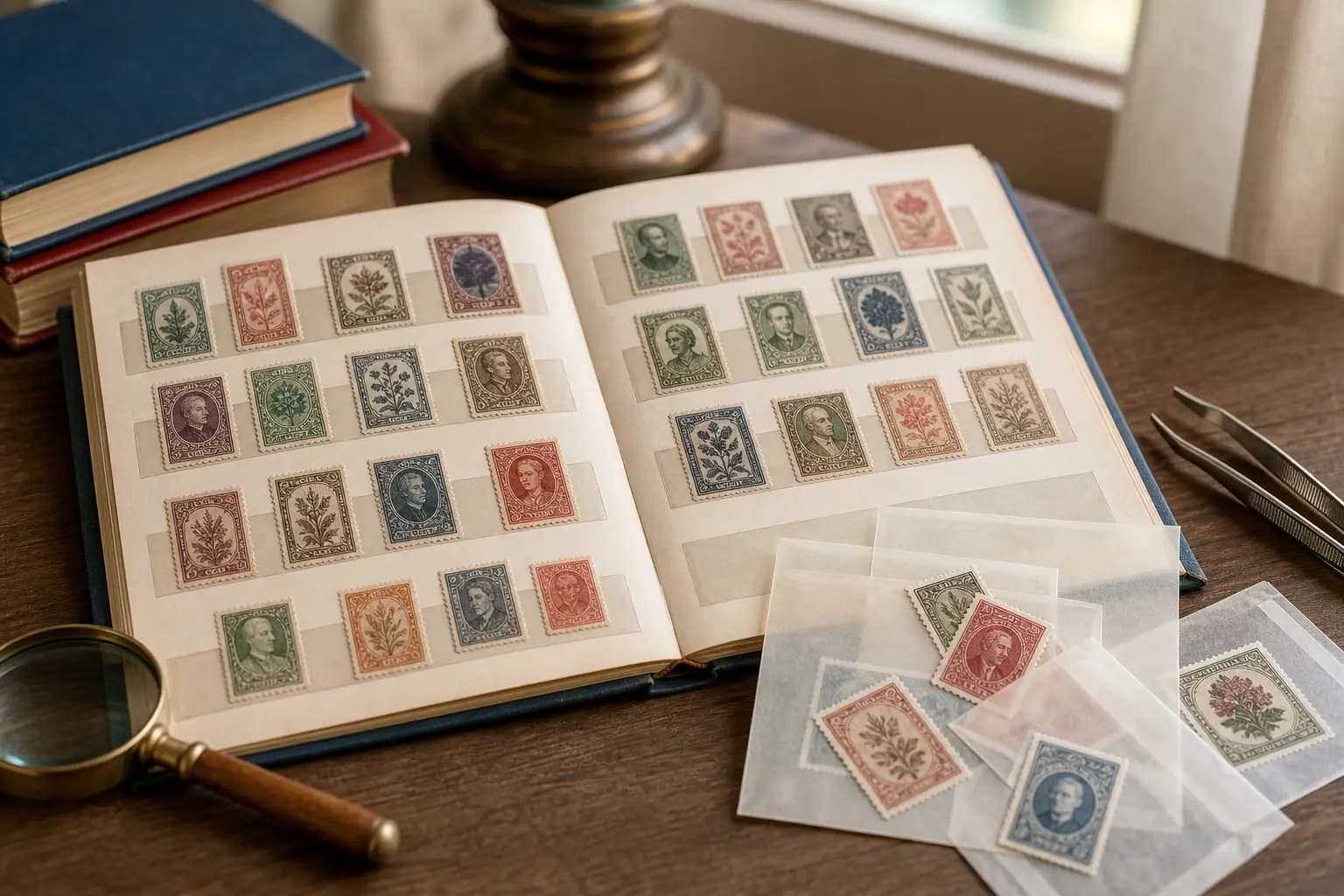
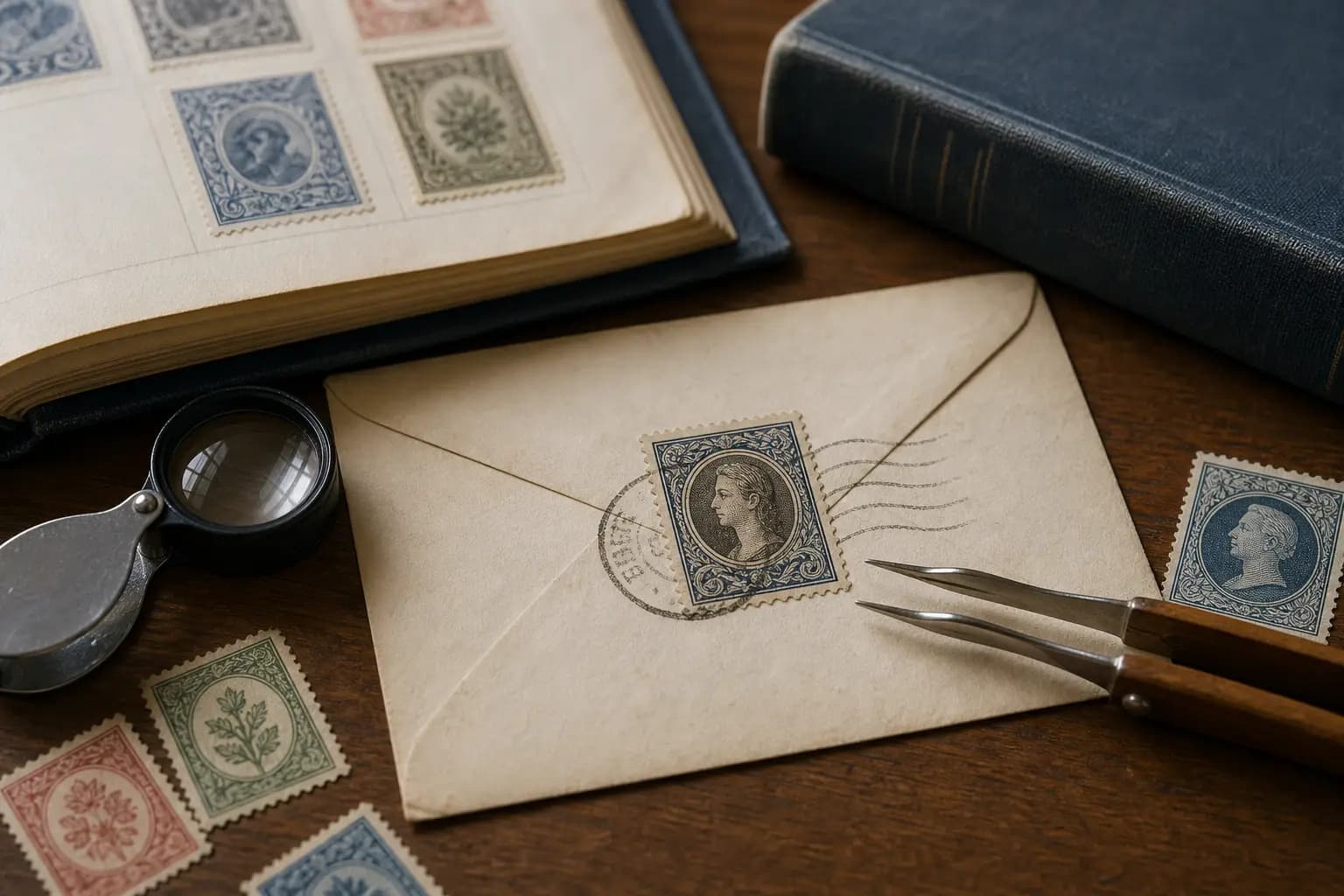
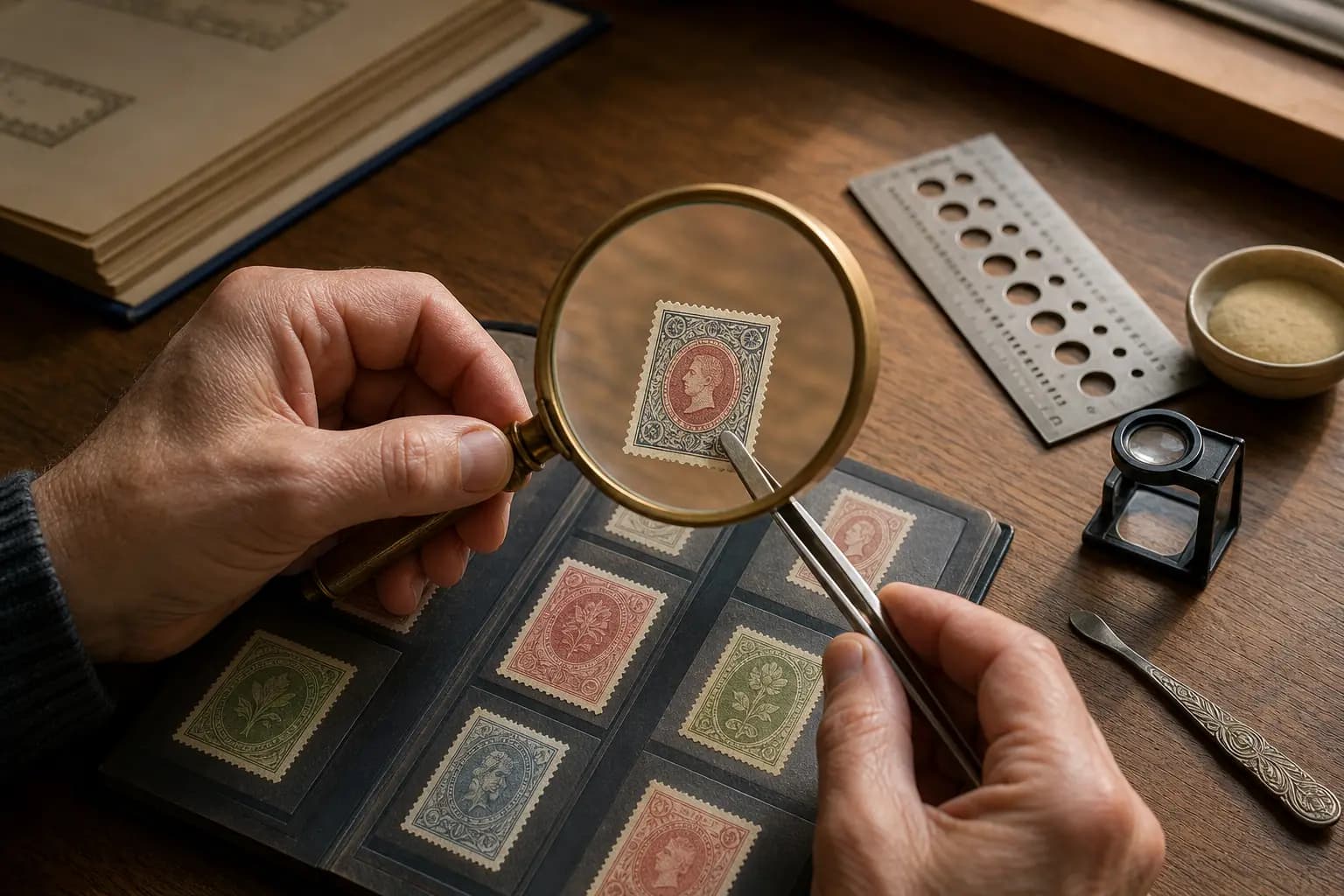
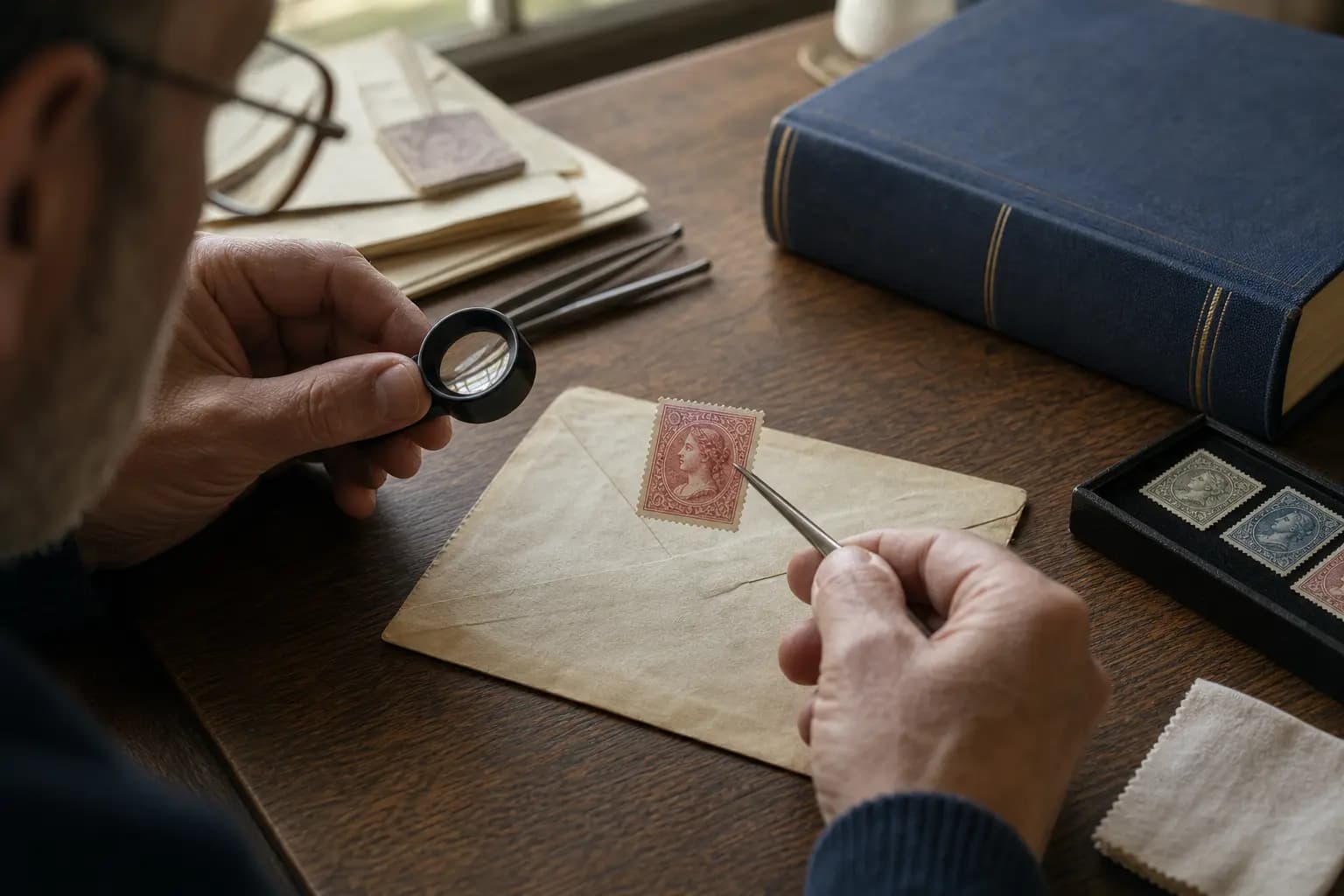
Start with simple tools and careful observation: use tongs, a clear magnifier, a catalog, and measuring tools to compare design details, perforations, and other clues without harming the stamp.
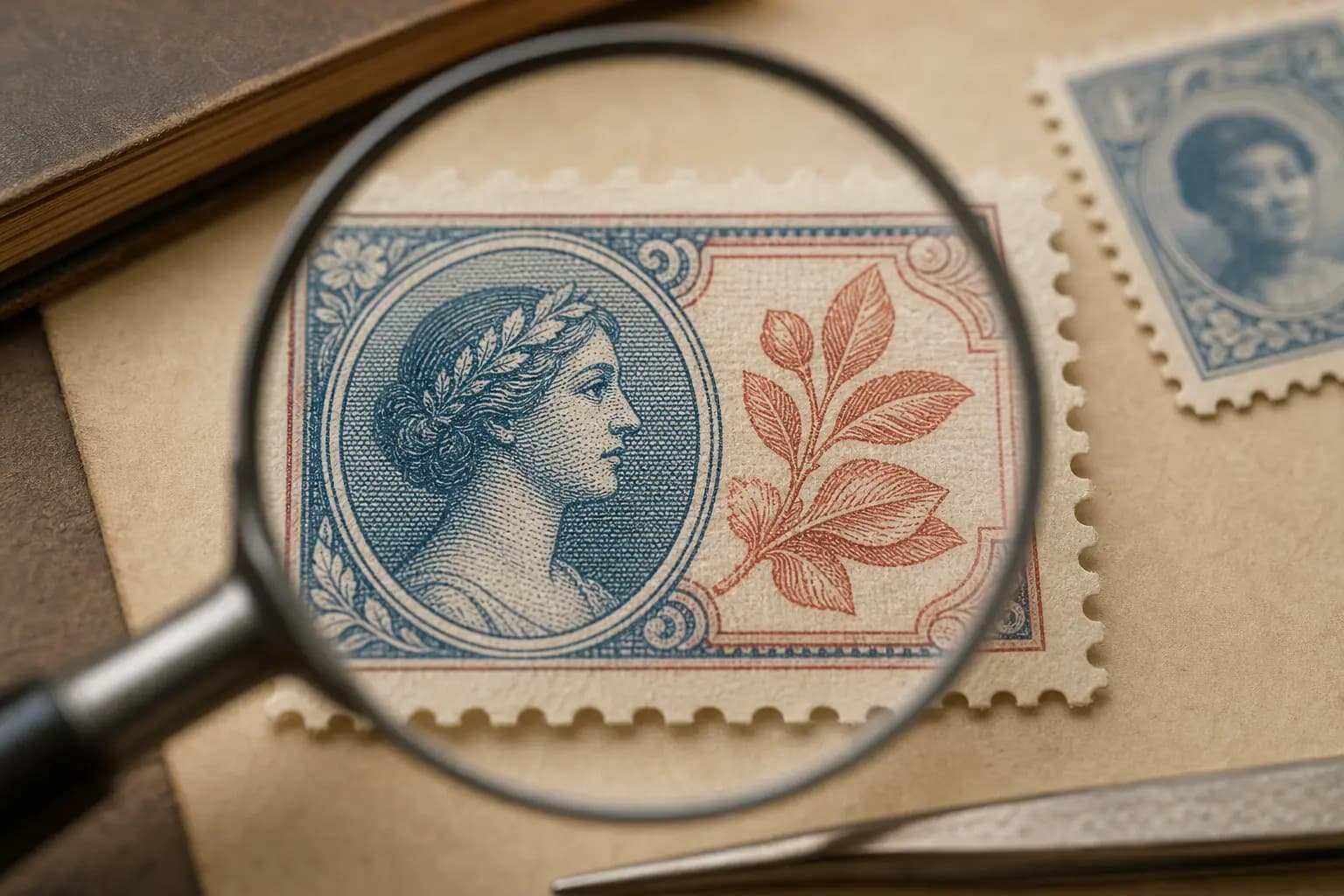
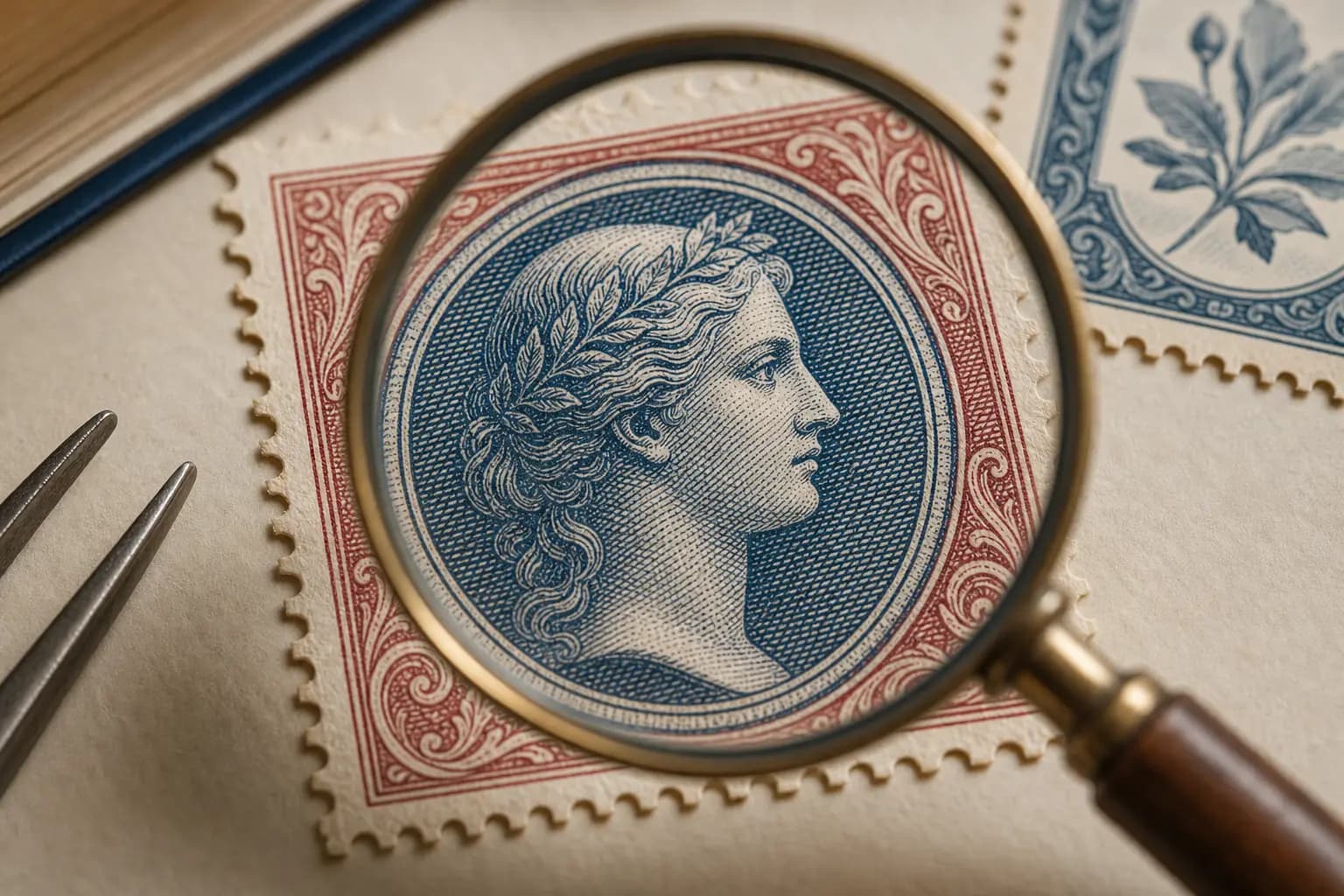
Offset lithography is identified by a mix of clues, not one test: smooth planographic printing, fine dot layers, and production records all matter. Use low-risk viewing methods and treat every visual feature as supporting evidence, not proof.
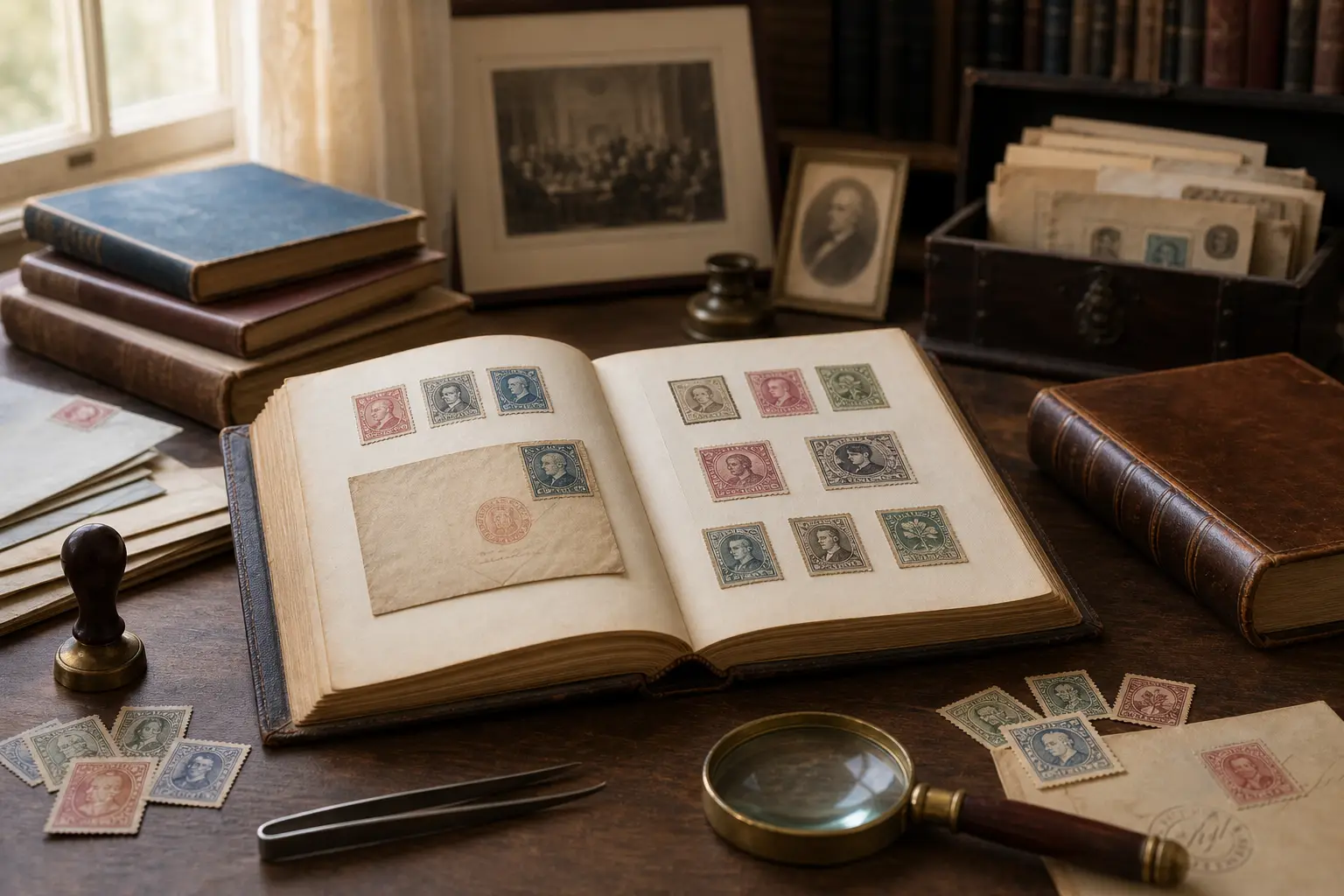
Early philatelic clubs preserved stamp history by sharing knowledge, publishing journals, building libraries, exchanging material, and recording specialist research. Their work turned private collecting into a documented hobby.
Prepare stamps for storage by drying them fully, sorting them gently, and using safe holders before album mounting. Keep wet material separate, avoid tape and glue, and use tongs only for dry stamps.
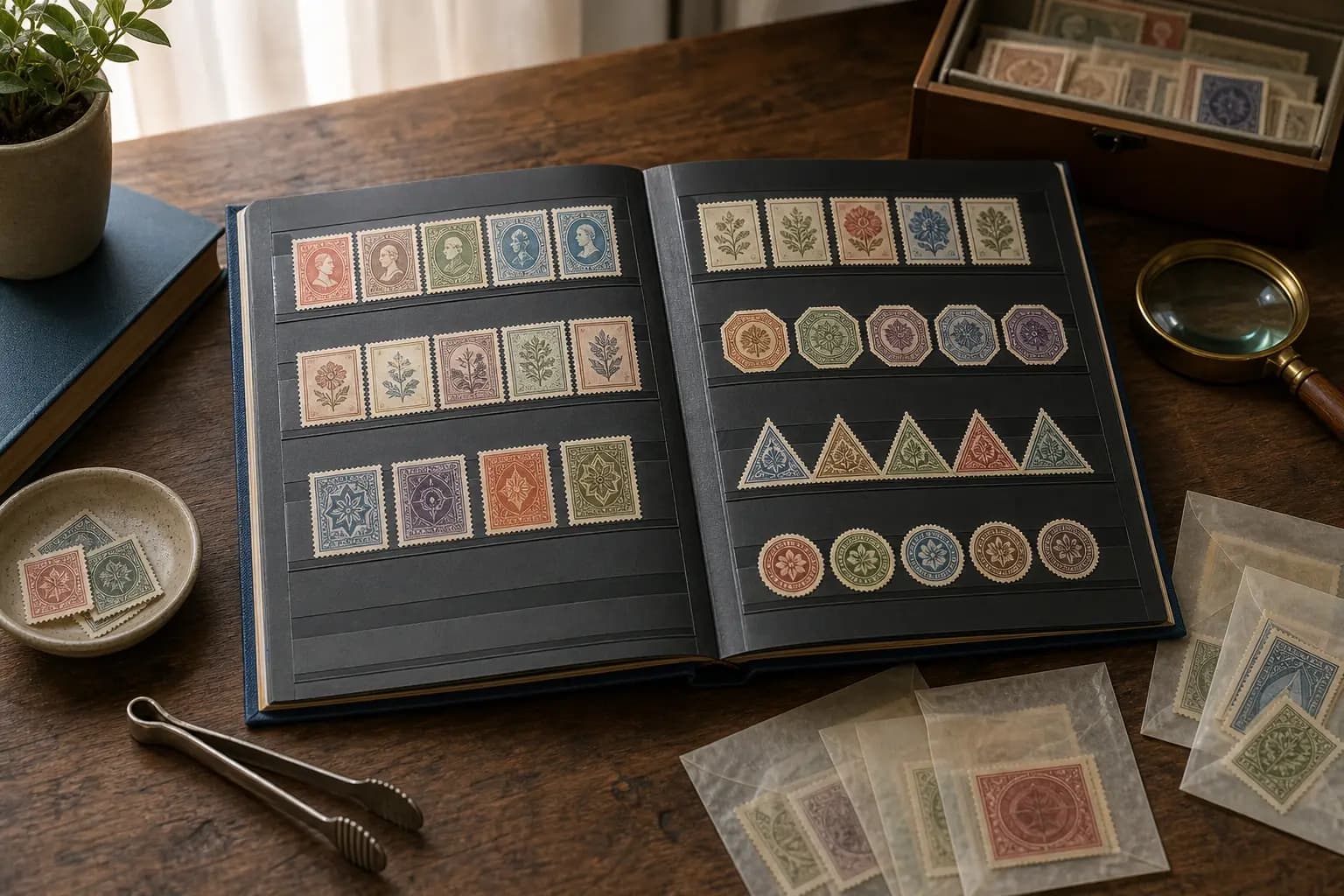
You can build a stamp collection by shape or color if that is what interests you. Start with simple tools, compare your finds with reliable references, and keep uncertain identifications open until you have enough evidence.
Yes. A watermark can make an otherwise identical stamp a different catalog listing and, in some cases, turn a common stamp into one valued much more highly. Check it carefully and safely, because the watermark may be the only meaningful difference.
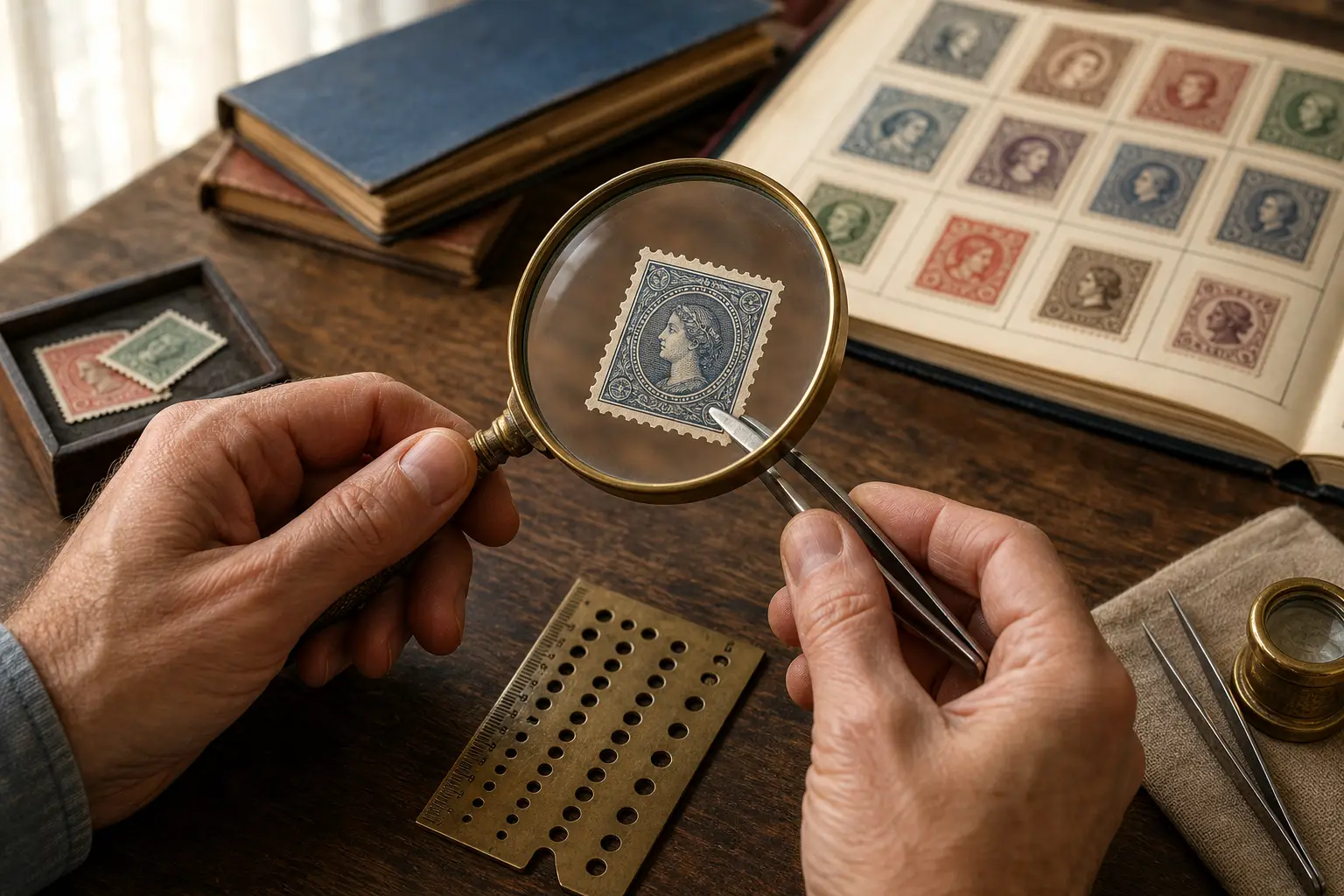
When two stamps look alike, the perforations may be the clue that separates them. Use a perforation gauge, compare carefully, and confirm with a catalog or record instead of guessing.
You can narrow a stamp’s printing family by combining several non-contact clues, but no single feature is decisive. Use magnification, diffuse or oblique light, and production records to distinguish line-engraved intaglio, gravure, letterpress, and lithography safely.
Philatelic clubs mattered because they turned scattered collectors into organised communities that exchanged material, shared knowledge, published research, and preserved reference information. The history includes concrete milestones from the 1850s through the founding of the American Philatelic Association in 1886.