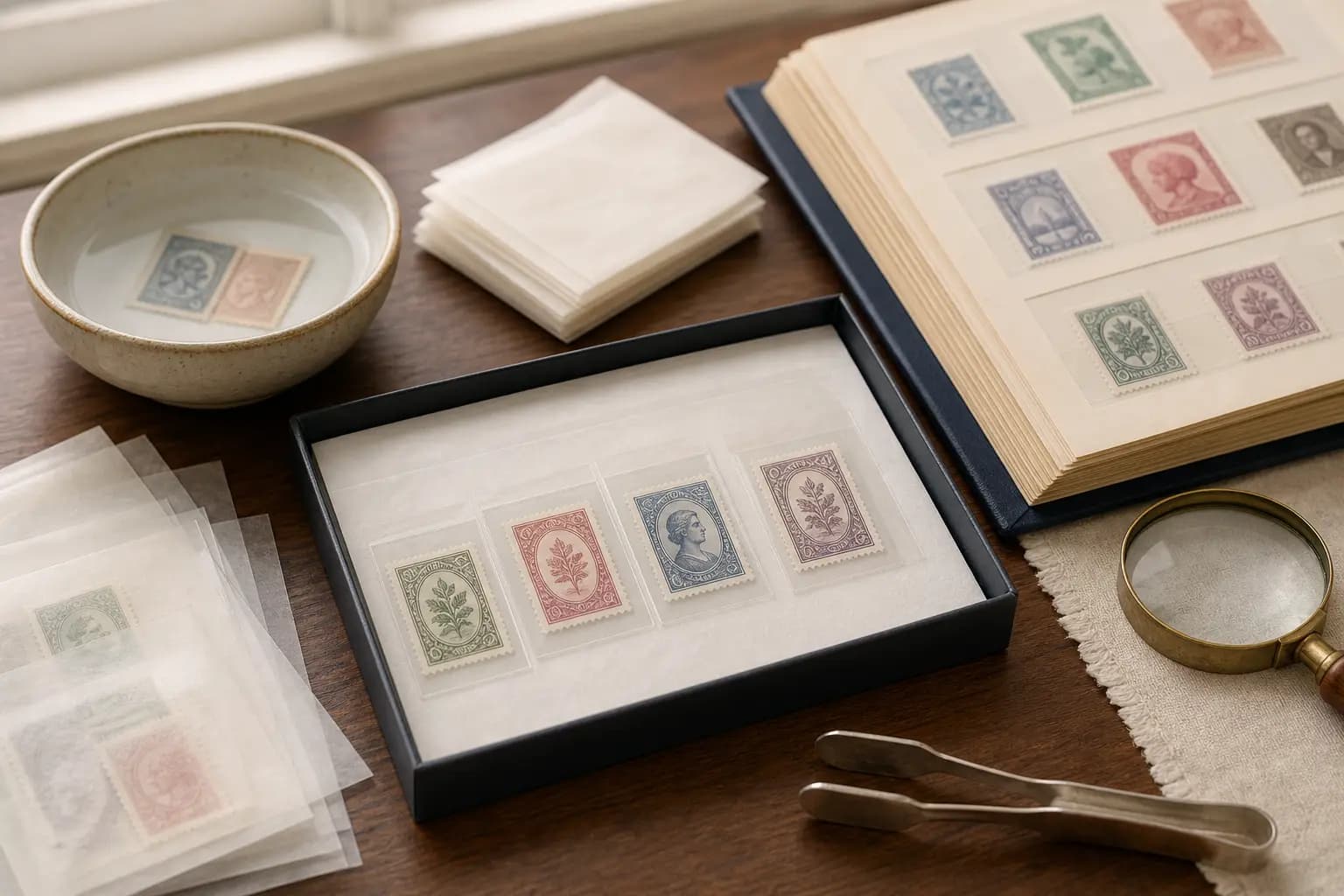
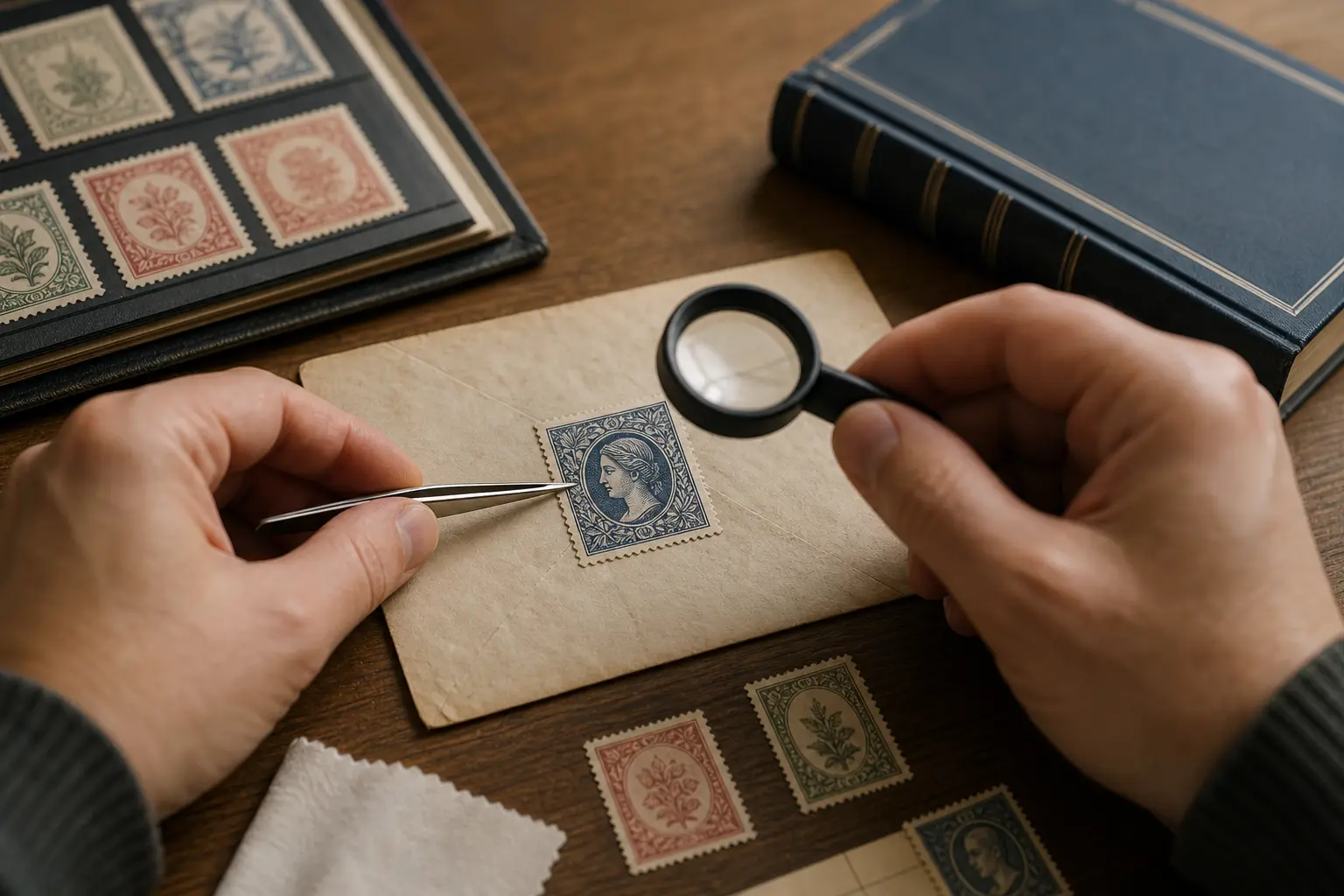
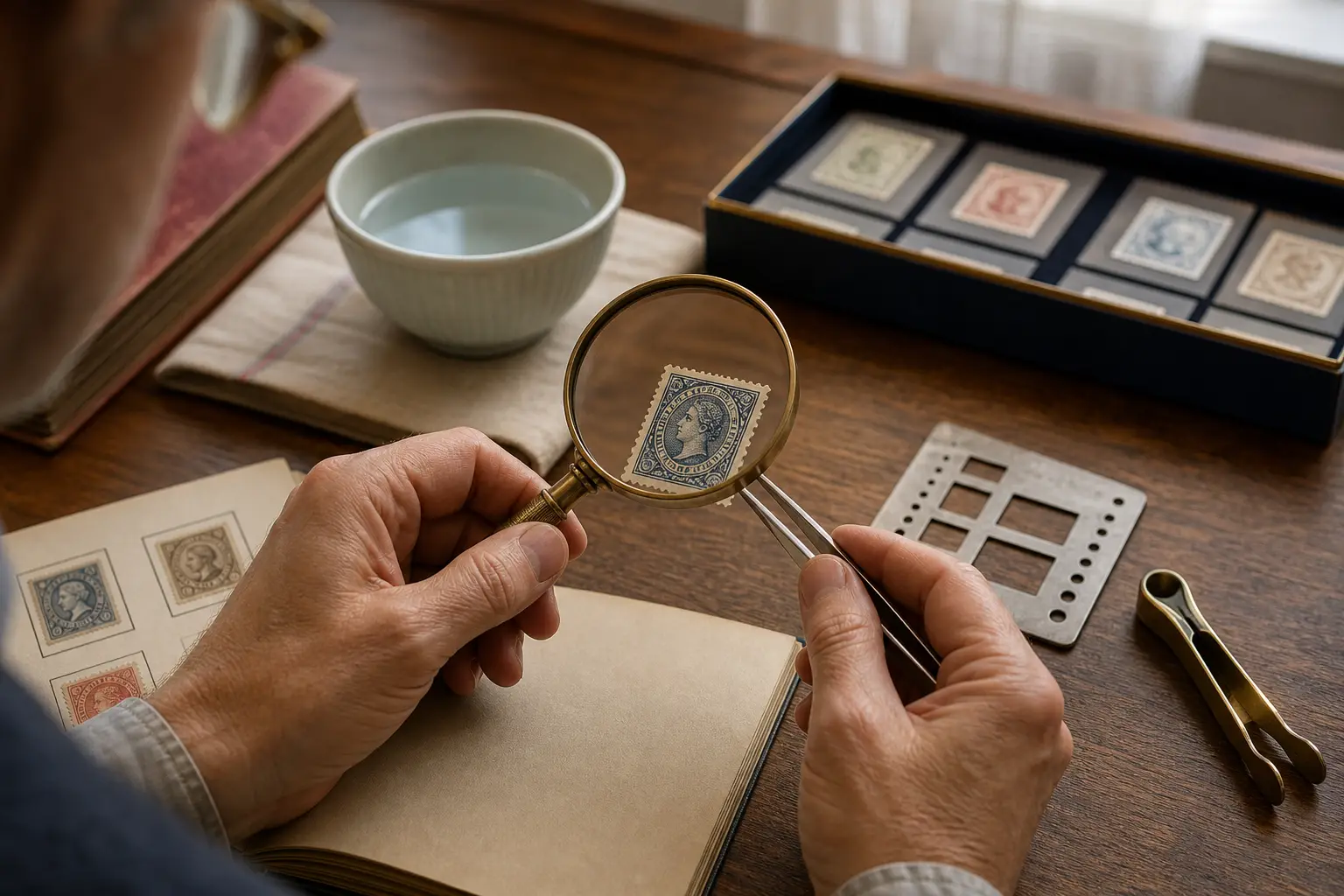
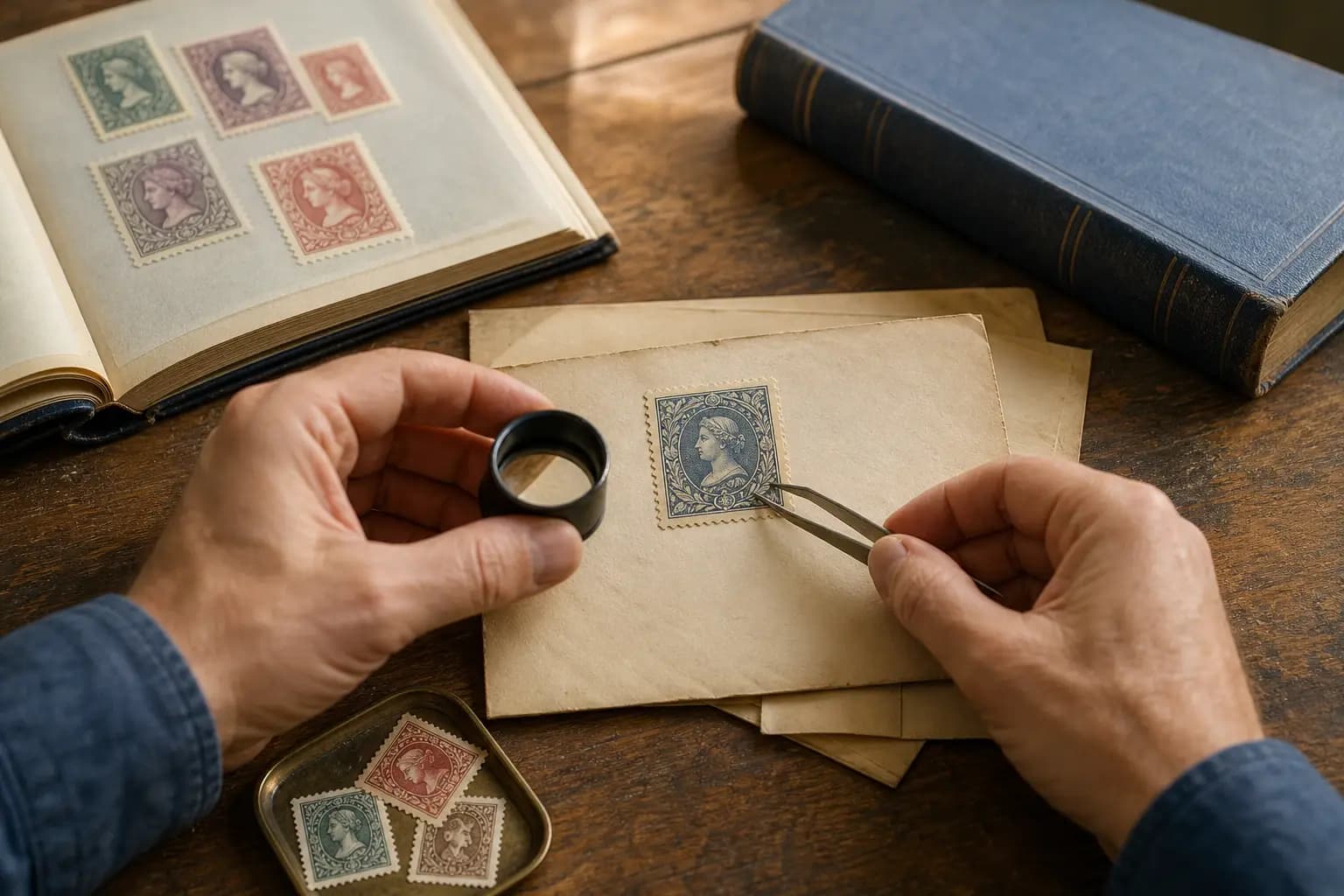
The safest approach is to let damp stamps dry flat, handle them gently, and store them only after they are fully dry. If a cover has important cancellations or images, preserve the entire envelope instead of forcing removal.
Choose a stamp collecting specialty by starting with what you enjoy, then narrowing by country, topic, type, shape, or era. This guide shows how to make that choice safely and build a clear collecting plan.
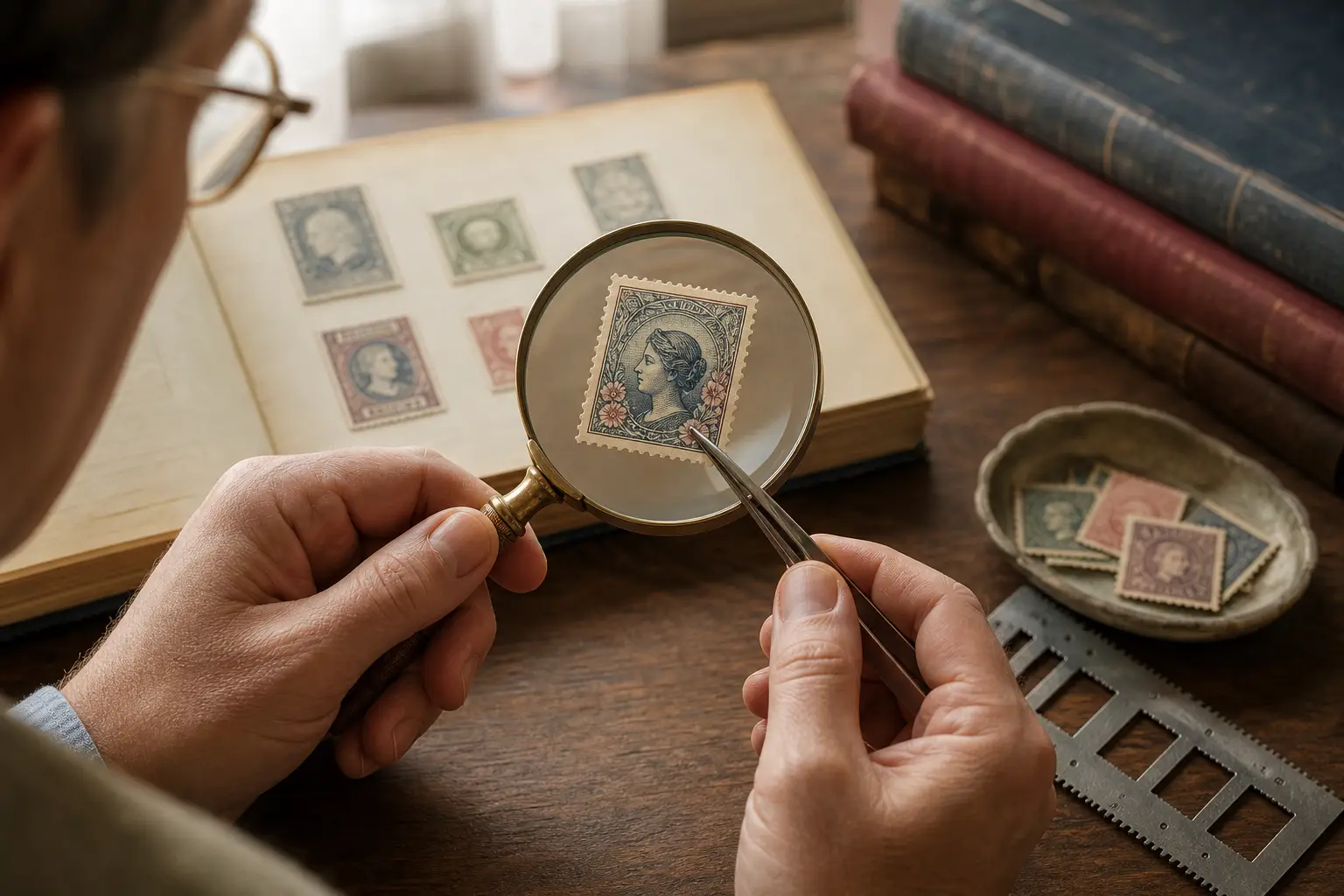
A watermark can make two stamps with the same design into separate catalog issues. Check carefully, use safe watermark fluid or light, and record uncertainty when the mark is only partly visible.
Start by checking the issue period and backing clues, then use a cautious test rather than force. Older self-adhesives often soaked off, while many current U.S. self-adhesives have oil-based backing and need a different approach.
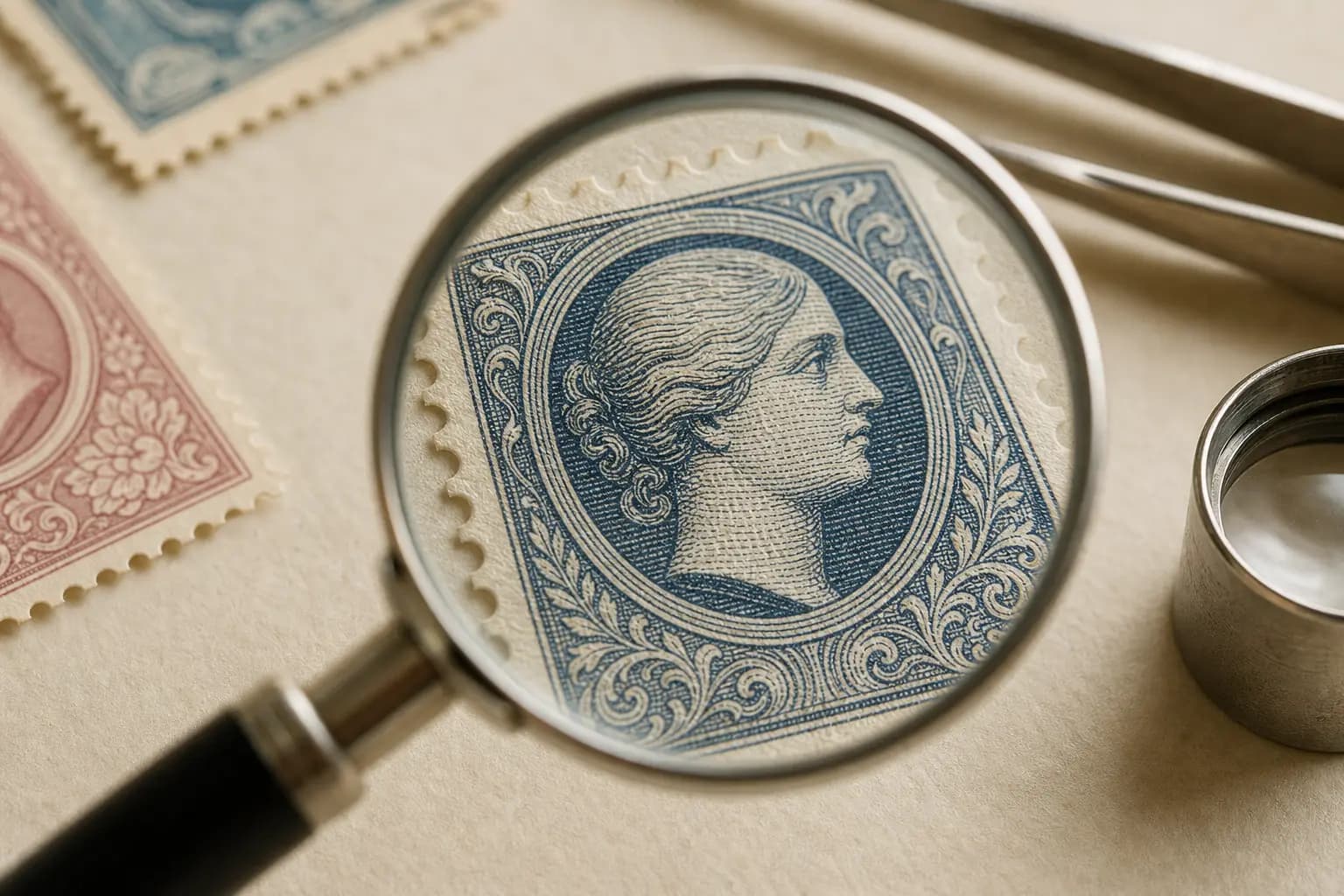
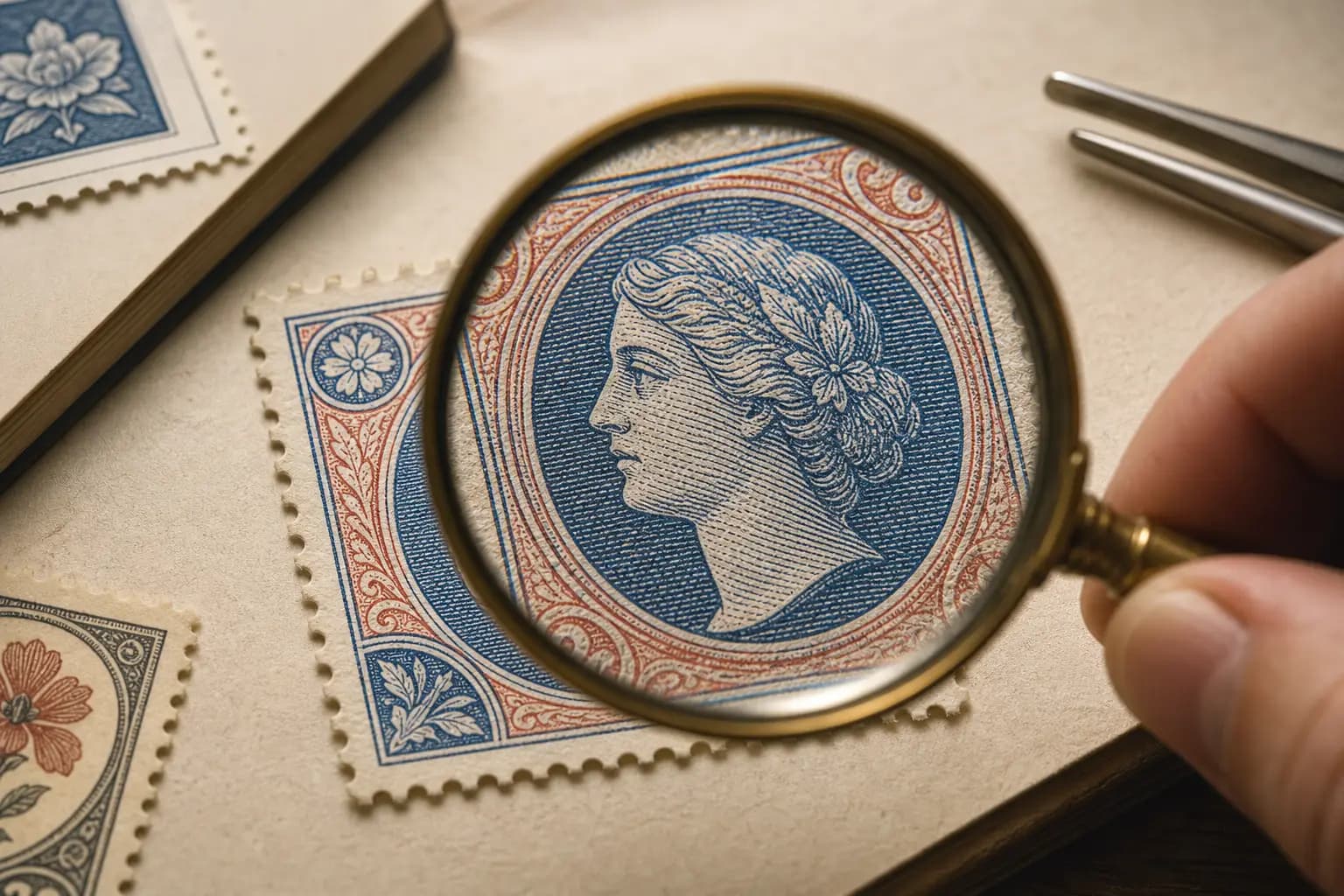
You can often identify a stamp’s printing family by combining visual clues, non-contact magnification, and production records. Treat line-engraved intaglio, gravure, letterpress, and lithography as cumulative possibilities, not single-test answers.
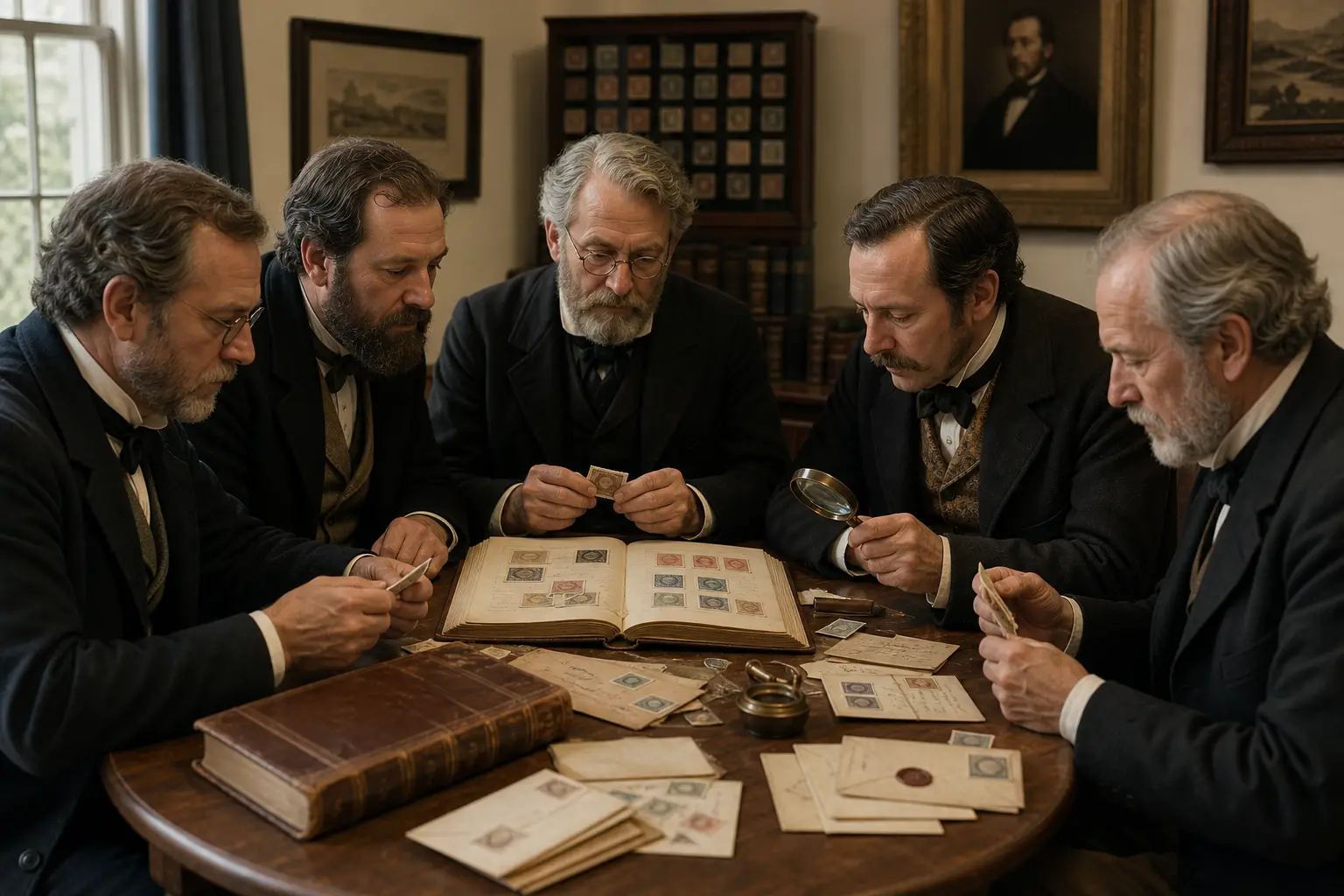
Early stamp clubs mattered because they turned isolated collectors into a network for buying, trading, study, exhibitions, and reference sharing. The best way to use that history today is to treat clubs as learning spaces, not as guarantees of value or authenticity.
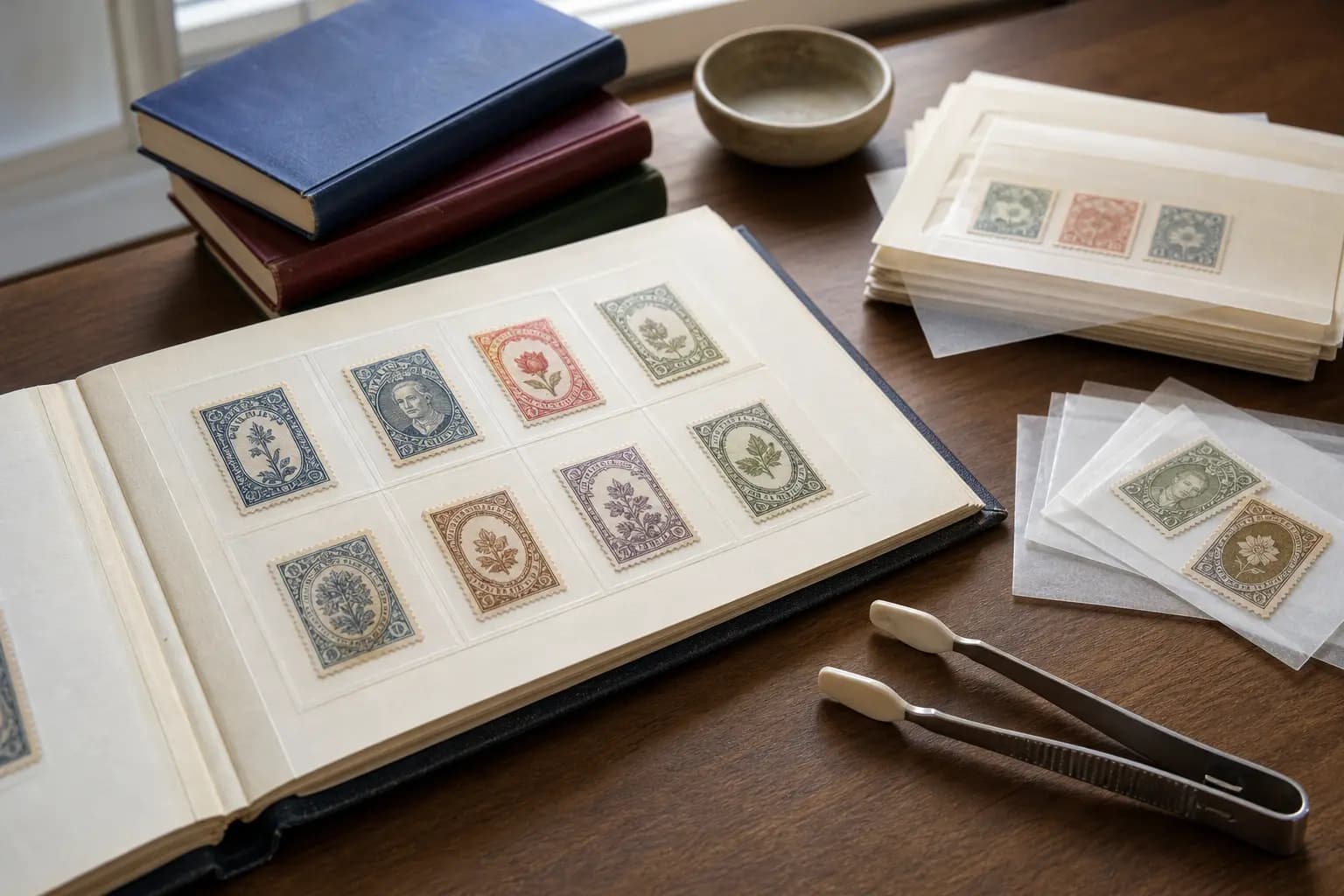
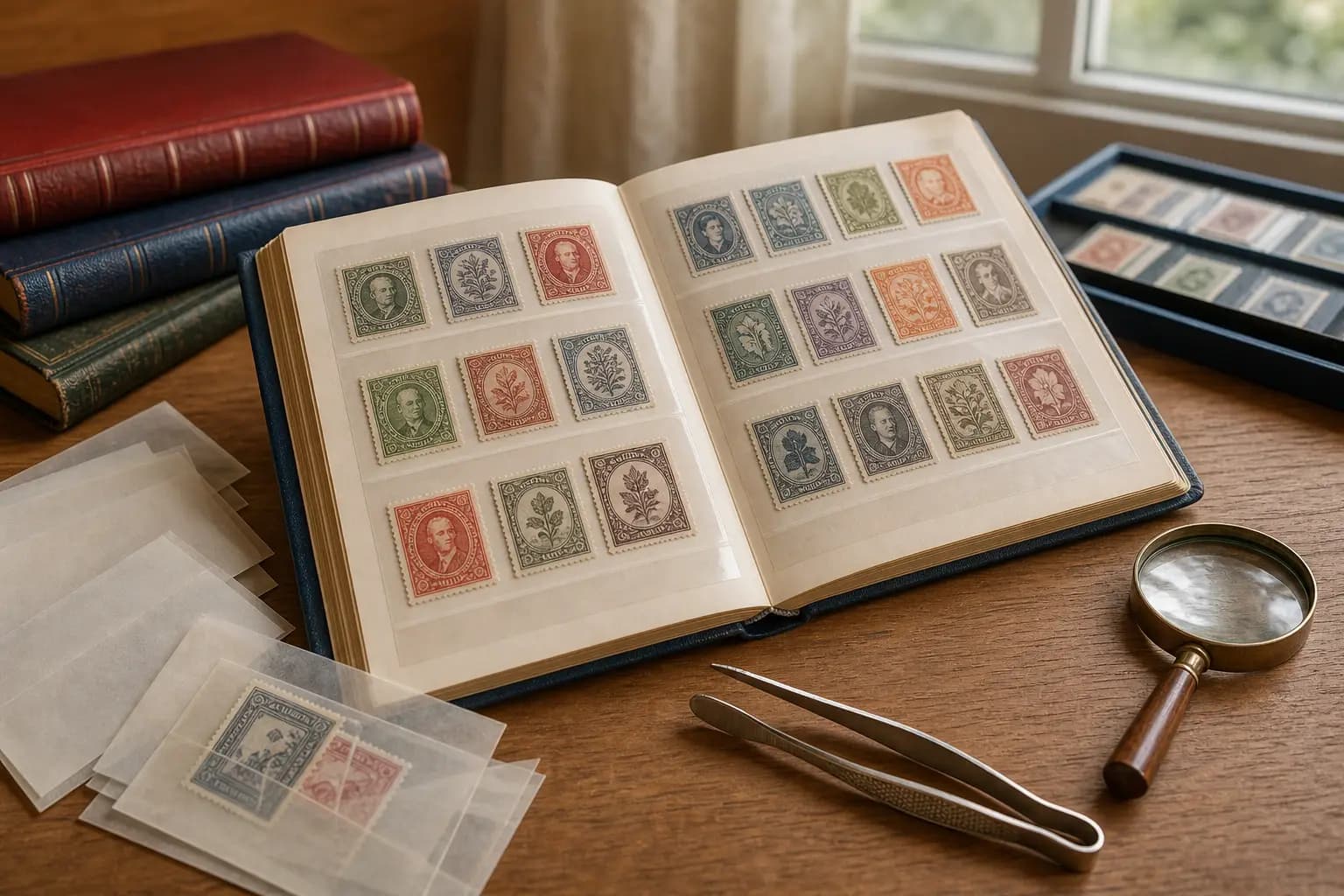
Original gum is easiest to preserve by avoiding unnecessary handling, moisture, and adhesive contact. For unused stamps, the safest approach is careful storage, dry handling with tongs, and album materials that do not damage the back of the stamp.
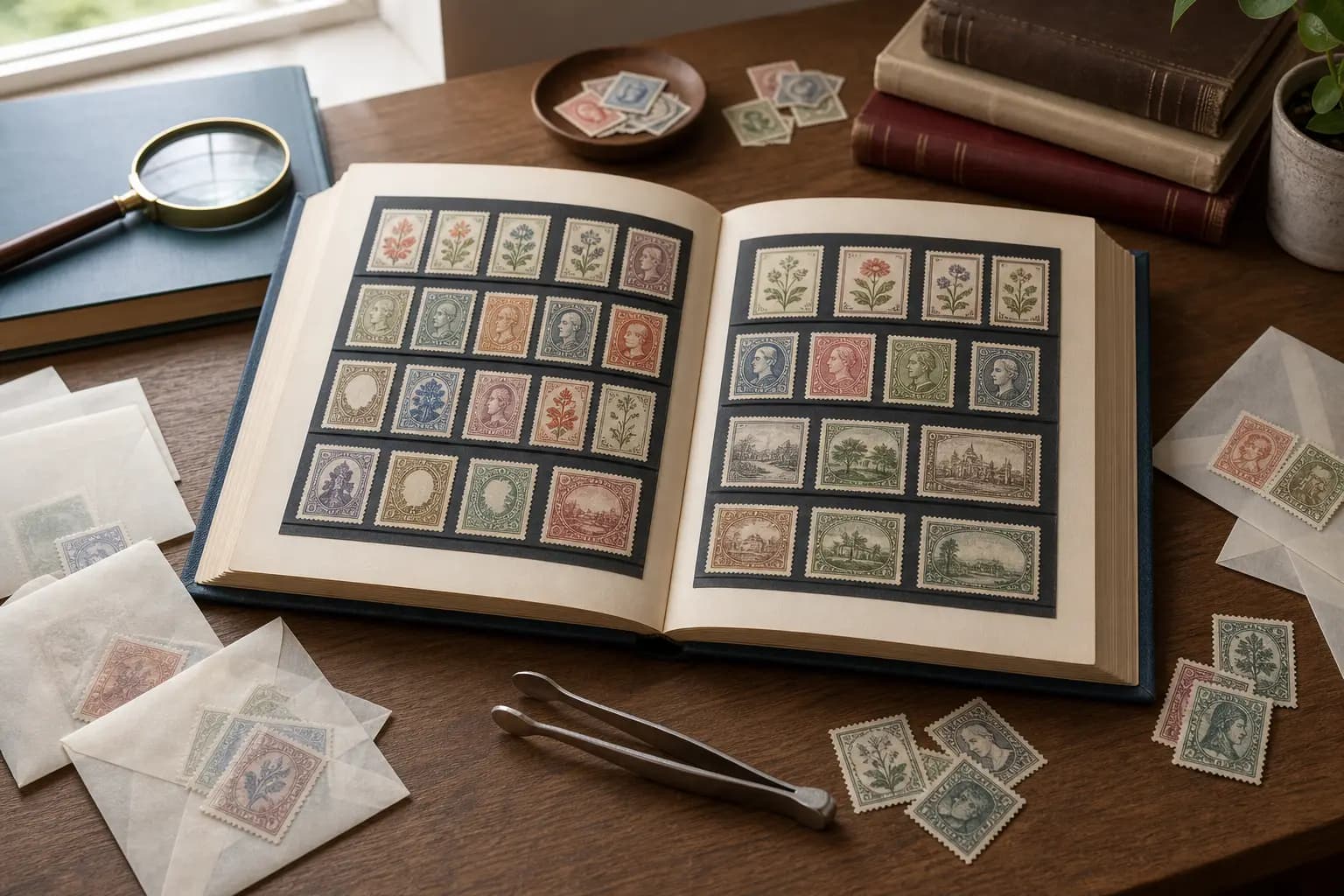
You can collect far more than postage stamps alone: covers, postmarks, postal stationery, labels, and topical material all fit within stamp collecting. Start with a clear focus, use safe tools, and compare what you see with reliable references.
A watermark can be the only difference between a common stamp and a much scarcer one. Learn how to check safely, why look-alike designs matter, and when to stop and note uncertainty instead of guessing.
Not all self-adhesive stamps will soak off in water. Current U.S. issues may have oil-based backing, so identification starts by checking the stamp’s type and handling the piece safely before you try any removal method.
Some modern stamps are printed by more than one process. The safest way to identify them is to combine visible clues, use non-contact magnification and light, and confirm with production records when possible.
Stamp clubs became important because they connected collectors for exchange, study, and publishing, then helped build reference material and organized philately. Here is the history, with key dated milestones and a safe way to use club resources today.